Collagen Market Size & Growth Forecast 2027–2036, By Segments (Application, Product, Source), Regional Demand Trends (North America, Asia Pacific, Europe), Key Country Insights (U.S., Japan, South Korea, Germany, France, Italy), and Competitive Landscape
Market Size and Growth Outlook
Collagen Market size was more than USD 12.7 billion in 2026 and is set to grow at a 10.36% CAGR between 2027 and 2036, exceeding USD 34.03 billion by 2036. The industry revenue for 2027 is calculated at USD 13.81 billion.
Get more details on this report
Request Free Sample ReportCollagen Market Intelligence Snapshot
Regional Market Dynamics
- Europe holds 37.46% share driven by mature food, nutraceutical, and personal care manufacturing, strong quality standards, and established collagen integration across wellness-focused product categories.
- Asia Pacific’s 12.54% CAGR is supported by rising supplement consumption, beauty-from-within adoption, food and beverage applications, and expanding production capacity serving a large wellness-focused consumer base.
Segment Momentum
- Gelatin captured a 64.51% share in 2026 due to its long-standing use in food processing, pharmaceuticals, and nutraceuticals, where its gelling, binding, and stabilizing properties support broad commercial adoption.
- Healthcare is the fastest-growing application segment as collagen adoption expands in wound care, tissue support, and medical nutrition, where its biological compatibility supports specialized clinical and therapeutic uses.
Market Expansion Drivers
- Growing consumer focus on skin health and joint wellness accelerating collagen supplement adoption.
- Rising demand for functional foods and nutraceutical beverages supporting collagen ingredient integration.
- Increasing preference for sustainable and plant-based wellness alternatives driving formulation innovation.
Leading Market Participants
- Key companies in the collagen market include GELITA AG (Germany), Rousselot B.V. (Netherlands), Tessenderlo Group NV (Belgium), Nitta Gelatin, Inc. (Japan), JBS S.A. (Brazil), Croda International Plc (United Kingdom), Weishardt Holding SA (France), Sterling Biotech Limited (India), Advanced BioMatrix, Inc. (United States), Titan Biotech Limited (India).
Global Market Forecast Snapshot
Market Outlook
- 2026 Market Size: USD 12.7 billion
- 2027 Estimated Market Size: USD 13.81 billion.
- Projected Market Size: USD 34.03 billion by 2036
- Growth Forecast: 10.36% CAGR (2027-2036)
Regional and Segment Outlook
- Leading Regional Market: Europe
- High-Growth Regional Hub: Asia Pacific
- Core Revenue Segment: Food & Beverages (Application) | Gelatin (Product) | Bovine (Source)
- Emerging Opportunity Segment: Healthcare (Application) | Hydrolyzed Collagen (Product) | Marine (Source)
Market Growth Drivers and Industry Trends
Growing consumer focus on skin health and joint wellness accelerating collagen supplement adoption
Growing consumer awareness of skin health, healthy aging, and joint wellness is strengthening demand for collagen-based supplements, which will drive the collagen market growth by expanding consumption across beauty, wellness, and nutrition applications. Consumers increasingly view collagen as a functional ingredient that can support appearance-related and mobility-focused wellness routines, encouraging greater incorporation of powders, capsules, gummies, and other convenient supplement formats into daily health practices. This shift toward proactive wellness management also supports recurring consumption as consumers seek products aligned with long-term skin and joint care.
Rising demand for functional foods and nutraceutical beverages supporting collagen ingredient integration
The growing preference for foods and beverages that provide benefits beyond basic nutrition will propel the collagen market growth as manufacturers integrate collagen ingredients into products designed for wellness-oriented consumers. Functional beverages, nutrition products, and fortified foods provide convenient channels for consumers to incorporate collagen into everyday diets without relying solely on traditional supplement formats. This integration also enables product developers to address multiple consumption occasions, including hydration, meal replacement, sports nutrition, and beauty-focused nutrition, while broadening the use of collagen across mainstream food and beverage categories.
Increasing preference for sustainable and plant-based wellness alternatives driving formulation innovation
Increasing consumer interest in environmentally conscious and plant-based wellness options is encouraging formulation innovation within the collagen market, particularly as product developers explore alternatives that align with evolving sustainability expectations. Demand for cleaner and more responsible ingredient profiles is prompting greater attention to sourcing, production practices, and formulation approaches while encouraging the development of wellness products suited to consumers seeking alternatives to conventional animal-derived ingredients. These preferences are also stimulating innovation in ingredient technologies and product positioning across supplements, functional foods, and beverages.
| Growth Driver | Impact on CAGR | Regulatory Influence | Geographic Relevance | Adoption Rate | Impact Timeline |
|---|---|---|---|---|---|
| Growing consumer focus on skin health and joint wellness accelerating collagen supplement adoption | 2.30% | Low | Europe, North America | High | Near Term |
| Rising demand for functional foods and nutraceutical beverages supporting collagen ingredient integration | 1.90% | Moderate | Asia Pacific, Europe | High | Mid Term |
| Increasing preference for sustainable and plant-based wellness alternatives driving formulation innovation | 1.50% | Moderate | North America, Asia Pacific | Emerging | Long Term |
Explore Growth Opportunities
Request Free Sample ReportRegional Demand Dynamics
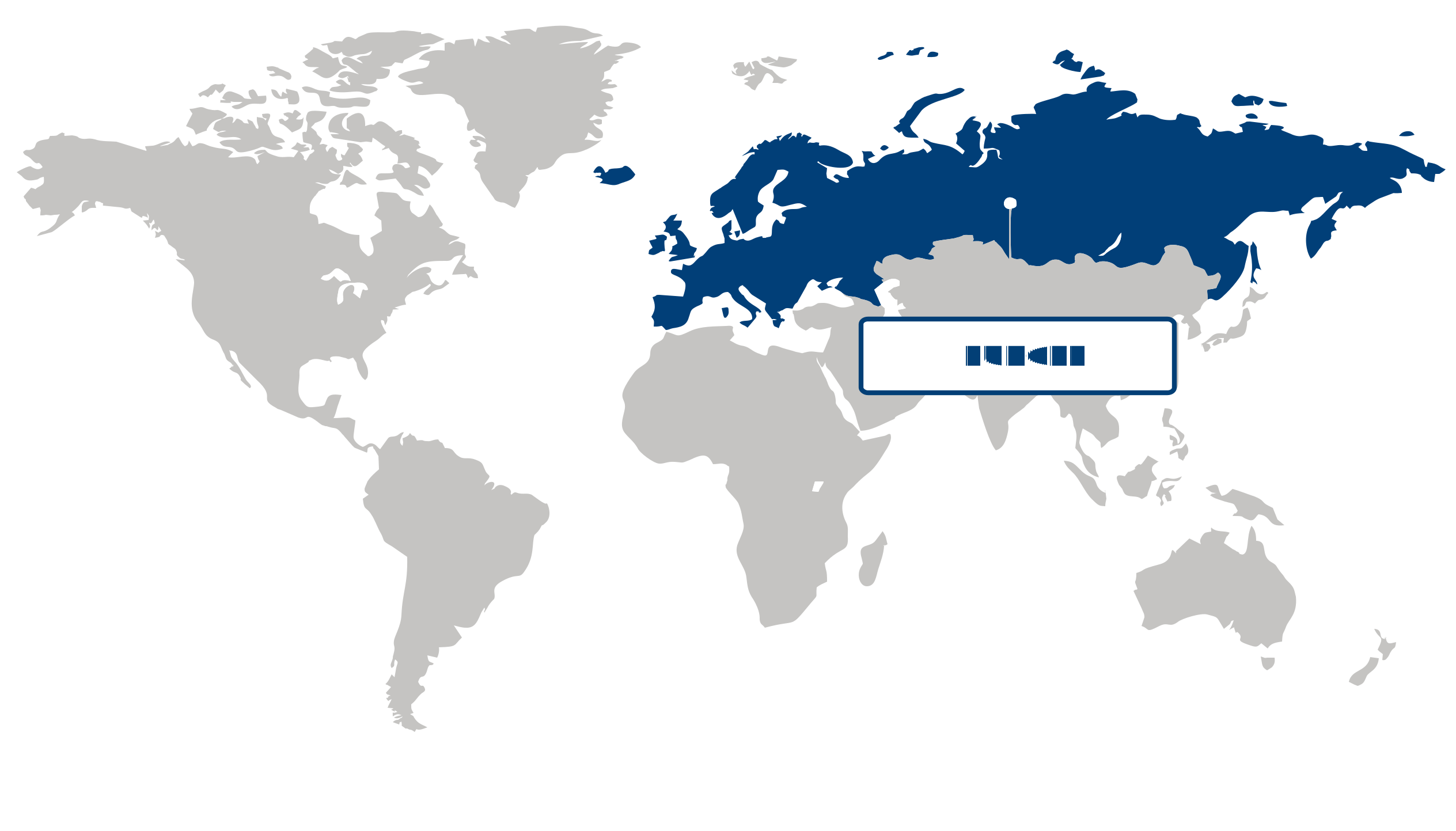
Europe (Largest Region)
In the collagen market, Europe held the largest regional share of 37.46% in 2026, supported by established demand for collagen across nutraceuticals, functional foods, cosmetics, and healthcare applications. The region benefits from strong consumer awareness of protein-based wellness products and growing interest in ingredients associated with healthy aging, skin appearance, joint support, and overall nutritional performance. Mature food, pharmaceutical, and personal care industries also provide a broad application base for collagen ingredients, while stringent quality and safety standards encourage demand for traceable and high-quality products. In addition, expanding premiumization within beauty and wellness products is supporting the incorporation of collagen into differentiated formulations. Well-developed processing capabilities, sophisticated distribution networks, and sustained investment in product innovation further reinforce Europe's position, allowing manufacturers to respond to evolving preferences for clean-label, convenient, and multifunctional collagen-based products.
Asia Pacific (Fastest-Growing Region)
Asia Pacific is positioned as the fastest-growing region, driven by expanding health and wellness awareness, rising disposable incomes, and increasing adoption of functional nutrition and beauty-oriented products. Growing urban populations and changing dietary habits are strengthening demand for convenient sources of protein and specialized nutritional ingredients, while the region's large consumer base creates substantial opportunities for collagen applications in food, beverages, supplements, cosmetics, and personal care. Increasing interest in preventive health and appearance-related wellness is also encouraging consumers to explore collagen-containing products beyond traditional applications. At the same time, the expansion of domestic food processing, nutraceutical, and cosmetic industries is improving regional manufacturing and distribution capabilities. These developments, combined with greater consumer exposure to premium wellness products and ongoing innovation in collagen formulations, are expected to support a strong growth trajectory across Asia Pacific.
| Parameter | North America | Asia Pacific | Europe | Latin America | MEA |
|---|---|---|---|---|---|
| Innovation Hub i Scale Nascent Developing Advanced | |||||
| Cost-Sensitive Region i Scale Low Medium High | |||||
| Regulatory Environment i Scale Restrictive Neutral Supportive | |||||
| Demand Drivers i Scale Weak Moderate Strong | |||||
| Development Stage i Scale Emerging Developing Developed | |||||
| Adoption Rate i Scale Low Medium High | |||||
| New Entrants / Startups i Scale Sparse Moderate Dense | |||||
| Macro Indicators i Scale Weak Stable Strong |
Key Country Insights
Germany 🇩🇪
Quality-Focused ManufacturingGermany emphasizes premium collagen production supported by rigorous quality standards and advanced processing technologies. Companies continue supplying collagen for healthcare, food, and personal care applications while improving manufacturing efficiency and product consistency.
France 🇫🇷
Premium Personal Care ApplicationsFrance emphasizes collagen use in premium cosmetics, dermaceutical products, and specialized nutrition applications. Companies focus on ingredient quality, formulation sophistication, and responsible sourcing to meet evolving customer expectations across personal care and wellness segments.
Italy 🇮🇹
Diversified End-Use PortfolioItaly continues to utilize collagen across food processing, healthcare, nutraceutical, and cosmetic industries. Manufacturers prioritize versatile collagen ingredients that support product innovation while meeting evolving regulatory, quality, and formulation requirements across multiple end-use sectors.
Japan 🇯🇵
Beauty and Wellness DemandJapan continues to expand collagen applications in beauty, functional foods, and health supplements. Manufacturers prioritize highly refined collagen ingredients that align with consumer expectations for premium quality, convenient formulations, and scientifically supported product performance.
South Korea 🇰🇷
Cosmetic Ingredient IntegrationSouth Korea leverages collagen extensively across skincare, cosmetics, and nutritional products supported by continuous formulation innovation. Domestic manufacturers increasingly develop value-added collagen ingredients that enhance product differentiation in competitive consumer markets.
United States 🇺🇸
Functional Ingredient InnovationThe U.S. collagen market is driven by demand across nutraceuticals, food and beverages, cosmetics, and biomedical applications. Manufacturers increasingly develop specialized collagen formulations that address consumer preferences for functionality, traceability, and product quality.
Segment Leadership and Growth Trends
Collagen Market Share (%), by Application, 2026
Go beyond the chart, access full insights & data tables
Request Free Sample ReportApplication Segment Analysis: Food & Beverages (Largest Segment) vs Healthcare (Fastest-Growing Segment)
Food & beverages dominated the collagen market in 2026, accounting for 59.64% share, supported by the expanding incorporation of collagen into functional foods, nutritional products, beverages, and wellness-oriented formulations. Collagen is valued in food and beverage applications for its protein content and association with health and wellness positioning, while its compatibility with a range of product formats supports broad formulation opportunities. Rising consumer interest in functional nutrition and products that combine convenience with perceived wellness benefits is strengthening demand for collagen-based offerings. Growing availability of collagen-infused beverages, snacks, supplements, and other nutritional products is also contributing to the segment's strong market position.
Healthcare is the fastest-growing application segment, reflecting increasing interest in collagen's functional properties across medical and therapeutic applications. Collagen-based materials can support tissue-related applications, wound care, biomaterials, and other healthcare uses where biocompatibility and structural properties are important. Ongoing development of advanced biomaterials and regenerative approaches is expanding the potential role of collagen beyond traditional nutritional applications. As healthcare research increasingly explores naturally derived materials for specialized medical solutions, collagen is gaining relevance in applications requiring supportive biological structures and functional performance.
Product Segment Analysis: Gelatin (Largest Segment) vs Hydrolyzed Collagen (Fastest-Growing Segment)
The gelatin segment led the collagen market in 2026, representing 64.51% share, owing to its established use across food, pharmaceutical, and industrial applications. Gelatin provides useful gelling, stabilizing, thickening, and film-forming properties, making it a versatile ingredient across a wide range of formulations. Its long-standing commercial use, established processing infrastructure, and broad compatibility with food and other consumer applications contribute to its strong market presence. Continued demand for functional ingredients that provide both formulation benefits and protein-related value supports the sustained importance of gelatin within the collagen product landscape.
Hydrolyzed collagen is the fastest-growing product segment as consumers and manufacturers increasingly favor collagen formats that can be incorporated conveniently into nutrition and wellness products. Hydrolysis breaks collagen into smaller peptides, supporting its use in beverages, powders, functional foods, and dietary formulations where ease of incorporation is important. Growing consumer attention toward beauty-from-within concepts, healthy aging, active lifestyles, and protein-focused nutrition is encouraging broader adoption of hydrolyzed collagen. Product innovation across convenient and ready-to-consume formats is further expanding its application potential and strengthening growth prospects.
| Segment | Sub-Segment | Largest Segment | Fastest Growing |
|---|---|---|---|
| Application | Food & Beverages, Healthcare, Cosmetics, Others | Food & Beverages | Healthcare |
| Product | Gelatin, Hydrolyzed Collagen, Native Collagen, Synthetic Collagen, Others | Gelatin | Hydrolyzed Collagen |
| Source | Bovine, Porcine, Poultry, Marine, Others | Bovine | Marine |
Unlock insights tailored to your business with our bespoke market research solutions.
Click to get your customized report now.
Competitive Landscape and Market Positioning
Key companies in the collagen market:
1. GELITA AG (Germany)
2. Rousselot B.V. (Netherlands)
3. Tessenderlo Group NV (Belgium)
4. Nitta Gelatin Inc. (Japan)
5. JBS S.A. (Brazil)
6. Croda International Plc (United Kingdom)
7. Weishardt Holding SA (France)
8. Sterling Biotech Limited (India)
9. Advanced BioMatrix Inc. (United States)
10. Titan Biotech Limited (India)
The collagen market is evolving with rising consumer interest in health, beauty, and nutritional wellness applications. Manufacturers are introducing specialized collagen formulations targeting functional foods, dietary supplements, and cosmetic products to address diverse consumer preferences. Technological improvements in extraction and processing methods are also enhancing product quality and application versatility, strengthening competitive differentiation across the market.
| Company | Market Share | Company Revenue | Revenue CAGR (%) | Product Portfolio | Geographic Presence | Innovation / R&D Focus | Strategic Developments |
|---|---|---|---|---|---|---|---|
| GELITA AG (Germany) | |||||||
| Rousselot B.V. (Netherlands) | |||||||
| Tessenderlo Group NV (Belgium) | |||||||
| Nitta Gelatin Inc. (Japan) | |||||||
| JBS S.A. (Brazil) | |||||||
| Croda International Plc (United Kingdom) | |||||||
| Weishardt Holding SA (France) | |||||||
| Sterling Biotech Limited (India) | |||||||
| Advanced BioMatrix Inc. (United States) | |||||||
| Titan Biotech Limited (India). |
Industry Development/News
| Company Name | Date | Key Development |
|---|---|---|
| Seagarden | May-26 | Seagarden launched Seacoll, a consolidated marine collagen ingredient brand, alongside a refreshed corporate identity. This restructuring aligns the company’s portfolio under a unified brand to enhance market differentiation and competitive positioning as a global supplier within the rapidly expanding collagen nutrition and skincare ingredient sectors. |
| Lonza Capsugel | Apr-26 | Lonza Capsugel introduced the UC-Flex collagen blend, incorporating undenatured type II collagen and calcium carbonate, specifically for pet food applications. The launch addresses the increasing demand for clinically-backed functional ingredients within the companion animal nutrition market, expanding the company’s footprint in specialized pet health. |
| Rousselot | Mar-26 | Rousselot is expanding its Nextida GC collagen peptide platform through targeted intellectual property development and new beverage applications. This initiative reinforces the company’s focus on science-backed, condition-specific peptide solutions, strengthening its competitive advantage and leadership within the functional nutrition and health-oriented beverage markets. |
| L’Oréal | Feb-26 | L’Oréal expanded into the nutricosmetics segment via its Vichy brand with the launch of Vichy Liftactiv Collagen Supplements. Developed with dermatologists and nutritionists, this move signifies a strategic pivot for the company to integrate ingestible beauty solutions alongside its established topically applied dermocosmetics portfolio. |
| Greenvit | Dec-25 | Greenvit acquired Synkol, a specialist in chicken sternal cartilage-derived collagen, to enter the type II collagen market. This acquisition integrates Synkol’s R&D expertise with Greenvit’s existing botanical extraction capabilities, creating a combined platform intended to scale joint and mobility health ingredient offerings across US and global markets. |
| Elasten | Nov-25 | Elasten entered the US market with a science-supported, collagen-based nutricosmetic supplement. The launch aims to capture growing consumer demand for ingestible beauty and anti-aging solutions, positioning the company within the dermatology-aligned wellness segment through a focus on clinical validation of skin structure and appearance improvements. |
| Nextida | May-25 | Darling Ingredients and Tessenderlo Group consolidated their respective collagen and gelatin businesses, Rousselot and PB Leiner, into a new joint venture, Nextida. With Darling holding an 85% stake, the entity aims to capture market share in health and nutrition through a scaled platform projected to generate USD 1.5 billion in annual revenue. |
| Maypharm | Feb-25 | Maypharm launched Skincolla, a recombinant human collagen filler formulated with hyaluronic acid. This development represents a strategic entry into the aesthetic medicine market, targeting demand for non-invasive skin rejuvenation and highlighting the commercialization of bioengineered collagen alternatives in dermatology. |
| Avita Medical | Dec-24 | Avita Medical received FDA 510(k) clearance for Cohealyx, a collagen-based dermal matrix for full-thickness wound healing. The product utilizes collagen to facilitate tissue integration and revascularization, marking a significant advancement in the application of collagen-based materials within the regenerative medicine and clinical wound care segments. |
Customize Your Report
Explore examples of how this report can be tailored to different research needs, including custom segments, additional topics or chapters, and related reports. Click a section of the wheel or its numbered marker to explore the available options.
Collagen Market — Custom Segments
| Segment | Sub-Segment |
|---|---|
| Form | Powder, Liquid, Gel, Sheet & Membrane |
| Manufacturing Process | Acid Extraction, Enzymatic Hydrolysis, Alkaline Extraction, Recombinant Production |
| Buyer Type | Food & Beverage Manufacturers, Pharmaceutical & Medical Device Companies, Cosmetics & Personal Care Manufacturers, Nutraceutical Manufacturers |
Collagen Market — Custom TOC
| Custom Chapter | Custom Details |
|---|---|
| Next-Generation Collagen Application Opportunity Assessment |
|
| Alternative Collagen Source Competitiveness Analysis |
|
| Brand Positioning and Claims Benchmarking |
|
Need a different cut of the data?
Request Custom ResearchWhat is the current revenue of the collagen market?
How is the collagen industry size expected to evolve during the forecast period?
How is consumer focus on skin and joint wellness influencing collagen supplement adoption?
How are functional foods and sustainability trends reshaping collagen product innovation?
Why does Gelatin hold the largest share of the collagen market?
Which application segment is growing the fastest in the collagen market?
Why does Europe hold the largest share in the collagen market?
What factors are accelerating Asia Pacific’s collagen market growth?
Which companies are driving growth in the collagen landscape?
Our Clients
"The report helped us understand emerging consumer trends in our product category. It clarified where to focus innovation for the next product launch."
LyondellBasell
"The regional forecast section was incredibly useful. We were able to identify two new potential partners in Europe thanks to the vendor mapping you included."
SABIC
"We appreciated how actionable the recommendations were. It guided us to improve supply chain resilience."
Olin Corporation
Our Research Team & Methodology
Every Fundamental Business Insights report is built by a dedicated vertical research team, validated through a structured primary-and-secondary methodology, and reviewed for accuracy before it reaches you.
Research Team Overview
Prepared by the Chemicals & Materials Research Team
Delivery
Published
Demand
Available
Support
Trust & Compliance
Research Intelligence
Research Workflow & Quality Assurance
Data Collection
Verified information gathered through primary and secondary research.
Data Triangulation
Cross-validation using multiple independent data sources.
Forecast Modelling
Market estimates developed using historical trends and analytical models.
Analyst Validation
Findings reviewed by domain experts for accuracy and consistency.
Editorial & Quality Review
Final editorial, quality, and compliance checks before publication.
Final Publication
Released after successful completion of the internal review process.
Report Coverage
📊 Market Assessment
- Market Size & Forecast
- Market Segmentation
- Regional Analysis
- Growth Drivers & Challenges
- Market Dynamics
🏢 Competitive Intelligence
- Competitive Landscape
- Company Profiles
- Competitive Benchmarking
- Mergers & Acquisitions
- Market Share Analysis or Key Company Strategies
🔍 Strategic Analysis
- Value Chain Analysis
- Porter's Five Forces
- PESTLE Analysis
- Pricing Trends
- Supply-Demand Analysis
🚀 Future Outlook
- Technology Landscape
- Regulatory Landscape
- Investment & Funding Landscape
- Emerging Opportunities
- Future Market Outlook
Have a question about this report or need a custom scope?
Request Customization