Commercial Drink Mixer Market Size & Forecasts 2026-2035, By Segments (Form, Application, Flavor Profile, Packaging Type), Growth Opportunities, Innovation Landscape, Regulatory Shifts, Strategic Regional Insights (U.S., Japan, China, South Korea, UK, Germany, France), and Competitive Dynamics (Hamilton Beach, Vitamix, Waring, Blendtec, Cuisinart)
Market Size and Growth Outlook
Commercial Drink Mixer Market size is anticipated to rise from USD 3.41 billion in 2025 to USD 6.16 billion by 2035, reflecting a CAGR surpassing 6.1% over the forecast horizon of 2026-2035. The estimated revenue for 2026 is USD 3.6 billion.
Get more details on this report
Request Free Sample ReportCommercial Drink Mixer Market Intelligence Snapshot
Regional Market Dynamics
Segment Momentum
Market Expansion Drivers
Leading Market Participants
Global Market Forecast Snapshot
Market Outlook
Regional and Segment Outlook
Market Growth Drivers and Industry Trends
The rapid growth of commercial foodservice establishments, including restaurants, cafes, and bars, is fundamentally boosting the commercial drink mixer market. With hospitality businesses diversifying their beverage offerings to attract nuanced consumer preferences, the demand for efficient, reliable, and versatile drink mixers has surged. According to the National Restaurant Association, the U.S. foodservice sector has expanded steadily, reflecting global trends favoring out-of-home dining experiences. This surge opens strategic opportunities for manufacturers to tailor mixers that cater to high-volume usage and quick service environments. Both legacy brands and new entrants can leverage this by innovating for durability and customization. The ongoing expansion of this segment underscores a sustained increase in mixer demand aligned with broader foodservice growth.
Escalating Demand for Premium Beverage Appliances
Elevated consumer expectations for quality and craftsmanship are driving the commercial drink mixer market toward premium segments. Leading firms like Hamilton Beach have emphasized sophisticated designs with advanced materials and enhanced performance capabilities to meet growing preferences for high-end appliance solutions, as outlined in their corporate press releases. This trend reflects a broader shift in consumer behavior emphasizing craft beverages and professional-grade equipment in commercial settings. The opportunity lies in developing mixers that combine aesthetic appeal with functional superiority, appealing to upscale venues and specialty chains. The push for premiumization ensures competitive differentiation will center on innovation and brand prestige in forthcoming market developments.
Technological Integration Through Digital Controls
The incorporation of digital controls into commercial drink mixers is revolutionizing the market by enhancing precision, usability, and connectivity. Companies such as Vitamix have led the way by unveiling mixers with programmable settings and touchscreen interfaces, as reported in their latest product launches. This innovation aligns with digital transformation trends prevalent across foodservice technology, enabling operators to streamline operations and maintain consistency. For established firms, this fosters pathways for system integration with broader kitchen automation; for new entrants, it presents avenues to disrupt traditional markets with user-centric designs. Continued adoption of digital features will solidify the market’s transition toward smart, data-enabled beverage preparation solutions.
Industry Restraints:
Stringent Regulatory Compliance and Labeling Requirements
Regulatory complexity significantly constrains the commercial drink mixer market by imposing costly and time-intensive compliance demands. Agencies such as the U.S. Food and Drug Administration (FDA) and the European Food Safety Authority (EFSA) enforce strict ingredient disclosure, allergen labeling, and health claim verifications, delaying product launches and increasing operational burdens. For instance, the FDA’s rigorous scrutiny of additives and labeling accuracy necessitates extensive testing and documentation, elevating entry barriers for smaller players lacking extensive regulatory expertise. Established brands must also navigate evolving global standards to maintain shelf presence across regions. This dynamic compels companies to invest heavily in legal and scientific resources, diverting focus from innovation. Given ongoing regulatory tightening globally, the drink mixer market will likely experience sustained pressure to prioritize compliance, favoring incumbents with robust regulatory infrastructure while constraining agile market entry.
Raw Material Price Volatility and Supply Chain Disruptions
Fluctuating costs of essential raw materials such as citrus extracts, natural flavorings, and sweeteners directly hamper market stability and profit margins. The commercial drink mixer segment is sensitive to agricultural supply shocks exacerbated by climate variability and geopolitical tensions, as highlighted by the United Nations Food and Agriculture Organization (FAO) reports on rising commodity price volatility. The COVID-19 pandemic exposed vulnerabilities in sourcing and logistics, with companies like Keurig Dr Pepper reporting delayed ingredient deliveries and increased input expenses in their quarterly filings. These disruptions challenge manufacturers’ capacity to maintain consistent quality and pricing, affecting both high-volume producers and niche artisanal brands. Market participants must therefore enhance supply chain resilience through diversification and long-term contracts. Continuing global uncertainties suggest a persistent need for strategic sourcing agility, which will remain a critical restraint shaping competitive dynamics in the commercial drink mixer market.
| Growth Driver | Impact on CAGR | Regulatory Influence | Geographic Relevance | Adoption Rate | Impact Timeline |
|---|---|---|---|---|---|
| Growth of commercial foodservice establishments | 1.70% | Short term (≤ 2 yrs) | North America, Europe | Low | Fast |
| Rising demand for premium beverage appliances | 1.60% | Medium term (2–5 yrs) | Asia Pacific, North America | Low | Moderate |
| Integration of digital controls in mixers | 1.30% | Long term (5+ yrs) | Europe, Asia Pacific | Medium | Moderate |
Explore Growth Opportunities
Request Free Sample ReportRegional Demand Dynamics
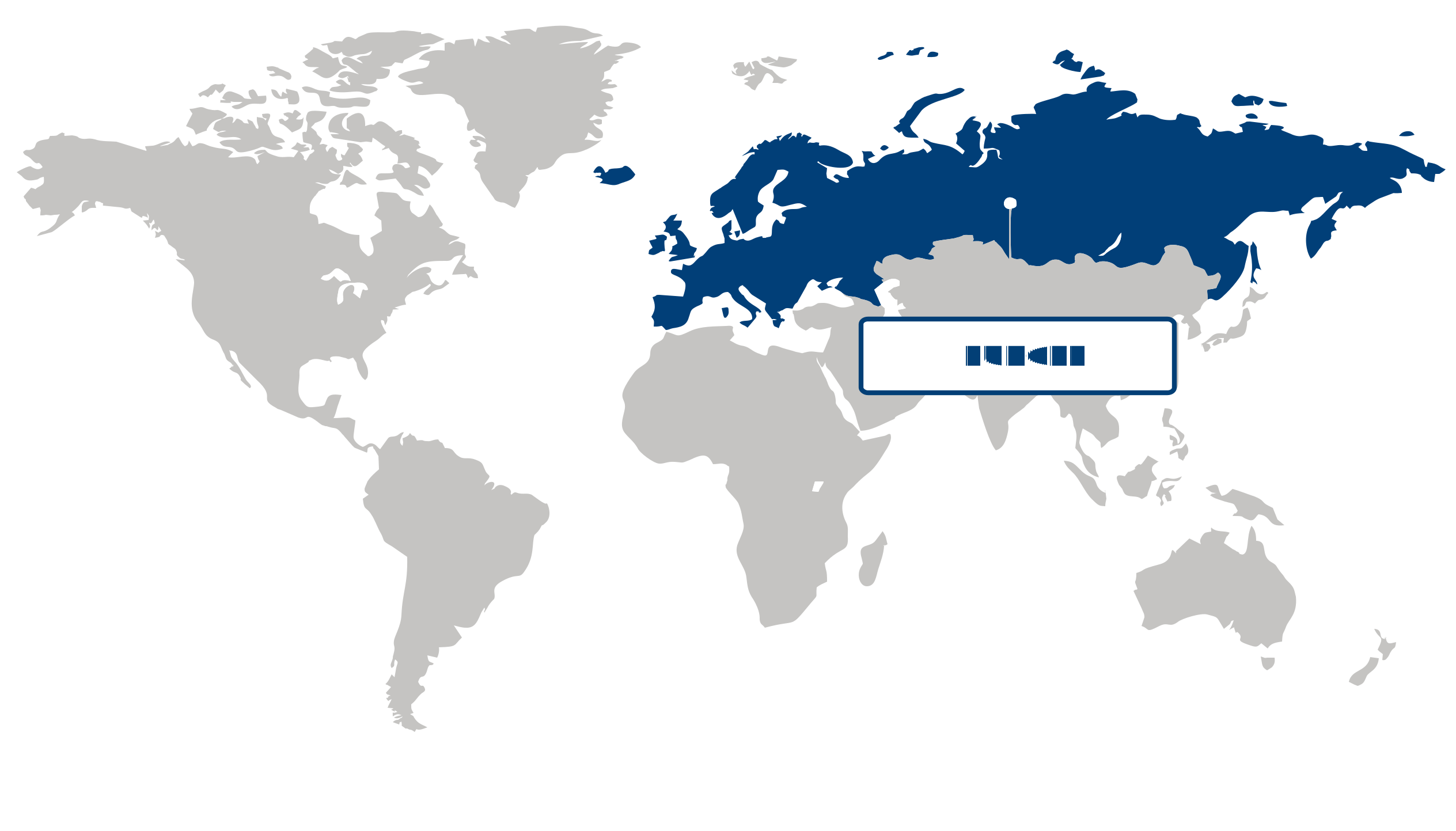
Europe captured more than 37% of the global commercial drink mixer market share in 2025, establishing itself as the largest regional contributor. The region's dominance is anchored in its well-established cocktail culture and a high density of bars and cafes, which stimulate sustained demand. For instance, the European Cocktails Association highlights a steady rise in premium and craft mixers favored by upscale venues, reflecting evolving consumer tastes. Additionally, Europe's robust hospitality sector and increasing consumer spending on experiential dining bolster market growth. Leading cities such as Berlin and Paris exhibit vibrant nightlife that fuels innovation and adoption of novel mixer products. As regulatory frameworks increasingly support sustainable packaging and ingredient sourcing, market players are also enhancing their operational agility. These combined dynamics position Europe as a lucrative arena for commercial drink mixer manufacturers seeking growth through diverse consumer engagement and premiumization strategies.
Germany serves as a crucial market in the European commercial drink mixer market, driven by its strong urban bar scenes and a growing trend toward premium and artisanal mixers. The German Hotel and Restaurant Association (DEHOGA) notes a rising preference for quality and locally sourced ingredients in drink offerings, which encourages manufacturers to innovate and adapt portfolios accordingly. Leading beverage producers like Schweppes GmbH continue investing in product differentiation and distribution channels to meet these localized demands. This consumer sophistication and regulatory emphasis on quality reinforce Germany’s strategic role in sustaining Europe’s market leadership. Similarly, France’s thriving cafe culture, backed by entities such as the French Bartenders’ Association, propels demand for versatile, craft-oriented mixers that align with evolving gourmet preferences. French market trends further consolidate Europe’s position as a nexus for premium mixer products, creating cross-border opportunities for industry growth.
Asia Pacific Market Analysis:
Asia Pacific emerged as the fastest-growing region in the commercial drink mixer market, registering a robust CAGR of 8.8%. This rapid growth is primarily driven by rising disposable incomes and the westernization of lifestyle preferences among the youth, which has fueled increased consumption of mixed beverages in urban centers. As reported by the Asia Pacific Economic Cooperation (APEC), expanding middle-class populations are seeking premium, convenient drink options that align with evolving tastes influenced by global trends. Additionally, the region benefits from strong digital retail penetration and expanding hospitality sectors, further supporting product accessibility and innovation. Government initiatives promoting modern trade infrastructure and food safety standards have enhanced supply chain efficiency, fostering reliable product availability. These dynamics position Asia Pacific as a critical growth hub, presenting significant opportunities for market players aiming to capture rising demand through localized product innovation and targeted marketing strategies.
Japan plays a significant role in the Asia Pacific commercial drink mixer market by combining a sophisticated consumer base with a strong preference for quality and innovation. Japanese consumers, governed by stringent food safety and labeling regulations enforced by the Ministry of Health, Labour and Welfare, show a penchant for premium, artisanal mixers tailored to both traditional and contemporary tastes, as observed in Suntory Beverage & Food Ltd.’s product expansions. The country’s mature retail landscape and growing cocktail culture among younger demographics support sustained demand for versatile mixers. Japan’s operational excellence in manufacturing and supply chain management ensures consistency and product differentiation, reinforcing its status as a test market for new flavor profiles and packaging innovations. These attributes enhance regional growth prospects by setting quality benchmarks and influencing consumer expectations across Asia Pacific.
China’s commercial drink mixer market exemplifies the region’s transformative potential, underpinned by expanding disposable incomes and rapid urbanization that propels lifestyle westernization. According to the Chinese Ministry of Commerce, younger consumers in tier-1 and tier-2 cities demonstrate heightened preference for mixed beverages in on-trade venues, driving demand for convenient and diverse drink mixers. The evolving regulatory environment, including strengthened quality control measures by the China Food and Drug Administration, assures product safety, helping build consumer trust in both domestic and international brands. Local manufacturers are increasingly adopting e-commerce platforms and digital marketing to expand their reach, facilitated by logistics improvements detailed in Alibaba Group’s supply innovations. China’s dynamic market conditions significantly complement Asia Pacific’s growth trajectory, offering expansive consumer bases and scale advantages crucial for sustained regional market leadership.
North America Market Trends:
North America held a commanding share in the commercial drink mixer market, driven largely by dynamic urban consumption patterns and a robust hospitality sector that values high-quality, innovative beverage solutions. The region's prominence is reinforced by evolving preferences toward premium and craft mixers, alongside increasing demand for low-calorie and natural ingredient formulations, as noted by the National Restaurant Association. Additionally, regulatory frameworks encouraging transparency and sustainability initiatives—highlighted through the Environmental Protection Agency’s guidelines on packaging—are shaping product development and supply chain efficiencies. Technological advancements in automated beverage dispensing and digital ordering systems, as implemented by major players like PepsiCo, further enhance operational capabilities. With a resilient economy fostering consistent spending in foodservice and entertainment venues, North America presents significant growth opportunities for commercial drink mixer suppliers seeking to capitalize on evolving consumer experiences and sustainability priorities.
The U.S. serves as the primary growth engine within the North American commercial drink mixer market, underpinned by a mature and diverse consumer base with an appetite for eclectic and health-conscious beverage options. Market dynamics are influenced by legislative push for nutritional labeling, highlighted by the Food and Drug Administration’s recent amendments, which propel manufacturers to innovate transparent and cleaner label mixers. Industry leaders such as Monin and Keurig Dr Pepper have expanded their product portfolios to include organic and reduced-sugar mixers, responding directly to shifting consumer demands documented by the Beverage Marketing Corporation. Furthermore, the U.S. market benefits from a well-established distribution infrastructure and endorsement of sustainable packaging solutions promoted by the Sustainable Packaging Coalition. Strategically, the U.S. holds a pivotal role, anchoring regional growth by driving product innovation and setting regulatory benchmarks that influence market standards across North America.
| Parameter | North America | Asia Pacific | Europe | Latin America | MEA |
|---|---|---|---|---|---|
| Innovation Hub i Scale Nascent Developing Advanced | |||||
| Cost-Sensitive Region i Scale Low Medium High | |||||
| Regulatory Environment i Scale Restrictive Neutral Supportive | |||||
| Demand Drivers i Scale Weak Moderate Strong | |||||
| Development Stage i Scale Emerging Developing Developed | |||||
| Adoption Rate i Scale Low Medium High | |||||
| New Entrants / Startups i Scale Sparse Moderate Dense | |||||
| Macro Indicators i Scale Weak Stable Strong |
Segment Leadership and Growth Trends
Commercial Drink Mixer Market Share (%), by Form, 2026
Go beyond the chart, access full insights & data tables
Request Free Sample ReportThe liquid segment held the largest share in the commercial drink mixer market in 2025, primarily driven by the increasing demand for ready-to-serve and premixed drink solutions in the hospitality sector. Liquids offer convenience and consistent quality, which aligns well with the operational efficiency goals of bars, restaurants, and hotels. Industry leaders like The Coca-Cola Company have emphasized expanding premixed liquid portfolios to meet evolving customer preferences for quick service without sacrificing taste. Additionally, liquid mixers benefit from streamlined supply chains and reduced preparation time, supporting sustainability by minimizing waste. This segment offers strategic opportunities for both incumbents and new entrants to innovate in packaging and flavor variety. Given the ongoing hospitality sector growth and consumer inclination toward convenience, the liquid segment is set to maintain its leading position in the near to medium term.
Analysis by Application
The restaurants segment represented the largest share in the commercial drink mixer market in 2025, fueled by the expansion of foodservice venues and rising consumer expenditure on dining experiences. As eateries diversify their drink offerings, demand for versatile mixers that enhance menu appeal has surged. The National Restaurant Association highlights increased consumer spending on premium and creative beverages, which reinforces the need for reliable commercial mixers. This segment is characterized by competitive dynamics encouraging product differentiation and operational integration, appealing to restaurateurs focused on quality and efficiency. The growing emphasis on experiential dining also opens doors for both established companies and startups to cater to niche palate preferences. Given these ongoing trends, the restaurant segment is poised to sustain its market dominance.
Analysis by Flavor Profile
The sweet flavor profile held the largest share in the commercial drink mixer market in 2025, driven by strong consumer preference for sweeter and familiar tastes in mixed beverages. This segment capitalizes on demographic inclinations and cultural trends favoring approachable flavors, as noted in insights from the International Bartenders Association, which underscore the enduring popularity of sweet cocktails in mainstream and premium venues. Sweet mixers also align with innovations in healthier sweetening alternatives, responding to regulatory and health-conscious demands. These factors contribute to a competitive environment where producers innovate with both traditional and novel sweet profiles. The segment offers robust opportunities for growth through flavor innovations and tailored product launches. Its alignment with evolving consumer preferences ensures continued relevance in the foreseeable future.
| Segment | Sub-Segment | Largest Segment | Fastest Growing |
|---|---|---|---|
| Form | Carbonated, Powdered, Liquid | ||
| Application | Bars and Nightclubs, Restaurants, Hotels, Home Use | ||
| Flavor Profile | Sweet, Sour, Bitter, Umami | ||
| Packaging Type | Cans, Bottles, Pouches, Sachets |
Unlock insights tailored to your business with our bespoke market research solutions.
Click to get your customized report now.
Competitive Landscape and Market Positioning
The competitive landscape is marked by a dynamic interplay of expansion through product innovation and strategic partnerships. Leading players frequently introduce technologically advanced mixers with improved efficiency and user experience, reinforcing differentiation. Collaborations and alliances have enhanced supply chains and market penetration, while targeted acquisitions have bolstered portfolios to include complementary technologies. These moves collectively reinforce their market positions and stimulate innovation cycles, enabling them to respond aptly to evolving consumer demands and competitive pressures. Focused investments in research underline a commitment to sustainability and smart appliance integration, further shaping the competitive environment.
Strategic / Actionable Recommendations for Regional Players
In North America, firms should explore synergies with emerging tech startups to integrate smart features and IoT-enabled functionalities, enhancing product appeal among tech-savvy consumers. Strengthening collaborations with premium beverage brands can stimulate demand within high-end hospitality sectors.
Within the Asia Pacific region, capitalizing on growing urbanization and rising disposable incomes by tailoring offerings to local taste profiles and usage contexts can increase adoption. Partnering with regional distributors will expand reach into rapid-growth markets, complementing innovation with targeted marketing.
European entities might focus on sustainable materials and energy-efficient designs to respond to stringent regulatory frameworks and eco-conscious consumers. Additionally, leveraging heritage craftsmanship and advanced manufacturing techniques can differentiate products in a competitive landscape dominated by innovation and brand legacy.
| Company | Market Share | Company Revenue | Revenue CAGR (%) | Product Portfolio | Geographic Presence | Innovation / R&D Focus | Strategic Developments |
|---|---|---|---|---|---|---|---|
| No companies available. | |||||||
Customize Your Report
Explore examples of how this report can be tailored to different research needs, including custom segments, additional topics or chapters, and related reports. Click a section of the wheel or its numbered marker to explore the available options.
Commercial Drink Mixer Market — Custom Segments
| Segment | Sub-Segment |
|---|---|
| No segment data available. | |
Commercial Drink Mixer Market — Custom TOC
| Custom Chapter | Chapter Details | ||
|---|---|---|---|
| No custom TOC data available. | |||
Need a different cut of the data?
Request Custom ResearchWhat is the anticipated CAGR of the commercial drink mixer industry?
Which part of the world shows the greatest dominance in the commercial drink mixer market?
Where has the commercial drink mixer sector recorded the sharpest year-over-year increase?
Why does liquid sub-segment dominate the form segment of commercial drink mixer sector?
How much is the restaurants segment expected to grow in the commercial drink mixer industry beyond 2025?
What factors give sweet segment a competitive edge in the commercial drink mixer sector?
Which is the largest sub-segment within the packaging type segment for commercial drink mixer industry?
Which organizations are considered leaders in the commercial drink mixer landscape?
Our Clients
"The report provided a thorough look at market trends, technological advancements, and the competitive landscape. The depth of insights was really valuable."
ITC Limited
"We would highly recommend Fundamental Business Insights & Consulting to anyone looking for reliable, detailed, and comprehensive market research in the Food industry."
Tyson Foods
"The clarity and presentation of the information were commendable. The report was delivered timely, which made the overall experience smooth and convenient."
Mondelēz International
Our Research Team & Methodology
Every Fundamental Business Insights report is built by a dedicated vertical research team, validated through a structured primary-and-secondary methodology, and reviewed for accuracy before it reaches you.
Research Team Overview
Prepared by the Food & Beverage Research Team
Delivery
Published
Demand
Available
Support
Trust & Compliance
Research Intelligence
| Source | Reference |
|---|---|
| Food and Agriculture Organization (FAO) | www.fao.org |
| World Health Organization (WHO) | www.who.int |
| U.S. Food & Drug Administration (FDA) | www.fda.gov |
| European Food Safety Authority (EFSA) | www.efsa.europa.eu |
| U.S. Department of Agriculture (USDA) | www.usda.gov |
| Codex Alimentarius Commission | www.fao.org/fao-who-codexalimentarius |
| International Organization for Standardization (ISO) | www.iso.org |
| AOAC INTERNATIONAL | www.aoac.org |
| Institute of Food Technologists (IFT) | www.ift.org |
| International Dairy Foods Association (IDFA) | www.idfa.org |
| International Sweeteners Association (ISA) | www.sweeteners.org |
| International Probiotics Association (IPA) | internationalprobiotics.org |
| Good Food Institute (GFI) | gfi.org |
| American Feed Industry Association (AFIA) | www.afia.org |
| International Feed Industry Federation (IFIF) | ifif.org |
| Specialty Food Association (SFA) | www.specialtyfood.com |
| Brewers Association | www.brewersassociation.org |
| International Bottled Water Association (IBWA) | bottledwater.org |
| International Alliance for Dietary/Food Supplement Associations (IADSA) | www.iadsa.org |
| OECD Agriculture & Food | www.oecd.org/agriculture |
Research Workflow & Quality Assurance
Data Collection
Verified information gathered through primary and secondary research.
Data Triangulation
Cross-validation using multiple independent data sources.
Forecast Modelling
Market estimates developed using historical trends and analytical models.
Analyst Validation
Findings reviewed by domain experts for accuracy and consistency.
Editorial & Quality Review
Final editorial, quality, and compliance checks before publication.
Final Publication
Released after successful completion of the internal review process.
Report Coverage
📊 Market Assessment
- Market Size & Forecast
- Market Segmentation
- Regional Analysis
- Growth Drivers & Challenges
- Market Dynamics
🏢 Competitive Intelligence
- Competitive Landscape
- Company Profiles
- Competitive Benchmarking
- Mergers & Acquisitions
- Market Share Analysis or Key Company Strategies
🔍 Strategic Analysis
- Value Chain Analysis
- Porter's Five Forces
- PESTLE Analysis
- Pricing Trends
- Supply-Demand Analysis
🚀 Future Outlook
- Technology Landscape
- Regulatory Landscape
- Investment & Funding Landscape
- Emerging Opportunities
- Future Market Outlook
Have a question about this report or need a custom scope?
Request Customization