Commercial Paving Slabs Market Size & Forecasts 2026-2035, By Segments (Material, Shape, Application, Surface Type, Color), Growth Opportunities, Innovation Landscape, Regulatory Shifts, Strategic Regional Insights (U.S., Japan, China, South Korea, UK, Germany, France), and Competitive Dynamics (Oldcastle, CRH, LafargeHolcim, HeidelbergCement, Boral)
Market Size and Growth Outlook
Commercial Paving Slabs Market size is estimated to increase from USD 13.92 billion in 2025 to USD 21.21 billion by 2035, supported by a CAGR exceeding 4.3% during 2026-2035. In 2026, revenues are forecast to reach USD 14.44 billion.
Get more details on this report
Request Free Sample ReportCommercial Paving Slabs Market Intelligence Snapshot
Regional Market Dynamics
Segment Momentum
Market Expansion Drivers
Leading Market Participants
Global Market Forecast Snapshot
Market Outlook
Regional and Segment Outlook
Market Growth Drivers and Industry Trends
The accelerating pace of urbanization has significantly boosted demand within the commercial paving slabs market, as cities prioritize upgrading public spaces and transport infrastructure. Governments and municipal bodies, such as the U.S. Department of Transportation and the European Commission’s urban agenda initiatives, are channeling funds toward revitalizing streetscapes and pedestrian zones that require durable, aesthetically versatile paving solutions. This trend aligns with evolving consumer preferences for multi-functional outdoor environments, enhancing commercial real estate attractiveness. Established manufacturers can leverage their scale to meet large infrastructure contracts, while new entrants focusing on niche landscaping applications stand to differentiate through design innovation. The ongoing investment in urban renewal assures a steady pipeline of projects, reinforcing the imperative for both legacy and emerging suppliers to diversify product lines and optimize supply chains to capture this growth.
Replacement and Renovation Projects
A significant driver for the commercial paving slabs market is the widespread replacement and renovation of aging pavements, prompted by infrastructure deterioration and stricter safety regulations enforced by bodies like the American Society for Testing and Materials (ASTM). This maintenance cycle is creating incremental demand as property owners and local governments prioritize durability and compliance over low-cost, short-term solutions. For instance, announcements by major facility management firms emphasize sustainable refurbishment programs integrating premium paving products. Businesses that can offer enhanced longevity and ease of installation are well-positioned to capitalize. This dynamic fosters competitive differentiation based on product quality and service reliability, with new entrants able to exploit technological advances in material science to capture retrofit projects previously served by traditional suppliers.
Innovation in Sustainable and Modular Paving Solutions
Sustainability and modularity innovations are reshaping the competitive landscape of the commercial paving slabs market, driven by tightening environmental standards and growing demand for flexible, resource-efficient infrastructure components. Organizations such as the U.S. Green Building Council and global firms like Eqiom highlight breakthroughs in recycled materials and interlocking designs that reduce installation time and lifecycle costs. These solutions appeal to environmentally conscious developers and public agencies aiming to minimize carbon footprints while optimizing maintenance expenses. The trend opens opportunities for both established producers to rebrand with eco-focused product lines and agile startups specializing in cutting-edge technologies. With regulatory momentum favoring green infrastructure, market players integrating sustainable innovation will gain strategic advantage amid intensifying policy expectations.
Industry Restraints:
Raw Material Price Volatility
Fluctuations in the cost of key inputs such as cement, aggregates, and polymer additives significantly challenge commercial paving slabs manufacturers by increasing production costs unpredictably. This price volatility, driven by global supply-demand imbalances and geopolitical tensions, compels companies to extend lead times or raise prices, adversely affecting project budgets and customer willingness to commit. For example, the U.S. Geological Survey (USGS) has highlighted recent surges in aggregate prices linked to supply chain disruptions and mining restrictions. Established firms face margin pressure, while new entrants struggle to secure stable supply contracts, hindering market penetration. Moving forward, persistent raw material cost uncertainty will induce cautious inventory and pricing strategies, encouraging firms to invest in cost-control innovations or diversify supplier bases to mitigate financial risk.
Stringent Environmental Regulations
Increasingly rigorous environmental standards on runoff management, carbon emissions, and sustainable sourcing impose compliance burdens that slow market growth by elevating development costs and elongating project approval timelines. Regulatory bodies like the European Chemicals Agency (ECHA) enforce strict guidelines for materials used in commercial paving slabs, compelling manufacturers to reformulate products with eco-friendlier compounds that often require costly R&D investments. These compliance complexities disproportionately challenge smaller manufacturers lacking resources to adapt quickly, while larger incumbents must incorporate costly sustainability certifications to maintain market access. Over the medium term, environmental regulations will continue to drive innovation and consolidation, favoring companies that proactively integrate green practices and can demonstrate compliance within evolving regulatory frameworks.
| Growth Driver | Impact on CAGR | Regulatory Influence | Geographic Relevance | Adoption Rate | Impact Timeline |
|---|---|---|---|---|---|
| Urban infrastructure and landscaping growth | 1.80% | Short term (≤ 2 yrs) | Asia Pacific, North America | Medium | Fast |
| Replacement and renovation projects | 1.30% | Medium term (2–5 yrs) | Europe, North America | Low | Moderate |
| Innovation in sustainable and modular paving solutions | 1.20% | Long term (5+ yrs) | Europe, Asia Pacific | High | Slow |
Explore Growth Opportunities
Request Free Sample ReportRegional Demand Dynamics
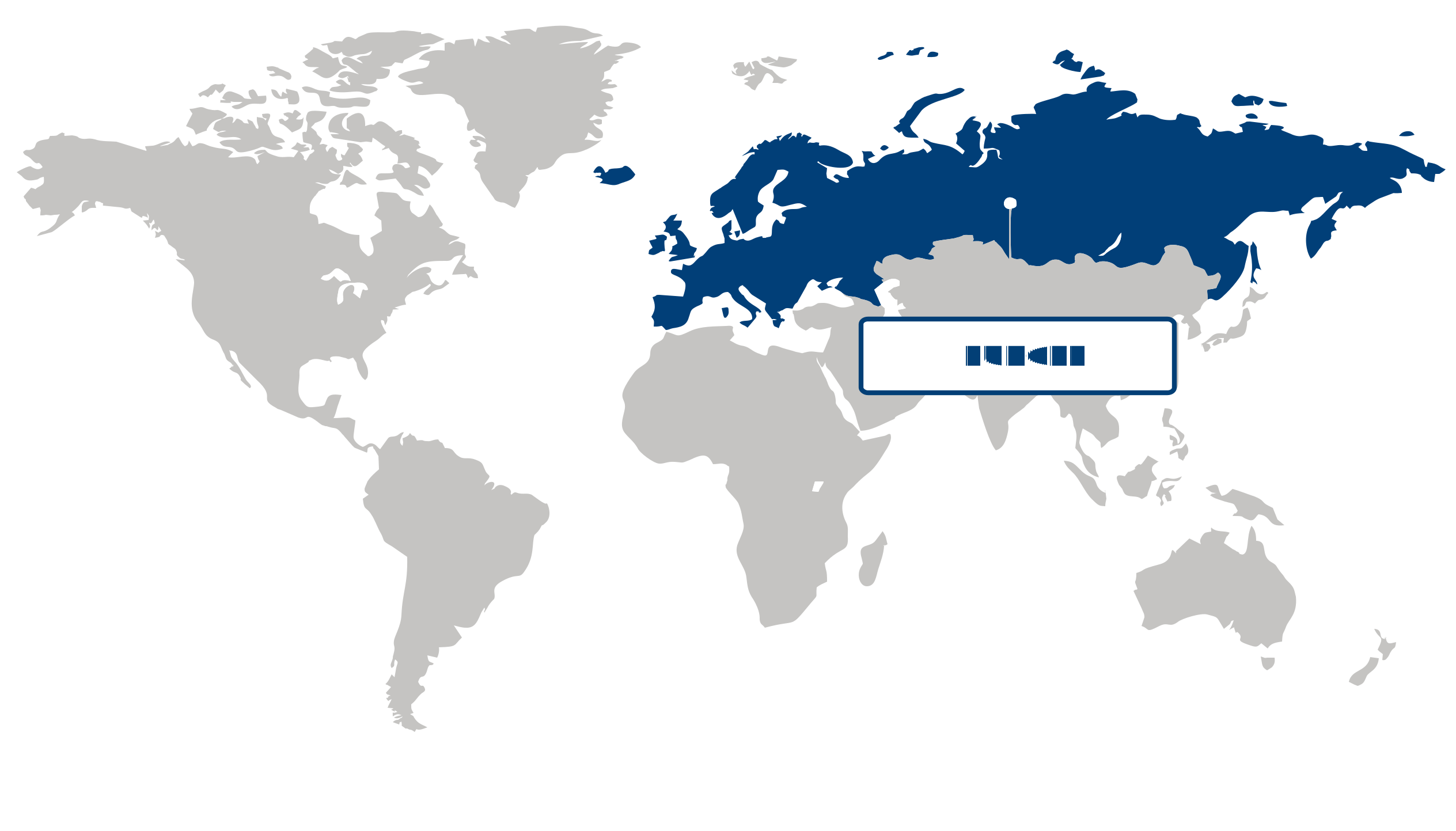
Europe captured over 38% of the global commercial paving slabs market in 2025, establishing itself as the largest regional player. This leadership stems primarily from extensive urban redevelopment, public-infrastructure upgrades, and flourishing commercial landscaping activities across major cities. European governments, including the European Commission, are intensifying investments in sustainable urban spaces and smart city projects, driving demand for durable and eco-friendly paving solutions. Additionally, the region's focus on stringent environmental standards and circular economy principles encourages innovation within paving slab materials and technologies, further strengthening supply chains and competitive positioning. Companies like Wienerberger and LafargeHolcim are expanding their commercial paving portfolio, reflecting the integration of sustainability in product development. Europe's resilient economic environment and regulatory alignment favor continued growth, making it an attractive arena for investors seeking innovation-led expansion in commercial paving slabs.
Germany anchors the European commercial paving slabs market, propelled by robust infrastructure modernization and government stimulus programs targeting urban beautification and transport networking. The German Federal Ministry of Transport and Digital Infrastructure’s investments in road and pedestrian pathway renovations underscore rising demand for quality paving solutions. Notably, HeidelbergCement's recent expansion in high-performance slab production exemplifies local innovation responding to regulatory compliance and climate resilience needs. Germany’s strategic emphasis on sustainability and industrial innovation positions it as a critical growth driver within Europe, reinforcing the region's overall market dominance.
France plays a pivotal role in the European commercial paving slabs market through its vigorous urban renewal projects and emphasis on public space enhancement. The French Agency for Ecological Transition (ADEME) actively promotes sustainable construction materials, encouraging the adoption of permeable and recycled paving slabs in commercial zones. Companies such as Saint-Gobain leverage these incentives by introducing advanced, environmentally friendly paving products tailored to France’s ambitious climate targets. This proactive regulatory and market environment not only accelerates demand but also supports Europe's competitive edge, integrating French innovations into regional growth strategies.
Asia Pacific Market Analysis:
Asia Pacific emerged as the fastest-growing region in the commercial paving slabs market, registering a robust CAGR of 5.6%. This dynamic growth is driven by rapid urbanization, smart-city initiatives, and an expanding commercial construction sector across the region. Governments in countries like China and Japan are investing heavily in developing sustainable urban infrastructure, integrating advanced materials in public spaces to enhance durability and aesthetic appeal. For instance, China's Ministry of Housing and Urban-Rural Development has launched multiple city-level regeneration projects emphasizing eco-friendly and high-performance paving solutions. Similarly, Japan’s focus on smart-city deployments, incorporating intelligent surface materials for pedestrian zones and commercial hubs, underscores rising demand. These trends reflect an evolving preference for innovative, weather-resistant paving slabs that align with environmental and technological priorities. Asia Pacific’s blend of demographic shifts, policy-driven infrastructure investments, and advanced manufacturing capabilities positions it as a key arena for commercial paving slab advancements in coming years.
Japan plays a pivotal role in Asia Pacific’s commercial paving slabs market by spearheading smart-city development projects that emphasize the integration of technology with urban infrastructure. The adoption of automated and sensor-embedded paving slabs enhances pedestrian safety and infrastructure monitoring, as exemplified by Miyagi Prefecture’s recent rollout of adaptive lighting paving slabs funded by Japan’s Ministry of Land, Infrastructure, Transport and Tourism. Japanese consumers and urban planners increasingly prioritize sustainable infrastructure, driving manufacturers to innovate in materials and design, reinforcing Japan’s position as a leader in premium commercial paving solutions within the region.
China’s expansive urbanization and commercial construction boom underpin its dominant stature in the Asia Pacific market. The government’s commitment to ambitious city expansion programs, such as the Greater Bay Area development plan, accelerates demand for versatile and cost-effective paving slabs suitable for large-scale commercial projects. Companies like China National Building Material Group Corporation are advancing production capacity and material technology to meet the scale and quality expectations of these developments. China’s competitive landscape, combined with efficient logistics networks and local raw material availability, strengthens its ability to support rapid market growth and innovation in commercial paving slabs. Together, Japan and China’s distinct but complementary market drivers sustain Asia Pacific’s leading edge in commercial paving slabs, offering significant investor opportunities.
North America Market Trends:
North America held a commanding share in the commercial paving slabs market, driven by a robust construction sector and increasing urban redevelopment initiatives. Demand has shifted towards durable and aesthetically versatile materials, reflecting consumer preference for high-quality urban infrastructure and commercial landscapes. Spending patterns indicate rising investments in commercial real estate, supported by regulatory emphasis on sustainable construction practices, particularly in states like California and New York, as outlined by the U.S. Green Building Council. Technological advances in manufacturing and logistics have reduced lead times and enhanced product customization, reinforcing North America’s competitive edge. Notably, companies such as Oldcastle Infrastructure have expanded their operations with eco-friendly product lines, responding to tightening environmental standards. Looking ahead, the region’s emphasis on smart city projects and climate-adaptive infrastructures, supported by federal and municipal funding mechanisms, presents significant opportunities for growth and innovation in commercial paving slabs.
The U.S. plays a pivotal role in the commercial paving slabs market, propelled by rapid urbanization and extensive infrastructure upgrades. The country’s focus on green building certifications, highlighted by the U.S. Green Building Council’s LEED framework, is shaping demand towards sustainable and recycled material-based paving solutions. Additionally, federal infrastructure investment plans, such as the Infrastructure Investment and Jobs Act, are catalyzing procurement in metropolitan and suburban commercial projects. Manufacturers like Unilock Americas have announced strategic expansion of production facilities to meet surging demand with advanced, permeable paving options. This environment of regulatory support and technological integration positions the U.S. as a key driver of innovation and scale, with ripple effects enhancing the broader North American commercial paving slabs market landscape.
| Parameter | North America | Asia Pacific | Europe | Latin America | MEA |
|---|---|---|---|---|---|
| Innovation Hub i Scale Nascent Developing Advanced | |||||
| Cost-Sensitive Region i Scale Low Medium High | |||||
| Regulatory Environment i Scale Restrictive Neutral Supportive | |||||
| Demand Drivers i Scale Weak Moderate Strong | |||||
| Development Stage i Scale Emerging Developing Developed | |||||
| Adoption Rate i Scale Low Medium High | |||||
| New Entrants / Startups i Scale Sparse Moderate Dense | |||||
| Macro Indicators i Scale Weak Stable Strong |
Segment Leadership and Growth Trends
Commercial Paving Slabs Market Share (%), by Material, 2026
Go beyond the chart, access full insights & data tables
Request Free Sample ReportConcrete held largest share in the commercial paving slabs market in 2025, driven by its durability, cost-effectiveness, and widespread adoption in commercial projects. The preference for long-lasting materials that balance performance and budget constraints has fortified concrete's lead, supported by the U.S. Concrete Association’s advocacy of sustainable and resilient infrastructure materials. Increasing emphasis on environmental certifications and lifecycle cost benefits further aligns with shifting customer priorities toward sustainability. Additionally, supply chain efficiencies and local production facilities reduce lead times, enhancing competitive positioning for established and emerging manufacturers. Concrete’s versatility in accommodating various architectural and urban planning requirements sustains its strategic value, ensuring its continued dominance as infrastructure modernization remains a policy focus for governments worldwide.
Analysis by Shape
Rectangle represented largest share in the commercial paving slabs market due to superior design flexibility and simplified installation processes in 2025. This segment’s leadership stems from the compatibility of rectangular slabs with modular construction practices and mechanized laying technologies, as noted in technical publications by the National Concrete Pavement Technology Center. The shape supports efficient space utilization and seamless integration into contemporary urban and commercial landscapes, echoing growing demands for aesthetic yet functional paving solutions. Developers and contractors benefit from reduced labor costs and accelerated project timelines, creating attractive entry points for innovative players optimizing installation methods. Given ongoing urban expansion and infrastructure upgrades, rectangular slabs are expected to maintain relevance through their alignment with standardized construction workflows and evolving architectural trends.
Analysis by Application
Public spaces represented largest share in the commercial paving slabs market, fueled by rising investments in urban infrastructure and public space enhancement. Municipal governments and urban planners increasingly prioritize pedestrian safety and aesthetic improvements, endorsed by initiatives like those from the American Society of Landscape Architects (ASLA), promoting durable, inclusive, and sustainable surface materials. The demand is further shaped by demographic shifts favoring outdoor recreational areas and community hubs that use paving slabs with high performance and low maintenance attributes. This trend creates substantial opportunities for firms skilled in delivering customizable, eco-friendly solutions that meet rigorous regulatory standards. Continued public funding and global mandates on improving urban livability ensure the ongoing importance of paving slabs in public spaces well into the near future.
| Segment | Sub-Segment | Largest Segment | Fastest Growing |
|---|---|---|---|
| Material | Concrete, Clay, Stone, Porcelain, Plastic | ||
| Shape | Square, Rectangle, Hexagon, Circle, Triangle | ||
| Application | Walkways, Patios, Driveways, Commercial Buildings, Public Spaces | ||
| Surface Type | Smooth, Textured, Stamped, Exposed Aggregate, Polished | ||
| Color | Gray, Black, Red, Beige, Brown |
Unlock insights tailored to your business with our bespoke market research solutions.
Click to get your customized report now.
Competitive Landscape and Market Positioning
The competitive landscape is characterized by strategic moves including alliances enhancing regional footprints, and ongoing investments in material innovation to improve durability and sustainability. Leading players have introduced advanced slab compositions optimized for load-bearing and environmental compliance, reflecting sharp responsiveness to urban infrastructure trends. Additionally, consolidation through selective acquisitions strengthens capacity and broadens product ranges. This dynamic nurtures an environment where innovation meets market needs while augmenting operational synergies, thus enhancing their positioning amidst evolving commercial construction requirements.
Strategic / Actionable Recommendations for Regional Players
In North America, forging integrated supply partnerships and embracing cutting-edge material technologies can foster resilience amid rising infrastructure modernization. Prioritizing collaborations to optimize logistics and local material sourcing would support faster market penetration and customer responsiveness.
Asia Pacific players should concentrate on scalable innovations addressing rapid urbanization and sustainability benchmarks. Targeting emerging sub-segments like commercial green spaces and transit-oriented development spaces could unlock growth while enhancing environmental adherence.
Europe’s commercial paving slabs market demands leveraging circular economy solutions alongside alliances with infrastructure developers. Advancing eco-efficient slab alternatives together with service diversification can reinforce competitive differentiation and appeal to increasingly sustainability-conscious clients.
| Company | Market Share | Company Revenue | Revenue CAGR (%) | Product Portfolio | Geographic Presence | Innovation / R&D Focus | Strategic Developments |
|---|---|---|---|---|---|---|---|
| No companies available. | |||||||
Customize Your Report
Explore examples of how this report can be tailored to different research needs, including custom segments, additional topics or chapters, and related reports. Click a section of the wheel or its numbered marker to explore the available options.
Commercial Paving Slabs Market — Custom Segments
| Segment | Sub-Segment |
|---|---|
| No segment data available. | |
Commercial Paving Slabs Market — Custom TOC
| Custom Chapter | Chapter Details | ||
|---|---|---|---|
| No custom TOC data available. | |||
Need a different cut of the data?
Request Custom ResearchWhat is the expected industry size of commercial paving slabs by 2035?
Which territory demonstrates the strongest presence in the commercial paving slabs market?
In which region is the commercial paving slabs sector expanding most rapidly?
Why is the concrete segment leading in the commercial paving slabs industry?
Why does rectangle sub-segment dominate the shape segment of commercial paving slabs sector?
How much is the public spaces segment expected to grow in the commercial paving slabs industry beyond 2025?
What factors give textured segment a competitive edge in the commercial paving slabs sector?
Which is the largest sub-segment within the color segment for commercial paving slabs industry?
What are the key competitors in the commercial paving slabs landscape?
Our Clients
"Your insights on workforce structures were spot-on. The analysis on mid-to-senior level roles validated some of our hiring decisions and highlighted gaps."
Ateliers De France
"The report gave us insights on competitors in the market. It helped our team refine our bidding strategy for upcoming contracts."
Clark Construction
"The reports provided a deep dive into market trends, and competitive landscape. The strategic insights and recommendations have been very helpful."
Rudolph and Sletten
Our Research Team & Methodology
Every Fundamental Business Insights report is built by a dedicated vertical research team, validated through a structured primary-and-secondary methodology, and reviewed for accuracy before it reaches you.
Research Team Overview
Prepared by the Construction & Manufacturing Research Team
Delivery
Published
Demand
Available
Support
Trust & Compliance
Research Intelligence
| Source | Reference |
|---|---|
| International Organization for Standardization (ISO) | www.iso.org |
| ASTM International | www.astm.org |
| National Institute of Standards and Technology (NIST) | www.nist.gov |
| International Code Council (ICC) | www.iccsafe.org |
| American Concrete Institute (ACI) | www.concrete.org |
| American Institute of Steel Construction (AISC) | www.aisc.org |
| Construction Industry Institute (CII) | www.construction-institute.org |
| Associated General Contractors of America (AGC) | www.agc.org |
| Association of Equipment Manufacturers (AEM) | www.aem.org |
| Building Owners and Managers Association (BOMA) | www.boma.org |
| American Society of Civil Engineers (ASCE) | www.asce.org |
| National Ready Mixed Concrete Association (NRMCA) | www.nrmca.org |
| International Facility Management Association (IFMA) | www.ifma.org |
| World Green Building Council (WorldGBC) | worldgbc.org |
| International Federation of Consulting Engineers (FIDIC) | fidic.org |
| International Labour Organization (ILO) | www.ilo.org |
| American Society of Mechanical Engineers (ASME) | www.asme.org |
| Society of Manufacturing Engineers (SME) | www.sme.org |
| National Association of Home Builders (NAHB) | www.nahb.org |
| European Construction Industry Federation (FIEC) | www.fiec.eu |
Research Workflow & Quality Assurance
Data Collection
Verified information gathered through primary and secondary research.
Data Triangulation
Cross-validation using multiple independent data sources.
Forecast Modelling
Market estimates developed using historical trends and analytical models.
Analyst Validation
Findings reviewed by domain experts for accuracy and consistency.
Editorial & Quality Review
Final editorial, quality, and compliance checks before publication.
Final Publication
Released after successful completion of the internal review process.
Report Coverage
📊 Market Assessment
- Market Size & Forecast
- Market Segmentation
- Regional Analysis
- Growth Drivers & Challenges
- Market Dynamics
🏢 Competitive Intelligence
- Competitive Landscape
- Company Profiles
- Competitive Benchmarking
- Mergers & Acquisitions
- Market Share Analysis or Key Company Strategies
🔍 Strategic Analysis
- Value Chain Analysis
- Porter's Five Forces
- PESTLE Analysis
- Pricing Trends
- Supply-Demand Analysis
🚀 Future Outlook
- Technology Landscape
- Regulatory Landscape
- Investment & Funding Landscape
- Emerging Opportunities
- Future Market Outlook
Have a question about this report or need a custom scope?
Request Customization