Compostable & Biodegradable Refuse Bags Market Size & Growth Forecast 2027–2036, By Segments (Application, Material, Capacity), Regional Demand Trends (North America, Asia Pacific, Europe), Key Country Insights (U.S., Japan, South Korea, Germany, France, Italy), and Competitive Landscape
Jump to content
Market Size and Growth Outlook
Compostable & Biodegradable Refuse Bags Market size was assessed at USD 453.5 million in 2026 and is poised to grow at a 7.03% CAGR between 2027 and 2036, crossing USD 894.61 million by 2036. The industry revenue for 2027 is estimated at USD 480.35 million.
Get more details on this report
Request Free Sample ReportCompostable & Biodegradable Refuse Bags Market Intelligence Snapshot
Regional Market Dynamics
- Europe held a 45.62% market share in 2026, supported by strong regulatory compliance, widespread municipal and commercial adoption, and a mature waste-management ecosystem.
- North America is projected to grow at an 8.48% CAGR as households, institutions, and food-service operators increasingly adopt sustainable refuse bags aligned with organics collection and waste-diversion practices.
Segment Momentum
- Retail & Consumer accounted for 49.61% of the market in 2026, supported by frequent household purchases, broad retail availability, and growing consumer demand for environmentally responsible waste-disposal products.
- Institutional demand is growing fastest as commercial facilities, healthcare, hospitality, and educational organizations increasingly adopt compostable refuse bags through large-scale procurement and sustainability initiatives.
Market Expansion Drivers
- Regulatory bans on single-use plastics accelerating shift toward compostable refuse bag adoption.
- Rising environmental awareness driving consumer preference for biodegradable waste disposal solutions.
- Growth of municipal waste management modernization programs boosting sustainable bag deployment.
Leading Market Participants
- Top companies in the compostable & biodegradable refuse bags market include Mondi plc (United Kingdom), Sphere Group Holdings, Inc. (United States), BioBag International AS (Norway), Vegware Global Ltd. (United Kingdom), Clondalkin Group Holdings B.V. (Netherlands), Cedo Ltd. (United Kingdom), Plastiroll Oy Ltd (Finland), The Biodegradable Bag Company Ltd (United Kingdom), TERDEX GmbH (Germany), Polybags Ltd. (United Kingdom).
Global Market Forecast Snapshot
Market Outlook
- 2026 Market Size: USD 453.5 million
- 2027 Estimated Market Size: USD 480.35 million.
- Projected Market Size: USD 894.61 million by 2036
- Growth Forecast: 7.03% CAGR (2027-2036)
Regional and Segment Outlook
- Leading Regional Market: Europe
- High-Growth Regional Hub: North America
- Core Revenue Segment: Retail & Consumer (Application) | Polylactic Acid (PLA) (Material) | 30 to 40 Gallons (Capacity)
- Emerging Opportunity Segment: Institutional (Application) | Polylactic Acid (PLA) (Material) | Above 55 Gallons (Capacity)
Market Growth Drivers and Industry Trends
Regulatory bans on single-use plastics accelerating shift toward compostable refuse bag adoption
Restrictions on conventional single-use plastic products are encouraging the compostable & biodegradable refuse bags market as households, businesses, and waste-management operators seek compliant alternatives. Refuse bags are widely used in everyday waste collection, making them an important application affected by policies aimed at reducing persistent plastic consumption. Compostable and biodegradable formats can provide an alternative for suitable waste streams while helping users adapt to evolving environmental requirements, particularly where local regulations place greater emphasis on reducing conventional plastic bag usage.
Rising environmental awareness driving consumer preference for biodegradable waste disposal solutions
Growing awareness of plastic pollution and waste-related environmental impacts is influencing purchasing behavior within the compostable & biodegradable refuse bags market. Consumers are increasingly interested in waste disposal products that are perceived to have a lower environmental burden than conventional plastic alternatives, particularly when the bags are used alongside appropriate organic waste collection systems. This preference is encouraging retailers and suppliers to expand sustainable bag offerings, while clearer consumer attention to material composition and disposal practices is increasing interest in biodegradable and compostable waste collection solutions.
Growth of municipal waste management modernization programs boosting sustainable bag deployment
Modernization of municipal waste management systems is creating additional opportunities for the compostable & biodegradable refuse bags market as local authorities improve waste segregation, collection, and processing practices. Programs that establish separate organic waste streams can increase the suitability of compostable bags for collecting food scraps and other compostable materials, provided the bags meet applicable processing requirements. Improved municipal collection frameworks can also make sustainable refuse bags more practical for households and institutions by connecting product use with organized waste treatment and disposal infrastructure.
| Growth Driver | Impact on CAGR | Regulatory Influence | Geographic Relevance | Adoption Rate | Impact Timeline |
|---|---|---|---|---|---|
| Regulatory bans on single-use plastics accelerating shift toward compostable refuse bag adoption | 2.30% | High | Europe, North America | High | Near Term |
| Rising environmental awareness driving consumer preference for biodegradable waste disposal solutions | 2.00% | High | Global | High | Near Term |
| Growth of municipal waste management modernization programs boosting sustainable bag deployment | 1.70% | Moderate | Asia Pacific, Europe | Medium | Mid Term |
Unlock insights tailored to your business with our bespoke market research solutions.
Click to get your customized report now.
Regional Demand Dynamics
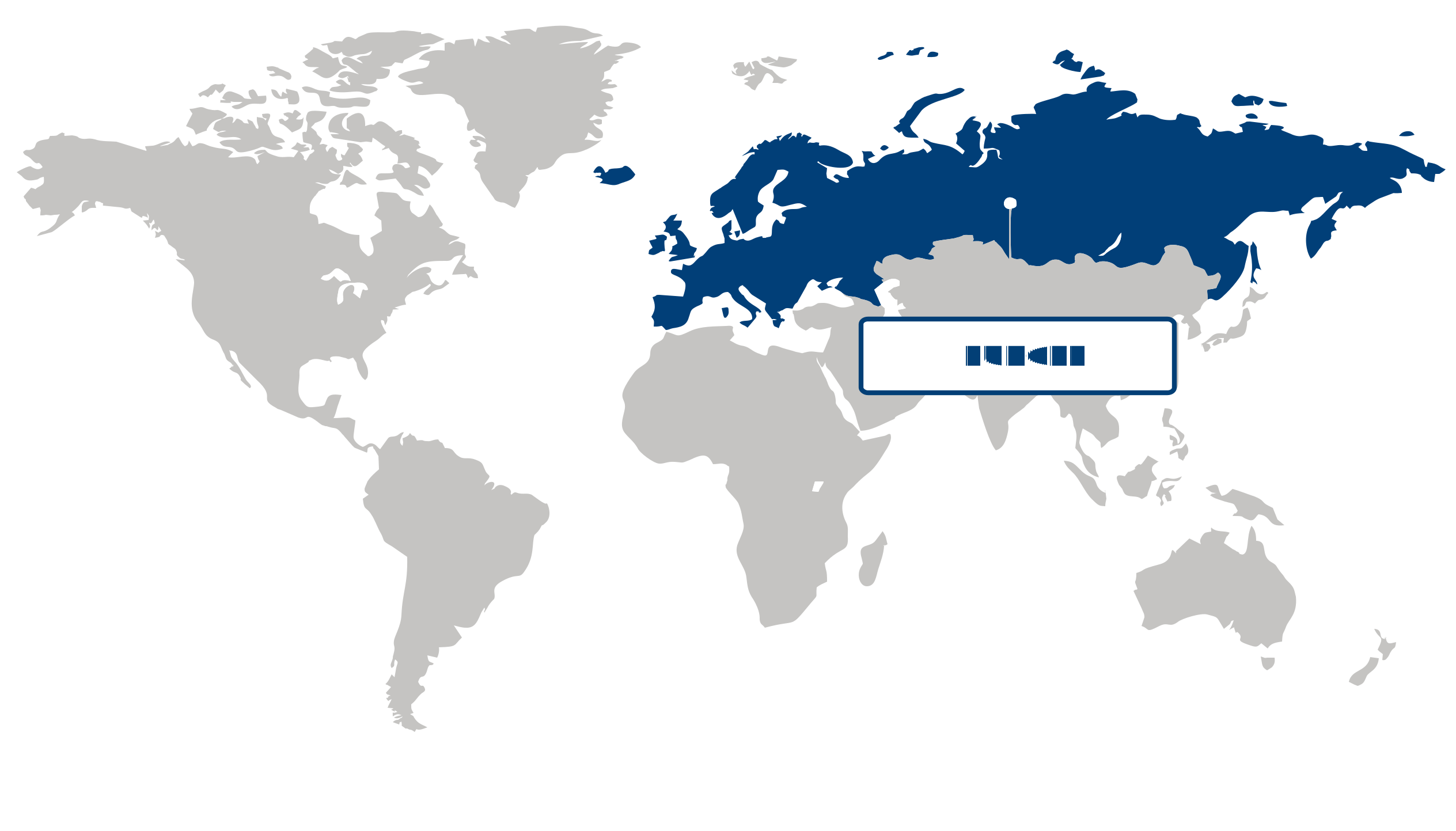
Europe (Largest Region)
Europe accounted for the largest share of the compostable & biodegradable refuse bags market at 45.62% in 2026, reflecting strong environmental regulations, established waste-separation practices, and widespread consumer acceptance of sustainable household and commercial products. Policies aimed at reducing plastic waste are encouraging municipalities, businesses, and households to transition toward environmentally preferable refuse bags. Increasing emphasis on organic waste collection and compatibility with composting systems is also supporting demand, while innovation in material performance and bag durability is improving the practicality of biodegradable alternatives.
North America (Fastest-Growing Region)
North America represents the fastest-growing regional market as businesses, consumers, and local waste-management systems increasingly seek alternatives to conventional plastic refuse bags. Rising awareness of plastic pollution, expanding sustainability initiatives, and growing adoption of composting and organic waste collection are creating favorable demand conditions. Product development focused on strength, leak resistance, and compostability is also helping broaden applications across households, foodservice operations, and commercial waste-management activities.
| Parameter | North America | Asia Pacific | Europe | Latin America | MEA |
|---|---|---|---|---|---|
| Innovation HubiScaleNascentDeveloping Advanced | |||||
| Cost-Sensitive RegioniScaleLowMedium High | |||||
| Regulatory EnvironmentiScaleRestrictiveNeutral Supportive | |||||
| Demand DriversiScaleWeakModerate Strong | |||||
| Development StageiScaleEmergingDeveloping Developed | |||||
| Adoption RateiScaleLowMedium High | |||||
| New Entrants / StartupsiScaleSparseModerate Dense | |||||
| Macro IndicatorsiScaleWeakStable Strong |
Key Country Insights
Germany 🇩🇪
Circular Packaging StandardsGermany prioritizes compostable and biodegradable refuse bags that align with circular economy objectives and strict waste separation practices. Manufacturers focus on certified materials, improved performance, and compliance with evolving environmental packaging requirements.
France 🇫🇷
Sustainable Consumer PackagingFrance supports wider adoption of compostable and biodegradable refuse bags through sustainability-focused retail offerings and environmental policy initiatives. Producers prioritize bio-based materials, certified compostability, and product differentiation for household and commercial users.
Italy 🇮🇹
Bio-Resin Manufacturing BaseItaly benefits from established bio-based material capabilities that support domestic production of compostable and biodegradable refuse bags. Italian manufacturers invest in material quality, processing efficiency, and products tailored to organic waste collection requirements.
Japan 🇯🇵
Urban Waste SolutionsJapan advances compostable and biodegradable refuse bags designed for efficient household and commercial waste management in densely populated cities. Local demand encourages compact designs, odor control features, and reliable material performance across disposal applications.
South Korea 🇰🇷
Eco-Material AdoptionSouth Korea is expanding the use of compostable and biodegradable refuse bags as businesses seek practical alternatives to conventional plastics. Suppliers emphasize material innovation, regulatory alignment, and suitability for food waste and municipal collection programs.
United States 🇺🇸
Retail Sustainability FocusThe U.S. market emphasizes compostable and biodegradable refuse bags for retail, municipal, and food service applications as organizations respond to packaging sustainability commitments. Product innovation centers on durability, certified compostability, and compatibility with existing waste collection systems.
Compostable & Biodegradable Refuse Bags Market Share (%), by Application, 2026
Go beyond the chart, access full insights & data tables
Request Free Sample ReportApplication Segment Analysis: Retail & Consumer (Largest Segment) vs Institutional (Fastest-Growing Segment)
Retail & consumer applications accounted for the largest share of 49.61% in the compostable & biodegradable refuse bags market in 2026, supported by widespread household waste disposal needs and increasing consumer awareness of environmentally preferable alternatives to conventional refuse bags. These products offer a familiar format while addressing growing concerns about plastic waste and disposal impacts. Rising sustainability awareness among households and greater availability of biodegradable and compostable options through consumer-oriented sales channels are supporting continued demand in this segment.
Institutional applications are growing at the fastest pace as organizations increasingly incorporate environmentally responsible waste-management practices into their facilities and procurement policies. Schools, offices, healthcare facilities, hospitality establishments, and other institutions generate recurring waste volumes and therefore represent important users of refuse bags. Growing emphasis on sustainable operations, responsible procurement, and reduction of conventional plastic usage is encouraging institutional buyers to consider compostable and biodegradable alternatives.
Material Segment Analysis: Polylactic Acid (PLA) (Largest & Fastest-Growing Segment)
Polylactic acid (PLA) held the largest share of 67.5% in the compostable & biodegradable refuse bags market in 2026 while also representing the fastest-growing material segment, reflecting its strong suitability for sustainability-focused refuse bag applications. PLA is derived from renewable feedstocks and can support the development of alternatives to conventional petroleum-based plastics. Increasing demand for materials with compostable or biodegradable characteristics, together with efforts to reduce the environmental burden associated with plastic waste, is strengthening the role of PLA in refuse bag production. Its established relevance to sustainable packaging and disposable products further supports continued adoption in waste-management applications.
| Segment | Sub-Segment | Largest Segment | Fastest Growing |
|---|---|---|---|
| Application | Retail & Consumer, Industrial, Institutional | Retail & Consumer | Institutional |
| Material | Polylactic Acid (PLA), Polybutylene Succinate (PBS), Polybutylene Adipate Terephthalate (PBAT), Polyhydroxyalkanoate (PHA), Others | Polylactic Acid (PLA) | Polylactic Acid (PLA) |
| Capacity | 7 to 20 Gallons, 20 to 30 Gallons, 30 to 40 Gallons, 40 to 55 Gallons, Above 55 Gallons | 30 to 40 Gallons | Above 55 Gallons |
Competitive Landscape and Market Positioning
Leading companies in the compostable & biodegradable refuse bags market:
1. Mondi plc (United Kingdom)
2. Sphere Group Holdings Inc. (United States)
3. BioBag International AS (Norway)
4. Vegware Global Ltd. (United Kingdom)
5. Clondalkin Group Holdings B.V. (Netherlands)
6. Cedo Ltd. (United Kingdom)
7. Plastiroll Oy Ltd (Finland)
8. The Biodegradable Bag Company Ltd (United Kingdom)
9. TERDEX GmbH (Germany)
10. Polybags Ltd. (United Kingdom)
Waste management sustainability goals are driving strong innovation in the compostable & biodegradable refuse bags market, particularly in urban consumption segments. The compostable & biodegradable refuse bags market is evolving through improved material strength and decomposition efficiency. Increasing environmental awareness is influencing product design and adoption rates. Continuous innovation is reinforcing usability while maintaining ecological compliance.
| Company | Market Share | Company Revenue | Revenue CAGR (%) | Product Portfolio | Geographic Presence | Innovation / R&D Focus | Strategic Developments |
|---|---|---|---|---|---|---|---|
| Mondi plc (United Kingdom) | |||||||
| Sphere Group Holdings Inc. (United States) | |||||||
| BioBag International AS (Norway) | |||||||
| Vegware Global Ltd. (United Kingdom) | |||||||
| Clondalkin Group Holdings B.V. (Netherlands) | |||||||
| Cedo Ltd. (United Kingdom) | |||||||
| Plastiroll Oy Ltd (Finland) | |||||||
| The Biodegradable Bag Company Ltd (United Kingdom) | |||||||
| TERDEX GmbH (Germany) | |||||||
| Polybags Ltd. (United Kingdom). |
Industry Development / News
| Company Name | Date | Key Development |
|---|---|---|
| Coles | Sep-23 | Coles introduced certified compostable bags for fresh produce across all its stores in South Australia, replacing conventional single-use plastic bags. The initiative is positioned as part of its sustainability strategy and is expected to eliminate approximately 28.0 million plastic produce bags annually, indicating a material shift in retail packaging operations and downstream plastic waste reduction within the grocery value chain. |
| BIOLO | Sep-22 | BIOLO launched what is described as the first home compostable bags made from a plant-based plastic alternative, polyhydroxyalkanoate (PHA), certified to biodegrade in soil, freshwater, and marine environments. The development targets plastic waste reduction by offering functional alternatives to conventional plastics, with applicability across e-commerce and food service packaging segments, supporting broader adoption of compostable materials in packaging supply chains. |
Customize Your Report
Explore examples of how this report can be tailored to different research needs, including custom segments, additional topics or chapters, and related reports. Click a section of the wheel or its numbered marker to explore the available options.
Compostable & Biodegradable Refuse Bags Market — Custom Segments
| Segment | Sub-Segment |
|---|---|
| Distribution Channel | Direct Sales, Online Retail, Specialty & Packaging Distributors, Supermarkets & Hypermarkets |
| Bag Type | Drawstring Bags, Tie-Handle Bags, Flat-Top Bags, Gusseted Bags |
| End-of-Life Disposal Environment | Industrial Composting, Commercial Composting, Home Composting, Landfill & Conventional Waste Disposal |
Compostable & Biodegradable Refuse Bags Market — Custom TOC
| Custom Chapter | Chapter Details |
|---|---|
| Waste Management Sustainability Trends |
|
| Municipal Procurement Opportunities |
|
| Retail and Consumer Adoption Strategies |
|
Need a different cut of the data?
Request Custom ResearchFrequently Asked Questions
How big is the compostable & biodegradable refuse bags market?
What is the expected industry size of compostable & biodegradable refuse bags by 2036?
How are regulatory changes influencing adoption of compostable refuse bags?
How are municipal programs and consumer awareness shaping market growth?
Why is the Retail & Consumer segment the largest application in the compostable & biodegradable refuse bags market?
Why is the Institutional segment the fastest-growing application in the compostable & biodegradable refuse bags market?
Why does Europe lead the compostable & biodegradable refuse bags market?
What factors are accelerating market growth in North America?
Who are the major participants shaping the compostable & biodegradable refuse bags landscape?
Our Clients
"The report provided us with a clear direction, and the level of detail was beyond what we expected. I would definitely recommend their services to others."
Haier Appliances
"The collaboration with Fundamental Business Insights has added significant value to our decision-making process, and we look forward to continuing this partnership for our future market research requirements."
Luxottica Group S.p.A.
"The team at FBI delivered an exceptional research report. The insights on industry innovations were particularly impressive and added a lot of value to the overall report."
Nike
Our Research Team & Methodology
Every Fundamental Business Insights report is built by a dedicated vertical research team, validated through a structured primary-and-secondary methodology, and reviewed for accuracy before it reaches you.
Delivery
Published
Available
Support
- Market Size & Forecast
- Market Segmentation
- Regional Analysis
- Growth Drivers & Challenges
- Market Dynamics
- Competitive Landscape
- Company Profiles
- Competitive Benchmarking
- Mergers & Acquisitions
- Market Share Analysis or Key Company Strategies
- Value Chain Analysis
- Porter's Five Forces
- PESTLE Analysis
- Pricing Trends
- Supply-Demand Analysis
- Technology Landscape
- Regulatory Landscape
- Investment & Funding Landscape
- Emerging Opportunities
- Future Market Outlook