Concrete Admixtures Market Size & Growth Forecast 2027–2036, By Segments (Type), Regional Demand Trends (North America, Asia Pacific, Europe), Key Country Insights (U.S., Japan, South Korea, Germany, France, Italy), and Competitive Landscape
Jump to Content
Market Size and Growth Outlook
Concrete Admixtures Market size stood at USD 21.4 billion in 2026 and is predicted to grow at a 8.17% CAGR from 2027 to 2036, exceeding USD 46.93 billion by 2036. The industry revenue for 2027 is calculated at USD 22.87 billion.
Get more details on this report
Request Free Sample ReportConcrete Admixtures Market Intelligence Snapshot
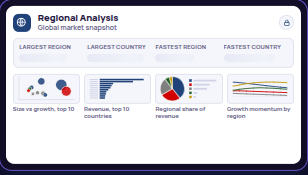
Regional Market Dynamics
- Asia Pacific leads the market through extensive construction activity, high concrete consumption, and recurring demand for admixtures that improve workability, durability, and performance across infrastructure and building projects.
- North America is expected to grow at an 8.81% CAGR as infrastructure renewal and modern construction projects increase demand for high-performance concrete with enhanced strength, durability, and placement efficiency.
Segment Momentum
- Water Reducing Agents held a 50.67% share in 2026 because they improve concrete workability while controlling water content, helping contractors achieve consistent strength, placement efficiency, and reliable material performance.
- Air-Entraining Agents are the fastest-growing segment as demand increases for concrete mixes that offer improved durability and long-term performance under challenging environmental exposure conditions.
Market Expansion Drivers
- Rapid urbanization and large-scale infrastructure development driving global concrete consumption.
- Green building regulations and sustainability mandates promoting low-cement concrete formulations.
- Advancements in high-performance and specialty admixtures improving construction efficiency and durability.
Leading Market Participants
- Leading players in the concrete admixtures market include Sika AG (Switzerland), MAPEI S.p.A. (Italy), Fosroc International Limited (United Kingdom), RPM International Inc. (United States), Saint-Gobain S.A. (France), Rhein-Chemotechnik GmbH (Germany), BASF SE (Germany), CEMEX S.A.B. de C.V. (Mexico), Chryso S.A.S. (France).
Global Market Forecast Snapshot
Market Outlook
- 2026 Market Size: USD 21.4 billion
- 2027 Estimated Market Size: USD 22.87 billion.
- Projected Market Size: USD 46.93 billion by 2036
- Growth Forecast: 8.17% CAGR (2027-2036)
Regional and Segment Outlook
- Leading Regional Market: Asia Pacific
- High-Growth Regional Hub: North America
- Core Revenue Segment: Water Reducing Agents (Type)
- Emerging Opportunity Segment: Air-Entraining Agents (Type)
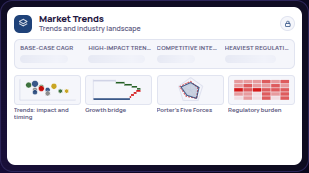
Market Growth Drivers and Industry Trends
Rapid urbanization and large-scale infrastructure development driving global concrete consumption
Rapid urban expansion and infrastructure construction are increasing the need for concrete with improved workability, strength, and performance, which will drive the concrete admixtures market growth. Large-scale development of residential buildings, transportation networks, commercial facilities, and public infrastructure requires concrete formulations that can meet varied construction conditions while supporting efficient placement and curing. Admixtures enable contractors and producers to modify concrete properties according to project requirements, including setting behavior, flow characteristics, and durability, making them increasingly important as construction activity expands across developing and established urban centers.
Green building regulations and sustainability mandates promoting low-cement concrete formulations
Stricter sustainability requirements in the construction sector are encouraging the use of concrete formulations that reduce material intensity and environmental impact, supporting the concrete admixtures market. Chemical admixtures can improve concrete performance while allowing producers to optimize cement usage and incorporate alternative cementitious materials into mixes without compromising required properties. Growing attention to embodied carbon, resource efficiency, and environmentally responsible construction is prompting builders and concrete manufacturers to adopt formulations that balance structural performance with sustainability objectives, particularly where green building requirements influence material selection.
Advancements in high-performance and specialty admixtures improving construction efficiency and durability
Technological development in admixture formulations is enhancing concrete performance while addressing increasingly demanding construction requirements, which will boost the concrete admixtures market demand. High-performance and specialty products can improve properties such as strength development, workability, setting control, water resistance, and durability under challenging environmental conditions. These capabilities allow construction professionals to achieve more consistent results while reducing complications associated with complex applications, including high-rise structures, infrastructure projects, and concrete exposed to demanding service conditions.
| Growth Driver | Impact on CAGR | Regulatory Influence | Geographic Relevance | Adoption Rate | Impact Timeline |
|---|---|---|---|---|---|
| Rapid urbanization and large-scale infrastructure development driving global concrete consumption | 2.30% | Moderate | Asia Pacific, Middle East & Africa | High | Near Term |
| Green building regulations and sustainability mandates promoting low-cement concrete formulations | 2.00% | High | Europe, North America, Asia Pacific | High | Mid Term |
| Advancements in high-performance and specialty admixtures improving construction efficiency and durability | 1.70% | Low | Asia Pacific, Europe | High | Mid Term |
Unlock insights tailored to your business with our bespoke market research solutions.
Click to get your customized report now.
Regional Demand Dynamics

Asia Pacific (Largest Region)
The concrete admixtures market was led by Asia Pacific in 2026, supported by extensive construction activity, rapid urbanization, and continued development of residential, commercial, transportation, and industrial infrastructure. Countries across the region are investing in large-scale construction projects that require concrete with improved strength, durability, workability, and resistance to demanding environmental conditions. The expansion of metropolitan areas and infrastructure modernization is encouraging contractors and developers to adopt high-performance admixtures that can improve construction efficiency while supporting longer-lasting structures. Increasing emphasis on sustainable construction is also strengthening demand for admixture technologies that reduce material consumption and improve concrete performance, reinforcing the region's substantial market position.
North America (Fastest-Growing Region)
North America is emerging as the fastest-growing region, driven by infrastructure renewal, modernization of aging structures, and increasing demand for higher-performance construction materials. The region's focus on resilient transportation infrastructure, energy facilities, commercial development, and sustainable building practices is encouraging broader use of specialized admixtures. Contractors are increasingly seeking solutions that enhance concrete durability, accelerate construction schedules, and improve performance under demanding climatic and operational conditions. Growing attention to resource efficiency and lower environmental impact is further supporting the adoption of advanced admixture formulations, creating favorable conditions for market expansion.
| Parameter | North America | Asia Pacific | Europe | Latin America | MEA |
|---|---|---|---|---|---|
| Innovation HubiScaleNascentDeveloping Advanced | |||||
| Cost-Sensitive RegioniScaleLowMedium High | |||||
| Regulatory EnvironmentiScaleRestrictiveNeutral Supportive | |||||
| Demand DriversiScaleWeakModerate Strong | |||||
| Development StageiScaleEmergingDeveloping Developed | |||||
| Adoption RateiScaleLowMedium High | |||||
| New Entrants / StartupsiScaleSparseModerate Dense | |||||
| Macro IndicatorsiScaleWeakStable Strong |
Key Country Insights
Germany 🇩🇪
Sustainable Mix OptimizationGermany prioritizes concrete admixtures that enhance material efficiency while supporting stringent environmental and construction quality standards. Manufacturers in Germany focus on admixture technologies that enable lower clinker content and consistent performance in advanced building applications.
France 🇫🇷
Low-Carbon Construction MaterialsFrance promotes concrete admixtures that complement sustainable construction initiatives and improved resource efficiency. The market in France increasingly integrates admixtures supporting recycled aggregates and reduced environmental impact without compromising concrete performance.
Italy 🇮🇹
Restoration Material IntegrationItaly combines demand for concrete admixtures in new construction with solutions suited for restoration and infrastructure rehabilitation projects. Italian customers value admixtures that improve compatibility, durability, and application flexibility across diverse construction environments.
Japan 🇯🇵
Precision Durability SolutionsJapan emphasizes concrete admixtures designed for long service life, seismic resilience, and consistent quality in demanding infrastructure projects. The Japanese market values specialized formulations that improve crack resistance and performance under diverse environmental conditions.
South Korea 🇰🇷
Advanced Infrastructure SupportSouth Korea adopts concrete admixtures that accelerate construction schedules while maintaining structural performance in large urban developments. Local demand encourages innovation in admixture systems compatible with high-strength concrete and prefabricated construction methods.
United States 🇺🇸
Performance Construction FocusThe U.S. concrete admixtures market emphasizes high-performance formulations that improve durability, workability, and placement efficiency across infrastructure and commercial construction. Demand in the U.S. increasingly favors admixtures compatible with low-carbon cement blends and modern construction practices.
Concrete Admixtures Market Share (%), by Type, 2026
Go beyond the chart, access full insights & data tables
Request Free Sample ReportType Segment Analysis: Water Reducing Agents (Largest Segment) vs Air-Entraining Agents (Fastest-Growing Segment)
Water reducing agents accounted for a 50.67% share of the concrete admixtures market in 2026, supported by their ability to improve concrete workability while reducing the amount of water required in concrete mixtures. Their use can contribute to improved strength, durability, and material efficiency, making them valuable across a broad range of construction applications. Increasing demand for high-performance concrete and greater emphasis on construction quality, resource efficiency, and long-lasting infrastructure continue to support the leading position of water reducing agents.
Air-entraining agents are expected to be the fastest-growing type, driven by their ability to introduce controlled air voids that enhance concrete durability, particularly under conditions involving repeated environmental stresses. Their use can improve resistance to freezing and thawing while supporting the long-term performance of concrete structures. Growing investment in durable infrastructure and increasing attention to concrete performance under demanding operating conditions are expected to encourage wider adoption of air-entraining agents.
| Segment | Sub-Segment | Largest Segment | Fastest Growing |
|---|---|---|---|
| Type | Water Reducing Agents, Waterproofing Agents, Accelerating Agents, Air-Entraining Agents, Retarding Agents, Others | Water Reducing Agents | Air-Entraining Agents |
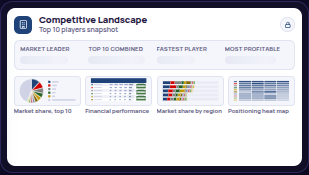
Competitive Landscape and Market Positioning
Key companies in the concrete admixtures market:
1. Sika AG (Switzerland)
2. MAPEI S.p.A. (Italy)
3. Fosroc International Limited (United Kingdom)
4. RPM International Inc. (United States)
5. Saint-Gobain S.A. (France)
6. Rhein-Chemotechnik GmbH (Germany)
7. BASF SE (Germany)
8. CEMEX S.A.B. de C.V. (Mexico)
9. Chryso S.A.S. (France)
The concrete admixtures market is evolving with growing emphasis on sustainable construction practices and high-performance building materials. Participants are introducing advanced admixture solutions that improve durability, reduce environmental impact, and enhance construction efficiency. Collaborative development initiatives and increased focus on green infrastructure projects are further influencing innovation and long-term market competitiveness.
| Company | Market Share | Company Revenue | Revenue CAGR (%) | Product Portfolio | Geographic Presence | Innovation / R&D Focus | Strategic Developments |
|---|---|---|---|---|---|---|---|
| Sika AG (Switzerland) | |||||||
| MAPEI S.p.A. (Italy) | |||||||
| Fosroc International Limited (United Kingdom) | |||||||
| RPM International Inc. (United States) | |||||||
| Saint-Gobain S.A. (France) | |||||||
| Rhein-Chemotechnik GmbH (Germany) | |||||||
| BASF SE (Germany) | |||||||
| CEMEX S.A.B. de C.V. (Mexico) | |||||||
| Chryso S.A.S. (France). |
Industry Development/News
| Company Name | Date | Key Development |
|---|---|---|
| Cemvision | May-26 | Cemvision partnered with Linotol to commercialize near-zero-carbon industrial flooring solutions utilizing its Re-ment Massive cement technology. The initiative targets the growing segment for sustainable construction materials within logistics and data center infrastructure markets. |
| Mapei UK | Apr-26 | Mapei UK increased its logistics and operational capacity by acquiring a new distribution and warehousing mega-hub. The investment is designed to support the company’s ongoing growth strategy and enhance its supply chain efficiency for construction chemicals and materials. |
| Saint-Gobain | Jan-26 | Saint-Gobain established a strategic joint venture in Indonesia to bolster its construction chemicals operations in Southeast Asia. This expansion enhances the company's regional supply chain capabilities and market access to address increasing demand for specialized construction solutions. |
| Somany Ceramics | Jul-25 | Somany Ceramics entered the construction chemicals market by acquiring a majority stake in Durabuild. This strategic acquisition enables the company to diversify its product portfolio beyond traditional building materials and establish a presence in high-growth, specialty construction solution segments. |
| Oil Sustainability Program | Dec-24 | The Oil Sustainability Program launched the NovusCrete consortium to advance the commercialization of sustainable concrete technologies. The initiative focuses on integrating polymer-based solutions, recycled aggregates, and specialized admixtures into the concrete value chain to improve environmental performance. |
| Gerdau Graphene | Aug-24 | Gerdau Graphene launched the NanoCONS range of graphene-based concrete admixtures. The product line is engineered to enhance the structural durability and strength of cementitious materials while facilitating reduced cement consumption, addressing industry needs for improved efficiency and sustainability. |
| Saint-Gobain Construction Chemicals | Jul-24 | Saint-Gobain Construction Chemicals introduced the EnviroMix C-Clay admixture range to support the adoption of calcined clay-based cements. This product development provides concrete producers with a solution to lower the carbon footprint of construction materials, reflecting a shift toward more sustainable infrastructure components. |
| Fosroc India | May-24 | Fosroc India commissioned a 260,000-square-foot construction chemicals facility in Hyderabad. This investment significantly increases regional production capacity for concrete admixtures and enhances logistical service levels across South and Central India, supporting long-term growth and operational scale. |
| Cormart | Mar-24 | Cormart formed a partnership with Fosroc to localize the manufacturing of construction chemicals. This collaboration strengthens the regional supply chain for concrete admixtures and enhances local production capabilities to meet market demand for construction materials. |
| Sika | Nov-23 | Sika completed an expansion of its Sealy, Texas, facility to increase production capacity for its high-performance ViscoCrete concrete admixture. The investment is strategically aligned with rising domestic demand driven by government-backed infrastructure projects and a growing focus on sustainable construction practices. |
Customize Your Report
Explore examples of how this report can be tailored to different research needs, including custom segments, additional topics or chapters, and related reports. Click a section of the wheel or its numbered marker to explore the available options.
Concrete Admixtures Market — Custom Segments
| Segment | Sub-Segment |
|---|---|
| Construction Type | Residential Construction, Commercial Construction, Infrastructure Construction, Industrial Construction |
| Concrete Mix Type | Ready-Mix Concrete, Precast Concrete, Shotcrete, Self-Compacting Concrete, High-Performance Concrete |
| Project Type | Buildings, Roads & Bridges, Dams & Water Infrastructure, Industrial Facilities, Marine & Coastal Structures |
Concrete Admixtures Market — Custom TOC
| Custom Chapter | Chapter Details |
|---|---|
| Infrastructure Project Demand Mapping |
|
| Low-Carbon Construction Adoption Outlook |
|
| Ready-Mix Concrete Procurement Benchmarking |
|
Need a different cut of the data?
Request Custom ResearchFrequently Asked Questions
What is the current size of the concrete admixtures market?
What is the forecasted size of the concrete admixtures industry?
How is large-scale infrastructure development influencing demand for concrete admixtures?
How are sustainability mandates and advanced admixture technologies reshaping purchasing decisions?
Why are Water Reducing Agents the leading type in the concrete admixtures market?
Which type is growing the fastest in the concrete admixtures market?
Why does Asia Pacific dominate the concrete admixtures market?
What is supporting concrete admixtures market growth in North America?
Who are the leading players in the concrete admixtures landscape?
Our Clients
"Your insights on workforce structures were spot-on. The analysis on mid-to-senior level roles validated some of our hiring decisions and highlighted gaps."
Ateliers De France
"The report gave us insights on competitors in the market. It helped our team refine our bidding strategy for upcoming contracts."
Clark Construction
"The reports provided a deep dive into market trends, and competitive landscape. The strategic insights and recommendations have been very helpful."
Rudolph and Sletten
Our Research Team & Methodology
Every Fundamental Business Insights report is built by a dedicated vertical research team, validated through a structured primary-and-secondary methodology, and reviewed for accuracy before it reaches you.
Delivery
Published
Available
Support
- Market Size & Forecast
- Market Segmentation
- Regional Analysis
- Growth Drivers & Challenges
- Market Dynamics
- Competitive Landscape
- Company Profiles
- Competitive Benchmarking
- Mergers & Acquisitions
- Market Share Analysis or Key Company Strategies
- Value Chain Analysis
- Porter's Five Forces
- PESTLE Analysis
- Pricing Trends
- Supply-Demand Analysis
- Technology Landscape
- Regulatory Landscape
- Investment & Funding Landscape
- Emerging Opportunities
- Future Market Outlook