Market Size and Growth Outlook
Confectionery Market size is predicted to grow from USD 266.77 billion in 2024 to USD 460.02 billion by 2034, reflecting a CAGR of over 5.6% from 2025 through 2034. The industry revenue is forecasted to reach USD 280.22 billion in 2025.
Base Year Value (2024)
USD 266.77 billion
19-24
x.x %
25-34
x.x %
CAGR (2025-2034)
5.6%
19-24
x.x %
25-34
x.x %
Forecast Year Value (2034)
USD 460.02 billion
19-24
x.x %
25-34
x.x %
Historical Data Period
2019-2024
Forecast Period
2025-2034
Get more details on this report -
Key Takeaways
In terms of segmentation, the global Confectionery market is analyzed on the basis of Type, Distribution Channel, Age Group.
Market Growth Drivers and Industry Trends
Growth Drivers & Opportunity:
Rising consumer demand for indulgent treats and innovative flavors is driving growth in the confectionery market.
Growing disposable income levels in emerging markets are fueling increased spending on confectionery products.
E-commerce and online retailing platforms are providing convenient access to a wider range of confectionery products, driving market growth.
Industry Restraints:
Health concerns related to the consumption of high-sugar and high-fat confectionery products are restraining market growth.
Increasing competition within the confectionery market is putting pressure on profit margins for manufacturers and retailers.
Unlock insights tailored to your business with our bespoke market research solutions - Click to get your customized report now!
Regional Demand Dynamics
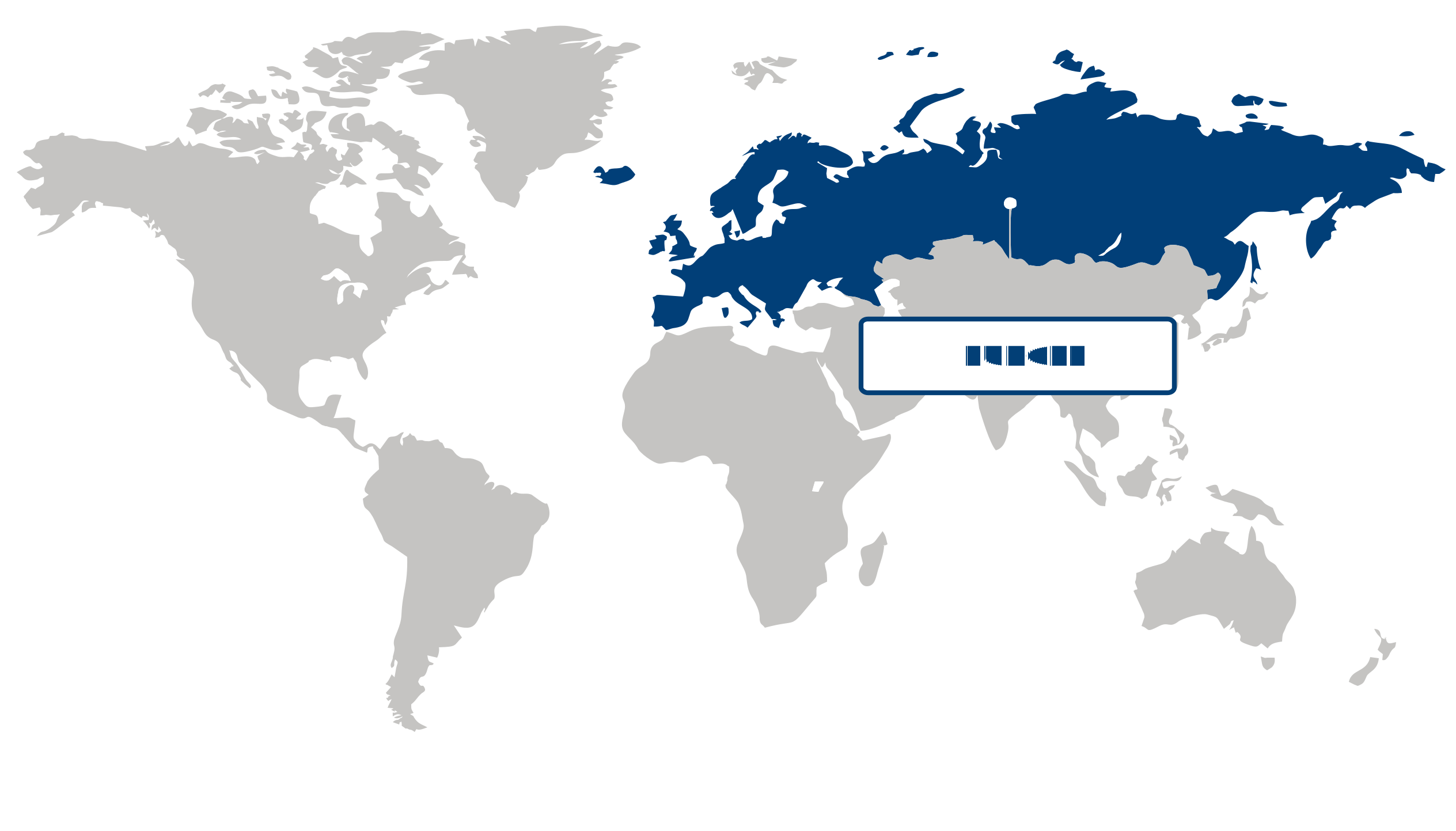
Largest Region
Europe
XX% Market Share in 2024
North America: The confectionery market size in North America, specifically the United States and Canada, is characterized by a high demand for confectionery products such as chocolates, candies, and gums. The market is driven by factors such as increasing disposable income, changing consumer preferences, and the presence of major confectionery manufacturers in the region. The United States is the largest market for confectionery products in North America, with a strong presence of both domestic and international confectionery brands. Canada, on the other hand, has a smaller but growing market for confectionery products, with a focus on premium and organic options.
Asia Pacific: In the Asia Pacific region, countries like China, Japan, and South Korea have witnessed significant growth in the confectionery market in recent years. China is the largest market for confectionery products in the region, driven by a large population, increasing urbanization, and rising disposable income. The market in Japan is characterized by a strong demand for premium and high-quality confectionery products, while South Korea has a growing market for innovative and unique confectionery offerings.
Europe: Europe, specifically the United Kingdom, Germany, and France, has a well-established confectionery market with a long history of traditional confectionery production. The United Kingdom is known for its iconic chocolate brands and unique sweets, while Germany is famous for its high-quality chocolates and candies. France, on the other hand, is renowned for its luxury and premium confectionery products. The confectionery market in Europe is characterized by a strong emphasis on quality, innovation, and sustainability, with consumers increasingly seeking natural and organic options.
No card data available for this language/report.
Segment Leadership and Growth Trends
Confectionery Market
Chocolate:
The chocolate segment of the confectionery market continues to dominate, with a wide variety of product offerings and flavors appealing to consumers of all ages. The popularity of premium and dark chocolates among adults, alongside the demand for novelty and gourmet chocolate products for kids, drive growth in this segment.
Sugar Confectionery:
The sugar confectionery segment encompasses a diverse range of products such as candies, caramels, and toffees. While kids are the primary consumers of these sweet treats, manufacturers are increasingly developing sugar-free and natural ingredient alternatives to cater to health-conscious adults and geriatric populations.
Gums & Jellies:
Gums and jellies are favored by consumers for their convenience and diverse flavor profiles. They are popular among kids, who often enjoy the chewy and gummy texture of these products. The availability of sugar-free options and fortified versions with added vitamins and minerals appeal to health-conscious adults and the geriatric demographic.
Mints:
Mints are a staple in the confectionery market, known for their breath-freshening properties and variety of flavors. While mints have traditionally been popular among adults for their functional benefits, manufacturers are introducing innovative packaging and flavor combinations to attract younger consumers, particularly in the kid and teen age groups.
Others:
The "Others" segment includes a variety of confectionery products such as licorice, nougat, and marzipan. These niche products cater to specific consumer preferences and dietary requirements, with manufacturers exploring new ingredients and flavors to attract a wider audience across different age groups.
Distribution Channel:
Supermarkets & Hypermarkets:
Pharmacies:
Specialty Stores:
Convenience Stores:
Online Stores:
Others:
Age Group:
Adult:
Kids:
Geriatric:
Competitive Landscape and Market Positioning
The competitive landscape in the Confectionery Market is characterized by a diverse array of companies ranging from large multinational corporations to smaller niche players. This dynamic market is influenced by consumer trends toward healthier options and innovative product offerings, leading to the introduction of sugar-free, organic, and artisanal sweets. Key players are investing heavily in research and development to create unique flavors and formulations while also focusing on sustainable practices, including eco-friendly packaging and sourcing ingredients responsibly. Regional preferences and cultural influences further shape product lines, making competition fierce in both developed and emerging markets. Digital marketing strategies and e-commerce are increasingly significant as consumer buying habits evolve, prompting companies to adapt and enhance their online presence.
Top Market Players
- Mars, Inc.
- Ferrero Group
- Mondelez International, Inc.
- Nestlé S.A.
- The Hershey Company
- Barry Callebaut AG
- Lindt & Sprüngli AG
- Haribo GmbH & Co. KG
- Meiji Holdings Co., Ltd.
- Perfetti Van Melle Group
Chapter 1. Methodology
- Market Definition
- Study Assumptions
- Market Scope
- Segmentation
- Regions Covered
- Base Estimates
- Forecast Calculations
- Data Sources
Chapter 2. Executive Summary
Chapter 3. Confectionery Market Insights
- Market Overview
- Market Drivers & Opportunity
- Market Restrains & Challenges
- Regulatory Landscape
- Ecosystem Analysis
- Technology & Innovation Outlook
- Key Industry Developments
- Partnership
- Merger/Acquisition
- Investment
- Product Launch
- Supply Chain Analysis
- Porter's Five Forces Analysis
- Threat of New Entrants
- Threat of Substitutes
- Industry Rivalry
- Bargaining Power of Suppliers
- Bargaining Power of Buyers
- COVID-19 Impact
- PESTLE Analysis
- Political Landscape
- Economic Landscape
- Social Landscape
- Technology Landscape
- Legal Landscape
- Environmental Landscape
- Competitive Landscape
- Introduction
- Company Market Share
- Competitive Positioning Matrix
Chapter 4. Confectionery Market Statistics, by Segments
- Key Trends
- Market Estimates and Forecasts
*Segment list as per the report scope/requirements
Chapter 5. Confectionery Market Statistics, by Region
- Key Trends
- Introduction
- Recession Impact
- Market Estimates and Forecasts
- Regional Scope
- North America
- United States
- Canada
- Mexico
- Europe
- Germany
- United Kingdom
- France
- Italy
- Spain
- Rest of Europe
- Asia Pacific
- China
- Japan
- South Korea
- Singapore
- India
- Australia
- Rest of APAC
- Latin America
- Argentina
- Brazil
- Rest of South America
- Middle East & Africa
- GCC
- South Africa
- Rest of MEA
*List Not Exhaustive
Chapter 6. Company Data
- Business Overview
- Financials
- Product Offerings
- Strategic Mapping
- Partnership
- Merger/Acquisition
- Investment
- Product Launch
- Recent Development
- Regional Dominance
- SWOT Analysis
*Company list as per the report scope/requirements