Copper Fungicides Market Size & Growth Forecast 2027–2036, By Segments (Application, Product), Regional Demand Trends (North America, Asia Pacific, Europe), Key Country Insights (U.S., Japan, South Korea, Germany, France, Italy), and Competitive Landscape
Jump to content
Market Size and Growth Outlook
Copper Fungicides Market size stood at USD 386 million in 2026 and is predicted to grow at a 5.32% CAGR from 2027 to 2036, attaining USD 648.18 million by 2036. The industry revenue for 2027 is assessed at USD 403.29 million.
Get more details on this report
Request Free Sample ReportCopper Fungicides Market Intelligence Snapshot
Regional Market Dynamics
- Europe held largest share in 2026 driven by established agriculture, vineyard and horticulture demand, and routine fungicide use in seasonal crop protection programs sustaining steady commercial uptake.
- Asia Pacific grows at 6.1% CAGR driven by large agricultural base, rising fungal pressure, and increased fungicide adoption in intensive cultivation focused on yield protection and crop quality.
Segment Momentum
- Fruits & Vegetables accounted for 44.33% of the market in 2026 due to frequent disease management needs in high-value crops and strong demand for reliable, field-proven crop protection solutions.
- Copper Hydroxide is growing fastest as growers increasingly prefer formulations that support modern spraying programs, targeted disease control, and more efficient crop-specific fungicide management.
Market Expansion Drivers
- Rising crop disease pressure from fungal pathogens increasing agricultural fungicide demand.
- Shrinking arable land driving need for higher agricultural yield protection solutions.
- Increasing adoption of integrated pest management practices supporting targeted fungicide usage.
Leading Market Participants
- Major players in the copper fungicides market include UPL Limited (India), Bayer AG (Germany), Corteva, Inc. (USA), Syngenta Group (Switzerland), Nufarm Limited (Australia), ADAMA Ltd. (Israel), Albaugh, LLC (USA), Nordox AS (Norway), Isagro S.p.A. (Italy), Quimetal Industrial S.A. (Chile).
Global Market Forecast Snapshot
Market Outlook
- 2026 Market Size: USD 386 million
- 2027 Estimated Market Size: USD 403.29 million.
- Projected Market Size: USD 648.18 million by 2036
- Growth Forecast: 5.32% CAGR (2027-2036)
Regional and Segment Outlook
- Leading Regional Market: Europe
- High-Growth Regional Hub: Asia Pacific
- Core Revenue Segment: Fruits & Vegetables (Application) | Copper Oxychloride (Product)
- Emerging Opportunity Segment: Fruits & Vegetables (Application) | Copper Hydroxide (Product)
Market Growth Drivers and Industry Trends
Rising crop disease pressure from fungal pathogens increasing agricultural fungicide demand
Increasing pressure from fungal pathogens across major agricultural crops will drive the copper fungicides market growth as growers seek reliable measures to protect plants from diseases that can reduce crop quality, productivity, and marketable yield. Copper-based fungicides are widely used for managing a range of fungal and bacterial plant diseases because copper compounds provide protective activity across crop surfaces and can be incorporated into established crop protection programs. Greater disease pressure associated with favorable pathogen conditions, intensive cultivation, and recurring crop production is encouraging growers to strengthen preventive disease-management practices, particularly in crops where disease outbreaks can significantly affect commercial value.
Shrinking arable land driving need for higher agricultural yield protection solutions
The reduction and increasing pressure on available arable land is strengthening the copper fungicides market as agricultural producers seek to maximize output from existing cultivated areas while minimizing losses caused by crop diseases. With limited scope for expanding farmland in many agricultural regions, protecting productive acreage becomes increasingly important for maintaining food and commercial crop supplies. Copper fungicides can form part of crop protection programs designed to safeguard plants during vulnerable growth stages, helping growers preserve the productive potential of cultivated land by limiting disease-related damage and maintaining crop quality under intensive farming conditions.
Increasing adoption of integrated pest management practices supporting targeted fungicide usage
The growing adoption of integrated pest management practices is supporting the copper fungicides market by promoting more targeted and strategically timed applications based on crop conditions, disease risk, and monitoring outcomes. Integrated approaches combine cultural, biological, mechanical, and chemical measures, allowing fungicides to be applied when disease pressure warrants intervention rather than relying solely on routine chemical treatment. Copper-based products can complement these programs as protective disease-control tools, particularly when growers seek to integrate chemical protection with broader field-management practices while maintaining closer control over application timing and crop health.
| Growth Driver | Impact on CAGR | Regulatory Influence | Geographic Relevance | Adoption Rate | Impact Timeline |
|---|---|---|---|---|---|
| Rising crop disease pressure from fungal pathogens increasing agricultural fungicide demand | 2.00% | High | Asia Pacific, Latin America | High | Near Term |
| Shrinking arable land driving need for higher agricultural yield protection solutions | 1.80% | Moderate | Asia Pacific, Africa | High | Mid Term |
| Increasing adoption of integrated pest management practices supporting targeted fungicide usage | 1.40% | High | Europe, North America | Medium | Mid Term |
Unlock insights tailored to your business with our bespoke market research solutions.
Click to get your customized report now.
Regional Demand Dynamics
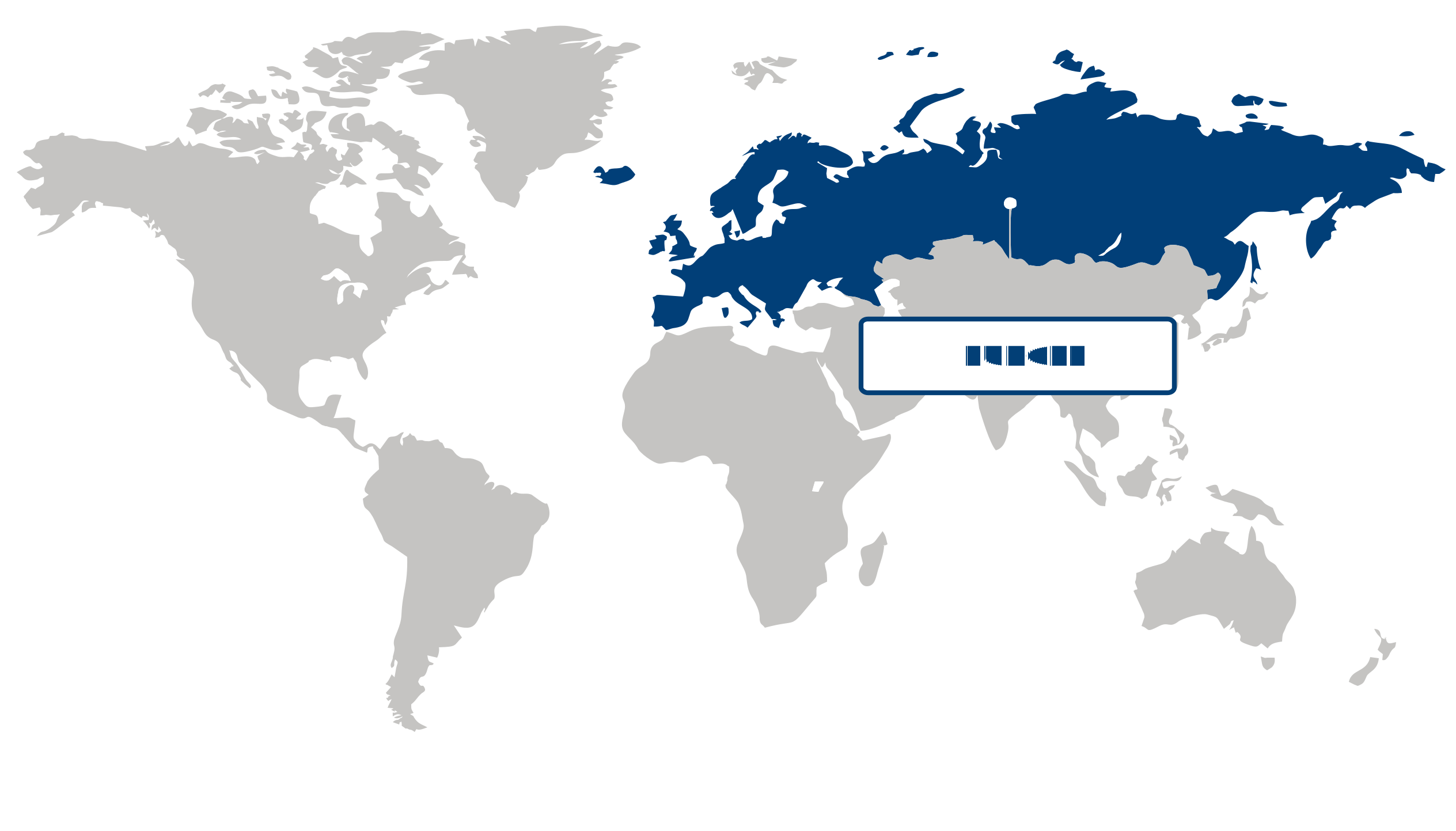
Europe (Largest Region)
Europe represented the largest regional share of the copper fungicides market in 2026, supported by established agricultural practices, strong demand for crop protection solutions, and continued emphasis on maintaining crop productivity and quality. Copper-based fungicides remain relevant for managing fungal diseases across a range of agricultural applications, particularly where effective disease control is essential for crop health. The region's structured agricultural sector and focus on sustainable crop management practices also support demand for established fungicidal solutions within permitted applications.
Asia Pacific (Fastest-Growing Region)
Asia Pacific is the fastest-growing region, driven by expanding agricultural production, increasing pressure from crop diseases, and rising efforts to improve farm productivity. Growing cultivation of high-value crops and increasing awareness of crop protection technologies are creating additional opportunities for copper-based fungicide adoption. Modernization of farming practices and improving access to agricultural inputs are further supporting the expansion of crop protection solutions across the region.
| Parameter | North America | Asia Pacific | Europe | Latin America | MEA |
|---|---|---|---|---|---|
| Innovation HubiScaleNascentDeveloping Advanced | |||||
| Cost-Sensitive RegioniScaleLowMedium High | |||||
| Regulatory EnvironmentiScaleRestrictiveNeutral Supportive | |||||
| Demand DriversiScaleWeakModerate Strong | |||||
| Development StageiScaleEmergingDeveloping Developed | |||||
| Adoption RateiScaleLowMedium High | |||||
| New Entrants / StartupsiScaleSparseModerate Dense | |||||
| Macro IndicatorsiScaleWeakStable Strong |
Key Country Insights
Germany 🇩🇪
Sustainable Disease ManagementGermany emphasizes copper fungicides within integrated crop management programs that support sustainable agricultural practices. Farmers increasingly seek optimized application approaches that maintain disease control while addressing environmental stewardship and evolving regulatory requirements.
France 🇫🇷
Vineyard Disease ProtectionFrance relies on copper fungicides for vineyard management and specialty crop cultivation where fungal disease prevention remains a production priority. The market increasingly supports optimized application practices that balance effective crop protection with sustainability objectives.
Italy 🇮🇹
Orchard Crop ManagementItaly's copper fungicides market is closely linked to vineyards, olive groves, and fruit orchards requiring consistent disease control throughout the growing season. Producers increasingly focus on efficient application programs that preserve crop quality while meeting environmental expectations.
Japan 🇯🇵
Precision Crop CareJapan utilizes copper fungicides across high-value horticulture and orchard production where effective disease management is essential. The market favors precise application methods and improved product formulations that support crop quality and efficient field management.
South Korea 🇰🇷
Horticultural Productivity FocusSouth Korea continues to adopt copper fungicides for protecting fruit, vegetable, and greenhouse crops against persistent fungal diseases. Agricultural producers increasingly emphasize reliable disease prevention while integrating copper products into comprehensive crop management practices.
United States 🇺🇸
Specialty Crop ProtectionThe U.S. copper fungicides market is driven by demand from fruit, vegetable, and specialty crop producers managing fungal and bacterial diseases. Growers increasingly integrate copper-based products into broader crop protection strategies that balance disease control with regulatory expectations.
Copper Fungicides Market Share (%), by Application, 2026
Go beyond the chart, access full insights & data tables
Request Free Sample ReportApplication Segment Analysis: Fruits & Vegetables (Largest & Fastest-Growing Segment)
The fruits & vegetables segment led the copper fungicides market, accounting for a 44.33% share in 2026, supported by the widespread use of copper-based fungicides for controlling fungal and bacterial diseases affecting high-value crops. Their broad-spectrum protective action and suitability for preventive crop protection make them valuable in managing disease pressure across diverse cultivation conditions. Growing emphasis on maintaining crop quality, reducing yield losses, and supporting reliable agricultural productivity continues to reinforce demand within this application. As growers increasingly prioritize effective disease management and integrated crop protection practices, the segment is positioned to retain its leading position while sustaining strong adoption momentum.
Product Segment Analysis: Copper Oxychloride (Largest Segment) vs Copper Hydroxide (Fastest-Growing Segment)
Copper oxychloride held the largest position in the copper fungicides market, representing a 32.12% share in 2026. Its established use as a broad-spectrum fungicide, combined with effective protection against a range of crop diseases, supports its widespread application in agricultural disease management. The product's familiarity among growers and compatibility with established crop protection practices further strengthen its market presence, particularly where preventive treatment remains an important component of farm management strategies.
Copper hydroxide is emerging as the fastest-growing product segment, supported by increasing demand for effective copper-based disease control and greater attention to crop health management. Its broad protective activity and flexibility across agricultural applications make it suitable for growers seeking dependable disease suppression. Continued adoption of integrated pest and disease management practices, alongside the need to protect crop quality and productivity, is expected to encourage greater use of copper hydroxide.
| Segment | Sub-Segment | Largest Segment | Fastest Growing |
|---|---|---|---|
| Application | Fruits & Vegetables, Cereals & Grains, Pulses & Oilseed, Others | Fruits & Vegetables | Fruits & Vegetables |
| Product | Copper Oxychloride, Copper Hydroxide, Cuprous Oxide, Copper Sulfate, Others | Copper Oxychloride | Copper Hydroxide |
Competitive Landscape and Market Positioning
Prominent players in the copper fungicides market:
1. UPL Limited (India)
2. Bayer AG (Germany)
3. Corteva Inc. (USA)
4. Syngenta Group (Switzerland)
5. Nufarm Limited (Australia)
6. ADAMA Ltd. (Israel)
7. Albaugh LLC (USA)
8. Nordox AS (Norway)
9. Isagro S.p.A. (Italy)
10. Quimetal Industrial S.A. (Chile)
Competitive activity within the copper fungicides market is being driven by the need for more sustainable crop protection solutions and enhanced agricultural productivity. Producers are focusing on advanced formulations that improve disease resistance while reducing environmental impact and application frequency. Increased investment in precision agriculture compatibility and eco-friendly fungicide technologies is also supporting the evolution of the copper fungicides market.
| Company | Market Share | Company Revenue | Revenue CAGR (%) | Product Portfolio | Geographic Presence | Innovation / R&D Focus | Strategic Developments |
|---|---|---|---|---|---|---|---|
| UPL Limited (India) | |||||||
| Bayer AG (Germany) | |||||||
| Corteva Inc. (USA) | |||||||
| Syngenta Group (Switzerland) | |||||||
| Nufarm Limited (Australia) | |||||||
| ADAMA Ltd. (Israel) | |||||||
| Albaugh LLC (USA) | |||||||
| Nordox AS (Norway) | |||||||
| Isagro S.p.A. (Italy) | |||||||
| Quimetal Industrial S.A. (Chile). |
Industry Development / News
| Company Name | Date | Key Development |
|---|---|---|
| Zhongda Agritech | Mar-25 | In March 2025, Zhongda Agritech received registration approval from China’s Ministry of Agriculture and Rural Affairs for its “Haoze” 40% Fluopyram · Oxine Copper SC formulation. The product integrates Fluopyram and Oxine Copper to support disease prevention and sustained crop health management, reinforcing the company’s presence in the copper fungicides segment of the Chinese agricultural market. |
| FMC Corporation | Sep-24 | In September 2024, FMC Corporation entered into a distribution agreement with Ballagro Agro Tecnologia to expand its copper fungicide portfolio in Brazil. The collaboration is intended to strengthen FMC’s market penetration in Latin America by enhancing access to sustainable crop protection solutions for Brazilian agricultural producers. |
| FMC India | Jul-24 | In July 2024, FMC India launched COSUIT, a copper-based fungicide formulated with Copper Hydroxychloride for controlling fungal and bacterial diseases across multiple crops including grapes, paddy, tomato, chili, tea, fruits, vegetables, and ornamentals. The product expands FMC India’s crop protection offerings targeting early-cycle disease control in diverse agricultural segments. |
| FMC India | Jul-24 | In July 2024, FMC India expanded its crop protection portfolio with the launch of VELZO alongside COSUIT, targeting early-stage fungal disease prevention across crops such as grapes, tomatoes, potatoes, paddy, chilli, and tea. The dual launch reinforces FMC India’s strategic focus on broad-spectrum fungicide solutions within key agricultural value chains. |
| Albaugh | Jul-24 | In July 2024, Albaugh launched a 46% Copper Hydroxide WDG fungicide in China through Rotam Global AgroSciences Limited. The formulation utilizes HiBio technology to improve copper ion release, enhancing efficacy, crop safety, and rain resistance, thereby strengthening Albaugh’s competitive positioning in advanced copper-based crop protection solutions. |
| Sipcam Oxon | Jun-24 | In June 2024, Sipcam Oxon acquired distribution assets from Phyteurop SA, strengthening its agricultural market presence in Europe with a focus on copper fungicides. The company established Sipcam France SA as part of its expansion strategy and continues to collaborate with InVivo to maintain access to agricultural input distribution networks across the region. |
| Corteva Agriscience | Mar-23 | In March 2023, Corteva Agriscience launched Adavel Active, a fungicide registered in Australia, Canada, and South Korea. The product features a differentiated mode of action aimed at protecting crops against a broad range of diseases that impact yield performance, strengthening Corteva’s position in advanced crop protection solutions across key international agricultural markets. |
| Certis Biologicals | Feb-23 | In February 2023, Certis Biologicals introduced Kocide 50DF, a high-load copper biofungicide formulation designed for preventive and curative control of multiple fungal diseases including blight, anthracnose, canker, phytophthora, and rot across citrus, vegetables, fruits, tree nuts, and specialty crops, expanding its biological crop protection portfolio. |
| Bharat Certis AgriScience Ltd. | Feb-22 | In February 2022, Bharat Certis AgriScience Ltd. launched Kocide 3000, a copper hydroxide-based fungicide containing 46.1% WG formulation with 30% metallic copper. The product enhances preventive crop protection capabilities against fungal diseases and strengthens the company’s copper fungicide portfolio within the broader agricultural inputs market. |
Customize Your Report
Explore examples of how this report can be tailored to different research needs, including custom segments, additional topics or chapters, and related reports. Click a section of the wheel or its numbered marker to explore the available options.
Copper Fungicides Market — Custom Segments
| Segment | Sub-Segment |
|---|---|
| Farming Practice | Conventional Farming, Organic Farming, Integrated Pest Management |
| Mode of Application | Foliar Spraying, Soil Application, Seed Treatment, Trunk & Stem Treatment |
| Farm Size | Small Farms, Medium-Sized Farms, Large Commercial Farms |
Copper Fungicides Market — Custom TOC
| Custom Chapter | Chapter Details |
|---|---|
| Sustainable Crop Protection Transition |
|
| Integrated Pest Management Adoption |
|
| Agricultural Disease Control Opportunities |
|
Need a different cut of the data?
Request Custom ResearchFrequently Asked Questions
How much revenue does the copper fungicides market generate?
What is the forecasted size of the copper fungicides industry?
How are changing crop protection strategies influencing demand in the copper fungicides market?
Why is integrated pest management strengthening adoption in the copper fungicides market?
Why do Fruits & Vegetables lead the copper fungicides market?
Why is Copper Hydroxide the fastest-growing product segment?
Why does Europe lead the copper fungicides market?
Why is Asia Pacific the fastest-growing copper fungicides market?
What are the prominent companies operating in the copper fungicides landscape?
Our Clients
"The report helped us understand emerging consumer trends in our product category. It clarified where to focus innovation for the next product launch."
LyondellBasell
"The regional forecast section was incredibly useful. We were able to identify two new potential partners in Europe thanks to the vendor mapping you included."
SABIC
"We appreciated how actionable the recommendations were. It guided us to improve supply chain resilience."
Olin Corporation
Our Research Team & Methodology
Every Fundamental Business Insights report is built by a dedicated vertical research team, validated through a structured primary-and-secondary methodology, and reviewed for accuracy before it reaches you.
Delivery
Published
Available
Support
- Market Size & Forecast
- Market Segmentation
- Regional Analysis
- Growth Drivers & Challenges
- Market Dynamics
- Competitive Landscape
- Company Profiles
- Competitive Benchmarking
- Mergers & Acquisitions
- Market Share Analysis or Key Company Strategies
- Value Chain Analysis
- Porter's Five Forces
- PESTLE Analysis
- Pricing Trends
- Supply-Demand Analysis
- Technology Landscape
- Regulatory Landscape
- Investment & Funding Landscape
- Emerging Opportunities
- Future Market Outlook