



Craft Rum Market Size & Growth Forecast 2027–2036, By Segments (Distribution Channel), Regional Demand Trends (North America, Asia Pacific, Europe), Key Country Insights (U.S., Japan, South Korea, Germany, France, Italy), and Competitive Landscape
Market Size and Growth Outlook
Craft Rum Market size was more than USD 1.5 billion in 2026 and is set to grow at a 5.61% CAGR between 2027 and 2036, reaching USD 2.59 billion by 2036. The industry revenue for 2027 is estimated at USD 1.57 billion.
Base Year Value (2026)
USD 1.5 billion
CAGR (2027-2036)
5.61%
Forecast Year Value (2036)
USD 2.59 billion

Historical Data Period
2022-2026

Largest Region
Europe

Forecast Period
2027-2036
Craft Rum Market Intelligence Snapshot:
-
Regional Market Dynamics:
- Europe holds 40.60% share due to mature premium spirits market, strong demand for artisanal products, and consumer preference for provenance-driven small-batch rum offerings.
- Europe’s momentum is supported by 6.78% CAGR, driven by premiumization trends, expanding niche spirit consumption, and growing distribution across on-trade and specialty retail channels.
-
Segment Momentum:
- The on-trade channel accounted for 60.33% of the market in 2026 because bars, restaurants, and hospitality venues strengthen premium positioning through product discovery, cocktail experiences, and brand storytelling that encourage repeat demand.
- Off-trade is growing fastest as consumers increasingly purchase craft rum for at-home consumption, with retail availability making it easier to compare brands, support repeat purchases, and expand household penetration.
-
Market Expansion Drivers:
- Millennial preference for authentic ingredients accelerating premium craft rum consumption globally.
- Expanding cocktail culture increasing demand for versatile craft rum in premium mixology.
- Sustainability-focused small-batch production and e-commerce expansion boosting craft rum premiumization trends.
-
Leading Market Participants:
Major companies in the craft rum market include Bacardi Limited (Bermuda), Diageo plc (United Kingdom), Suntory Holdings Limited (Japan), Maine Craft Distilling, LLC (United States), Rockstar Spirits Ltd. (United Kingdom), Wicked Dolphin Distillery (United States), Belize Spirits Marketing, Inc. (Belize), Drum & Black Rum Company (United Kingdom), Domaines Ellam (France), Charles Merser & Co. (United Kingdom).
Global Market Forecast Snapshot:
-
Market Outlook:
- 2026 Market Size: USD 1.5 billion
- 2027 Estimated Market Size: USD 1.57 billion.
- Projected Market Size: USD 2.59 billion by 2036
- Growth Forecasts: 5.61% CAGR (2027-2036)
-
Regional and Segment Outlook:
- Leading Regional Market: Europe
- High-Growth Regional Hub: Europe
- Core Revenue Segment: On-trade (Distribution Channel)
- Emerging Opportunity Segment: Off-trade (Distribution Channel)
Market Growth Drivers and Industry Trends
Millennial preference for authentic ingredients accelerating premium craft rum consumption globally
Millennial consumers are increasingly attracted to spirits that emphasize authenticity, distinctive provenance, traditional production methods, and recognizable ingredients, strengthening interest in premium and craft-oriented beverages. This consumer preference will accelerate craft rum market growth as producers differentiate offerings through small-batch production, ingredient transparency, maturation characteristics, and regional identity. Craft rum also appeals to consumers seeking more distinctive alternatives to standardized mass-market spirits, particularly when product narratives emphasize craftsmanship and sensory complexity. Growing interest in exploring unique flavor profiles and premium drinking experiences is supporting greater consumer engagement with artisanal rum products across specialty retail, hospitality, and premium beverage channels.
Expanding cocktail culture increasing demand for versatile craft rum in premium mixology
The continued expansion of cocktail culture is broadening the use of rum beyond traditional consumption occasions and increasing demand for spirits that can perform across diverse premium cocktail formats. The craft rum market will benefit as bartenders and consumers seek versatile expressions with distinct flavor characteristics that can be incorporated into both classic and contemporary mixed drinks. Craft rum can provide varied sensory profiles depending on fermentation, distillation, aging, and blending techniques, allowing mixologists to select products according to the character of individual cocktails. The growth of premium bars, cocktail-focused venues, and at-home mixology is further encouraging experimentation with higher-quality rum in layered and ingredient-driven beverages.
Sustainability-focused small-batch production and e-commerce expansion boosting craft rum premiumization trends
Sustainability considerations are becoming increasingly relevant to premium beverage purchasing, particularly among consumers who value responsible sourcing, efficient production practices, and transparent product origins. For the craft rum market, small-batch production can reinforce premium positioning by emphasizing careful production, distinctive sourcing, and product authenticity while sustainability-focused practices strengthen brand differentiation. At the same time, expanding e-commerce access is making niche and specialty rum products easier for consumers to discover and purchase beyond traditional local distribution networks. Digital channels also allow producers to communicate production methods, provenance, and sustainability attributes directly to consumers, supporting premium product discovery and broader access to specialized craft offerings.
| Growth Driver Assessment Framework | |||||
| Growth Driver | Impact On CAGR | Regulatory Influence | Geographic Relevance | Adoption Rate | Impact Timeline |
|---|---|---|---|---|---|
| Millennial preference for authentic ingredients accelerating premium craft rum consumption globally | 2.00% | Moderate | North America, Europe | High | Near Term |
| Expanding cocktail culture increasing demand for versatile craft rum in premium mixology | 1.80% | Moderate | Global | High | Near Term |
| Sustainability-focused small-batch production and e-commerce expansion boosting craft rum premiumization trends | 1.60% | Moderate | Asia Pacific, Latin America | Medium | Mid Term |
Unlock insights tailored to your business with our bespoke market research solutions - Click to get your customized report now!
Regional Demand Dynamics
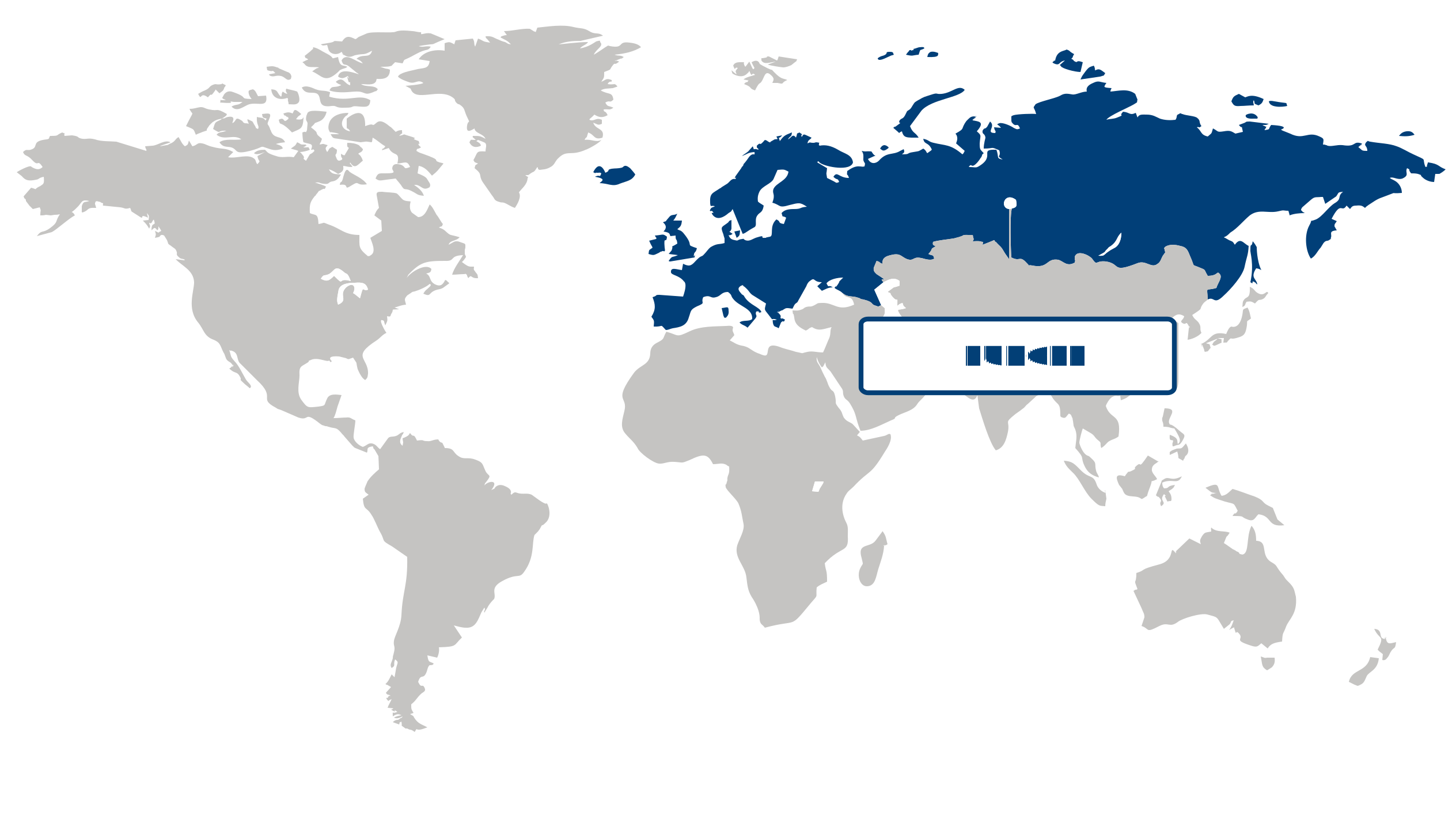
Largest Region
Europe
40.6% Market Share in 2026
Europe (Largest & Fastest-Growing Region)
Europe dominated the craft rum market, holding the largest share of 40.60% in 2026 while also representing the fastest-growing region. The region benefits from a strong premium spirits culture, established appreciation for artisanal production, and growing consumer interest in distinctive flavor profiles and small-batch beverages. Craft rum producers are increasingly differentiated through production techniques, ingredient quality, maturation approaches, and regional identity, aligning well with demand for authentic and premium drinking experiences. Expanding interest in specialty spirits, evolving consumer preferences, and the continued development of craft beverage culture are supporting both the region's established market position and its growth momentum.
Key Country Insights
The U.S. craft rum market is shaped by consumer interest in premium, small-batch spirits with distinctive flavor profiles. Domestic distilleries are expanding experimental aging techniques and locally sourced ingredients to strengthen product differentiation across retail and hospitality channels.
Japan values craft rum with refined flavor complexity and consistent production quality, particularly within premium bars and specialty liquor outlets. Producers serving Japan increasingly emphasize aging methods, ingredient transparency, and carefully curated product positioning.
South Korea is driving demand for craft rum through an expanding cocktail culture and premium beverage experiences. Distillers and distributors are introducing distinctive rum varieties that appeal to younger consumers seeking unique and high-quality spirits.
Germany is supporting craft rum through specialty beverage retailers and premium on-trade venues that emphasize product authenticity. Consumers increasingly seek limited-production labels, encouraging importers and craft producers to broaden premium rum portfolios.
France continues to embrace craft rum through premium retail and hospitality channels where artisanal production methods attract discerning consumers. The market favors brands that combine authentic craftsmanship with innovative maturation and flavor development.
Italy is strengthening the craft rum market through premium bars and specialty beverage stores offering curated spirit selections. Consumers increasingly appreciate handcrafted rum with distinctive regional identities and balanced flavor characteristics.
Segment Leadership and Growth Trends
Distribution Channel Segment Analysis: On-trade (Largest Segment) vs Off-trade (Fastest-Growing Segment)
The on-trade segment dominated the craft rum market with a 60.33% share in 2026, benefiting from the role of bars, restaurants, and hospitality venues in introducing consumers to distinctive craft spirits. On-trade settings provide opportunities for consumers to explore premium rum through curated serves, cocktails, and experiential offerings, which can strengthen product discovery and encourage trial. The emphasis on unique beverage experiences and premium drinking occasions continues to support the segment's leading position.
Off-trade is the fastest-growing distribution channel as consumers increasingly seek convenient ways to purchase craft rum for home consumption and personal occasions. Retail-based purchasing provides greater flexibility and allows consumers to compare different product offerings outside hospitality environments. Expanding consumer interest in premium and differentiated spirits, combined with the convenience of purchasing for at-home use, is supporting stronger momentum for the off-trade channel.
| Report Segmentation | |||
| Segment | Sub-Segment | Largest Segment | Fastest Growing Segment |
|---|---|---|---|
| Distribution Channel | On-trade, Off-trade | On-trade | Off-trade |
 Read our Research Approach
Competitive Landscape and Market Positioning
Top players in the craft rum market:
1. Bacardi Limited (Bermuda)
2. Diageo plc (United Kingdom)
3. Suntory Holdings Limited (Japan)
4. Maine Craft Distilling LLC (United States)
5. Rockstar Spirits Ltd. (United Kingdom)
6. Wicked Dolphin Distillery (United States)
7. Belize Spirits Marketing Inc. (Belize)
8. Drum & Black Rum Company (United Kingdom)
9. Domaines Ellam (France)
10. Charles Merser & Co. (United Kingdom)
The craft rum market is experiencing strong product innovation driven by rising consumer preference for premium spirits, artisanal production methods, and unique flavor profiles. Distillers are expanding limited-edition collections and experimenting with barrel aging techniques to strengthen brand differentiation. Increasing demand for authentic and small-batch alcoholic beverages continues to shape competitive dynamics in the market.
Industry Development/News
| Company Name | Date | Key Development |
|---|---|---|
| Diageo | Jan-23 | Diageo acquired Don Papa, a Filipino craft rum brand, to enhance its premium spirits portfolio. The move integrates an established artisanal rum producer—known for utilizing local sugarcane and American oak barrel aging—into the global conglomerate's distribution network, significantly bolstering its competitive positioning within the premium and craft rum segments. |
| Rock Paper Rum | Jul-25 | Rock Paper Rum secured funding via Shark Tank India at a valuation of approximately Rs 20 crore. The capital injection is strategically earmarked to accelerate product development and facilitate market expansion, aiming to scale the brand's presence and capture additional share within the competitive Indian craft spirits landscape. |
| Tidal Rum | Jun-24 | U.K.-based premium craft rum producer Tidal Rum successfully raised approximately USD 315 thousand through a crowdfunding initiative. The secured capital provides the necessary financial flexibility to support ongoing operational scaling and enhance the brand's market penetration within the competitive U.K. craft spirits sector. |
| Diageo India | Sep-24 | Diageo India launched The Flavour Lab in Bengaluru, establishing a direct-to-consumer experiential ecosystem. This strategic initiative is designed to cultivate brand engagement and promote the consumption of craft spirits in India, signaling a shift toward experiential marketing to drive market adoption and strengthen the company's regional footprint. |
| Sammy’s Beach Bar Rum | Jul-25 | Sammy’s Beach Bar Rum executed a strategic geographic expansion into New York, New Jersey, and Wisconsin. By broadening its retail and on-premise distribution network across these key U.S. markets, the company aims to enhance brand visibility and improve overall product accessibility within the craft rum category. |
Why Choose Us
Specialized Expertise: Our team comprises industry experts with a deep understanding of your market segment. We bring specialized knowledge and experience that ensures our research and consulting services are tailored to your unique needs.
Customized Solutions: We understand that every client is different. That's why we offer customized research and consulting solutions designed specifically to address your challenges and capitalize on opportunities within your industry.
Proven Results: With a track record of successful projects and satisfied clients, we have demonstrated our ability to deliver tangible results. Our case studies and testimonials speak to our effectiveness in helping clients achieve their goals.
Cutting-Edge Methodologies: We leverage the latest methodologies and technologies to gather insights and drive informed decision-making. Our innovative approach ensures that you stay ahead of the curve and gain a competitive edge in your market.
Client-Centric Approach: Your satisfaction is our top priority. We prioritize open communication, responsiveness, and transparency to ensure that we not only meet but exceed your expectations at every stage of the engagement.
Continuous Innovation: We are committed to continuous improvement and staying at the forefront of our industry. Through ongoing learning, professional development, and investment in new technologies, we ensure that our services are always evolving to meet your evolving needs.
Value for Money: Our competitive pricing and flexible engagement models ensure that you get maximum value for your investment. We are committed to delivering high-quality results that help you achieve a strong return on your investment.
Select Licence Type

