Dark Factories Market Size & Growth Forecast 2027–2036, By Segments (Technology Type, End-Use Industry), Regional Demand Trends (North America, Asia Pacific, Europe), Key Country Insights (U.S., Japan, South Korea, Germany, France, Italy), and Competitive Landscape
Jump to Content
Market Size and Growth Outlook
Dark Factories Market size stood at USD 137.48 billion in 2026 and is predicted to grow at a 9.22% CAGR from 2027 to 2036, reaching USD 332.09 billion by 2036. The industry revenue for 2027 is estimated at USD 148.24 billion.
Get more details on this report
Request Free Sample ReportDark Factories Market Intelligence Snapshot
Regional Market Dynamics
- Europe accounted for 53% of market revenue in 2026, driven by advanced industrial automation, Industry 4.0 investments, and integration of robotics, artificial intelligence, and connected manufacturing systems.
- Asia Pacific is growing fastest as its manufacturing base expands and investments in robotics, machine vision, artificial intelligence, and industrial IoT accelerate the transition toward autonomous production.
Segment Momentum
- Industrial robotics accounts for 46.43% of the market in 2026, reflecting its central role in automated assembly, material handling, inspection, and packaging, where precision, consistency, and reduced manual intervention are priorities.
- Electronics and semiconductors are growing fastest as manufacturers require precise, repeatable production and strict contamination control. Robotics, machine vision, and AI-driven monitoring support quality inspection, continuous production, and greater manufacturing efficiency.
Market Expansion Drivers
- Growing adoption of fully automated “dark factories”.
- Integration of AI and robotics in manufacturing.
- Expansion of industrial automation in emerging economies.
Leading Market Participants
- Key players in the dark factories market include Siemens (Germany), Rockwell Automation (USA), Schneider Electric (France), ABB (Switzerland), Fanuc (Japan), Mitsubishi Electric (Japan), Bosch Rexroth (Germany), Omron (Japan), Yaskawa Electric (Japan), Emerson Electric (USA).
Global Market Forecast Snapshot
Market Outlook
- 2026 Market Size: USD 137.48 billion
- 2027 Estimated Market Size: USD 148.24 billion
- Projected Market Size: USD 332.09 billion by 2036
- Growth Forecast: 9.22% CAGR (2027-2036)
Regional and Segment Outlook
- Leading Regional Market: Europe
- High-Growth Regional Hub: Asia Pacific
- Core Revenue Segment: Technology Type (Industrial Robotics) | End-Use Industry (Automotive)
- Emerging Opportunity Segment: Technology Type (Artificial Intelligence & Machine Learning) | End-Use Industry (Electronics & Semiconductors)
Market Growth Drivers and Industry Trends
Growing adoption of fully automated “dark factories”
The growing adoption of fully automated “dark factories” is driven by manufacturers seeking highly streamlined production environments that can operate with minimal human intervention. Automated facilities enable continuous production, improve process consistency, reduce reliance on manual labor for repetitive activities, and support greater operational flexibility. As manufacturers focus on improving productivity and responding to changing production requirements, the transition toward lights-out manufacturing environments is gaining momentum across industries.
Integration of AI and robotics in manufacturing
The integration of artificial intelligence and robotics is accelerating the development of dark factories by enabling machines to perform complex production, inspection, material-handling, and maintenance activities with greater autonomy. AI-powered systems can analyze operational conditions and optimize manufacturing processes, while advanced robotics improves precision and repeatability. The convergence of these technologies is creating more adaptive and intelligent production environments, encouraging manufacturers to invest in highly automated facilities.
Expansion of industrial automation in emerging economies
The expansion of industrial automation in emerging economies is supporting the development of dark factories as manufacturers modernize production infrastructure and seek greater efficiency. Rising manufacturing activity, labor availability challenges, and increasing demand for consistent product quality are encouraging businesses to adopt automated production systems. Investments in smart manufacturing infrastructure are also enabling emerging industrial markets to move toward digitally connected and increasingly autonomous factory environments.
| Growth Driver | Impact on CAGR | Regulatory Influence | Geographic Relevance | Adoption Rate | Impact Timeline |
|---|---|---|---|---|---|
| Growing adoption of fully automated “dark factories” | 3.5% | Short term (≤ 2 yrs) | North America; Europe | Medium | Fast |
| Integration of AI and robotics in manufacturing | 3.2% | Medium term (2–5 yrs) | Europe; Asia Pacific | Medium | Moderate |
| Expansion of industrial automation in emerging economies | 2.44% | Long term (5+ yrs) | Asia Pacific; Latin America | Medium | Moderate |
Explore Growth Opportunities
Request Free Sample ReportRegional Demand Dynamics
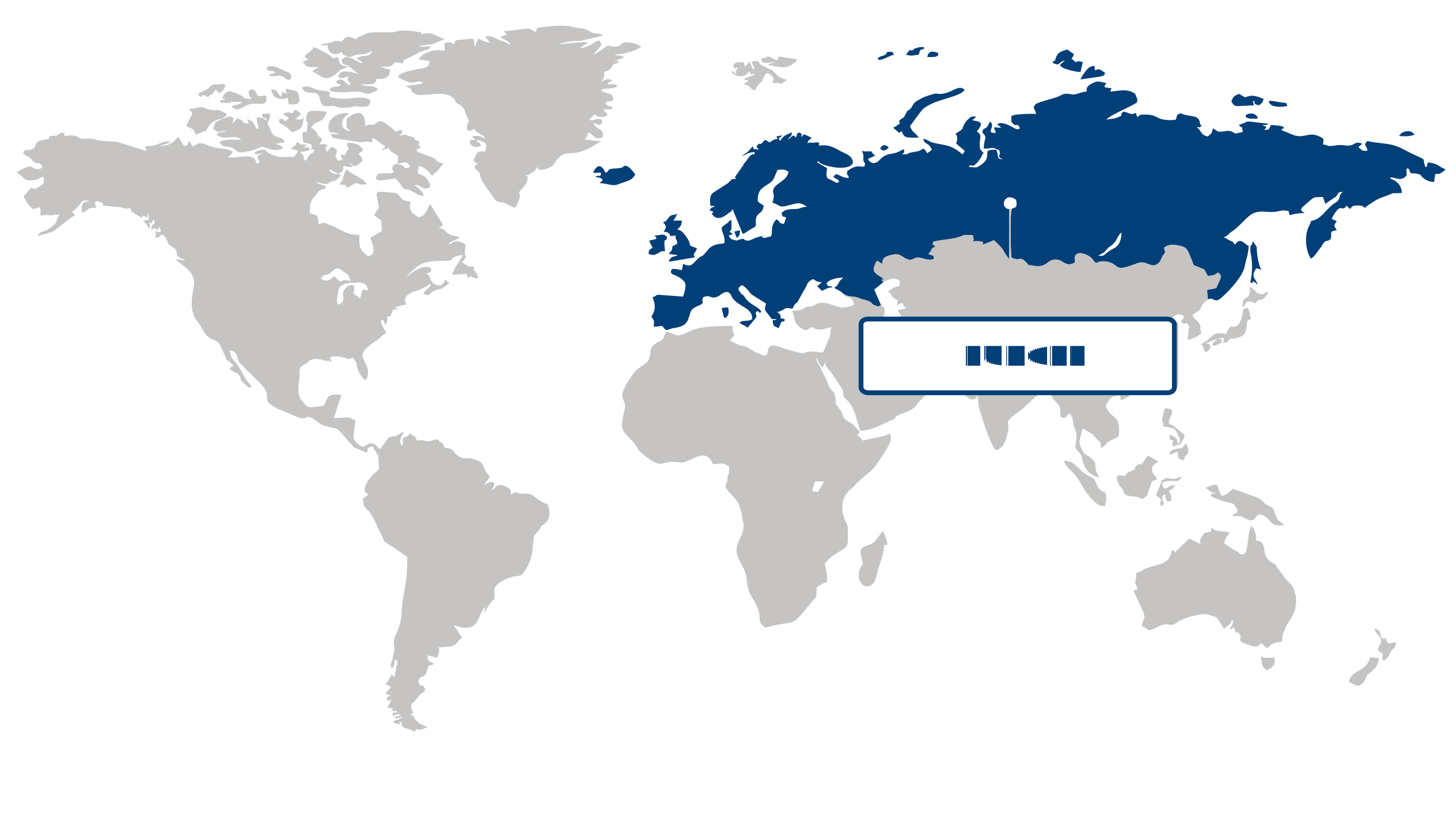
Europe (Largest Region)
Europe held the largest revenue share of 53% in 2026, supported by the region’s advanced industrial automation ecosystem, strong emphasis on smart manufacturing, and growing adoption of highly automated production environments. The market for dark factories in Europe is being driven by the increasing integration of robotics, artificial intelligence, industrial IoT, and autonomous production systems, enabling manufacturers to improve operational efficiency while reducing reliance on manual intervention. Strong investments in industry 4.0 technologies, digital transformation initiatives, and connected manufacturing infrastructure are further supporting the development of lights-out production facilities. The region’s established industrial base and focus on precision manufacturing are also creating favorable conditions for the deployment of fully automated factories across automotive, electronics, machinery, and other manufacturing applications.
Asia Pacific (Fastest-Growing Region)
The Asia Pacific dark factories market is expanding rapidly, propelled by the region’s large manufacturing base, accelerating industrial automation, and increasing adoption of smart factory technologies. Growing investments in robotics, artificial intelligence, machine vision, and industrial IoT are enabling manufacturers to establish increasingly autonomous production environments with limited human intervention. The expansion of electronics, automotive, semiconductor, and advanced manufacturing industries is further strengthening demand for automated facilities, while ongoing digitalization and efforts to improve production efficiency are encouraging manufacturers to transition toward connected and data-driven factory operations.
| Parameter | North America | Asia Pacific | Europe | Latin America | MEA |
|---|---|---|---|---|---|
| Innovation HubiScaleNascentDeveloping Advanced | |||||
| Cost-Sensitive RegioniScaleLowMedium High | |||||
| Regulatory EnvironmentiScaleRestrictiveNeutral Supportive | |||||
| Demand DriversiScaleWeakModerate Strong | |||||
| Development StageiScaleEmergingDeveloping Developed | |||||
| Adoption RateiScaleLowMedium High | |||||
| New Entrants / StartupsiScaleSparseModerate Dense | |||||
| Macro IndicatorsiScaleWeakStable Strong |
Key Country Insights
United States 🇺🇸
Autonomous Production ScalingThe U.S. dark factories market is driven by investment in highly automated production environments combining robotics, machine vision, industrial software, and autonomous material handling. Manufacturers are prioritizing facilities that reduce dependence on repetitive manual labor while improving process consistency, operational visibility, and flexible high-volume manufacturing.
Germany 🇩🇪
Industry 4.0 AutomationGermany's dark factory development is closely connected to advanced Industry 4.0 manufacturing, with emphasis on robotics, connected equipment, digital twins, and autonomous production control. Industrial players are prioritizing smart facilities capable of maintaining precision and productivity while addressing labor availability and increasingly complex manufacturing processes.
Japan 🇯🇵
Robotics-Driven ManufacturingJapan's dark factory market centers on extensive robotics, automated inspection, and autonomous production systems designed for consistent manufacturing with limited human intervention. Priorities include flexible automation, predictive maintenance, machine-to-machine coordination, and compact production layouts supporting electronics, automotive components, and precision manufacturing.
South Korea 🇰🇷
Smart Factory DeploymentSouth Korea is advancing dark-factory capabilities through robotics, AI, industrial IoT, and automated logistics, particularly in technology-intensive manufacturing. Companies are prioritizing connected production environments that enable real-time monitoring, automated quality control, and continuous operations while improving responsiveness to high-mix and precision manufacturing requirements.
France 🇫🇷
Automated Industrial ModernizationFrance's dark factory market is shaped by efforts to modernize industrial production through robotics, AI, connected machinery, and automated handling. Manufacturers are evaluating highly autonomous facilities to improve productivity and process reliability while reducing exposure to labor constraints and strengthening domestic capabilities in strategically important industrial sectors.
Italy 🇮🇹
Flexible Factory AutomationItaly's dark factory adoption is particularly relevant to advanced manufacturing environments where automation can improve flexibility and repeatability. Market priorities include robotic production cells, automated material movement, machine vision, and digital production management, enabling manufacturers to modernize operations without sacrificing customization capabilities.
Dark Factories Market Share (%), by Technology Type, 2026
Go beyond the chart, access full insights & data tables
Request Free Sample ReportTechnology Type Segment Analysis: Industrial Robotics (Largest Segment) vs Artificial Intelligence & Machine Learning (Fastest-Growing Segment)
Industrial robotics accounted for the largest market share of 46.43% in 2026, supported by the central role of automated robotic systems in enabling highly autonomous manufacturing environments. Industrial robots can perform repetitive, precision-intensive, and physically demanding production activities with limited human intervention, making them fundamental to dark factories market operations. Their integration into assembly, material handling, inspection, packaging, and other manufacturing processes helps improve consistency, operational efficiency, and production continuity. The growing emphasis on automation is encouraging manufacturers to deploy robotic systems across increasingly interconnected production lines, particularly where high levels of repeatability and process control are required. Industrial robotics can also be integrated with sensors, automated machinery, and digital control systems to support coordinated manufacturing workflows. As manufacturers seek to reduce dependence on manual processes and improve production efficiency, industrial robotics remains a key technology supporting the development and expansion of dark factory environments.
Artificial intelligence & machine learning is expected to grow at the fastest rate during the forecast period as manufacturers increasingly integrate intelligent decision-making capabilities into highly automated production environments in the dark factories market. AI and machine learning can analyze data from connected machines, sensors, production systems, and operational processes to identify patterns, detect anomalies, optimize workflows, and support predictive maintenance. Unlike conventional automation, intelligent systems can continuously learn from operational data and adapt processes according to changing production conditions. This creates opportunities for more autonomous decision-making across quality control, equipment management, production scheduling, and resource optimization. The growing availability of industrial data and connected manufacturing infrastructure is providing a stronger foundation for deploying AI-driven systems. As manufacturers move toward increasingly self-managed production environments, the integration of artificial intelligence and machine learning is becoming important for improving adaptability, reducing operational disruptions, and enabling more sophisticated levels of factory autonomy.
End-Use Industry Segment Analysis: Automotive (Largest Segment) vs Electronics & Semiconductors (Fastest-Growing Segment)
Automotive represents the largest end-use industry segment, supported by the industry's long-standing adoption of advanced automation across highly repetitive and precision-oriented manufacturing processes. In 2026, automotive accounted for a prominent market share in the dark factories market. Vehicle production involves extensive assembly, material handling, welding, painting, inspection, and component integration activities that can be efficiently supported by automated systems. The increasing complexity of vehicle manufacturing and growing emphasis on production efficiency are encouraging manufacturers to expand the use of connected machinery, robotics, and automated control systems. The transition toward increasingly software-driven and technologically advanced vehicles is also creating more complex production requirements, strengthening the need for highly coordinated manufacturing environments. Dark factory concepts can help automotive manufacturers achieve greater process consistency, optimize resource utilization, and reduce dependence on manual intervention. Continued modernization of automotive production facilities is therefore supporting the sector's strong position within the market.
Electronics & semiconductors is expected to grow at the fastest rate during the forecast period, driven by the industry's stringent requirements for precision, consistency, contamination control, and highly repeatable production processes. Manufacturing of electronic components and semiconductor devices involves complex processes where even minor variations can affect product quality, creating strong opportunities for automated and highly controlled production environments in the dark factories market. Robotics, machine vision, intelligent process monitoring, and AI-driven analytics can help manufacturers maintain precise operating conditions while supporting continuous production and quality inspection. The rapid expansion of electronic devices and increasing demand for advanced semiconductor components are also encouraging manufacturers to increase production capacity and improve manufacturing efficiency. As production processes become more sophisticated, the ability to integrate automation with real-time monitoring and intelligent decision-making is becoming increasingly valuable. These factors are supporting greater adoption of dark factory technologies within electronics and semiconductor manufacturing and are driving rapid expansion of this end-use industry segment.
| Segment | Sub-Segment | Largest Segment | Fastest Growing |
|---|---|---|---|
| Technology Type | Industrial Robotics, Industrial Internet of Things (IIoT), Additive Manufacturing / 3D Printing, Automated Guided Vehicles (AGVs), Machine Vision Systems, Artificial Intelligence & Machine Learning | Industrial Robotics | Artificial Intelligence & Machine Learning |
| End-Use Industry | Automotive, Electronics & Semiconductors, Pharmaceuticals & Medical Devices, Aerospace & Defense, Consumer Goods, Industrial Equipment Manufacturing | Automotive | Electronics & Semiconductors |
Unlock insights tailored to your business with our bespoke market research solutions.
Click to get your customized report now.
Competitive Landscape and Market Positioning
Analyst Perspective:
Achieving operational success in dark factories requires robust software orchestration paired with edge-level intelligence to sustain continuous, lights-out production. To operate without direct human oversight, facilities depend on autonomous material handling robots coordinated alongside real-time IoT monitoring and predictive maintenance models. However, system resilience hinges on managing operational anomalies before they escalate into facility-wide shutdowns. Automation vendors that differentiate through exception-handling software, low-latency edge AI diagnostics, and seamless integration with legacy machinery will capture key market share as manufacturers pursue unattended industrial operations.
Key companies in the dark factories market:
- Siemens (Germany)
- Rockwell Automation (USA)
- Schneider Electric (France)
- ABB (Switzerland)
- Fanuc (Japan)
- Mitsubishi Electric (Japan)
- Bosch Rexroth (Germany)
- Omron (Japan)
- Yaskawa Electric (Japan)
- Emerson Electric (USA)
| Company | Market Share | Company Revenue | Revenue CAGR (%) | Product Portfolio | Geographic Presence | Innovation / R&D Focus | Strategic Developments |
|---|---|---|---|---|---|---|---|
| Siemens (Germany) | |||||||
| Rockwell Automation (USA) | |||||||
| Schneider Electric (France) | |||||||
| ABB (Switzerland) | |||||||
| Fanuc (Japan) | |||||||
| Mitsubishi Electric (Japan) | |||||||
| Bosch Rexroth (Germany) | |||||||
| Omron (Japan) | |||||||
| Yaskawa Electric (Japan) | |||||||
| Emerson Electric (USA) |
Industry Development/News
| Company Name | Date | Key Development |
|---|---|---|
| Xiaomi | May 2026 | Xiaomi operates a highly automated dark factory in Changping, China, utilizing proprietary hardware and software for smartphone manufacturing. The facility achieves a production rate of approximately one smartphone every 3.15 seconds, demonstrating advanced lights-out manufacturing infrastructure within the consumer electronics sector. |
| Bharat Forge | May 2026 | Bharat Forge entered into a memorandum of understanding with Agile Robots to investigate AI-driven industrial automation solutions tailored for civilian manufacturing operations across India and Southeast Asia. The initiative focuses on integrating robotics and artificial intelligence to enhance autonomous production capabilities. |
| Inbolt | May 2025 | Inbolt announced market expansion initiatives to introduce its real-time robot guidance systems to the United States and Japan. The technology enables industrial robots to perceive assembly lines dynamically and adapt to real-world manufacturing variations, supporting flexible automation. |
| BYD Company Ltd. | April 2025 | BYD Company Ltd. executed a joint development agreement with Saudi Aramco Technologies Company to research and develop advanced manufacturing technologies for automated dark factories. The collaboration targets the integration of artificial intelligence and automation systems into electric vehicle assembly processes to improve operational efficiency. |
| Hon Hai Precision Industry Co., Ltd. (Foxconn) | March 2025 | Hon Hai Precision Industry Co., Ltd. announced strategic progress in its dark factory initiatives, centering on artificial intelligence-driven automation and electric vehicle platforms. The company intends to scale investments in robotics and automation infrastructure to optimize fully automated manufacturing operations for global markets. |
Customize Your Report
Explore examples of how this report can be tailored to different research needs, including custom segments, additional topics or chapters, and related reports. Click a section of the wheel or its numbered marker to explore the available options.
Dark Factories Market — Custom Segments
| Segment | Sub-Segment |
|---|---|
| Automation Level | Highly Automated Factories, Fully Autonomous Factories, Lights-Out Production Lines |
| Production Process | Discrete Manufacturing, Continuous Manufacturing, Batch Manufacturing |
| Manufacturing Strategy | Greenfield Smart Factory Deployment, Brownfield Factory Transformation, Distributed & Flexible Manufacturing |
Dark Factories Market — Custom TOC
| Custom Chapter | Chapter Details |
|---|---|
| Dark Factory Readiness Benchmarking |
|
| Autonomous Factory Business Cases |
|
| Dark Factory Cybersecurity Risk |
|
Need a different cut of the data?
Request Custom ResearchFrequently Asked Questions
What is the estimated worth of the dark factories market?
What is the anticipated CAGR of the dark factories industry?
How is AI and robotics integration accelerating the shift toward dark factories?
Why are emerging economies becoming important for dark factory deployment?
Why does industrial robotics remain the dominant technology in dark factories?
Why are electronics and semiconductors becoming a high-growth end-use industry for dark factories?
How does Europe maintain its leadership in the dark factories market?
Why is Asia Pacific becoming a key growth market for dark factories?
Which companies are driving growth in the dark factories landscape?
Our Clients
"The team at Fundamental Business Insights & Consulting demonstrated a commitment to excellence, not only in the quality of the report but also in their client-centric approach."
FANUC
"The level of detail in the market segmentation provided were particularly noteworthy. The detailed country-level insights were also very helpful."
B&R Industrial Automation GmbH
"The consultant took the time to understand our specific business objectives, ensuring that the reports were tailored to address our unique challenges and opportunities."
KUKA SE & Co. KGaA
Our Research Team & Methodology
Every Fundamental Business Insights report is built by a dedicated vertical research team, validated through a structured primary-and-secondary methodology, and reviewed for accuracy before it reaches you.
This report was prepared by the Industrial Automation & Equipment Research Team at Fundamental Business Insights, a dedicated research group specializing in industrial automation technologies, manufacturing systems, and industrial equipment markets. Our analysts continuously monitor advancements in factory automation, robotics, industrial IoT (IIoT), smart manufacturing, process optimization, equipment modernization, supply chain developments, industrial safety standards, and evolving digital transformation initiatives across manufacturing industries to deliver timely and reliable market intelligence. The research is developed using a structured methodology that combines primary discussions with equipment manufacturers, automation solution providers, system integrators, industrial end users, distributors, and industry experts, along with company annual reports, regulatory publications, government industrial statistics, industry associations, technical standards, engineering publications, and other authoritative secondary sources. Market estimates are validated through multiple research techniques, including top-down and bottom-up analysis, before undergoing an internal quality review to ensure accuracy, consistency, and methodological integrity prior to publication.
Delivery
Published
Available
Support
- Market Size & Forecast
- Market Segmentation
- Regional Analysis
- Growth Drivers & Challenges
- Market Dynamics
- Competitive Landscape
- Company Profiles
- Competitive Benchmarking
- Mergers & Acquisitions
- Market Share Analysis or Key Company Strategies
- Value Chain Analysis
- Porter's Five Forces
- PESTLE Analysis
- Pricing Trends
- Supply-Demand Analysis
- Technology Landscape
- Regulatory Landscape
- Investment & Funding Landscape
- Emerging Opportunities
- Future Market Outlook