Dental Bone Void Filler Market Size & Growth Forecast 2027–2036, By Segments (Material), Regional Demand Trends (North America, Asia Pacific, Europe), Key Country Insights (U.S., Japan, South Korea, Germany, France, Italy), and Competitive Landscape
Jump to content
Market Size and Growth Outlook
Dental Bone Void Filler Market size was valued at USD 113.2 million in 2026 and is anticipated to grow at a 5.61% CAGR from 2027 to 2036, crossing USD 195.39 million by 2036. The industry revenue for 2027 is calculated at USD 118.54 million.
Get more details on this report
Request Free Sample ReportDental Bone Void Filler Market Intelligence Snapshot
Regional Market Dynamics
- Europe leads with a 41.34% share due to a mature dental care ecosystem, widespread implantology adoption, strong periodontal treatment practices, and consistent use of bone regeneration materials in routine clinical and hospital-based settings.
- Asia Pacific is growing at a 6.78% CAGR, supported by expanding dental infrastructure, rising procedural volumes in urban centers, and increasing adoption of advanced regenerative materials for implant and restorative dental treatments.
Segment Momentum
- DBM is the leading material because its established use in dental grafting, familiar handling characteristics, and broad acceptance in routine bone regeneration procedures continue to support consistent clinical demand.
- Tricalcium Phosphate Ceramics are growing fastest as providers increasingly adopt standardized synthetic materials with predictable composition, supporting broader use across evolving regenerative dental procedures.
Market Expansion Drivers
- Rising dental implant procedures increasing demand for bone regeneration materials in restorative dentistry.
- Aging population driving higher incidence of tooth loss and periodontal bone defects globally.
- Advancements in synthetic biomaterials improving safety and osteoconductivity of dental fillers.
Leading Market Participants
- Prominent players in the dental bone void filler market include Medtronic plc (Ireland), Johnson & Johnson (United States), Stryker Corporation (United States), BONESUPPORT AB (Sweden), Curasan AG (Germany), Olympus Terumo Biomaterials Corporation (Japan), Graftys SA (France), Geistlich Pharma AG (Switzerland), Dentsply Sirona Inc. (United States), Zimmer Biomet Holdings, Inc. (United States).
Global Market Forecast Snapshot
Market Outlook
- 2026 Market Size: USD 113.2 million
- 2027 Estimated Market Size: USD 118.54 million.
- Projected Market Size: USD 195.39 million by 2036
- Growth Forecast: 5.61% CAGR (2027-2036)
Regional and Segment Outlook
- Leading Regional Market: Europe
- High-Growth Regional Hub: Asia Pacific
- Core Revenue Segment: Demineralized Bone Matrix (DBM) (Material)
- Emerging Opportunity Segment: Tricalcium Phosphate Ceramics (Material)
Market Growth Drivers and Industry Trends
Rising dental implant procedures increasing demand for bone regeneration materials in restorative dentistry
The growing adoption of dental implant procedures will drive the dental bone void filler market as implant placement increasingly requires adequate bone volume and structural support for successful restoration. Tooth loss, trauma, and bone resorption can leave insufficient bone for implant positioning, creating demand for regenerative materials that help fill osseous defects and support new bone formation. Dental bone void fillers are used across restorative procedures to stabilize deficient sites and create a suitable environment for subsequent implant integration. As dental practices increasingly emphasize functional restoration and long-term implant stability, the need for effective bone regeneration solutions is expanding across implant dentistry and related surgical procedures.
Aging population driving higher incidence of tooth loss and periodontal bone defects globally
Demographic aging is creating a broader patient base for the dental bone void filler market, particularly as older adults experience greater exposure to tooth loss, periodontal disease, and associated deterioration of supporting bone structures. Age-related changes in oral health can increase the occurrence of periodontal defects and reduce the quality and volume of alveolar bone, complicating restorative and implant-based treatments. This encourages dental professionals to incorporate bone regeneration materials into procedures designed to reconstruct deficient areas and improve the foundation for prosthetic rehabilitation. Increasing attention to maintaining oral function and restoring missing teeth among older populations is also supporting the use of bone graft substitutes in periodontal and restorative interventions.
Advancements in synthetic biomaterials improving safety and osteoconductivity of dental fillers
Technological progress in synthetic biomaterials is strengthening the dental bone void filler market by enabling the development of materials with improved biocompatibility, handling characteristics, and bone-supporting properties. Newer synthetic formulations can be engineered to provide controlled structures that facilitate cellular attachment and bone growth while reducing concerns associated with donor-derived materials. Improvements in material composition, porosity, degradation behavior, and surface characteristics are enhancing osteoconductive performance and allowing clinicians to select fillers suited to different defect configurations. Such developments are also supporting greater consistency in regenerative procedures and improving the practical usability of synthetic fillers in dental surgery.
| Growth Driver | Impact on CAGR | Regulatory Influence | Geographic Relevance | Adoption Rate | Impact Timeline |
|---|---|---|---|---|---|
| Rising dental implant procedures increasing demand for bone regeneration materials in restorative dentistry | 2.40% | High | North America, Europe, Asia Pacific | High | Near Term |
| Aging population driving higher incidence of tooth loss and periodontal bone defects globally | 2.10% | High | North America, Europe, Asia Pacific | High | Mid Term |
| Advancements in synthetic biomaterials improving safety and osteoconductivity of dental fillers | 1.80% | Moderate | Europe, North America | Medium | Long Term |
Unlock insights tailored to your business with our bespoke market research solutions.
Click to get your customized report now.
Regional Demand Dynamics
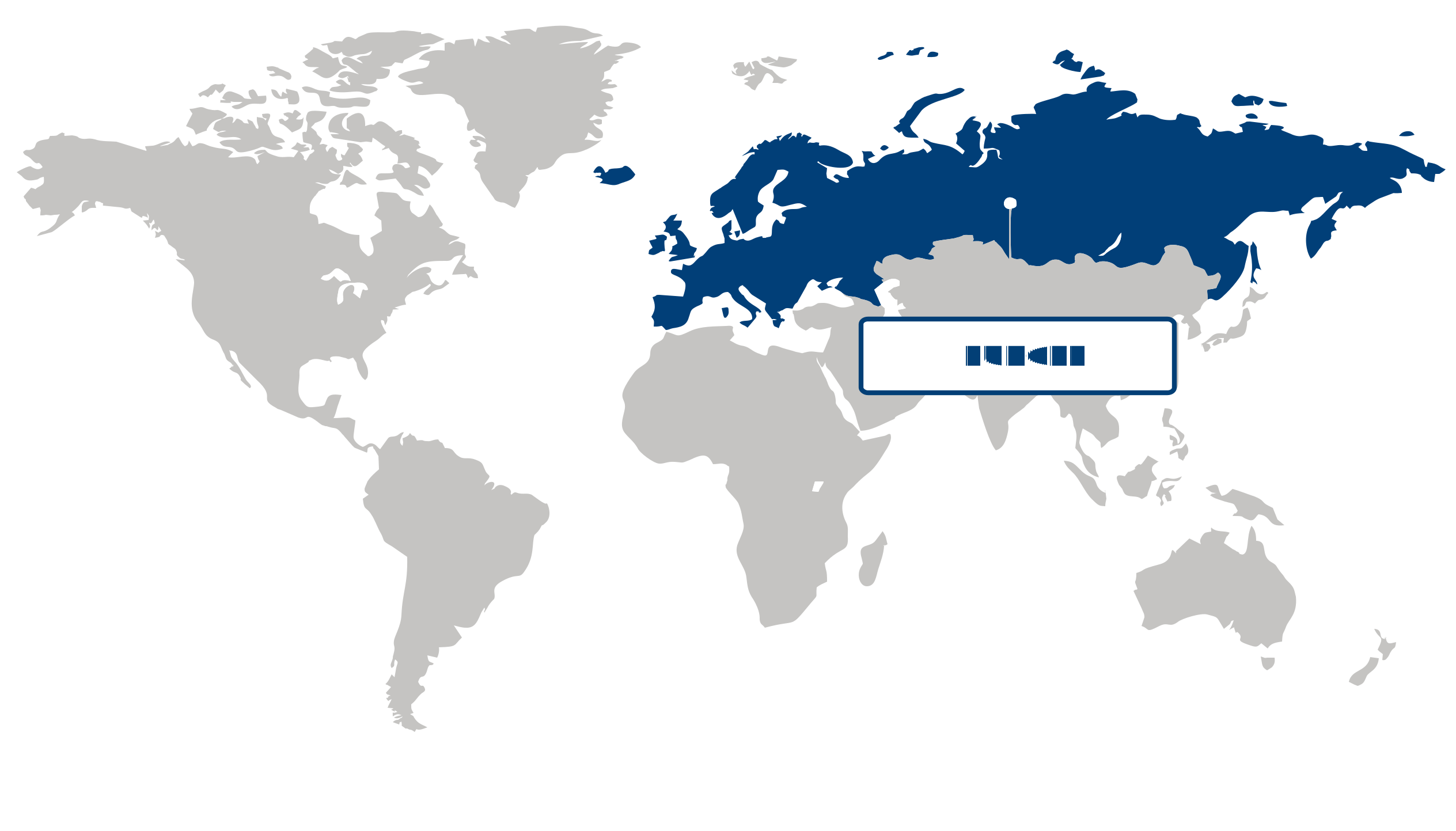
Europe (Largest Region)
Europe held the largest share of the dental bone void filler market, accounting for 41.34% in 2026. The region’s position is supported by established dental healthcare infrastructure, broad access to advanced oral surgical procedures, and growing demand for regenerative solutions that support bone restoration. Increasing adoption of implant dentistry and periodontal procedures is creating sustained demand for bone grafting materials, while greater emphasis on minimally invasive techniques and improved clinical outcomes is encouraging the use of advanced filler formulations.
Asia Pacific (Fastest-Growing Region)
Asia Pacific is emerging as the fastest-growing region as dental care access improves and demand for restorative and implant-based procedures increases. Expanding dental infrastructure, rising healthcare expenditure, and greater awareness of oral health are supporting the adoption of regenerative dental materials. Growth in dental tourism and the increasing availability of advanced oral surgery in emerging healthcare markets are also widening the addressable patient base for dental bone void fillers.
| Parameter | North America | Asia Pacific | Europe | Latin America | MEA |
|---|---|---|---|---|---|
| Innovation HubiScaleNascentDeveloping Advanced | |||||
| Cost-Sensitive RegioniScaleLowMedium High | |||||
| Regulatory EnvironmentiScaleRestrictiveNeutral Supportive | |||||
| Demand DriversiScaleWeakModerate Strong | |||||
| Development StageiScaleEmergingDeveloping Developed | |||||
| Adoption RateiScaleLowMedium High | |||||
| New Entrants / StartupsiScaleSparseModerate Dense | |||||
| Macro IndicatorsiScaleWeakStable Strong |
Key Country Insights
Germany 🇩🇪
Biomaterial Quality FocusGermany prioritizes clinically validated dental bone void fillers supported by stringent quality standards and advanced manufacturing. Dental professionals in Germany favor products with proven biocompatibility, handling efficiency, and long-term treatment performance.
France 🇫🇷
Evidence-Based ApplicationsFrance promotes dental bone void fillers with strong clinical evidence across oral surgery and implant dentistry. Healthcare professionals in France focus on material safety, regulatory compliance, and dependable regeneration performance for complex dental procedures.
Italy 🇮🇹
Specialist Implant PracticeItaly supports demand for dental bone void fillers through experienced implant specialists and restorative dentistry services. Dental clinics in Italy increasingly evaluate graft materials based on surgical handling, biological compatibility, and successful implant integration.
Japan 🇯🇵
Precision Implant SupportJapan continues integrating dental bone void fillers into implant procedures that require precise bone regeneration and consistent healing outcomes. Manufacturers and clinicians in Japan emphasize reliable biomaterials compatible with advanced dental treatment protocols.
South Korea 🇰🇷
Cosmetic Dentistry IntegrationSouth Korea incorporates dental bone void fillers into implant and aesthetic dental procedures driven by advanced clinical practices. Dental providers in South Korea increasingly select regenerative materials that shorten treatment timelines and improve functional outcomes.
United States 🇺🇸
Advanced Regenerative AdoptionThe U.S. dental bone void filler market emphasizes regenerative biomaterials for implantology and periodontal procedures. Dental clinics and specialists in the U.S. increasingly adopt grafting solutions that improve treatment predictability and support minimally invasive clinical workflows.
Dental Bone Void Filler Market Share (%), by Material, 2026
Go beyond the chart, access full insights & data tables
Request Free Sample ReportMaterial Segment Analysis: Demineralized Bone Matrix (DBM) (Largest Segment) vs Tricalcium Phosphate Ceramics (Fastest-Growing Segment)
The demineralized bone matrix (DBM) segment held the largest position in the dental bone void filler market in 2026, supported by its established use in bone regeneration procedures and its ability to provide a biologically favorable matrix for tissue repair. DBM is valued in dental applications where restoration of bone volume and support for regeneration are important clinical objectives. Increasing demand for advanced dental procedures, greater emphasis on predictable bone healing, and continued adoption of regenerative approaches are reinforcing the material's strong role in dental bone repair.
Tricalcium phosphate ceramics are expected to be the fastest-growing material segment, driven by growing interest in synthetic and biocompatible materials for bone regeneration. Their osteoconductive properties and versatility in supporting bone formation make them attractive for dental applications where clinicians require alternatives to biologically derived graft materials. Continued development of regenerative dentistry, increasing demand for minimally invasive approaches, and interest in materials that offer controlled handling and consistent composition are supporting expanding adoption of tricalcium phosphate ceramics.
| Segment | Sub-Segment | Largest Segment | Fastest Growing |
|---|---|---|---|
| Material | Tricalcium Phosphate Ceramics, Biphasic Calcium Phosphate Ceramics, Calcium Phosphate Cements, Calcium Sulfates, Demineralized Bone Matrix (DBM), Others | Demineralized Bone Matrix (DBM) | Tricalcium Phosphate Ceramics |
Competitive Landscape and Market Positioning
Leading companies in the dental bone void filler market:
1. Medtronic plc (Ireland)
2. Johnson & Johnson (United States)
3. Stryker Corporation (United States)
4. BONESUPPORT AB (Sweden)
5. Curasan AG (Germany)
6. Olympus Terumo Biomaterials Corporation (Japan)
7. Graftys SA (France)
8. Geistlich Pharma AG (Switzerland)
9. Dentsply Sirona Inc. (United States)
10. Zimmer Biomet Holdings Inc. (United States)
The dental bone void filler market is advancing through continuous improvements in regenerative dental materials and clinical performance. Collaborative initiatives are supporting the development of more effective biomaterial solutions. Ongoing innovation and portfolio expansion activities are strengthening competitiveness across dental restoration applications.
| Company | Market Share | Company Revenue | Revenue CAGR (%) | Product Portfolio | Geographic Presence | Innovation / R&D Focus | Strategic Developments |
|---|---|---|---|---|---|---|---|
| Medtronic plc (Ireland) | |||||||
| Johnson & Johnson (United States) | |||||||
| Stryker Corporation (United States) | |||||||
| BONESUPPORT AB (Sweden) | |||||||
| Curasan AG (Germany) | |||||||
| Olympus Terumo Biomaterials Corporation (Japan) | |||||||
| Graftys SA (France) | |||||||
| Geistlich Pharma AG (Switzerland) | |||||||
| Dentsply Sirona Inc. (United States) | |||||||
| Zimmer Biomet Holdings Inc. (United States). |
Industry Development / News
| Company Name | Date | Key Development |
|---|---|---|
| ZimVie Inc. | Apr-24 | ZimVie divested its spine division for USD 375 million, reallocating capital toward dental biomaterials and implant-focused businesses. The strategic restructuring strengthens the company’s focus on dental regeneration and implant-related product categories within its core market. |
| ZimVie Inc. | Apr-23 | ZimVie Inc. launched RegenerOssCC Allograft Particulate and RegenerOssBone Graft Plug across the North American region, expanding its dental biomaterials portfolio for bone regeneration applications. The introduction strengthens the company’s position in dental grafting solutions used in restorative and reconstructive procedures. |
| curasan AG | Jul-22 | curasan AG expanded its bone void filler portfolio with CERASORB Calcium Phosphate Cement (CPC) products targeting orthopedic, maxillofacial, and trauma surgery applications. The development enhances its biomaterials offering across surgical bone regeneration use cases. |
Customize Your Report
Explore examples of how this report can be tailored to different research needs, including custom segments, additional topics or chapters, and related reports. Click a section of the wheel or its numbered marker to explore the available options.
Dental Bone Void Filler Market — Custom Segments
| Segment | Sub-Segment |
|---|---|
| Application | Socket Preservation, Ridge Augmentation, Periodontal Defect Repair, Implant Site Preparation |
| Form | Putty, Granules, Paste, Gel |
| Clinical Setting | Dental Clinics, Hospitals, Academic & Research Institutions |
Dental Bone Void Filler Market — Custom TOC
| Custom Chapter | Chapter Details |
|---|---|
| Dental Regeneration Procedure Adoption Analysis |
|
| Dental Implant Procedure Demand Assessment |
|
| Material and Product Innovation Outlook |
|
Need a different cut of the data?
Request Custom ResearchFrequently Asked Questions
What is the market size of dental bone void filler?
How will the dental bone void filler industry grow in terms of size and CAGR by 2036?
How is the growth of dental implant procedures influencing demand for dental bone void fillers?
Why are synthetic biomaterials gaining preference in the dental bone void filler market?
Why does Demineralized Bone Matrix (DBM) lead the dental bone void filler market?
Why are Tricalcium Phosphate Ceramics the fastest-growing material segment in the dental bone void filler market?
Why does Europe lead the dental bone void filler market?
What is driving growth in the Asia Pacific dental bone void filler market?
Which organizations are considered leaders in the dental bone void filler landscape?
Our Clients
"The team took the time to understand our specific business needs and delivered a report that was well aligned with our objectives. Their expertise and understanding of the industry were clearly reflected in the quality and relevance of the insights provided."
Siemens Healthcare
"Our experience in acquiring the research report has been excellent. The depth of analysis, and actionable insights provided have been extremely valuable in supporting our ongoing R&D efforts."
GC Biopharma
"The report offered a comprehensive view of the market trends. The in-depth segmentation and analysis of emerging opportunities gave us a better understanding of the market."
Medtronic
Our Research Team & Methodology
Every Fundamental Business Insights report is built by a dedicated vertical research team, validated through a structured primary-and-secondary methodology, and reviewed for accuracy before it reaches you.
Delivery
Published
Available
Support
- Market Size & Forecast
- Market Segmentation
- Regional Analysis
- Growth Drivers & Challenges
- Market Dynamics
- Competitive Landscape
- Company Profiles
- Competitive Benchmarking
- Mergers & Acquisitions
- Market Share Analysis or Key Company Strategies
- Value Chain Analysis
- Porter's Five Forces
- PESTLE Analysis
- Pricing Trends
- Supply-Demand Analysis
- Technology Landscape
- Regulatory Landscape
- Investment & Funding Landscape
- Emerging Opportunities
- Future Market Outlook