



Dental Fluoride Treatment Market Size & Forecasts 2026-2035, By Segments (Product), Growth Opportunities, Innovation Landscape, Regulatory Shifts, Strategic Regional Insights (U.S., Japan, China, South Korea, UK, Germany, France), and Competitive Dynamics (Church & Dwight, Colgate-Palmolive, Dentsply Sirona, GlaxoSmithKline, 3M)
Market Size and Growth Outlook
Dental Fluoride Treatment Market size is projected to expand significantly, moving from USD 16.91 billion in 2025 to USD 27.54 billion by 2035, with a CAGR of 5% during the 2026-2035 forecast period. The expected revenue for 2026 is USD 17.64 billion.
Base Year Value (2025)
USD 16.91 billion
CAGR (2026-2035)
5%
Forecast Year Value (2035)
USD 27.54 billion

Historical Data Period
2022-2025

Largest Region
Europe

Forecast Period
2026-2035
Key Takeaways
- Europe region possessed more than 32.3% revenue share in 2025, supported by strong preventive dental‑care standards, regulatory and public health emphasis on caries prevention, and high awareness of dental hygiene in Europe.
- Asia Pacific region will grow at more than 7.35% CAGR through 2035, driven by rising oral‑health awareness, increasing population base, and expanding access to dental care in emerging APAC countries.
- The toothpaste segment held largest share of the market in 2025, driven by increasing awareness of preventive dental care and the widespread use of fluoride toothpaste in daily oral hygiene.
- The top participants in the dental fluoride treatment market are Church & Dwight (USA), Colgate-Palmolive (USA), Dentsply Sirona (USA), GlaxoSmithKline (UK), 3M (USA), Ivoclar Vivadent (Liechtenstein), Sunstar (Japan), Septodont (France), Pierre Fabre (France), Kuraray Noritake Dental (Japan).
Market Growth Drivers and Industry Trends
Increased Awareness of Dental Health and Fluoride BenefitsGrowing public emphasis on oral hygiene and prevention has significantly propelled the dental fluoride treatment market. Campaigns by the World Health Organization (WHO) and national health departments underscore fluoride’s role in cavity prevention, prompting consumers to actively seek fluoride-based solutions. This heightened awareness is also reflected in school programs and public health initiatives, notably by the Centers for Disease Control and Prevention (CDC), which promote fluoride use, thereby expanding the patient base. Established companies can leverage this trend by enhancing educational outreach and tailoring products for preventive care, while new entrants have opportunities to develop affordable fluoride treatments targeting health-conscious consumers. As these awareness efforts gain momentum globally, particularly in underserved regions, the market is positioned for steady demand growth rooted in informed consumer choices.
Introduction of Innovative Fluoride Treatment Products
The dental fluoride treatment market is experiencing transformation through the introduction of advanced fluoride delivery systems, including varnishes, gels, and slow-release technologies. Industry leaders such as Colgate-Palmolive and Dentsply Sirona have launched novel products integrating fluoride with remineralization agents and natural extracts, catering to evolving consumer preferences for multifunctional and minimally invasive treatments. Innovation also extends to digital applications enabling personalized fluoride regimes, enhancing patient adherence. These developments create strategic openings for incumbents to differentiate their portfolios and for startups to disrupt traditional therapeutic approaches. The integration of technology and bioactive compounds signals a shift towards precision oral care, promising enhanced efficacy and broader market appeal in the near term.
Expansion of Dental Clinics in Emerging Markets
The growing density of dental clinics across emerging markets is a critical catalyst for the dental fluoride treatment market. Countries in Asia-Pacific and Latin America, with rising middle-class populations and increasing expenditure on oral health, are witnessing clinic proliferation backed by supportive regulatory frameworks, as highlighted by the Indian Dental Association and Brazil’s Federal Council of Dentistry. This expansion improves access to fluoride treatments, facilitating market penetration. For multinational corporations, establishing partnerships with local providers offers scalable entry points, while local companies can capitalize on rising healthcare infrastructure investments. This geographic broadening aligns with urbanization trends and workforce growth in healthcare sectors, enabling sustained market expansion driven by enhanced service availability and consumer reach.
Industry Restraints:
Stringent Regulatory Frameworks on Fluoride Usage
Regulatory restrictions around fluoride concentration and application protocols significantly constrain the dental fluoride treatment market. Agencies such as the U.S. Food and Drug Administration (FDA) and the European Medicines Agency (EMA) enforce rigorous standards to mitigate health risks associated with fluoride overexposure. These requirements increase compliance costs and elongate product approval timelines, creating barriers for innovation and market entry. For example, 3M’s regulatory submissions highlight the need for extensive clinical data to demonstrate safety and efficacy, delaying product launches. Established firms must allocate substantial resources to regulatory affairs, while new entrants face steep hurdles navigating these complexities. This restraint sustains a cautious market environment where incremental advances replace disruptive innovations. Given current regulatory scrutiny and evolving public health guidelines, compliance demands will remain a key challenge influencing strategic planning for market players through the medium term.
Consumer Perception and Usage Concerns
Widespread consumer skepticism regarding fluoride safety limits the adoption rate of dental fluoride treatments. Misinformation campaigns and polarized public opinions, noted by organizations like the American Dental Association (ADA), have fueled doubts about fluoride’s benefits versus risks, affecting demand patterns. This wariness discourages dental practices from recommending fluoride aggressively, thereby restraining market penetration and sales growth. Even companies such as Colgate-Palmolive acknowledge that patient education initiatives are critical but costly, impacting marketing strategies and operational priorities. Both incumbents and startups must invest heavily in outreach and evidence-based communication to build trust. As awareness campaigns evolve and regulatory backing persists, companies capable of effectively addressing consumer concerns will gain competitive advantage, but the underlying perception challenge will remain a persistent market restraint over the coming years.
| Growth Driver Assessment Framework | |||||
| Growth Driver | Impact On CAGR | Regulatory Influence | Geographic Relevance | Adoption Rate | Impact Timeline |
|---|---|---|---|---|---|
| Increased awareness of dental health and fluoride benefits | 2.00% | Short term (≤ 2 yrs) | North America, Europe | Low | Fast |
| Introduction of innovative fluoride treatment products | 1.50% | Medium term (2–5 yrs) | North America, Asia Pacific | Medium | Moderate |
| Expansion of dental clinics in emerging markets | 1.00% | Long term (5+ yrs) | Latin America, MEA | Low | Moderate |
Unlock insights tailored to your business with our bespoke market research solutions - Click to get your customized report now!
Regional Demand Dynamics
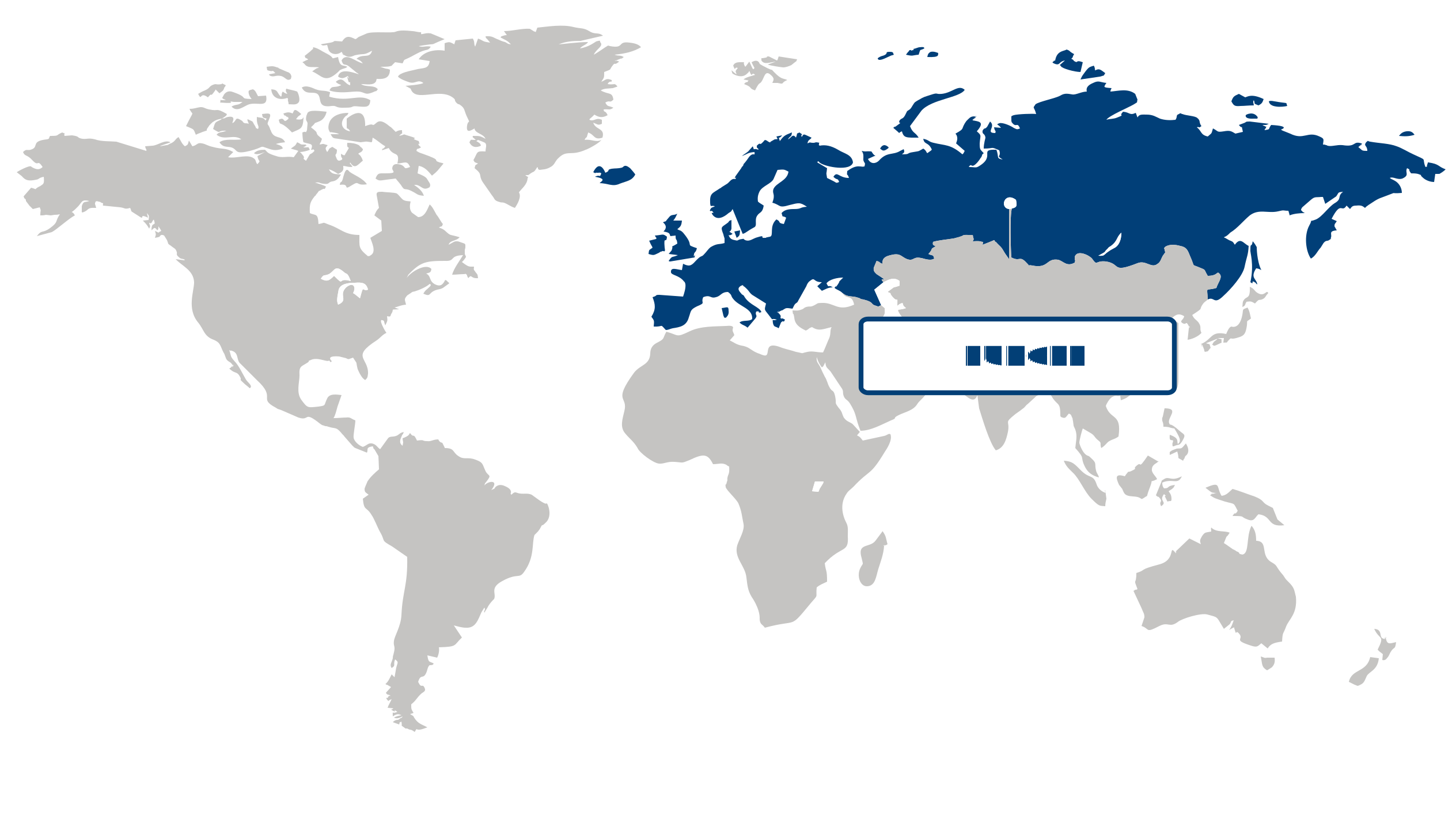
Largest Region
Europe
32.3% Market Share in 2025
Europe captured over 32.3% of the global dental fluoride treatment market in 2025, establishing itself as the largest regional segment. The market’s growth is driven by robust preventive dental-care standards and proactive regulatory frameworks emphasizing caries prevention across the continent. High public awareness of oral hygiene, supported by campaigns from entities like the European Federation of Periodontology, reinforces sustained demand. Additionally, advancements in dental technology and widespread adoption of fluoride varnish and gel treatments contribute to operational efficiency. Strong healthcare infrastructure and collaborative efforts among national public health bodies, such as the UK’s NHS dental programs, further solidify Europe’s leadership. With rising consumer preference for minimally invasive dental care and policies prioritizing oral health, the region offers a promising outlook for investors targeting the dental fluoride treatment market.
Germany anchors Europe’s dental fluoride treatment market through stringent regulatory oversight and advanced preventive care initiatives. Government programs led by the Federal Centre for Health Education actively promote fluoride use, influencing consumer adoption and payer coverage. Germany’s competitive landscape, driven by innovation in fluoride delivery systems, is exemplified by companies like Ivoclar Vivadent investing in clinical research. This environment fosters consistent uptake of fluoride varnish and gels in both pediatric and adult populations. Strategically, Germany’s market dynamics emphasize how regulatory rigor and public health integration underpin broader European market growth prospects.
France plays a pivotal role in Europe’s dental fluoride treatment market with strong cultural emphasis on oral hygiene and public health promotion. National health campaigns supported by the French Ministry of Health, such as the Programme National Nutrition Santé, underline preventive strategies incorporating fluoride treatments. French consumers benefit from wide reimbursement coverage and accessibility facilitated by healthcare institutions like Assurance Maladie. Furthermore, local companies and European subsidiaries actively participate in educational outreach, enhancing penetration of topical fluoride products. France’s cohesive public-private approach to dental care reinforces the overall European momentum, highlighting its significance in sustaining regional market expansion.
Asia Pacific Market Analysis:
Asia Pacific emerged as the fastest-growing region in the dental fluoride treatment market, registering rapid growth with a robust CAGR of 7.35%. This impressive expansion is primarily driven by rising oral-health awareness, a burgeoning population, and expanding access to dental care, specifically in emerging economies within the region. Increased government initiatives, such as Japan’s Ministry of Health campaigns promoting preventative dentistry, and China’s rural healthcare outreach programs, have contributed to shifting consumer preferences toward proactive oral health management. Moreover, investments in dental infrastructure and digital health technologies by both public and private sectors are improving treatment accessibility and quality across urban and rural areas. Industry players like Sunstar and GC Corporation have actively introduced tailored fluoride products resonating with diverse demographics, underscoring the region’s market vibrancy. These dynamics collectively position Asia Pacific as a critical growth hub with sustained opportunities driven by evolving healthcare ecosystems and heightened patient focus on preventive care.
Japan serves as a pivotal market within Asia Pacific’s dental fluoride treatment landscape, characterized by sophisticated consumer demand for premium, scientifically validated fluoride therapies. Heightened health consciousness among aging populations and routine dental check-ups have stimulated demand for advanced fluoride varnishes and gels available through domestic suppliers such as Shofu Inc. Regulatory frameworks encouraging stringent quality standards ensure treatment safety, reinforcing consumer trust. Furthermore, collaborations between Japanese dental associations and manufacturers to promote fluoride use underscore strong institutional support. Consequently, Japan’s mature market dynamics amplify the region’s overall growth potential by setting benchmarks for innovation and quality that other APAC countries increasingly aspire to emulate.
China plays a transformative role in the Asia Pacific dental fluoride treatment market by leveraging its expanding population and growing middle class to broaden dental care access. Government policies, including the Healthy China 2030 initiative, emphasize oral health improvement and integrate fluoride treatments into public health programs, particularly targeting underserved rural regions. Rising disposable incomes coupled with a shift from curative to preventive healthcare approaches have influenced consumer purchasing behavior toward fluoride-containing dental products. Industry leaders like Yunnan Baiyao Group have capitalized on these trends by scaling production and marketing efforts, facilitating deeper market penetration. China’s rapid urbanization and technological adoption in dental clinics reinforce supply chain efficiencies and treatment efficacy, solidifying its role as a cornerstone of the region’s dental fluoride treatment market expansion.
North America Market Trends:
North America held a substantial share in the dental fluoride treatment market, driven largely by robust healthcare infrastructure and increasing preventive dental care awareness. High consumer spending on oral health and proactive government programs, such as those promoted by the Centers for Disease Control and Prevention (CDC), have elevated demand for fluoride-based treatments. Additionally, advancements in dental technologies and streamlined supply chain operations have boosted the availability of innovative fluoride solutions. The presence of leading dental product manufacturers headquartered in the region, backed by strong regulatory frameworks like the U.S. Food and Drug Administration (FDA), further fortifies North America’s commanding market position. Given these dynamics, the region is poised to continue offering attractive opportunities for investment and innovation in dental fluoride treatments, especially as digital dental health platforms gain traction among consumers.
The U.S. remains a pivotal market within North America’s dental fluoride treatment sector, propelled by widespread adoption of preventive oral care and supportive federal oral health initiatives such as those from the National Institute of Dental and Craniofacial Research (NIDCR). Consumer preference for fluoride varnishes and gels, combined with a competitive market featuring companies like Colgate-Palmolive, underscores the country’s leadership in product innovation and market penetration. Furthermore, integration of dental fluoride treatments into school-based programs highlights regulatory commitment to public health, enhancing market accessibility. Strategically, the U.S. market’s emphasis on preventive dental care not only drives domestic growth but also influences regional trends, reinforcing North America’s significant role in the global dental fluoride treatment market.
No card data available for this language/report.
Segment Leadership and Growth Trends
Toothpaste represented the largest share in the dental fluoride treatment market in 2025, driven by rising awareness of preventive dental care and the widespread use of fluoride toothpaste in daily oral hygiene routines. This segment’s leadership reflects strong consumer preferences for convenient, cost-effective solutions that align with global oral health guidelines promoted by organizations such as the American Dental Association. Enhanced formulations incorporating sustainable ingredients and technological advancements, including remineralization boosters, further strengthen toothpaste’s appeal. Major manufacturers like Colgate-Palmolive have actively expanded their product portfolios with fluoride-enriched variants, underscoring competitive dynamics and innovation trends. For both established firms and new entrants, toothpaste offers strategic advantages through broad accessibility and integration into habitual care. Given sustained public health advocacy and increasing regulatory focus on preventive dentistry, the toothpaste segment is expected to maintain its dominance, supported by ongoing investments in product efficacy and consumer education initiatives worldwide.
| Report Segmentation | |||
| Segment | Sub-Segment | Largest Segment | Fastest Growing Segment |
|---|---|---|---|
| Product | Toothpaste, Varnish, Gel, Mouth Rinse, Other products | ||
 Read our Research Approach
Competitive Landscape and Market Positioning
Key players in the dental fluoride treatment market include Church & Dwight, Colgate-Palmolive, Dentsply Sirona, GlaxoSmithKline, 3M, Ivoclar Vivadent, Sunstar, Septodont, Pierre Fabre, and Kuraray Noritake Dental. These companies are distinguished by their robust product portfolios and established global footprints that leverage decades of experience in oral care innovation. With strong brand recognition and comprehensive R&D capabilities, they maintain significant influence on fluoride treatment formulations and delivery methods. The diversity among these leaders—from multinational conglomerates to specialized dental manufacturers—facilitates a broad spectrum of treatment options, supporting varied consumer and professional needs worldwide.The competitive dynamics in the dental fluoride treatment sector are notably shaped by these top players’ pursuit of collaborative ventures and technological advancements. Through partnerships and technology integration, they enhance product efficacy and patient compliance, while expanding clinical applications. Several have refined their strategies by integrating advanced fluoride delivery systems and oral health innovations, which underpin their market resilience. Such concerted efforts to innovate and align with evolving dental health protocols create a continuously shifting landscape where maintaining technological edge and strategic alliances are key to sustaining competitiveness.
Strategic / Actionable Recommendations for Regional Players
In North America, firms could benefit from reinforcing ties with dental research institutions and leveraging digital health technologies to enhance personalized fluoride treatment solutions. Engaging in symbiotic partnerships with dental service providers may foster deeper market penetration amid high consumer health awareness.
For the Asia Pacific region, targeting fast-growing urban centers by adapting products tailored to regional oral health profiles could prove advantageous. Collaborations with local manufacturers might accelerate innovation cycles and regulatory approvals, enhancing access to emerging sub-segments prioritizing preventive dental care.
European stakeholders are well-positioned to capitalize on sustainability trends by innovating eco-friendly fluoride formulations and packaging. Aligning efforts with public oral health initiatives and cross-border alliances could strengthen credibility and expand influence in this mature market characterized by stringent regulatory standards.
Why Choose Us
Specialized Expertise: Our team comprises industry experts with a deep understanding of your market segment. We bring specialized knowledge and experience that ensures our research and consulting services are tailored to your unique needs.
Customized Solutions: We understand that every client is different. That's why we offer customized research and consulting solutions designed specifically to address your challenges and capitalize on opportunities within your industry.
Proven Results: With a track record of successful projects and satisfied clients, we have demonstrated our ability to deliver tangible results. Our case studies and testimonials speak to our effectiveness in helping clients achieve their goals.
Cutting-Edge Methodologies: We leverage the latest methodologies and technologies to gather insights and drive informed decision-making. Our innovative approach ensures that you stay ahead of the curve and gain a competitive edge in your market.
Client-Centric Approach: Your satisfaction is our top priority. We prioritize open communication, responsiveness, and transparency to ensure that we not only meet but exceed your expectations at every stage of the engagement.
Continuous Innovation: We are committed to continuous improvement and staying at the forefront of our industry. Through ongoing learning, professional development, and investment in new technologies, we ensure that our services are always evolving to meet your evolving needs.
Value for Money: Our competitive pricing and flexible engagement models ensure that you get maximum value for your investment. We are committed to delivering high-quality results that help you achieve a strong return on your investment.
Select Licence Type

