



Dental Impression Material Market Size & Growth Forecast 2027–2036, By Segments (End-use, Application, Material Type), Regional Demand Trends (North America, Asia Pacific, Europe), Key Country Insights (U.S., Japan, South Korea, Germany, France, Italy), and Competitive Landscape
Market Size and Growth Outlook
Dental Impression Material Market size stood at USD 962.95 million in 2026 and is predicted to grow at a 9.5% CAGR from 2027 to 2036, attaining USD 2.39 billion by 2036. The industry revenue for 2027 is assessed at USD 1.04 billion.
Base Year Value (2026)
USD 962.95 million
CAGR (2027-2036)
9.50%
Forecast Year Value (2036)
USD 2.39 billion

Historical Data Period
2022-2026

Largest Region
Europe

Forecast Period
2027-2036
Dental Impression Material Market Intelligence Snapshot:
-
Regional Market Dynamics:
- Europe captured a 42.51% market share in 2026, supported by mature dental infrastructure, high restorative procedure volumes, and routine use of precision impression materials across clinical workflows.
- Asia Pacific is expected to grow at an 11.42% CAGR, driven by expanding dental clinics, rising restorative and cosmetic procedures, improved oral healthcare access, and increasing adoption of modern impression materials.
-
Segment Momentum:
- Dental clinics held a 58.59% share in 2026 because they perform a high volume of restorative, prosthetic, and diagnostic procedures that routinely require impression materials.
- Orthodontics is the fastest-growing application segment, driven by increasing demand for precise and repeatable impressions used in treatment planning and customized appliance development.
-
Market Expansion Drivers:
- Rising prevalence of dental caries and edentulism increasing restorative dental procedure volumes.
- Growing adoption of cosmetic dentistry and dental implants driving impression material utilization.
- Expansion of digital impression technologies improving precision and workflow efficiency in dental practices.
-
Leading Market Participants:
Major players in the dental impression material market include 3M Company (United States), Dentsply Sirona Inc. (United States), Envista Holdings Corporation (United States), GC Corporation (Japan), Ivoclar Vivadent AG (Liechtenstein), Kulzer GmbH (Germany), Coltene Holding AG (Switzerland), Shofu Inc. (Japan), Zhermack S.p.A. (Italy), Keystone Dental Inc. (United States).
Global Market Forecast Snapshot:
-
Market Outlook:
- 2026 Market Size: USD 962.95 million
- 2027 Estimated Market Size: USD 1.04 billion.
- Projected Market Size: USD 2.39 billion by 2036
- Growth Forecasts: 9.5% CAGR (2027-2036)
-
Regional and Segment Outlook:
- Leading Regional Market: Europe
- High-Growth Regional Hub: Asia Pacific
- Core Revenue Segment: Dental Clinics (End-use) | Restorative Dentistry (Application) | Alginate (Material Type)
- Emerging Opportunity Segment: Dental Clinics (End-use) | Orthodontics (Application) | Silicone (Material Type)
Market Growth Drivers and Industry Trends
Rising prevalence of dental caries and edentulism increasing restorative dental procedure volumes
A growing burden of dental caries and tooth loss is increasing the number of restorative and prosthodontic procedures, thereby supporting the dental impression material market. Dentists require accurate impressions for crowns, bridges, dentures, and other restorative applications, making impression materials an important component of treatment workflows. As patient demand for tooth replacement and restoration increases, dental practices are performing more procedures that require precise replication of oral structures, supporting consumption of elastomeric, alginate, and other impression materials across clinical settings.
Growing adoption of cosmetic dentistry and dental implants driving impression material utilization
Increasing interest in aesthetic dental treatments and implant-supported restorations is contributing to the dental impression material market by expanding the need for highly accurate dental models and treatment planning. Cosmetic procedures such as veneers and aesthetic restorations require detailed impressions to achieve appropriate fit, occlusion, and appearance, while implant procedures demand precise recording of implant positions and surrounding oral structures. The expanding use of these treatments is increasing demand for impression solutions that can capture fine anatomical details and maintain dimensional stability during restorative workflows.
Expansion of digital impression technologies improving precision and workflow efficiency in dental practices
The adoption of digital impression technologies is reshaping dental workflows by improving scanning accuracy, reducing conventional impression-related handling, and enabling faster transfer of patient data to laboratories and design systems, which will boost the dental impression material market through broader integration of impression workflows. Digital systems can reduce patient discomfort associated with traditional trays and materials while supporting computer-aided design and manufacturing for restorations and prostheses. At the same time, hybrid practices continue to use conventional materials for procedures where physical impressions remain practical, creating demand across both traditional and digitally enabled workflows.
| Growth Driver Assessment Framework | |||||
| Growth Driver | Impact On CAGR | Regulatory Influence | Geographic Relevance | Adoption Rate | Impact Timeline |
|---|---|---|---|---|---|
| Rising prevalence of dental caries and edentulism increasing restorative dental procedure volumes | 2.00% | Moderate | North America, Asia Pacific, Latin America | High | Near Term |
| Growing adoption of cosmetic dentistry and dental implants driving impression material utilization | 1.80% | Moderate | North America, Europe, Asia Pacific | High | Mid Term |
| Expansion of digital impression technologies improving precision and workflow efficiency in dental practices | 1.50% | Moderate | North America, Europe, Asia Pacific | Emerging | Mid Term |
Unlock insights tailored to your business with our bespoke market research solutions - Click to get your customized report now!
Regional Demand Dynamics
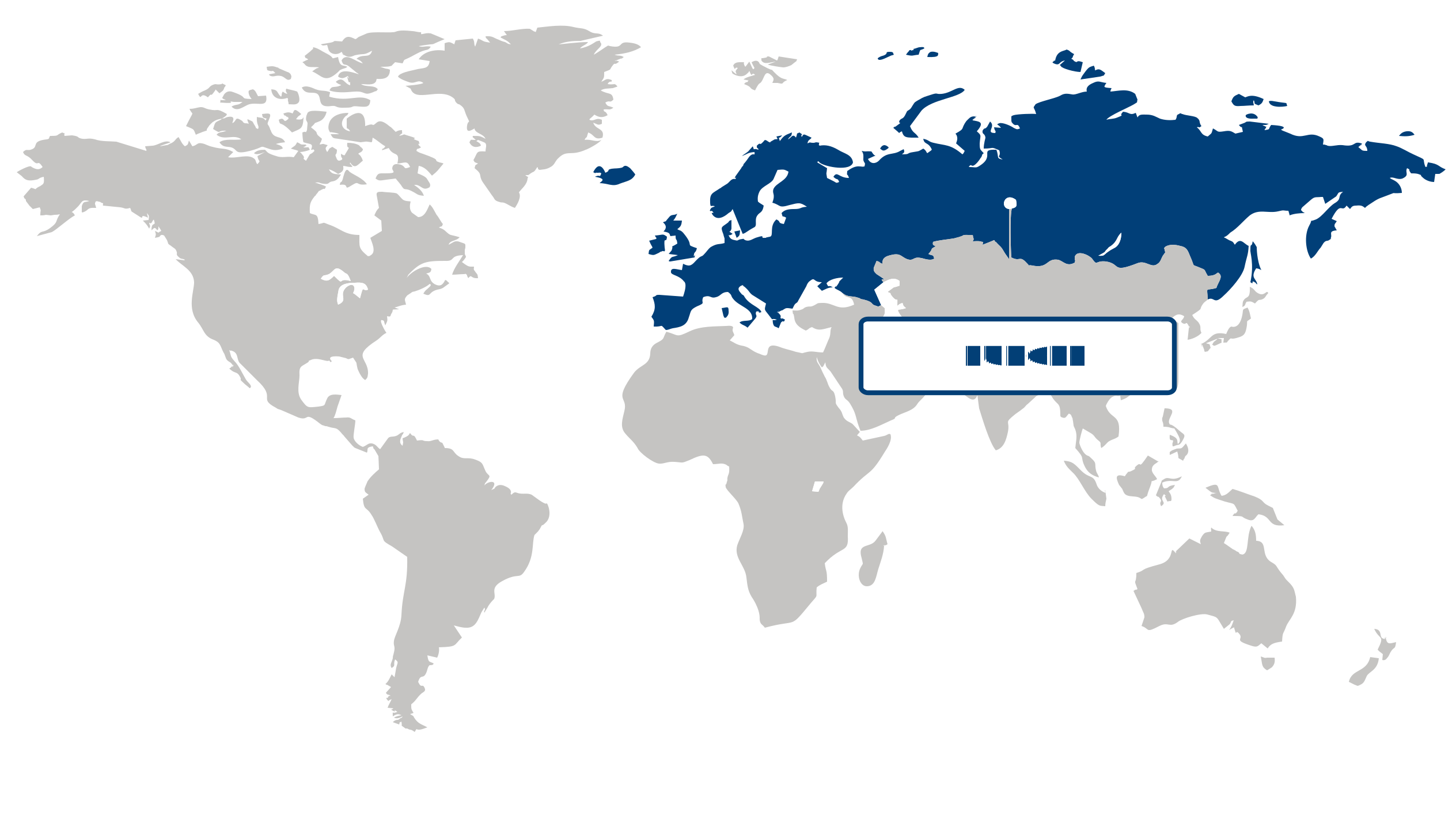
Largest Region
Europe
42.51% Market Share in 2026
Europe (Largest Region) vs Asia Pacific (Fastest-Growing Region)
Europe accounted for the largest share of the dental impression material market at 42.51% in 2026, reflecting well-developed dental care infrastructure, high utilization of restorative and prosthetic procedures, and established standards for dental materials. Growing demand for precise clinical outcomes is supporting the use of high-performance impression materials with improved dimensional stability, accuracy, and handling characteristics. Continued advancement in dental treatment techniques and emphasis on quality care are reinforcing demand across dental practices and laboratories.
Asia Pacific is experiencing the fastest growth, supported by expanding dental healthcare access, increasing awareness of oral health, and rising demand for restorative and prosthetic treatments. Improvements in healthcare infrastructure and the growing availability of modern dental services are widening the patient base for impression-based procedures. Increasing adoption of advanced dental technologies, coupled with expanding private dental practices and greater attention to treatment quality, is creating favorable conditions for broader use of contemporary impression materials.
Key Country Insights
The U.S. market increasingly combines conventional dental impression materials with digital dentistry workflows, improving restorative and orthodontic procedures. Dental practices continue selecting materials that deliver precision, patient comfort, and compatibility with advanced laboratory processes.
Japan continues adopting dental impression materials that enhance procedural accuracy while improving patient comfort during restorative treatments. Dental clinics increasingly value products offering reliable handling characteristics and compatibility with modern prosthetic manufacturing techniques.
South Korea utilizes advanced dental impression materials to meet growing demand for aesthetic and restorative dental procedures. Clinics increasingly prefer products that provide accurate impressions, streamlined workflows, and compatibility with digital prosthetic fabrication systems.
Germany emphasizes high-performance dental impression materials that support precise prosthodontic and restorative procedures. Dental professionals prioritize consistent dimensional accuracy and material quality while integrating efficient clinical and laboratory workflows.
France prioritizes dental impression materials that deliver dependable performance across restorative, prosthetic, and orthodontic applications. Dental professionals continue adopting materials that balance precision, ease of use, and efficient integration into routine clinical practice.
Italy supports demand for dental impression materials through its established prosthetic dentistry expertise and expanding restorative treatment needs. Dental laboratories and clinics increasingly emphasize materials that improve impression accuracy and overall treatment efficiency.
Segment Leadership and Growth Trends
End-use Segment Analysis: Dental Clinics (Largest & Fastest-Growing Segment)
The dental clinics segment accounted for the largest share of 58.59% in 2026 and is also the fastest-growing segment in the dental impression material market, supported by the central role of clinics in diagnostic, restorative, orthodontic, and prosthetic dental procedures. Dental impression materials remain essential for capturing accurate oral structures used in treatment planning and the fabrication of dental restorations and appliances. Increasing demand for routine and specialized dental care, together with the adoption of digital and more precise clinical workflows, is strengthening the need for reliable impression solutions. Improvements in material characteristics such as dimensional stability, setting performance, patient comfort, and handling efficiency are further supporting use across dental practices.
Application Segment Analysis: Restorative Dentistry (Largest Segment) vs Orthodontics (Fastest-Growing Segment)
The restorative dentistry segment held the largest share of 62.9% in 2026, reflecting the extensive use of dental impressions in procedures designed to restore damaged, decayed, or missing teeth. Accurate impressions are important for developing crowns, bridges, dentures, and other restorative solutions that require close adaptation to the patient's oral anatomy. Rising demand for functional and aesthetic dental restoration, combined with greater emphasis on treatment precision, continues to support consumption of impression materials in restorative applications.
Orthodontics is gaining momentum as demand for personalized alignment treatments increases and dental practices adopt more precise approaches to planning and appliance fabrication. Impression materials support the creation of orthodontic models and appliances while enabling clinicians to capture detailed representations of dental structures. The expanding use of customized orthodontic treatment and growing patient interest in improved dental aesthetics are strengthening demand for impression solutions within this application.
| Report Segmentation | |||
| Segment | Sub-Segment | Largest Segment | Fastest Growing Segment |
|---|---|---|---|
| End-use | Dental Clinics, Hospitals, Others | Dental Clinics | Dental Clinics |
| Application | Restorative Dentistry, Orthodontics, Others | Restorative Dentistry | Orthodontics |
| Material Type | Alginate, Silicone, Polyether, Others | Alginate | Silicone |
 Read our Research Approach
Competitive Landscape and Market Positioning
Prominent players in the dental impression material market:
1. 3M Company (United States)
2. Dentsply Sirona Inc. (United States)
3. Envista Holdings Corporation (United States)
4. GC Corporation (Japan)
5. Ivoclar Vivadent AG (Liechtenstein)
6. Kulzer GmbH (Germany)
7. Coltene Holding AG (Switzerland)
8. Shofu Inc. (Japan)
9. Zhermack S.p.A. (Italy)
10. Keystone Dental Inc. (United States)
The dental impression material market is benefiting from continuous innovation in high-precision materials designed to improve patient comfort and clinical accuracy. Manufacturers are investing in advanced formulations with faster setting times, enhanced dimensional stability, and improved handling characteristics for dental professionals. The integration of digital dentistry workflows and compatibility with CAD/CAM technologies is also driving transformation in the dental impression material market.
Why Choose Us
Specialized Expertise: Our team comprises industry experts with a deep understanding of your market segment. We bring specialized knowledge and experience that ensures our research and consulting services are tailored to your unique needs.
Customized Solutions: We understand that every client is different. That's why we offer customized research and consulting solutions designed specifically to address your challenges and capitalize on opportunities within your industry.
Proven Results: With a track record of successful projects and satisfied clients, we have demonstrated our ability to deliver tangible results. Our case studies and testimonials speak to our effectiveness in helping clients achieve their goals.
Cutting-Edge Methodologies: We leverage the latest methodologies and technologies to gather insights and drive informed decision-making. Our innovative approach ensures that you stay ahead of the curve and gain a competitive edge in your market.
Client-Centric Approach: Your satisfaction is our top priority. We prioritize open communication, responsiveness, and transparency to ensure that we not only meet but exceed your expectations at every stage of the engagement.
Continuous Innovation: We are committed to continuous improvement and staying at the forefront of our industry. Through ongoing learning, professional development, and investment in new technologies, we ensure that our services are always evolving to meet your evolving needs.
Value for Money: Our competitive pricing and flexible engagement models ensure that you get maximum value for your investment. We are committed to delivering high-quality results that help you achieve a strong return on your investment.
Select Licence Type

