Direct To Film Printing Market Size & Growth Forecast 2027–2036, By Segments (Type, Film, End Product), Regional Demand Trends (North America, Asia Pacific, Europe), Key Country Insights (U.S., Japan, South Korea, Germany, France, Italy), and Competitive Landscape
Jump to Content
Market Size and Growth Outlook
Direct To Film Printing Market size was estimated at USD 3 billion in 2026 and is projected to grow at a 6.36% CAGR from 2027 to 2036, surpassing USD 5.56 billion by 2036. The industry revenue for 2027 is assessed at USD 3.16 billion.
Get more details on this report
Request Free Sample ReportDirect To Film Printing Market Intelligence Snapshot
Regional Market Dynamics
- Europe holds the leading position through established textile manufacturing, demand for customized garments, and adoption of digital printing workflows that support detailed designs, shorter production runs, and efficient order fulfillment.
- Asia Pacific is expanding rapidly, supported by its large textile manufacturing base, growing apparel customization, increasing e-commerce activity, and demand for on-demand printing and personalized merchandise.
Segment Momentum
- Dedicated DTF printers accounted for 47.7% of the market in 2026 and are also the fastest-growing type. Specialized workflows, consistent transfer production, and demand for customized apparel encourage investment among garment decorators and small printing businesses.
- Hot peel films are the fastest-growing film segment because they allow film removal shortly after pressing, reducing production delays. Faster turnaround and streamlined workflows make them attractive to businesses handling customized apparel and short-run orders.
Market Expansion Drivers
- Growth in promotional and custom printing demand.
- Adoption of DTF printing in textile and packaging industries.
- Technological innovation in DTF inks and equipment.
Leading Market Participants
- Top players in the direct to film printing market include Kornit Digital (Israel), Roland DG (Japan), Epson (Japan), Brother Industries (Japan), Ricoh (Japan), Mimaki Engineering (Japan), DGI Digital Technology (South Korea), ColDesi (US), Aeoon Technologies (Austria), Seiko Instruments (Japan).
Global Market Forecast Snapshot
Market Outlook
- 2026 Market Size: USD 3 billion
- 2027 Estimated Market Size: USD 3.16 billion
- Projected Market Size: USD 5.56 billion by 2036
- Growth Forecast: 6.36% CAGR (2027-2036)
Regional and Segment Outlook
- Leading Regional Market: Europe
- High-Growth Regional Hub: Asia Pacific
- Core Revenue Segment: Type (Dedicated DTF Printers) | Film (Cold Peel Film) | End Product (T-shirts)
- Emerging Opportunity Segment: Type (Dedicated DTF Printers) | Film (Hot Peel Film) | End Product (T-shirts)
Market Growth Drivers and Industry Trends
Growth in promotional and custom printing demand
Growth in promotional and custom printing demand is supporting the adoption of direct-to-film printing by enabling businesses to produce detailed, colorful, and personalized designs across a wide range of apparel and merchandise. The technology provides flexibility for short production runs and customized orders, making it suitable for businesses responding to changing consumer preferences and on-demand printing requirements. Increasing demand for personalized clothing, event merchandise, promotional products, and small-batch designs is encouraging greater use of digital transfer printing. Its ability to reproduce intricate graphics across different fabric types is further supporting its adoption among custom printing businesses.
Adoption of DTF printing in textile and packaging industries
Adoption of DTF printing in textile and packaging industries is expanding the application base of the technology by providing efficient solutions for transferring detailed designs onto diverse surfaces and materials. In textile applications, DTF printing offers flexibility for producing customized garments, accessories, and decorative products without extensive setup requirements. Growing demand for personalized products and flexible production processes is encouraging its integration into small and medium-scale manufacturing operations. Increasing use of digitally printed graphics in packaging and promotional applications is also creating additional opportunities for DTF technology across commercial printing environments.
Technological innovation in DTF inks and equipment
Technological innovation in DTF inks and equipment is strengthening market development by improving print quality, color accuracy, durability, production efficiency, and compatibility with different substrates. Advances in ink formulations are enabling more vibrant and detailed transfers while supporting improved adhesion and wash resistance on finished products. Improvements in printers, film handling systems, curing processes, and workflow automation are also helping streamline production and reduce operational complexity. Continued development of user-friendly equipment and specialized consumables is making DTF printing increasingly accessible to businesses seeking flexible and high-quality digital printing solutions.
| Growth Driver | Impact on CAGR | Regulatory Influence | Geographic Relevance | Adoption Rate | Impact Timeline |
|---|---|---|---|---|---|
| Growth in promotional and custom printing demand | 2.5% | Short term (≤ 2 yrs) | North America; Europe | Low | Fast |
| Adoption of DTF printing in textile and packaging industries | 2% | Medium term (2–5 yrs) | Asia Pacific; Europe | Low | Moderate |
| Technological innovation in DTF inks and equipment | 1.8% | Long term (5+ yrs) | North America; Asia Pacific | Low | Moderate |
Explore Growth Opportunities
Request Free Sample ReportRegional Demand Dynamics
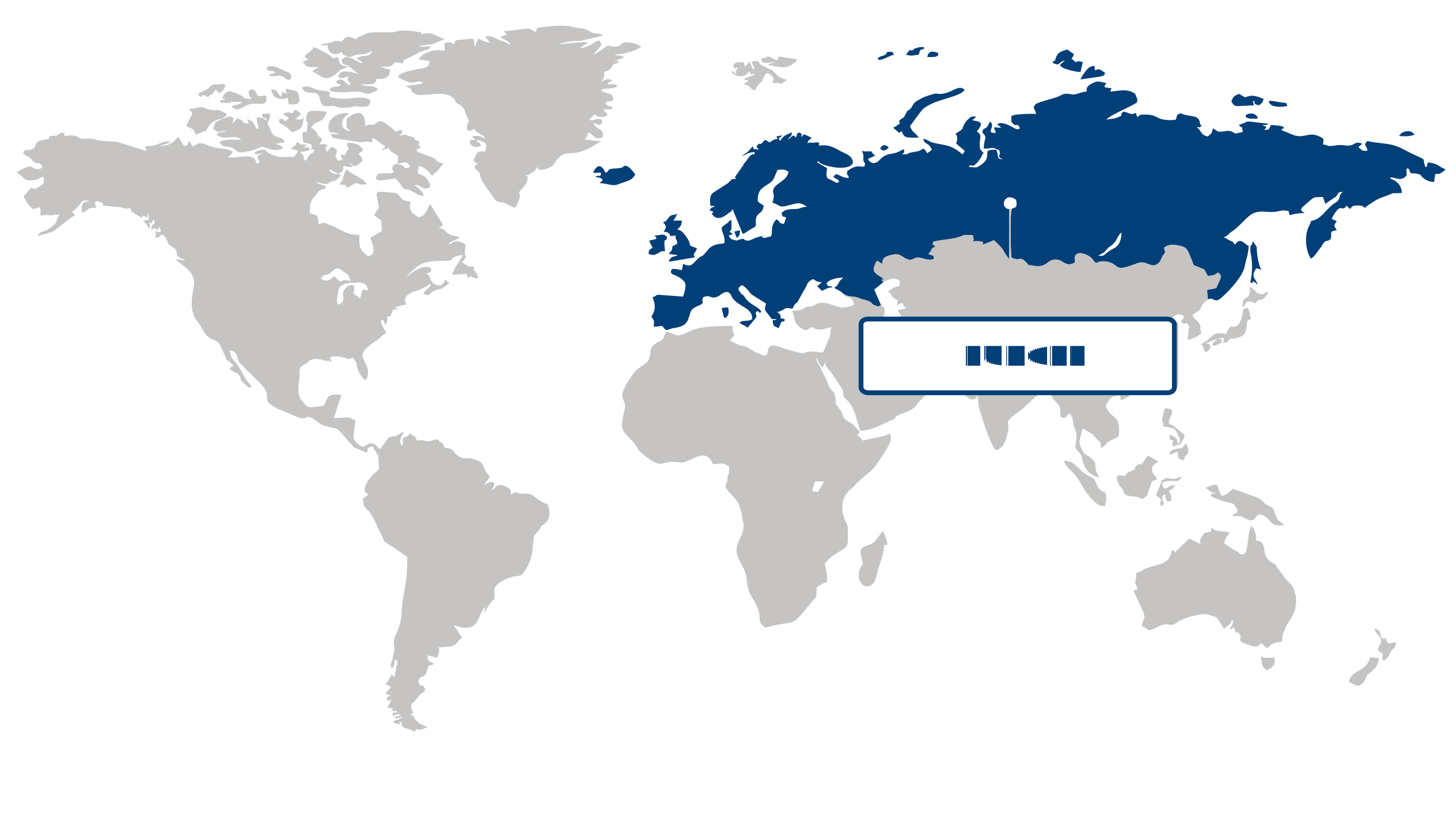
Europe (Largest Region)
Europe direct to film printing market held the largest share in 2026, supported by established textile and apparel manufacturing capabilities, strong demand for customized garments, and increasing adoption of digital textile printing technologies. Direct-to-film printing enables flexible production of detailed and durable designs across diverse fabric types while supporting shorter production runs and customization. Growing demand for personalized apparel and on-demand textile production is encouraging businesses to adopt digital printing workflows. Increasing emphasis on production efficiency, reduced material waste, and flexible order fulfillment is further supporting the integration of direct-to-film printing across European textile markets.
Asia Pacific (Fastest-Growing Region)
Asia Pacific direct to film printing market is expanding rapidly as textile production, apparel customization, and digital printing adoption continue to develop across the region. A large textile manufacturing base provides significant opportunities for the adoption of flexible printing technologies that can support varied designs and smaller production batches. Rising demand for customized clothing, promotional apparel, and digitally printed garments is creating additional applications. Growing e-commerce activity is also encouraging on-demand production and personalized merchandise, while improvements in printing equipment and transfer materials are making direct-to-film workflows increasingly accessible to textile businesses.
| Parameter | North America | Asia Pacific | Europe | Latin America | MEA |
|---|---|---|---|---|---|
| Innovation HubiScaleNascentDeveloping Advanced | |||||
| Cost-Sensitive RegioniScaleLowMedium High | |||||
| Regulatory EnvironmentiScaleRestrictiveNeutral Supportive | |||||
| Demand DriversiScaleWeakModerate Strong | |||||
| Development StageiScaleEmergingDeveloping Developed | |||||
| Adoption RateiScaleLowMedium High | |||||
| New Entrants / StartupsiScaleSparseModerate Dense | |||||
| Macro IndicatorsiScaleWeakStable Strong |
Key Country Insights
United States 🇺🇸
On-Demand Apparel ProductionThe U.S. direct to film printing market is closely tied to short-run apparel, custom merchandise, and on-demand fulfillment, with buyers prioritizing print quality and production flexibility. Commercial focus is shifting toward efficient transfer workflows, broader garment compatibility, and equipment that supports rapid customization without excessive setup requirements.
Germany 🇩🇪
Industrial Print EfficiencyGermany’s direct to film printing market emphasizes dependable production, repeatable output, and integration into professional textile-decoration operations. Commercial priorities include automated workflows, durable transfer quality, efficient powder application and curing, and systems capable of supporting customized orders while maintaining consistent production standards.
Japan 🇯🇵
Precision Transfer PrintingJapan’s direct to film printing market is oriented toward precise, high-quality customization across apparel and specialty textile applications. Equipment and consumables that deliver fine detail, consistent color reproduction, compact operation, and reliable repeatability are particularly relevant for businesses balancing customized production with limited operating space.
South Korea 🇰🇷
Fashion Customization DemandSouth Korea’s direct to film printing market benefits from customization across fashion, merchandise, and small-batch textile production. Market priorities include vibrant transfer output, rapid design changes, streamlined digital-to-print workflows, and equipment suited to businesses serving trend-sensitive apparel and personalized product orders.
France 🇫🇷
Premium Textile DecorationFrance’s direct to film printing market is particularly relevant to customized apparel, creative merchandise, and premium textile decoration. Suppliers can differentiate through transfer quality, fabric versatility, and efficient small-batch production, enabling printers and fashion-oriented businesses to respond to varied designs without conventional screen-printing setup constraints.
Italy 🇮🇹
Fashion-Led Custom PrintingItaly’s direct to film printing market is closely connected with apparel customization, fashion-oriented merchandise, and flexible short-run production. Commercial priorities include high-resolution transfers, compatibility with varied textiles, efficient sampling, and production systems that allow printers and garment businesses to move quickly from digital designs to finished products.
Direct To Film Printing Market Share (%), by Type, 2026
Go beyond the chart, access full insights & data tables
Request Free Sample ReportType Segment Analysis: Dedicated DTF Printers (Largest & Fastest-Growing Segment)
The dedicated DTF printers segment accounted for the largest share of the direct-to-film printing market in 2026, representing 47.7%, while also registering the fastest growth as businesses increasingly seek specialized equipment for efficient and flexible garment decoration. Dedicated DTF printers are designed specifically for the direct-to-film workflow, enabling consistent transfer production while supporting vibrant and detailed graphics across a broad range of fabrics. Their ability to streamline printing and transfer operations makes them attractive to apparel decorators, custom printing businesses, and small-scale production environments seeking greater control over turnaround times and print quality. In addition, growing demand for customized apparel, short-run production, and on-demand printing is encouraging investment in dedicated equipment. Improvements in printhead technology, color reproduction, workflow automation, and overall operating efficiency are further supporting adoption, particularly among users looking to expand production capabilities without relying on conventional garment printing processes.
Film Segment Analysis: Cold Peel Film (Largest Segment) vs Hot Peel Film (Fastest-Growing Segment)
The cold peel film segment represented the largest share of the direct-to-film printing market's film segment in 2026, supported by its established use in transfer workflows where the printed film is allowed to cool before separation. This approach can provide reliable transfer handling and help maintain print integrity during application, making cold peel films suitable for a wide range of garment decoration requirements. Their compatibility with established DTF processes and broad usability across apparel applications contribute to continued demand. At the same time, the hot peel film segment is emerging as the fastest-growing film type as users increasingly prioritize faster production cycles and improved workflow efficiency. Hot peel films allow the transfer film to be removed shortly after pressing, helping reduce waiting time between production stages and supporting faster order fulfillment. Growing demand for rapid customization, short production runs, and streamlined garment decoration processes is therefore encouraging greater adoption of hot peel solutions.
End Product Segment Analysis: T-shirts (Largest & Fastest-Growing Segment)
The T-shirts segment accounted for the largest share of the direct-to-film printing market's end product segment in 2026 and is also expected to experience the fastest growth, reflecting the strong suitability of DTF technology for customized apparel production. T-shirts provide a versatile surface for detailed graphics, promotional designs, personalized artwork, logos, and small-batch printing, making them a major application area for transfer-based decoration. The increasing popularity of customized clothing and demand for on-demand apparel are supporting the use of DTF printing as businesses seek flexible production methods that can accommodate varied designs without extensive setup requirements. In addition, the technology's ability to produce vibrant prints across different fabric compositions is expanding its relevance for T-shirt decoration. Growth in personalized fashion, event merchandise, small business apparel, and made-to-order products is expected to further strengthen demand for DTF-printed T-shirts.
| Segment | Sub-Segment | Largest Segment | Fastest Growing |
|---|---|---|---|
| Type | Dedicated DTF Printers, Hybrid Printers, Roll-to-Roll Printers, UV Printers | Dedicated DTF Printers | Dedicated DTF Printers |
| Film | Hot Peel Film, Cold Peel Film | Cold Peel Film | Hot Peel Film |
| End Product | T-shirts, Hoodies, Sportswear, Caps, Bags, Others | T-shirts | T-shirts |
Unlock insights tailored to your business with our bespoke market research solutions.
Click to get your customized report now.
Competitive Landscape and Market Positioning
Analyst Perspective:
Operational efficiency and output repeatability define competitiveness in the direct-to-film printing market. Success depends heavily on managing pigment-rich formulations—particularly high-opacity white inks—via automated circulation systems and durable printheads that prevent clogging and downtime. Seamless integration between automated powder application and curing lines is equally vital, as it ensures consistent transfer adhesion while limiting material waste across cotton, polyester, and performance blends. Print providers ultimately look beyond initial hardware costs, favoring equipment suppliers that offer reliable multi-textile wash fastness, accessible routine maintenance, and clear operational guidance to minimize garment rejections and maximize high-volume commercial throughput.
Key companies in the direct to film printing market:
- Kornit Digital (Israel)
- Roland DG (Japan)
- Epson (Japan)
- Brother Industries (Japan)
- Ricoh (Japan)
- Mimaki Engineering (Japan)
- DGI Digital Technology (South Korea)
- ColDesi (US)
- Aeoon Technologies (Austria)
- Seiko Instruments (Japan)
| Company | Market Share | Company Revenue | Revenue CAGR (%) | Product Portfolio | Geographic Presence | Innovation / R&D Focus | Strategic Developments |
|---|---|---|---|---|---|---|---|
| Kornit Digital (Israel) | |||||||
| Roland DG (Japan) | |||||||
| Epson (Japan) | |||||||
| Brother Industries (Japan) | |||||||
| Ricoh (Japan) | |||||||
| Mimaki Engineering (Japan) | |||||||
| DGI Digital Technology (South Korea) | |||||||
| ColDesi (US) | |||||||
| Aeoon Technologies (Austria) | |||||||
| Seiko Instruments (Japan) |
Industry Development/News
| Company Name | Date | Key Development |
|---|---|---|
| Roland DG | June 2026 | Unveiled the VersaStudio BY2-20, a production-ready direct-to-film printing system designed for compact apparel workflows. The rollout strategically expands the company's direct-to-film portfolio toward smaller-scale production environments, providing growing apparel businesses with a dedicated, space-efficient solution. |
| Brother | February 2026 | Launched the DTRX, a next-generation industrial direct-to-film printing system engineered specifically for professional, high-volume production environments. This launch strengthens Brother's competitive footprint in the industrial segment, catering directly to commercial apparel decorators requiring robust throughput capabilities. |
| Mimaki | April 2025 | Announced the UJV300DTF-75, representing its first UV-curable direct-to-film printer designed for decorating irregular or rounded surfaces. This technological innovation broadens application possibilities into sign graphics and interior elements while integrating safer ink formulations free from substances of very high concern. |
| Seiko Epson Corporation | February 2025 | Launched the SC-G6000, marking the company's formal entry into the commercial direct-to-film printing market. The roll-to-roll system leverages proprietary core inkjet technology to deliver high-quality fabric transfers, establishing a versatile and efficient production option for industrial textile printing applications. |
| Caldera | September 2024 | Launched a specialized direct-to-film software solution aimed at streamlining digital textile production workflows. The platform optimizes image preparation to achieve high-quality transfers efficiently, removing technical complexities for operators without requiring specialized graphic design expertise. |
| Big Frog Custom T-Shirts & More | September 2023 | Partnered with Axiom America to deploy advanced Arcus direct-to-film printing systems across nearly 100 franchise locations nationwide. This large-scale operational rollout significantly enhances in-house custom decoration capabilities, reduces third-party outsourcing dependencies, and shortens turnaround times for retail customers. |
Customize Your Report
Explore examples of how this report can be tailored to different research needs, including custom segments, additional topics or chapters, and related reports. Click a section of the wheel or its numbered marker to explore the available options.
Direct To Film Printing Market — Custom Segments
| Segment | Sub-Segment |
|---|---|
| Customer Type | Garment Manufacturers, Print Service Providers, Promotional Product Businesses, Small & Home-Based Printers |
| Automation Level | Manual, Semi-Automated, Fully Automated |
| Distribution Channel | Direct Sales, Distributors & Dealers, Online Channels |
Direct To Film Printing Market — Custom TOC
| Custom Chapter | Chapter Details |
|---|---|
| DTF Print Shop Business Economics |
|
| Apparel Customization Demand Mapping |
|
| DTF Technology Substitution Assessment |
|
Need a different cut of the data?
Request Custom ResearchFrequently Asked Questions
What is the overall size of the direct to film printing market?
What is the forecasted size of the direct to film printing industry?
How is demand for personalized and short-run products accelerating DTF printing adoption?
How are advances in DTF inks and equipment strengthening the technology's commercial value?
Why do dedicated DTF printers dominate the direct-to-film printing market?
How are hot peel films creating growth opportunities in the direct-to-film printing market?
Why does Europe lead the direct-to-film printing market?
What is driving direct-to-film printing growth in Asia Pacific?
Which companies dominate the direct to film printing landscape?
Our Clients
"The report provided us with a clear direction, and the level of detail was beyond what we expected. I would definitely recommend their services to others."
Haier Appliances
"The collaboration with Fundamental Business Insights has added significant value to our decision-making process, and we look forward to continuing this partnership for our future market research requirements."
Luxottica Group S.p.A.
"The team at FBI delivered an exceptional research report. The insights on industry innovations were particularly impressive and added a lot of value to the overall report."
Nike
Our Research Team & Methodology
Every Fundamental Business Insights report is built by a dedicated vertical research team, validated through a structured primary-and-secondary methodology, and reviewed for accuracy before it reaches you.
This report was prepared by the Consumer Goods & Services Research Team at Fundamental Business Insights, a dedicated research group specializing in global consumer markets, retail industries, and service-oriented businesses. The team closely tracks evolving consumer preferences, purchasing behavior, product innovation, brand strategies, retail and e-commerce developments, pricing trends, distribution channels, sustainability initiatives, demographic shifts, and changing lifestyle patterns to deliver timely and reliable market intelligence. The research is developed using a structured methodology that combines primary discussions with manufacturers, brand owners, retailers, distributors, service providers, industry experts, and other key stakeholders, along with company annual reports, government consumer statistics, regulatory publications, industry associations, retail market data, trade publications, and other authoritative secondary sources. Market estimates are validated through multiple research techniques, including top-down and bottom-up analysis, before undergoing an internal quality review to ensure accuracy, consistency, and methodological integrity prior to publication.
Delivery
Published
Available
Support
- Market Size & Forecast
- Market Segmentation
- Regional Analysis
- Growth Drivers & Challenges
- Market Dynamics
- Competitive Landscape
- Company Profiles
- Competitive Benchmarking
- Mergers & Acquisitions
- Market Share Analysis or Key Company Strategies
- Value Chain Analysis
- Porter's Five Forces
- PESTLE Analysis
- Pricing Trends
- Supply-Demand Analysis
- Technology Landscape
- Regulatory Landscape
- Investment & Funding Landscape
- Emerging Opportunities
- Future Market Outlook