



Direct To Garment Printing Market Size & Growth Forecast 2027–2036, By Segments (Operation, Substrate, Application, Ink Type), Regional Demand Trends (North America, Asia Pacific, Europe), Key Country Insights (U.S., Japan, South Korea, Germany, France, Italy), and Competitive Landscape
Market Size and Growth Outlook
Direct To Garment Printing Market size was worth USD 2.4 billion in 2026 and is poised to grow at a 13.4% CAGR between 2027 and 2036, surpassing USD 8.44 billion by 2036. The industry revenue for 2027 is assessed at USD 2.67 billion.
Base Year Value (2026)
USD 2.4 billion
CAGR (2027-2036)
13.40%
Forecast Year Value (2036)
USD 8.44 billion

Historical Data Period
2022-2026

Largest Region
Europe

Forecast Period
2027-2036
Direct To Garment Printing Market Intelligence Snapshot:
-
Regional Market Dynamics:
- Europe held a 38.90% market share in 2026, supported by a strong apparel customization ecosystem and widespread adoption of digital textile printing for efficient on-demand production.
- Asia Pacific is forecast to grow at a 13.89% CAGR as garment manufacturers adopt flexible digital printing to support smaller production runs, faster design changes, and growing customization demand.
-
Segment Momentum:
- Multi Pass held a 59.94% market share in 2026 because it delivers consistent print quality, color depth, and design flexibility, making it well suited for custom and short-run garment production.
- Polyester is growing fastest as demand expands for activewear and functional apparel, encouraging printers to support synthetic fabrics and serve broader garment applications.
-
Market Expansion Drivers:
- Rising demand for personalized apparel accelerating on-demand digital garment printing adoption.
- E-commerce expansion enabling scalable customized apparel fulfillment and rapid production cycles.
- Sustainable production methods reducing textile waste through digital small-batch manufacturing models.
-
Leading Market Participants:
Leading companies in the direct to garment printing market include Kornit Digital Ltd. (Israel), Seiko Epson Corporation (Japan), Brother Industries, Ltd. (Japan), Mimaki Engineering Co., Ltd. (Japan), Roland DG Corporation (Japan), Ricoh Company, Ltd. (Japan), Konica Minolta, Inc. (Japan), Durst Phototechnik AG (Italy), aeoon Technologies GmbH (Austria), M&R Printing Equipment, Inc. (United States).
Global Market Forecast Snapshot:
-
Market Outlook:
- 2026 Market Size: USD 2.4 billion
- 2027 Estimated Market Size: USD 2.67 billion.
- Projected Market Size: USD 8.44 billion by 2036
- Growth Forecasts: 13.4% CAGR (2027-2036)
-
Regional and Segment Outlook:
- Leading Regional Market: Europe
- High-Growth Regional Hub: Asia Pacific
- Core Revenue Segment: Multi Pass (Operation) | Cotton (Substrate) | Clothing/Apparel (Application) | Pigment (Ink Type)
- Emerging Opportunity Segment: Single Pass (Operation) | Polyester (Substrate) | Home Decor (Application) | Reactive (Ink Type)
Market Growth Drivers and Industry Trends
Rising demand for personalized apparel accelerating on-demand digital garment printing adoption
Growing consumer interest in customized clothing, unique designs, and personalized fashion is creating favorable conditions for the direct to garment printing market by enabling manufacturers and sellers to produce detailed graphics without relying on conventional mass-production processes. Digital garment printing allows designs to be applied directly to finished apparel with greater flexibility across colors, artwork, and product variations. This capability is particularly relevant for customized merchandise, limited collections, and individualized orders where traditional printing methods can involve additional setup requirements. The ability to produce differentiated apparel in response to specific customer preferences is encouraging businesses to incorporate digital printing into more flexible production models.
E-commerce expansion enabling scalable customized apparel fulfillment and rapid production cycles
The expansion of online apparel commerce is supporting demand for flexible production technologies capable of responding to orders without requiring extensive physical inventory, which will boost the direct to garment printing market growth. E-commerce sellers can offer broader ranges of customized products while producing garments closer to the point of demand, allowing designs to be created after an order is received. Digital printing supports short production runs and rapid design changes, making it suitable for online business models that frequently introduce new artwork, seasonal collections, or customer-specific products. Its compatibility with on-demand fulfillment also enables apparel businesses to manage product variety without committing to large quantities of every design.
Sustainable production methods reducing textile waste through digital small-batch manufacturing models
The growing focus on resource efficiency and waste reduction is encouraging apparel producers to consider digital manufacturing approaches that limit unnecessary production, creating opportunities for the direct to garment printing market. Small-batch and on-demand printing can reduce the need to manufacture large quantities of products before consumer demand is established, helping limit unsold apparel and associated material waste. Digital workflows can also simplify production for short runs by reducing the need for extensive setup and dedicated printing infrastructure associated with some conventional methods. These characteristics align with apparel manufacturing strategies that emphasize more responsive production, efficient material utilization, and reduced excess inventory.
| Growth Driver Assessment Framework | |||||
| Growth Driver | Impact On CAGR | Regulatory Influence | Geographic Relevance | Adoption Rate | Impact Timeline |
|---|---|---|---|---|---|
| Rising demand for personalized apparel accelerating on-demand digital garment printing adoption | 2.00% | Low | North America, Europe | High | Near Term |
| E-commerce expansion enabling scalable customized apparel fulfillment and rapid production cycles | 1.70% | Low | Asia Pacific, North America | High | Near Term |
| Sustainable production methods reducing textile waste through digital small-batch manufacturing models | 1.50% | Moderate | Europe, Asia Pacific | Medium | Mid Term |
Unlock insights tailored to your business with our bespoke market research solutions - Click to get your customized report now!
Regional Demand Dynamics
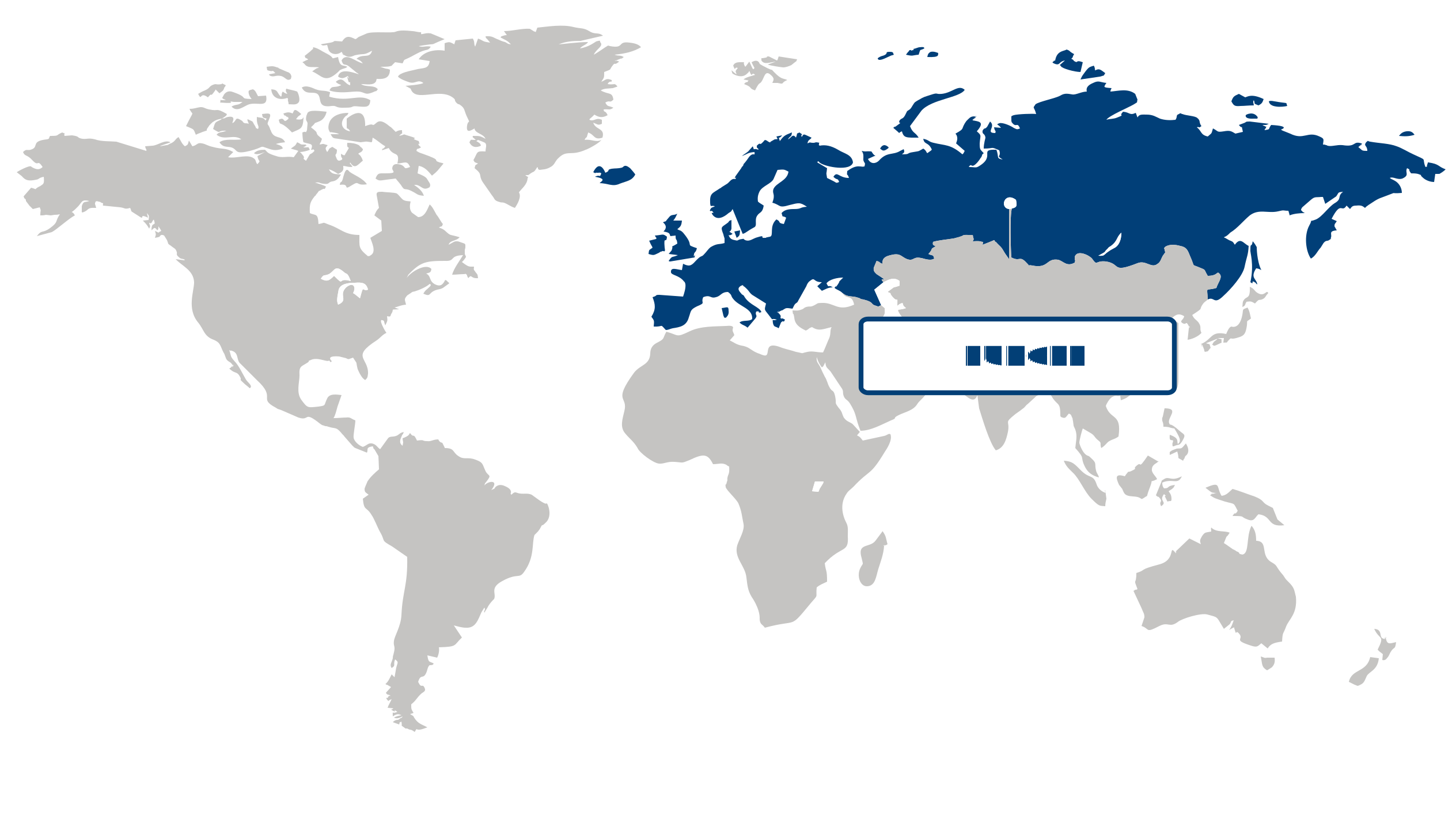
Largest Region
Europe
38.9% Market Share in 2026
Europe (Largest Region) vs Asia Pacific (Fastest-Growing Region)
Europe held the largest share of the direct to garment printing market at 38.90% in 2026, supported by a strong apparel and textile design ecosystem, demand for customized clothing, and growing preference for flexible digital production methods. Direct-to-garment printing enables shorter production runs, detailed graphics, and personalized designs without the extensive setup associated with conventional printing processes. Increasing demand for on-demand apparel and efforts to reduce excess inventory and material waste are further supporting adoption among fashion, promotional, and specialty textile businesses.
Asia Pacific is the fastest-growing regional market, benefiting from its extensive textile and apparel manufacturing base, expanding customization demand, and rapid development of digital printing capabilities. Manufacturers are increasingly adopting flexible printing technologies to respond to shorter production cycles, changing consumer preferences, and demand for personalized garments. Growth in online fashion commerce and custom apparel businesses is also encouraging wider use of direct-to-garment printing, particularly where efficient small-batch production and design flexibility are commercially important.
Key Country Insights
The U.S. market for direct to garment printing is driven by demand for customized apparel, small production runs, and online merchandising. Brands and print service providers are investing in faster printing systems to support e-commerce fulfillment and personalized product offerings.
In Japan, direct to garment printing is being adopted by niche fashion brands and creators producing limited-edition apparel. The market favors compact, high-precision printing systems that can support detailed designs and rapid product personalization.
South Korea is leveraging direct to garment printing to serve expanding demand for entertainment merchandise and influencer-led apparel brands. Print providers are focusing on quick turnaround capabilities and digital workflows that support customized, low-volume production.
Germany is emphasizing direct to garment printing for high-quality customized apparel and short-run production. Demand is supported by fashion brands and promotional product companies seeking flexible printing solutions with improved color consistency and lower inventory requirements.
France is using direct to garment printing to expand personalized fashion offerings and limited collections. The technology is increasingly adopted by independent designers and apparel retailers seeking flexible manufacturing methods that reduce excess inventory and support design experimentation.
Italy's direct to garment printing market is supported by small and medium apparel businesses producing customized garments and promotional items. Companies are adopting digital printing technologies that allow rapid design changes and efficient production of premium short-run apparel.
Segment Leadership and Growth Trends
Operation Segment Analysis: Multi Pass (Largest Segment) vs Single Pass (Fastest-Growing Segment)
The multi pass segment held the largest share of the direct to garment printing market at 59.94% in 2026, supported by its ability to deliver detailed and high-quality prints across a broad range of garment designs. Multiple print passes allow printers to build up ink coverage and achieve richer color reproduction, making the technology suitable for customized apparel, intricate graphics, and applications where print quality is a priority. Continued demand for personalized clothing and short-run production is reinforcing the importance of multi-pass systems among apparel printing businesses.
Single pass technology is gaining traction as garment printers increasingly prioritize production speed, workflow efficiency, and higher throughput. By reducing the need for repeated printhead passes, single-pass systems can support faster processing and help businesses respond more efficiently to growing demand for customized apparel. The expansion of on-demand printing and digitally enabled textile production is further encouraging interest in technologies capable of combining productivity with consistent print output.
Substrate Segment Analysis: Cotton (Largest Segment) vs Polyester (Fastest-Growing Segment)
Cotton represented the largest share of the substrate segment in the direct to garment printing market in 2026, reflecting its widespread use in apparel and its strong compatibility with direct-to-garment printing processes. Cotton fabrics provide a suitable surface for absorbing water-based textile inks and producing detailed, vibrant designs, making them particularly attractive for customized clothing and everyday apparel. The popularity of cotton garments across casualwear and personalized fashion continues to support its strong position within the substrate landscape.
Polyester is emerging as the fastest-growing substrate as demand expands for performance-oriented and synthetic apparel. Its use in sportswear, activewear, promotional garments, and other applications where durability and moisture-management properties are valued is creating additional opportunities for direct-to-garment printing. Advances in ink formulations and printing processes designed for synthetic fabrics are also helping address traditional compatibility challenges, supporting wider adoption of polyester-based garments.
| Report Segmentation | |||
| Segment | Sub-Segment | Largest Segment | Fastest Growing Segment |
|---|---|---|---|
| Operation | Single Pass, Multi Pass | Multi Pass | Single Pass |
| Substrate | Cotton, Silk, Polyester, Others | Cotton | Polyester |
| Application | Clothing/Apparel, Home Decor, Soft Signage, Industrial | Clothing/Apparel | Home Decor |
| Ink Type | Sublimation, Pigment, Reactive, Acid, Others | Pigment | Reactive |
 Read our Research Approach
Competitive Landscape and Market Positioning
Major players in the direct to garment printing market:
1. Kornit Digital Ltd. (Israel)
2. Seiko Epson Corporation (Japan)
3. Brother Industries Ltd. (Japan)
4. Mimaki Engineering Co. Ltd. (Japan)
5. Roland DG Corporation (Japan)
6. Ricoh Company Ltd. (Japan)
7. Konica Minolta Inc. (Japan)
8. Durst Phototechnik AG (Italy)
9. aeoon Technologies GmbH (Austria)
10. M&R Printing Equipment Inc. (United States)
The direct to garment printing market is advancing through improvements in printing precision and production flexibility. Development efforts are increasingly focused on enhancing color accuracy and material compatibility. New system introductions are enabling faster customization capabilities for end users. The direct to garment printing market reflects a shift toward high-efficiency, on-demand textile printing solutions.
Industry Development/News
| Company Name | Date | Key Development |
|---|---|---|
| Epson | Jan-24 | Launched the SureColor F1070, an entry-level DTG printer supporting both DTG and direct-to-film (DTFilm) applications. This compact, affordable solution targets small business owners and home-based printers, addressing a strategic gap in the market for accessible, high-quality, small-batch garment production technology. |
| Ricoh | Feb-24 | Released the RICOH Ri 4000, an industrial-grade DTG printer engineered for 100% polyester apparel. Featuring an integrated automatic pre-treatment system, the device significantly enhances operational efficiency and print consistency, facilitating high-quality customization for the sportswear and promotional apparel sectors. |
| Printeez | Sep-24 | Established a new manufacturing hub in Lakewood Ranch, Florida, marking the company’s first U.S.-based production facility. This strategic investment expands the company's geographical footprint and increases its overall production capacity to meet rising demand for custom apparel services within the North American market. |
Why Choose Us
Specialized Expertise: Our team comprises industry experts with a deep understanding of your market segment. We bring specialized knowledge and experience that ensures our research and consulting services are tailored to your unique needs.
Customized Solutions: We understand that every client is different. That's why we offer customized research and consulting solutions designed specifically to address your challenges and capitalize on opportunities within your industry.
Proven Results: With a track record of successful projects and satisfied clients, we have demonstrated our ability to deliver tangible results. Our case studies and testimonials speak to our effectiveness in helping clients achieve their goals.
Cutting-Edge Methodologies: We leverage the latest methodologies and technologies to gather insights and drive informed decision-making. Our innovative approach ensures that you stay ahead of the curve and gain a competitive edge in your market.
Client-Centric Approach: Your satisfaction is our top priority. We prioritize open communication, responsiveness, and transparency to ensure that we not only meet but exceed your expectations at every stage of the engagement.
Continuous Innovation: We are committed to continuous improvement and staying at the forefront of our industry. Through ongoing learning, professional development, and investment in new technologies, we ensure that our services are always evolving to meet your evolving needs.
Value for Money: Our competitive pricing and flexible engagement models ensure that you get maximum value for your investment. We are committed to delivering high-quality results that help you achieve a strong return on your investment.
Select Licence Type

