Dried Fruit Market Size & Growth Forecast 2027–2036, By Segments (Product, Category, Distribution Channel), Regional Demand Trends (North America, Asia Pacific, Europe), Key Country Insights (U.S., Japan, South Korea, Germany, France, Italy), and Competitive Landscape
Jump to Content
Market Size and Growth Outlook
Dried Fruit Market size was estimated at USD 13.22 billion in 2026 and is projected to grow at a 5.32% CAGR from 2027 to 2036, surpassing USD 22.2 billion by 2036. The industry revenue for 2027 is assessed at USD 13.81 billion.
Get more details on this report
Request Free Sample ReportDried Fruit Market Intelligence Snapshot
Regional Market Dynamics
- Europe accounted for 31.86% of the market in 2026, supported by established consumption habits, mature food processing, extensive retail availability, and consistent demand across multiple food applications.
- Asia Pacific is projected to grow at a 6.44% CAGR, driven by changing food preferences, rising packaged food consumption, expanding modern retail, and stronger distribution of convenient snack products.
Segment Momentum
- Dates captured a 47.81% share in 2026 due to widespread use in direct consumption, bakery, confectionery, and traditional foods, supported by strong consumer familiarity and established trade channels.
- Organic dried fruit is expanding fastest as buyers increasingly favor products associated with cleaner sourcing, transparent production methods, and differentiated purchasing preferences over conventional alternatives.
Market Expansion Drivers
- Rising health-conscious snacking trends increasing demand for natural dried fruit products.
- Expansion of e-commerce and online grocery platforms boosting dried fruit accessibility.
- Advancements in AI-enabled drying and processing technologies improving product quality and yield.
Leading Market Participants
- Top players in the dried fruit market include Sun-Maid Growers of California (United States), Sunsweet Growers Inc. (United States), Traina Foods, Inc. (United States), Bergin Fruit and Nut Company, Inc. (United States), Al Foah Company PJSC (United Arab Emirates), Red River Foods Incorporated (United States), Geobres Nemean Currants and Dried Fruits S.A. (Greece), Kiantama Oy (Finland), Angas Park Fruit Company Pty Ltd. (Australia), Sunbeam Foods Pty Ltd. (Australia).
Global Market Forecast Snapshot
Market Outlook
- 2026 Market Size: USD 13.22 billion
- 2027 Estimated Market Size: USD 13.81 billion.
- Projected Market Size: USD 22.2 billion by 2036
- Growth Forecast: 5.32% CAGR (2027-2036)
Regional and Segment Outlook
- Leading Regional Market: Europe
- High-Growth Regional Hub: Asia Pacific
- Core Revenue Segment: Dates (Product) | Conventional (Category) | Offline (Distribution Channel)
- Emerging Opportunity Segment: Cranberries (Product) | Organic (Category) | Online (Distribution Channel)
Market Growth Drivers and Industry Trends
Rising health-conscious snacking trends increasing demand for natural dried fruit products
Changing consumer attitudes toward nutrition and healthier snacking are creating favorable demand conditions for the dried fruit market, as consumers increasingly seek convenient foods perceived as more natural and nutrient-rich alternatives to heavily processed snacks. Dried fruits offer portability and extended usability while retaining many of the characteristic flavors and nutritional attributes associated with fresh fruit, making them suitable for consumption between meals, at work, during travel, and as additions to breakfast or other foods. Growing interest in clean-label eating and naturally sourced ingredients is also encouraging consumers to examine product composition more closely, supporting demand for dried fruit varieties with minimal processing and limited added ingredients.
Expansion of e-commerce and online grocery platforms boosting dried fruit accessibility
The rapid development of digital retail channels is widening consumer access to dried fruit products, supporting the dried fruit market by making a broader assortment available beyond conventional physical stores. Online grocery platforms enable shoppers to compare product varieties, package formats, ingredients, and prices while purchasing from home, which is particularly useful for consumers seeking specialized or less commonly stocked dried fruit options. Digital distribution also allows producers and retailers to reach customers across a wider geographic area without relying solely on traditional shelf space. Subscription purchasing, doorstep delivery, and convenient online replenishment further support recurring consumption of dried fruit products among digitally engaged households.
Advancements in AI-enabled drying and processing technologies improving product quality and yield
The integration of artificial intelligence into drying and processing operations is improving production control and supporting the dried fruit market through more efficient management of product quality and processing conditions. AI-enabled systems can analyze variables such as temperature, moisture levels, drying duration, and product characteristics to help optimize processing parameters for different fruit types. More precise monitoring can reduce inconsistencies in texture, color, and moisture content while helping processors identify deviations during production. Improved process control can also contribute to better raw material utilization and reduced operational losses, enabling manufacturers to maintain more consistent product characteristics across batches.
| Growth Driver | Impact on CAGR | Regulatory Influence | Geographic Relevance | Adoption Rate | Impact Timeline |
|---|---|---|---|---|---|
| Rising health-conscious snacking trends increasing demand for natural dried fruit products | 2.20% | Low | Europe, North America, Asia Pacific | High | Near Term |
| Expansion of e-commerce and online grocery platforms boosting dried fruit accessibility | 1.90% | Low | Global | High | Near Term |
| Advancements in AI-enabled drying and processing technologies improving product quality and yield | 1.60% | Moderate | Asia Pacific, Europe | Medium | Mid Term |
Unlock insights tailored to your business with our bespoke market research solutions.
Click to get your customized report now.
Regional Demand Dynamics
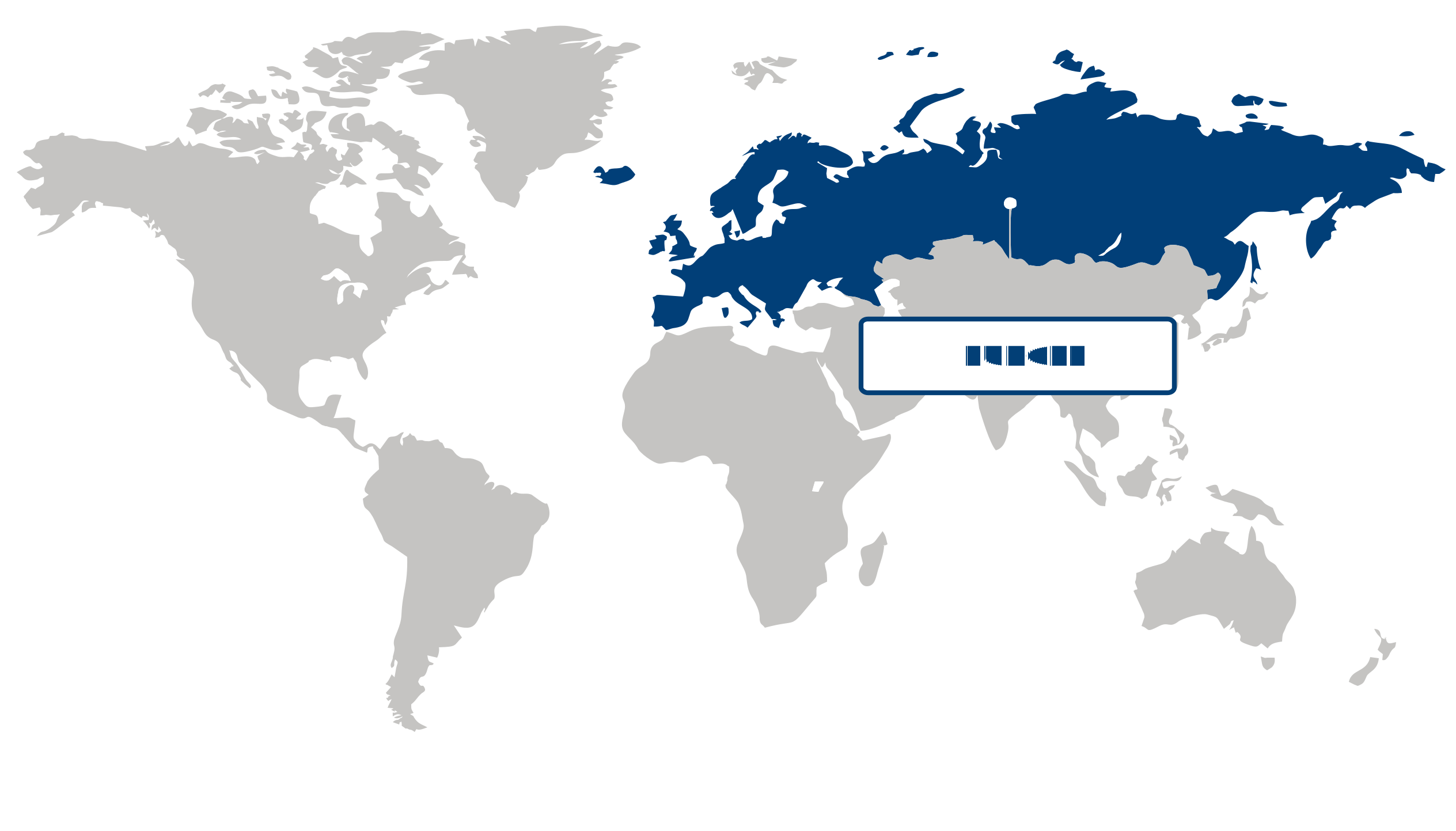
Europe (Largest Region)
Europe led the dried fruit market with a 31.86% share in 2026, supported by established consumer demand for convenient, nutrient-oriented food products and broad incorporation of dried fruits into everyday diets. Strong interest in natural ingredients, snacking, baking, breakfast foods, and ingredient-based food preparation provides multiple demand channels. Mature food retail infrastructure and consumer familiarity with diverse dried fruit varieties also contribute to the region’s sustained market presence.
Asia Pacific (Fastest-Growing Region)
Asia Pacific represents the fastest-growing region, fueled by expanding urban populations, evolving dietary preferences, and rising demand for convenient packaged foods. Growing consumer interest in healthier snacking and naturally sourced ingredients is creating additional opportunities for dried fruit products. Improvements in modern retail and e-commerce distribution are widening product availability, while increasing exposure to international food trends is supporting greater consumption across household and foodservice applications.
| Parameter | North America | Asia Pacific | Europe | Latin America | MEA |
|---|---|---|---|---|---|
| Innovation HubiScaleNascentDeveloping Advanced | |||||
| Cost-Sensitive RegioniScaleLowMedium High | |||||
| Regulatory EnvironmentiScaleRestrictiveNeutral Supportive | |||||
| Demand DriversiScaleWeakModerate Strong | |||||
| Development StageiScaleEmergingDeveloping Developed | |||||
| Adoption RateiScaleLowMedium High | |||||
| New Entrants / StartupsiScaleSparseModerate Dense | |||||
| Macro IndicatorsiScaleWeakStable Strong |
Key Country Insights
Germany 🇩🇪
Organic Product PreferenceGermany prioritizes dried fruit with organic certification, traceable sourcing, and limited processing. Consumers in Germany increasingly favor naturally preserved products without added sugar, encouraging suppliers to strengthen premium product portfolios and sustainability-focused sourcing strategies.
France 🇫🇷
Gourmet Ingredient UsageFrance supports dried fruit demand through both healthy snacking and culinary applications across bakery and specialty food segments. Consumers in France increasingly appreciate premium-quality fruit selections that combine natural taste with versatile household and foodservice use.
Italy 🇮🇹
Mediterranean Ingredient HeritageItaly emphasizes dried fruit as both a traditional food ingredient and a convenient everyday snack. Producers in Italy continue highlighting quality sourcing and authentic fruit varieties while expanding packaged offerings that meet modern retail and consumer convenience expectations.
Japan 🇯🇵
Portion-Control InnovationJapan emphasizes dried fruit products in compact, portion-controlled packaging suited to on-the-go consumption and premium gifting. Manufacturers in Japan increasingly focus on product quality, texture, and unique fruit varieties that appeal to health-conscious consumers seeking convenient snacks.
South Korea 🇰🇷
Functional Snack AppealSouth Korea integrates dried fruit into health-focused snack offerings that align with active lifestyles and wellness trends. Brands in South Korea continue expanding premium blends and value-added products marketed through online retail platforms and modern convenience channels.
United States 🇺🇸
Healthy Snacking DemandThe dried fruit market in the U.S. benefits from sustained interest in convenient, nutrient-rich snacks and clean-label food products. Producers in the U.S. continue introducing organic varieties, innovative flavor combinations, and resealable packaging to support everyday consumption across multiple retail channels.
Dried Fruit Market Share (%), by Product, 2026
Go beyond the chart, access full insights & data tables
Request Free Sample ReportProduct Segment Analysis: Dates (Largest Segment) vs Cranberries (Fastest-Growing Segment)
In the dried fruit market, dates held the largest position in the product segment, accounting for a 47.81% share in 2026. Their dominance is supported by broad consumer familiarity, natural sweetness, and versatility across both direct consumption and food preparation. Dates are widely incorporated into bakery products, confectionery, snacks, cereals, and traditional cuisines, strengthening their demand across diverse consumer groups. Their naturally concentrated flavor and nutritional profile also align with growing interest in convenient foods perceived as less processed, while their use as a natural sweetening ingredient supports continued incorporation into health-oriented and functional food products.
Cranberries are emerging as the fastest-growing product segment, supported by increasing consumer interest in fruit-based snacks and ingredients associated with wellness-oriented diets. Their distinctive flavor and compatibility with cereals, trail mixes, bakery products, confectionery, and snack formulations provide manufacturers with multiple avenues for product development. Growing demand for convenient foods with recognizable fruit ingredients is also encouraging greater use of cranberries in premium and value-added formulations. In addition, their strong positioning within healthy snacking and diversified packaged-food applications is helping expand their role across the dried fruit category.
Category Segment Analysis: Conventional (Largest Segment) vs Organic (Fastest-Growing Segment)
Conventional products maintained the largest position within the category segment of the dried fruit market in 2026, reflecting their broad availability, established supply chains, and extensive use across mainstream food applications. Conventional dried fruits benefit from widespread distribution through retail and foodservice channels, allowing manufacturers and consumers to access a diverse range of products consistently. Their established production and processing infrastructure also supports their integration into packaged snacks, bakery products, cereals, and confectionery, reinforcing their continued importance across mass-market applications.
Organic dried fruit is gaining momentum as the fastest-growing category, driven by rising consumer attention to ingredient sourcing, clean-label positioning, and agricultural practices perceived as more environmentally responsible. Increasing preference for products aligned with natural and wellness-focused lifestyles is encouraging consumers to seek organically produced alternatives. Retailers and food manufacturers are also expanding organic offerings to address demand for differentiated products, while greater awareness of certification and sourcing practices is helping strengthen consumer confidence in the segment.
| Segment | Sub-Segment | Largest Segment | Fastest Growing |
|---|---|---|---|
| Product | Dried Grapes, Dates, Apricots, Figs, Cranberries, Others | Dates | Cranberries |
| Category | Conventional, Organic | Conventional | Organic |
| Distribution Channel | Online, Offline | Offline | Online |
Competitive Landscape and Market Positioning
Major players in the dried fruit market:
1. Sun-Maid Growers of California (United States)
2. Sunsweet Growers Inc. (United States)
3. Traina Foods Inc. (United States)
4. Bergin Fruit and Nut Company Inc. (United States)
5. Al Foah Company PJSC (United Arab Emirates)
6. Red River Foods Incorporated (United States)
7. Geobres Nemean Currants and Dried Fruits S.A. (Greece)
8. Kiantama Oy (Finland)
9. Angas Park Fruit Company Pty Ltd. (Australia)
10. Sunbeam Foods Pty Ltd. (Australia)
The dried fruit market is benefiting from increasing demand for healthy snacking products and naturally preserved food alternatives. Producers are improving processing technologies and supply chain efficiency to enhance product quality, shelf life, and consistency. Rising interest in organic dried fruits, clean-label products, and convenient packaging formats is also shaping innovation across the market.
| Company | Market Share | Company Revenue | Revenue CAGR (%) | Product Portfolio | Geographic Presence | Innovation / R&D Focus | Strategic Developments |
|---|---|---|---|---|---|---|---|
| Sun-Maid Growers of California (United States) | |||||||
| Sunsweet Growers Inc. (United States) | |||||||
| Traina Foods Inc. (United States) | |||||||
| Bergin Fruit and Nut Company Inc. (United States) | |||||||
| Al Foah Company PJSC (United Arab Emirates) | |||||||
| Red River Foods Incorporated (United States) | |||||||
| Geobres Nemean Currants and Dried Fruits S.A. (Greece) | |||||||
| Kiantama Oy (Finland) | |||||||
| Angas Park Fruit Company Pty Ltd. (Australia) | |||||||
| Sunbeam Foods Pty Ltd. (Australia). |
Industry Development/News
| Company Name | Date | Key Development |
|---|---|---|
| Optimum Sorting | Jun-26 | Optimum Sorting relocated its California operations to Sacramento to support long-term business growth. This investment in facility capacity enhances the company’s ability to provide advanced food processing and sorting technology solutions tailored for the dried fruit and broader food manufacturing industries. |
| Westfalia Fruit | Feb-26 | Westfalia Fruit opened a new distribution and ripening center in North Carolina, integrating digitally controlled ripening technology. This infrastructure expansion strengthens the company's supply chain capabilities and improves operational efficiency within its fruit distribution network. |
| Uzbek Agricultural Producers | Dec-25 | Uzbek agricultural producers expanded the international footprint of the nation’s dried and freeze-dried fruit sector by entering the Danish market and increasing export volumes to Kuwait, supporting strategic diversification of global supply destinations. |
| The Ugly Co. | Jun-25 | The Ugly Co. significantly scaled its retail distribution network, launching products in 180 new locations including a partnership with Walmart. This expansion increases nationwide market reach while scaling the company’s operational focus on utilizing upcycled fruit to reduce food waste. |
| Traina Foods | Oct-24 | Traina Foods acquired Martin Farms to consolidate its position in sun-dried tomato production. This acquisition enhances the company’s manufacturing capabilities and expands its specialized portfolio of dried fruit and vegetable ingredients to support long-term market growth. |
| Climate Asset | May-24 | Climate Asset completed a strategic investment in agricultural land dedicated to nut and dried fruit production across Spain and Portugal. This move increases regional production capacity and secures a sustainable supply chain base for the European dried fruit market. |
| RIND Snacks | Feb-24 | RIND Snacks acquired Small Batch Organics to transition into a vertically integrated healthy snack platform. This strategic acquisition enhances the company’s internal supply chain capabilities, broadens its product portfolio, and establishes a foundation for expanding private-label manufacturing opportunities. |
Customize Your Report
Explore examples of how this report can be tailored to different research needs, including custom segments, additional topics or chapters, and related reports. Click a section of the wheel or its numbered marker to explore the available options.
Dried Fruit Market — Custom Segments
| Segment | Sub-Segment |
|---|---|
| End Use | Household Consumption, Bakery & Confectionery, Cereals & Snack Foods, Foodservice & Hospitality, Industrial Food Processing |
| Processing Method | Sun-Dried, Dehydrated, Freeze-Dried, Vacuum-Dried |
| Buyer Type | Retail Consumers, Food Manufacturers, Foodservice Operators, Ingredient Distributors |
Dried Fruit Market — Custom TOC
| Custom Chapter | Chapter Details |
|---|---|
| Ingredient Demand Across Food and Beverage Industries |
|
| Origin Sourcing and Supply Resilience Assessment |
|
| Export Competitiveness and Trade Opportunity Analysis |
|
Need a different cut of the data?
Request Custom ResearchFrequently Asked Questions
How big is the dried fruit market?
How is the dried fruit industry projected to perform over the next decade?
How are health-conscious snacking trends influencing purchasing behavior in the dried fruit market?
How is e-commerce expansion reshaping distribution and accessibility in the dried fruit market?
What makes dates the leading product segment in the dried fruit market?
Why is the organic category growing fastest in the dried fruit market?
Why does Europe hold the largest share of the dried fruit market?
What factors are supporting dried fruit market growth in Asia Pacific?
Who are the major participants shaping the dried fruit landscape?
Our Clients
"The report provided a thorough look at market trends, technological advancements, and the competitive landscape. The depth of insights was really valuable."
ITC Limited
"We would highly recommend Fundamental Business Insights & Consulting to anyone looking for reliable, detailed, and comprehensive market research in the Food industry."
Tyson Foods
"The clarity and presentation of the information were commendable. The report was delivered timely, which made the overall experience smooth and convenient."
Mondelēz International
Our Research Team & Methodology
Every Fundamental Business Insights report is built by a dedicated vertical research team, validated through a structured primary-and-secondary methodology, and reviewed for accuracy before it reaches you.
Delivery
Published
Available
Support
- Market Size & Forecast
- Market Segmentation
- Regional Analysis
- Growth Drivers & Challenges
- Market Dynamics
- Competitive Landscape
- Company Profiles
- Competitive Benchmarking
- Mergers & Acquisitions
- Market Share Analysis or Key Company Strategies
- Value Chain Analysis
- Porter's Five Forces
- PESTLE Analysis
- Pricing Trends
- Supply-Demand Analysis
- Technology Landscape
- Regulatory Landscape
- Investment & Funding Landscape
- Emerging Opportunities
- Future Market Outlook