E-commerce Footwear Market Size & Growth Forecast 2027–2036, By Segments (Type), Regional Demand Trends (North America, Asia Pacific, Europe), Key Country Insights (U.S., Japan, South Korea, Germany, France, Italy), and Competitive Landscape
Market Size and Growth Outlook
E-commerce Footwear Market size was around USD 130.15 billion in 2026 and is slated to grow at a 6.46% CAGR from 2027 to 2036, surpassing USD 243.39 billion by 2036. The industry revenue for 2027 is calculated at USD 137.23 billion.
Get more details on this report
Request Free Sample ReportE-commerce Footwear Market Intelligence Snapshot
Regional Market Dynamics
- Europe accounted for 32.86% of the market in 2026, supported by mature online retail ecosystems, strong cross-border commerce, and efficient brand and marketplace networks that sustain consistent purchasing activity.
- Asia Pacific is projected to grow at a 7.8% CAGR, fueled by expanding online marketplaces, mobile-led shopping, wider digital payment adoption, and increasing participation from regional and international footwear sellers.
Segment Momentum
- Leather Footwear leads due to strong demand for versatile formal and casual styles, broad online availability, and consistent repeat purchases driven by everyday, work, and occasion-based usage preferences.
- Athletic Footwear is growing fastest as consumers shift toward comfort-led, activity-oriented styles that align with lifestyle changes, frequent product refresh cycles, and strong responsiveness to digital browsing behavior.
Market Expansion Drivers
- Expansion of digital payment systems and mobile wallets enabling seamless footwear purchases.
- Rising social media influence and disposable income driving online footwear fashion demand.
- AI-powered personalization engines enhancing recommendations and improving customer shopping experience.
Leading Market Participants
- Top players in the E-commerce footwear market include Amazon.com, Inc. (United States), Alibaba Group Holding Limited (China), Walmart Inc. (United States), JD.com, Inc. (China), eBay Inc. (United States), Flipkart Internet Private Limited (India), Shopify Inc. (Canada), Zalando SE (Germany), Rakuten Group, Inc. (Japan), MercadoLibre, Inc. (Uruguay).
Global Market Forecast Snapshot
Market Outlook
- 2026 Market Size: USD 130.15 billion
- 2027 Estimated Market Size: USD 137.23 billion.
- Projected Market Size: USD 243.39 billion by 2036
- Growth Forecast: 6.46% CAGR (2027-2036)
Regional and Segment Outlook
- Leading Regional Market: Europe
- High-Growth Regional Hub: Asia Pacific
- Core Revenue Segment: Leather Footwear (Type)
- Emerging Opportunity Segment: Athletic Footwear (Type)
Market Growth Drivers and Industry Trends
Expansion of digital payment systems and mobile wallets enabling seamless footwear purchases
The expansion of digital payment infrastructure is creating a more convenient purchasing environment and will drive the E-commerce footwear market growth by reducing friction during online transactions. The wider availability of mobile wallets, instant payment options, contactless transactions, and integrated checkout solutions allows consumers to complete footwear purchases quickly across smartphones and other connected devices. Simplified payment processes are particularly valuable for online footwear shopping, where consumers may compare multiple products and retailers before completing an order. Enhanced transaction security, easy authentication, saved payment credentials, and flexible digital payment choices can also strengthen consumer confidence in online purchases, while merchants benefit from smoother checkout experiences and reduced abandonment during the payment stage.
Rising social media influence and disposable income driving online footwear fashion demand
Increasing social media engagement is reshaping how consumers discover footwear styles, trends, and brands, while higher disposable income can provide greater flexibility for discretionary fashion purchases. For the E-commerce footwear market, social platforms create a highly influential discovery channel where consumers are exposed to seasonal styles, lifestyle-oriented footwear, influencer content, and user-generated recommendations. This visibility encourages impulse purchases as well as repeated browsing for emerging designs, while greater spending capacity supports demand for fashionable, premium, and occasion-specific footwear. Social commerce features, targeted promotional content, and direct links from product inspiration to online checkout further shorten the path between trend discovery and purchase.
AI-powered personalization engines enhancing recommendations and improving customer shopping experience
The integration of artificial intelligence into digital retail platforms is improving product discovery and will propel E-commerce footwear market growth through more relevant and individualized shopping experiences. AI-powered personalization engines can analyze browsing behavior, purchase history, preferences, and interactions with products to recommend footwear that better matches individual consumer requirements. Such capabilities are especially useful in footwear retail because shoppers often evaluate products according to style, size, intended use, color, brand preference, and price range. Personalized recommendations can help consumers navigate extensive online catalogs more efficiently, while retailers can use these systems to present complementary products, tailor promotional offers, and refine merchandising strategies based on changing shopping behavior.
| Growth Driver | Impact on CAGR | Regulatory Influence | Geographic Relevance | Adoption Rate | Impact Timeline |
|---|---|---|---|---|---|
| Expansion of digital payment systems and mobile wallets enabling seamless footwear purchases | 1.80% | Low | Europe, North America, Asia Pacific | High | Near Term |
| Rising social media influence and disposable income driving online footwear fashion demand | 1.60% | Low | Europe, Asia Pacific | High | Near Term |
| AI-powered personalization engines enhancing recommendations and improving customer shopping experience | 1.40% | Low | North America, Asia Pacific | Medium | Mid Term |
Explore Growth Opportunities
Request Free Sample ReportRegional Demand Dynamics
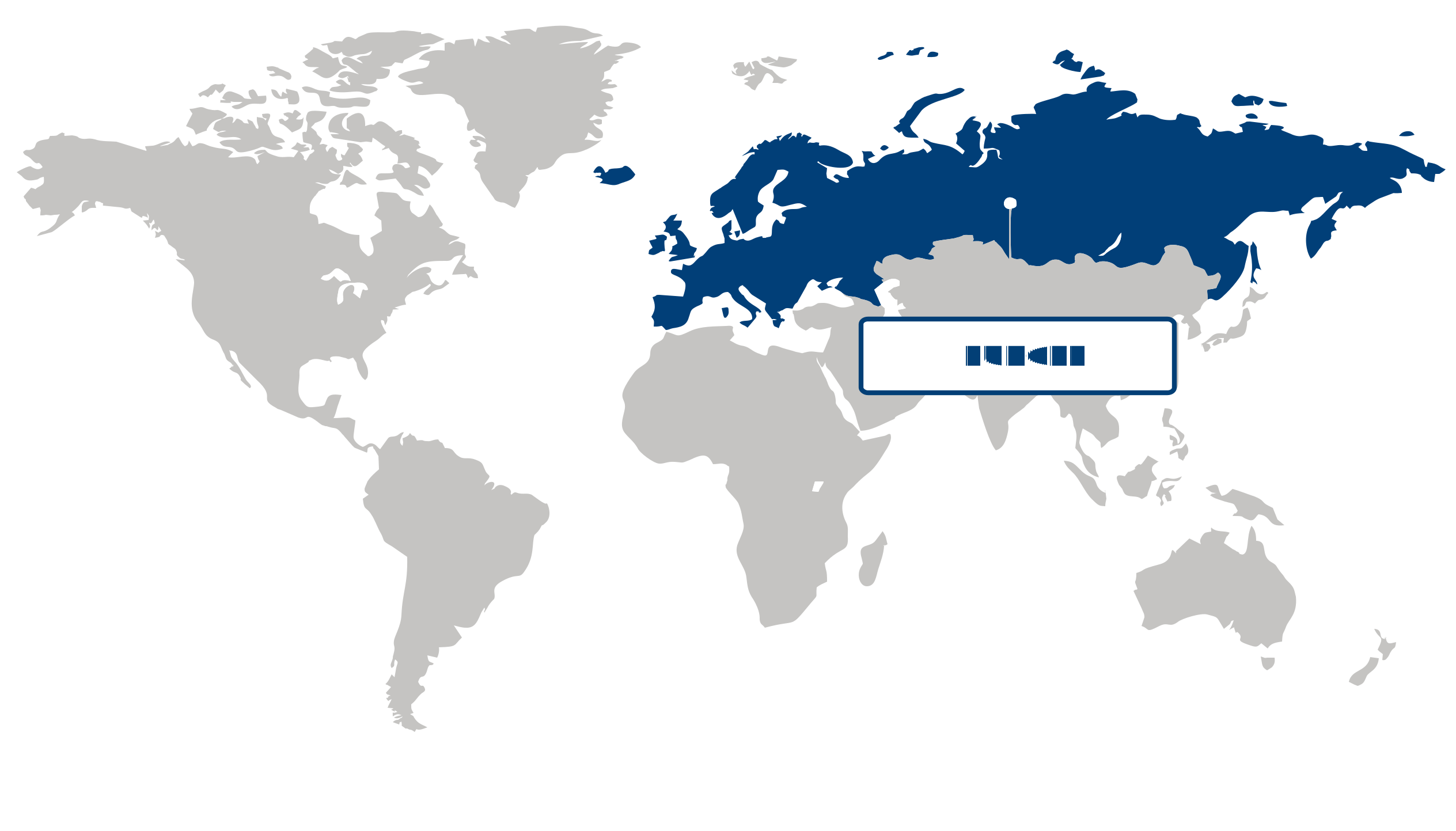
Europe (Largest Region)
Europe held the largest share of the E-commerce footwear market at 32.86% in 2026, supported by strong digital retail infrastructure, high online shopping penetration, and well-established consumer familiarity with purchasing footwear through digital channels. Consumers across the region increasingly value convenient home delivery, broad product assortments, easy price comparison, and flexible return options, which strengthen online footwear purchasing. Demand for fashion-oriented footwear, premium products, and sustainable materials also supports e-commerce sales as consumers increasingly use digital platforms to discover new styles and evaluate product attributes. Mature logistics networks and widespread digital payment adoption further reinforce Europe's position by enabling efficient fulfillment and a seamless purchasing experience.
Asia Pacific (Fastest-Growing Region)
Asia Pacific represents the fastest-growing regional market, driven by rapid expansion of internet connectivity, smartphone-based shopping, and digital payment ecosystems. A large and increasingly urbanized consumer base is accelerating demand for convenient online access to athletic, casual, and fashion footwear. The expansion of social commerce, mobile-first retail experiences, and personalized product recommendations is also encouraging consumers to shift more footwear purchases toward digital channels. Improvements in delivery infrastructure and the increasing reach of e-commerce platforms into emerging markets are broadening consumer access, while rising disposable incomes and changing lifestyle preferences create additional opportunities for footwear brands and online retailers.
| Parameter | North America | Asia Pacific | Europe | Latin America | MEA |
|---|---|---|---|---|---|
| Innovation Hub i Scale Nascent Developing Advanced | |||||
| Cost-Sensitive Region i Scale Low Medium High | |||||
| Regulatory Environment i Scale Restrictive Neutral Supportive | |||||
| Demand Drivers i Scale Weak Moderate Strong | |||||
| Development Stage i Scale Emerging Developing Developed | |||||
| Adoption Rate i Scale Low Medium High | |||||
| New Entrants / Startups i Scale Sparse Moderate Dense | |||||
| Macro Indicators i Scale Weak Stable Strong |
Key Country Insights
Germany 🇩🇪
Digital Quality PurchasingGermany's e-commerce footwear market emphasizes trusted online shopping experiences supported by detailed product information and reliable delivery. Retailers focus on transparent sizing, sustainable collections, and efficient returns to improve purchase confidence.
France 🇫🇷
Premium Fashion CommerceFrance combines fashion-driven purchasing with expanding online footwear sales across premium and contemporary brands. The e-commerce footwear market increasingly emphasizes curated collections, brand storytelling, and convenient omnichannel fulfillment services.
Italy 🇮🇹
Designer Brand DigitizationItaly's e-commerce footwear market benefits from strong demand for designer and premium footwear sold through digital channels. Retailers strengthen online growth with enhanced product visualization, international shipping capabilities, and localized customer experiences.
Japan 🇯🇵
Precision Shopping ExperienceJapan's e-commerce footwear market prioritizes accurate sizing, premium product presentation, and dependable logistics. Retailers enhance digital experiences through detailed specifications, responsive customer service, and convenient delivery options for repeat buyers.
South Korea 🇰🇷
Mobile Commerce InnovationSouth Korea's e-commerce footwear market is strongly influenced by mobile shopping and digitally connected consumers. Brands leverage social commerce, live shopping, and rapid fulfillment services to encourage product discovery and faster purchasing decisions.
United States 🇺🇸
Omnichannel Retail ExpansionThe U.S. e-commerce footwear market is driven by seamless integration between digital platforms and physical retail. Brands invest in personalized recommendations, rapid fulfillment, and flexible return policies to strengthen online customer engagement.
Segment Leadership and Growth Trends
E-commerce Footwear Market Share (%), by Type, 2026
Go beyond the chart, access full insights & data tables
Request Free Sample ReportType Segment Analysis: Leather Footwear (Largest Segment) vs Athletic Footwear (Fastest-Growing Segment)
Leather footwear dominated the E-commerce footwear market in 2026, accounting for 67.9% of the market share, supported by its established consumer appeal, durability, and suitability for formal and everyday applications. Leather shoes are widely purchased across business, casual, and premium footwear categories, providing a broad customer base for online retailers. E-commerce platforms also allow consumers to access extensive collections of leather footwear across styles, finishes, and price ranges, while detailed product descriptions and customer reviews help reduce uncertainty associated with purchasing footwear online. Continued demand for durable and versatile footwear therefore reinforces the position of leather products within digital retail.
Athletic footwear is experiencing faster growth as consumers increasingly prioritize comfort, performance, and versatile styling in their everyday footwear choices. The expanding adoption of active lifestyles has encouraged demand for footwear designed for running, training, walking, and recreational activities while also supporting the use of athletic designs as casual wear. Online channels are particularly well suited to this category because consumers can compare technical features, cushioning systems, fit information, and user reviews before purchasing. The combination of performance-oriented innovation and growing preference for athleisure products is strengthening the momentum of athletic footwear in e-commerce.
| Segment | Sub-Segment | Largest Segment | Fastest Growing |
|---|---|---|---|
| Type | Leather Footwear, Athletic Footwear, Athleisure Footwear, Others | Leather Footwear | Athletic Footwear |
Unlock insights tailored to your business with our bespoke market research solutions.
Click to get your customized report now.
Competitive Landscape and Market Positioning
Major players in the E-commerce footwear market:
1. Amazon.com Inc. (United States)
2. Alibaba Group Holding Limited (China)
3. Walmart Inc. (United States)
4. JD.com Inc. (China)
5. eBay Inc. (United States)
6. Flipkart Internet Private Limited (India)
7. Shopify Inc. (Canada)
8. Zalando SE (Germany)
9. Rakuten Group Inc. (Japan)
10. MercadoLibre Inc. (Uruguay)
The E-commerce footwear market is evolving rapidly as digital storefront optimization and immersive shopping experiences become central to consumer engagement strategies. Frequent product introductions aligned with seasonal trends and lifestyle segmentation are strengthening brand responsiveness in an increasingly fast-moving environment. Market expansion efforts are also being driven by personalized recommendation systems and localized assortment strategies that adapt to regional preferences. These developments collectively reflect how shifting consumer expectations and digital adoption are reshaping the broader structure of the E-commerce footwear market.
| Company | Market Share | Company Revenue | Revenue CAGR (%) | Product Portfolio | Geographic Presence | Innovation / R&D Focus | Strategic Developments |
|---|---|---|---|---|---|---|---|
| Amazon.com Inc. (United States) | |||||||
| Alibaba Group Holding Limited (China) | |||||||
| Walmart Inc. (United States) | |||||||
| JD.com Inc. (China) | |||||||
| eBay Inc. (United States) | |||||||
| Flipkart Internet Private Limited (India) | |||||||
| Shopify Inc. (Canada) | |||||||
| Zalando SE (Germany) | |||||||
| Rakuten Group Inc. (Japan) | |||||||
| MercadoLibre Inc. (Uruguay). |
Industry Development/News
| Company Name | Date | Key Development |
|---|---|---|
| Shoes For Crews | Dec-24 | Shoes For Crews appointed Chris Quinn as chief executive officer, marking a leadership transition aimed at strengthening strategic direction and operational execution. The change is positioned to support improvements in distribution efficiency and sales channel management within the company’s safety and slip-resistant footwear business, reinforcing its competitive positioning in professional footwear segments. |
| Puma SE | Oct-21 | Puma SE opened its largest retail store in Gurgaon’s CyberHub, designed as a digital experience store integrating physical retail with digital touchpoints. The expansion strengthens Puma’s omnichannel strategy by enhancing customer engagement and supporting hybrid retail models that link in-store experiences with online footwear commerce channels. |
| Nike | Jul-21 | Nike launched the Nike App across Southeast Asian markets, including Singapore, Philippines, Thailand, Malaysia, and Taiwan, expanding its digital commerce ecosystem. The initiative strengthens Nike’s direct-to-consumer capabilities by enhancing online engagement, improving regional market penetration, and supporting digital sales channel development within the e-commerce footwear landscape. |
Customize Your Report
Explore examples of how this report can be tailored to different research needs, including custom segments, additional topics or chapters, and related reports. Click a section of the wheel or its numbered marker to explore the available options.
E-commerce Footwear Market — Custom Segments
| Segment | Sub-Segment |
|---|---|
| End User | Men, Women, Children |
| Price Range | Economy, Mid-Range, Premium |
| Occasion | Casual & Everyday Wear, Sports & Athletic Activities, Formal & Business Wear, Outdoor & Recreational Activities |
E-commerce Footwear Market — Custom TOC
| Custom Chapter | Custom Details |
|---|---|
| Omnichannel Footwear Retail Transformation Assessment |
|
| Consumer Purchase Journey and Conversion Optimization |
|
| Cross-Border E-commerce Expansion Opportunity Analysis |
|
Need a different cut of the data?
Request Custom ResearchHow large is the E-commerce footwear market?
How is the E-commerce footwear industry expected to grow over the next 10 years?
How is AI-powered personalization improving commercial performance in the E-commerce Footwear Market?
Why are digital payment innovations accelerating growth in the E-commerce Footwear Market?
Why does Leather Footwear hold the largest share in the e-commerce footwear market?
What is driving the rapid growth of Athletic Footwear in online sales?
Why does Europe lead the e-commerce footwear market?
What is driving rapid growth in the e-commerce footwear market across Asia Pacific?
Who holds a significant market share in the E-commerce footwear landscape?
Our Clients
"The report provided us with a clear direction, and the level of detail was beyond what we expected. I would definitely recommend their services to others."
Haier Appliances
"The collaboration with Fundamental Business Insights has added significant value to our decision-making process, and we look forward to continuing this partnership for our future market research requirements."
Luxottica Group S.p.A.
"The team at FBI delivered an exceptional research report. The insights on industry innovations were particularly impressive and added a lot of value to the overall report."
Nike
Our Research Team & Methodology
Every Fundamental Business Insights report is built by a dedicated vertical research team, validated through a structured primary-and-secondary methodology, and reviewed for accuracy before it reaches you.
Research Team Overview
Prepared by the Consumer Goods & Services Research Team
Delivery
Published
Demand
Available
Support
Trust & Compliance
Research Intelligence
Research Workflow & Quality Assurance
Data Collection
Verified information gathered through primary and secondary research.
Data Triangulation
Cross-validation using multiple independent data sources.
Forecast Modelling
Market estimates developed using historical trends and analytical models.
Analyst Validation
Findings reviewed by domain experts for accuracy and consistency.
Editorial & Quality Review
Final editorial, quality, and compliance checks before publication.
Final Publication
Released after successful completion of the internal review process.
Report Coverage
📊 Market Assessment
- Market Size & Forecast
- Market Segmentation
- Regional Analysis
- Growth Drivers & Challenges
- Market Dynamics
🏢 Competitive Intelligence
- Competitive Landscape
- Company Profiles
- Competitive Benchmarking
- Mergers & Acquisitions
- Market Share Analysis or Key Company Strategies
🔍 Strategic Analysis
- Value Chain Analysis
- Porter's Five Forces
- PESTLE Analysis
- Pricing Trends
- Supply-Demand Analysis
🚀 Future Outlook
- Technology Landscape
- Regulatory Landscape
- Investment & Funding Landscape
- Emerging Opportunities
- Future Market Outlook
Have a question about this report or need a custom scope?
Request Customization