



E-Trekking Bike Market Size & Forecasts 2026-2035, By Segments (Battery Type, Motor, Propulsion type, Sales Channel), Growth Opportunities, Innovation Landscape, Regulatory Shifts, Strategic Regional Insights (U.S., Japan, China, South Korea, UK, Germany, France), and Competitive Dynamics (Trek Bicycle, Giant Bicycles, Specialized, Bosch eBike Systems, Cannondale)
Market Size and Growth Outlook
E-Trekking Bike Market size is projected to expand significantly, moving from USD 13.28 billion in 2025 to USD 18.2 billion by 2035, with a CAGR of 3.2% during the 2026-2035 forecast period. The expected revenue for 2026 is USD 13.64 billion.
Base Year Value (2025)
USD 13.28 Billion
CAGR (2026-2035)
3.2%
Forecast Year Value (2035)
USD 18.2 Billion

Historical Data Period
2021-2025

Largest Region
Europe

Forecast Period
2026-2035
Key Takeaways
- Europe region acquired more than 43.3% revenue share in 2025, spurred by strong cycling culture and eco-friendly transport policies.
- Asia Pacific region will record around 4% CAGR during the forecast period, driven by rising urbanization and demand for sustainable mobility.
- Securing 54.45% of the market in 2025, mid motor segment was strengthened by better balance and performance on varied terrains.
- The pedal-assist segment recorded 77.6% revenue share in 2025, impelled by consumer preference for energy-efficient cycling.
- Achieving 63.7% share in 2025, offline segment maintained its lead, sustained by in-store testing and immediate availability.
- Leading organizations shaping the e-trekking bike market include Trek Bicycle (US), Giant Bicycles (Taiwan), Specialized (US), Bosch eBike Systems (Germany), Cannondale (US), Haibike (Germany), Scott Sports (Switzerland), Riese & Müller (Germany), Merida (Taiwan), Cube Bikes (Germany).
Market Growth Drivers and Industry Trends
Rising Popularity of Trekking and Eco-Tourism
The increasing interest in trekking and eco-tourism is significantly shaping the e-trekking bike market, as consumers seek sustainable and immersive travel experiences. This trend is supported by organizations like the World Tourism Organization, which emphasizes the growing demand for eco-friendly travel options. As more individuals prioritize environmentally conscious choices, e-trekking bikes serve as a perfect solution for exploring natural landscapes while minimizing carbon footprints. This shift not only encourages established manufacturers to diversify their offerings but also presents opportunities for startups to innovate in niche markets, such as guided eco-tours that incorporate e-trekking bikes. As this segment continues to gain traction, companies that align their products with sustainability will likely enhance their market positioning.
Technological Advancements Improving Battery Life and Motor Performance
Technological innovations in battery life and motor performance are critical growth drivers in the e-trekking bike market, enabling enhanced user experiences and extending the range of travel. Companies like Bosch and Shimano are at the forefront, developing advanced battery systems that offer longer life and faster charging times, thereby addressing consumer concerns about range anxiety. These improvements not only increase the appeal of e-trekking bikes for longer excursions but also attract a broader demographic, including casual riders and fitness enthusiasts. As technology continues to evolve, established players can leverage these advancements to refine their product lines, while new entrants can focus on developing cutting-edge features that differentiate their offerings in a competitive landscape.
Expansion of Rental and Sharing Programs in Urban and Rural Areas
The expansion of rental and sharing programs for e-trekking bikes is transforming access and usability, thereby enhancing the overall market landscape. Initiatives by companies like Lime and Jump are making e-trekking bikes more accessible to urban dwellers and tourists alike, reducing the barriers to entry for potential users. This democratization of e-trekking bike access not only promotes a shift in consumer behavior towards shared mobility but also fosters a culture of cycling as a viable mode of transport. As cities and rural areas invest in infrastructure to support these programs, established brands can collaborate with local governments to create strategic partnerships, while new entrants can capitalize on the growing demand for flexible, on-demand transportation solutions. The ongoing development of supportive policies will further bolster this trend, ensuring sustainable growth for the e-trekking bike market.
Industry Restraints:
Regulatory Compliance Burdens
The e-trekking bike market is significantly hindered by stringent regulatory compliance requirements, which can deter manufacturers from innovation and market entry. Regulations concerning safety standards, battery disposal, and environmental impact create operational inefficiencies that slow product development cycles and increase costs. For instance, the European Union’s stringent regulations on e-bike safety, as outlined by the European Commission, require extensive testing and certification processes, which can be particularly challenging for startups lacking the resources of established players. This regulatory landscape not only impacts product availability but also contributes to consumer hesitation, as buyers may question the reliability and safety of e-trekking bikes that are not fully compliant with these standards. As a result, market participants face heightened barriers to entry, potentially stifling competition and innovation.
Supply Chain Vulnerabilities
The e-trekking bike market is also constrained by significant supply chain vulnerabilities, particularly in sourcing critical components such as batteries and electronic systems. The COVID-19 pandemic has exposed the fragility of global supply chains, leading to delays and increased costs for manufacturers. According to a report by McKinsey & Company, disruptions in the semiconductor supply chain have had cascading effects across various industries, including e-bikes, where electronic components are essential. This situation presents a dual challenge: established companies may struggle to maintain production levels while new entrants face difficulties in securing reliable suppliers. Furthermore, rising material costs and geopolitical tensions can exacerbate these vulnerabilities, creating an unpredictable market environment. Looking ahead, these supply chain challenges are likely to persist, compelling companies to invest in more resilient sourcing strategies and potentially reshaping competitive dynamics within the e-trekking bike sector.
| Growth Driver Assessment Framework | |||||
| Growth Driver | Impact On CAGR | Regulatory Influence | Geographic Relevance | Adoption Rate | Impact Timeline |
|---|---|---|---|---|---|
| Rising popularity of trekking and eco-tourism driving e-trekking bike demand | 1.20% | Short term (≤ 2 yrs) | Europe, North America | Low | Fast |
| Technological advancements improving battery life and motor performance | 1.00% | Medium term (2–5 yrs) | Asia Pacific, Europe | Medium | Moderate |
| Expansion of rental and sharing programs in urban and rural areas | 1.00% | Long term (5+ yrs) | North America, Asia Pacific | Low | Moderate |
Unlock insights tailored to your business with our bespoke market research solutions - Click to get your customized report now!
Regional Demand Dynamics
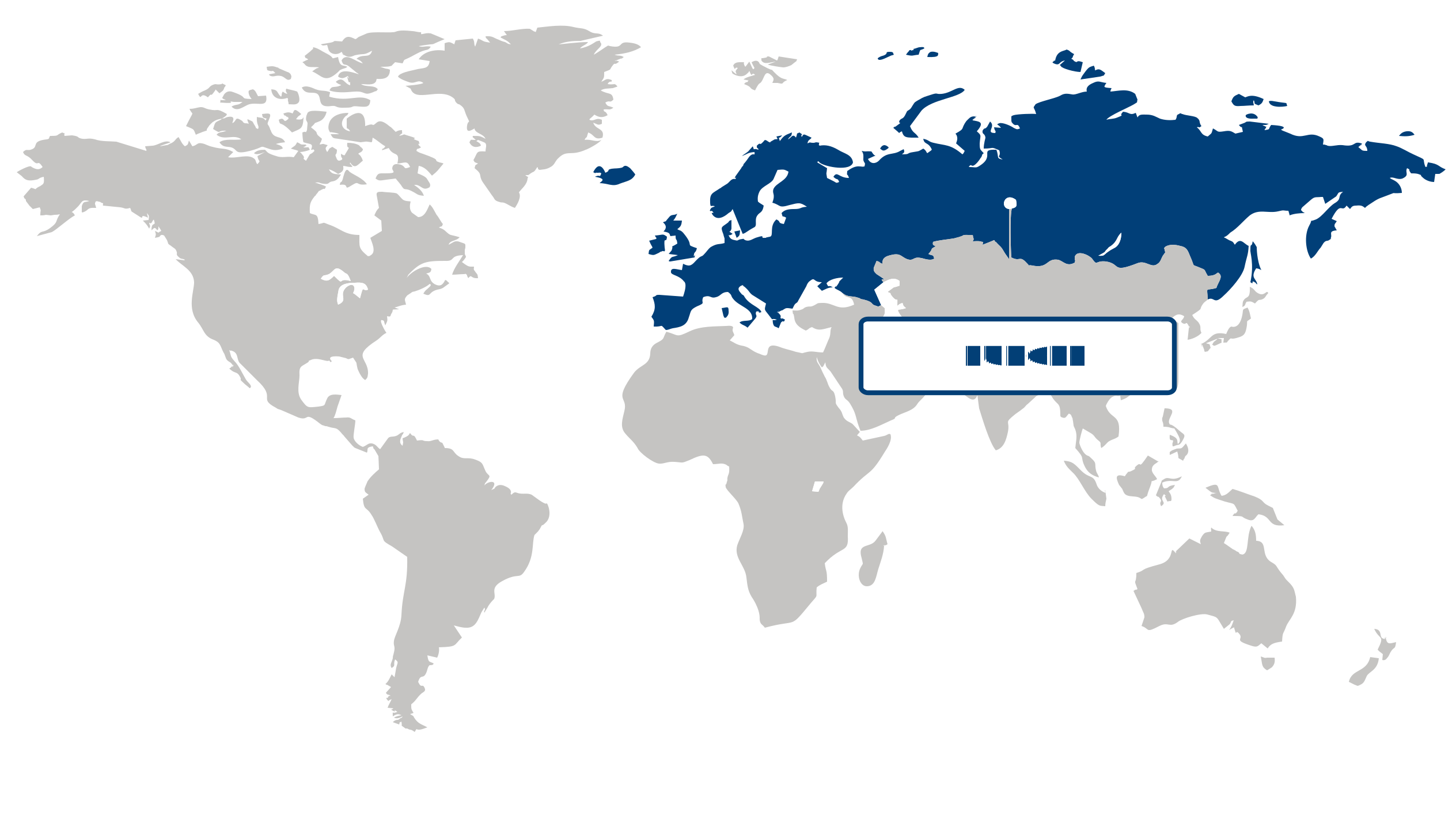
Largest Region
Europe
43.3% Market Share in 2025
Europe Market Statistics:
Europe represented more than 43.3% of the global e-trekking bike market in 2025, establishing itself as the largest region. This dominance can be attributed to a robust cycling culture combined with progressive eco-friendly transport policies that resonate with consumers increasingly prioritizing sustainability. The European market has seen a significant shift in demand towards electric mobility solutions, driven by a growing awareness of environmental issues and government incentives promoting green transport. Notably, organizations such as the European Cyclists' Federation have underscored the importance of cycling infrastructure and support, further facilitating the growth of the e-trekking bike market. As urban areas evolve and consumers seek more sustainable commuting options, Europe presents substantial opportunities for innovation and investment in the e-trekking bike sector.
Germany anchors the European e-trekking bike market, showcasing a unique blend of technological advancement and consumer enthusiasm for sustainable transport. The country has seen a surge in e-trekking bike adoption, supported by favorable regulatory frameworks that incentivize electric mobility. For example, the German Federal Ministry for Digital and Transport has implemented initiatives to expand cycling infrastructure, making e-trekking bikes an attractive option for urban commuters. This alignment of consumer preferences with supportive policies has positioned Germany as a leader in the market. As a result, opportunities for manufacturers and investors to capitalize on this growing trend are significant, reinforcing the overall strength of Europe in the e-trekking bike market.
France also plays a pivotal role in the European e-trekking bike market, characterized by a cultural shift towards cycling as a primary mode of transport. The French government's commitment to eco-friendly policies, such as the "Plan Vélo," aims to increase cycling infrastructure and promote electric bicycles. This initiative has been met with enthusiasm from consumers, reflecting a broader trend towards sustainable living. The increasing popularity of e-trekking bikes among French consumers is further supported by collaborations between local governments and manufacturers to enhance accessibility and affordability. As France continues to embrace these initiatives, it reinforces Europe’s leadership position in the e-trekking bike market, presenting significant opportunities for growth and investment.
Asia Pacific Market Analysis:
Asia Pacific has emerged as the fastest-growing region in the e-trekking bike market, registering rapid growth with a CAGR of 4%. This growth is primarily driven by rising urbanization and an increasing demand for sustainable mobility solutions. The region's significant urban population is shifting towards eco-friendly transportation options, aligning with global sustainability trends. As cities expand, the need for efficient, green commuting alternatives has become paramount, prompting both consumers and policymakers to embrace e-trekking bikes as viable options. Furthermore, advancements in battery technology and smart connectivity features are enhancing the appeal of e-trekking bikes, making them attractive to a broader demographic. According to the Asia-Pacific Economic Cooperation (APEC), urban centers are investing in infrastructure that supports cycling, further propelling market growth. With a focus on sustainability and innovation, the Asia Pacific region presents substantial opportunities for stakeholders in the e-trekking bike market.
Japan plays a pivotal role in the Asia Pacific e-trekking bike market, characterized by a strong consumer preference for high-quality, technologically advanced products. The rising urbanization trend in Japan has led to increased demand for sustainable mobility solutions, as cities like Tokyo are implementing policies to reduce carbon emissions. Japanese consumers are increasingly favoring e-trekking bikes that offer both performance and eco-friendliness, with companies like Yamaha and Panasonic leading the charge in innovation. The Japanese government has also introduced incentives for electric vehicle adoption, further stimulating market growth. As a result, Japan's unique blend of technological advancement and environmental consciousness positions it as a key player in the regional e-trekking bike market, reinforcing the overall growth narrative in Asia Pacific.
China, another major player in the Asia Pacific e-trekking bike market, is witnessing a surge in demand driven by rapid urbanization and a cultural shift towards sustainable living. The Chinese government has prioritized green transportation, implementing policies that encourage the use of electric bikes and bicycles. In cities like Beijing and Shanghai, the popularity of e-trekking bikes is growing among urban dwellers seeking efficient commuting options. Local manufacturers such as BYD and Aima are capitalizing on this trend by developing a range of e-trekking bikes that cater to diverse consumer preferences. Moreover, the rise of e-commerce platforms facilitates accessibility, making it easier for consumers to purchase these bikes. China's commitment to sustainability and innovation in the e-trekking bike sector not only enhances its domestic market but also contributes significantly to the overall growth of the Asia Pacific region.
North America Market Trends:
The North America region has maintained a notable presence in the e-trekking bike market, characterized by moderate growth driven by increasing consumer interest in sustainable transportation options and recreational activities. Factors such as a growing emphasis on outdoor lifestyles, alongside heightened awareness of environmental issues, have led to a shift in consumer preferences towards electric bikes that offer both utility and leisure. Recent data from the Outdoor Industry Association indicates a surge in outdoor participation rates, which correlates with rising e-trekking bike sales. Additionally, advancements in battery technology and a robust supply chain infrastructure have facilitated greater accessibility and affordability of e-trekking bikes. As urban areas increasingly prioritize green mobility solutions, the North American market presents significant opportunities for innovation and investment in the e-trekking segment.
In the U.S., the e-trekking bike market plays a critical role in shaping consumer behavior and industry dynamics. The country has seen a marked increase in demand for electric bicycles, fueled by state-level incentives promoting eco-friendly transportation. According to the League of American Bicyclists, cities like Portland and San Francisco are leading the charge with policies that support cycling infrastructure, enhancing the appeal of e-trekking bikes. The competitive landscape is further intensified by established players like Trek and Specialized, who are innovating to capture the evolving consumer base. This trend of adopting e-trekking bikes aligns with broader national goals of reducing carbon footprints and enhancing public health, positioning the U.S. as a key player in the North American e-trekking bike market. The strategic implications suggest that continued investment in infrastructure and technology will bolster the market, making it a focal point for growth in the region.
Canada also significantly contributes to the e-trekking bike market, where the emphasis on outdoor recreation and sustainability is particularly pronounced. The Canadian government's recent initiatives to promote electric mobility, as outlined in Transport Canada's Electric Vehicle and Alternative Fuel Infrastructure Deployment Initiative, have catalyzed consumer interest in e-trekking bikes. Provinces like British Columbia are witnessing a rise in e-bike adoption, supported by incentives and a growing network of cycling paths. Companies such as Canadian Electric Bike Company are responding to this demand by launching models tailored to local preferences, enhancing their competitive edge. As Canada continues to prioritize green technologies and outdoor activities, it solidifies its role in the North American e-trekking bike market, presenting ample opportunities for stakeholders to capitalize on the growing trend.
No card data available for this language/report.
Segment Leadership and Growth Trends
Analysis by Motor
The e-trekking bike market is significantly led by the Mid Motor segment, which is projected to hold a commanding 54.4% share in 2025. This leadership is primarily attributed to its superior balance and performance on varied terrains, making it a preferred choice among consumers seeking versatility in their riding experience. The increasing demand for high-performance bikes aligns with evolving customer preferences for robust and reliable options, particularly in regions with diverse landscapes. Notably, organizations such as the European Cyclists' Federation have highlighted the growing interest in sustainable transport solutions, further reinforcing the appeal of mid motor e-trekking bikes. The strategic advantages for established firms lie in their ability to leverage advanced technology, while emerging players can capitalize on niche markets focused on performance and sustainability. This segment is expected to maintain its relevance in the near to medium term as technological innovations continue to enhance motor efficiency and user experience.
Analysis by Propulsion type
In the e-trekking bike market, the Pedal-Assist segment stands out, capturing over 77.6% share in 2025. This dominance stems from a strong consumer preference for energy-efficient cycling, which aligns with the increasing awareness of environmental sustainability. As urban populations seek greener transportation alternatives, pedal-assist bikes have become a favored choice, appealing to both casual riders and serious cyclists. The World Health Organization has noted the health benefits associated with cycling, further driving demand for this segment. Established firms can leverage their brand reputation to promote pedal-assist models, while new entrants can focus on innovative designs and features that enhance user engagement. Given the ongoing shift towards eco-friendly commuting options, this segment is likely to remain a focal point for both consumers and manufacturers in the coming years.
Analysis by Sales Channel
The e-trekking bike market is predominantly influenced by the Offline segment, which is expected to represent more than 63.7% of sales in 2025. This strong performance is largely due to the advantages of in-store testing and immediate availability, allowing consumers to experience the bikes firsthand before making a purchase. As highlighted by the National Bicycle Dealers Association, the tactile experience of physically engaging with a product plays a crucial role in consumer decision-making. This segment offers established firms opportunities to enhance customer loyalty through personalized service, while emerging players can differentiate themselves by creating unique in-store experiences. As retail environments continue to adapt to consumer expectations for interactive shopping, the offline segment is poised to remain vital in the near to medium term.
| Report Segmentation | |||
| Segment | Sub-Segment | Largest Segment | Fastest Growing Segment |
|---|---|---|---|
| Battery Type | SLA, Li-ion, NiMH | ||
| Motor | Hub Motor, Mid Motor | ||
| Propulsion type | Pedal-Assist, Throttle-Assist | ||
| Sales Channel | Online, Offline | ||
 Read our Research Approach
Competitive Landscape and Market Positioning
Key players in the e-trekking bike market include renowned brands such as Trek Bicycle, Giant Bicycles, and Specialized, each commanding significant recognition in the industry. Bosch eBike Systems stands out for its innovative propulsion systems, while Cannondale and Haibike are noted for their commitment to performance and design excellence. Scott Sports and Riese & Müller leverage their European heritage to emphasize quality and craftsmanship, appealing to discerning consumers. Merida and Cube Bikes enhance their market presence through a focus on sustainable practices and advanced technology, establishing themselves as key competitors in this dynamic landscape.
The competitive environment in the e-trekking bike market is characterized by a flurry of strategic initiatives among these leading players, which continually reshape their market positioning. Noteworthy collaborations have emerged, particularly in technology integration, enhancing product offerings and customer experiences. New product introductions reflect a keen focus on innovation, with several companies investing in research and development to refine their designs and improve performance metrics. Additionally, the landscape is marked by strategic partnerships that facilitate broader distribution channels, allowing brands to penetrate new markets and respond effectively to evolving consumer preferences.
Strategic / Actionable Recommendations for Regional Players
In North America, there is an opportunity for market players to forge partnerships with local retailers, enhancing distribution networks and improving customer accessibility. Emphasizing the integration of emerging technologies, such as smart connectivity features in e-trekking bikes, can attract tech-savvy consumers seeking enhanced riding experiences.
In the Asia Pacific region, tapping into high-growth sub-segments, particularly urban commuting and adventure tourism, can drive brand loyalty and market penetration. Collaborations with local outdoor adventure companies can also position brands favorably within this rapidly evolving market.
In Europe, focusing on sustainability and eco-friendly practices will resonate deeply with the environmentally conscious consumer base. Engaging in community-based initiatives and promoting local cycling events can enhance brand visibility and foster a loyal customer community, ultimately strengthening market presence.
Why Choose Us
Specialized Expertise: Our team comprises industry experts with a deep understanding of your market segment. We bring specialized knowledge and experience that ensures our research and consulting services are tailored to your unique needs.
Customized Solutions: We understand that every client is different. That's why we offer customized research and consulting solutions designed specifically to address your challenges and capitalize on opportunities within your industry.
Proven Results: With a track record of successful projects and satisfied clients, we have demonstrated our ability to deliver tangible results. Our case studies and testimonials speak to our effectiveness in helping clients achieve their goals.
Cutting-Edge Methodologies: We leverage the latest methodologies and technologies to gather insights and drive informed decision-making. Our innovative approach ensures that you stay ahead of the curve and gain a competitive edge in your market.
Client-Centric Approach: Your satisfaction is our top priority. We prioritize open communication, responsiveness, and transparency to ensure that we not only meet but exceed your expectations at every stage of the engagement.
Continuous Innovation: We are committed to continuous improvement and staying at the forefront of our industry. Through ongoing learning, professional development, and investment in new technologies, we ensure that our services are always evolving to meet your evolving needs.
Value for Money: Our competitive pricing and flexible engagement models ensure that you get maximum value for your investment. We are committed to delivering high-quality results that help you achieve a strong return on your investment.
Select Licence Type

