Ecotoxicological Studies Market Size & Growth Forecast 2027–2036, By Segments (Service), Regional Demand Trends (North America, Asia Pacific, Europe), Key Country Insights (U.S., Japan, South Korea, Germany, France, Italy), and Competitive Landscape
Jump to content
Market Size and Growth Outlook
Ecotoxicological Studies Market size was assessed at USD 1.2 billion in 2026 and is poised to grow at a 2.95% CAGR between 2027 and 2036, crossing USD 1.6 billion by 2036. The industry revenue for 2027 is estimated at USD 1.23 billion.
Get more details on this report
Request Free Sample ReportEcotoxicological Studies Market Intelligence Snapshot
Regional Market Dynamics
- Europe held a 35.72% market share in 2026, supported by mature environmental testing infrastructure, strong regulatory oversight, experienced testing providers, and steady compliance-driven research demand.
- Asia Pacific is forecast to grow at a 3.76% CAGR as industrial expansion, stronger environmental compliance, increasing regulatory testing, and improving laboratory capabilities drive greater study volumes.
Segment Momentum
- Aquatic ecotoxicology accounted for 45.69% of the market in 2026 because water-based toxicity testing is widely used for environmental compliance, chemical registration, and ecological risk assessment.
- Sediment ecotoxicology is the fastest-growing segment as attention increases on contaminants accumulating in sediments and their long-term effects on benthic ecosystems.
Market Expansion Drivers
- Stringent environmental risk assessment requirements increasing ecotoxicology testing across pharmaceutical industries.
- Rising contamination concerns from disinfectants and antiviral drugs boosting aquatic ecosystem studies.
- Expanding agrochemical and industrial chemical registrations driving demand for environmental impact assessments.
Leading Market Participants
- Top companies in the ecotoxicological studies market include SGS S.A. (Switzerland), Eurofins Scientific SE (Luxembourg), Charles River Laboratories International, Inc. (United States), Laboratory Corporation of America Holdings (United States), Smithers Group (United States), Fera Science Limited (United Kingdom), Noack Laboratorien GmbH (Germany), Aragen Life Sciences Pvt. Ltd. (India), Intertek Group plc (United Kingdom), Bureau Veritas S.A. (France).
Global Market Forecast Snapshot
Market Outlook
- 2026 Market Size: USD 1.2 billion
- 2027 Estimated Market Size: USD 1.23 billion.
- Projected Market Size: USD 1.6 billion by 2036
- Growth Forecast: 2.95% CAGR (2027-2036)
Regional and Segment Outlook
- Leading Regional Market: Europe
- High-Growth Regional Hub: Asia Pacific
- Core Revenue Segment: Aquatic Ecotoxicology (Service)
- Emerging Opportunity Segment: Sediment Ecotoxicology (Service)
Market Growth Drivers and Industry Trends
Stringent environmental risk assessment requirements increasing ecotoxicology testing across pharmaceutical industries
Stricter environmental risk assessment requirements across pharmaceutical development and manufacturing are increasing the need for systematic evaluation of chemical effects on ecosystems, supporting the ecotoxicological studies market. Regulatory scrutiny of pharmaceutical residues in wastewater, surface water, and soil is encouraging manufacturers to generate environmental toxicity data for active pharmaceutical ingredients and related compounds before and during commercialization. This is increasing the use of aquatic and terrestrial toxicity studies to assess potential effects on organisms and identify environmental hazards, while more comprehensive regulatory submissions are also creating demand for specialized testing capabilities.
Rising contamination concerns from disinfectants and antiviral drugs boosting aquatic ecosystem studies
Growing concerns regarding the environmental release of disinfectants, antiviral drugs, and their residues are expanding the scope of aquatic ecosystem research, which will propel the ecotoxicological studies market. Increased use of these substances can introduce biologically active compounds into wastewater streams, raising interest in their persistence, degradation behavior, and potential effects on aquatic organisms. Testing laboratories and research institutions are therefore evaluating toxicity across different species and exposure conditions to understand ecological consequences, particularly where conventional wastewater treatment may not fully remove pharmaceutical and antimicrobial residues.
Expanding agrochemical and industrial chemical registrations driving demand for environmental impact assessments
The continued registration and commercialization of agrochemicals and industrial chemicals are creating broader requirements for environmental safety evaluations, strengthening demand in the ecotoxicological studies market. New pesticides, fertilizers, specialty chemicals, and industrial formulations require assessment of their potential effects on soil organisms, aquatic species, plants, and other components of ecosystems. Manufacturers increasingly rely on structured ecotoxicity testing to support regulatory dossiers, characterize environmental exposure pathways, and demonstrate that products meet applicable safety requirements, increasing the need for laboratory-based environmental impact assessments.
| Growth Driver | Impact on CAGR | Regulatory Influence | Geographic Relevance | Adoption Rate | Impact Timeline |
|---|---|---|---|---|---|
| Stringent environmental risk assessment requirements increasing ecotoxicology testing across pharmaceutical industries | 2.00% | High | North America, Europe | High | Near Term |
| Rising contamination concerns from disinfectants and antiviral drugs boosting aquatic ecosystem studies | 1.60% | High | North America, Europe | Medium | Mid Term |
| Expanding agrochemical and industrial chemical registrations driving demand for environmental impact assessments | 1.40% | High | Europe, Asia Pacific | Medium | Long Term |
Unlock insights tailored to your business with our bespoke market research solutions.
Click to get your customized report now.
Regional Demand Dynamics
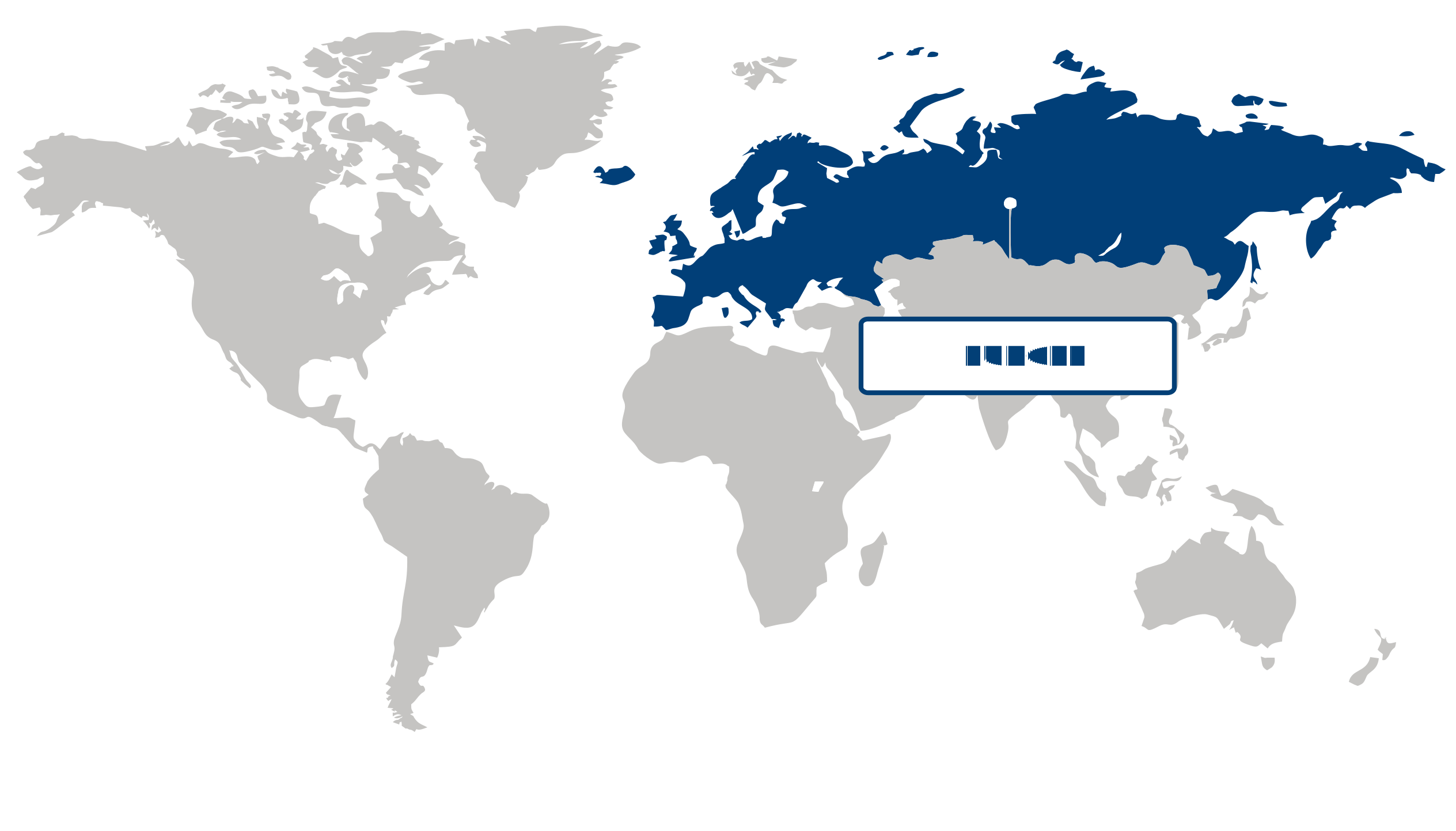
Europe (Largest Region)
Europe held the largest share of the ecotoxicological studies market at 35.72% in 2026, supported by stringent environmental regulations, established chemical safety frameworks, and strong institutional capabilities for assessing ecological risks. Growing scrutiny of industrial pollutants, chemicals, agricultural inputs, and emerging contaminants is increasing demand for reliable environmental impact assessments. Continued emphasis on biodiversity protection, ecosystem health, and evidence-based regulatory decision-making further strengthens the region's need for advanced ecotoxicological testing and monitoring.
Asia Pacific (Fastest-Growing Region)
Asia Pacific is the fastest-growing region, driven by expanding industrial activity, increasing environmental pressures, and strengthening regulatory attention toward chemical and ecological safety. Rapid urbanization and development across manufacturing, agriculture, and resource-intensive industries are creating greater demand for environmental risk assessment. Rising investment in environmental monitoring capabilities, research infrastructure, and regulatory compliance is also encouraging broader adoption of ecotoxicological studies across diverse ecosystems and industrial applications.
| Parameter | North America | Asia Pacific | Europe | Latin America | MEA |
|---|---|---|---|---|---|
| Innovation HubiScaleNascentDeveloping Advanced | |||||
| Cost-Sensitive RegioniScaleLowMedium High | |||||
| Regulatory EnvironmentiScaleRestrictiveNeutral Supportive | |||||
| Demand DriversiScaleWeakModerate Strong | |||||
| Development StageiScaleEmergingDeveloping Developed | |||||
| Adoption RateiScaleLowMedium High | |||||
| New Entrants / StartupsiScaleSparseModerate Dense | |||||
| Macro IndicatorsiScaleWeakStable Strong |
Key Country Insights
Germany 🇩🇪
Sustainable Compliance ResearchGermany emphasizes ecotoxicological studies that align with stringent environmental regulations and responsible chemical management practices. Research organizations continue supporting manufacturers with advanced toxicity assessments that facilitate sustainable product development and regulatory submissions.
France 🇫🇷
Ecological Research IntegrationFrance supports ecotoxicological studies through strong environmental research infrastructure and regulatory oversight of chemical safety. Laboratories increasingly collaborate with industry to evaluate ecological impacts while supporting sustainable innovation and environmental stewardship objectives.
Italy 🇮🇹
Applied Environmental TestingItaly focuses on ecotoxicological studies that assist manufacturers in meeting environmental compliance requirements across industrial sectors. Continued investment in laboratory expertise and standardized testing methods supports reliable ecological safety evaluations for new products.
Japan 🇯🇵
Environmental Risk AssessmentJapan continues strengthening ecotoxicological testing to evaluate environmental impacts of industrial chemicals, agricultural products, and new materials. Demand is supported by ongoing investment in standardized laboratory methods and scientifically robust ecological risk evaluations.
South Korea 🇰🇷
Industrial Safety ValidationSouth Korea is expanding ecotoxicological research capabilities to support chemical manufacturing, environmental protection, and regulatory compliance. Testing laboratories increasingly adopt advanced analytical methods that improve environmental risk characterization across diverse industrial applications.
United States 🇺🇸
Regulatory Testing FocusThe U.S. market prioritizes ecotoxicological studies that support environmental compliance, chemical registration, and sustainable product development. Laboratories continue expanding testing capabilities for aquatic and terrestrial ecosystems as industries face increasingly rigorous environmental assessment requirements.
Ecotoxicological Studies Market Share (%), by Service, 2026
Go beyond the chart, access full insights & data tables
Request Free Sample ReportService Segment Analysis: Aquatic Ecotoxicology (Largest Segment) vs Sediment Ecotoxicology (Fastest-Growing Segment)
The ecotoxicological studies market was led by the aquatic ecotoxicology segment, which accounted for 45.69% in 2026, reflecting the importance of evaluating the effects of chemicals, pollutants, and other environmental contaminants on aquatic organisms and ecosystems. Growing regulatory attention to environmental safety and the need to assess the ecological impact of industrial and agricultural substances are sustaining demand for aquatic testing services. Increasing concern over water quality and ecosystem protection is also encouraging organizations to incorporate more comprehensive environmental risk assessments into product development and regulatory processes.
Sediment ecotoxicology is gaining momentum as environmental assessment expands beyond water columns to include contaminants that accumulate in sediments and can affect benthic organisms and aquatic ecosystems over time. Increasing recognition of sediment as an important pathway for persistent pollutants is encouraging more detailed environmental investigations. The growing focus on ecosystem-level risk assessment, remediation planning, and long-term contaminant behavior is further strengthening demand for specialized sediment ecotoxicology services.
| Segment | Sub-Segment | Largest Segment | Fastest Growing |
|---|---|---|---|
| Service | Aquatic Ecotoxicology, Sediment Ecotoxicology, Terrestrial Ecotoxicology, Avian Ecotoxicology, Pollinator Testing | Aquatic Ecotoxicology | Sediment Ecotoxicology |
Competitive Landscape and Market Positioning
Leading companies in the ecotoxicological studies market:
1. SGS S.A. (Switzerland)
2. Eurofins Scientific SE (Luxembourg)
3. Charles River Laboratories International Inc. (United States)
4. Laboratory Corporation of America Holdings (United States)
5. Smithers Group (United States)
6. Fera Science Limited (United Kingdom)
7. Noack Laboratorien GmbH (Germany)
8. Aragen Life Sciences Pvt. Ltd. (India)
9. Intertek Group plc (United Kingdom)
10. Bureau Veritas S.A. (France)
The ecotoxicological studies market is evolving through increasing alignment with environmental compliance standards and the adoption of advanced testing methodologies for toxicity assessment. Organizations are investing in automated laboratory technologies and digital data analysis tools to improve testing accuracy and reporting efficiency. Collaborative research initiatives focused on environmental risk evaluation are also supporting innovation within the ecotoxicological studies market.
| Company | Market Share | Company Revenue | Revenue CAGR (%) | Product Portfolio | Geographic Presence | Innovation / R&D Focus | Strategic Developments |
|---|---|---|---|---|---|---|---|
| SGS S.A. (Switzerland) | |||||||
| Eurofins Scientific SE (Luxembourg) | |||||||
| Charles River Laboratories International Inc. (United States) | |||||||
| Laboratory Corporation of America Holdings (United States) | |||||||
| Smithers Group (United States) | |||||||
| Fera Science Limited (United Kingdom) | |||||||
| Noack Laboratorien GmbH (Germany) | |||||||
| Aragen Life Sciences Pvt. Ltd. (India) | |||||||
| Intertek Group plc (United Kingdom) | |||||||
| Bureau Veritas S.A. (France). |
Industry Development / News
| Company Name | Date | Key Development |
|---|---|---|
| Charles River Laboratories | Oct-25 | Charles River Laboratories partnered with Toxys to launch the ReproTracker in-vitro assay, introducing an advanced endocrine-disruption screening capability. By eliminating the requirement for live fish testing, the technology-driven integration reduces overall regulatory ecotoxicology study timelines by approximately 40%. |
| Vivo Bio Tech | Aug-25 | Vivo Bio Tech secured an INR 10.75-crore (USD 1.3 million) contract to perform comprehensive pre-clinical safety, mutagenicity, and ecotoxicology studies for an Indian pharmaceutical and agrochemical client. The generated experimental data will support mandatory regulatory submissions to India’s Central Insecticides Board & Registration Committee. |
| Smithers | Jan-23 | Smithers acquired ResChem Analytical Limited to broaden its global residue management services and expand its localized regulatory field trial capabilities. The acquisition adds specialized field cooperators to support crop residue operator exposure studies, strengthening the company's agrochemical ecotoxicological testing network. |
| Aragen Life Sciences Pvt. Ltd. | Dec-21 | Aragen Life Sciences Pvt. Ltd. acquired contract testing provider INTOX PVT. LTD. to expand its domestic operational footprint in India. The transaction integrates specialized bio-safety testing services into Aragen’s laboratory portfolio, strengthening its competitive position in regulatory preclinical development. |
| SGS SA | Feb-21 | SGS SA expanded its strategic partnership with RLP AgroScience to co-develop customized experimental designs for environmental and human safety evaluations. The collaboration enhances laboratory testing precision for biocides, pesticides, human and veterinary medications, and industrial chemicals. |
Customize Your Report
Explore examples of how this report can be tailored to different research needs, including custom segments, additional topics or chapters, and related reports. Click a section of the wheel or its numbered marker to explore the available options.
Ecotoxicological Studies Market — Custom Segments
| Segment | Sub-Segment |
|---|---|
| Regulatory Purpose | Pesticide & Biocide Registration, Pharmaceutical & Chemical Safety Assessment, Environmental Risk Assessment, Industrial & Commercial Product Compliance |
| Customer Industry | Pharmaceuticals & Biotechnology, Agrochemicals, Chemicals & Materials, Consumer Products, Food & Agriculture, Environmental & Waste Management |
| Service Delivery Model | In-House Studies, Outsourced Studies, Hybrid In-House & Outsourced Studies |
Ecotoxicological Studies Market — Custom TOC
| Custom Chapter | Chapter Details |
|---|---|
| Outsourcing Strategy and CRO Selection Landscape |
|
| Alternative Testing Methods Adoption Assessment |
|
| Regulatory Testing Demand by Chemical Category |
|
Need a different cut of the data?
Request Custom ResearchFrequently Asked Questions
What is the current revenue of the ecotoxicological studies market?
What is the projected value of the ecotoxicological studies industry by 2036?
Why are environmental risk assessment requirements increasing demand for ecotoxicological studies?
How are expanding chemical registrations influencing commercial opportunities in the ecotoxicological studies market?
Why does aquatic ecotoxicology hold the largest share of the ecotoxicological studies market?
What is fueling growth in sediment ecotoxicology services?
Why does Europe hold the largest share of the ecotoxicological studies market?
What factors are accelerating ecotoxicological studies in Asia Pacific?
Which companies are driving growth in the ecotoxicological studies landscape?
Our Clients
"The report helped us understand emerging consumer trends in our product category. It clarified where to focus innovation for the next product launch."
LyondellBasell
"The regional forecast section was incredibly useful. We were able to identify two new potential partners in Europe thanks to the vendor mapping you included."
SABIC
"We appreciated how actionable the recommendations were. It guided us to improve supply chain resilience."
Olin Corporation
Our Research Team & Methodology
Every Fundamental Business Insights report is built by a dedicated vertical research team, validated through a structured primary-and-secondary methodology, and reviewed for accuracy before it reaches you.
Delivery
Published
Available
Support
- Market Size & Forecast
- Market Segmentation
- Regional Analysis
- Growth Drivers & Challenges
- Market Dynamics
- Competitive Landscape
- Company Profiles
- Competitive Benchmarking
- Mergers & Acquisitions
- Market Share Analysis or Key Company Strategies
- Value Chain Analysis
- Porter's Five Forces
- PESTLE Analysis
- Pricing Trends
- Supply-Demand Analysis
- Technology Landscape
- Regulatory Landscape
- Investment & Funding Landscape
- Emerging Opportunities
- Future Market Outlook