



Elastic Bonding Adhesive & Sealant Market Size & Forecasts 2026-2035, By Segments (End-use Industry, Resin Type), Growth Opportunities, Innovation Landscape, Regulatory Shifts, Strategic Regional Insights (U.S., Japan, China, South Korea, UK, Germany, France), and Competitive Dynamics (Henkel, Sika, 3M, H.B. Fuller, BASF)
Market Size and Growth Outlook
Elastic Bonding Adhesive & Sealant Market size is projected to expand significantly, moving from USD 27.76 billion in 2025 to USD 54.61 billion by 2035, with a CAGR of 7% during the 2026-2035 forecast period. The expected revenue for 2026 is USD 29.46 billion.
Base Year Value (2025)
USD 27.76 billion
CAGR (2026-2035)
7%
Forecast Year Value (2035)
USD 54.61 billion

Historical Data Period
2022-2025

Largest Region
Europe

Forecast Period
2026-2035
Key Takeaways
- Europe region possessed more than 38% revenue share in 2025, driven by advanced automotive lightweighting and construction standards.
- Asia Pacific region will grow at more than 8.5% CAGR through 2035, driven by expanding automotive and electronics manufacturing in Asia Pacific, where advanced elastic bonding adhesives and sealants are increasingly used in assembly and structural applications.
- The building and construction segment captured majority of the market share in 2025, driven by increasing use of weather-resistant bonding systems in curtain walls and modular façades in modern infrastructure.
- In elastic bonding adhesive & sealant market, the polyurethane segment accounted for the largest revenue share in 2025, due to the versatility of polyurethane adhesives for diverse substrates and broad application in construction and automotive.
- The top participants in the elastic bonding adhesive & sealant market are Henkel (Germany), Sika (Switzerland), 3M (USA), H.B. Fuller (USA), BASF (Germany), Dow (USA), Arkema (France), Bostik (France), RPM International (USA), Huntsman (USA).
Market Growth Drivers and Industry Trends
Rising Construction and Automotive Industry DemandThe resurgence in construction activities worldwide, paired with the automotive sector’s pivot towards lightweight and durable materials, significantly propels the elastic bonding adhesive & sealant market. Key industry players such as BASF and 3M have reported increasing product adoption in structural bonding and sealing applications, driven by stricter safety and durability standards issued by organizations like the U.S. Department of Transportation. Consumer preference for faster, cost-effective, and resilient construction and vehicle assembly further accelerates market uptake. For established firms, integrating adhesive technologies with material innovations offers differentiation, while newcomers can capitalize on niche applications within modular construction and electric vehicle manufacturing. As infrastructure modernization and vehicle lightweighting persist, this demand trajectory will continuously shape competitive dynamics and product portfolios.
Adoption of High-Performance Adhesive Formulations
The shift towards advanced, high-performance elastic bonding adhesive & sealant formulations is transforming market expectations around strength, flexibility, and curing time. Innovators like Henkel and Sika have introduced formulations that cater to harsh environmental conditions and complex substrates, meeting rigorous standards from regulatory bodies such as the European Chemicals Agency (ECHA). This technical evolution responds to growing industrial and consumer demands for durable yet adaptable solutions, especially in aerospace and renewable energy sectors. Strategically, this creates opportunities for R&D investments focused on multifunctional adhesives, enabling companies to command premium segments. As technology progresses, industry leaders and start-ups alike are poised to benefit from continuous innovation cycles, reinforcing the importance of technical expertise in market positioning.
Innovation in Eco-Friendly Bonding Solutions
Growing regulatory pressures on volatile organic compounds (VOCs) and consumer demand for sustainable products are driving innovation in eco-friendly elastic bonding adhesive & sealant market offerings. Industry players such as Henkel’s recent launch of low-VOC, bio-based sealants aligns with global sustainability targets set by agencies like the Environmental Protection Agency (EPA) and the International Energy Agency (IEA). This trend reflects shifting investor and buyer priorities towards environmentally responsible building materials and automotive components, fostering market entry points for green chemistry developers and niche suppliers. Companies that prioritize sustainability in formulation and production processes gain competitive advantage in an increasingly regulated landscape. Future market evolution will hinge on balancing performance with environmental impact, reinforcing the integration of circular economy principles within adhesive technology development.
Industry Restraints:
Stringent Environmental Regulations and Compliance Costs
Environmental policies increasingly restrict the use of solvent-based adhesives and sealants due to volatile organic compound (VOC) emissions, escalating compliance costs and limiting product formulations. The U.S. Environmental Protection Agency’s (EPA) tightening of VOC limits under the National Emission Standards for Hazardous Air Pollutants (NESHAP) has compelled manufacturers like 3M and Henkel to reformulate products, impacting production timelines and capital expenditures. Compliance complexity especially challenges smaller players lacking scale economies, constraining innovation and slowing market expansion. Strategic investments in eco-friendly R&D and adoption of water-based or bio-based alternatives are essential but costly. Over the next several years, regulatory pressures will continue to drive industry consolidation and favor companies with advanced sustainable technologies and robust regulatory expertise, reshaping competitive dynamics and raising barriers to entry.
Raw Material Price Volatility and Supply Chain Disruptions
Price fluctuations in key petrochemical-derived inputs such as polyurethanes and silicones significantly hinder the market’s operational efficiency and profitability. Recent supply chain disturbances, exemplified by the 2021 surge in global oil prices and logistical bottlenecks reported by BASF and Dow Inc., have increased input costs, causing pricing instability and order backlogs. This volatility impairs manufacturers’ ability to offer consistent pricing and affects contract negotiations, adding risk for both suppliers and end-users. Established producers with diversified supply networks fare better, but new entrants and smaller firms face heightened vulnerability. Going forward, these disruptions will incentivize greater supply chain diversification and increased vertical integration strategies to mitigate cost exposure and maintain market resilience amid evolving global trade conditions.
| Growth Driver Assessment Framework | |||||
| Growth Driver | Impact On CAGR | Regulatory Influence | Geographic Relevance | Adoption Rate | Impact Timeline |
|---|---|---|---|---|---|
| Rising construction and automotive industry demand | 3.00% | Short term (≤ 2 yrs) | North America, Asia Pacific | Low | Fast |
| Adoption of high-performance adhesive formulations | 2.00% | Medium term (2–5 yrs) | Europe, North America | Medium | Moderate |
| Innovation in eco-friendly bonding solutions | 2.00% | Long term (5+ yrs) | Asia Pacific, Europe | High | Slow |
Unlock insights tailored to your business with our bespoke market research solutions - Click to get your customized report now!
Regional Demand Dynamics
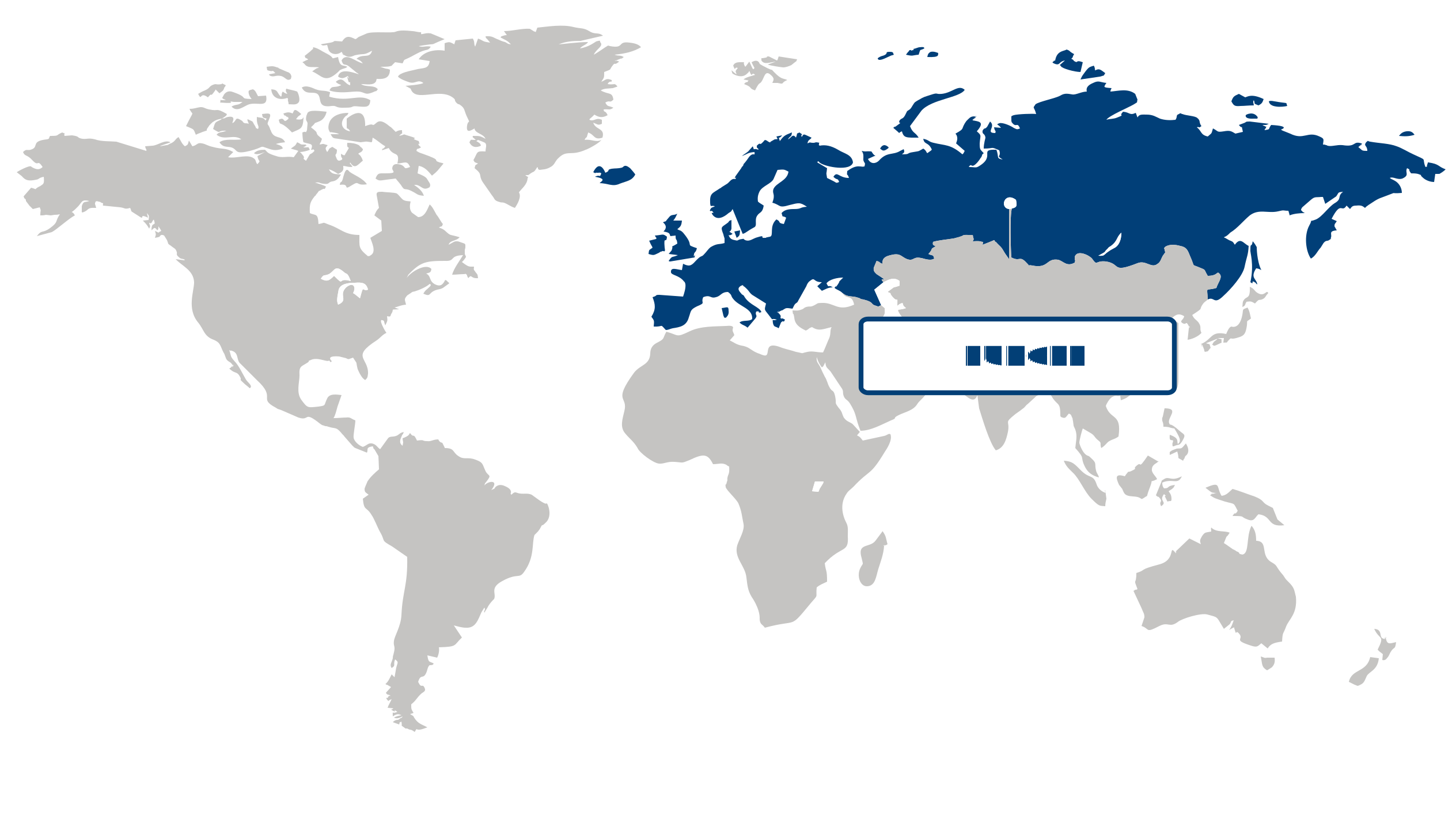
Largest Region
Europe
38% Market Share in 2025
Europe dominated the elastic bonding adhesive & sealant market in 2025, capturing over 38% of the global share. This regional leadership stems primarily from advanced automotive lightweighting and stringent construction standards that drive demand for high-performance, flexible bonding solutions. Countries across Europe increasingly prioritize sustainability and energy efficiency in vehicles and buildings, reflecting policies endorsed by the European Commission’s Green Deal framework. Moreover, innovations introduced by companies like Henkel and Sika, focusing on eco-friendly, durable adhesives, reinforce Europe’s position. Supply chain resilience and robust industrial infrastructure further enhance market competitiveness. Looking ahead, Europe’s continued investment in next-generation mobility and sustainable urban development promises sustained expansion and attractive entry points for investors in the elastic bonding adhesive & sealant market.
Germany anchors the European elastic bonding adhesive & sealant market as a powerhouse of automotive innovation and industrial manufacturing. The country’s leadership in lightweight automotive design, fueled by the rapid adoption of electric vehicles and stricter emissions regulations from the German Federal Motor Transport Authority (Kraftfahrt-Bundesamt), intensifies demand for elastic bonding solutions. German manufacturers such as BASF have accelerated product development to meet these evolving specifications, enhancing market dynamism. This technologically advanced environment creates a fertile ground for growth and positions Germany as a key contributor to Europe’s overall market dominance.
France plays a pivotal role in reinforcing Europe’s elastic bonding adhesive & sealant market, particularly through its stringent construction regulations and revitalization of infrastructure projects. The Ministry of Ecological Transition’s enforcement of energy-efficient building codes has stimulated demand for elastic sealants that provide durability and thermal insulation. French firms like Arkema have capitalized on this by developing innovative, sustainable adhesive technologies tailored to meet these requirements. France’s focus on eco-friendly construction combined with rising urbanization strengthens Europe’s overall market prospects, solidifying its strategic importance within the region.
Asia Pacific Market Analysis:
Asia Pacific emerged as the fastest-growing region in the elastic bonding adhesive & sealant market, registering a robust CAGR of 8.5%. This rapid growth is primarily driven by the expanding automotive and electronics manufacturing sectors across the region, where advanced elastic bonding adhesives and sealants find increasing application in assembly and structural uses. The region’s remarkable industrial dynamism stems from rising consumer demand for lightweight, durable, and energy-efficient products, which has compelled manufacturers to adopt innovative bonding solutions. Regulatory incentives promoting environmental sustainability and stringent quality standards in countries like Japan and China further fuel market expansion, as noted by the Japan Adhesive Industry Association’s recent reports on eco-friendly adhesive usage. Looking ahead, Asia Pacific’s investment in automation, digital manufacturing, and supply chain resilience will continue to underpin its significant opportunities in this market.
Japan holds a pivotal position in Asia Pacific’s elastic bonding adhesive & sealant market, characterized by strong innovation in formulation technology tailored for automotive lightweighting and next-generation electronics. Local manufacturers prioritize high-performance, environmentally compliant products to meet the demands of flagship automakers such as Toyota and Honda. The Japanese Ministry of Economy, Trade and Industry (METI) has recently highlighted initiatives supporting sustainable adhesives that reduce VOC emissions, aligning with evolving consumer preferences for greener technologies. This approach strengthens Japan’s leadership as a center for technological advancement and innovation in adhesive solutions, reinforcing Asia Pacific’s overall market prominence.
China’s role in the elastic bonding adhesive & sealant market is marked by its vast manufacturing base and rapid industrialization, particularly in automotive and consumer electronics sectors. The country’s growing middle class drives demand for high-quality, durable products, prompting greater use of elastic bonding adhesives in smart devices and electric vehicles. Government policies such as the Made in China 2025 initiative actively promote domestic innovation and advanced materials adoption, encouraging local producers like H.B. Fuller Shanghai to expand production capabilities. Increasing cross-border trade and infrastructure development further increase logistical efficiencies, bolstering China’s influence on the Asia Pacific market trajectory and underlying the region's growing global competitiveness.
North America Market Trends:
North America held a substantial share in the elastic bonding adhesive & sealant market, driven by its robust industrial base and emphasis on advanced manufacturing technologies. The region’s strong demand for high-performance materials in automotive, aerospace, and construction sectors has been reinforced by increasing consumer preference for durability and energy-efficient solutions. Regulatory actions from the U.S. Environmental Protection Agency (EPA) promoting low-VOC (volatile organic compounds) products have accelerated the adoption of environmentally friendly sealants, while supply chain resilience amid global disruptions has supported steady operations. Notably, technological advancements from firms like 3M Company in elastic bonding formulations have enhanced product efficacy and sustainability. North America’s skilled workforce and strategic investments in R&D further underpin its competitive advantage, positioning the region as a pivotal hub offering significant growth opportunities as industries pivot toward innovative, eco-conscious adhesive solutions.
The U.S. serves as a focal point within the North American elastic bonding adhesive & sealant market due to its integrated manufacturing ecosystem and regulatory emphasis on sustainability. Stringent standards imposed by the Occupational Safety and Health Administration (OSHA) and the EPA have prompted manufacturers to develop safer, low-emission sealants, aligning with growing demand among construction and automotive enterprises for compliant, high-performance products. For example, Dow Chemical’s recent launch of a bio-based adhesive line underscores the country’s leadership in marrying innovation with environmental responsibility. The expanding infrastructure initiatives backed by the U.S. government further stimulate market growth by increasing the need for resilient bonding solutions, making the U.S. a critical driver of regional momentum and a strategic gateway for industry players aiming to capitalize on North America’s evolving elastic bonding adhesive & sealant market landscape.
No card data available for this language/report.
Segment Leadership and Growth Trends
The building and construction segment held largest share of the elastic bonding adhesive & sealant market in 2025, driven by rising adoption of weather-resistant bonding systems in curtain walls and modular façades within modern infrastructure projects. This leadership is underpinned by increasing demand for energy-efficient, durable building envelopes that comply with stringent regulations on thermal insulation and sustainability, such as those advocated by the U.S. Green Building Council. The segment benefits from a growing preference among developers for repairable and resilient materials that align with long-term maintenance strategies and urbanization trends. Key players like Sika AG have emphasized innovations targeting façade applications, providing a competitive edge and entry points for new entrants to address niche construction challenges. Given ongoing investments in smart buildings and regulatory push for sustainable construction, this segment is poised to maintain its dominance as infrastructure modernization accelerates globally.
Analysis by Resin Type
Polyurethane represented largest share in the elastic bonding adhesive & sealant market in 2025, attributed to its versatility across diverse substrates and extensive use in both construction and automotive sectors. Its formulation adaptability supports varying performance requirements such as elasticity, durability, and chemical resistance, responding to the evolving demands for high-performance adhesive solutions cited by the Adhesive and Sealant Council. The segment capitalizes on increasing industrial automation and digital quality controls in manufacturing, which facilitate consistent product reliability and supply chain efficiencies. Leading manufacturers like Huntsman Corporation are leveraging polyurethane’s broad functionality to expand application portfolios, meeting stricter environmental and safety standards. With technological advancements and cross-industry applicability, the polyurethane segment continues to offer strategic growth potential and is expected to remain integral as demand for multifunctional adhesives intensifies.
| Report Segmentation | |||
| Segment | Sub-Segment | Largest Segment | Fastest Growing Segment |
|---|---|---|---|
| End-use Industry | Building and Construction, Automotive and Transportation, Others | ||
| Resin Type | Polyurethane, Silicone, Silane Modified Polymers, Others | ||
 Read our Research Approach
Competitive Landscape and Market Positioning
Key players in the elastic bonding adhesive & sealant market include Henkel, Sika, 3M, H.B. Fuller, BASF, Dow, Arkema, Bostik, RPM International, and Huntsman. These companies are recognized for their advanced material science capabilities, extensive product portfolios, and strong global distribution channels, which underpin their leadership positions. Henkel and Sika are often regarded as innovation frontrunners due to their targeted developments in sustainable adhesives and sealants. Meanwhile, 3M is distinguished by its broad industrial reach and commitment to multifunctional bonding solutions. The German and American giants—BASF, Dow, and Huntsman—leverage their deep chemical expertise to create tailored performance products suited for diverse applications. European brands such as Arkema and Bostik emphasize customization and environmental compliance, shaping market benchmarks through quality and regulatory adherence.The competitive landscape reflects a dynamic interplay of resource consolidation and technological advancement among these leaders. Recent movements include sophisticated technology integrations and portfolio expansions aimed at enhancing product durability and elasticity under diverse conditions. Collaborative ventures and selective acquisitions have enabled these companies to access niche markets and advanced formulations, reinforcing their foothold in high-value segments. Simultaneously, ongoing investments in research and development facilitate continuous innovation cycles, enabling quicker responses to evolving regulatory standards and customer expectations. Collectively, these initiatives foster a multi-dimensional differentiation across the industry, encouraging incremental improvements while driving competitive agility.
Strategic / Actionable Recommendations for Regional Players
In North America, forging partnerships with technology startups to integrate novel material platforms could accelerate product innovation and offer differentiation. Emphasizing cross-sector applications—such as automotive and aerospace—where elastic bonding is critical may unlock high-value opportunities. Additionally, leveraging digital tools to optimize supply chain and customer engagement will be essential to navigate increasingly complex market demands.
For the Asia Pacific region, collaborating with regional raw material suppliers and technology institutes can reduce time-to-market and customize solutions for rapidly growing construction and electronics sectors. Embracing sustainable formulations aligned with regional environmental policies will enhance competitiveness. Targeting emerging sub-segments like flexible electronics and green building materials may yield strategic advantages in this heterogeneous market.
Within Europe, capitalizing on the continent’s advanced regulatory framework to develop eco-friendly and bio-based elastic adhesives aligns with heightened consumer and policymaker expectations. Strengthening collaborations across R&D networks and contributing to standardization efforts will help maintain technological leadership. Expanding presence in specialized industries such as healthcare and renewable energy could offset saturation in traditional markets.
Why Choose Us
Specialized Expertise: Our team comprises industry experts with a deep understanding of your market segment. We bring specialized knowledge and experience that ensures our research and consulting services are tailored to your unique needs.
Customized Solutions: We understand that every client is different. That's why we offer customized research and consulting solutions designed specifically to address your challenges and capitalize on opportunities within your industry.
Proven Results: With a track record of successful projects and satisfied clients, we have demonstrated our ability to deliver tangible results. Our case studies and testimonials speak to our effectiveness in helping clients achieve their goals.
Cutting-Edge Methodologies: We leverage the latest methodologies and technologies to gather insights and drive informed decision-making. Our innovative approach ensures that you stay ahead of the curve and gain a competitive edge in your market.
Client-Centric Approach: Your satisfaction is our top priority. We prioritize open communication, responsiveness, and transparency to ensure that we not only meet but exceed your expectations at every stage of the engagement.
Continuous Innovation: We are committed to continuous improvement and staying at the forefront of our industry. Through ongoing learning, professional development, and investment in new technologies, we ensure that our services are always evolving to meet your evolving needs.
Value for Money: Our competitive pricing and flexible engagement models ensure that you get maximum value for your investment. We are committed to delivering high-quality results that help you achieve a strong return on your investment.
Select Licence Type

