



Electric Boiler Market Size & Growth Forecast 2027–2036, By Segments (Capacity, Voltage Rating, Application), Regional Demand Trends (North America, Asia Pacific, Europe), Key Country Insights (U.S., Japan, South Korea, Germany, France, Italy), and Competitive Landscape
Market Size and Growth Outlook
Electric Boiler Market size was worth USD 11.74 Billion in 2026 and is expected to grow at 13.73% CAGR between 2027 and 2036, attaining USD 42.5 Billion by 2036. The industry revenue for 2027 is assessed at USD 13.13 Billion.
Base Year Value (2026)
USD 11.74 Billion
CAGR (2027-2036)
13.73%
Forecast Year Value (2036)
USD 42.5 Billion

Historical Data Period
2022-2026

Largest Region
Europe

Forecast Period
2027-2036
Electric Boiler Market Intelligence Snapshot:
-
Regional Market Dynamics:
- Europe led in 2025 as decarbonization efforts, environmental policies, renewable electricity adoption, and heating infrastructure modernization accelerated electric heating deployment.
- Asia Pacific is the fastest-growing region, supported by industrialization, construction activity, infrastructure investment, electrification, and modernization of conventional heating equipment.
-
Segment Momentum:
- The ≤ 10 MMBtu/hr segment leads the market due to widespread adoption across residential, commercial, and light industrial facilities seeking efficient, easy-to-install electric heating systems.
- Industrial demand is rising as manufacturers adopt electric boilers to reduce emissions, improve process efficiency, comply with stricter environmental standards, and support broader decarbonization initiatives.
-
Market Expansion Drivers:
- Carbon emission regulations driving large-scale replacement of conventional industrial boilers
- Rising demand for energy-efficient space heating boosting electric boiler installations
- Industrial electrification trend accelerating transition toward low-emission thermal systems
-
Leading Market Participants:
Major players in the electric boiler market include Viessmann Group (Germany), Bosch Industriekessel GmbH (Germany), Fulton Companies (United States), Chromalox Inc. (United States), Babcock Wanson (France), Ferroli S.p.A. (Italy), Thermon Group Holdings, Inc. (United States), Lochinvar, LLC (United States), Danstoker A/S (Denmark), ACV International (Belgium)
Global Market Forecast Snapshot:
-
Market Outlook:
- 2026 Market Size: USD 11.74 Billion
- 2027 Estimated Market Size: USD 13.13 Billion
- Projected Market Size: USD 42.5 Billion by 2036
- Growth Forecasts: 13.73% CAGR (2027-2036)
-
Regional and Segment Outlook:
- Leading Regional Market: Europe
- High-Growth Regional Hub: Asia Pacific
- Core Revenue Segment: ≤ 10 MMBtu/hr (Capacity) | Low Voltage (Voltage Rating) | Residential (Application)
- Emerging Opportunity Segment: > 100 - 250 MMBtu/hr (Capacity) | Medium Voltage (Voltage Rating) | Industrial (Application)
Market Growth Drivers and Industry Trends
Carbon emission regulations driving large-scale replacement of conventional industrial boilers
Governments are introducing stricter environmental regulations that require industrial facilities to reduce greenhouse gas emissions and modernize existing thermal infrastructure. The electric boiler market growth is driven by the replacement of conventional fossil fuel-fired boilers with electrically powered alternatives that help manufacturers comply with evolving emission standards while simplifying environmental compliance. Industries are also prioritizing technologies that eliminate on-site combustion, reduce local air pollutants, and integrate more effectively with broader corporate decarbonization strategies across manufacturing and processing operations.
Rising demand for energy-efficient space heating boosting electric boiler installations
Growing emphasis on energy conservation across residential, commercial, and institutional buildings is encouraging the adoption of advanced heating systems with improved operational efficiency. Increasing demand for efficient building heating solutions will propel the electric boiler market growth as property owners seek heating equipment capable of delivering consistent thermal performance with lower maintenance requirements and greater compatibility with modern building energy management systems. The preference for compact and controllable heating technologies is also influencing renovation projects as well as new building developments where efficient energy utilization remains a key design consideration.
Industrial electrification trend accelerating transition toward low-emission thermal systems
Manufacturing industries are progressively replacing combustion-based processes with electrically powered technologies to improve operational sustainability and reduce dependence on conventional fuels. Within this transformation, the electric boiler market benefits from increasing investments in low-emission thermal systems that align with industrial electrification strategies and support cleaner production environments. Electrically powered boilers are becoming an integral part of facility modernization programs because they can be integrated with renewable electricity sources and digital process controls while supporting stable heat generation across diverse industrial applications.
| Growth Driver Assessment Framework | |||||
| Growth Driver | Impact On CAGR | Regulatory Influence | Geographic Relevance | Adoption Rate | Impact Timeline |
|---|---|---|---|---|---|
| Carbon emission regulations driving large-scale replacement of conventional industrial boilers | 2% | High | Europe, North America | High | Near Term |
| Rising demand for energy-efficient space heating boosting electric boiler installations | 1.7% | Moderate | Asia Pacific | High | Mid Term |
| Industrial electrification trend accelerating transition toward low-emission thermal systems | 1.6% | High | Europe, Asia Pacific | Medium | Mid Term |
Unlock insights tailored to your business with our bespoke market research solutions - Click to get your customized report now!
Regional Demand Dynamics
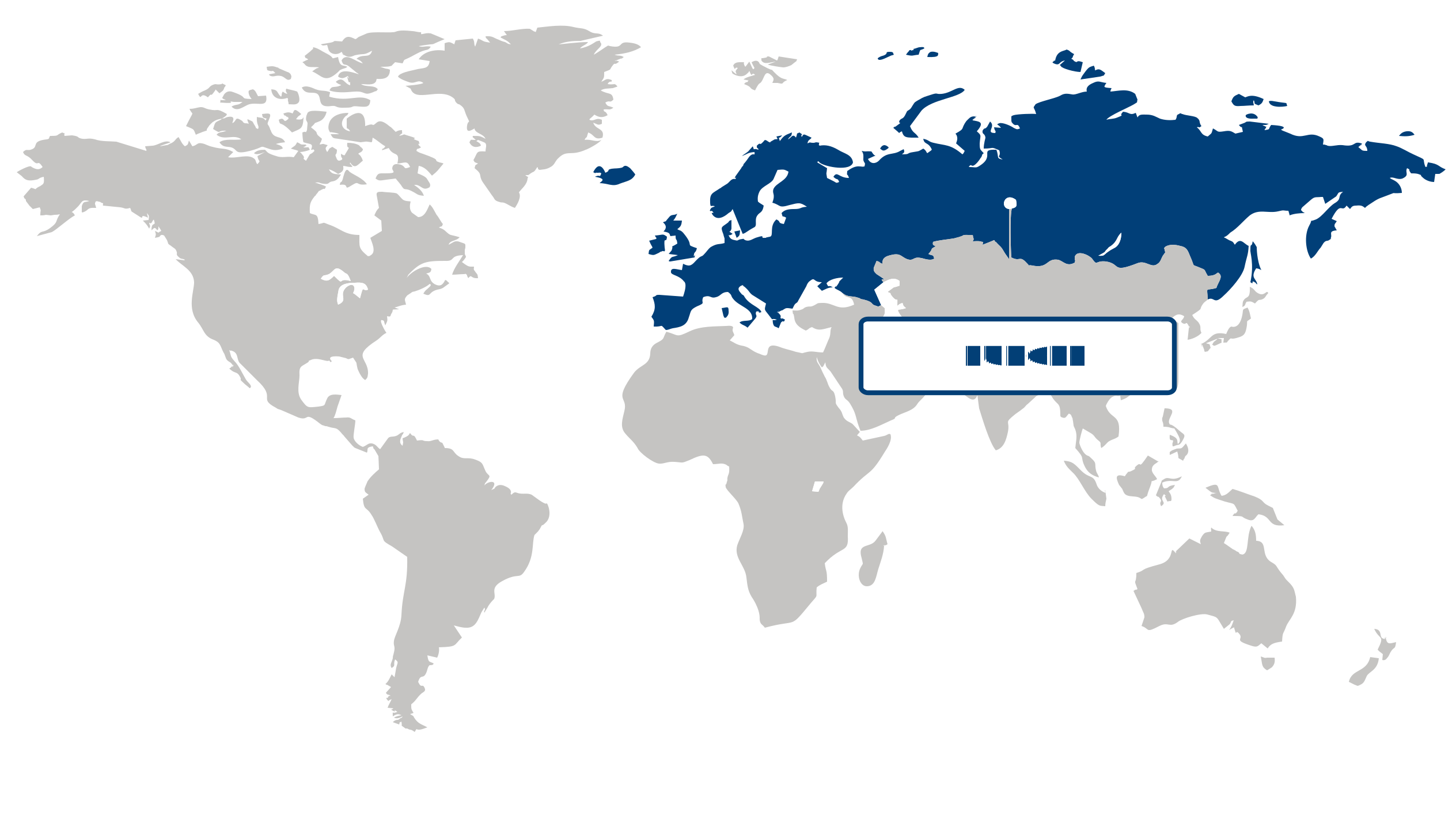
Largest Region
Europe
Largest Market Share in 2026
Europe (Largest Region) vs Asia Pacific (Fastest-Growing Region)
Europe accounted for the largest share of the electric boiler market in 2026, reflecting strong efforts to decarbonize heating systems and reduce reliance on fossil-fuel-based technologies. Increasing adoption of renewable electricity, stringent environmental policies, and investments in energy-efficient buildings are supporting the transition toward electric heating solutions. Electric boilers are gaining relevance in residential, commercial, and industrial applications where users seek cleaner heating alternatives and compatibility with low-carbon energy systems. Building renovation initiatives and the modernization of heating infrastructure are further creating opportunities for electric boiler deployment, while the integration of heating systems with smart energy management technologies is strengthening their appeal.
Asia Pacific is positioned as the fastest-growing regional market, supported by rapid industrialization, expanding construction activity, and rising demand for efficient heating technologies. Growing investment in commercial and industrial infrastructure is creating new applications for electric boilers, particularly in facilities seeking reliable and controllable heating systems. Increasing electrification of energy consumption and the gradual expansion of renewable power generation are also improving the environmental benefits of electric heating. In addition, urban development and modernization of industrial facilities are encouraging the replacement of conventional heating equipment with more efficient electric alternatives.
No card data available for this language/report.
Segment Leadership and Growth Trends
Capacity Segment Analysis: ≤ 10 MMBtu/hr (Largest Segment) vs > 100 - 250 MMBtu/hr (Fastest-Growing Segment)
The ≤ 10 MMBtu/hr capacity segment held the largest share in 2026 due to its widespread adoption across small commercial facilities, residential complexes, and light industrial operations requiring reliable and efficient heat generation. These systems offer relatively simple installation, lower operating complexity, and compatibility with facilities transitioning toward cleaner electric heating technologies. Their suitability for distributed heating applications continues to support strong market demand.
Holding the fastest growth in the electric boiler market, the > 100 - 250 MMBtu/hr capacity segment is benefiting from increasing electrification across large industrial facilities and district heating applications. Organizations seeking to reduce emissions while maintaining high-capacity steam and hot water generation are investing in larger electric boiler systems. Expanding industrial decarbonization initiatives and growing reliance on renewable electricity are expected to accelerate adoption within this capacity range.
Voltage Rating Segment Analysis: Low Voltage (Largest Segment) vs Medium Voltage (Fastest-Growing Segment)
The low voltage segment accounted for the largest share in 2026, supported by its broad suitability for residential, commercial, and small industrial installations. Lower infrastructure requirements, simplified integration with existing electrical systems, and reduced installation complexity have made low-voltage electric boilers the preferred option across a wide range of end users.
The medium voltage segment is projected to expand at the fastest pace as larger industrial facilities increasingly require higher-capacity electric boilers capable of supporting energy-intensive processes. Growing investments in industrial electrification, modernization of manufacturing infrastructure, and the transition toward low-emission heating solutions are driving stronger demand for medium-voltage systems.
Application Segment Analysis: Residential (Largest Segment) vs Industrial (Fastest-Growing Segment)
The residential segment dominated the electric boiler market in 2026 through widespread adoption of compact, energy-efficient heating systems for homes and residential buildings. Rising consumer preference for cleaner heating technologies, increasing replacement of fossil fuel-based systems, and greater emphasis on indoor energy efficiency continue to support demand across the residential sector.
The industrial segment is expected to register the fastest growth as manufacturers adopt electric boilers to support decarbonization strategies and comply with increasingly stringent environmental standards. Industries are investing in electric heating technologies to reduce operational emissions, improve process efficiency, and integrate renewable electricity into production operations, creating favorable conditions for sustained segment expansion.
| Report Segmentation | |||
| Segment | Sub-Segment | Largest Segment | Fastest Growing Segment |
|---|---|---|---|
| Capacity | ≤ 10 MMBtu/hr, > 10 - 50 MMBtu/hr, > 50 - 100 MMBtu/hr, > 100 - 250 MMBtu/hr, > 250 MMBtu/hr | ≤ 10 MMBtu/hr | > 100 - 250 MMBtu/hr |
| Voltage Rating | Low Voltage, Medium Voltage | Low Voltage | Medium Voltage |
| Application | Residential, Commercial, Industrial | Residential | Industrial |
 Read our Research Approach
Competitive Landscape and Market Positioning
Leading companies in the electric boiler market:
- Viessmann Group (Germany)
- Bosch Industriekessel GmbH (Germany)
- Fulton Companies (United States)
- Chromalox, Inc. (United States)
- Babcock Wanson (France)
- Ferroli S.p.A. (Italy)
- Thermon Group Holdings, Inc. (United States)
- Lochinvar LLC (United States)
- Danstoker A/S (Denmark)
- ACV International (Belgium)
Electrification of industrial and commercial heating is reshaping competitive priorities as equipment providers expand their focus from standalone boilers to integrated heating solutions that can operate alongside renewable electricity sources and intelligent energy management systems. Product development increasingly reflects demand for flexible capacity, faster response times, and advanced control technologies that help users manage fluctuating power availability without compromising process reliability. Suppliers are also strengthening service capabilities through lifecycle support, predictive maintenance, and system optimization, recognizing that long-term operating performance has become an increasingly influential factor in purchasing decisions across diverse end-use sectors.
Industry Development/News
| Company Name | Date | Key Development |
|---|---|---|
| Nobian | Jun-26 | Nobian has commissioned a fully electrified salt production facility in Mariager, Denmark. This infrastructure investment significantly expands production capacity while enhancing energy efficiency and reducing the site's overall carbon footprint through the transition from conventional thermal energy to electrified processes. |
| Lion | Apr-26 | Lion completed a NZ$7.2 million sustainability project at its Speight’s Brewery, commissioning a 3 MW electric boiler. This installation replaces fossil fuel-based heating with a high-capacity electric alternative, optimizing energy flexibility and improving operational efficiency in line with the company’s emissions reduction targets. |
| Graphite Energy | Apr-26 | Graphite Energy secured new funding to accelerate the commercial deployment of its Green Steam thermal energy storage technology. This initiative aims to scale the adoption of low-carbon industrial steam generation, providing a viable electrified alternative for heavy-duty process heating applications. |
| Valmet | Mar-26 | Valmet has invested EUR 2 million to install a new electric boiler at its Tampere fabrics production facility in Finland. This deployment supports the company's broader manufacturing decarbonization strategy by reducing greenhouse gas emissions and improving the energy intensity of its internal heating operations. |
| AtmosZero | Feb-26 | AtmosZero has entered a strategic partnership with R.F. MacDonald to scale the deployment of its industrial electric steam heat pump technology. This collaboration targets the replacement of legacy fossil-fuel boiler systems across commercial and industrial sectors, facilitating a transition to high-efficiency electrified steam generation. |
| Braskem | Nov-25 | Braskem partnered with ComBio to install a renewable-powered electric boiler at its Paulínia facility. By shifting to electric heating, the company strengthens its operational decarbonization strategy while simultaneously optimizing energy costs and reducing reliance on traditional fuel sources for industrial processing. |
| Alfa Laval | Jun-25 | Alfa Laval has expanded its heating portfolio with advanced electric boilers designed to provide fuel flexibility and improve maritime operational efficiency. The units support integration with shore-to-ship power (OPS) terminals, helping operators comply with tightening global environmental regulations and reduce at-port emissions. |
| Cleaver-Brooks | Feb-25 | Cleaver-Brooks introduced the LVR electric hydronic boiler, featuring a modular design that achieves near 100% site efficiency. The unit, offering a power range of 90 to 540 kW, is optimized for seamless integration with renewable energy sources and utilizes advanced PLC controls for precision energy management. |
| New Belgium Brewing | Feb-25 | New Belgium Brewing adopted the AtmosZero Electric Boiler 2.0 to support the industrial-scale electrification of its steam generation processes. The move replaces traditional fossil-fuel boiler systems, demonstrating the feasibility of commercializing electric heating technology within high-demand brewery operations. |
| AERCO | Jan-24 | AERCO launched the Benchmark E, a zero-emissions electric boiler engineered for commercial applications. The system focuses on high energy efficiency within a compact physical footprint, providing an scalable solution for facilities transitioning away from carbon-intensive conventional boiler architectures. |
Why Choose Us
Specialized Expertise: Our team comprises industry experts with a deep understanding of your market segment. We bring specialized knowledge and experience that ensures our research and consulting services are tailored to your unique needs.
Customized Solutions: We understand that every client is different. That's why we offer customized research and consulting solutions designed specifically to address your challenges and capitalize on opportunities within your industry.
Proven Results: With a track record of successful projects and satisfied clients, we have demonstrated our ability to deliver tangible results. Our case studies and testimonials speak to our effectiveness in helping clients achieve their goals.
Cutting-Edge Methodologies: We leverage the latest methodologies and technologies to gather insights and drive informed decision-making. Our innovative approach ensures that you stay ahead of the curve and gain a competitive edge in your market.
Client-Centric Approach: Your satisfaction is our top priority. We prioritize open communication, responsiveness, and transparency to ensure that we not only meet but exceed your expectations at every stage of the engagement.
Continuous Innovation: We are committed to continuous improvement and staying at the forefront of our industry. Through ongoing learning, professional development, and investment in new technologies, we ensure that our services are always evolving to meet your evolving needs.
Value for Money: Our competitive pricing and flexible engagement models ensure that you get maximum value for your investment. We are committed to delivering high-quality results that help you achieve a strong return on your investment.
Select Licence Type

