Electric Earthmoving Equipment Market Size & Growth Forecast 2027–2036, By Segments (Product, Propulsion, Battery Type), Regional Demand Trends (North America, Asia Pacific, Europe), Key Country Insights (U.S., Japan, South Korea, Germany, France, Italy), and Competitive Landscape
Jump to Content
Market Size and Growth Outlook
Electric Earthmoving Equipment Market size stood at USD 2.83 billion in 2026 and is predicted to grow at a 12.83% CAGR from 2027 to 2036, attaining USD 9.46 billion by 2036. The industry revenue for 2027 is calculated at USD 3.14 billion.
Get more details on this report
Request Free Sample ReportElectric Earthmoving Equipment Market Intelligence Snapshot
Regional Market Dynamics
- Asia Pacific led the market in 2026, supported by extensive construction and infrastructure activity that drives equipment replacement, new project demand, and wider adoption of electric earthmoving machines.
- Asia Pacific is projected to grow at a 14.9% CAGR as contractors and fleet owners increasingly adopt electrified equipment to improve efficiency, utilization, and job-site performance.
Segment Momentum
- Loader held a 41.28% share in 2026 because its frequent loading, lifting, and short-distance operations make electrification practical, helping operators reduce fuel consumption, emissions, and site noise.
- BEV is the fastest-growing propulsion segment as operators increasingly prioritize fully electric equipment in jobsites and quarries where charging infrastructure, duty cycles, and equipment scheduling can be effectively managed.
Market Expansion Drivers
- Stringent emission regulations driving transition toward zero-emission construction machinery fleets.
- Rising infrastructure and construction projects increasing deployment of electric loaders and excavators.
- Advancements in battery durability and charging systems improving heavy equipment operational efficiency.
Leading Market Participants
- Major players in the electric earthmoving equipment market include Caterpillar Inc. (United States), Komatsu Ltd. (Japan), Volvo Construction Equipment AB (Sweden), Hitachi Construction Machinery Co., Ltd. (Japan), Liebherr-International AG (Switzerland), Sany Heavy Industry Co., Ltd. (China), CNH Industrial N.V. (United Kingdom), J C Bamford Excavators Ltd. (United Kingdom), Doosan Corporation (South Korea), Hydrema Holding ApS (Denmark).
Global Market Forecast Snapshot
Market Outlook
- 2026 Market Size: USD 2.83 billion
- 2027 Estimated Market Size: USD 3.14 billion.
- Projected Market Size: USD 9.46 billion by 2036
- Growth Forecast: 12.83% CAGR (2027-2036)
Regional and Segment Outlook
- Leading Regional Market: Asia Pacific
- High-Growth Regional Hub: Asia Pacific
- Core Revenue Segment: Loader (Product) | Hybrid Electric Vehicle (HEV) (Propulsion) | Lithium-ion (Battery Type)
- Emerging Opportunity Segment: Dump Truck (Product) | Battery Electric Vehicle (BEV) (Propulsion) | Lithium-ion (Battery Type)
Market Growth Drivers and Industry Trends
Stringent emission regulations driving transition toward zero-emission construction machinery fleets
Tightening environmental regulations are reshaping equipment procurement strategies, and the electric earthmoving equipment market is benefiting as construction companies seek machinery that can meet increasingly demanding emissions requirements. Conventional diesel-powered loaders, excavators, and related equipment face greater pressure in regions implementing stricter limits on exhaust emissions, particularly for projects operating in urban areas and environmentally sensitive locations. Electric machinery eliminates direct tailpipe emissions and can support contractors in complying with local air-quality requirements while reducing dependence on fossil fuels. Regulatory pressure is also encouraging fleet operators to evaluate electrification during equipment replacement cycles, creating stronger demand for battery-powered earthmoving machinery.
Rising infrastructure and construction projects increasing deployment of electric loaders and excavators
Expansion of infrastructure development, commercial construction, residential projects, and urban redevelopment is creating additional equipment requirements, supporting the electric earthmoving equipment market as contractors increasingly consider electric alternatives for new fleet deployments. Electric loaders and excavators are particularly relevant for construction environments where lower noise and zero onsite exhaust emissions can provide operational advantages, such as urban projects, indoor worksites, and locations subject to noise or air-quality restrictions. The growing emphasis on sustainable construction practices is also influencing project specifications and equipment selection, encouraging contractors to incorporate electric machinery alongside conventional fleets across excavation, material handling, site preparation, and related activities.
Advancements in battery durability and charging systems improving heavy equipment operational efficiency
Technological progress in battery systems and charging infrastructure is improving the practical usability of electric machinery, strengthening the electric earthmoving equipment market by addressing earlier concerns around operating duration and equipment availability. Improvements in battery energy density, thermal management, durability, and power delivery enable heavy equipment to perform demanding tasks with greater consistency, while faster and more flexible charging solutions can reduce downtime between operating cycles. Integration of intelligent battery management systems can further optimize energy consumption and help operators monitor equipment performance, allowing electric excavators, loaders, and other machinery to function more effectively across demanding construction environments.
| Growth Driver | Impact on CAGR | Regulatory Influence | Geographic Relevance | Adoption Rate | Impact Timeline |
|---|---|---|---|---|---|
| Stringent emission regulations driving transition toward zero-emission construction machinery fleets | 2.20% | High | Europe, North America | High | Near Term |
| Rising infrastructure and construction projects increasing deployment of electric loaders and excavators | 1.90% | Moderate | Asia Pacific, Middle East | High | Mid Term |
| Advancements in battery durability and charging systems improving heavy equipment operational efficiency | 1.50% | Moderate | North America, Asia Pacific | Emerging | Long Term |
Go beyond the chart, access full insights & data tables
Request Free Sample ReportRegional Demand Dynamics

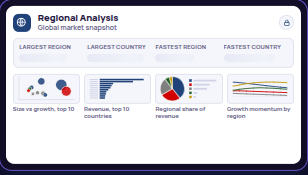
Asia Pacific (Largest & Fastest-Growing Region)
The electric earthmoving equipment market in Asia Pacific held the largest share in 2026 while also representing the fastest-growing regional market, supported by extensive construction activity, rapid urban development, and increasing investment in sustainable infrastructure. Growing pressure to reduce emissions from construction operations is encouraging contractors and equipment operators to evaluate electric alternatives for applications where charging access and operating requirements are favorable. Expansion of battery technology, charging infrastructure, and electric powertrain capabilities is improving equipment performance and operational practicality. In addition, government efforts to promote cleaner industrial machinery, rising demand for quieter equipment in urban construction environments, and increasing investment in smart and sustainable construction practices are strengthening regional adoption.
| Parameter | North America | Asia Pacific | Europe | Latin America | MEA |
|---|---|---|---|---|---|
| Innovation HubiScaleNascentDeveloping Advanced | |||||
| Cost-Sensitive RegioniScaleLowMedium High | |||||
| Regulatory EnvironmentiScaleRestrictiveNeutral Supportive | |||||
| Demand DriversiScaleWeakModerate Strong | |||||
| Development StageiScaleEmergingDeveloping Developed | |||||
| Adoption RateiScaleLowMedium High | |||||
| New Entrants / StartupsiScaleSparseModerate Dense | |||||
| Macro IndicatorsiScaleWeakStable Strong |
Key Country Insights
Germany 🇩🇪
Sustainable Equipment AdoptionGermany is advancing electric earthmoving equipment across construction and industrial projects with emphasis on efficient and low-emission operations. Equipment suppliers are enhancing battery technologies and digital fleet management capabilities.
France 🇫🇷
Green Infrastructure SupportFrance is encouraging the use of electric earthmoving equipment for infrastructure projects with environmental performance objectives. Equipment buyers are prioritizing machines that balance productivity, regulatory compliance, and lower operating emissions.
Italy 🇮🇹
Urban Project ModernizationItaly is introducing electric earthmoving equipment for urban construction and renovation projects where reduced noise and emissions offer operational advantages. Construction firms are gradually expanding electric fleets while adapting site charging capabilities.
Japan 🇯🇵
Compact Equipment DevelopmentJapan is focusing on compact and efficient electric earthmoving equipment suited to urban construction environments. Manufacturers are improving machine reliability and energy efficiency while supporting quieter operations on constrained project sites.
South Korea 🇰🇷
Smart Construction EquipmentSouth Korea is combining electrification with smart construction technologies to improve equipment utilization and operational efficiency. Contractors are adopting connected electric machinery that supports monitoring, maintenance, and lower site emissions.
United States 🇺🇸
Low-Emission ConstructionThe U.S. construction sector is introducing electric earthmoving equipment to reduce emissions on infrastructure and urban development projects. Contractors are evaluating battery performance, equipment productivity, and charging logistics for demanding job sites.
Electric Earthmoving Equipment Market Share (%), by Product, 2026
Unlock insights tailored to your business with our bespoke market research solutions.
Click to get your customized report now.
Go beyond the chart, access full insights & data tables
Request Free Sample ReportProduct Segment Analysis: Loader (Largest Segment) vs Dump Truck (Fastest-Growing Segment)
Loaders accounted for a 41.28% share of the electric earthmoving equipment market in 2026, making the loader segment the largest within the product category. Their broad use in construction, material handling, mining, and infrastructure development creates substantial demand for equipment capable of performing repetitive loading and material-transfer tasks. The shift toward electric machinery is being supported by efforts to reduce onsite emissions, lower operating noise, and improve equipment efficiency, particularly in applications where environmental performance is becoming an increasingly important consideration.
The dump truck segment is expanding at the fastest pace as construction, mining, and other heavy-material transport operations increasingly explore electrification for high-energy equipment. Electric dump trucks can support efforts to reduce emissions from material-hauling activities while contributing to quieter operation in environmentally sensitive or urban-adjacent work sites. Increasing investment in sustainable construction practices and the broader electrification of off-highway machinery are creating favorable conditions for greater adoption of electric dump trucks.
Propulsion Segment Analysis: Hybrid Electric Vehicle (HEV) (Largest Segment) vs Battery Electric Vehicle (BEV) (Fastest-Growing Segment)
Hybrid electric vehicle (HEV) represented the largest propulsion segment in the electric earthmoving equipment market in 2026, reflecting its ability to combine electric assistance with conventional power to support demanding equipment operations. Hybrid systems can improve energy utilization while retaining the operational flexibility required for heavy-duty construction and earthmoving applications. Their suitability for equipment operating under variable loads and demanding duty cycles is supporting adoption as equipment users seek practical pathways toward improved fuel efficiency and reduced environmental impact.
Battery electric vehicle (BEV) is the fastest-growing propulsion segment, driven by increasing interest in fully electrified earthmoving machinery and the industry's broader shift toward zero-emission equipment. Battery-powered systems are particularly attractive for applications where reducing onsite emissions, noise, and fuel consumption is a priority. Improvements in battery capabilities, charging solutions, and electric drivetrain performance are helping address operational requirements and supporting the wider transition toward fully electric construction equipment.
| Segment | Sub-Segment | Largest Segment | Fastest Growing |
|---|---|---|---|
| Product | Dozer, Excavator, Loader, Motor Grader, Dump Truck | Loader | Dump Truck |
| Propulsion | Battery Electric Vehicle (BEV), Hybrid Electric Vehicle (HEV) | Hybrid Electric Vehicle (HEV) | Battery Electric Vehicle (BEV) |
| Battery Type | Lithium-ion, Lead-acid | Lithium-ion | Lithium-ion |
Competitive Landscape and Market Positioning
Prominent players in the electric earthmoving equipment market:
1. Caterpillar Inc. (United States)
2. Komatsu Ltd. (Japan)
3. Volvo Construction Equipment AB (Sweden)
4. Hitachi Construction Machinery Co. Ltd. (Japan)
5. Liebherr-International AG (Switzerland)
6. Sany Heavy Industry Co. Ltd. (China)
7. CNH Industrial N.V. (United Kingdom)
8. J C Bamford Excavators Ltd. (United Kingdom)
9. Doosan Corporation (South Korea)
10. Hydrema Holding ApS (Denmark)
Sustainability goals are driving innovation in the electric earthmoving equipment market, with increasing adoption of battery-powered machinery. Automation technologies are improving precision and operational efficiency on job sites. Continuous engineering advancements are enhancing equipment durability and performance. The electric earthmoving equipment market is progressing through green construction transformation.
| Company | Market Share | Company Revenue | Revenue CAGR (%) | Product Portfolio | Geographic Presence | Innovation / R&D Focus | Strategic Developments |
|---|---|---|---|---|---|---|---|
| Caterpillar Inc. (United States) | |||||||
| Komatsu Ltd. (Japan) | |||||||
| Volvo Construction Equipment AB (Sweden) | |||||||
| Hitachi Construction Machinery Co. Ltd. (Japan) | |||||||
| Liebherr-International AG (Switzerland) | |||||||
| Sany Heavy Industry Co. Ltd. (China) | |||||||
| CNH Industrial N.V. (United Kingdom) | |||||||
| J C Bamford Excavators Ltd. (United Kingdom) | |||||||
| Doosan Corporation (South Korea) | |||||||
| Hydrema Holding ApS (Denmark). |
Industry Development/News
| Company Name | Date | Key Development |
|---|---|---|
| CASE Construction Equipment | Mar-26 | CASE expanded its electric portfolio with the TL100EV electric mini track loader, targeting contractors, landscaping, municipal maintenance, and indoor demolition applications. The machine is designed to improve operational efficiency and safety in low-noise environments, supporting broader electrification of compact construction equipment used in urban and controlled jobsite conditions. |
| Caterpillar | Mar-26 | Caterpillar introduced the Cat D8 XE dozer within its Next Generation range, featuring electric drive powertrain architecture that replaces the conventional torque converter with a generator-driven system powering electric final drives. The model emphasizes fuel efficiency, reduced maintenance requirements, and performance optimization through electrified power transmission in heavy construction equipment. |
| Komatsu Ltd. | Feb-25 | Komatsu launched an advanced electric excavator incorporating autonomous operation capabilities and predictive diagnostics. Deployed in Shanghai and Tokyo, the system leverages cloud-based monitoring and mobile alerts to improve safety, optimize energy consumption, and enhance maintenance scheduling efficiency across construction operations. |
| Komatsu Ltd. | Feb-25 | Komatsu, in partnership with Dimaag, introduced the Mobile Megawatt Charging System (MWCS) at Bauma 2025. The modular charging solution enables 1–6 MW DC fast charging for construction and mining sites using integrated energy storage and thermal management systems, supporting large-scale electrification of heavy-duty equipment fleets. |
| Doosan Infracore | Jan-25 | Doosan Infracore unveiled an electric loader series featuring modular battery systems, AI-assisted predictive maintenance, and remote diagnostics capabilities. Early deployments in Dubai and Seoul demonstrated improved fleet efficiency and reduced downtime, supporting increased adoption of electrified construction equipment in municipal and commercial operations. |
| Caterpillar | Sep-24 | Caterpillar launched the Cat 793 XE battery-electric mining truck under its Early Learner program, deploying units at select customer sites including Newmont’s Cripple Creek and Victor mine. The initiative focuses on real-world validation of electric haulage performance, efficiency, and operational integration in large-scale mining environments. |
| Komatsu Ltd. | Sep-24 | Komatsu introduced the PC4000-11E, a large electric hydraulic mining excavator designed for high-capacity mining operations. With a 409-ton operating weight and 22 m³ bucket capacity, the machine is engineered to match 150–240 ton haul trucks, reinforcing electrification trends in heavy mining equipment. |
| Volvo CE | Jun-24 | Volvo CE introduced its first fully electric 20-tonne loader together with an on-site and off-grid charging solution. The launch expands the company's electric construction equipment portfolio while supporting lower-emission job sites and improving operational efficiency through integrated charging infrastructure. |
| Volvo Construction Equipment | Apr-24 | Volvo CE announced plans to introduce its largest electric excavator in Japan, reinforcing its electrification strategy for heavy construction machinery. The initiative targets growing demand for low-emission equipment in urban infrastructure projects and reflects expansion of electric product offerings in high-capacity excavation segments. |
| Caterpillar | Jan-24 | Caterpillar entered a strategic partnership with CRH to accelerate deployment of 70–100 ton class battery-electric off-highway trucks and integrated charging infrastructure. The collaboration aims to support large-scale adoption of electric heavy equipment and strengthen supporting energy and charging ecosystems in construction and aggregates operations. |
| Hitachi Construction Machinery | Jan-24 | Hitachi unveiled the EH4000AC-5 ultra-large rigid dump truck, featuring a high-capacity payload architecture designed for mining operations. The model strengthens Hitachi’s position in heavy-duty haulage equipment, supporting improved productivity and efficiency in large-scale surface mining environments. |
Customize Your Report
Explore examples of how this report can be tailored to different research needs, including custom segments, additional topics or chapters, and related reports. Click a section of the wheel or its numbered marker to explore the available options.
Electric Earthmoving Equipment Market — Custom Segments
| Segment | Sub-Segment |
|---|---|
| End-user Industry | Construction, Mining, Quarrying, Infrastructure Development, Agriculture & Forestry, Waste Management |
| Machine Ownership Model | Direct Ownership, Equipment Rental, Equipment Leasing, Equipment-as-a-Service |
| Automation Level | Manual Operation, Operator-Assisted Automation, Semi-Autonomous Operation, Fully Autonomous Operation |
Electric Earthmoving Equipment Market — Custom TOC
| Custom Chapter | Chapter Details |
|---|---|
| Construction Fleet Electrification Roadmap |
|
| Total Cost of Ownership Assessment |
|
| Charging Infrastructure Deployment Assessment |
|
Need a different cut of the data?
Request Custom ResearchFrequently Asked Questions
How much revenue does the electric earthmoving equipment market generate?
What are the growth projections for the electric earthmoving equipment industry?
How are emission regulations reshaping fleet procurement strategies in the electric earthmoving equipment market?
Why is rising construction activity accelerating deployment of electric excavators and loaders?
Why is the Loader the largest product segment in the electric earthmoving equipment market?
Why is the Battery Electric Vehicle (BEV) segment growing fastest in the electric earthmoving equipment market?
Why does Asia Pacific lead the electric earthmoving equipment market?
What is driving electric earthmoving equipment market growth in Asia Pacific?
What are the prominent companies operating in the electric earthmoving equipment landscape?
Our Clients
"Your insights on workforce structures were spot-on. The analysis on mid-to-senior level roles validated some of our hiring decisions and highlighted gaps."
Ateliers De France
"The report gave us insights on competitors in the market. It helped our team refine our bidding strategy for upcoming contracts."
Clark Construction
"The reports provided a deep dive into market trends, and competitive landscape. The strategic insights and recommendations have been very helpful."
Rudolph and Sletten
Our Research Team & Methodology
Every Fundamental Business Insights report is built by a dedicated vertical research team, validated through a structured primary-and-secondary methodology, and reviewed for accuracy before it reaches you.
Delivery
Published
Available
Support
- Market Size & Forecast
- Market Segmentation
- Regional Analysis
- Growth Drivers & Challenges
- Market Dynamics
- Competitive Landscape
- Company Profiles
- Competitive Benchmarking
- Mergers & Acquisitions
- Market Share Analysis or Key Company Strategies
- Value Chain Analysis
- Porter's Five Forces
- PESTLE Analysis
- Pricing Trends
- Supply-Demand Analysis
- Technology Landscape
- Regulatory Landscape
- Investment & Funding Landscape
- Emerging Opportunities
- Future Market Outlook