



Electric Ship Market Size & Growth Forecast 2026–2035, By Segments (Power Source, Type, Vessel Type, Power Output), Regional Demand Trends (North America, Asia Pacific, Europe), Key Country Insights (U.S., Japan, South Korea, Germany, France, Italy), and Competitive Landscape
Market Size and Growth Outlook
Base Year Value (2025)
USD 10.44 Billion
CAGR (2026-2035)
10.8%
Forecast Year Value (2035)
USD 29.11 Billion

Historical Data Period
2022-2025

Largest Region
Europe

Forecast Period
2026-2035
Electric Ship Market Intelligence Snapshot:
-
Regional Market Dynamics:
- Europe captured 37.95% of the market in 2025, supported by early vessel electrification, established ferry networks, port charging development, and strong demand for low-emission marine transport.
- Asia Pacific is projected to grow at a 12.1% CAGR, driven by expanding shipbuilding activity, port infrastructure development, and increasing electrification of coastal and short-distance vessels.
-
Segment Momentum:
- Hybrid accounted for 77.43% of the market in 2025 because it lowers fuel consumption while preserving route flexibility, onboard power reliability, and compatibility with existing vessel designs across commercial and passenger operations.
- Fully Autonomous is the fastest-growing type segment as operators pursue greater automation, crew optimization, and remote operations, supported by increasing confidence in autonomous technologies for structured operating conditions.
-
Market Expansion Drivers:
- IMO emissions regulations accelerating shift toward low-carbon electric maritime propulsion systems.
- Fuel efficiency optimization and operational cost reduction driving hybrid-electric vessel adoption.
- Advances in battery energy density and hybrid propulsion improving vessel electrification feasibility.
-
Leading Market Participants:
Prominent companies in the electric ship market include Kongsberg Gruppen ASA (Norway), ABB Ltd (Switzerland), Wärtsilä Corporation (Finland), Siemens AG (Germany), Damen Shipyards Group (Netherlands), Fincantieri S.p.A. (Italy), General Dynamics Corporation (United States), Bureau Veritas S.A. (France), Corvus Energy AS (Norway), Torqeedo GmbH (Germany).
Global Market Forecast Snapshot:
-
Market Outlook:
- 2025 Market Size: USD 10.44 Billion
- Projected Market Size: USD 29.11 Billion by 2035
- Growth Forecasts: 10.8% CAGR (2026-2035)
-
Regional and Segment Outlook:
- Leading Regional Market: Europe
- High-Growth Regional Hub: Asia Pacific
- Core Revenue Segment: Hybrid (Power Source) | Semi Autonomous (Type) | Commercial Vessel (Vessel Type) | 75 kW-745kW (Power Output)
- Emerging Opportunity Segment: Fully Electric (Power Source) | Fully Autonomous (Type) | Defense Vessel (Vessel Type) | <75 kW (Power Output)
Market Growth Drivers and Industry Trends
IMO emissions regulations accelerating shift toward low-carbon electric maritime propulsion systemsTightening IMO emissions rules are reshaping vessel investment decisions by raising the compliance burden on conventional marine propulsion and making electric and hybrid-electric configurations more commercially practical for newbuild programs and fleet retrofits. In the electric ship market, shipowners, operators, and naval architects are giving greater weight to propulsion systems that can reduce emissions during port operations, coastal routes, and regulated operating zones, where compliance pressure is most immediate. This is influencing procurement cycles, technology partnerships, and design specifications, while ports and charterers increasingly favor cleaner vessels that align with decarbonization commitments, reinforcing market demand for electric propulsion platforms rather than incremental efficiency upgrades alone.
Fuel efficiency optimization and operational cost reduction driving hybrid-electric vessel adoption
For many operators, the appeal of hybrid systems lies less in full electrification and more in the ability to cut fuel consumption in operating profiles with variable loads, frequent maneuvering, or extended low-speed sailing. That dynamic is encouraging market growth in the electric ship market because hybrid-electric vessels allow engines to run closer to efficient load ranges while batteries handle peak shaving, hotel loads, and intermittent power demands. The result is a clearer operating-cost case for ferries, offshore support vessels, tugboats, and short-sea shipping fleets, where fuel savings and lower maintenance exposure influence replacement timing and make hybrid architectures a more financeable step than conventional propulsion.
Advances in battery energy density and hybrid propulsion improving vessel electrification feasibility
Improvements in battery energy density are expanding the range of vessel types that can adopt electric propulsion without unacceptable trade-offs in payload, space allocation, or voyage flexibility. In the electric ship market, that shifts electrification from a niche option for short routes toward a more viable design pathway for commercial vessels that need better endurance and more practical onboard energy storage. At the same time, advances in hybrid propulsion architecture, power management systems, and integration engineering are reducing technical barriers for shipyards and operators, increasing confidence in deployment and strengthening market development through more standardized, operationally reliable electrified vessel platforms.
| Growth Driver Assessment Framework | |||||
| Growth Driver | Impact On CAGR | Regulatory Influence | Geographic Relevance | Adoption Rate | Impact Timeline |
|---|---|---|---|---|---|
| Adoption of Electric Propulsion in Ships | 4.00% | Short term (≤ 2 yrs) | Europe, Asia Pacific (spillover: North America) | Medium | Fast |
| Government Incentives for Green Shipping | 3.50% | Medium term (2–5 yrs) | North America, Europe (spillover: Asia Pacific) | High | Moderate |
| Regulatory Policies on Maritime Emissions | 3.30% | Long term (5+ yrs) | Europe, North America (spillover: MEA) | High | Moderate |
| IMO emissions regulations accelerating shift toward low-carbon electric maritime propulsion systems | 2.30% | High | Europe, Asia Pacific | Medium | Near Term |
| Fuel efficiency optimization and operational cost reduction driving hybrid-electric vessel adoption | 2.00% | Moderate | Global | High | Mid Term |
| Advances in battery energy density and hybrid propulsion improving vessel electrification feasibility | 1.80% | Moderate | Asia Pacific, Europe | Emerging | Long Term |
Unlock insights tailored to your business with our bespoke market research solutions - Click to get your customized report now!
Regional Demand Dynamics
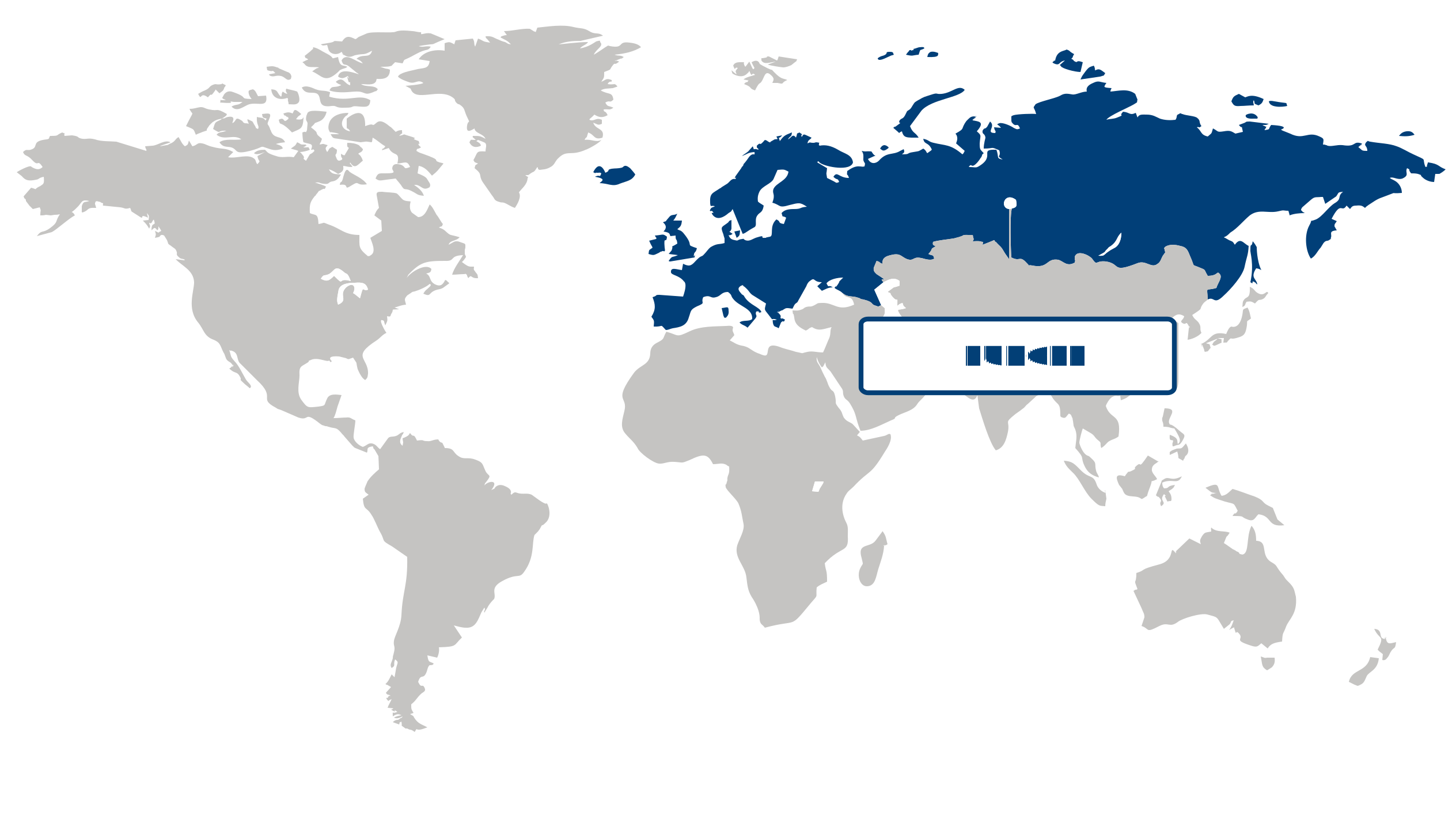
Largest Region
Europe
37.95% Market Share in 2025
Europe held a 37.95% share of the electric ship market in 2025, supported by the region’s early movement toward vessel electrification, dense short-sea and ferry networks, and active replacement of conventional fleets in emission-sensitive coastal and inland routes. Market leadership is reinforced by the practical fit between electric propulsion and Europe’s operating environment, where relatively predictable routes, stricter decarbonization pressure, and port-side charging development make commercial deployment more viable. This operating backdrop helps sustain purchasing activity across passenger and workboat applications rather than limiting adoption to pilot programs.
Asia Pacific is set to expand at a 12.1% CAGR over the forecast period, with growth in the electric ship market being impelled by rising shipbuilding activity, expanding port infrastructure, and increasing adoption of cleaner marine transport across high-traffic coastal economies. The region’s momentum is closely tied to how quickly operators can electrify vessels used in short-distance transport, harbor services, and inter-island movement, where fuel savings and compliance benefits are easier to capture in day-to-day operations. As regional fleets modernize, adoption is being accelerated by the scale of maritime activity and the practical need for more efficient vessel operations.
Key Country Insights
The U.S. advances electric ship technologies through naval modernization programs and commercial vessel decarbonization initiatives. Shipbuilders increasingly integrate battery systems, hybrid propulsion, and energy management solutions to improve operational efficiency and regulatory compliance.
Japan focuses on incorporating electric propulsion and hybrid systems into commercial shipping while improving onboard energy efficiency. Domestic manufacturers collaborate across the maritime value chain to develop reliable solutions suited for long-service vessel operations.
South Korea strengthens electric ship development by combining advanced shipbuilding capabilities with digital vessel management systems. Shipyards increasingly invest in battery-powered and hybrid platforms that align with evolving maritime decarbonization requirements.
Germany emphasizes electric propulsion for inland waterways, ferries, and specialized vessels as shipyards expand low-emission designs. The country supports integration of advanced power electronics and battery technologies to enhance vessel performance and environmental sustainability.
France promotes electric ships for coastal transport and passenger ferry applications to reduce maritime emissions. Industry participants prioritize scalable propulsion technologies and charging infrastructure that support cleaner marine operations.
Italy expands electric ship adoption within regional ferry networks and port operations where emission reduction is a growing priority. Ship operators increasingly evaluate hybrid propulsion systems that improve operational flexibility and fuel efficiency.
Segment Leadership and Growth Trends
Hybrid held the leading position in the electric ship market in 2025, accounting for a 77.43% share. This leadership reflects the practical advantage of hybrid propulsion in marine operations, where operators need lower emissions without sacrificing route flexibility, onboard power reliability, or compatibility with existing vessel designs. Hybrid systems fit well across commercial and passenger applications because they reduce fuel consumption while avoiding the operational limits that can come with fully battery-dependent configurations, which helps sustain their broad adoption in the electric ship market.
Fully Electric is the fastest-growing power source segment in the electric ship market as vessel owners increasingly prioritize zero-emission operations on shorter routes and in controlled operating environments. Its momentum is being reinforced through the growing suitability of fully electric propulsion for ferries, inland vessels, and other use cases where charging access and route predictability make all-electric deployment more practical than conventional alternatives. Compared with hybrid systems, Fully Electric is seeing wider adoption where operators want to eliminate fuel use entirely and align more closely with tightening environmental requirements.
Type Segment Analysis: Semi Autonomous (Largest Segment) vs Fully Autonomous (Fastest-Growing Segment)
By 2025, Semi Autonomous accounted for a 92.34% share of the electric ship market, making it the dominant type segment. its position is rooted in the marine industry’s preference for operational models that improve navigation, monitoring, and onboard efficiency while retaining human oversight for safety-critical decisions. This balance makes Semi Autonomous vessels easier to integrate into current maritime operating practices and regulatory frameworks, which helps preserve their strong share across the electric ship market.
Fully Autonomous is emerging as the fastest-growing type segment in the electric ship market because the industry is moving toward deeper automation in response to efficiency, crew optimization, and remote operations requirements. Growth is strongest where operators see value in reducing dependence on onboard manual intervention and improving voyage consistency through advanced control systems. Relative to Semi Autonomous solutions, Fully Autonomous is gaining momentum as confidence in autonomous marine technologies increases and use cases become more viable in structured operating conditions.
| Report Segmentation | |||
| Segment | Sub-Segment | Largest Segment | Fastest Growing Segment |
|---|---|---|---|
| Power Source | Fully Electric, Hybrid | Hybrid | Fully Electric |
| Type | Semi Autonomous, Fully Autonomous | Semi Autonomous | Fully Autonomous |
| Vessel Type | Commercial Vessel, Defense Vessel, Special Vessel | Commercial Vessel | Defense Vessel |
| Power Output | <75 kW, 75 kW-745kW, 746 kW-7,560 kW, >7,560 kW | 75 kW-745kW | <75 kW |
 Read our Research Approach
Competitive Landscape and Market Positioning
Prominent players in the electric ship market:1. Kongsberg Gruppen ASA (Norway)
2. ABB Ltd (Switzerland)
3. Wärtsilä Corporation (Finland)
4. Siemens AG (Germany)
5. Damen Shipyards Group (Netherlands)
6. Fincantieri S.p.A. (Italy)
7. General Dynamics Corporation (United States)
8. Bureau Veritas S.A. (France)
9. Corvus Energy AS (Norway)
10. Torqeedo GmbH (Germany)
The electric ship market is evolving through advancements in propulsion systems and energy storage technologies that enhance maritime sustainability. Continuous innovation in electrification solutions is improving vessel efficiency and reducing emissions. Collaborative engineering efforts are supporting integrated marine systems, while performance optimization initiatives are strengthening operational viability across the electric ship market.
Industry Development/News
| Company Name | Date | Key Development |
|---|---|---|
| Candela | Mar-26 | Candela secured €30 million in funding from existing investors and the International Finance Corporation to scale its electric hydrofoil technology. This capital infusion supports the expansion of production capacity and the commercialization of energy-efficient vessels, aimed at improving operational efficiency and reducing maritime emissions within the passenger and light commercial transport segments. |
| Incat | Dec-25 | Incat Tasmania achieved a significant milestone in large-scale maritime electrification by completing motor trials for the world’s largest battery-electric ship. Equipped with a 40 MWh battery system, the vessel is engineered for high-capacity passenger transport, providing operational validation for the feasibility of ultra-large battery-powered maritime vessels in commercial service. |
| Contemporary Amperex Technology Co., Limited (CATL) | Oct-25 | CATL’s subsidiary developed the 6006 pure electric cargo vessel, recognized as a national benchmark for energy integration in China. The project demonstrates advancements in battery-swapping technology for inland waterway logistics, offering a scalable model for fleet electrification and cargo transport decarbonization. |
| Zero Emission Services | Sep-25 | Zero Emission Services, in partnership with Inland Terminals Group and Nedcargo, launched a fully emission-free inland container transport service in the Netherlands. By utilizing integrated battery-powered vessel operations, the initiative provides a commercial framework for electrified logistics across European inland waterways, directly addressing decarbonization targets for the freight sector. |
| Parkwind | Jul-24 | Parkwind installed the first offshore electric ship-charging station in the Belgian North Sea. By utilizing wind-powered infrastructure for at-sea vessel charging, this development introduces a new approach to decarbonizing maritime operations, enhancing the utility of electric vessels by extending their range and operational flexibility through renewable energy integration. |
| Port of San Diego | Jul-24 | The Port of San Diego deployed the eWolf, the United States' first all-electric harbor tugboat, marking a significant advancement in port electrification. Designed for ship-assist operations, the vessel eliminates diesel emissions and serves as a practical demonstration of high-torque, battery-electric propulsion technology for commercial harbor logistics and port infrastructure. |
| COSCO Shipping | May-24 | COSCO Shipping commissioned the world’s largest battery-electric container ship for regular inland freight service between Shanghai and Nanjing. This deployment highlights the increasing commercial scalability of large-scale electric propulsion in commercial shipping and demonstrates the practical application of battery power to reduce operational emissions on major inland trade routes. |
| PowerX, Inc. | May-25 | PowerX, Inc. completed the detailed design for its "Battery Tanker X," a specialized vessel engineered to transport renewable energy from offshore wind farms to shore. Scheduled for field testing in 2026, the zero-emission vessel represents a strategic innovation in energy logistics, potentially bridging the gap between offshore power generation and terrestrial energy grids. |
| Electric Ship Innovation Alliance | Feb-23 | COSCO Shipping Development and COSCO Shipping established the Electric Ship Innovation Alliance to accelerate industry-wide electrification. This strategic collaboration consolidates technical expertise and resources to drive the adoption of battery-electric propulsion systems, reinforcing China's competitive position in the global development of sustainable maritime transport and supporting large-scale fleet electrification initiatives. |
| Hyundai Heavy Industries | Jan-23 | Hyundai Heavy Industries commissioned South Korea’s first next-generation dual-powered electric ship. The vessel integrates battery technology with conventional fuel systems to provide a versatile propulsion solution for passenger transport. This development serves as a critical proof-of-concept for hybrid maritime technologies, enabling broader adoption of electric propulsion in domestic tourism and commercial coastal applications. |
Why Choose Us
Specialized Expertise: Our team comprises industry experts with a deep understanding of your market segment. We bring specialized knowledge and experience that ensures our research and consulting services are tailored to your unique needs.
Customized Solutions: We understand that every client is different. That's why we offer customized research and consulting solutions designed specifically to address your challenges and capitalize on opportunities within your industry.
Proven Results: With a track record of successful projects and satisfied clients, we have demonstrated our ability to deliver tangible results. Our case studies and testimonials speak to our effectiveness in helping clients achieve their goals.
Cutting-Edge Methodologies: We leverage the latest methodologies and technologies to gather insights and drive informed decision-making. Our innovative approach ensures that you stay ahead of the curve and gain a competitive edge in your market.
Client-Centric Approach: Your satisfaction is our top priority. We prioritize open communication, responsiveness, and transparency to ensure that we not only meet but exceed your expectations at every stage of the engagement.
Continuous Innovation: We are committed to continuous improvement and staying at the forefront of our industry. Through ongoing learning, professional development, and investment in new technologies, we ensure that our services are always evolving to meet your evolving needs.
Value for Money: Our competitive pricing and flexible engagement models ensure that you get maximum value for your investment. We are committed to delivering high-quality results that help you achieve a strong return on your investment.
Select Licence Type

