Energy-Efficient Building Market Size & Forecasts 2026-2035, By Segments (Building Type, Component Type), Growth Opportunities, Innovation Landscape, Regulatory Shifts, Strategic Regional Insights (U.S., Japan, China, South Korea, UK, Germany, France), and Competitive Dynamics (Siemens, Johnson Controls, Schneider Electric, Honeywell, ABB)
Market Size and Growth Outlook
Energy-Efficient Building Market size is anticipated to rise from USD 138.53 billion in 2025 to USD 255.2 billion by 2035, reflecting a CAGR surpassing 6.3% over the forecast horizon of 2026-2035. The estimated revenue for 2026 is USD 146.13 billion.
Get more details on this report
Request Free Sample ReportEnergy-Efficient Building Market Intelligence Snapshot
Regional Market Dynamics
Segment Momentum
Market Expansion Drivers
Leading Market Participants
Global Market Forecast Snapshot
Market Outlook
Regional and Segment Outlook
Market Growth Drivers and Industry Trends
The surging demand for energy-efficient residential and commercial buildings is a fundamental driver transforming the energy-efficient building market. Increasing consciousness about environmental impact and rising energy costs are prompting consumers and enterprises to prioritize sustainability in real estate decisions. The U.S. Green Building Council’s LEED certification program exemplifies this trend, with a growing number of projects seeking certification to enhance building value and appeal. This shift presents strategic opportunities for incumbents to diversify product offerings and for new entrants to develop niche solutions tailored to evolving customer preferences. As environmental awareness intensifies alongside urbanization trends, this demand momentum will continue to shape market innovation and investment strategies.
Technological Advancements in Building Insulation and HVAC
Continuous innovations in insulation materials and HVAC systems are pivotal growth drivers in the energy-efficient building market. Companies like Owens Corning and Daikin have recently introduced advanced insulation composites and smart HVAC units that significantly reduce thermal loss and energy consumption. These developments enable builders and developers to meet stricter energy standards while maintaining occupant comfort. By leveraging digital control systems and IoT integration, producers can differentiate their solutions and capture value in retrofitting and new construction projects. With technology evolving rapidly, firms positioned at the intersection of building science and digitalization stand to capitalize on this trend, reinforcing sustainability mandates and operational efficiency.
Government Incentives and Regulations for Green Buildings
Robust government policies and incentives aimed at promoting green buildings are reshaping the energy-efficient building market landscape. Regulatory frameworks, such as the European Union’s Energy Performance of Buildings Directive (EPBD) and the U.S. Department of Energy’s tax credits for energy-efficient construction, incentivize adoption and innovation. These measures reduce initial cost barriers and encourage broader compliance with environmental standards. For market participants, navigating these policies offers both a competitive challenge and an opportunity to align product strategies with evolving regulatory demands. As more jurisdictions tighten sustainability requirements, proactive engagement with policy developments will be critical in securing growth and market leadership.
Industry Restraints:
High Initial Capital Costs
High upfront investment requirements for energy-efficient building technologies and materials significantly constrain market growth. Despite long-term operational savings, many developers and building owners hesitate to commit due to elevated initial expenses, impacting project feasibility. The U.S. Green Building Council reports that such financial barriers remain a top concern, especially for small to mid-sized enterprises lacking access to favorable financing or incentives. This dynamic creates a barrier for both incumbent construction firms and innovative startups striving to scale sustainable solutions, as cost concerns limit adoption and slow market penetration. Going forward, unless financing mechanisms and subsidy programs—like those promoted by the International Energy Agency—expand and become more accessible, the energy-efficient building market will likely encounter continued delays in adoption among price-sensitive stakeholders, prolonging the reliance on conventional, less sustainable building methods.
Fragmented Regulatory Landscape
The energy-efficient building market faces significant impediments from a fragmented and often inconsistent regulatory environment across regions. Divergent building codes, certification standards, and incentive structures complicate compliance, increasing costs and operational complexity for market participants. For example, the European Union’s Energy Performance of Buildings Directive contrasts sharply with more lenient regulations in certain U.S. states, creating barriers for companies operating internationally or scaling solutions across jurisdictions. The World Green Building Council highlights this regulatory disparity as a core challenge to harmonized market growth. Firms must allocate substantial resources to navigate varying requirements, disproportionately affecting smaller companies lacking compliance expertise. Persisting regulatory fragmentation is expected to perpetuate market inefficiencies, impeding streamlined adoption of energy-efficient technologies and favoring incumbents who can better absorb compliance complexities, while deterring agile new entrants.
| Growth Driver | Impact on CAGR | Regulatory Influence | Geographic Relevance | Adoption Rate | Impact Timeline |
|---|---|---|---|---|---|
| Rising demand for energy-efficient residential and commercial buildings | 2.00% | Short term (≤ 2 yrs) | North America, Europe | Medium | Fast |
| Technological advancements in building insulation and HVAC | 2.10% | Medium term (2–5 yrs) | Europe, Asia Pacific | Medium | Moderate |
| Government incentives and regulations for green buildings | 2.20% | Long term (5+ yrs) | Europe, North America | High | Moderate |
Explore Growth Opportunities
Request Free Sample ReportRegional Demand Dynamics
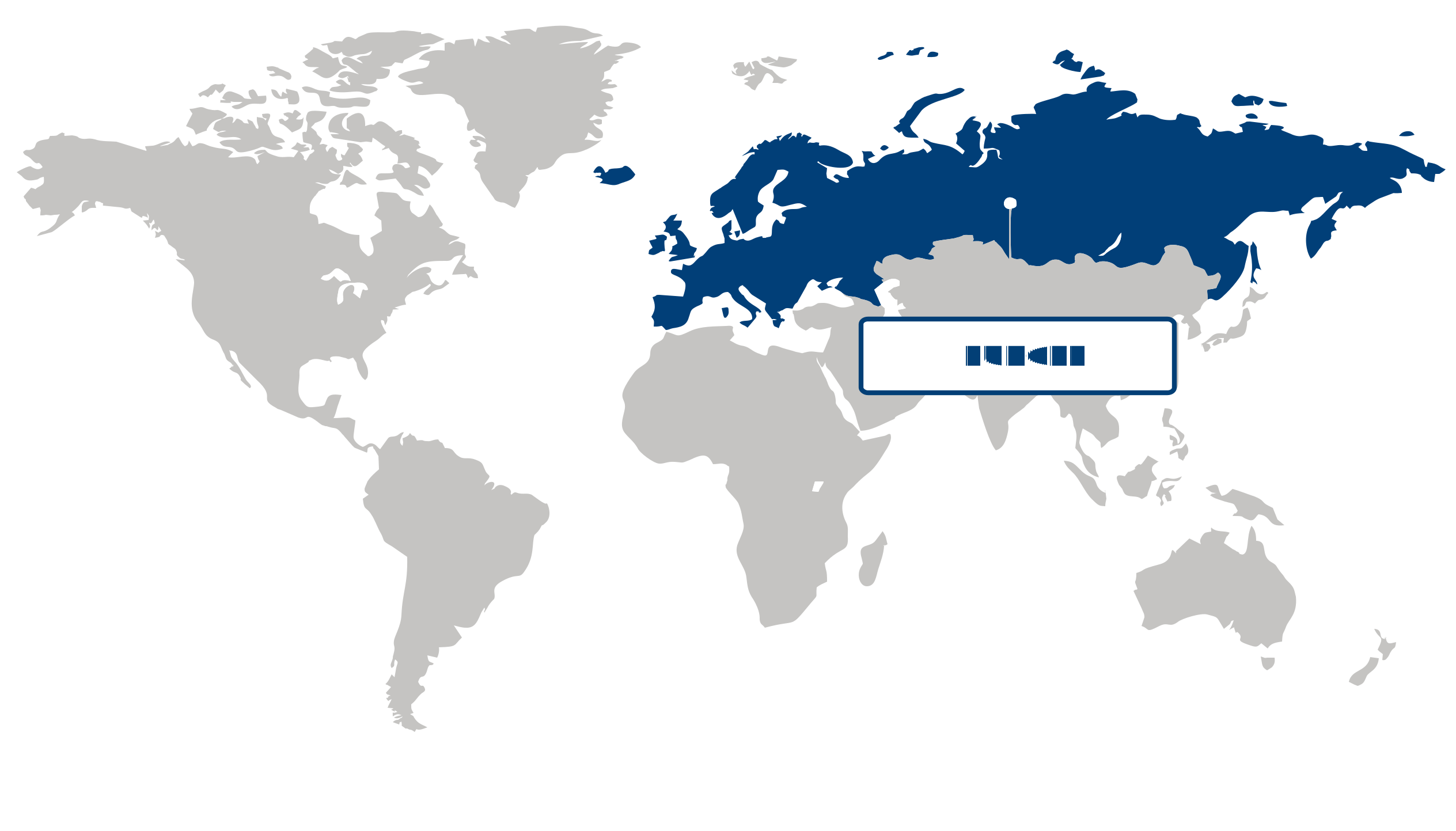
Europe dominated the energy-efficient building market in 2025, capturing approximately 45% of the global share. This leadership is primarily driven by stringent European energy efficiency regulations and robust renovation activity across the region. Governments in Europe, such as the European Commission, have implemented ambitious policies and standards aimed at reducing carbon emissions, such as the Energy Performance of Buildings Directive (EPBD). These regulatory frameworks have accelerated the adoption of advanced insulation, smart energy management systems, and green building materials. Moreover, strong retrofit initiatives in aging urban infrastructure further amplify demand for energy-efficient solutions. Industry players like Schneider Electric and Siemens report increased deployment of digital energy systems, reflecting operational advancements. Europe’s commitment to sustainability, combined with economic resilience post-pandemic, positions it as a fertile ground for innovation and investment in energy-efficient buildings, offering substantial growth opportunities moving forward.
Germany anchors the European energy-efficient building market with its aggressive retrofit programs and energy-saving incentives targeting residential and commercial sectors. The German Federal Ministry for Economic Affairs and Climate Action actively promotes the "National Building Renovation Strategy," accelerating the uptake of energy-efficient technologies. Key companies, such as Viessmann and Bosch Thermotechnology, are pioneering heating and ventilation system upgrades, catering to stringent regulatory requirements and consumer preferences for sustainability. This dynamic supports Germany’s role as a trendsetter in the region, underscoring Europe’s overall momentum toward net-zero building standards.
France plays a pivotal role in Europe’s energy-efficient building market, driven by robust public investment in building renovations and a growing focus on reducing energy poverty. The French government’s "MaPrimeRénov'" scheme encourages homeowners to upgrade insulation and install renewable energy systems. Regulatory authorities like ADEME actively facilitate awareness and adoption of energy-efficient building codes. French companies such as Saint-Gobain innovate in eco-friendly construction materials, aligning with evolving consumer demands. France’s sustained policy support and market maturity reinforce its strategic importance within Europe, bolstering regional growth prospects in energy-efficient building solutions.
Asia Pacific Market Analysis:
Asia Pacific emerged as the fastest-growing region in the energy-efficient building market, registering a robust CAGR of 8.1%. This accelerated growth is driven primarily by the implementation of stricter energy codes and sustainability mandates across countries in the region, which incentivize investment in energy-efficient building solutions and materials. Governments such as the Asia-Pacific Economic Cooperation (APEC) have bolstered regulations demanding higher energy performance in construction, aligning with global climate commitments. The region's fast urbanization and rising environmental awareness among both public and private sectors further reinforce demand for green building technologies. Industry players like Panasonic and Mitsubishi Electric have ramped up innovations tailored to this regulatory environment, enabling adoption of sustainable HVAC systems and smart energy management. With continued policy support and increasing capital flow towards green infrastructure, Asia Pacific offers substantial opportunities for market expansion in energy-efficient building technologies.
Japan plays a pivotal role within Asia Pacific’s energy-efficient building market, leveraging its advanced technological ecosystem and rigorous sustainability policies. The government’s Top Runner Program enforces stringent energy efficiency standards on building materials and appliances, catalyzing widespread adoption in both commercial and residential sectors. Unique demographic trends, including an aging population and a preference for smart, user-friendly energy solutions, have further shaped consumer demand. For example, companies like Toshiba and Hitachi have introduced IoT-enabled building management systems, which optimize energy use and improve occupant comfort. Japan's commitment to reducing greenhouse gas emissions via its Ministry of Economy, Trade and Industry (METI) initiatives positions it as a critical innovation hub, reinforcing Asia Pacific’s dominance in this market.
China is a major force propelling the Asia Pacific energy-efficient building market through expansive government-led infrastructure development and aggressive environmental policies. The 14th Five-Year Plan emphasizes green construction and energy conservation, requiring the integration of sustainable building materials at scale. Urban centers including Shanghai and Beijing have introduced localized building codes promoting efficiency and renewable energy integration. Consumer preference is increasingly oriented toward eco-friendly housing, supported by subsidies and incentives from the China Green Building Council. Companies such as China State Construction Engineering Corporation are pioneering the use of prefabricated energy-efficient components, improving supply chain efficiency and lowering costs. China’s scale and regulatory momentum complement Japan’s technological leadership, jointly reinforcing the region’s vibrant growth trajectory in energy-efficient building solutions.
North America Market Trends:
North America held a commanding share in the energy-efficient building market, driven by the region’s vigorous push toward sustainability and stringent building codes that promote reduced energy consumption. This landscape reflects heightened investment from both public and private sectors, backed by evolving consumer preferences favoring green construction and smart technologies. Incentives from entities like the U.S. Department of Energy and the Canadian Green Building Council have bolstered adoption of energy-efficient retrofitting and construction practices. Additionally, advancements in digital building management systems and integration of renewable energy components underscore operational efficiency gains. The region’s resilient supply chains and a skilled workforce further enhance market momentum. With ongoing regulatory enhancements and increasing corporate ESG commitments, North America presents substantial opportunities for scaling innovations in sustainable infrastructure.
The U.S. plays a pivotal role in the energy-efficient building market, fueled by aggressive federal and state-level mandates such as the U.S. Environmental Protection Agency’s ENERGY STAR program and California’s Title 24 energy standards. Consumer demand in metropolitan hubs is complemented by increased corporate focus on energy cost savings and carbon footprint reduction. For instance, companies like Johnson Controls have recently expanded their smart building solutions tailored to commercial real estate, signaling strong competitive innovation. This regulatory environment, paired with technological adoption across new construction and renovation projects, positions the U.S. as a critical driver for regional growth by setting benchmarks that influence neighboring markets and supply chain dynamics.
| Parameter | North America | Asia Pacific | Europe | Latin America | MEA |
|---|---|---|---|---|---|
| Innovation Hub i Scale Nascent Developing Advanced | |||||
| Cost-Sensitive Region i Scale Low Medium High | |||||
| Regulatory Environment i Scale Restrictive Neutral Supportive | |||||
| Demand Drivers i Scale Weak Moderate Strong | |||||
| Development Stage i Scale Emerging Developing Developed | |||||
| Adoption Rate i Scale Low Medium High | |||||
| New Entrants / Startups i Scale Sparse Moderate Dense | |||||
| Macro Indicators i Scale Weak Stable Strong |
Segment Leadership and Growth Trends
Energy-Efficient Building Market Share (%), by Building Type, 2026
Go beyond the chart, access full insights & data tables
Request Free Sample ReportThe residential segment represented the largest share in the energy-efficient building market in 2025, anchored by the expanding adoption of energy-efficient homes supported by sustainability incentives. This leadership stems from growing consumer preference for cost-effective, eco-friendly living spaces encouraged by government programs such as the U.S. Department of Energy’s weatherization assistance initiatives. Increasing demand for comfortable, low-energy residences coupled with rising urbanization and demographic shifts further fuel interest. Major homebuilders like Lennar Corporation have publicly emphasized their commitment to energy-efficient construction, signaling strong competitive momentum. For both established firms and new entrants, residential energy efficiency offers strategic opportunities to capitalize on government rebates and evolving customer expectations. Continued regulatory focus on reducing residential carbon footprints ensures this segment’s sustained relevance, as innovations in building materials and smart home technologies integrate deeper into mainstream construction.
Analysis by Component Type
Energy management systems held the largest share in the energy-efficient building market segment for component types in 2025, driven primarily by rising demand for smart energy systems to optimize building efficiency. Market leadership is reinforced by the increasing adoption of IoT-enabled platforms that provide real-time monitoring and automated control of energy usage, meeting the growing expectations of corporate sustainability programs and energy cost reduction strategies. Regulatory milestones such as the European Union’s Green Deal promote digital transformation in building controls, fostering innovation from key players like Siemens and Schneider Electric. These dynamics create lucrative avenues for both incumbent technology providers and innovative startups specializing in AI-driven energy analytics. As smart infrastructure gains momentum across commercial and residential sectors, energy management systems remain pivotal in advancing building performance and complying with stringent energy codes globally.
| Segment | Sub-Segment | Largest Segment | Fastest Growing |
|---|---|---|---|
| Building Type | Residential, Commercial, Industrial | ||
| Component Type | Ventilation Systems, Lighting Technologies, Energy Management Systems, Controls |
Unlock insights tailored to your business with our bespoke market research solutions.
Click to get your customized report now.
Competitive Landscape and Market Positioning
The competitive landscape is marked by ongoing efforts among top players to elevate their market presence via strategic alliances and enhanced innovation cycles. Several leaders have broadened product portfolios to address integrated smart building systems, enabling end-to-end energy management. Investments in research and development underpin breakthroughs in AI-driven efficiency and IoT-enabled monitoring, facilitating predictive maintenance and energy optimization. Acquisitions and regional partnerships have expanded geographical reach and service offerings, intensifying competitive differentiation. These developments reinforce their ability to meet increasingly stringent regulatory requirements while catering to customer demand for greener, cost-effective infrastructures, fostering a robust environment for disruptive technological adoption.
Strategic / Actionable Recommendations for Regional Players
North American stakeholders should consider deepening collaborations with technology providers specializing in AI and IoT to enhance building automation capabilities, while also targeting retrofit and renovation projects within aging commercial real estate to capture untapped energy-saving potentials.
In Asia Pacific, capitalizing on rapid urbanization through scalable modular energy-efficient solutions and partnerships with local governments can facilitate access to emerging smart city initiatives. Emphasizing affordable, high-performance HVAC systems tailored to diverse climatic zones will address regional market needs effectively.
European firms can strengthen their foothold by aligning with renewable energy producers and focusing on net-zero energy building designs. Investing in cross-border innovation networks and sustainable material technologies will help navigate regulatory complexities and reinforce competitiveness in green building certifications.
| Company | Market Share | Company Revenue | Revenue CAGR (%) | Product Portfolio | Geographic Presence | Innovation / R&D Focus | Strategic Developments |
|---|---|---|---|---|---|---|---|
| No companies available. | |||||||
Customize Your Report
Explore examples of how this report can be tailored to different research needs, including custom segments, additional topics or chapters, and related reports. Click a section of the wheel or its numbered marker to explore the available options.
Energy-Efficient Building Market — Custom Segments
| Segment | Sub-Segment |
|---|---|
| No segment data available. | |
Energy-Efficient Building Market — Custom TOC
| Custom Chapter | Chapter Details | ||
|---|---|---|---|
| No custom TOC data available. | |||
Need a different cut of the data?
Request Custom ResearchWhat is the anticipated CAGR of the energy-efficient building industry?
Which geographic area exhibits the highest level of energy-efficient building market penetration?
Which geography represents the strongest growth trajectory for the energy-efficient building sector?
What share does residential segment hold in the energy-efficient building sector as of 2025?
Where is the energy management systems segment seeing the strongest adoption within the energy-efficient building industry?
Who holds a significant market share in the energy-efficient building landscape?
Our Clients
"Your insights on workforce structures were spot-on. The analysis on mid-to-senior level roles validated some of our hiring decisions and highlighted gaps."
Ateliers De France
"The report gave us insights on competitors in the market. It helped our team refine our bidding strategy for upcoming contracts."
Clark Construction
"The reports provided a deep dive into market trends, and competitive landscape. The strategic insights and recommendations have been very helpful."
Rudolph and Sletten
Our Research Team & Methodology
Every Fundamental Business Insights report is built by a dedicated vertical research team, validated through a structured primary-and-secondary methodology, and reviewed for accuracy before it reaches you.
Research Team Overview
Prepared by the Construction & Manufacturing Research Team
Delivery
Published
Demand
Available
Support
Trust & Compliance
Research Intelligence
| Source | Reference |
|---|---|
| International Organization for Standardization (ISO) | www.iso.org |
| ASTM International | www.astm.org |
| National Institute of Standards and Technology (NIST) | www.nist.gov |
| International Code Council (ICC) | www.iccsafe.org |
| American Concrete Institute (ACI) | www.concrete.org |
| American Institute of Steel Construction (AISC) | www.aisc.org |
| Construction Industry Institute (CII) | www.construction-institute.org |
| Associated General Contractors of America (AGC) | www.agc.org |
| Association of Equipment Manufacturers (AEM) | www.aem.org |
| Building Owners and Managers Association (BOMA) | www.boma.org |
| American Society of Civil Engineers (ASCE) | www.asce.org |
| National Ready Mixed Concrete Association (NRMCA) | www.nrmca.org |
| International Facility Management Association (IFMA) | www.ifma.org |
| World Green Building Council (WorldGBC) | worldgbc.org |
| International Federation of Consulting Engineers (FIDIC) | fidic.org |
| International Labour Organization (ILO) | www.ilo.org |
| American Society of Mechanical Engineers (ASME) | www.asme.org |
| Society of Manufacturing Engineers (SME) | www.sme.org |
| National Association of Home Builders (NAHB) | www.nahb.org |
| European Construction Industry Federation (FIEC) | www.fiec.eu |
Research Workflow & Quality Assurance
Data Collection
Verified information gathered through primary and secondary research.
Data Triangulation
Cross-validation using multiple independent data sources.
Forecast Modelling
Market estimates developed using historical trends and analytical models.
Analyst Validation
Findings reviewed by domain experts for accuracy and consistency.
Editorial & Quality Review
Final editorial, quality, and compliance checks before publication.
Final Publication
Released after successful completion of the internal review process.
Report Coverage
📊 Market Assessment
- Market Size & Forecast
- Market Segmentation
- Regional Analysis
- Growth Drivers & Challenges
- Market Dynamics
🏢 Competitive Intelligence
- Competitive Landscape
- Company Profiles
- Competitive Benchmarking
- Mergers & Acquisitions
- Market Share Analysis or Key Company Strategies
🔍 Strategic Analysis
- Value Chain Analysis
- Porter's Five Forces
- PESTLE Analysis
- Pricing Trends
- Supply-Demand Analysis
🚀 Future Outlook
- Technology Landscape
- Regulatory Landscape
- Investment & Funding Landscape
- Emerging Opportunities
- Future Market Outlook
Have a question about this report or need a custom scope?
Request Customization