Enriched Biochar Market Size & Growth Forecast 2027–2036, By Segments (Application), Regional Demand Trends (North America, Asia Pacific, Europe), Key Country Insights (U.S., Japan, South Korea, Germany, France, Italy), and Competitive Landscape
Market Size and Growth Outlook
Enriched Biochar Market size was assessed at USD 52.8 million in 2026 and is poised to grow at a 8.36% CAGR between 2027 and 2036, attaining USD 117.85 million by 2036. The industry revenue for 2027 is estimated at USD 56.52 million.
Get more details on this report
Request Free Sample ReportEnriched Biochar Market Intelligence Snapshot
Regional Market Dynamics
- Europe held a 45.05% share in 2026, supported by sustainable agriculture practices, carbon management initiatives, and adoption of enriched inputs for soil improvement.
- Asia Pacific is projected to grow at a 10.06% CAGR, driven by rising agricultural input demand and growing interest in soil fertility enhancement solutions.
Segment Momentum
- Agriculture captured 63.44% of the market in 2026 due to its broad use in soil management and crop production, where enriched biochar supports nutrient efficiency and routine farming practices.
- Turfs are the fastest-growing application segment as demand rises for soil enhancement solutions that improve surface quality, moisture management, and maintenance efficiency in managed green spaces.
Market Expansion Drivers
- Rising demand for sustainable soil enhancement products supporting enriched biochar adoption in agriculture.
- Increasing focus on water conservation and nutrient retention driving biochar-based farming practices.
- Expansion of regenerative agriculture initiatives encouraging organic soil amendment utilization.
Leading Market Participants
- Prominent companies in the enriched biochar market include Carbon Gold Ltd (United Kingdom), CharGrow LLC (United States), Biochar Now LLC (United States), Pacific Biochar Benefit Corporation (United States), Carbo Culture Oy (Finland), Charm Industrial Inc. (United States), Varaha Climate AG (India), Airex Energy Inc. (Canada), The Dorset Charcoal Company (United Kingdom), The Natural Charcoal Company (United Kingdom).
Global Market Forecast Snapshot
Market Outlook
- 2026 Market Size: USD 52.8 million
- 2027 Estimated Market Size: USD 56.52 million.
- Projected Market Size: USD 117.85 million by 2036
- Growth Forecast: 8.36% CAGR (2027-2036)
Regional and Segment Outlook
- Leading Regional Market: Europe
- High-Growth Regional Hub: Asia Pacific
- Core Revenue Segment: Agriculture (Application)
- Emerging Opportunity Segment: Turfs (Application)
Market Growth Drivers and Industry Trends
Rising demand for sustainable soil enhancement products supporting enriched biochar adoption in agriculture
The growing emphasis on sustainable agricultural inputs is creating stronger demand for solutions that improve soil quality while reducing reliance on conventional amendments. The enriched biochar market will benefit from the adoption of biochar enhanced with nutrients and other beneficial materials, enabling farmers to address soil fertility requirements through more resource-efficient practices. Enriched formulations can improve the functional value of biochar by combining soil conditioning properties with targeted nutrient delivery, supporting their use across different crop production systems.
Increasing focus on water conservation and nutrient retention driving biochar-based farming practices
Water scarcity and nutrient losses are encouraging agricultural producers to adopt practices that improve the efficiency of soil resources. Within the enriched biochar market, biochar-based amendments can support water retention by improving soil structure and creating conditions that help retain moisture within the root zone. Their capacity to retain nutrients can also reduce nutrient movement away from productive soil layers, making enriched biochar relevant to farming systems focused on improving input efficiency and maintaining soil productivity.
Expansion of regenerative agriculture initiatives encouraging organic soil amendment utilization
The expansion of regenerative agriculture is increasing interest in practices that restore soil health and promote more sustainable resource management. The enriched biochar market is gaining from this shift as enriched biochar can serve as an organic soil amendment that supports soil structure, nutrient management, and biological activity. Its integration into regenerative farming practices provides growers with an input that can complement approaches centered on improving long-term soil quality and reducing dependence on resource-intensive agricultural practices.
| Growth Driver | Impact on CAGR | Regulatory Influence | Geographic Relevance | Adoption Rate | Impact Timeline |
|---|---|---|---|---|---|
| Rising demand for sustainable soil enhancement products supporting enriched biochar adoption in agriculture | 1.90% | Moderate | Europe, North America | High | Near Term |
| Increasing focus on water conservation and nutrient retention driving biochar-based farming practices | 1.70% | Moderate | North America, Latin America | High | Mid Term |
| Expansion of regenerative agriculture initiatives encouraging organic soil amendment utilization | 1.40% | Moderate | Europe, Asia Pacific | Emerging | Long Term |
Explore Growth Opportunities
Request Free Sample ReportRegional Demand Dynamics
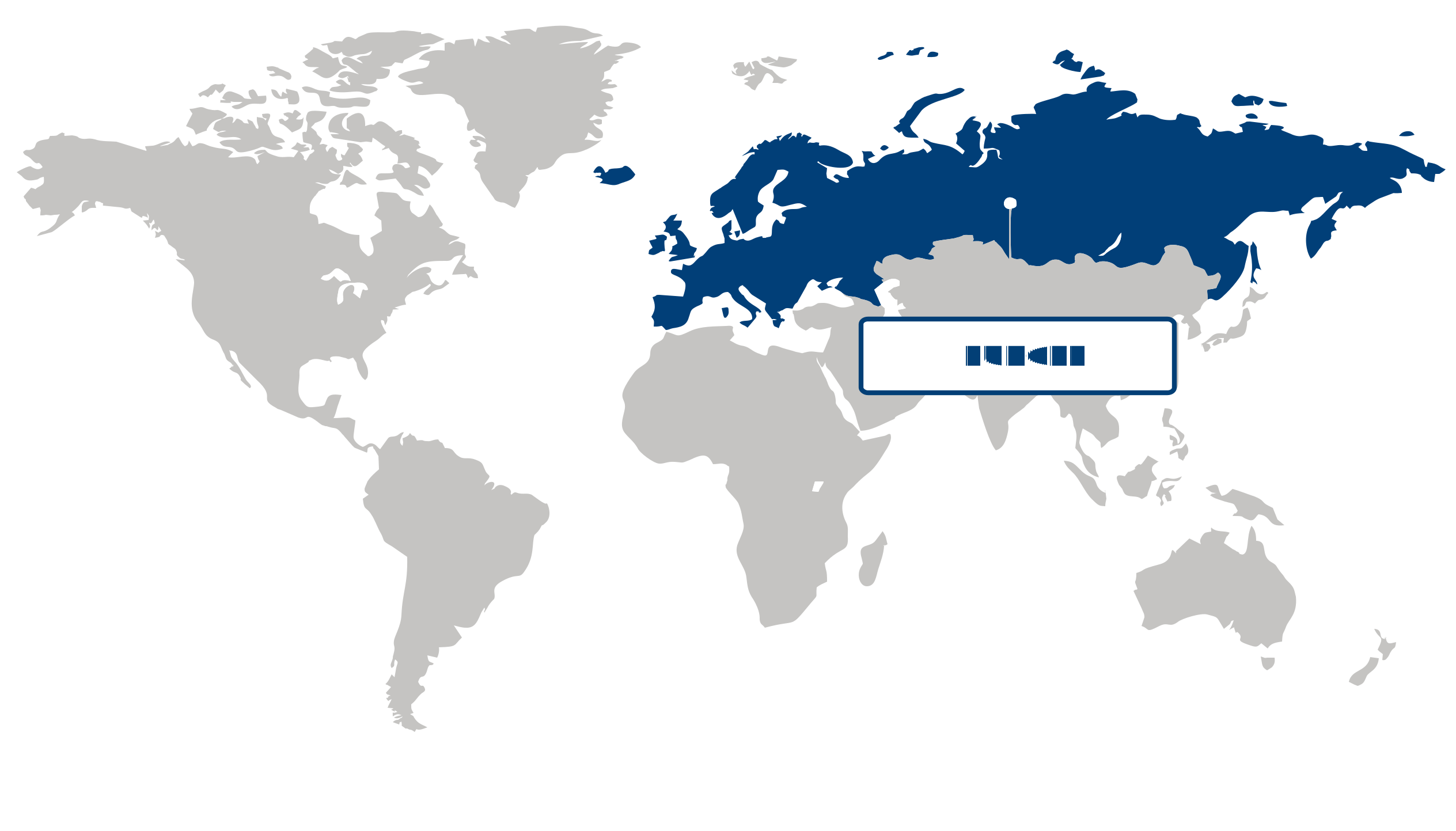
Europe (Largest Region)
The enriched biochar market in Europe accounted for 45.05% share in 2026, supported by strong emphasis on soil health, sustainable agriculture, carbon management, and circular resource utilization. The region benefits from growing adoption of regenerative farming practices and increasing interest in bio-based soil amendments that can improve nutrient efficiency while supporting environmental objectives. Established agricultural infrastructure, sustainability-focused policies, and demand for lower-impact farming inputs further reinforce the use of enriched biochar across crop production and land management applications.
Asia Pacific (Fastest-Growing Region)
Asia Pacific represents the fastest-growing region, driven by expanding agricultural activity, increasing soil degradation concerns, and rising awareness of sustainable farming practices. Demand is being encouraged by the need to improve soil productivity and nutrient management while making more effective use of agricultural and organic residues. Growing investment in modern agricultural technologies and greater adoption of environmentally responsible inputs are also creating favorable conditions for enriched biochar, particularly as producers seek solutions that combine soil improvement with resource efficiency.
| Parameter | North America | Asia Pacific | Europe | Latin America | MEA |
|---|---|---|---|---|---|
| Innovation Hub i Scale Nascent Developing Advanced | |||||
| Cost-Sensitive Region i Scale Low Medium High | |||||
| Regulatory Environment i Scale Restrictive Neutral Supportive | |||||
| Demand Drivers i Scale Weak Moderate Strong | |||||
| Development Stage i Scale Emerging Developing Developed | |||||
| Adoption Rate i Scale Low Medium High | |||||
| New Entrants / Startups i Scale Sparse Moderate Dense | |||||
| Macro Indicators i Scale Weak Stable Strong |
Key Country Insights
Germany 🇩🇪
Circular Agriculture IntegrationGermany emphasizes enriched biochar within circular agriculture initiatives that promote efficient nutrient recycling and sustainable soil improvement. The enriched biochar market benefits from research collaborations and demand for environmentally responsible soil enhancement products across agricultural applications.
France 🇫🇷
Low-Impact Farming PracticesFrance incorporates enriched biochar into agricultural strategies that emphasize soil health and reduced environmental impact. The enriched biochar market benefits from interest in value-added soil amendments that complement sustainable crop production and long-term land management.
Italy 🇮🇹
Specialty Agriculture SupportItaly applies enriched biochar across horticulture, vineyards, and specialty crop cultivation where soil quality is a key production factor. The enriched biochar market in Italy continues to focus on nutrient efficiency and improved soil structure for high-value agricultural systems.
Japan 🇯🇵
Precision Soil EnhancementJapan prioritizes enriched biochar formulations that support efficient nutrient utilization and soil quality improvement in intensive farming systems. The enriched biochar market in Japan reflects demand for consistent product performance and technologies suited to high-value agricultural production.
South Korea 🇰🇷
Sustainable Crop InputsSouth Korea encourages the adoption of enriched biochar as part of sustainable farming practices focused on improving soil fertility and resource efficiency. Market participants in South Korea continue to develop specialized biochar products aligned with modern agricultural productivity goals.
United States 🇺🇸
Regenerative Soil SolutionsThe U.S. enriched biochar market is supported by growing adoption of regenerative agriculture and carbon-focused soil management practices. Producers and agricultural stakeholders in the U.S. increasingly integrate nutrient-enriched biochar to improve soil productivity while enhancing long-term resource efficiency.
Segment Leadership and Growth Trends
Enriched Biochar Market Share (%), by Application, 2026
Go beyond the chart, access full insights & data tables
Request Free Sample ReportApplication Segment Analysis: Agriculture (Largest Segment) vs Turfs (Fastest-Growing Segment)
Agriculture dominated the enriched biochar market, accounting for 63.44% in 2026. Enriched biochar is increasingly used as a soil amendment because its porous structure can support nutrient retention, moisture management, and improved soil conditions. Its ability to carry additional nutrients and biological inputs enhances its value in agricultural applications, particularly as producers focus on improving soil productivity while using resources more efficiently. Growing interest in regenerative agricultural practices, soil health, and sustainable nutrient management is further supporting demand for enriched biochar in farming.
The turfs segment is expected to be the fastest-growing application as sports fields, landscaping projects, recreational grounds, and managed green spaces increasingly seek solutions that improve soil and growing conditions. Enriched biochar can contribute to moisture retention, nutrient availability, and improved soil structure, supporting healthier turf under intensive management. Increasing attention to efficient water and nutrient use, along with the need to maintain high-quality turf in recreational and landscaped environments, is creating additional opportunities for enriched biochar in this application.
| Segment | Sub-Segment | Largest Segment | Fastest Growing |
|---|---|---|---|
| Application | Agriculture, Gardening, Turfs, Others | Agriculture | Turfs |
Unlock insights tailored to your business with our bespoke market research solutions.
Click to get your customized report now.
Competitive Landscape and Market Positioning
Prominent players in the enriched biochar market:
1. Carbon Gold Ltd (United Kingdom)
2. CharGrow LLC (United States)
3. Biochar Now LLC (United States)
4. Pacific Biochar Benefit Corporation (United States)
5. Carbo Culture Oy (Finland)
6. Charm Industrial Inc. (United States)
7. Varaha Climate AG (India)
8. Airex Energy Inc. (Canada)
9. The Dorset Charcoal Company (United Kingdom)
10. The Natural Charcoal Company (United Kingdom)
The enriched biochar market is witnessing increasing attention due to its potential to improve soil fertility, carbon sequestration, and agricultural sustainability. Industry participants are investing in enhanced biochar formulations and production techniques that maximize nutrient retention and crop performance. Collaborative research efforts focused on sustainable farming applications and environmental benefits are also supporting market growth and technology advancement.
| Company | Market Share | Company Revenue | Revenue CAGR (%) | Product Portfolio | Geographic Presence | Innovation / R&D Focus | Strategic Developments |
|---|---|---|---|---|---|---|---|
| Carbon Gold Ltd (United Kingdom) | |||||||
| CharGrow LLC (United States) | |||||||
| Biochar Now LLC (United States) | |||||||
| Pacific Biochar Benefit Corporation (United States) | |||||||
| Carbo Culture Oy (Finland) | |||||||
| Charm Industrial Inc. (United States) | |||||||
| Varaha Climate AG (India) | |||||||
| Airex Energy Inc. (Canada) | |||||||
| The Dorset Charcoal Company (United Kingdom) | |||||||
| The Natural Charcoal Company (United Kingdom). |
Customize Your Report
Explore examples of how this report can be tailored to different research needs, including custom segments, additional topics or chapters, and related reports. Click a section of the wheel or its numbered marker to explore the available options.
Enriched Biochar Market — Custom Segments
| Segment | Sub-Segment |
|---|---|
| Feedstock Source | Wood & Forestry Residues, Agricultural Residues, Animal Manure, Organic Waste |
| Enrichment Technology | Nutrient Impregnation, Microbial Enrichment, Mineral Enrichment, Chemical Functionalization |
| Sales Channel | Direct Sales, Distributors & Dealers, Online Channels, Agricultural Cooperatives |
Enriched Biochar Market — Custom TOC
| Custom Chapter | Chapter Details |
|---|---|
| Carbon Credit and Environmental Attribute Monetization Landscape |
|
| Feedstock Availability and Regional Sourcing Assessment |
|
| Government Incentive and Funding Opportunity Mapping |
|
Need a different cut of the data?
Request Custom ResearchWhat is the current revenue of the enriched biochar market?
How is the enriched biochar industry size expected to evolve during the forecast period?
How is the shift toward sustainable crop management accelerating enriched biochar adoption?
Why are water conservation and nutrient efficiency becoming important demand drivers for enriched biochar?
Why does agriculture hold the largest share of the enriched biochar market?
Which application segment is growing fastest in the enriched biochar market?
Why does Europe dominate the enriched biochar market?
How is Asia Pacific accelerating enriched biochar adoption?
Which companies are driving growth in the enriched biochar landscape?
Our Clients
"The report helped us understand emerging consumer trends in our product category. It clarified where to focus innovation for the next product launch."
LyondellBasell
"The regional forecast section was incredibly useful. We were able to identify two new potential partners in Europe thanks to the vendor mapping you included."
SABIC
"We appreciated how actionable the recommendations were. It guided us to improve supply chain resilience."
Olin Corporation
Our Research Team & Methodology
Every Fundamental Business Insights report is built by a dedicated vertical research team, validated through a structured primary-and-secondary methodology, and reviewed for accuracy before it reaches you.
Research Team Overview
Prepared by the Chemicals & Materials Research Team
Delivery
Published
Demand
Available
Support
Trust & Compliance
Research Intelligence
| Source | Reference |
|---|---|
| American Chemistry Council (ACC) | www.americanchemistry.com |
| European Chemical Industry Council (Cefic) | cefic.org |
| International Council of Chemical Associations (ICCA) | icca-chem.org |
| European Chemicals Agency (ECHA) | echa.europa.eu |
| U.S. Environmental Protection Agency (EPA) | www.epa.gov |
| ASTM International | www.astm.org |
| International Organization for Standardization (ISO) | www.iso.org |
| National Institute of Standards and Technology (NIST) | www.nist.gov |
| Plastics Industry Association (PLASTICS) | www.plasticsindustry.org |
| European Biplastics | www.european-bioplastics.org |
| The Adhesive and Sealant Council (ASC) | www.ascouncil.org |
| National Association of Corrosion Engineers (AMPP) | www.ampp.org |
| Society of Plastics Engineers (SPE) | www.4spe.org |
| International Fertilizer Association (IFA) | www.fertilizer.org |
| CropLife International | croplife.org |
| Packaging Europe | packagingeurope.com |
| Flexible Packaging Association (FPA) | www.flexpack.org |
| Battery Council International (BCI) | batterycouncil.org |
| International Copper Association (ICA) | internationalcopper.org |
| World Steel Association | worldsteel.org |
Research Workflow & Quality Assurance
Data Collection
Verified information gathered through primary and secondary research.
Data Triangulation
Cross-validation using multiple independent data sources.
Forecast Modelling
Market estimates developed using historical trends and analytical models.
Analyst Validation
Findings reviewed by domain experts for accuracy and consistency.
Editorial & Quality Review
Final editorial, quality, and compliance checks before publication.
Final Publication
Released after successful completion of the internal review process.
Report Coverage
📊 Market Assessment
- Market Size & Forecast
- Market Segmentation
- Regional Analysis
- Growth Drivers & Challenges
- Market Dynamics
🏢 Competitive Intelligence
- Competitive Landscape
- Company Profiles
- Competitive Benchmarking
- Mergers & Acquisitions
- Market Share Analysis or Key Company Strategies
🔍 Strategic Analysis
- Value Chain Analysis
- Porter's Five Forces
- PESTLE Analysis
- Pricing Trends
- Supply-Demand Analysis
🚀 Future Outlook
- Technology Landscape
- Regulatory Landscape
- Investment & Funding Landscape
- Emerging Opportunities
- Future Market Outlook
Have a question about this report or need a custom scope?
Request Customization