Enzymatic Food Processing Solutions Market Size & Growth Forecast 2027–2036, By Segments (Enzyme Type, Application), Regional Demand Trends (North America, Asia Pacific, Europe), Key Country Insights (U.S., Japan, South Korea, Germany, France, Italy), and Competitive Landscape
Jump to Content
Market Size and Growth Outlook
Enzymatic Food Processing Solutions Market size was estimated at USD 4.36 billion in 2026 and is projected to grow at a 7.21% CAGR from 2027 to 2036, reaching USD 8.75 billion by 2036. The industry revenue for 2027 is calculated at USD 4.63 billion.
Get more details on this report
Request Free Sample ReportEnzymatic Food Processing Solutions Market Intelligence Snapshot
Regional Market Dynamics
- Europe accounted for 34.67% of the market in 2026, supported by mature food processing infrastructure, clean-label demand, and growing emphasis on efficient, sustainable manufacturing.
- Asia Pacific is growing fastest as expanding food manufacturing, rising convenience food demand, and investments in modern processing facilities encourage enzyme adoption across bakery, dairy, and beverage applications.
Segment Momentum
- Proteases held a 30.67% share in 2026, supported by their ability to improve texture, tenderness, solubility, and digestibility. Their broad use across meat, dairy, bakery, and protein-based products reinforces demand for consistent processing outcomes.
- Bakery and confectionery accounted for 28.3% of the market in 2026 and are also the fastest-growing application segment. Demand for improved texture, product freshness, shelf stability, and efficient large-scale production supports enzyme adoption.
Market Expansion Drivers
- Demand for clean-label and minimally processed food products.
- Enzyme-based process efficiency and yield improvements.
- Regulatory approval and acceptance of enzyme-assisted processing.
Leading Market Participants
- Key players in the enzymatic food processing solutions market include Novozymes (Denmark), DSM-Firmenich (Netherlands), DuPont (USA), Chr. Hansen (Denmark), Kerry Group (Ireland), BASF (Germany), Amano Enzyme (Japan), Advanced Enzyme Technologies (India), AB Enzymes (Germany), Soufflet Biotechnologies (France).
Global Market Forecast Snapshot
Market Outlook
- 2026 Market Size: USD 4.36 billion
- 2027 Estimated Market Size: USD 4.63 billion
- Projected Market Size: USD 8.75 billion by 2036
- Growth Forecast: 7.21% CAGR (2027-2036)
Regional and Segment Outlook
- Leading Regional Market: Europe
- High-Growth Regional Hub: Asia Pacific
- Core Revenue Segment: Enzyme Type (Proteases) | Application (Bakery & Confectionery)
- Emerging Opportunity Segment: Enzyme Type (Proteases) | Application (Bakery & Confectionery)
Market Growth Drivers and Industry Trends
Demand for clean-label and minimally processed food products
Growing consumer preference for clean-label and minimally processed foods is encouraging food manufacturers to adopt processing methods that improve product quality while reducing reliance on harsh chemical treatments and extensive processing techniques. Enzymes can support targeted transformations during food production, helping improve texture, flavor, digestibility, shelf stability, and processing performance while maintaining desirable product characteristics. This compatibility with cleaner processing approaches is increasing the use of enzymatic solutions across a broad range of food applications and supporting their integration into modern formulation and manufacturing processes.
Enzyme-based process efficiency and yield improvements
Food manufacturers are increasingly seeking processing technologies that can improve production efficiency, optimize raw material utilization, and maintain consistent product quality. Enzymes facilitate specific biochemical reactions under controlled processing conditions, enabling manufacturers to improve extraction, clarification, fermentation, texture modification, and ingredient conversion processes. Their ability to enhance processing performance while reducing waste and supporting consistent outcomes is encouraging broader adoption across food manufacturing operations, particularly where producers are focused on improving resource efficiency and optimizing production workflows.
Regulatory approval and acceptance of enzyme-assisted processing
Increasing regulatory recognition and acceptance of enzyme-assisted processing are supporting wider adoption of enzymatic technologies throughout the food industry. Clearer frameworks for evaluating food enzymes and their applications are helping manufacturers incorporate enzyme-based processes into established production systems while addressing safety, quality, and labeling requirements. As regulatory familiarity grows, food producers are gaining greater confidence in using enzymatic solutions for processing and formulation, supporting their expansion across applications where controlled biological reactions can improve product characteristics and manufacturing efficiency.
| Growth Driver | Impact on CAGR | Regulatory Influence | Geographic Relevance | Adoption Rate | Impact Timeline |
|---|---|---|---|---|---|
| Demand for clean-label and minimally processed food products | 1.6% | Medium term (2–5 yrs) | Europe; North America | Medium | Moderate |
| Enzyme-based process efficiency and yield improvements | 1.4% | Long term (5+ yrs) | North America; Asia Pacific | Low | Slow |
| Regulatory approval and acceptance of enzyme-assisted processing | 1.1% | Short term (≤ 2 yrs) | Europe; North America | High | Moderate |
Explore Growth Opportunities
Request Free Sample ReportRegional Demand Dynamics
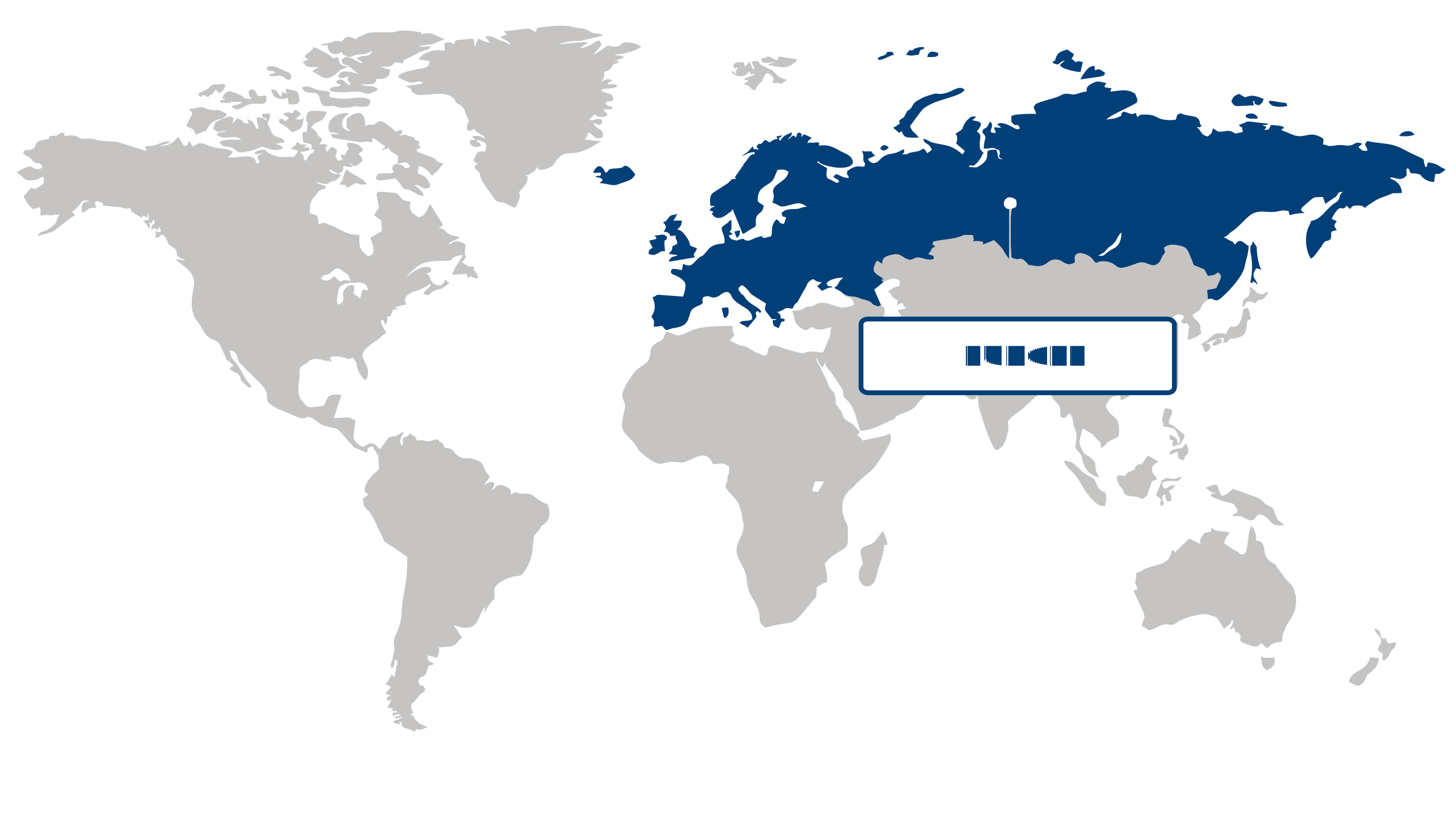
Europe (Largest Region)
Europe held the largest share of the enzymatic food processing solutions market in 2026 at 34.67%, impelled by a mature food processing industry, strong demand for clean-label products, and increasing emphasis on efficient and sustainable food manufacturing processes. Food manufacturers across the region are increasingly adopting enzymatic solutions to improve processing efficiency, product consistency, texture, flavor, and shelf stability across diverse food applications. Growing consumer preference for naturally derived ingredients and minimally processed foods is further supporting the use of enzymes as processing aids and functional ingredients. In addition, the region’s established food manufacturing infrastructure, emphasis on product quality, and focus on resource-efficient production are encouraging greater adoption of enzymatic processing technologies.
Asia Pacific (Fastest-Growing Region)
Asia Pacific is the fastest-growing region in the enzymatic food processing solutions market, supported by expanding food and beverage manufacturing, rising demand for processed and convenience foods, and increasing adoption of advanced processing technologies. Rapid industrialization of the food processing sector is encouraging manufacturers to improve production efficiency, quality, and consistency while responding to changing consumer preferences. Growing demand for bakery products, dairy products, beverages, and other processed foods is creating broader applications for enzymatic solutions. In addition, increasing awareness of clean-label processing, resource efficiency, and product quality is encouraging food manufacturers to adopt enzyme-based technologies, while investments in modern food processing facilities are further supporting regional market growth.
| Parameter | North America | Asia Pacific | Europe | Latin America | MEA |
|---|---|---|---|---|---|
| Innovation HubiScaleNascentDeveloping Advanced | |||||
| Cost-Sensitive RegioniScaleLowMedium High | |||||
| Regulatory EnvironmentiScaleRestrictiveNeutral Supportive | |||||
| Demand DriversiScaleWeakModerate Strong | |||||
| Development StageiScaleEmergingDeveloping Developed | |||||
| Adoption RateiScaleLowMedium High | |||||
| New Entrants / StartupsiScaleSparseModerate Dense | |||||
| Macro IndicatorsiScaleWeakStable Strong |
Key Country Insights
United States 🇺🇸
Process Innovation AdoptionThe U.S. market prioritizes enzymes that improve processing efficiency, product consistency, and clean-label formulation across bakery, dairy, beverages, and meat applications. Food manufacturers are increasingly evaluating tailored enzyme systems that support ingredient optimization while meeting evolving consumer expectations for minimally processed products.
Germany 🇩🇪
Precision Processing FocusGermany emphasizes enzyme-based solutions that enhance process control, resource efficiency, and product quality within highly engineered food manufacturing environments. Producers are likely to prioritize specialized formulations for baking, brewing, dairy, and starch processing where reproducibility, reduced processing inputs, and consistent functional performance are commercially important.
Japan 🇯🇵
Functional Food IntegrationJapan's enzymatic food processing demand is closely tied to product functionality, quality, and sophisticated processing requirements. Food companies focus on enzymes that improve texture, flavor, shelf stability, and processing performance, particularly across fermented foods, beverages, bakery products, and specialized nutrition-oriented formulations.
South Korea 🇰🇷
Advanced Food FormulationSouth Korea is strengthening enzyme adoption through sophisticated processed-food and beverage formulation, with manufacturers seeking solutions that improve texture, flavor development, and production efficiency. Enzyme suppliers can address demand through application-specific technologies suited to convenience foods, bakery products, dairy alternatives, and functional beverages.
France 🇫🇷
Premium Processing ApplicationsFrance places emphasis on enzyme solutions that preserve product quality while supporting premium food formulations and efficient manufacturing. Applications across bakery, dairy, beverages, and fermentation benefit from enzymes that enhance texture, processing consistency, and ingredient functionality without compromising sensory characteristics.
Italy 🇮🇹
Specialty Food OptimizationItaly's market prioritizes enzyme technologies that improve processing performance while retaining the sensory and functional characteristics valued in specialty foods. Bakery, dairy, pasta, wine, and fermentation applications create demand for targeted enzyme solutions that support consistency, ingredient efficiency, and refined product quality.
Enzymatic Food Processing Solutions Market Share (%), by Enzyme Type, 2026
Go beyond the chart, access full insights & data tables
Request Free Sample ReportEnzyme Type Segment Analysis: Proteases (Largest & Fastest-Growing Segment)
The proteases segment accounted for the largest share of 30.67% in the enzyme type segment in 2026 and is also projected to register the fastest growth, supported by the broad functional role of proteolytic enzymes across enzymatic food processing solutions. Proteases facilitate the controlled breakdown of proteins, helping food manufacturers improve texture, tenderness, solubility, digestibility, and overall product consistency across diverse processing applications. Their established use in meat processing, dairy production, bakery formulations, and protein-based food products strengthens demand as manufacturers increasingly adopt enzyme-based processing to improve efficiency while maintaining desired sensory characteristics. The growing emphasis on clean-label processing, optimized raw material utilization, and consistent production outcomes further supports the adoption of proteases as an effective processing aid. In addition, continued development of specialized enzyme formulations suited to different processing conditions is expanding the applicability of proteases, reinforcing their leading position and supporting sustained growth in the enzyme type segment.
Application Segment Analysis: Bakery & Confectionery (Largest & Fastest-Growing Segment)
The bakery & confectionery segment held the largest share of 28.3% in 2026 and is also expected to experience the fastest growth, driven by the increasing use of enzymatic food processing solutions to improve product quality, processing efficiency, and shelf stability. Enzymes are widely incorporated into bakery and confectionery processing to support dough handling, enhance volume and texture, improve crumb softness, and maintain product freshness over extended periods. Their ability to deliver consistent results while optimizing ingredient functionality is particularly valuable as manufacturers respond to evolving consumer preferences for improved texture, freshness, and product quality. Rising demand for packaged baked goods and convenience-oriented bakery products is further encouraging manufacturers to adopt processing technologies that support large-scale production while preserving sensory characteristics. Additionally, greater focus on production efficiency, waste reduction, and formulation optimization is expected to strengthen enzyme utilization across bakery and confectionery applications, supporting the segment's continued expansion.
| Segment | Sub-Segment | Largest Segment | Fastest Growing |
|---|---|---|---|
| Enzyme Type | Proteases, Amylases, Lipases, Carbohydrases, Specialized Enzymes | Proteases | Proteases |
| Application | Bakery & Confectionery, Dairy Processing, Beverage Production, Meat & Seafood Processing, Starch & Sweetener Production, Plant-based & Alternative Proteins, Oil & Fat Processing, Others | Bakery & Confectionery | Bakery & Confectionery |
Unlock insights tailored to your business with our bespoke market research solutions.
Click to get your customized report now.
Competitive Landscape and Market Positioning
Analyst Perspective:
Competitive positioning in enzymatic food processing solutions depends on combining application-specific enzyme performance with economical production and regulatory readiness. Thermal stability and substrate specificity influence process consistency, reaction efficiency, and finished-product quality, but their commercial value depends on performance under actual processing conditions rather than isolated technical advantages. Enzymes must deliver the desired transformation across variations in raw materials while preserving relevant sensory and functional characteristics. Production economics provide another differentiator, as fermentation yield, feedstock costs, recovery requirements, and batch consistency collectively determine the cost of supplying usable enzyme at scale. Regulatory compliance further affects commercialization and geographic expansion because requirements vary according to enzyme classification, intended use, and jurisdiction. Suppliers that align enzyme engineering with scalable manufacturing and application-specific regulatory support can offer food producers a more commercially practical solution.
Key companies in the enzymatic food processing solutions market:
- Novozymes (Denmark)
- DSM-Firmenich (Netherlands)
- DuPont (USA)
- Chr. Hansen (Denmark)
- Kerry Group (Ireland)
- BASF (Germany)
- Amano Enzyme (Japan)
- Advanced Enzyme Technologies (India)
- AB Enzymes (Germany)
- Soufflet Biotechnologies (France)
| Company | Market Share | Company Revenue | Revenue CAGR (%) | Product Portfolio | Geographic Presence | Innovation / R&D Focus | Strategic Developments |
|---|---|---|---|---|---|---|---|
| Novozymes (Denmark) | |||||||
| DSM-Firmenich (Netherlands) | |||||||
| DuPont (USA) | |||||||
| Chr. Hansen (Denmark) | |||||||
| Kerry Group (Ireland) | |||||||
| BASF (Germany) | |||||||
| Amano Enzyme (Japan) | |||||||
| Advanced Enzyme Technologies (India) | |||||||
| AB Enzymes (Germany) | |||||||
| Soufflet Biotechnologies (France) |
Industry Development/News
| Company Name | Date | Key Development |
|---|---|---|
| Novonesis | February 2025 | Completed the acquisition of DSM Firmenich's stake in the Feed Enzyme Alliance for USD 1.5 billion, more than doubling their product portfolio and significantly expanding their global operational reach within the market. |
| Layn Natural Ingredients | February 2025 | Announced the expansion of their biotech facility dedicated to the large-scale production of enzyme and precision fermentation ingredients, scaling manufacturing capacity for commercial operations. |
| IFF | November 2024 | Released TEXSTAR, an enzymatic texturizing product specifically engineered for plant-based and fermented foods, representing a material product innovation for the food processing sector. |
Customize Your Report
Explore examples of how this report can be tailored to different research needs, including custom segments, additional topics or chapters, and related reports. Click a section of the wheel or its numbered marker to explore the available options.
Enzymatic Food Processing Solutions Market — Custom Segments
| Segment | Sub-Segment |
|---|---|
| Processing Stage | Raw Material Preparation, Primary Processing, Conversion & Reaction, Product Finishing & Stabilization |
| Enzyme Form | Liquid Enzyme Preparations, Dry & Powdered Enzymes, Immobilized Enzymes, Granulated & Encapsulated Enzymes |
| Processing Scale | Industrial-Scale Processing, Mid-Scale Processing, Small-Scale & Artisan Processing |
Enzymatic Food Processing Solutions Market — Custom TOC
| Custom Chapter | Chapter Details |
|---|---|
| Enzyme Adoption Roadmap by Food Processing Application |
|
| Process Economics of Enzymatic Processing |
|
| Commercialization Pathways for Novel Enzymes |
|
Need a different cut of the data?
Request Custom ResearchFrequently Asked Questions
How big is the enzymatic food processing solutions market?
What is the anticipated CAGR of the enzymatic food processing solutions industry?
How are clean-label trends and manufacturing efficiency priorities accelerating adoption of enzymatic food processing solutions?
How is regulatory acceptance influencing the commercialization of enzyme-based food processing solutions?
Why do proteases lead the enzymatic food processing solutions market?
What is driving growth in bakery and confectionery enzyme applications?
Why does Europe dominate the enzymatic food processing solutions market?
Which factors are accelerating enzymatic food processing solutions adoption in Asia Pacific?
Which companies dominate the enzymatic food processing solutions landscape?
Our Clients
"The report provided a thorough look at market trends, technological advancements, and the competitive landscape. The depth of insights was really valuable."
ITC Limited
"We would highly recommend Fundamental Business Insights & Consulting to anyone looking for reliable, detailed, and comprehensive market research in the Food industry."
Tyson Foods
"The clarity and presentation of the information were commendable. The report was delivered timely, which made the overall experience smooth and convenient."
Mondelēz International
Our Research Team & Methodology
Every Fundamental Business Insights report is built by a dedicated vertical research team, validated through a structured primary-and-secondary methodology, and reviewed for accuracy before it reaches you.
This report was prepared by the Food & Beverage Research Team at Fundamental Business Insights, a dedicated research group specializing in the global food, beverage, ingredients, and food processing industries. Our analysts continuously monitor evolving consumer preferences, product innovation, ingredient developments, food safety regulations, manufacturing technologies, supply chain dynamics, pricing trends, sustainability initiatives, and changing retail and foodservice landscapes to deliver timely and reliable market intelligence. The research is developed using a structured methodology that combines primary discussions with food manufacturers, ingredient suppliers, distributors, retailers, industry experts, and other key stakeholders, along with company annual reports, regulatory publications, government trade statistics, food safety authorities, industry associations, technical publications, and other authoritative secondary sources. Market estimates are validated through multiple research techniques, including top-down and bottom-up analysis, before undergoing an internal quality review to ensure accuracy, consistency, and methodological integrity prior to publication.
Delivery
Published
Available
Support
- Market Size & Forecast
- Market Segmentation
- Regional Analysis
- Growth Drivers & Challenges
- Market Dynamics
- Competitive Landscape
- Company Profiles
- Competitive Benchmarking
- Mergers & Acquisitions
- Market Share Analysis or Key Company Strategies
- Value Chain Analysis
- Porter's Five Forces
- PESTLE Analysis
- Pricing Trends
- Supply-Demand Analysis
- Technology Landscape
- Regulatory Landscape
- Investment & Funding Landscape
- Emerging Opportunities
- Future Market Outlook