Epoxy Active Diluent Market Size & Growth Forecast 2027–2036, By Segments (Types, Application), Regional Demand Trends (North America, Asia Pacific, Europe), Key Country Insights (U.S., Japan, South Korea, Germany, France, Italy), and Competitive Landscape
Jump to Content
Market Size and Growth Outlook
Epoxy Active Diluent Market size stood at USD 1.01 Billion in 2026 and is predicted to grow at 4.1% CAGR from 2027 to 2036, crossing USD 1.51 Billion by 2036. The industry revenue for 2027 is estimated at USD 1.04 Billion.
Get more details on this report
Request Free Sample ReportEpoxy Active Diluent Market Intelligence Snapshot
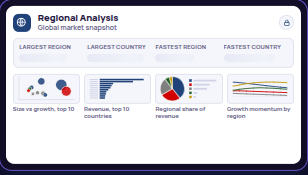
Regional Market Dynamics
- North America leads through established construction, automotive, electronics, and industrial manufacturing sectors, alongside demand for advanced epoxy formulations and durable protective coatings.
- Asia Pacific is growing fastest as industrialization, construction, electronics, automotive manufacturing, and investments in downstream production infrastructure expand epoxy applications.
Segment Momentum
- Monofunctional active diluents led the market in 2026 because they effectively adjust epoxy viscosity, improve processing, and maintain formulation performance across coatings, adhesives, sealants, and composite applications.
- Composite materials are the fastest-growing application as industries increasingly adopt lightweight, durable, and high-performance composites that benefit from improved epoxy processing and mechanical performance.
Market Expansion Drivers
- Shift toward low-VOC coatings driving demand for compliant epoxy formulations
- Expansion of construction and industrial flooring projects increasing epoxy usage
- Growth in composites for wind energy and automotive lightweighting applications
Leading Market Participants
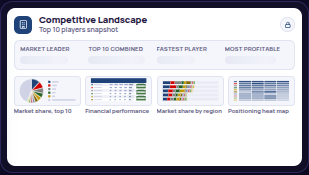
- Leading players in the epoxy active diluent market include Dow Inc. (United States), BASF SE (Germany), Hexion Inc. (United States), Huntsman Corporation (United States), Arkema S.A. (France), Evonik Industries AG (Germany), Air Products and Chemicals, Inc. (United States), Cardolite Corporation (United States), Aditya Birla Chemicals (India), King Industries, Inc. (United States)
Global Market Forecast Snapshot
Market Outlook
- 2026 Market Size: USD 1.01 Billion
- 2027 Estimated Market Size: USD 1.04 Billion
- Projected Market Size: USD 1.51 Billion by 2036
- Growth Forecast: 4.1% CAGR (2027-2036)
Regional and Segment Outlook
- Leading Regional Market: North America
- High-Growth Regional Hub: Asia Pacific
- Core Revenue Segment: Monofunctional (Types) | Coatings (Application)
- Emerging Opportunity Segment: Difunctional (Types) | Composite Material (Application)
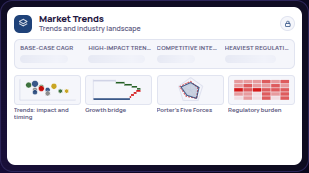
Market Growth Drivers and Industry Trends
Shift toward low-VOC coatings driving demand for compliant epoxy formulations
Increasing emphasis on environmentally responsible coating technologies is encouraging manufacturers to reformulate products that comply with evolving emission requirements while maintaining application performance. The epoxy active diluent market is driven by the growing adoption of low-VOC coating systems that rely on compatible diluents to optimize viscosity, improve processing characteristics, and preserve the mechanical properties of epoxy formulations. Demand is further supported by industrial users seeking solutions that balance regulatory compliance with operational efficiency across protective coating applications.
Expansion of construction and industrial flooring projects increasing epoxy usage
Rising investments in commercial buildings, industrial facilities, and infrastructure development are strengthening demand for durable flooring systems capable of withstanding heavy mechanical and chemical exposure. Expanding construction activity will propel the epoxy active diluent market growth as epoxy-based flooring solutions require carefully formulated resin systems that provide excellent flow, adhesion, and curing performance. Manufacturers are also focusing on formulations that facilitate efficient installation while delivering long-lasting surface protection in demanding industrial environments.
Growth in composites for wind energy and automotive lightweighting applications
The increasing use of advanced composite materials in renewable energy and transportation sectors is creating new opportunities for epoxy resin technologies that support high-performance structural applications. Within the epoxy active diluent market, growing composite production requires active diluents that enhance resin processability while maintaining the strength, durability, and dimensional stability of finished components. These materials enable manufacturers to optimize fabrication processes for complex composite structures used in lightweight vehicles and wind energy systems.
| Growth Driver | Impact on CAGR | Regulatory Influence | Geographic Relevance | Adoption Rate | Impact Timeline |
|---|---|---|---|---|---|
| Shift toward low-VOC coatings driving demand for compliant epoxy formulations | 1.6% | High | Europe, North America | High | Near Term |
| Expansion of construction and industrial flooring projects increasing epoxy usage | 1.5% | Moderate | Asia Pacific, Middle East | High | Mid Term |
| Growth in composites for wind energy and automotive lightweighting applications | 1.4% | High | Europe, Asia Pacific | High | Mid Term |
Unlock insights tailored to your business with our bespoke market research solutions.
Click to get your customized report now.
Regional Demand Dynamics

North America (Largest Region)
North America accounted for the largest share of the epoxy active diluent market in 2026, supported by established construction, automotive, electronics, and industrial manufacturing sectors that use epoxy-based materials in coatings, adhesives, and composite applications. Demand for high-performance formulations with improved processing characteristics is encouraging the use of active diluents in epoxy systems. Ongoing industrial modernization and the region's focus on advanced materials and durable protective coatings further contribute to sustained market demand.
Asia Pacific (Fastest-Growing Region)
Asia Pacific is anticipated to be the fastest-growing region, supported by rapid industrialization, expanding construction activity, and increasing manufacturing of electronics, automotive components, and industrial goods. The growing use of epoxy-based coatings, adhesives, and composites across these applications is creating favorable conditions for active diluent consumption. Increasing investments in manufacturing infrastructure and the expansion of downstream industries are also broadening the application base for epoxy formulations, supporting regional market growth.
| Parameter | North America | Asia Pacific | Europe | Latin America | MEA |
|---|---|---|---|---|---|
| Innovation HubiScaleNascentDeveloping Advanced | |||||
| Cost-Sensitive RegioniScaleLowMedium High | |||||
| Regulatory EnvironmentiScaleRestrictiveNeutral Supportive | |||||
| Demand DriversiScaleWeakModerate Strong | |||||
| Development StageiScaleEmergingDeveloping Developed | |||||
| Adoption RateiScaleLowMedium High | |||||
| New Entrants / StartupsiScaleSparseModerate Dense | |||||
| Macro IndicatorsiScaleWeakStable Strong |
Key Country Insights
United States 🇺🇸
High-Performance FormulationsThe U.S. epoxy active diluent market is driven by demand for formulations that improve processing efficiency and coating performance across construction, electronics, and industrial applications. Manufacturers in the U.S. continue developing specialty diluents that enhance viscosity control while supporting evolving environmental requirements.
Germany 🇩🇪
Industrial Coating EnhancementGermany prioritizes epoxy active diluents that support precision manufacturing and advanced industrial coatings. Companies in Germany increasingly adopt high-quality formulations that improve resin performance, processing consistency, and compliance with stringent chemical and sustainability standards.
Japan 🇯🇵
Precision Resin DevelopmentJapan emphasizes epoxy active diluents tailored for electronics, automotive, and high-value industrial applications requiring precise material performance. Japanese manufacturers continue investing in advanced resin technologies that improve processing characteristics without compromising mechanical properties.
South Korea 🇰🇷
Electronics Material SupportSouth Korea is strengthening demand for epoxy active diluents through expanding electronics and semiconductor manufacturing activities. Producers in South Korea focus on formulations that deliver reliable processing performance and compatibility with high-specification resin systems used in advanced industrial applications.
France 🇫🇷
Specialty Chemical IntegrationFrance is expanding the use of epoxy active diluents in specialty coatings, adhesives, and composite applications requiring improved formulation performance. French manufacturers continue emphasizing balanced product performance alongside regulatory compliance and sustainable chemical development practices.
Italy 🇮🇹
Composite Manufacturing FocusItaly supports the epoxy active diluent market through growing use of advanced resin systems in industrial manufacturing and composite production. Italian companies increasingly select formulations that improve application efficiency while maintaining durability and consistent processing performance across multiple industries.
Epoxy Active Diluent Market Share (%), by Types, 2026
Go beyond the chart, access full insights & data tables
Request Free Sample ReportTypes Segment Analysis: Monofunctional (Largest Segment) vs Difunctional (Fastest-Growing Segment)
The monofunctional segment held the largest share of the epoxy active diluent market in 2026. Monofunctional active diluents are widely used to adjust the viscosity and processing characteristics of epoxy formulations while maintaining the functional performance required across coatings, adhesives, sealants, and composite applications. Their ability to improve formulation handling and support efficient processing makes them valuable in applications where controlled flow and ease of application are important. Broad utilization across industrial and construction-related applications continues to support the strong position of monofunctional active diluents.
Difunctional active diluents are experiencing the fastest growth as manufacturers increasingly seek formulation components that can contribute to both processing efficiency and the performance of cured epoxy systems. Their ability to participate more extensively in crosslinking reactions can support the development of materials with desirable mechanical and chemical characteristics. Growing demand for higher-performance coatings, adhesives, composites, and other advanced epoxy formulations is encouraging greater interest in difunctional solutions. The expansion of applications requiring improved durability and performance is therefore supporting the segment's growth momentum.
Application Segment Analysis: Coatings (Largest Segment) vs Composite Material (Fastest-Growing Segment)
Coatings accounted for the largest share of the epoxy active diluent market in 2026. Epoxy-based coatings are widely valued for their adhesion, durability, chemical resistance, and protective performance across industrial and construction applications. Active diluents help improve the viscosity and application properties of epoxy coating formulations, enabling more efficient processing and coverage. The continued need for protective surfaces that can withstand demanding operating environments supports consistent demand for epoxy active diluents in coatings.
The composite material segment is expanding at the fastest pace as industries increasingly adopt lightweight, durable, and high-performance composite structures. Epoxy systems are widely used as matrices and binding materials in composites because of their strong adhesion and mechanical performance. Active diluents can improve the processing characteristics of these formulations, supporting more efficient manufacturing and the development of complex composite components. Growing demand for advanced materials across transportation, construction, energy, and industrial applications is strengthening the role of epoxy active diluents in composite material production.
| Segment | Sub-Segment | Largest Segment | Fastest Growing |
|---|---|---|---|
| Types | Monofunctional, Difunctional, Others | Monofunctional | Difunctional |
| Application | Coatings, Adhesives and Sealants, Composite Material, Electrical and Electronics, Construction, Others | Coatings | Composite Material |
Competitive Landscape and Market Positioning
Top players in the epoxy active diluent market:
- Dow, Inc. (United States)
- BASF SE (Germany)
- Hexion, Inc. (United States)
- Huntsman Corporation (United States)
- Arkema S.A. (France)
- Evonik Industries AG (Germany)
- Air Products and Chemicals, Inc. (United States)
- Cardolite Corporation (United States)
- Aditya Birla Chemicals (India)
- King Industries, Inc. (United States)
The epoxy active diluent market is evolving beyond price-based competition as end users demand formulations that improve processing characteristics while preserving the mechanical and chemical performance of finished epoxy systems. Suppliers are investing in application-focused product development to address increasingly specialized requirements across coatings, adhesives, composites, and construction materials, making technical expertise a more significant competitive asset. Greater attention to environmental compliance and formulation safety is also encouraging innovation in lower-impact chemistries, prompting manufacturers to differentiate through performance optimization that aligns with changing regulatory and customer expectations. As a result, formulation support and collaborative product development are becoming as influential as production capability in securing long-term commercial relationships.
| Company | Market Share | Company Revenue | Revenue CAGR (%) | Product Portfolio | Geographic Presence | Innovation / R&D Focus | Strategic Developments |
|---|---|---|---|---|---|---|---|
| Dow Inc. (United States) | |||||||
| BASF SE (Germany) | |||||||
| Hexion Inc. (United States) | |||||||
| Huntsman Corporation (United States) | |||||||
| Arkema S.A. (France) | |||||||
| Evonik Industries AG (Germany) | |||||||
| Air Products and Chemicals Inc. (United States) | |||||||
| Cardolite Corporation (United States) | |||||||
| Aditya Birla Chemicals (India) | |||||||
| King Industries Inc. (United States) |
Industry Development/News
| Company Name | Date | Key Development |
|---|---|---|
| Cardolite | May-24 | Cardolite launched a new series of bio-based epoxy active diluents derived from renewable sources. This development represents a strategic shift toward sustainable chemical manufacturing, offering the industry a high-performance alternative to petro-based diluents while reducing carbon footprints and dependence on fossil fuel-based raw materials in epoxy formulations. |
| Royce Global | Apr-23 | Royce Global re-entered the epoxy market with the launch of its ReOxy product line, encompassing epoxy resins, curing agents, and reactive diluents. The initiative leverages domestic U.S. manufacturing and technical support to address market demand for high-performance specialty chemicals, marking a significant re-establishment of the company's competitive presence in the global epoxy value chain. |
Customize Your Report
Explore examples of how this report can be tailored to different research needs, including custom segments, additional topics or chapters, and related reports. Click a section of the wheel or its numbered marker to explore the available options.
Epoxy Active Diluent Market — Custom Segments
| Segment | Sub-Segment |
|---|---|
| Reactive Diluent Source | Bio-Based, Petroleum-Based |
| Curing System Compatibility | Amine-Cured Systems, Anhydride-Cured Systems, Polyamide-Cured Systems, Other Curing Systems |
| Sales Channel | Direct Sales, Distributors & Specialty Chemical Suppliers |
Epoxy Active Diluent Market — Custom TOC
| Custom Chapter | Chapter Details |
|---|---|
| Application-Specific Diluent Selection Strategy |
|
| Bio-Based Diluent Commercialization Potential |
|
| Customer Adoption Barriers & Switching Dynamics |
|
Need a different cut of the data?
Request Custom ResearchFrequently Asked Questions
How large is the epoxy active diluent market?
How will the epoxy active diluent industry grow in terms of size and CAGR by 2036?
How are low-VOC coating trends influencing epoxy formulation demand?
How are composite applications expanding opportunities for epoxy active diluents?
Why do monofunctional active diluents lead the epoxy active diluent market?
Which application segment is growing the fastest in the epoxy active diluent market?
Why does North America lead the epoxy active diluent market?
What is driving faster growth of epoxy active diluents in Asia Pacific?
Who holds a significant market share in the epoxy active diluent landscape?
Our Clients
"The report helped us understand emerging consumer trends in our product category. It clarified where to focus innovation for the next product launch."
LyondellBasell
"The regional forecast section was incredibly useful. We were able to identify two new potential partners in Europe thanks to the vendor mapping you included."
SABIC
"We appreciated how actionable the recommendations were. It guided us to improve supply chain resilience."
Olin Corporation
Our Research Team & Methodology
Every Fundamental Business Insights report is built by a dedicated vertical research team, validated through a structured primary-and-secondary methodology, and reviewed for accuracy before it reaches you.
Delivery
Published
Available
Support
- Market Size & Forecast
- Market Segmentation
- Regional Analysis
- Growth Drivers & Challenges
- Market Dynamics
- Competitive Landscape
- Company Profiles
- Competitive Benchmarking
- Mergers & Acquisitions
- Market Share Analysis or Key Company Strategies
- Value Chain Analysis
- Porter's Five Forces
- PESTLE Analysis
- Pricing Trends
- Supply-Demand Analysis
- Technology Landscape
- Regulatory Landscape
- Investment & Funding Landscape
- Emerging Opportunities
- Future Market Outlook