



Ethnic Food Market Size & Growth Forecast 2027–2036, By Segments (Type, Distribution Channel), Regional Demand Trends (North America, Asia Pacific, Europe), Key Country Insights (U.S., Japan, South Korea, Germany, France, Italy), and Competitive Landscape
Market Size and Growth Outlook
Ethnic Food Market size was more than USD 56.4 billion in 2026 and is set to grow at a 8.46% CAGR between 2027 and 2036, surpassing USD 127.05 billion by 2036. The industry revenue for 2027 is estimated at USD 60.42 billion.
Base Year Value (2026)
USD 56.4 billion
CAGR (2027-2036)
8.46%
Forecast Year Value (2036)
USD 127.05 billion

Historical Data Period
2022-2026

Largest Region
Europe

Forecast Period
2027-2036
Ethnic Food Market Intelligence Snapshot:
-
Regional Market Dynamics:
- Europe leads with 34.03% share supported by strong multicultural consumption, mature retail networks, and widespread availability of international cuisines across foodservice and retail channels.
- Asia Pacific is expanding at 9.38% CAGR driven by urban consumption growth, expanding digital ordering platforms, and rising exposure to international cuisines.
-
Segment Momentum:
- Chinese accounted for 38.9% of the market in 2026, supported by strong consumer familiarity, broad product variety, and widespread availability across both retail and foodservice channels.
- Online is growing fastest because consumers value convenient shopping, broader access to specialty ethnic foods, and the ability to discover products beyond the selection typically available in physical stores.
-
Market Expansion Drivers:
- Increasing multicultural consumer demographics accelerating global demand for authentic ethnic cuisines.
- Rising preference for plant-based and health-oriented ethnic foods expanding consumer adoption.
- Growth of online food delivery and social media discovery boosting ethnic food accessibility.
-
Leading Market Participants:
Leading companies in the ethnic food market include General Mills, Inc. (United States), Ajinomoto Co., Inc. (Japan), McCormick & Company, Incorporated (United States), Associated British Foods plc (United Kingdom), Orkla ASA (Norway), ARYZTA AG (Switzerland), Paulig Group Oy (Finland), TRS Group (United Kingdom), The Spice Tailor Ltd. (United Kingdom), Asli Fine Foods A/S (Denmark).
Global Market Forecast Snapshot:
-
Market Outlook:
- 2026 Market Size: USD 56.4 billion
- 2027 Estimated Market Size: USD 60.42 billion.
- Projected Market Size: USD 127.05 billion by 2036
- Growth Forecasts: 8.46% CAGR (2027-2036)
-
Regional and Segment Outlook:
- Leading Regional Market: Europe
- High-Growth Regional Hub: Asia Pacific
- Core Revenue Segment: Chinese (Type) | Hypermarkets & Supermarkets (Distribution Channel)
- Emerging Opportunity Segment: Mexican (Type) | Online (Distribution Channel)
Market Growth Drivers and Industry Trends
Increasing multicultural consumer demographics accelerating global demand for authentic ethnic cuisines
Changing multicultural consumer demographics are accelerating demand for diverse culinary offerings, supporting growth in the ethnic food market across both established and emerging food categories. Greater cultural diversity, international migration, and consumer exposure to cuisines from different regions are encouraging households and food service operators to seek authentic ingredients, traditional recipes, and region-specific prepared foods. Consumers are increasingly able to explore cuisines beyond their cultural backgrounds, creating opportunities for broader adoption of asian, middle eastern, latin american, african, and other ethnic food products. This wider consumer base is expanding the presence of authentic ethnic flavors across grocery, restaurant, and ready-to-eat food channels.
Rising preference for plant-based and health-oriented ethnic foods expanding consumer adoption
Growing interest in healthier eating patterns and plant-based diets is creating additional opportunities for the ethnic food market by increasing demand for nutritious versions of traditional cuisine. Many ethnic food cultures already incorporate vegetables, legumes, grains, herbs, spices, and plant-based proteins, allowing consumers to explore flavorful alternatives that align with changing dietary preferences. Manufacturers and food service providers are responding by offering ethnic products with plant-based ingredients, cleaner formulations, and health-oriented positioning while retaining distinctive regional flavors. The combination of nutritional appeal and culinary variety is helping ethnic foods reach consumers who may not traditionally purchase these products.
Growth of online food delivery and social media discovery boosting ethnic food accessibility
The growth of online food delivery platforms and social media-driven food discovery is making the ethnic food market more accessible to consumers who may have limited exposure to specialized cuisines. Digital ordering enables customers to conveniently purchase dishes and products from restaurants and food providers offering regional specialties without relying solely on physical proximity. At the same time, social media content featuring unfamiliar dishes, cooking methods, and cultural food experiences can stimulate curiosity and encourage trial among new consumer groups. Digital visibility also allows smaller ethnic food businesses to showcase distinctive offerings and reach audiences beyond their immediate local communities.
| Growth Driver Assessment Framework | |||||
| Growth Driver | Impact On CAGR | Regulatory Influence | Geographic Relevance | Adoption Rate | Impact Timeline |
|---|---|---|---|---|---|
| Increasing multicultural consumer demographics accelerating global demand for authentic ethnic cuisines | 2.00% | Low | Europe, North America | High | Near Term |
| Rising preference for plant-based and health-oriented ethnic foods expanding consumer adoption | 1.80% | Moderate | Asia Pacific, Europe | High | Mid Term |
| Growth of online food delivery and social media discovery boosting ethnic food accessibility | 1.60% | Low | Middle East & Africa, North America | High | Near Term |
Unlock insights tailored to your business with our bespoke market research solutions - Click to get your customized report now!
Regional Demand Dynamics
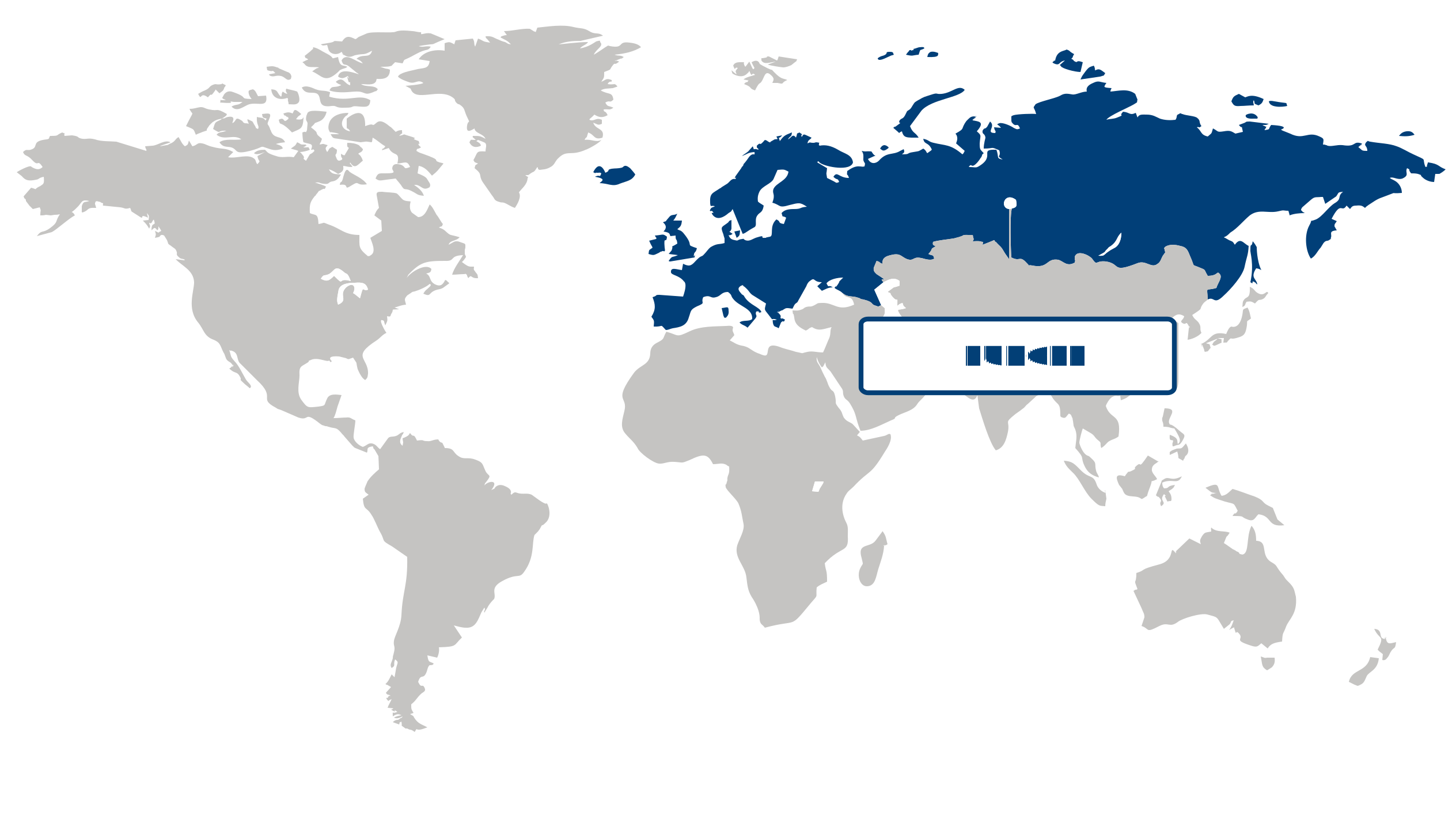
Largest Region
Europe
34.03% Market Share in 2026
Europe (Largest Region) vs Asia Pacific (Fastest-Growing Region)
Europe accounted for the largest share of 34.03% in 2026 in the ethnic food market, reflecting the region's diverse population, multicultural consumer base, and established demand for international cuisines. Immigration and cross-cultural exchange have broadened consumer exposure to foods originating from different regions, while retailers and foodservice operators increasingly offer diverse product selections to accommodate changing dietary preferences. Strong distribution networks and the availability of specialized ethnic ingredients further support the market's established presence across European countries.
Asia Pacific is gaining momentum as changing lifestyles, urbanization, and growing consumer exposure to international cuisines expand demand for ethnic food products. Rising disposable incomes and the development of modern retail and foodservice channels are making a wider range of specialty and globally inspired foods more accessible to consumers. At the same time, increasing tourism, migration, and cultural exchange are contributing to greater experimentation with diverse cuisines, creating additional opportunities for ethnic food producers and distributors.
Key Country Insights
The U.S. ethnic food market is shaped by multicultural consumer preferences and expanding demand for authentic international cuisines across retail and foodservice channels. Brands in the U.S. increasingly focus on clean-label ingredients, convenient formats, and regional flavor authenticity to broaden consumer appeal.
Japan balances demand for authentic ethnic cuisine with products adapted to local taste preferences and convenient meal formats. Food manufacturers in Japan continue introducing globally inspired flavors while maintaining high standards for product quality and presentation.
South Korea's ethnic food market benefits from growing consumer exposure to international cuisines through travel, digital media, and restaurant expansion. Companies in South Korea increasingly introduce packaged ethnic foods that combine convenience with recognizable global flavors and authentic ingredients.
Germany continues to expand its ethnic food offerings as consumers seek authentic global flavors and premium imported ingredients. Retailers and foodservice operators in Germany increasingly diversify product portfolios with ready-to-cook meals, specialty sauces, and regional cuisine selections.
France is strengthening its ethnic food market through broader availability of international products in supermarkets and specialty food retailers. Consumers in France increasingly seek authentic culinary experiences, encouraging suppliers to expand premium ingredient and ready-meal portfolios.
Italy continues expanding ethnic food offerings as changing consumer lifestyles encourage greater experimentation with international cuisines. Retailers and foodservice businesses in Italy increasingly emphasize authentic ingredients, convenient meal solutions, and diverse regional recipes to meet evolving dietary preferences.
Segment Leadership and Growth Trends
Type Segment Analysis: Chinese (Largest Segment) vs Mexican (Fastest-Growing Segment)
Chinese cuisine represented the largest share of the ethnic food market, accounting for 38.9% in 2026. Its strong position reflects broad consumer familiarity, extensive menu diversity, and established availability across restaurants, foodservice outlets, and retail channels. The cuisine's ability to accommodate different taste preferences and its wide range of dishes spanning noodles, rice-based meals, sauces, and prepared foods support sustained consumer demand. Continued product innovation and the integration of chinese-inspired offerings into mainstream food retail further reinforce its leading position.
Mexican cuisine is the fastest-growing segment, driven by increasing consumer interest in bold flavors, distinctive ingredients, and globally inspired meal options. Growing exposure to mexican-style foods across restaurants, prepared-food categories, and retail products is expanding consumer familiarity and encouraging broader adoption. The versatility of mexican cuisine also supports its incorporation into convenient and modern food formats, while evolving consumer preferences for diverse international flavors are creating additional opportunities for segment expansion.
Distribution Channel Segment Analysis: Hypermarkets & Supermarkets (Largest Segment) vs Online (Fastest-Growing Segment)
Hypermarkets & supermarkets held the largest share of the ethnic food market at 38.69% in 2026, benefiting from their extensive product assortment, physical accessibility, and ability to offer consumers a broad selection of international food products in one location. These retail formats provide strong visibility for ethnic food brands and products while enabling consumers to compare different cuisines and product categories directly. Established grocery purchasing habits and the availability of packaged, frozen, ready-to-eat, and specialty ethnic foods continue to support the channel's leading position.
Online is the fastest-growing distribution channel as consumers increasingly seek convenient access to a wider selection of ethnic food products without relying solely on local retail availability. Digital platforms can offer broader product variety, specialized ingredients, and cuisines that may be difficult to find through conventional grocery channels. The expansion of e-commerce grocery services and growing consumer comfort with digital food purchasing are improving accessibility to ethnic products. Personalized recommendations, convenient home delivery, and broader geographic reach are further supporting online channel adoption.
| Report Segmentation | |||
| Segment | Sub-Segment | Largest Segment | Fastest Growing Segment |
|---|---|---|---|
| Type | Chinese, Japanese, Mexican, Italian, Others | Chinese | Mexican |
| Distribution Channel | Hypermarkets & Supermarkets, Convenience Stores, Grocery Stores, Online, Others | Hypermarkets & Supermarkets | Online |
 Read our Research Approach
Competitive Landscape and Market Positioning
Major players in the ethnic food market:
1. General Mills Inc. (United States)
2. Ajinomoto Co. Inc. (Japan)
3. McCormick & Company Incorporated (United States)
4. Associated British Foods plc (United Kingdom)
5. Orkla ASA (Norway)
6. ARYZTA AG (Switzerland)
7. Paulig Group Oy (Finland)
8. TRS Group (United Kingdom)
9. The Spice Tailor Ltd. (United Kingdom)
10. Asli Fine Foods A/S (Denmark)
Consumer interest in global cuisines and authentic flavors continues to support growth in the ethnic food market. Brands are expanding product availability through regional flavor innovations, ready-to-cook offerings, and fusion-based food concepts that appeal to broader demographics. Expanding retail distribution and evolving multicultural consumption habits are further strengthening market penetration across urban and online channels.
Industry Development/News
| Company Name | Date | Key Development |
|---|---|---|
| Premier Foods | Jul-22 | Premier Foods acquired Indian meal kit provider The Spice Tailor for USD 57.10 million. This transaction significantly enhances the company's international geographic footprint across the UK, India, Australia, Canada, and Ireland, while strategically expanding its ethnic foods portfolio, particularly within the Australian market segment. |
| DDC Enterprise, Ltd. | Jun-24 | DDC Enterprise, Ltd. acquired Asian food brand Omsom to leverage operational synergies and accelerate product development. The integration is expected to enhance efficiency and reduce R&D timelines by 50%, strengthening the company’s ability to scale innovation across its multi-brand portfolio of Asian consumer food products. |
| GoodLife Foods | Jul-24 | GoodLife Foods completed two strategic acquisitions aimed at accelerating growth and diversifying its food portfolio. These transactions are designed to align the company’s manufacturing and product offerings with shifting consumer demand, specifically targeting increased penetration into international and ethnic food categories. |
| Aahu Barah | Aug-24 | Afghan food distributor Aahu Barah acquired a property in Hicksville, New York, for approximately $5.15 million. This capital investment facilitates the expansion of the company’s Long Island operations, providing increased distribution capacity and strengthening its overall position in the ethnic food supply chain. |
| Gen Korean BBQ | Aug-24 | Gen Korean BBQ is scaling its consumer packaged goods (CPG) program, targeting distribution across 1,500–2,000 retail locations in the United States by the end of 2026. This initiative marks a strategic shift to capture broader market share beyond restaurant operations through the commercialization of Korean-inspired ethnic food products. |
| H Mart | Jul-24 | H Mart established a partnership with DoorDash to integrate on-demand delivery services across its grocery network. This initiative enhances the company’s digital commerce capabilities, improving consumer access to its Asian food product offerings through high-speed, scalable logistics channels. |
| Heritage Grocers Group | Aug-24 | Heritage Grocers Group partnered with NationsBenefits to integrate health-benefit payment solutions into its grocery network for Food as Medicine programs. This collaboration aligns culturally relevant food offerings with health initiatives, improving accessibility and market penetration within diverse consumer communities. |
| CJ CheilJedang | Jul-24 | CJ CheilJedang expanded the availability of its Bibigo dumpling line into the New Zealand market. This move is part of a broader Oceania growth strategy intended to capitalize on rising demand for Asian ethnic food products and reinforce the brand's competitive positioning within the international K-food category. |
Why Choose Us
Specialized Expertise: Our team comprises industry experts with a deep understanding of your market segment. We bring specialized knowledge and experience that ensures our research and consulting services are tailored to your unique needs.
Customized Solutions: We understand that every client is different. That's why we offer customized research and consulting solutions designed specifically to address your challenges and capitalize on opportunities within your industry.
Proven Results: With a track record of successful projects and satisfied clients, we have demonstrated our ability to deliver tangible results. Our case studies and testimonials speak to our effectiveness in helping clients achieve their goals.
Cutting-Edge Methodologies: We leverage the latest methodologies and technologies to gather insights and drive informed decision-making. Our innovative approach ensures that you stay ahead of the curve and gain a competitive edge in your market.
Client-Centric Approach: Your satisfaction is our top priority. We prioritize open communication, responsiveness, and transparency to ensure that we not only meet but exceed your expectations at every stage of the engagement.
Continuous Innovation: We are committed to continuous improvement and staying at the forefront of our industry. Through ongoing learning, professional development, and investment in new technologies, we ensure that our services are always evolving to meet your evolving needs.
Value for Money: Our competitive pricing and flexible engagement models ensure that you get maximum value for your investment. We are committed to delivering high-quality results that help you achieve a strong return on your investment.
Select Licence Type

