Fashion Influencer Marketing Market Size & Forecasts 2026-2035, By Segments (Fashion Type, Influencer Type), Growth Opportunities, Innovation Landscape, Regulatory Shifts, Strategic Regional Insights (U.S., Japan, China, South Korea, UK, Germany, France), and Competitive Dynamics (IZEA, AspireIQ, Upfluence, Tagger Media, Influencity)
Jump to Content
Market Size and Growth Outlook
Fashion Influencer Marketing Market size is set to grow from USD 39.22 billion in 2025 to USD 161.45 billion by 2035, reflecting a CAGR greater than 15.2% through 2026-2035. Industry revenues in 2026 are estimated at USD 44.52 billion.
Get more details on this report
Request Free Sample ReportFashion Influencer Market Intelligence Snapshot
Regional Market Dynamics
Segment Momentum
Market Expansion Drivers
Leading Market Participants
Global Market Forecast Snapshot
Market Outlook
Regional and Segment Outlook
Market Growth Drivers and Industry Trends
The exponential growth of social media platforms has fundamentally reshaped consumer engagement within the fashion influencer market. Channels like Instagram and TikTok enable influencers to reach highly targeted and engaged audiences, aligning with evolving consumer preferences for authentic, relatable content. According to Meta's corporate press releases, fashion brands increasingly allocate marketing budgets toward influencer partnerships, driving higher brand visibility and consumer conversion rates. This shift offers strategic opportunities for established brands to deepen direct-to-consumer initiatives and for new entrants to leverage niche communities rapidly. The sustained evolution of social algorithms and platform features suggests ongoing refinement of influencer strategies will remain central to competitive positioning in this market.
Integration with AI Analytics for Campaign Performance Measurement
The fashion influencer market is witnessing a pivotal transformation through AI-driven analytics, enhancing precision in campaign effectiveness and ROI tracking. Tools developed by firms like Hootsuite and Influencity enable brands to dissect engagement metrics and sentiment analysis, optimizing influencer selection and content delivery. This analytical edge supports strategic decision-making, helping established companies scale influencer programs systematically while empowering startups to demonstrate measurable value rapidly. As AI models advance, ethical transparency and data privacy maintained by entities such as the Digital Advertising Alliance guarantee trust, ensuring these technologies become standard practice rather than optional upgrades.
Regulatory Scrutiny and Disclosure Mandates for Influencer Marketing
Increasing regulatory attention on transparency in influencer marketing is reshaping compliance frameworks within the fashion influencer market. Agencies such as the U.S. Federal Trade Commission (FTC) have reinforced mandates requiring clear disclosures of paid partnerships, addressing consumer demand for authenticity and ethical standards. This regulatory environment compels both incumbents and emerging players to institutionalize governance processes, mitigating legal risks and enhancing brand reputation. The heightened scrutiny drives innovation in disclosure technologies and best practices, creating avenues for compliance-focused service providers. As enforcement mechanisms sharpen, adherence to these standards will become a fundamental differentiator in stakeholder trust and long-term market viability.
Industry Restraints:
Stringent Advertising and Disclosure Regulations
The growing enforcement of advertising standards and influencer disclosure requirements significantly constrains the fashion influencer market by increasing compliance costs and impacting content authenticity. Agencies such as the U.S. Federal Trade Commission (FTC) have intensified scrutiny on influencer marketing, mandating transparent disclosure of sponsored posts to combat misleading advertising. For instance, the FTC’s crackdown on non-compliant influencers resulted in warnings and fines, underscoring regulatory vigilance. This environment compels influencers and brands to invest in legal counsel and compliance infrastructure, reducing agility and inflating operational expenses. Established players must navigate complex jurisdictional variations, while newcomers face barriers to entry due to unclear regulatory landscapes. Moving forward, adherence to transparency laws will continue shaping strategic decisions around campaign design and influencer partnerships, with those able to embed compliance seamlessly positioned to maintain market trust and longevity.
Consumer Trust Erosion amid Market Saturation
Market oversaturation has led to consumer fatigue, diluting the perceived authenticity of fashion influencers and limiting audience engagement. A 2023 Nielsen study highlighted that over 60% of social media users express skepticism toward endorsements perceived as overly commercial or repetitive, impacting campaign effectiveness. As a result, consumer hesitation slows content monetization, especially for micro-influencers striving to differentiate themselves amid a crowded field. This skepticism challenges brands to identify credible influencer partners, increasing due diligence and often favoring established personalities with proven track records. Consequently, new entrants encounter difficulties building loyal followings while established influencers must continuously innovate content to sustain relevance. Over the near term, this dynamic is expected to drive a shift toward more niche, value-driven influencer marketing strategies emphasizing genuine storytelling and community engagement to restore consumer confidence and drive sustainable growth.
| Growth Driver | Impact on CAGR | Regulatory Influence | Geographic Relevance | Adoption Rate | Impact Timeline |
|---|---|---|---|---|---|
| Rise of social media and influencer marketing adoption in fashion | 5.00% | Short term (≤ 2 yrs) | North America, Europe; Spillover: Asia Pacific | Medium | Fast |
| Integration with AI analytics for campaign performance measurement | 4.00% | Medium term (2–5 yrs) | North America, Asia Pacific; Spillover: Europe | Low | Moderate |
| Regulatory scrutiny and disclosure mandates for influencer marketing | 3.00% | Long term (5+ yrs) | Europe, North America; Spillover: Asia Pacific | High | Moderate |
Unlock insights tailored to your business with our bespoke market research solutions.
Click to get your customized report now.
Regional Demand Dynamics
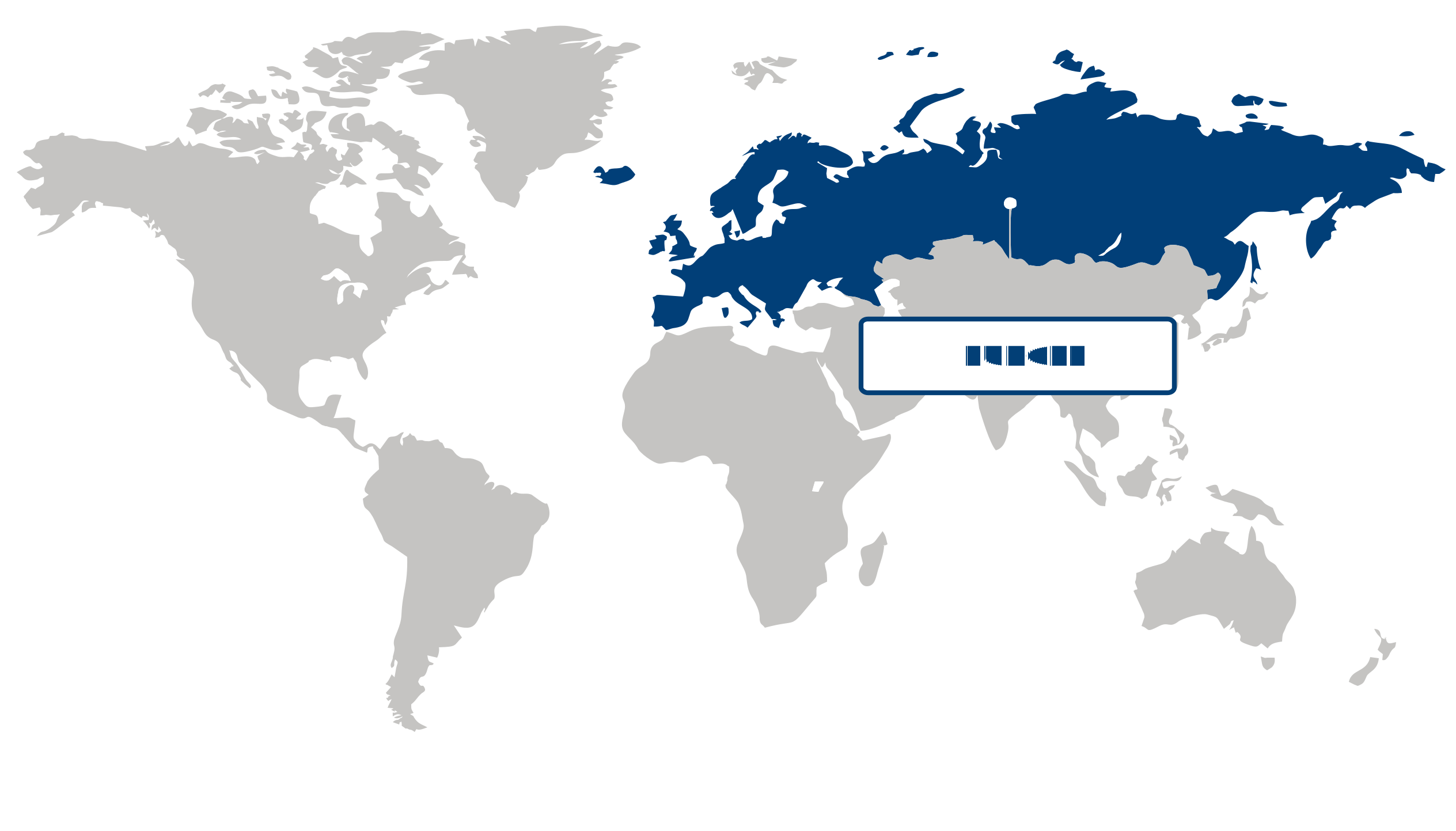
Europe captured more than 36% of the global fashion influencer market in 2025, establishing itself as the largest regional player. This commanding share is largely driven by the dense presence of luxury fashion houses and the region’s robust uptake of social media commerce. European consumers, especially in urban centers, exhibit sophisticated preferences for high-end brands, supported by influential content creators who blend heritage fashion narratives with digital engagement. According to the Fédération de la Haute Couture et de la Mode, Europe’s luxury sector remains resilient amid economic fluctuations, fueling influencer collaborations. Additionally, platforms like Instagram and TikTok have been integrated seamlessly into e-commerce models, accelerating purchase decisions influenced by fashion personalities. This synergy between premium brand equity and digital commerce sophistication makes Europe a fertile ground for growth, promising investors extensive opportunities to capitalize on evolving influencer-brand partnerships within a culturally rich and digitally mature environment.
Germany acts as a cornerstone in Europe’s fashion influencer market, leveraging its position as Europe’s largest economy with a digitally savvy population. The country’s thriving e-commerce ecosystem and the Federal Ministry for Economic Affairs and Climate Action's support for digital innovation have fostered an environment where fashion influencers effectively bridge consumers and premium brands. German fashion influencers often emphasize sustainable luxury, aligning with national environmental priorities, which enhances authenticity and consumer trust. For instance, campaigns led by influencer networks such as the Fashion Council Germany demonstrate the strategic leverage of content creators in shaping demand for both established and emerging luxury designers. Germany’s focused market approach reinforces Europe’s leadership, underscoring the critical role of localized influencer engagement within a broadly upscale and tech-driven market framework.
France stands as a pivotal hub in Europe’s fashion influencer market due to its iconic fashion heritage and the global prominence of Paris as a style epicenter. The fusion of haute couture tradition with cutting-edge digital marketing strategies underscores France’s unique influencer ecosystem. The Chambre Syndicale de la Haute Couture’s endorsement of digital showcases has amplified influencers’ roles in brand storytelling and consumer outreach. French influencers, benefiting from widespread luxury brand headquarters like Chanel and Dior, curate aspirational content that resonates globally, reinforcing luxury brand dominance and driving international fashion commerce. This dynamic interplay not only consolidates France’s market position but also elevates the entire European region’s attractiveness to investors focusing on premium brand-driven influencer campaigns. The country’s seamless digital and cultural synthesis provides a blueprint for tapping Europe’s expanding fashion influencer economy.
Asia Pacific Market Analysis:
Asia Pacific emerged as the fastest-growing region in the fashion influencer market, registering a robust CAGR of 17.9%. This rapid expansion is driven primarily by the swift rise of social commerce platforms coupled with the increasing engagement of Gen-Z consumers. The proliferation of platforms such as TikTok, Xiaohongshu, and Instagram has revolutionized content creation and direct-to-consumer sales, enabling influencers to seamlessly integrate fashion promotion with e-commerce. Youthful demographics in the region, especially digital-native Gen-Z, exhibit high responsiveness to influencer recommendations, favoring authentic, relatable content and driving higher conversion rates. Additionally, advancements in mobile internet infrastructure and localized content strategies have further accelerated penetration. According to reports from platforms like Alibaba’s Taobao Live, live shopping spearheaded by fashion influencers is setting new benchmarks in audience engagement and sales volumes. This combination of technology adoption and evolving consumer preferences positions Asia Pacific as a strategic hub for investors aiming to capitalize on digital retail innovation in fashion influencer marketing.
China plays a pivotal role in Asia Pacific’s fashion influencer market growth, anchored by its dominance in social commerce innovation. The Chinese market is characterized by sophisticated omni-channel sales models through platforms like Douyin and Little Red Book, which blend entertainment with seamless purchase experiences. Rising consumer demand among younger generations for personalized fashion content has been met by brands partnering extensively with localized influencers to enhance authenticity and trust. Regulatory oversight by the Cyberspace Administration of China ensures a balanced ecosystem, fostering sustainable influencer engagement while curbing misleading endorsements. A prime example is the collaboration between global fashion brands and local Key Opinion Leaders (KOLs), which has driven significant revenue growth noted in Alibaba’s quarterly filings. This dynamic landscape underscores China’s capacity to lead regional shifts in fashion influencer monetization.
Japan represents another vital market within Asia Pacific, distinguished by a unique blend of cutting-edge technology adoption and cultural nuance in fashion promotion. Japanese consumers exhibit high brand loyalty and a preference for curated, high-quality influencer content, often intersecting with niche fashion subcultures. Platforms like LINE and Instagram have seen steady growth, driven by influencers who emphasize craftsmanship and sustainability, aligning with increasing environmental consciousness. According to the Japan Fashion Association, collaboration between influencers and domestic brands has expanded digital reach and deepened consumer engagement in 2023. Japan’s mature digital infrastructure and consumers’ discerning tastes complement the broader regional dynamics, cementing its role in Asia Pacific’s prominence in the fashion influencer market and offering nuanced opportunities for tailored strategic investments.
North America Market Trends:
North America held a substantial share in the fashion influencer market, driven by its mature digital ecosystem and high consumer spending on luxury and fast-fashion segments. The region's diverse demographics and increasing prioritization of sustainable and ethical fashion have reshaped influencer content towards authenticity and environmental consciousness, as reflected in partnerships seen through platforms like Instagram and TikTok. U.S.-based firms such as Meta have enhanced content discovery algorithms, boosting influencer reach and engagement. Additionally, regulatory scrutiny on advertising standards by the Federal Trade Commission (FTC) has elevated transparency, fostering consumer trust. These dynamics, coupled with advanced supply chains and a digitally savvy workforce, position North America as a hub for innovation and brand-influencer collaborations, offering significant long-term growth prospects.
The U.S. plays a pivotal role in the fashion influencer market, characterized by rapid adoption of immersive technologies such as augmented reality (AR) and live-stream commerce, facilitated by leading tech firms including Snap Inc. American consumers show a growing preference for niche influencer segments, from sustainable fashion advocates to avant-garde stylists, reflecting cultural diversity and evolving fashion sensibilities. Initiatives by the Council of Fashion Designers of America (CFDA) emphasize sustainable fashion promotion, which influencers leverage for brand partnerships. The U.S. market’s regulatory framework ensures influencer disclosure compliance, enhancing market integrity. Strategically, the country’s innovation-driven environment serves as a bellwether for regional trends, offering a blueprint for expanding influencer-based fashion marketing across North America.
| Parameter | North America | Asia Pacific | Europe | Latin America | MEA |
|---|---|---|---|---|---|
| Innovation HubiScaleNascentDeveloping Advanced | |||||
| Cost-Sensitive RegioniScaleLowMedium High | |||||
| Regulatory EnvironmentiScaleRestrictiveNeutral Supportive | |||||
| Demand DriversiScaleWeakModerate Strong | |||||
| Development StageiScaleEmergingDeveloping Developed | |||||
| Adoption RateiScaleLowMedium High | |||||
| New Entrants / StartupsiScaleSparseModerate Dense | |||||
| Macro IndicatorsiScaleWeakStable Strong |
Fashion Influencer Market Share (%), by Fashion Type, 2026
Go beyond the chart, access full insights & data tables
Request Free Sample ReportThe fashion influencer market in 2025 will see the apparel segment holding the largest market share, driven primarily by the high demand for apparel influencer campaigns that significantly boost brand visibility. Apparel's leadership is reinforced as consumer preferences increasingly favor personalized and trend-oriented clothing showcased through dynamic digital content. Platforms such as Instagram and TikTok amplify this effect, supported by supply chain innovations enabling rapid product launches aligned with influencer-led trends, as evidenced by Puma's collaborations with influencers for limited-edition apparel collections. This segment offers strategic opportunities for both established brands and emerging designers to capitalize on the evolving style narratives and sustainability-conscious apparel lines. Given continuous digital transformation and shifting fashion cycles, the apparel segment’s influence is poised to remain substantial in the near to medium term.
Analysis by Influencer Type
Within the fashion influencer market, microinfluencers are expected to represent the largest share in 2025, propelled by brands tapping into their ability to generate higher engagement and foster niche audience trust. This segment leads thanks to its authentic connection with followers, resonating well with evolving consumer demands for genuine and relatable content in a rapidly digitizing landscape. Regulatory emphasis on transparent influencer marketing, as highlighted by the U.S. Federal Trade Commission’s updated endorsement guidelines, further strengthens microinfluencers’ position. Both established firms and startups benefit from this segment’s cost-effective yet impactful campaigns that drive brand loyalty. As digital ecosystems deepen and consumers seek refined, community-driven recommendations, microinfluencers’ pivotal role in the fashion market is expected to persist robustly.
| Segment | Sub-Segment | Largest Segment | Fastest Growing |
|---|---|---|---|
| Fashion Type | Beauty & Cosmetics, Apparel, Jewelry & Accessories | ||
| Influencer Type | Nanoinfluencers, Megainfluencers, Microinfluencers, Macroinfluencers |
Competitive Landscape and Market Positioning
The competitive environment is characterized by intensified integration of AI-driven analytics and enhanced influencer vetting processes among these top entities. Collaborations with fashion brands and social media platforms have elevated the precision of campaign targeting, especially by ventures such as CreatorIQ and Tagger Media. Expansion through alliances has broadened geographic reach and service portfolios, supported by consistent updates in user interface and data visualization tools. This focus on seamless multi-platform operability and influencer authenticity verification underpins their differentiation, fostering stronger market share retention amidst rising demand for transparent and measurable influencer marketing efforts.
Strategic / Actionable Recommendations for Regional Players
In North America, tapping into emerging AI technologies to refine influencer matching algorithms and bolster predictive analytics can increase campaign effectiveness. Strategic partnerships with luxury and fast-fashion brands could deepen market penetration by customizing influencer collaborations that resonate with diverse consumer segments.
In Asia Pacific, fostering ties with regional social commerce platforms and integrating localized content strategies can enhance relevance and engagement. Emphasizing mobile-first influencer campaigns and leveraging live-streaming trends will cater to digitally savvy audiences, creating dynamic brand experiences.
European players could benefit from expanding data privacy compliance expertise while investing in cross-border influencer network growth. Collaborating with fashion hubs in key cities to create exclusive influencer events or digital showcases can strengthen brand visibility and authenticity in a competitive market.
| Company | Market Share | Company Revenue | Revenue CAGR (%) | Product Portfolio | Geographic Presence | Innovation / R&D Focus | Strategic Developments |
|---|---|---|---|---|---|---|---|
| No companies available. | |||||||
Customize Your Report
Explore examples of how this report can be tailored to different research needs, including custom segments, additional topics or chapters, and related reports. Click a section of the wheel or its numbered marker to explore the available options.
Fashion Influencer Market — Custom Segments
| Segment | Sub-Segment |
|---|---|
| No segment data available. | |
Fashion Influencer Market — Custom TOC
| Custom Chapter | Chapter Details |
|---|---|
| No custom TOC data available. | |
Need a different cut of the data?
Request Custom ResearchFrequently Asked Questions
How is the fashion influencer marketing industry projected to perform over the next decade?
Which global region commands the highest percentage of the fashion influencer marketing market?
Which geographical area is witnessing the highest growth rate in the fashion influencer marketing sector?
What share does apparel segment hold in the fashion influencer marketing sector as of 2025?
Where is the microinfluencers segment seeing the strongest adoption within the fashion influencer marketing industry?
Who holds a significant market share in the fashion influencer marketing landscape?
Our Clients
"The report provided us with a clear direction, and the level of detail was beyond what we expected. I would definitely recommend their services to others."
Haier Appliances
"The collaboration with Fundamental Business Insights has added significant value to our decision-making process, and we look forward to continuing this partnership for our future market research requirements."
Luxottica Group S.p.A.
"The team at FBI delivered an exceptional research report. The insights on industry innovations were particularly impressive and added a lot of value to the overall report."
Nike
Our Research Team & Methodology
Every Fundamental Business Insights report is built by a dedicated vertical research team, validated through a structured primary-and-secondary methodology, and reviewed for accuracy before it reaches you.
Delivery
Published
Available
Support
- Market Size & Forecast
- Market Segmentation
- Regional Analysis
- Growth Drivers & Challenges
- Market Dynamics
- Competitive Landscape
- Company Profiles
- Competitive Benchmarking
- Mergers & Acquisitions
- Market Share Analysis or Key Company Strategies
- Value Chain Analysis
- Porter's Five Forces
- PESTLE Analysis
- Pricing Trends
- Supply-Demand Analysis
- Technology Landscape
- Regulatory Landscape
- Investment & Funding Landscape
- Emerging Opportunities
- Future Market Outlook