



Fireproof Ceramics Market Size & Growth Forecast 2026–2035, By Segments (Type, End Use), Regional Demand Trends (North America, Asia Pacific, Europe), Key Country Insights (U.S., Japan, South Korea, Germany, France, Italy), and Competitive Landscape
Market Size and Growth Outlook
Fireproof Ceramics Market size was around USD 6.17 Billion in 2025 and is slated to grow at a 11.8% CAGR from 2026 to 2035, attaining USD 18.82 Billion by 2035. The industry revenue for 2026 is assessed at USD 6.82 billion.
Base Year Value (2025)
USD 6.17 Billion
CAGR (2026-2035)
11.8%
Forecast Year Value (2035)
USD 18.82 Billion

Historical Data Period
2022-2025

Largest Region
Asia Pacific

Forecast Period
2026-2035
Fireproof Ceramics Market Intelligence Snapshot:
-
Regional Market Dynamics:
- Asia Pacific led the market in 2025, supported by its broad manufacturing base and strong demand from high-temperature industries requiring durable, heat-resistant, and thermally insulating ceramic materials.
- Asia Pacific is projected to grow at a 13.22% CAGR, driven by expanding industrial activity and rising demand for refractory ceramics that improve process efficiency, equipment protection, and thermal compliance.
-
Segment Momentum:
- Blanket leads with 29.16% share due to flexible installation, strong thermal efficiency, and suitability for furnace and kiln insulation upgrades without major equipment redesign in industrial operations.
- Iron & Steel holds 33.28% share due to continuous high-temperature operations in furnaces and ladles, driving steady insulation needs through routine maintenance and thermal efficiency requirements.
-
Market Expansion Drivers:
- Rising industrial fire safety regulations driving adoption of high-temperature resistant ceramic materials.
- Expanding aerospace and manufacturing applications increasing demand for thermal-resistant ceramics.
- Growing energy-efficient industrial processes boosting adoption of advanced insulating ceramic materials.
-
Leading Market Participants:
Major players in the fireproof ceramics market include Morgan Advanced Materials plc (United Kingdom), Saint-Gobain S.A. (France), IBIDEN Co., Ltd. (Japan), Isolite Insulating Products Co., Ltd. (Japan), Luyang Energy-Saving Materials Co., Ltd. (China), Skamol A/S (Denmark), Rath AG (Austria), ZIRCAR Ceramics Inc. (United States), RHI Magnesita N.V. (Austria), Unifrax LLC (United States).
Global Market Forecast Snapshot:
-
Market Outlook:
- 2025 Market Size: USD 6.17 Billion
- Projected Market Size: USD 18.82 Billion by 2035
- Growth Forecasts: 11.8% CAGR (2026-2035)
-
Regional and Segment Outlook:
- Leading Regional Market: Asia Pacific
- High-Growth Regional Hub: Asia Pacific
- Core Revenue Segment: Blanket (Type) | Iron & Steel (End Use)
- Emerging Opportunity Segment: Blanket (Type) | Petrochemicals (End Use)
Market Growth Drivers and Industry Trends
Rising industrial fire safety regulations driving adoption of high-temperature resistant ceramic materialsTighter fire protection standards in heavy industry, processing plants, power facilities, and high-heat manufacturing environments are pushing operators to replace conventional linings, barriers, and insulation systems with materials that maintain structural integrity under sustained thermal stress. In the fireproof ceramics market, this is increasing demand for refractory bricks, ceramic boards, fiber products, and protective components that help facilities meet compliance requirements while reducing shutdown risk, equipment damage, and worker exposure during high-temperature events. Procurement decisions increasingly favor certified, high-temperature resistant ceramic materials because regulatory compliance is being treated not only as a safety obligation but also as an operational requirement tied to plant uptime and insurability.
Expanding aerospace and manufacturing applications increasing demand for thermal-resistant ceramics
Rising use of heat-intensive equipment and components in aerospace systems, metal processing, automotive production, and advanced manufacturing is driving market development for materials that can perform reliably under repeated thermal cycling and extreme operating conditions. The fireproof ceramics market benefits as manufacturers seek ceramic solutions for furnace linings, thermal shields, engine-area insulation, and process equipment where temperature stability directly affects product quality, equipment life, and maintenance intervals. As production environments become more technically demanding, buyers are placing greater value on ceramics that combine fire resistance with dimensional stability and low thermal conductivity, supporting broader specification in high-performance industrial applications.
Growing energy-efficient industrial processes boosting adoption of advanced insulating ceramic materials
Industrial operators pursuing lower heat loss, tighter temperature control, and improved furnace efficiency are increasing market penetration of insulation-focused ceramic products that help retain process heat and reduce energy consumption. In the fireproof ceramics market, advanced insulating ceramics are being adopted in kilns, reactors, boilers, and thermal processing units because they enable higher operating efficiency without compromising protection in high-temperature settings. This shift is influencing retrofit cycles as well as new equipment design, with plant managers and OEMs selecting lighter, more thermally efficient ceramic systems to improve process economics and support stricter energy management targets.
| Growth Driver Assessment Framework | |||||
| Growth Driver | Impact On CAGR | Regulatory Influence | Geographic Relevance | Adoption Rate | Impact Timeline |
|---|---|---|---|---|---|
| Rising industrial fire safety regulations driving adoption of high-temperature resistant ceramic materials | 2.00% | High | Europe, North America | High | Near Term |
| Expanding aerospace and manufacturing applications increasing demand for thermal-resistant ceramics | 1.80% | Moderate | Asia Pacific, North America | High | Mid Term |
| Growing energy-efficient industrial processes boosting adoption of advanced insulating ceramic materials | 1.50% | Moderate | Europe, Asia Pacific | Medium | Mid Term |
Unlock insights tailored to your business with our bespoke market research solutions - Click to get your customized report now!
Regional Demand Dynamics
Largest Region
Asia Pacific
XX% Market Share in 2025
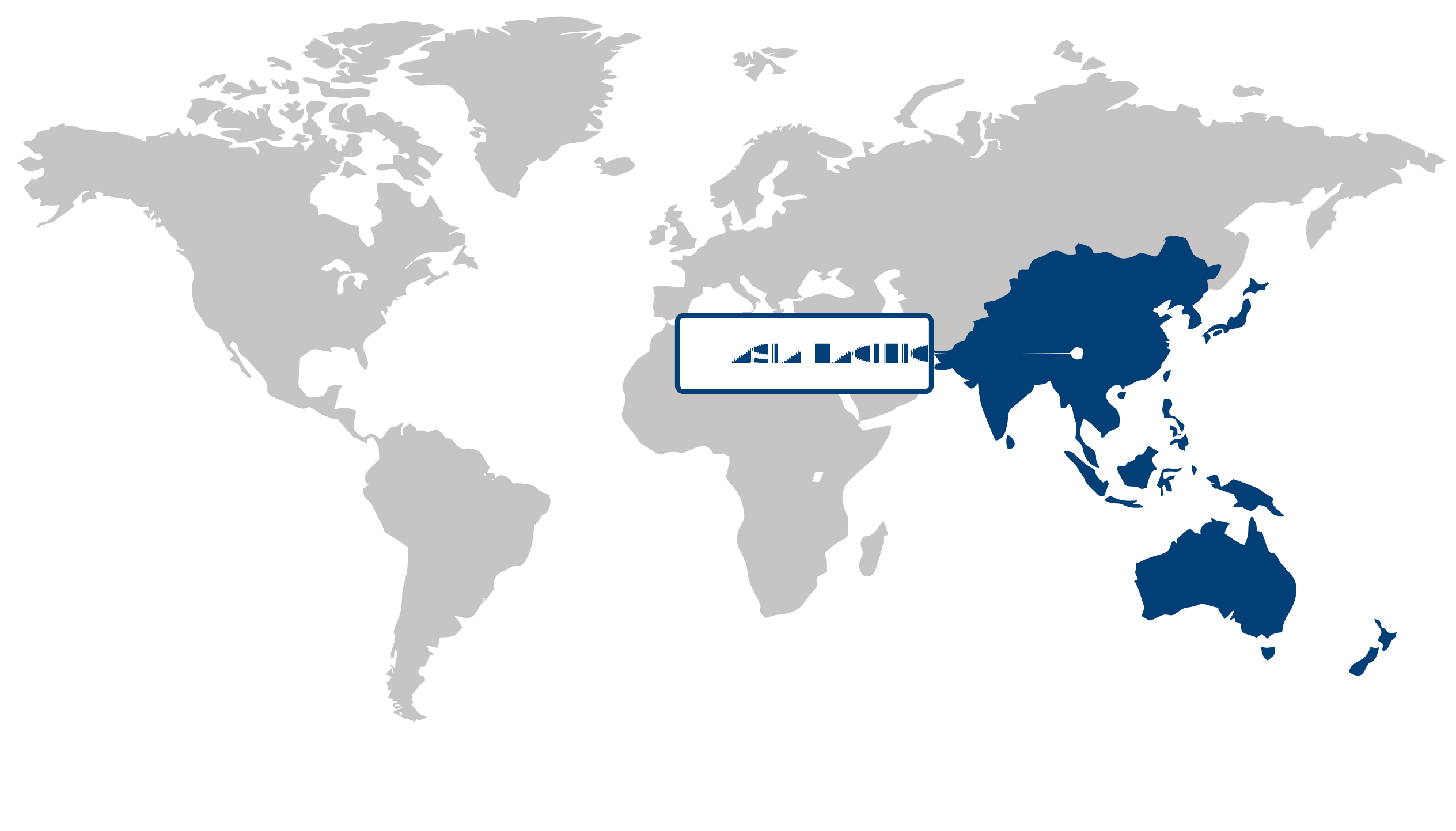
Asia Pacific held the largest regional market share in 2025 and is projected to expand at a 13.22% CAGR over the forecast period in the fireproof ceramics market. Its leadership is bolstered by a broad manufacturing base and sustained demand from high-temperature industrial applications where heat resistance, thermal insulation, and material durability are essential in day-to-day operations. The same operating conditions are also sustaining growth momentum, as expanding industrial activity continues to raise consumption across end-use settings that require reliable refractory and fire-resistant ceramic materials for process efficiency, equipment protection, and compliance with demanding thermal environments.
Key Country Insights
The U.S. fireproof ceramics market benefits from demand in energy, metallurgy, defense, and industrial processing facilities requiring reliable thermal insulation. Suppliers are expanding advanced ceramic solutions that improve equipment longevity and operational safety under extreme temperatures.
Japan emphasizes high-performance fireproof ceramics for electronics manufacturing, industrial kilns, and precision production systems. Manufacturers continue refining ceramic compositions that deliver stability, thermal resistance, and longer service life.
South Korea uses fireproof ceramics extensively in semiconductor fabrication, steel production, and advanced manufacturing facilities. Material suppliers are developing products that withstand aggressive thermal conditions while supporting efficient industrial operations.
Germany prioritizes fireproof ceramics for industrial furnaces, automotive production, and advanced manufacturing operations. Producers focus on durable materials that support energy-efficient processing while maintaining consistent thermal performance in demanding environments.
France supports fireproof ceramics across industrial facilities, transportation infrastructure, and energy applications where fire resistance is essential. Companies are emphasizing certified materials that align with evolving safety standards and industrial modernization projects.
Italy maintains steady demand for fireproof ceramics in foundries, glass manufacturing, and ceramic production industries. Manufacturers are improving refractory materials that enhance production continuity while reducing maintenance requirements for high-temperature equipment.
Segment Leadership and Growth Trends
Blanket held a 29.16% share of the fireproof ceramics market in 2025, making it the leading Type segment while also sustaining the fastest growth momentum. Its position is aided by broad usability across high-temperature insulation needs where flexible installation, thermal efficiency, and effective lining performance are essential in industrial operations. Demand continues to build because blanket products fit practical replacement and upgrade cycles in furnaces, kilns, and process heating systems more easily than more rigid alternatives, allowing end users in the fireproof ceramics market to improve heat management without major redesign of existing equipment.
End Use Segment Analysis: Iron & Steel (Largest Segment) vs Petrochemicals (Fastest-Growing Segment)
Within the fireproof ceramics market, Iron & Steel accounted for a 33.28% share in 2025, keeping it the largest End Use segment. This leadership is grounded in the sector’s continuous exposure to extreme operating temperatures and the resulting need for durable thermal insulation across furnaces, ladles, reheating units, and other heat-intensive processes. The steady consumption pattern in iron and steel production supports repeat demand for fireproof ceramics, which helps the segment maintain its share through routine maintenance, lining replacement, and operational efficiency requirements.
Petrochemicals is the fastest-growing End Use segment in the fireproof ceramics market as processing environments increasingly require reliable insulation for temperature control, energy efficiency, and equipment protection in complex thermal operations. Its momentum is rising relative to other end uses because petrochemical facilities depend heavily on consistent process conditions, making advanced refractory insulation materials a practical necessity during upgrades and capacity optimization. This creates a stronger growth pathway for fireproof ceramics in petrochemicals than in more mature end-use settings where demand is driven more by replacement than expanding application intensity.
| Report Segmentation | |||
| Segment | Sub-Segment | Largest Segment | Fastest Growing Segment |
|---|---|---|---|
| Type | Blanket, Module, Bulk, Board, Paper, Others | Blanket | Blanket |
| End Use | Iron & Steel, Petrochemicals, Ceramics & Glass, Aluminum, Power Generation, Others | Iron & Steel | Petrochemicals |
 Read our Research Approach
Competitive Landscape and Market Positioning
Prominent players in the fireproof ceramics market:1. Morgan Advanced Materials plc (United Kingdom)
2. Saint-Gobain S.A. (France)
3. IBIDEN Co. Ltd. (Japan)
4. Isolite Insulating Products Co. Ltd. (Japan)
5. Luyang Energy-Saving Materials Co. Ltd. (China)
6. Skamol A/S (Denmark)
7. Rath AG (Austria)
8. ZIRCAR Ceramics Inc. (United States)
9. RHI Magnesita N.V. (Austria)
10. Unifrax LLC (United States)
The fireproof ceramics market is shaped by increasing demand for high-temperature resistant materials used in industrial and construction applications. Innovation is centered on improving thermal stability and structural resilience under extreme conditions. Ongoing development efforts are also aligning product performance with stricter safety and regulatory expectations.
Why Choose Us
Specialized Expertise: Our team comprises industry experts with a deep understanding of your market segment. We bring specialized knowledge and experience that ensures our research and consulting services are tailored to your unique needs.
Customized Solutions: We understand that every client is different. That's why we offer customized research and consulting solutions designed specifically to address your challenges and capitalize on opportunities within your industry.
Proven Results: With a track record of successful projects and satisfied clients, we have demonstrated our ability to deliver tangible results. Our case studies and testimonials speak to our effectiveness in helping clients achieve their goals.
Cutting-Edge Methodologies: We leverage the latest methodologies and technologies to gather insights and drive informed decision-making. Our innovative approach ensures that you stay ahead of the curve and gain a competitive edge in your market.
Client-Centric Approach: Your satisfaction is our top priority. We prioritize open communication, responsiveness, and transparency to ensure that we not only meet but exceed your expectations at every stage of the engagement.
Continuous Innovation: We are committed to continuous improvement and staying at the forefront of our industry. Through ongoing learning, professional development, and investment in new technologies, we ensure that our services are always evolving to meet your evolving needs.
Value for Money: Our competitive pricing and flexible engagement models ensure that you get maximum value for your investment. We are committed to delivering high-quality results that help you achieve a strong return on your investment.
Select Licence Type

