



Flexible Packaging Adhesive Market Size & Forecasts 2026-2035, By Segments (Type, Formulation, End Use, Application), Growth Opportunities, Innovation Landscape, Regulatory Shifts, Strategic Regional Insights (U.S., Japan, China, South Korea, UK, Germany, France), and Competitive Dynamics (Henkel, H.B. Fuller, Avery Dennison, Bostik, Hexion)
Market Size and Growth Outlook
Base Year Value (2025)
USD 5.96 billion
CAGR (2026-2035)
4%
Forecast Year Value (2035)
USD 8.82 billion

Historical Data Period
2022-2025

Largest Region
Asia Pacific

Forecast Period
2026-2035
Key Takeaways
- Asia Pacific region achieved over 41.44% revenue share in 2025, owing to the region's expanding retail sector and rising demand for packaged food.
- Asia Pacific region will witness over 5.6% CAGR between 2026 and 2035, propelled by shifting manufacturing bases and technological innovations in packaging.
- The water-based adhesives segment accounted for majority share of the market in 2025, driven by increasing environmental regulations restricting VOC emissions and demand for sustainable adhesives.
- In 2025, the polyurethane adhesives segment led the flexible packaging adhesive market with a majority share, due to increasing uptake of polyurethane adhesives in flexible packaging driven by their superior bonding strength, chemical resistance and suitability for high-performance films and laminates.
- In 2025, the consumer goods segment held largest share of the market, accelerated by increasing consumer goods demand which fuels the need for flexible packaging adhesives that enable lightweight, durable packaging aligned with rising retail and e-commerce activities.
- In 2025, the food packaging segment held the largest share of the flexible packaging adhesive market, driven by expanding food packaging demand driven by convenience and processed food consumption.
- Leading organizations shaping the flexible packaging adhesive market include Henkel (Germany), H.B. Fuller (USA), Avery Dennison (USA), Bostik (France), Hexion (USA), 3M (USA), Sika AG (Switzerland), Arkema (France), DIC Corporation (Japan), Beiersdorf (Germany).
Market Growth Drivers and Industry Trends
Increasing Demand for Adhesives in Flexible Packaging ApplicationsThe flexible packaging adhesive market is significantly propelled by rising consumer preference for convenience and sustainability in packaging formats, driving expanded use of flexible substrates like films and pouches. The shift toward e-commerce and on-the-go lifestyles, as highlighted in the U.S. Flexible Packaging Association’s data, underscores growing need for adhesives that ensure package integrity, barrier performance, and aesthetic appeal. This evolving consumer behavior encourages manufacturers to innovate tailored adhesive solutions, creating opportunities for both incumbent chemical producers and innovative startups to differentiate through enhanced adhesion properties. As brands prioritize lightweight, durable packaging to reduce shipping costs and waste, the market is poised for sustained adoption of advanced adhesives specialized for flexible materials.
Technological Advancements in Adhesive Performance and Compatibility
Ongoing innovations in adhesive formulations have expanded the functional scope and compatibility with diverse flexible substrates, driving growth in the flexible packaging adhesive market. Dow Inc. recently announced a breakthrough water-based adhesive technology that combines strong bonding with easier recyclability, exemplifying how R&D efforts address industry demands for improved adhesion coupled with sustainability. These advances enable broader application across food, pharmaceutical, and consumer goods packaging, aligning with trend toward multi-layered flexible films. Such technological strides allow market players to capture value through premium, specialty adhesives and facilitate integration into circular economy models, positioning them competitively in a landscape where product differentiation increasingly hinges on superior performance and environmental compliance.
Regulatory Focus on Eco-Friendly and Safe Adhesives
Regulatory scrutiny from agencies such as the European Chemicals Agency (ECHA) and the U.S. Food and Drug Administration (FDA) on the environmental and health impacts of adhesive components is shaping the flexible packaging adhesive market trajectory. Stricter limits on volatile organic compounds (VOCs) and migration of harmful substances have prompted manufacturers to reformulate adhesives with bio-based and non-toxic materials, as evidenced by Henkel’s green adhesive portfolio expansion. This regulatory evolution drives suppliers to prioritize safer chemistries, unlocking new market segments focused on clean-label packaging and sustainability certifications. For investors and strategists, this trend signals a transition phase where compliance-focused innovation not only mitigates risk but also acts as a competitive advantage, ensuring long-term viability amid tightening global standards.
Industry Restraints:
Environmental Regulatory Constraints
Stringent environmental regulations aimed at reducing volatile organic compounds (VOCs) and hazardous chemicals significantly restrict the flexible packaging adhesive market’s innovation and product rollout. Agencies like the U.S. Environmental Protection Agency (EPA) and the European Chemicals Agency (ECHA) enforce rigorous compliance standards on adhesive formulations, mandating low-toxicity, solvent-free alternatives that often entail higher development costs and longer approval timelines. This regulatory landscape limits the ability of manufacturers to use certain high-performance but non-compliant adhesives, creating operational inefficiencies and delaying market entry. For incumbent players and new entrants alike, these compliance costs constrain R&D investment and product diversification, potentially narrowing competitive advantages. Moving forward, as regulators intensify focus on circular economy and sustainability frameworks, companies must prioritize eco-friendly adhesive technologies or risk regulatory bottlenecks that will continue to slow the market’s pace of innovation and adoption.
Raw Material Supply Volatility
The flexible packaging adhesive market faces significant challenges from raw material supply volatility, particularly for petrochemical-based polymers and specialty resins critical to adhesive production. Geopolitical tensions, such as trade disputes and sanctions impacting key chemical suppliers in regions like the Middle East and Asia, exacerbate price fluctuations and availability uncertainties, as reported by the American Chemistry Council. Additionally, disruptions in cracker capacities and logistics bottlenecks during the COVID-19 pandemic underscored vulnerabilities in supply chains. These conditions elevate operational costs and complicate inventory management, disadvantaging smaller companies with less procurement leverage, while forcing established firms to optimize supply networks and consider alternative sourcing. Looking ahead, sustained raw material unpredictability is likely to pressure margins and delay product development timelines, compelling market participants to invest in supply resilience strategies and diversify material inputs to remain competitive.
| Growth Driver Assessment Framework | |||||
| Growth Driver | Impact On CAGR | Regulatory Influence | Geographic Relevance | Adoption Rate | Impact Timeline |
|---|---|---|---|---|---|
| Increasing demand for adhesives in flexible packaging applications | 1.50% | Short term (≤ 2 yrs) | North America, Europe; Spillover: Asia Pacific | Low | Fast |
| Technological advancements in adhesive performance and compatibility | 1.30% | Medium term (2–5 yrs) | Europe, Asia Pacific; Spillover: North America | Low | Moderate |
| Regulatory focus on eco-friendly and safe adhesives | 1.20% | Long term (5+ yrs) | Europe, North America; Spillover: Asia Pacific | High | Moderate |
Unlock insights tailored to your business with our bespoke market research solutions - Click to get your customized report now!
Regional Demand Dynamics
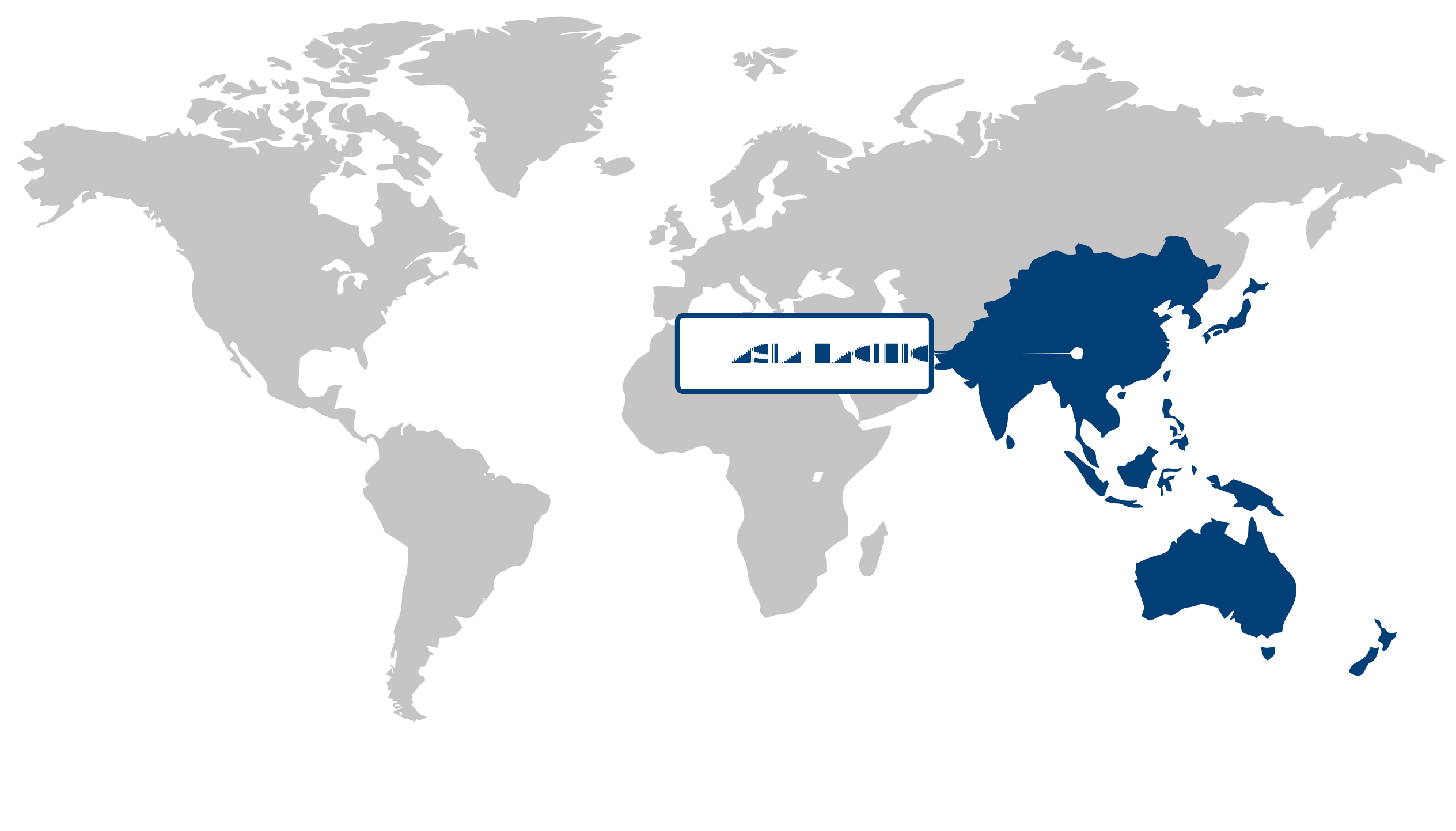
Largest Region
Asia Pacific
41.44% Market Share in 2025
Asia Pacific dominated the flexible packaging adhesive market, capturing over 41.44% of the global share in 2025 and exhibiting the fastest growth at a 5.6% CAGR. This leadership stems largely from the region's expanding retail sector and surging demand for packaged food products. Countries like China and Japan showcase dynamic shifts toward convenience and safety in food packaging, stimulated by rising urbanization and consumer spending power. Regulatory frameworks promoting sustainable and efficient packaging, coupled with advancements in adhesive technologies by key players such as Wacker Chemie AG’s initiatives in the region, further bolster market expansion. Additionally, digital transformation in supply chains enhances responsiveness to demand fluctuations, while increasing environmental awareness drives innovation in eco-friendly adhesives. Given these factors, Asia Pacific is poised to remain a strategic hub for investment and innovation, presenting substantial opportunities for stakeholders in the flexible packaging adhesive market.
Japan is positioned as a pivotal hub in the Asia Pacific flexible packaging adhesive market, driven by stringent regulatory standards and a mature retail landscape emphasizing quality and sustainability. The Japanese government’s initiatives, such as the Ministry of Economy, Trade and Industry’s (METI) push for environmentally sustainable packaging, encourage adoption of biodegradable and low-VOC adhesives. Consumer preference for premium packaged foods has led companies like DIC Corporation to innovate adhesives that ensure product integrity and extended shelf life. These trends underscore Japan’s role in setting high industry benchmarks, attracting global adhesive manufacturers aiming to capitalize on the country’s advanced packaging demands. This strategic positioning amplifies regional growth prospects by elevating technology and sustainability standards across Asia Pacific.
China anchors the Asia Pacific flexible packaging adhesive market through its vast and rapidly urbanizing population fueling demand for packaged goods. The country’s expansive retail infrastructure and government policies promoting food safety and packaging standardization, such as those enforced by the State Administration for Market Regulation (SAMR), have created a fertile environment for adhesive market expansion. Major local players like H.B. Fuller’s China division focus on developing cost-effective, high-performance adhesives tailored to China’s diverse packaging needs, meeting consumer expectations for convenience and hygiene. China’s scale and pace of growth complement Japan’s quality-driven market, together reinforcing Asia Pacific’s dominance and offering robust opportunities for investment and technological advancement in flexible packaging adhesives.
North America Market Analysis:
North America held a substantial share in the flexible packaging adhesive market, driven by the region’s advanced manufacturing infrastructure and strong demand for high-performance packaging solutions. The rise in e-commerce and shifting consumer preferences toward sustainable and convenient packaging formats have propelled growth. Regulatory emphasis on environmental standards, as reflected in initiatives by the U.S. Environmental Protection Agency (EPA), has accelerated adoption of eco-friendly adhesive technologies. Moreover, leading packaging manufacturers such as Bemis Company, Inc. and Avery Dennison Corporation have pioneered innovations in barrier solutions and bio-based adhesives, reinforcing North America’s competitive edge. Robust supply chains and investments in automation further support operational efficiencies. These dynamics position North America to capitalize on rising consumer demand for flexible packaging with enhanced product protection and sustainability, indicating continued prominence in the evolving market landscape.
The U.S. plays a pivotal role in North America’s flexible packaging adhesive market, underpinned by its substantial consumer base and stringent regulatory frameworks promoting sustainable materials. The Food and Drug Administration’s (FDA) evolving guidelines on food-grade adhesives have spurred development of safer formulations, bolstering demand in food and beverage sectors. U.S. companies increasingly adopt digital printing and smart packaging technologies, as evidenced by Amcor’s recent collaboration with HP Indigo to develop innovative flexible packaging solutions. This momentum reflects consumers' preference for personalized, eco-conscious packaging, elevating the country's influence on regional growth. Consequently, the U.S. continues to act as a strategic hub for technological advancement and sustainability leadership, reinforcing North America’s robust positioning in the flexible packaging adhesive market.
Europe Market Trends:
Europe held a commanding share in the flexible packaging adhesive market, driven by its advanced manufacturing base and strong emphasis on sustainable packaging solutions. The region’s regulatory landscape, shaped by stringent EU directives on recycling and environmental safety, encourages the adoption of eco-friendly adhesives, prompting innovation among key players. This shift aligns with rising consumer demand for sustainable packaging, especially in food and pharmaceuticals. Germany’s focus on green technologies and France’s initiatives for circular economy models exemplify these dynamics. Additionally, Europe's well-established logistics infrastructure supports efficient supply chains, maintaining competitive intensity while fostering collaboration among adhesives manufacturers and flexible packaging producers. According to the European Bioplastics Association, the region’s commitment to bio-based and recyclable materials reinforces its leading position. Looking ahead, Europe presents significant growth opportunities by advancing adhesive formulations that meet evolving environmental standards and consumer expectations.
Germany remains a pivotal force in the flexible packaging adhesive market, underscored by its industrial sophistication and strong R&D capabilities in polymer sciences. The country’s regulatory environment promotes bio-based and low-VOC adhesives, as highlighted by the German Environment Agency’s guidelines, aligning with demand from packaging firms aiming to meet both domestic and EU sustainability mandates. German manufacturers are also integrating digitalization in production processes for enhanced operational efficiency, as exemplified by Henkel’s recent press release on Industry 4.0 initiatives. This combination of regulatory support, technological advancement, and sustainability focus solidifies Germany’s role as a trendsetter, driving innovation and quality standards. Strategically, Germany’s leadership in sustainable adhesive solutions is instrumental for scaling such technologies across Europe, reinforcing regional growth prospects.
France plays a significant part in the flexible packaging adhesive market, propelled by its proactive policies on waste reduction and packaging recyclability within the European framework. French government programs, such as the National Plan for Plastic Recovery, encourage adhesive innovations that facilitate material separability and recyclability, fostering collaboration between adhesive producers and flexible packaging converters. The presence of key players like Arkema, which has publicly committed to developing eco-friendly adhesive technologies, exemplifies this trend. French consumers’ preference for environmentally responsible products also drives market demand, influencing manufacturers’ product design and marketing strategies. This creates a robust platform for France to influence adhesive formulation standards and sustainability benchmarks in Europe, positioning the country as a vital contributor to the region’s expansion in flexible packaging adhesives.
No card data available for this language/report.
Segment Leadership and Growth Trends
Water-based adhesives represented the largest share in the flexible packaging adhesive market owing to stringent environmental regulations limiting volatile organic compound (VOC) emissions and a growing preference for sustainable adhesive solutions. This segment’s leadership is further underscored by widespread regulatory milestones such as those enforced by the U.S. Environmental Protection Agency (EPA) promoting low-VOC products. Additionally, consumer demand for eco-friendly packaging aligns with this shift, encouraging manufacturers to adopt water-based formulations. Industry leaders like Henkel and H.B. Fuller have publicly committed to expanding water-based adhesive offerings, signaling robust competitive momentum. The segment offers strategic opportunities in regulatory compliance and green innovation for both established firms and startups. Given escalating environmental policies and continuous advancements in formulation technology, water-based adhesives are poised to sustain their dominance in near- to medium-term packaging applications.
Analysis by Formulation
Polyurethane adhesives held the largest share in the flexible packaging adhesive market driven by their exceptional bonding strength, chemical resistance, and compatibility with high-performance films and laminates. Their superior performance caters to evolving customer preferences for durable, reliable packaging that can maintain product integrity under varied storage and transport conditions. This is reinforced by corporate developments such as Avery Dennison’s integration of polyurethane adhesives in barrier packaging solutions to enhance shelf life. Furthermore, supply chain improvements enabling cost-effective polyurethane production enhance adoption rates. For market players, this segment provides a platform to leverage technological innovations, such as bio-based polyurethanes, underscoring sustainability without compromising quality. Given ongoing material science advances and rising demand for robust packaging, polyurethane adhesives are expected to retain critical relevance in high-end flexible packaging sectors.
Analysis by End Use
The consumer goods segment dominated the flexible packaging adhesive market, propelled by growing demand for lightweight, durable packaging driven by expanding retail and e-commerce sectors worldwide. This growth reflects shifting consumption patterns where convenience, shelf appeal, and sustainability influence packaging choices in food, beverages, and personal care products. Retail giants like Walmart have highlighted sustainability targets that favor recyclable flexible packaging enabled by advanced adhesives. Additionally, demographic trends toward urbanization and increased disposable incomes reinforce demand in this segment. Competitive dynamics favor flexible adhesive solutions that support branding and product differentiation, creating strategic entry points for innovative adhesive manufacturers. Given continuous retail evolution and digital transformation in supply chains, the consumer goods segment remains a cornerstone for flexible packaging adhesive demand in the foreseeable future.
| Report Segmentation | |||
| Segment | Sub-Segment | Largest Segment | Fastest Growing Segment |
|---|---|---|---|
| Type | Water-Based Adhesives, Solvent-Based Adhesives, Hot Melt Adhesives, Reactive Adhesives | ||
| Formulation | Polymer-Based Adhesives, Acrylic Adhesives, Polyurethane Adhesives, Silicone Adhesives | ||
| End Use | Consumer Goods, Healthcare, Automotive, Electronics | ||
| Application | Food Packaging, Beverage Packaging, Pharmaceutical Packaging, Cosmetic Packaging, Industrial Packaging | ||
 Read our Research Approach
Competitive Landscape and Market Positioning
Company Profile
Business Overview Financial Highlights Product Landscape SWOT Analysis Recent Developments Company Heat Map Analysis

The competitive environment witnesses these top players engaging in synergistic efforts that enhance market presence and technological leadership. Collaborative endeavors often focus on developing eco-friendly adhesives and improved barrier properties, driving differentiation. Portfolio expansions through acquisitions or targeted alliances facilitate entry into emerging sub-segments, such as bio-based and recyclable adhesive solutions. Meanwhile, sustained investment in R&D accelerates innovation cycles, enabling firms like Henkel and H.B. Fuller to maintain technical superiority. These undertakings sharpen competitive edges and respond proactively to evolving regulatory and consumer demands, thus redefining industry benchmarks.
Strategic / Actionable Recommendations for Regional Players
North American entities could benefit from expanding strategic collaborations with technology startups specializing in sustainable adhesive formulations, thus accelerating innovation in response to growing eco-conscious packaging trends. Focusing efforts on enhancing adhesive performance for flexible food packaging may capture sizable demand.
In the Asia Pacific region, strengthening partnerships with local converters and packaging manufacturers can facilitate tailored solutions that address diverse application needs. Embracing digitalization in product development and supply chains will bolster responsiveness and operational efficiency in this rapidly evolving market.
European firms might capitalize on the stringent regulatory environment by innovating adhesives enabling recyclability and compliance with sustainability mandates. Collaborating with research institutes could expedite development of next-generation materials aligning with circular economy principles, securing competitive advantage.
Our Clients


Why Choose Us
Specialized Expertise: Our team comprises industry experts with a deep understanding of your market segment. We bring specialized knowledge and experience that ensures our research and consulting services are tailored to your unique needs.
Customized Solutions: We understand that every client is different. That's why we offer customized research and consulting solutions designed specifically to address your challenges and capitalize on opportunities within your industry.
Proven Results: With a track record of successful projects and satisfied clients, we have demonstrated our ability to deliver tangible results. Our case studies and testimonials speak to our effectiveness in helping clients achieve their goals.
Cutting-Edge Methodologies: We leverage the latest methodologies and technologies to gather insights and drive informed decision-making. Our innovative approach ensures that you stay ahead of the curve and gain a competitive edge in your market.
Client-Centric Approach: Your satisfaction is our top priority. We prioritize open communication, responsiveness, and transparency to ensure that we not only meet but exceed your expectations at every stage of the engagement.
Continuous Innovation: We are committed to continuous improvement and staying at the forefront of our industry. Through ongoing learning, professional development, and investment in new technologies, we ensure that our services are always evolving to meet your evolving needs.
Value for Money: Our competitive pricing and flexible engagement models ensure that you get maximum value for your investment. We are committed to delivering high-quality results that help you achieve a strong return on your investment.
Select Licence Type

