



Flushable Wipes Market Size & Growth Forecast 2027–2036, By Segments (Product, Material, Consumer Group, Scent Type, Distribution Channel, Price Range), Regional Demand Trends (North America, Asia Pacific, Europe), Key Country Insights (U.S., Japan, South Korea, Germany, France, Italy), and Competitive Landscape
Market Size and Growth Outlook
Flushable Wipes Market size was worth USD 2.33 Billion in 2026 and is expected to grow at 6.36% CAGR between 2027 and 2036, exceeding USD 4.32 Billion by 2036. The industry revenue for 2027 is assessed at USD 2.46 Billion.
Base Year Value (2026)
USD 2.33 Billion
CAGR (2027-2036)
6.36%
Forecast Year Value (2036)
USD 4.32 Billion

Historical Data Period
2022-2026

Largest Region
Europe

Forecast Period
2027-2036
Flushable Wipes Market Intelligence Snapshot:
-
Regional Market Dynamics:
- Europe held a 38.34% share in 2025, supported by strong hygiene awareness, established retail infrastructure, and demand for convenient disposable hygiene products.
- Asia Pacific is growing fastest as hygiene awareness, urbanization, consumer spending, modern retail access, and demand for convenient products increase.
-
Segment Momentum:
- Non-biodegradable materials held a 66.24% market share in 2025 due to their durability, strength, moisture retention, established production processes, and broad availability across multiple consumer wipe applications.
- Biodegradable materials are growing fastest as sustainability becomes a key purchasing priority. Rising demand for renewable materials, eco-friendly manufacturing, and improved wastewater management is accelerating adoption.
-
Market Expansion Drivers:
- Rising hygiene awareness driving demand for convenient disposable personal care products
- Improving living standards in emerging economies accelerating personal hygiene product adoption
- Urbanization-driven lifestyle changes increasing consumption of on-the-go hygiene solutions
-
Leading Market Participants:
Prominent players in the flushable wipes market include Kimberly-Clark Corporation (USA), Procter & Gamble Co. (USA), Berry Global Group, Inc. (USA), Nice-Pak Products, Inc. (USA), Albaad Massuot Yitzhak Ltd. (Israel), Essity AB (Sweden), Ahlstrom Oyj (Finland), Codi Group B.V. (Netherlands)
Global Market Forecast Snapshot:
-
Market Outlook:
- 2026 Market Size: USD 2.33 Billion
- 2027 Estimated Market Size: USD 2.46 Billion
- Projected Market Size: USD 4.32 Billion by 2036
- Growth Forecasts: 6.36% CAGR (2027-2036)
-
Regional and Segment Outlook:
- Leading Regional Market: Europe
- High-Growth Regional Hub: Asia Pacific
- Core Revenue Segment: Wet Wipes (Product) | Non-biodegradable (Material) | Adult Care (Consumer Group) | Unscented (Scent Type) | Offline (Distribution Channel) | Medium (Price Range)
- Emerging Opportunity Segment: Wet Wipes (Product) | Biodegradable (Material) | Baby Care (Consumer Group) | Scented (Scent Type) | Online (Distribution Channel) | High (Price Range)
Market Growth Drivers and Industry Trends
Rising hygiene awareness driving demand for convenient disposable personal care products
Increasing consumer awareness regarding personal cleanliness and everyday hygiene practices is strengthening demand for products that combine convenience with effective care, which will drive the flushable wipes market growth across household and personal care applications. Consumers are increasingly incorporating disposable hygiene products into their daily routines because they offer practical solutions for maintaining cleanliness while traveling, at work, or in public settings. Product innovation focused on softness, skin compatibility, and ease of use further supports wider adoption among diverse consumer groups with evolving hygiene expectations.
Improving living standards in emerging economies accelerating personal hygiene product adoption
As household incomes and living standards improve across emerging economies, spending on premium personal care products continues to rise, creating favorable conditions for the flushable wipes market. Consumers are becoming more willing to purchase hygiene products that provide added comfort, convenience, and enhanced daily care compared with conventional alternatives. The expansion of organized retail, broader product availability, and increasing exposure to modern hygiene practices are also encouraging greater acceptance of flushable wipes across urban and developing consumer markets.
Urbanization-driven lifestyle changes increasing consumption of on-the-go hygiene solutions
Rapid urbanization is reshaping daily routines through longer commuting times, busy work schedules, and greater mobility, factors that will propel the flushable wipes market growth by increasing demand for portable hygiene solutions. Consumers increasingly prefer compact products that can be carried easily and used whenever access to traditional washing facilities is limited. This shift in lifestyle has encouraged manufacturers to develop packaging formats that improve portability while addressing the practical hygiene needs of individuals in fast-paced urban environments.
| Growth Driver Assessment Framework | |||||
| Growth Driver | Impact On CAGR | Regulatory Influence | Geographic Relevance | Adoption Rate | Impact Timeline |
|---|---|---|---|---|---|
| Rising hygiene awareness driving demand for convenient disposable personal care products | 2% | Moderate | North America, Asia Pacific | High | Near Term |
| Improving living standards in emerging economies accelerating personal hygiene product adoption | 1.7% | Low | Asia Pacific, Latin America | High | Mid Term |
| Urbanization-driven lifestyle changes increasing consumption of on-the-go hygiene solutions | 1.5% | Low | Asia Pacific | Medium | Mid Term |
Unlock insights tailored to your business with our bespoke market research solutions - Click to get your customized report now!
Regional Demand Dynamics
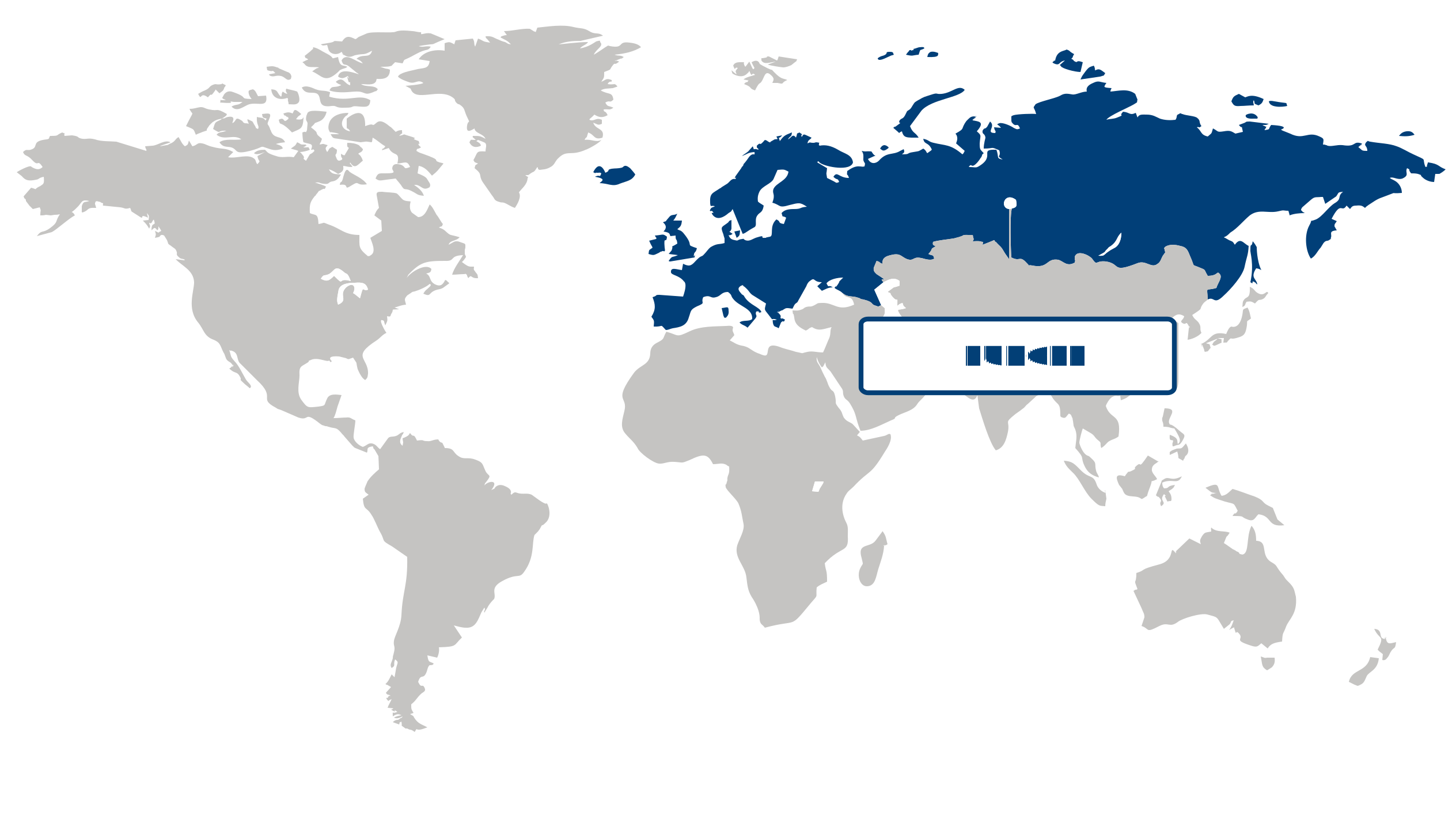
Largest Region
Europe
38.34% Market Share in 2026
Europe (Largest Region) vs Asia Pacific (Fastest-Growing Region)
Europe held the largest share of the flushable wipes market at 38.34% in 2026, supported by strong consumer awareness of personal hygiene, established retail infrastructure, and growing demand for convenient disposable hygiene products. The region's emphasis on product quality, environmental considerations, and responsible waste management is also encouraging manufacturers to develop wipes with improved dispersibility and material characteristics. Continued demand from households and personal-care applications provides a stable foundation for the regional market.
Asia Pacific is the fastest-growing region, driven by rising hygiene awareness, urbanization, and expanding consumer spending on personal-care products. Growing access to modern retail channels and increasing adoption of convenient hygiene solutions are broadening the consumer base, while manufacturers are responding to evolving preferences for products that combine functionality with improved environmental attributes. Expanding middle-class populations across several economies are further supporting market penetration.
No card data available for this language/report.
Segment Leadership and Growth Trends
Product Segment Analysis: Wet Wipes (Largest & Fastest-Growing Segment)
The wet wipes segment led the flushable wipes market, accounting for 64.99% in 2026, while also emerging as the fastest-growing product category. Wet flushable wipes are increasingly preferred because they provide enhanced cleanliness, convenience, and comfort compared with conventional dry tissue products. Their widespread use in personal hygiene routines, combined with continuous improvements in skin-friendly formulations and flushability performance, has strengthened consumer adoption across residential and travel applications. Growing awareness of personal hygiene, demand for convenient disposable products, and ongoing product innovation are expected to reinforce the segment's leadership and growth over the forecast period.
Material Segment Analysis: Non-biodegradable (Largest Segment) vs Biodegradable (Fastest-Growing Segment)
The non-biodegradable material segment accounted for 66.24% in 2026, making it the largest material category in the flushable wipes market. Manufacturers have traditionally relied on these materials because they provide superior durability, strength, and moisture retention, ensuring wipes maintain their integrity throughout storage and use. Their established production processes and broad availability have also contributed to their widespread adoption across multiple consumer product categories.
The biodegradable material segment is projected to experience the fastest growth over the forecast period as sustainability becomes a key purchasing consideration among consumers and regulatory bodies. Demand is increasing for flushable wipes produced from renewable and environmentally responsible materials that reduce waste and support improved wastewater management. Continued innovation in biodegradable fibers and eco-friendly manufacturing practices is expected to accelerate the transition toward more sustainable wipe products.
Consumer Group Segment Analysis: Adult Care (Largest Segment) vs Baby Care (Fastest-Growing Segment)
The adult care segment held the largest position in 2026 within the flushable wipes market. Adult consumers increasingly use flushable wipes for everyday personal hygiene, convenience, and improved cleanliness, particularly in households, workplaces, and travel settings. The growing emphasis on hygiene awareness and the availability of products designed for sensitive skin and routine use have supported the segment's leading market position.
The baby care segment is expected to witness the fastest growth over the forecast period as parents increasingly seek gentle, convenient, and skin-friendly hygiene products for infants and toddlers. Flushable wipes designed for baby care are gaining popularity due to their soft texture, ease of use, and formulations intended to minimize skin irritation. Rising attention to infant hygiene and the availability of safer product options continue to support expansion within this segment.
| Report Segmentation | |||
| Segment | Sub-Segment | Largest Segment | Fastest Growing Segment |
|---|---|---|---|
| Product | Wet Wipes, Dry Wipes | Wet Wipes | Wet Wipes |
| Material | Biodegradable, Non-biodegradable | Non-biodegradable | Biodegradable |
| Consumer Group | Adult Care, Baby Care | Adult Care | Baby Care |
| Scent Type | Scented, Unscented | Unscented | Scented |
| Distribution Channel | Online, Offline | Offline | Online |
| Price Range | Low, Medium, High | Medium | High |
 Read our Research Approach
Competitive Landscape and Market Positioning
Major players in the flushable wipes market:
- Kimberly-Clark Corporation (USA)
- Procter & Gamble Co. (USA)
- Berry Global Group, Inc. (USA)
- Nice-Pak Products, Inc. (USA)
- Albaad Massuot Yitzhak Ltd. (Israel)
- Essity AB (Sweden)
- Ahlstrom Oyj (Finland)
- Codi Group B.V. (Netherlands)
Product credibility has become a defining competitive factor in the flushable wipes market as manufacturers work to address rising expectations for both consumer convenience and wastewater compatibility. Innovation is increasingly directed toward substrate engineering, dispersibility, and material selection that balances product durability during use with responsible disposal characteristics. At the same time, regulatory scrutiny and heightened environmental awareness are encouraging suppliers to invest in product validation, transparent performance claims, and sustainable material development, shifting competition toward technical reliability and long-term brand confidence.
Industry Development/News
| Company Name | Date | Key Development |
|---|---|---|
| Soane Materials | Jun-26 | Soane Materials introduced a licensable platform for manufacturing flushable wet wipes that improves wet strength and dispersibility. The technology is compatible with existing manufacturing infrastructure, allowing producers to enhance product performance and achieve regulatory compliance without the need for significant capital equipment retrofits or production line modifications. |
| Dalian Ruiguang | May-26 | Dalian Ruiguang contracted ANDRITZ to install a third Wetlace production line to manufacture premium, pulp-based, biodegradable flushable wipes. This investment will increase the company's annual production capacity to 40,000 tons, with operations slated to commence by the end of 2026. The new capacity is specifically designed to meet stringent international flushability standards. |
| Kruger Nonwovens | May-26 | Kruger Nonwovens announced its entry into the nonwovens market by ordering a plastic-free, chemical-free Wetlace hybrid production line from ANDRITZ for its facility in Quebec. This strategic investment marks a significant expansion of regional manufacturing capabilities for sustainable, biodegradable wipes, with full-scale production expected to begin in 2028. |
| Kimberly-Clark | Mar-26 | A U.S. federal judge granted final approval to Kimberly-Clark's $20 million class-action settlement regarding the marketing of its wipe products. This resolution concludes long-standing litigation and establishes a significant legal precedent for manufacturers regarding the substantiation of "flushable" labeling claims within the North American consumer market. |
| DUDE Wipes | Jun-25 | DUDE Wipes secured a private equity investment from TSG Consumer Partners. The capital injection is intended to accelerate the company’s retail distribution partnerships and support its long-term growth objectives within the competitive flushable wipes market, signaling ongoing investor confidence in the brand's commercial trajectory. |
| Magnera Corporation | Mar-25 | Magnera Corporation launched a portfolio of next-generation dispersible nonwoven substrates for flushable wipe applications. Developed by integrating R&D resources following the merger of Berry Global and Glatfelter, the new product line aims to enhance the material performance and flushability compliance of wipes across North American and European markets. |
| Albaad | Jan-25 | Albaad expanded the distribution of its Twipes water-dispersible, certified-flushable wipe line into five major European markets, including Germany, France, Spain, Italy, and the Netherlands. This expansion focuses on securing retail shelf space within pharmacy and grocery channels while ensuring compliance with regional Single-Use Plastics Directive (SUPD) requirements. |
Why Choose Us
Specialized Expertise: Our team comprises industry experts with a deep understanding of your market segment. We bring specialized knowledge and experience that ensures our research and consulting services are tailored to your unique needs.
Customized Solutions: We understand that every client is different. That's why we offer customized research and consulting solutions designed specifically to address your challenges and capitalize on opportunities within your industry.
Proven Results: With a track record of successful projects and satisfied clients, we have demonstrated our ability to deliver tangible results. Our case studies and testimonials speak to our effectiveness in helping clients achieve their goals.
Cutting-Edge Methodologies: We leverage the latest methodologies and technologies to gather insights and drive informed decision-making. Our innovative approach ensures that you stay ahead of the curve and gain a competitive edge in your market.
Client-Centric Approach: Your satisfaction is our top priority. We prioritize open communication, responsiveness, and transparency to ensure that we not only meet but exceed your expectations at every stage of the engagement.
Continuous Innovation: We are committed to continuous improvement and staying at the forefront of our industry. Through ongoing learning, professional development, and investment in new technologies, we ensure that our services are always evolving to meet your evolving needs.
Value for Money: Our competitive pricing and flexible engagement models ensure that you get maximum value for your investment. We are committed to delivering high-quality results that help you achieve a strong return on your investment.
Select Licence Type

