



Football Shoes Market Size & Growth Forecast 2027–2036, By Segments (Distribution Channel, Product), Regional Demand Trends (North America, Asia Pacific, Europe), Key Country Insights (U.S., Japan, South Korea, Germany, France, Italy), and Competitive Landscape
Market Size and Growth Outlook
Football Shoes Market size was around USD 22.75 billion in 2026 and is slated to grow at a 5.04% CAGR from 2027 to 2036, reaching USD 37.2 billion by 2036. The industry revenue for 2027 is estimated at USD 23.71 billion.
Base Year Value (2026)
USD 22.75 billion
CAGR (2027-2036)
5.04%
Forecast Year Value (2036)
USD 37.2 billion

Historical Data Period
2022-2026

Largest Region
Europe

Forecast Period
2027-2036
Football Shoes Market Intelligence Snapshot:
-
Regional Market Dynamics:
- Europe accounted for the largest regional share in 2026, supported by widespread football participation, strong club networks, specialty retail channels, and consistent demand for performance-focused footwear replacements.
- Asia Pacific is projected to grow at a 6.1% CAGR, driven by rising organized football participation, expanding access to branded footwear, and increasing purchases through urban retail and digital channels.
-
Segment Momentum:
- Firm Ground held a 53% share in 2026 due to its broad suitability for natural grass surfaces, making it the most widely used option for regular play and training.
- Hard Ground/Multi Ground is the fastest-growing segment as players increasingly prefer versatile footwear that performs across multiple playing surfaces without needing separate pairs.
-
Market Expansion Drivers:
- Expanding football participation and sports infrastructure increasing consumer spending on performance footwear.
- Rising investments in women’s football and global tournaments boosting football shoe demand.
- Increasing adoption of sustainable materials driving innovation in eco-friendly football footwear manufacturing.
-
Leading Market Participants:
Key players in the football shoes market include Nike, Inc. (United States), Adidas AG (Germany), Puma SE (Germany), Under Armour, Inc. (United States), New Balance Athletics, Inc. (United States), ASICS Corporation (Japan), Mizuno Corporation (Japan), Lotto Sport Italia S.p.A. (Italy), Decathlon S.A. (France), Skechers U.S.A., Inc. (United States).
Global Market Forecast Snapshot:
-
Market Outlook:
- 2026 Market Size: USD 22.75 billion
- 2027 Estimated Market Size: USD 23.71 billion.
- Projected Market Size: USD 37.2 billion by 2036
- Growth Forecasts: 5.04% CAGR (2027-2036)
-
Regional and Segment Outlook:
- Leading Regional Market: Europe
- High-Growth Regional Hub: Asia Pacific
- Core Revenue Segment: Offline (Distribution Channel) | Firm Ground (Product)
- Emerging Opportunity Segment: Online (Distribution Channel) | Hard Ground/Multi Ground (Product)
Market Growth Drivers and Industry Trends
Expanding football participation and sports infrastructure increasing consumer spending on performance footwear
Growing participation in football at recreational, amateur, youth, and professional levels is expanding the consumer base for specialized footwear designed to support performance and comfort. The football shoes market will drive demand as investments in sports facilities, training grounds, academies, and community-level infrastructure make organized football more accessible across different regions and participant groups. Players increasingly recognize the importance of footwear suited to playing surfaces, movement patterns, traction requirements, and fit, encouraging replacement of general-purpose athletic shoes with purpose-built football footwear. Rising involvement in structured training and competitive play is also increasing demand for specialized models that incorporate features such as improved grip, stability, lightweight construction, and enhanced ball control.
Rising investments in women’s football and global tournaments boosting football shoe demand
Greater investment in women's football is expanding participation, visibility, professional opportunities, and commercial activity across the sport, creating additional demand for specialized equipment and footwear. Rising investments in women's football and major tournaments will boost football shoe demand as athletes and developing players require footwear designed for competitive training and match conditions. International tournaments and increased exposure to high-level competition can also strengthen interest among younger players and recreational participants, encouraging them to adopt equipment associated with professional performance. The expansion of women's leagues, grassroots programs, and dedicated training environments is creating more purchasing occasions for football footwear across different levels of participation, while tournament-driven attention can increase consumer interest in new designs and performance-oriented features.
Increasing adoption of sustainable materials driving innovation in eco-friendly football footwear manufacturing
Environmental considerations are becoming increasingly relevant to footwear development as manufacturers explore ways to reduce material waste, resource consumption, and the environmental impact associated with production. In the football shoes market, this shift is encouraging the development of footwear incorporating recycled, bio-based, and other lower-impact materials while maintaining functional requirements such as durability, flexibility, traction, and lightweight performance. Advances in material engineering are allowing manufacturers to investigate alternatives across uppers, soles, linings, and other components, supporting innovation without compromising the demands of active sports use. Consumer awareness of sustainability is also encouraging greater interest in products with environmentally responsible material choices, influencing purchasing considerations among players who want performance footwear aligned with broader environmental preferences.
| Growth Driver Assessment Framework | |||||
| Growth Driver | Impact On CAGR | Regulatory Influence | Geographic Relevance | Adoption Rate | Impact Timeline |
|---|---|---|---|---|---|
| Expanding football participation and sports infrastructure increasing consumer spending on performance footwear | 2.00% | Low | Europe, Asia Pacific, Latin America | High | Near Term |
| Rising investments in women’s football and global tournaments boosting football shoe demand | 1.70% | Moderate | Europe, North America | High | Mid Term |
| Increasing adoption of sustainable materials driving innovation in eco-friendly football footwear manufacturing | 1.30% | Moderate | Europe, North America | Emerging | Long Term |
Unlock insights tailored to your business with our bespoke market research solutions - Click to get your customized report now!
Regional Demand Dynamics
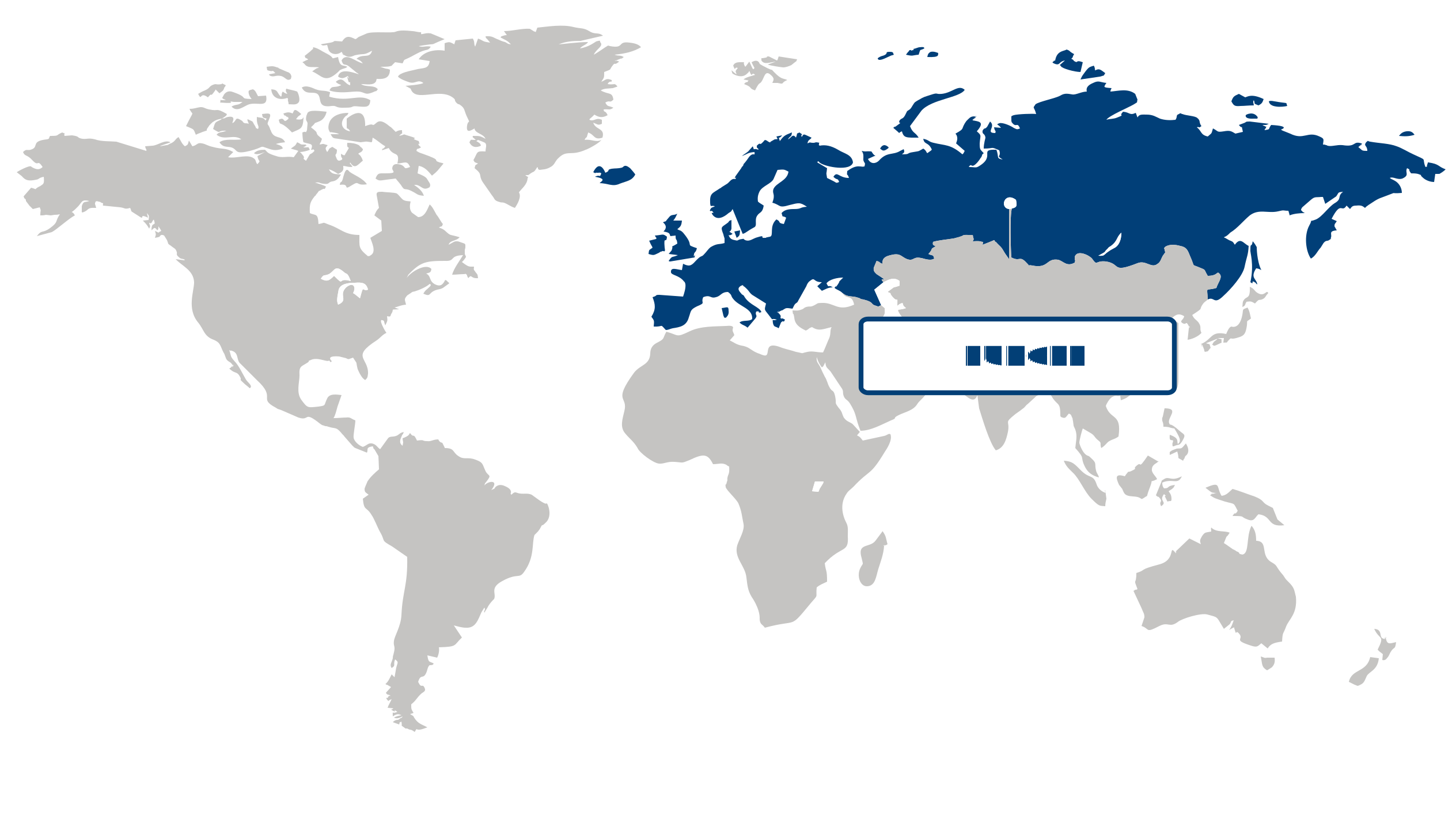
Largest Region
Europe
Largest Market Share in 2026
Europe (Largest Region) vs Asia Pacific (Fastest-Growing Region)
The football shoes market was led by Europe in 2026, supported by the region's deep-rooted football culture, extensive participation, and strong demand for performance-oriented sporting equipment. Established football infrastructure and widespread engagement at professional, amateur, and youth levels sustain demand for specialized footwear designed to provide traction, comfort, durability, and playing performance.
Asia Pacific is the fastest-growing region as football participation expands and the sport gains greater visibility among younger consumers. Rising investment in sports infrastructure, growing interest in organized football, and increasing consumer spending on athletic products are strengthening demand for specialized football footwear. Expanding sports retail and digital commerce are also making performance products more accessible across the region.
Key Country Insights
The U.S. football shoes market is shaped by growing participation in soccer across youth, collegiate, and professional levels. Brands are expanding lightweight, high-performance footwear with digital retail strategies and athlete-driven product launches to strengthen consumer engagement.
Japan emphasizes football shoes that deliver superior fit, lightweight construction, and enhanced ball control. Japanese consumers increasingly value premium craftsmanship and product customization across amateur and professional football segments.
South Korea combines football footwear demand with sports fashion trends, encouraging manufacturers to introduce stylish performance-oriented designs. Domestic retailers continue expanding premium product selections through digital commerce and specialty sporting goods outlets.
Germany prioritizes football shoes with advanced traction systems, durable materials, and performance-focused designs. German manufacturers and retailers continue introducing products tailored to both competitive players and grassroots football communities.
France supports demand for football shoes through strong participation in professional clubs and youth development programs. Manufacturers in France focus on innovation in comfort, speed, and durability to meet evolving player performance expectations.
Italy values football shoes that combine technical performance with premium craftsmanship and design quality. Italian consumers continue seeking products suited for competitive play while brands strengthen collaborations with football clubs and athletes.
Segment Leadership and Growth Trends
Distribution Channel Segment Analysis: Offline (Largest Segment) vs Online (Fastest-Growing Segment)
The offline segment dominated the football shoes market with a 67.9% share in 2026. Physical retail remains important because football footwear requires consumers to assess fit, comfort, traction, and overall construction before purchasing. Specialist sports stores and other offline outlets also enable customers to compare different shoe designs and receive product guidance based on playing conditions and individual requirements. The ability to physically evaluate footwear, combined with established retail availability and immediate purchase fulfillment, continues to support offline channels as the primary route to market.
Online is the fastest-growing distribution channel, driven by increasing consumer comfort with digital purchasing and the expanding availability of football footwear through e-commerce platforms. Online channels provide access to a broader range of models, sizes, styles, and playing-surface specifications than many individual physical stores. Convenient home delivery, product comparisons, customer reviews, and promotional offers are also encouraging consumers to shift more purchases toward digital platforms. As online sports retail becomes more sophisticated, improved product information and easier size-selection tools are helping reduce barriers associated with purchasing football shoes remotely.
Product Segment Analysis: Firm Ground (Largest Segment) vs Hard Ground/Multi Ground (Fastest-Growing Segment)
Firm ground football shoes held the largest product share of 53% in 2026, reflecting their suitability for the natural grass surfaces commonly used in organized football. Their stud configuration provides a balance of traction, stability, and maneuverability, making them a preferred choice for players competing on firm natural pitches. The widespread use of such playing surfaces across amateur, professional, and recreational football supports consistent demand. Manufacturers also continue to refine soleplate designs, upper materials, and fit characteristics to improve comfort and performance, reinforcing the appeal of firm ground footwear.
Hard Ground/Multi ground football shoes represent the fastest-growing product segment as players increasingly seek versatile footwear capable of adapting to varied playing environments. The growing use of artificial, compact, and mixed-surface pitches is increasing demand for designs that provide reliable traction without being restricted to a single field condition. Multi-ground configurations can offer greater flexibility for players who train and compete across different venues, reducing the need to own separate footwear for every surface. This emphasis on versatility, convenience, and year-round usability is supporting stronger adoption of hard ground and multi-ground football shoes.
| Report Segmentation | |||
| Segment | Sub-Segment | Largest Segment | Fastest Growing Segment |
|---|---|---|---|
| Distribution Channel | Online, Offline | Offline | Online |
| Product | Soft Ground, Firm Ground, Artificial Ground, Hard Ground/Multi Ground, Turf Football, Indoor Football | Firm Ground | Hard Ground/Multi Ground |
 Read our Research Approach
Competitive Landscape and Market Positioning
Top players in the football shoes market:
1. Nike Inc. (United States)
2. Adidas AG (Germany)
3. Puma SE (Germany)
4. Under Armour Inc. (United States)
5. New Balance Athletics Inc. (United States)
6. ASICS Corporation (Japan)
7. Mizuno Corporation (Japan)
8. Lotto Sport Italia S.p.A. (Italy)
9. Decathlon S.A. (France)
10. Skechers U.S.A. Inc. (United States)
The football shoes market is evolving through continuous enhancement in performance-oriented design, where innovation in materials and structural engineering plays a central role. Product development is increasingly aligned with agility, comfort, and surface adaptability, reflecting growing performance expectations among users. Collaborative efforts across design and performance testing ecosystems are contributing to faster innovation cycles. Meanwhile, emphasis on sustainability and precision fit technologies is strengthening product differentiation, supporting a more competitive and innovation-driven market landscape.
Industry Development/News
| Company Name | Date | Key Development |
|---|---|---|
| adidas | May-24 | adidas underwent a significant portfolio restructuring by replacing its long-running X silo with the F50 football boot series. This strategic launch was designed to revitalize the brand’s speed-focused performance footwear segment and reinforce its innovation leadership by introducing updated materials and construction techniques tailored for elite-level play in a highly competitive market. |
| Nike | Dec-24 | Nike secured a long-term extension of its licensing partnership with the NFL, running through 2038. This agreement solidifies the company’s sustained dominance in the supply of performance footwear and apparel for the league, ensuring continued high-visibility brand presence and reinforcing its strategic grip on professional American football sports licensing and supply chain operations. |
| PUMA | Dec-24 | PUMA launched the next-generation Future 8 football boots, featuring upgraded design architecture focused on precision and adaptability. The release marks an essential step in PUMA’s iterative innovation cycle, directly impacting the performance capabilities of its core football footwear franchise and maintaining its competitive positioning against other top-tier global sportswear manufacturers. |
| PUMA | May-24 | PUMA released the Ultra 5 Carbon edition, a high-performance football boot incorporating design aesthetics and material inspirations derived from Formula 1 aerodynamic testing. This development highlights the company’s strategic integration of motorsport-derived engineering and design influences into its performance football segment, aiming to differentiate its product offerings through advanced technical storytelling. |
Why Choose Us
Specialized Expertise: Our team comprises industry experts with a deep understanding of your market segment. We bring specialized knowledge and experience that ensures our research and consulting services are tailored to your unique needs.
Customized Solutions: We understand that every client is different. That's why we offer customized research and consulting solutions designed specifically to address your challenges and capitalize on opportunities within your industry.
Proven Results: With a track record of successful projects and satisfied clients, we have demonstrated our ability to deliver tangible results. Our case studies and testimonials speak to our effectiveness in helping clients achieve their goals.
Cutting-Edge Methodologies: We leverage the latest methodologies and technologies to gather insights and drive informed decision-making. Our innovative approach ensures that you stay ahead of the curve and gain a competitive edge in your market.
Client-Centric Approach: Your satisfaction is our top priority. We prioritize open communication, responsiveness, and transparency to ensure that we not only meet but exceed your expectations at every stage of the engagement.
Continuous Innovation: We are committed to continuous improvement and staying at the forefront of our industry. Through ongoing learning, professional development, and investment in new technologies, we ensure that our services are always evolving to meet your evolving needs.
Value for Money: Our competitive pricing and flexible engagement models ensure that you get maximum value for your investment. We are committed to delivering high-quality results that help you achieve a strong return on your investment.
Select Licence Type

