



Fromage Frais and Quark Market Size & Growth Forecast 2026–2035, By Segments (Distribution Channel), Regional Demand Trends (North America, Asia Pacific, Europe), Key Country Insights (U.S., Japan, South Korea, Germany, France, Italy), and Competitive Landscape
Market Size and Growth Outlook
Base Year Value (2025)
USD 13.05 Billion
CAGR (2026-2035)
2.7%
Forecast Year Value (2035)
USD 17.03 Billion

Historical Data Period
2022-2025

Largest Region
Europe

Forecast Period
2026-2035
Fromage Frais and Quark Market Intelligence Snapshot:
-
Regional Market Dynamics:
- Europe accounted for 53.00% of the market in 2025, supported by established consumer familiarity, mature dairy processing, extensive retail distribution, and strong everyday demand for cultured dairy products.
- North America is forecast to grow at a 3.08% CAGR as retailers expand premium dairy assortments and consumers increasingly adopt fresh cheese products for breakfast, snacks, and high-protein meals.
-
Segment Momentum:
- Supermarkets and hypermarkets lead due to strong refrigerated shelf presence, high footfall, and convenient one-stop grocery shopping, enabling consistent visibility and purchase of fresh dairy staples.
- Online channels are growing fastest due to convenience, home delivery, and improved cold-chain logistics, making it easier for consumers to purchase and compare fresh dairy products digitally.
-
Market Expansion Drivers:
- Growing demand for high-protein, low-fat dairy products driving functional dairy consumption.
- Rising lactose intolerance prevalence accelerating demand for lactose-free dairy alternatives.
- Expanding healthy snacking trend and product innovation in premium dairy categories.
-
Leading Market Participants:
Leading players in the fromage frais and quark market include Nestlé S.A. (Switzerland), Arla Foods amba (Denmark), Lactalis Group (France), Müller Group (Germany), Savencia Fromage & Dairy (France), First Milk Limited (United Kingdom), Frischli Milchwerke GmbH (Germany), General Mills, Inc. (United States), Barambah Organics Pty Ltd (Australia).
Global Market Forecast Snapshot:
-
Market Outlook:
- 2025 Market Size: USD 13.05 Billion
- 2026 Market Size: USD 15.2 billion
- Projected Market Size: USD 17.03 Billion by 2035
- Growth Forecasts: 2.7% CAGR (2026-2035)
-
Regional and Segment Outlook:
- Leading Regional Market: Europe
- High-Growth Regional Hub: North America
- Core Revenue Segment: Supermarkets/Hypermarkets (Distribution Channel)
- Emerging Opportunity Segment: Online (Distribution Channel)
Market Growth Drivers and Industry Trends
Growing demand for high-protein, low-fat dairy products driving functional dairy consumptionAs protein-focused eating moves from sports nutrition into everyday diets, the fromage frais and quark market is benefiting from products that naturally fit both satiety and calorie-conscious consumption patterns. Retailers and dairy brands are positioning quark and fromage frais as practical breakfast, snack, and post-workout options because their protein density and lower fat profile align with how consumers now evaluate dairy purchases. This is influencing market adoption by shifting demand away from purely indulgent yogurts toward formats that deliver a clearer nutritional function, which in turn is encouraging wider flavor development, single-serve packaging, and stronger placement in health-oriented chilled dairy ranges.
Rising lactose intolerance prevalence accelerating demand for lactose-free dairy alternatives
A higher incidence of lactose intolerance is reshaping purchase decisions in refrigerated dairy, and the fromage frais and quark market is seeing growth where manufacturers adapt familiar cultured products into lactose-free formats rather than forcing consumers to leave the category entirely. In practice, this expands the addressable consumer base by retaining dairy buyers who still want the taste, texture, and protein content of fresh cheese products but need improved digestibility. The result is increasing market presence through reformulated offerings, clearer digestive-health labeling, and broader distribution in mainstream grocery channels where lactose-free is becoming a routine filter in dairy selection.
Expanding healthy snacking trend and product innovation in premium dairy categories
The shift toward convenient, better-for-you snacking is strengthening market development for products that can sit between traditional yogurt, dessert, and fresh cheese, giving the fromage frais and quark market a useful position in premium chilled dairy. Brands are translating this trend into layered textures, fruit inclusions, indulgence-led but nutritionally balanced recipes, and portable packaging that make these products more relevant for on-the-go consumption and higher-value purchases. This combination of snackability and premiumization is encouraging market growth by raising consumer willingness to try differentiated formats and by giving retailers more reasons to allocate shelf space to innovative dairy propositions rather than standard commodity lines.
| Growth Driver Assessment Framework | |||||
| Growth Driver | Impact On CAGR | Regulatory Influence | Geographic Relevance | Adoption Rate | Impact Timeline |
|---|---|---|---|---|---|
| Growing demand for high-protein, low-fat dairy products driving functional dairy consumption | 1.80% | Moderate | Europe, North America | High | Near Term |
| Rising lactose intolerance prevalence accelerating demand for lactose-free dairy alternatives | 1.60% | Moderate | Asia Pacific, Europe | High | Mid Term |
| Expanding healthy snacking trend and product innovation in premium dairy categories | 1.30% | Low | Global | High | Near Term |
Unlock insights tailored to your business with our bespoke market research solutions - Click to get your customized report now!
Regional Demand Dynamics
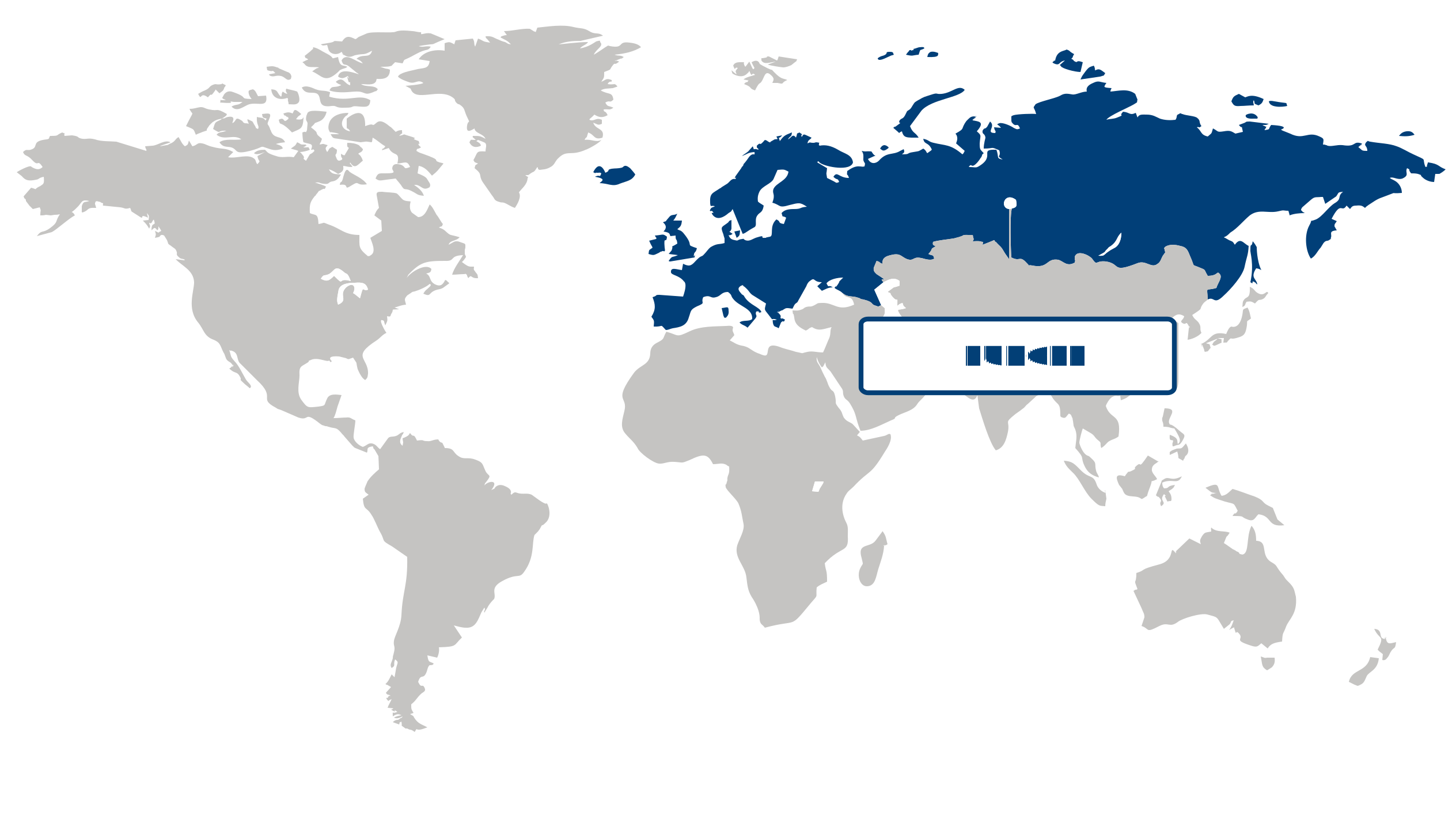
Largest Region
Europe
53.00% Market Share in 2025
Europe held a 53.00% share of the fromage frais and quark market in 2025, supported by the category’s deep integration into everyday dairy consumption and well-established retail distribution across the region. Leadership is underpinned by consistent consumer familiarity with fresh cultured dairy products, which keeps baseline demand broad across household and foodservice channels. This practical market structure allows producers to maintain steady shelf presence, support product turnover, and benefit from mature cold-chain and dairy processing networks that reinforce regional sales volume.
North America is projected to expand at a 3.08% CAGR over the forecast period, with growth in the fromage frais and quark market being impelled by increasing consumer openness to fresh dairy formats beyond traditional yogurt and cream-based products. Adoption is accelerating as retailers widen premium and health-oriented dairy assortments, creating more visibility for spoonable fresh cheese products in mainstream grocery settings. Growth also reflects changing usage patterns, as consumers incorporate these products into breakfast, snacking, and high-protein meal occasions, helping the category move from niche specialty consumption toward broader everyday purchase behavior.
| Regional Market Attractiveness & Strategic Fit Matrix | |||||
| Parameter | North America | Asia Pacific | Europe | Latin America | MEA |
|---|---|---|---|---|---|
| Innovation Hub | Advanced | Developing | Advanced | Nascent | Nascent |
| Cost-Sensitive Region | Medium | High | Medium | High | High |
| Regulatory Environment | Supportive | Neutral | Restrictive | Neutral | Neutral |
| Demand Drivers | Moderate | Moderate | Strong | Weak | Weak |
| Development Stage | Developed | Developing | Developed | Emerging | Emerging |
| Adoption Rate | High | Medium | High | Low | Low |
| New Entrants / Startups | Moderate | Moderate | Moderate | Sparse | Sparse |
| Macro Indicators | Strong | Stable | Stable | Weak | Weak |
Key Country Insights
The U.S. fromage frais and quark market is supported by growing interest in high-protein dairy products and healthier snack options. Manufacturers position quark and fromage frais as versatile ingredients suitable for breakfast, desserts, and fitness-oriented diets.
Japan develops fromage frais and quark products with refined textures, portion-controlled packaging, and premium flavor profiles. Dairy companies adapt formulations to suit local taste preferences while expanding opportunities in healthy snacking categories.
South Korea's fromage frais and quark market reflects increasing interest in nutritious dairy products with clean-label positioning. Producers emphasize convenient packaging, high-protein formulations, and innovative flavors to broaden consumer acceptance.
Germany maintains strong consumer familiarity with quark, encouraging continuous product innovation across flavored, organic, and protein-rich varieties. Dairy producers focus on premium ingredients and convenient packaging to strengthen everyday consumption.
France integrates fromage frais into everyday dairy consumption through premium recipes and diverse flavor options. Manufacturers enhance product differentiation with organic ingredients, indulgent textures, and convenient retail formats suited to changing lifestyles.
Italy is gradually expanding fromage frais and quark offerings through premium dairy positioning and culinary versatility. Producers introduce innovative formats that appeal to health-conscious consumers while supporting usage in desserts, snacks, and home cooking.
Segment Leadership and Growth Trends
Supermarkets/Hypermarkets held the largest share of the fromage frais and quark market in 2025, underpinned by their established role in routine dairy purchasing and their ability to offer broad refrigerated assortments in a single shopping trip. This channel benefits from strong in-store visibility, frequent consumer traffic, and dependable cold-chain handling, which are especially important for fresh dairy products. Its leadership in the fromage frais and quark market is sustained by the convenience of immediate purchase and the purchasing habits of consumers who continue to buy chilled staples alongside other groceries.
Online is the fastest-growing distribution channel in the fromage frais and quark market as consumers increasingly shift toward digital grocery purchasing for convenience, delivery access, and easier product comparison. Growth is being reinforced by improvements in cold-chain logistics for home delivery and the rising comfort of ordering fresh food through e-commerce platforms. Compared with store-based alternatives, online channels are gaining momentum because they align more directly with changing shopping behavior centered on time efficiency and at-home fulfillment.
| Report Segmentation | |||
| Segment | Sub-Segment | Largest Segment | Fastest Growing Segment |
|---|---|---|---|
| Distribution Channel | Supermarkets/Hypermarkets, Convenience Stores, Online, Others | Supermarkets/Hypermarkets | Online |
 Read our Research Approach
Competitive Landscape and Market Positioning
Company Profile
Business Overview Financial Highlights Product Landscape SWOT Analysis Recent Developments Company Heat Map Analysis

1. Nestlé S.A. (Switzerland)
2. Arla Foods amba (Denmark)
3. Lactalis Group (France)
4. Müller Group (Germany)
5. Savencia Fromage & Dairy (France)
6. First Milk Limited (United Kingdom)
7. Frischli Milchwerke GmbH (Germany)
8. General Mills Inc. (United States)
9. Barambah Organics Pty Ltd (Australia)
The fromage frais and quark market is shaped by growing interest in high-protein and health-oriented dairy alternatives. Product innovation is focusing on improved taste profiles and nutritional balance. Increasing consumer awareness of dietary health is supporting steady demand. In the fromage frais and quark market, health positioning is a key differentiator.
Industry Development/News
| Company Name | Date | Key Development |
|---|---|---|
| Lactalis | Nov-21 | Lactalis acquired a portfolio of cheese and dairy brands including Breakstone’s, Knudsen, Cracker Barrel, and related licensed assets from The Kraft Heinz Company, integrating them under Lactalis Heritage Dairy. The acquisition strengthens Lactalis’ branded dairy portfolio and expands its presence in global cheese and fresh dairy-adjacent segments, supporting long-term international growth in value-added dairy categories. |
| First Milk | Apr-22 | First Milk partnered with Ornua Foods UK to supply British cheddar and dairy-based products under a long-term arrangement. The collaboration strengthens commercial distribution into UK retail channels and supports stable sourcing and production integration for high-quality dairy products, reinforcing supply chain continuity in branded cheese and fresh dairy categories. |
| Nestlé | Sep-21 | Nestlé announced a CHF 1.2 billion investment plan over five years focused on regenerative agriculture across its manufacturing and sourcing network. The initiative is aimed at improving sustainability across dairy and broader food supply chains, supporting climate targets and strengthening upstream agricultural practices linked to long-term raw material sourcing stability. |
Frequently Asked Questions
How big is the fromage frais and quark market?
The market size of fromage frais and quark in 2026 is calculated to be USD 13.35 billion.
What is the expected industry size of fromage frais and quark by 2035?
Fromage Frais And Quark Market size is predicted to expand from USD 13.05 billion in 2025 to USD 17.03 billion by 2035 with growth underpinned by a CAGR above 2.7% between 2026 and 2035.
How are protein-focused dietary preferences influencing the fromage frais and quark market?
Demand for high-protein, lower-fat dairy products is positioning fromage frais and quark as practical breakfast, snack, and post-workout options. This is encouraging product innovation, stronger retail placement, and wider consumer adoption.
Why is product innovation becoming strategically important in the fromage frais and quark market?
Brands are responding to healthy snacking trends through premium recipes, portable packaging, and differentiated product formats. These innovations increase consumer appeal while supporting premiumization and greater retail shelf allocation.
Why do supermarkets and hypermarkets dominate distribution in the fromage frais and quark market?
Supermarkets and hypermarkets lead due to strong refrigerated shelf presence, high footfall, and convenient one-stop grocery shopping, enabling consistent visibility and purchase of fresh dairy staples.
What is driving faster online growth in this dairy category?
Online channels are growing fastest due to convenience, home delivery, and improved cold-chain logistics, making it easier for consumers to purchase and compare fresh dairy products digitally.
Why does Europe lead the fromage frais and quark market?
Europe accounted for 53.00% of the market in 2025, supported by established consumer familiarity, mature dairy processing, extensive retail distribution, and strong everyday demand for cultured dairy products.
What is driving the growth of the fromage frais and quark market in North America?
North America is forecast to grow at a 3.08% CAGR as retailers expand premium dairy assortments and consumers increasingly adopt fresh cheese products for breakfast, snacks, and high-protein meals.
Who are the major participants shaping the fromage frais and quark landscape?
Leading players in the fromage frais and quark market include Nestlé S.A. (Switzerland), Arla Foods amba (Denmark), Lactalis Group (France), Müller Group (Germany), Savencia Fromage & Dairy (France), First Milk Limited (United Kingdom), Frischli Milchwerke GmbH (Germany), General Mills, Inc. (United States), Barambah Organics Pty Ltd (Australia).
Our Clients


Why Choose Us
Specialized Expertise: Our team comprises industry experts with a deep understanding of your market segment. We bring specialized knowledge and experience that ensures our research and consulting services are tailored to your unique needs.
Customized Solutions: We understand that every client is different. That's why we offer customized research and consulting solutions designed specifically to address your challenges and capitalize on opportunities within your industry.
Proven Results: With a track record of successful projects and satisfied clients, we have demonstrated our ability to deliver tangible results. Our case studies and testimonials speak to our effectiveness in helping clients achieve their goals.
Cutting-Edge Methodologies: We leverage the latest methodologies and technologies to gather insights and drive informed decision-making. Our innovative approach ensures that you stay ahead of the curve and gain a competitive edge in your market.
Client-Centric Approach: Your satisfaction is our top priority. We prioritize open communication, responsiveness, and transparency to ensure that we not only meet but exceed your expectations at every stage of the engagement.
Continuous Innovation: We are committed to continuous improvement and staying at the forefront of our industry. Through ongoing learning, professional development, and investment in new technologies, we ensure that our services are always evolving to meet your evolving needs.
Value for Money: Our competitive pricing and flexible engagement models ensure that you get maximum value for your investment. We are committed to delivering high-quality results that help you achieve a strong return on your investment.
Select Licence Type

