Frozen Cooked Ready Meals Market Size & Growth Forecast 2027–2036, By Segments (Product Type, Packaging Type, Distribution Channel), Regional Demand Trends (North America, Asia Pacific, Europe), Key Country Insights (U.S., Japan, South Korea, Germany, France, Italy), and Competitive Landscape
Jump to content
Market Size and Growth Outlook
Frozen Cooked Ready Meals Market size was valued at USD 48.71 Billion in 2026 and is anticipated to grow at 5.94% CAGR from 2027 to 2036, exceeding USD 86.74 Billion by 2036. The industry revenue for 2027 is calculated at USD 51.16 Billion.
Get more details on this report
Request Free Sample ReportFrozen Cooked Ready Meals Market Intelligence Snapshot
Regional Market Dynamics
- Europe led in 2026 due to established frozen food consumption, strong retail infrastructure, and widespread acceptance of convenient, portion-controlled meal solutions.
- Urbanization, changing household structures, rising incomes, modern retail, expanding cold-chain infrastructure, and growing demand for convenient meals are supporting rapid adoption.
Segment Momentum
- Non-vegetarian meals held 61.59% in 2026, supported by demand for convenient meat, poultry, and seafood meals offering substantial portions and familiar flavors.
- Online retail is growing fastest as consumers seek convenient grocery delivery, broader product choices, easy comparison, promotions, and increasingly reliable cold-chain fulfillment.
Market Expansion Drivers
- Rising demand for convenient ready meals driven by urban lifestyles and time-constrained households
- Expansion of e-commerce grocery and organized retail boosting frozen meal accessibility
- Advancements in freezing and packaging technologies improving product quality and shelf stability
Leading Market Participants
- Top companies in the frozen cooked ready meals market include Nestlé S.A. (Switzerland), Conagra Brands, Inc. (United States), McCain Foods Limited (Canada), Nomad Foods Limited (United Kingdom), General Mills, Inc. (United States), Kraft Heinz Company (United States), Ajinomoto Co., Inc. (Japan), Dr. Oetker GmbH (Germany), Tyson Foods, Inc. (United States), Kerry Group plc (Ireland)
Global Market Forecast Snapshot
Market Outlook
- 2026 Market Size: USD 48.71 Billion
- 2027 Estimated Market Size: USD 51.16 Billion
- Projected Market Size: USD 86.74 Billion by 2036
- Growth Forecast: 5.94% CAGR (2027-2036)
Regional and Segment Outlook
- Leading Regional Market: Europe
- High-Growth Regional Hub: Asia Pacific
- Core Revenue Segment: Non-Vegetarian Meals (Product Type) | Pouches (Packaging Type) | Supermarkets/hypermarkets (Distribution Channel)
- Emerging Opportunity Segment: Vegetarian Meals (Product Type) | Trays (Packaging Type) | Online Retail (Distribution Channel)
Market Growth Drivers and Industry Trends
Rising demand for convenient ready meals driven by urban lifestyles and time-constrained households
Busy urban schedules and changing household structures are increasing reliance on quick meal solutions that require minimal preparation. The frozen cooked ready meals market benefits from consumers seeking convenient food options that deliver consistency, portion control, and reduced cooking effort without compromising availability. Rising participation in fast-paced work environments and growing preference for at-home dining solutions are encouraging food manufacturers to expand frozen meal offerings across diverse cuisines, dietary preferences, and consumption occasions.
Expansion of e-commerce grocery and organized retail boosting frozen meal accessibility
The growth of digital grocery platforms and modern retail networks is improving consumer access to frozen food categories by enabling wider product availability and efficient delivery systems. Expansion of organized retail will support the frozen cooked ready meals market as retailers allocate more shelf space and logistics capabilities toward temperature-controlled products. Enhanced cold storage infrastructure within retail channels allows manufacturers to reach new customer segments while reducing distribution limitations associated with frozen meal products.
Advancements in freezing and packaging technologies improving product quality and shelf stability
Innovations in freezing methods and packaging formats are helping manufacturers preserve taste, texture, and nutritional attributes while extending product usability. The frozen cooked ready meals market is strengthened by technologies that minimize quality degradation during storage and transportation, allowing producers to maintain product consistency across longer supply chains. Improved packaging solutions also support better portion formats, easier preparation, and enhanced protection against moisture loss and freezer-related quality issues.
| Growth Driver | Impact on CAGR | Regulatory Influence | Geographic Relevance | Adoption Rate | Impact Timeline |
|---|---|---|---|---|---|
| Rising demand for convenient ready meals driven by urban lifestyles and time-constrained households | 2.2% | Low | North America, Europe | High | Near Term |
| Expansion of e-commerce grocery and organized retail boosting frozen meal accessibility | 1.9% | Moderate | Asia Pacific, North America | High | Mid Term |
| Advancements in freezing and packaging technologies improving product quality and shelf stability | 1.6% | Moderate | Europe, Asia Pacific | High | Mid Term |
Unlock insights tailored to your business with our bespoke market research solutions.
Click to get your customized report now.
Regional Demand Dynamics
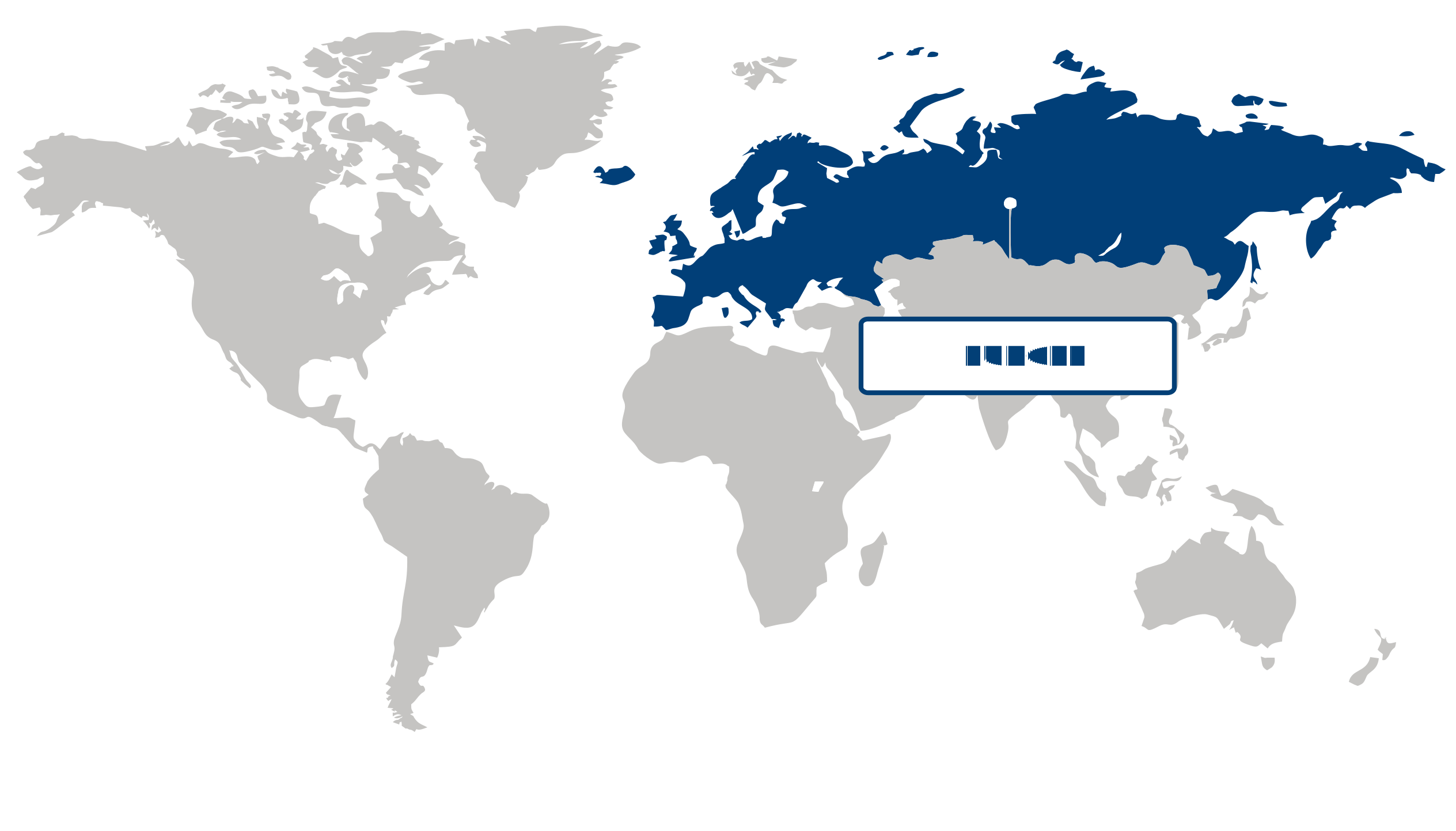
Europe (Largest Region)
Europe represented the largest region in the frozen cooked ready meals market in 2026, benefiting from established frozen food consumption patterns, strong retail infrastructure, and widespread consumer acceptance of convenient meal solutions. Busy lifestyles, demand for quick preparation, and growing preference for portion-controlled and easy-to-store foods are supporting the adoption of frozen cooked meals across households. Product diversification toward healthier recipes, varied cuisines, and improved nutritional profiles is further helping manufacturers address changing dietary preferences.
Asia Pacific (Fastest-Growing Region)
Asia Pacific is poised for the fastest growth, supported by rapid urbanization, changing household structures, rising disposable incomes, and increasing demand for convenient food options. Expanding modern retail and cold-chain infrastructure is improving access to frozen products, while younger consumers are showing greater willingness to incorporate ready-to-eat and ready-to-cook meals into their routines. Growing exposure to international cuisines and evolving food preferences are also encouraging broader consumption of frozen prepared meals.
| Parameter | North America | Asia Pacific | Europe | Latin America | MEA |
|---|---|---|---|---|---|
| Innovation HubiScaleNascentDeveloping Advanced | |||||
| Cost-Sensitive RegioniScaleLowMedium High | |||||
| Regulatory EnvironmentiScaleRestrictiveNeutral Supportive | |||||
| Demand DriversiScaleWeakModerate Strong | |||||
| Development StageiScaleEmergingDeveloping Developed | |||||
| Adoption RateiScaleLowMedium High | |||||
| New Entrants / StartupsiScaleSparseModerate Dense | |||||
| Macro IndicatorsiScaleWeakStable Strong |
Key Country Insights
United States 🇺🇸
Convenience Meal InnovationThe U.S. market is expanding premium frozen cooked ready meals that combine convenience with healthier ingredients and diverse cuisines. Manufacturers are investing in recipe innovation, sustainable packaging, and retail partnerships to address evolving consumer meal preferences.
Germany 🇩🇪
Retail Private Label FocusGermany is strengthening frozen cooked ready meals through retailer-led private label expansion and product quality improvements. Companies are emphasizing clean-label formulations, efficient cold-chain logistics, and meal options that suit changing household consumption patterns.
Japan 🇯🇵
Portion-Controlled SolutionsJapan is prioritizing frozen cooked ready meals designed for smaller households and convenient daily consumption. Producers are focusing on balanced nutrition, premium taste retention, and compact packaging that aligns with urban lifestyles and limited freezer space.
South Korea 🇰🇷
Premium Convenience OfferingsSouth Korea is expanding premium frozen cooked ready meals featuring local flavors alongside international cuisine. Food manufacturers are improving processing technologies and product variety to meet growing demand for convenient, high-quality meal solutions.
France 🇫🇷
Culinary Quality EmphasisFrance is developing frozen cooked ready meals that preserve culinary quality while meeting demand for convenience. Producers are highlighting authentic recipes, carefully sourced ingredients, and improved freezing technologies that maintain texture and flavor consistency.
Italy 🇮🇹
Traditional Recipe AdaptationItaly is adapting traditional cuisine into frozen cooked ready meal formats without compromising taste expectations. Manufacturers are emphasizing authentic ingredients, balanced portion sizes, and premium product positioning to appeal to modern consumers seeking convenience.
Frozen Cooked Ready Meals Market Share (%), by Product Type, 2026
Go beyond the chart, access full insights & data tables
Request Free Sample ReportProduct Type Segment Analysis: Non-Vegetarian Meals (Largest Segment) vs Vegetarian Meals (Fastest-Growing Segment)
Non-Vegetarian meals dominated the frozen cooked ready meals market and accounted for a market share of 61.59% in 2026. Their leading position is supported by strong consumer demand for convenient meal options containing meat, poultry, and seafood, particularly among consumers seeking ready-to-heat products that offer substantial meal portions and familiar flavors. Improvements in freezing and preparation processes have also helped preserve taste and texture, supporting the broader acceptance of frozen non-vegetarian meals. Vegetarian meals are growing at the fastest pace as consumers increasingly pursue healthier, plant-based, and environmentally conscious food choices. Rising interest in meat reduction, expanding vegetarian consumer populations, and improvements in plant-based ingredients are encouraging food manufacturers to broaden their vegetarian ready meal offerings. The growing availability of diverse cuisines and nutritionally balanced vegetarian options is further supporting segment expansion.
Packaging Type Segment Analysis: Pouches (Largest Segment) vs Trays (Fastest-Growing Segment)
Pouches held the largest share of the frozen cooked ready meals market, accounting for 30.24% in 2026. Their adoption is supported by their lightweight structure, convenient storage, efficient use of packaging materials, and suitability for a variety of frozen meal formats. Pouches can also support convenient handling and preparation, making them attractive to consumers seeking quick meal solutions. Trays are growing at the fastest pace as manufacturers and consumers increasingly value packaging that provides improved portion presentation, structural protection, and convenience during heating and serving. The expansion of ready-to-eat and ready-to-heat meal formats, combined with ongoing packaging innovation, is supporting increased use of trays across the frozen food industry.
Distribution Channel Segment Analysis: Supermarkets/hypermarkets (Largest Segment) vs Online Retail (Fastest-Growing Segment)
Supermarkets/hypermarkets dominated the frozen cooked ready meals market and accounted for a market share of 49.4% in 2026. These retail formats offer broad product availability, established frozen food sections, and the convenience of purchasing ready meals alongside other household groceries. Their extensive reach and ability to provide multiple brands, meal types, and price points continue to support strong consumer purchasing activity. Online retail is growing at the fastest pace as consumers increasingly use digital platforms for grocery shopping and home delivery. The convenience of browsing a wide product range, comparing products, accessing promotions, and receiving frozen food directly at home is encouraging greater adoption of online purchasing. Improvements in cold-chain delivery and digital grocery infrastructure are further supporting the expansion of this channel.
| Segment | Sub-Segment | Largest Segment | Fastest Growing |
|---|---|---|---|
| Product Type | Vegetarian Meals, Non-vegetarian Meals | Non-Vegetarian Meals | Vegetarian Meals |
| Packaging Type | Pouches, Trays, Bags, Boxes | Pouches | Trays |
| Distribution Channel | Supermarkets/hypermarkets, Convenience Stores, Online Retail, Specialty Stores, Foodservice/restaurants | Supermarkets/hypermarkets | Online Retail |
Competitive Landscape and Market Positioning
Major players in the frozen cooked ready meals market:
- Nestlé S.A. (Switzerland)
- Conagra Brands, Inc. (United States)
- McCain Foods Limited (Canada)
- Nomad Foods Limited (United Kingdom)
- General Mills, Inc. (United States)
- Kraft Heinz Company (United States)
- Ajinomoto Co., Inc. (Japan)
- Dr. Oetker GmbH (Germany)
- Tyson Foods, Inc. (United States)
- Kerry Group plc (Ireland)
Competition in the frozen cooked ready meals market is shifting toward greater differentiation in taste, nutrition, and convenience as consumers seek meal options that balance quick preparation with improved quality expectations. Producers are moving beyond basic frozen offerings by emphasizing recipe variety, dietary preferences, and enhanced eating experiences to strengthen consumer loyalty in a crowded category. Retail channel expansion and changing household consumption patterns are also intensifying the need for flexible product portfolios, pushing market participants to compete through innovation in meal formats, ingredient choices, and positioning around modern lifestyles.
| Company | Market Share | Company Revenue | Revenue CAGR (%) | Product Portfolio | Geographic Presence | Innovation / R&D Focus | Strategic Developments |
|---|---|---|---|---|---|---|---|
| Nestlé S.A. (Switzerland) | |||||||
| Conagra Brands Inc. (United States) | |||||||
| McCain Foods Limited (Canada) | |||||||
| Nomad Foods Limited (United Kingdom) | |||||||
| General Mills Inc. (United States) | |||||||
| Kraft Heinz Company (United States) | |||||||
| Ajinomoto Co. Inc. (Japan) | |||||||
| Dr. Oetker GmbH (Germany) | |||||||
| Tyson Foods Inc. (United States) | |||||||
| Kerry Group plc (Ireland) |
Customize Your Report
Explore examples of how this report can be tailored to different research needs, including custom segments, additional topics or chapters, and related reports. Click a section of the wheel or its numbered marker to explore the available options.
Frozen Cooked Ready Meals Market — Custom Segments
| Segment | Sub-Segment |
|---|---|
| Cuisine | Asian, European, North American, Latin American, Middle Eastern & African |
| Meal Occasion | Breakfast, Lunch, Dinner, Snacks & Light Meals |
| Nutritional Profile | Standard, Low-Calorie, High-Protein, Reduced-Sodium, Plant-Based & Health-Focused |
Frozen Cooked Ready Meals Market — Custom TOC
| Custom Chapter | Chapter Details |
|---|---|
| Consumer Meal Occasion Intelligence |
|
| Private Label Growth Playbook |
|
| Menu and Cuisine Innovation Priorities |
|
Need a different cut of the data?
Request Custom ResearchFrequently Asked Questions
How much revenue does the frozen cooked ready meals market generate?
How is the frozen cooked ready meals industry size expected to evolve during the forecast period?
How are changing consumer lifestyles influencing demand for frozen cooked ready meals?
Which operational developments are strengthening growth in the frozen cooked ready meals market?
Why do non-vegetarian meals dominate the frozen cooked ready meals market?
What is driving the fastest growth of online retail for frozen cooked ready meals?
Why does Europe dominate the frozen cooked ready meals market?
How is Asia Pacific driving faster growth in frozen cooked ready meals?
What are the prominent companies operating in the frozen cooked ready meals landscape?
Our Clients
"The report provided a thorough look at market trends, technological advancements, and the competitive landscape. The depth of insights was really valuable."
ITC Limited
"We would highly recommend Fundamental Business Insights & Consulting to anyone looking for reliable, detailed, and comprehensive market research in the Food industry."
Tyson Foods
"The clarity and presentation of the information were commendable. The report was delivered timely, which made the overall experience smooth and convenient."
Mondelēz International
Our Research Team & Methodology
Every Fundamental Business Insights report is built by a dedicated vertical research team, validated through a structured primary-and-secondary methodology, and reviewed for accuracy before it reaches you.
Delivery
Published
Available
Support
- Market Size & Forecast
- Market Segmentation
- Regional Analysis
- Growth Drivers & Challenges
- Market Dynamics
- Competitive Landscape
- Company Profiles
- Competitive Benchmarking
- Mergers & Acquisitions
- Market Share Analysis or Key Company Strategies
- Value Chain Analysis
- Porter's Five Forces
- PESTLE Analysis
- Pricing Trends
- Supply-Demand Analysis
- Technology Landscape
- Regulatory Landscape
- Investment & Funding Landscape
- Emerging Opportunities
- Future Market Outlook