



Furandicarboxylic Acid Market Size & Growth Forecast 2027–2036, By Segments (Application), Regional Demand Trends (North America, Asia Pacific, Europe), Key Country Insights (U.S., Japan, South Korea, Germany, France, Italy), and Competitive Landscape
Market Size and Growth Outlook
Furandicarboxylic Acid Market size was worth USD 21.6 billion in 2026 and is expected to grow at a 32.3% CAGR between 2027 and 2036, crossing USD 354.86 billion by 2036. The industry revenue for 2027 is calculated at USD 27.48 billion.
Base Year Value (2026)
USD 21.6 billion
CAGR (2027-2036)
32.30%
Forecast Year Value (2036)
USD 354.86 billion

Historical Data Period
2022-2026

Largest Region
Europe

Forecast Period
2027-2036
Furandicarboxylic Acid Market Intelligence Snapshot:
-
Regional Market Dynamics:
- Europe leads due to established bio-based chemicals ecosystem, sustainable packaging development, and strong alignment between producers and downstream industrial users.
- Asia Pacific is projected to expand at 36.3% CAGR, driven by scaling manufacturing capacity, cost-sensitive demand, and increasing adoption of bio-based materials in packaging applications.
-
Segment Momentum:
- PET accounted for 81.51% of the market in 2026 due to its strong commercial relevance, processing familiarity, and alignment with established packaging and polymer value chains.
- Growth remains concentrated in PET because manufacturers can more easily align material substitution, product development, and scale-up efforts with existing packaging and polymer requirements.
-
Market Expansion Drivers:
- Growing demand for bio-based alternatives to petrochemicals accelerating FDCA commercialization efforts.
- Expanding sustainable polyester production increasing FDCA adoption as terephthalic acid substitute.
- Strategic feedstock partnerships improving large-scale production feasibility for bio-based FDCA manufacturers.
-
Leading Market Participants:
Top companies in the furandicarboxylic acid market include Avantium N.V. (Netherlands), Corbion N.V. (Netherlands), Tokyo Chemical Industry Co., Ltd. (Japan), Synbias Pharma AG (Switzerland), V & V Pharma Industries (India), Carbone Scientific Co., Ltd. (China), Chemsky (Shanghai) International Co., Ltd. (China), AstaTech, Inc. (United States), Thermo Fisher Scientific Inc. (United States), Toronto Research Chemicals Inc. (Canada).
Global Market Forecast Snapshot:
-
Market Outlook:
- 2026 Market Size: USD 21.6 billion
- 2027 Estimated Market Size: USD 27.48 billion.
- Projected Market Size: USD 354.86 billion by 2036
- Growth Forecasts: 32.3% CAGR (2027-2036)
-
Regional and Segment Outlook:
- Leading Regional Market: Europe
- High-Growth Regional Hub: Asia Pacific
- Core Revenue Segment: PET (Application)
- Emerging Opportunity Segment: PET (Application)
Market Growth Drivers and Industry Trends
Growing demand for bio-based alternatives to petrochemicals accelerating FDCA commercialization efforts
Growing demand for bio-based alternatives to petrochemicals will propel the furandicarboxylic acid market as manufacturers seek renewable building blocks for chemicals, polymers, and other material applications. FDCA can be produced from renewable carbohydrate-derived feedstocks and offers a pathway toward reducing reliance on conventional fossil-based chemical intermediates. Increasing emphasis on lower-impact material production is encouraging research, process development, and commercial efforts aimed at integrating FDCA into industrial value chains.
Expanding sustainable polyester production increasing FDCA adoption as terephthalic acid substitute
Expanding sustainable polyester production is strengthening the furandicarboxylic acid market because FDCA can serve as a bio-based alternative to terephthalic acid in selected polymer systems. Its compatibility with polyester chemistry creates opportunities for developing materials with renewable feedstock content and targeted performance characteristics. As polymer producers explore more sustainable resin formulations for packaging, textiles, and other applications, interest in FDCA-based polyester pathways is increasing among material developers and manufacturers.
Strategic feedstock partnerships improving large-scale production feasibility for bio-based FDCA manufacturers
Strategic feedstock partnerships are improving the furandicarboxylic acid market by helping producers establish more reliable access to renewable raw materials required for commercial-scale FDCA manufacturing. Stable feedstock availability is important for managing production consistency, process economics, and supply-chain coordination as bio-based chemical technologies move toward broader industrial deployment. Collaboration across agricultural, biochemical, and chemical value chains can also support the integration of feedstock processing with FDCA production requirements, facilitating more dependable manufacturing operations.
| Growth Driver Assessment Framework | |||||
| Growth Driver | Impact On CAGR | Regulatory Influence | Geographic Relevance | Adoption Rate | Impact Timeline |
|---|---|---|---|---|---|
| Growing demand for bio-based alternatives to petrochemicals accelerating FDCA commercialization efforts | 2.20% | High | Europe, North America | High | Mid Term |
| Expanding sustainable polyester production increasing FDCA adoption as terephthalic acid substitute | 2.00% | Moderate | Europe, Asia Pacific | High | Long Term |
| Strategic feedstock partnerships improving large-scale production feasibility for bio-based FDCA manufacturers | 1.70% | Moderate | North America, Europe | Emerging | Mid Term |
Unlock insights tailored to your business with our bespoke market research solutions - Click to get your customized report now!
Regional Demand Dynamics
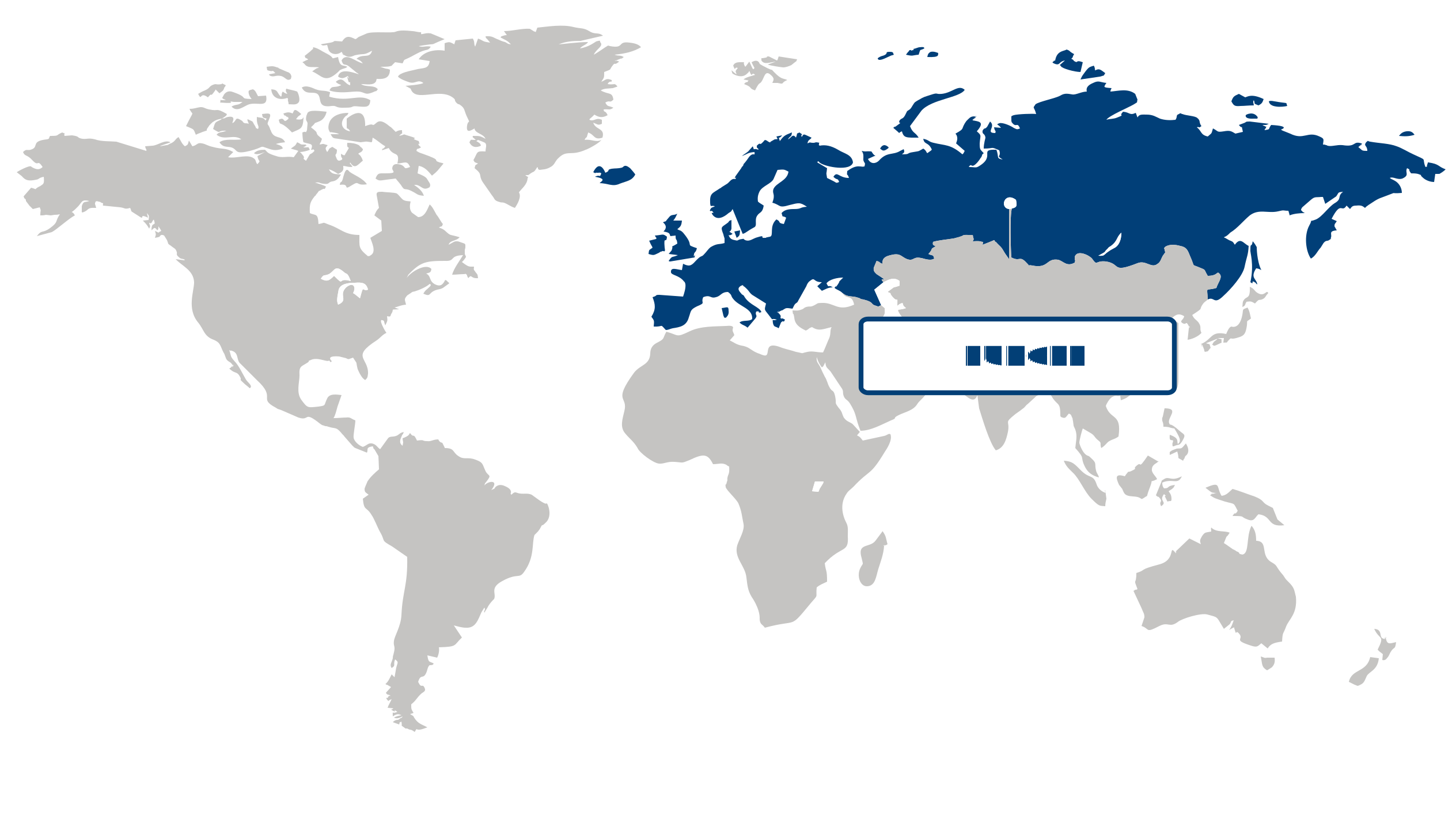
Largest Region
Europe
Largest Market Share in 2026
Europe (Largest Region) vs Asia Pacific (Fastest-Growing Region)
Europe held the largest share of the furandicarboxylic acid market in 2026, supported by strong emphasis on sustainable materials, bio-based chemicals, and the transition toward lower-impact industrial production. The region's focus on circular economy principles and renewable feedstocks is encouraging interest in bio-derived alternatives for chemical and polymer applications. Increasing demand for sustainable packaging and advanced materials is further supporting the development and adoption of furandicarboxylic acid as an alternative building block for next-generation materials.
Asia Pacific is the fastest-growing region, driven by expanding manufacturing industries, increasing demand for sustainable polymers, and rapid development of packaging and materials infrastructure. Growing industrialization is creating opportunities for bio-based chemical technologies across multiple downstream applications. Rising environmental awareness and efforts to reduce dependence on conventional fossil-based feedstocks are also encouraging investment in renewable chemical pathways, strengthening the regional potential for furandicarboxylic acid adoption.
Key Country Insights
The U.S. furandicarboxylic acid market is supported by interest in renewable polymers and sustainable packaging materials. Companies in the U.S. focus on scaling bio-based chemical production and expanding commercial applications for advanced materials.
Japan explores furandicarboxylic acid for high-performance packaging and specialty polymer applications. Japanese companies invest in material optimization and production technologies that improve compatibility with sustainable manufacturing objectives.
South Korea expands interest in furandicarboxylic acid through investments in sustainable chemical manufacturing and advanced materials. South Korean companies evaluate renewable feedstocks and commercial polymer applications to diversify product portfolios.
Germany advances furandicarboxylic acid adoption through research into bio-based plastics and industrial materials. German manufacturers prioritize process efficiency and material performance to strengthen renewable alternatives within the chemical sector.
France promotes furandicarboxylic acid within bio-based packaging and environmentally focused materials development. French manufacturers emphasize renewable chemical inputs and collaboration across packaging and specialty materials industries.
Italy incorporates furandicarboxylic acid into initiatives supporting sustainable plastics and packaging innovation. Italian companies focus on integrating renewable material solutions into industrial manufacturing while enhancing product performance and environmental compatibility.
Segment Leadership and Growth Trends
Application Segment Analysis: PET (Largest & Fastest-Growing Segment)
The PET segment accounted for the largest share of the furandicarboxylic acid market at 81.51% in 2026 while also emerging as the fastest-growing application, reflecting the strong relevance of furandicarboxylic acid as a potential bio-based building block for polyester materials. Its compatibility with PET-related applications supports interest in producing packaging and polymer products with greater renewable content. Increasing emphasis on sustainable materials, efforts to reduce dependence on fossil-based feedstocks, and growing demand for environmentally preferable packaging solutions are strengthening the role of furandicarboxylic acid in PET applications.
| Report Segmentation | |||
| Segment | Sub-Segment | Largest Segment | Fastest Growing Segment |
|---|---|---|---|
| Application | PET, Polyamides, Polycarbonates, Plasticizers, Polyester Polyols, Others | PET | PET |
 Read our Research Approach
Competitive Landscape and Market Positioning
Leading companies in the furandicarboxylic acid market:
1. Avantium N.V. (Netherlands)
2. Corbion N.V. (Netherlands)
3. Tokyo Chemical Industry Co. Ltd. (Japan)
4. Synbias Pharma AG (Switzerland)
5. V & V Pharma Industries (India)
6. Carbone Scientific Co. Ltd. (China)
7. Chemsky (Shanghai) International Co. Ltd. (China)
8. AstaTech Inc. (United States)
9. Thermo Fisher Scientific Inc. (United States)
10. Toronto Research Chemicals Inc. (Canada)
The furandicarboxylic acid market is advancing through increasing investments in bio-based chemical production technologies that support sustainable material development. Industry stakeholders are focusing on improving manufacturing efficiency and expanding the application scope of renewable polymer intermediates across packaging and industrial sectors. Continuous research efforts aimed at enhancing product performance and scalability are also contributing to the long-term growth potential of the furandicarboxylic acid market.
Industry Development/News
| Company Name | Date | Key Development |
|---|---|---|
| GS Biomats | Apr-26 | GS Biomats secured a kiloton-level supply agreement with Henan Yinjinda Group for 2,5-furandicarboxylic acid (FDCA). This transaction stands as one of Asia's most significant commercial arrangements for bio-based plastic monomers, signaling a material shift toward the adoption of FDCA as a viable, renewable replacement for traditional petroleum-derived packaging materials. |
| Avantium | Jan-26 | Avantium announced a delay in the commissioning of its flagship industrial-scale FDCA facility in Delfzijl, Netherlands, citing construction challenges. The project disruption is expected to necessitate an additional €7 million in capital expenditure, creating a consequential setback for the immediate commercial availability and scaling timeline of FDCA production. |
| Tereos | Sep-25 | Tereos, Avantium, and LVMH entered a memorandum of understanding to accelerate the industrial-scale production of plant-based polyethylene furanoate (PEF) packaging. This strategic partnership aims to institutionalize FDCA-based materials across diverse high-value sectors, including food, beverage, and luxury goods, by stabilizing the supply chain and validating market adoption. |
| BIOVOX | May-25 | BIOVOX entered a multi-year capacity reservation agreement with Avantium to secure access to PEF produced via its licensed industrial technology. This collaboration is set to drive the integration of FDCA-derived plastics into specialized pharmaceutical and healthcare applications, expanding the addressable market for renewable packaging beyond standard consumer goods. |
| Amcor Rigid Packaging USA LLC | Feb-25 | Amcor Rigid Packaging formed a joint development agreement with Avantium to evaluate the application of Releaf PEF polymer in rigid food and beverage containers. This initiative marks a significant effort to validate the commercial viability and functional performance of FDCA-derived polymers within the high-volume rigid packaging infrastructure. |
| Avantium | Dec-21 | Avantium secured $100 million in financing to initiate the construction of its flagship FDCA manufacturing plant in the Netherlands. This capital infusion provided the critical financial foundation for the facility's development, establishing the operational infrastructure required to scale global FDCA production and commercialize bio-based polyethylene furanoate applications. |
Why Choose Us
Specialized Expertise: Our team comprises industry experts with a deep understanding of your market segment. We bring specialized knowledge and experience that ensures our research and consulting services are tailored to your unique needs.
Customized Solutions: We understand that every client is different. That's why we offer customized research and consulting solutions designed specifically to address your challenges and capitalize on opportunities within your industry.
Proven Results: With a track record of successful projects and satisfied clients, we have demonstrated our ability to deliver tangible results. Our case studies and testimonials speak to our effectiveness in helping clients achieve their goals.
Cutting-Edge Methodologies: We leverage the latest methodologies and technologies to gather insights and drive informed decision-making. Our innovative approach ensures that you stay ahead of the curve and gain a competitive edge in your market.
Client-Centric Approach: Your satisfaction is our top priority. We prioritize open communication, responsiveness, and transparency to ensure that we not only meet but exceed your expectations at every stage of the engagement.
Continuous Innovation: We are committed to continuous improvement and staying at the forefront of our industry. Through ongoing learning, professional development, and investment in new technologies, we ensure that our services are always evolving to meet your evolving needs.
Value for Money: Our competitive pricing and flexible engagement models ensure that you get maximum value for your investment. We are committed to delivering high-quality results that help you achieve a strong return on your investment.
Select Licence Type

