Glazing Gel Market Size & Growth Forecast 2027–2036, By Segments (Origin, Product Type, Application), Regional Demand Trends (North America, Asia Pacific, Europe), Key Country Insights (U.S., Japan, South Korea, Germany, France, Italy), and Competitive Landscape
Market Size and Growth Outlook
Glazing Gel Market size was more than USD 487.94 Million in 2026 and is set to grow at 6.36% CAGR between 2027 and 2036, surpassing USD 903.96 Million by 2036. The industry revenue for 2027 is calculated at USD 514.29 Million.
Get more details on this report
Request Free Sample ReportGlazing Gel Market Intelligence Snapshot
Regional Market Dynamics
- Europe led in 2026, supported by its established food processing industry, strong baking culture, and demand for premium bakery and confectionery products.
- Asia Pacific is poised for fastest growth as urbanization, rising incomes, modern retail, foodservice expansion, and premium dessert consumption increase adoption.
Segment Momentum
- Synthetic glazing gels accounted for 55.12% of the market in 2026 because they deliver consistent texture, reliable gloss, and stable performance while supporting efficient large-scale food production across multiple applications.
- Pastry and cake decoration is growing the fastest as demand rises for visually appealing, customized desserts that require glazing gels to provide smooth, glossy finishes and enhance overall product presentation.
Market Expansion Drivers
- Rising cosmetics industry demand driving widespread use of glazing gels in personal care formulations
- Expanding food and beverage applications increasing demand for stabilizing and texturizing gel ingredients
- Advancements in formulation chemistry enabling multifunctional glazing gels with improved stability and texture
Leading Market Participants
- Major players in the glazing gel market include Cargill, Inc. (USA), Kerry Group plc (Ireland), Arla Foods amba (Denmark), Mantrose-Haeuser Co., Inc. (USA), Swiss Bake Ingredients Pvt. Ltd. (India), TNG Foods International (India), Vaikra Blends (India), Ingredion Incorporated (USA), Tate & Lyle PLC (UK), Archer Daniels Midland Company (USA)
Global Market Forecast Snapshot
Market Outlook
- 2026 Market Size: USD 487.94 Million
- 2027 Estimated Market Size: USD 514.29 Million
- Projected Market Size: USD 903.96 Million by 2036
- Growth Forecast: 6.36% CAGR (2027-2036)
Regional and Segment Outlook
- Leading Regional Market: Europe
- High-Growth Regional Hub: Asia Pacific
- Core Revenue Segment: Synthetic (Origin) | Sugar-based (Product Type) | Bakery Products (Application)
- Emerging Opportunity Segment: Natural (Origin) | Fruit-based (Product Type) | Pastry and Cake Decoration (Application)
Market Growth Drivers and Industry Trends
Rising cosmetics industry demand driving widespread use of glazing gels in personal care formulations
Growing consumer interest in enhanced beauty and personal care solutions is strengthening demand for specialized ingredients, enabling the glazing gel market to expand through increased use in cosmetic formulations. Beauty brands are incorporating glazing gels into products that require smooth application, improved appearance, and appealing sensory characteristics across skincare and haircare categories. The rising preference for multifunctional personal care products with premium textures and enhanced performance is encouraging formulators to utilize gel-based ingredients that provide desirable consistency and product aesthetics.
Expanding food and beverage applications increasing demand for stabilizing and texturizing gel ingredients
The broadening use of functional ingredients in processed foods and beverages is supporting the glazing gel market growth as manufacturers seek solutions for improved texture, stability, and visual appeal. Food producers are increasingly adopting gel ingredients to enhance product structure, maintain consistency, and improve consumer acceptance across bakery, confectionery, dairy, and beverage applications. Changing consumer expectations for attractive food presentation and high-quality sensory experiences are encouraging greater incorporation of glazing gels into diverse product formulations.
Advancements in formulation chemistry enabling multifunctional glazing gels with improved stability and texture
Innovation in ingredient science is creating new opportunities for the glazing gel market by enabling the development of advanced formulations with improved performance characteristics. Manufacturers are focusing on refining gel compositions to deliver better stability, smoother textures, and compatibility across multiple applications. These advancements allow producers to design versatile glazing solutions that address evolving requirements in cosmetics and food industries while improving formulation efficiency and end-product quality.
| Growth Driver | Impact on CAGR | Regulatory Influence | Geographic Relevance | Adoption Rate | Impact Timeline |
|---|---|---|---|---|---|
| Rising cosmetics industry demand driving widespread use of glazing gels in personal care formulations | 2.2% | Moderate | North America, Europe, Asia Pacific | High | Near Term |
| Expanding food and beverage applications increasing demand for stabilizing and texturizing gel ingredients | 2% | High | Asia Pacific, North America | High | Mid Term |
| Advancements in formulation chemistry enabling multifunctional glazing gels with improved stability and texture | 1.8% | Moderate | Europe, North America | Medium | Mid Term |
Explore Growth Opportunities
Request Free Sample ReportRegional Demand Dynamics
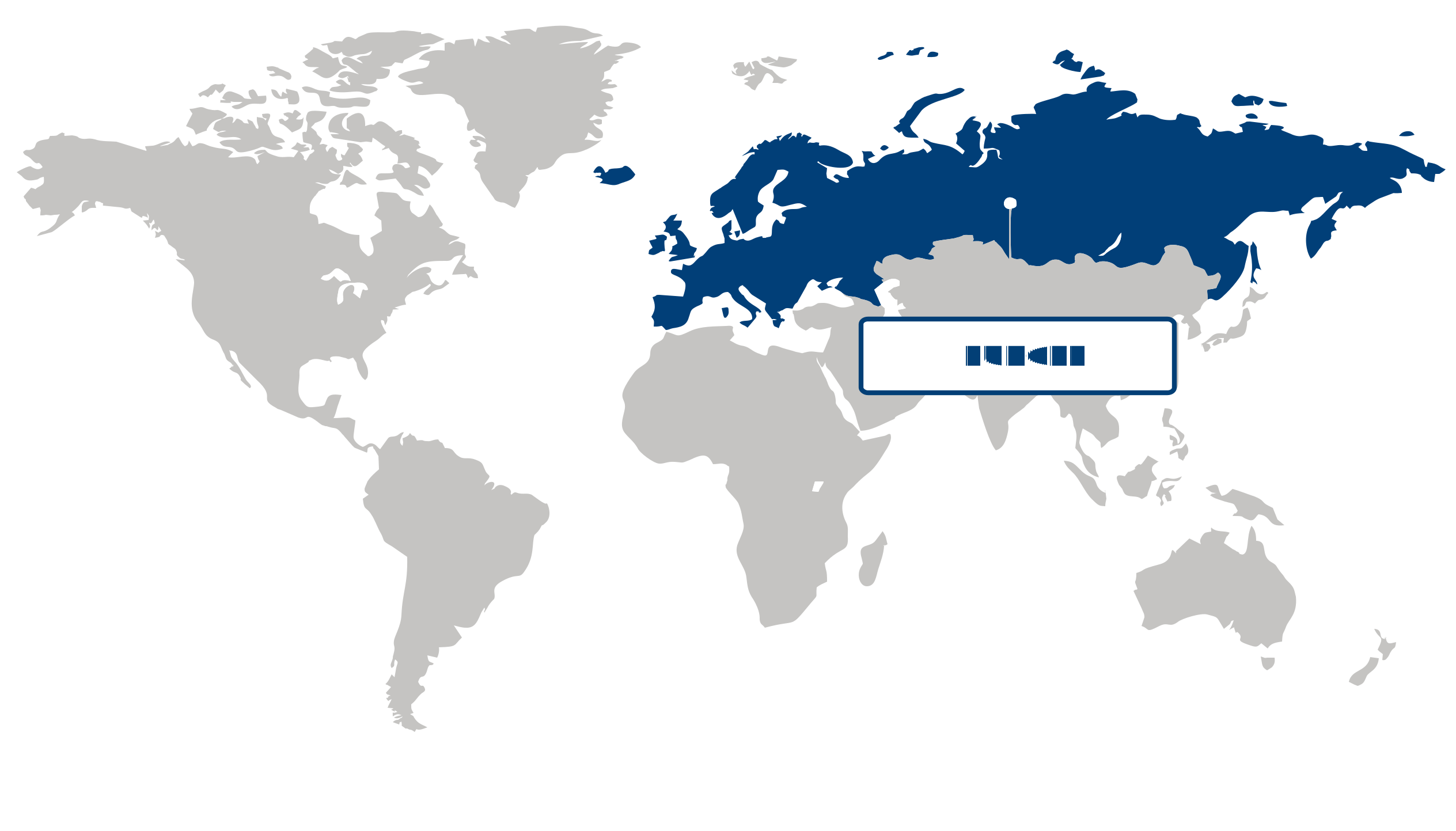
Europe (Largest Region)
Europe accounted for the largest share of the glazing gel market in 2026, supported by its established food processing industry and strong demand for premium bakery, confectionery, and patisserie products. The region’s well-developed baking culture and consumer preference for visually appealing finished products encourage manufacturers to use glazing gels for surface enhancement, moisture retention, and improved product presentation. Growing demand for premium and specialty bakery products, together with continued innovation in food formulations, is strengthening the use of glazing solutions across commercial and artisanal applications.
Asia Pacific (Fastest-Growing Region)
Asia Pacific is poised for the fastest growth as urbanization, rising disposable incomes, and expanding consumption of packaged bakery and confectionery products reshape regional food demand. The development of modern retail and foodservice channels is encouraging manufacturers to improve the visual appeal and shelf presentation of baked goods, creating additional opportunities for glazing gels. Increasing investment in food processing capabilities and growing consumer interest in premium desserts are also supporting broader adoption across the region.
| Parameter | North America | Asia Pacific | Europe | Latin America | MEA |
|---|---|---|---|---|---|
| Innovation Hub i Scale Nascent Developing Advanced | |||||
| Cost-Sensitive Region i Scale Low Medium High | |||||
| Regulatory Environment i Scale Restrictive Neutral Supportive | |||||
| Demand Drivers i Scale Weak Moderate Strong | |||||
| Development Stage i Scale Emerging Developing Developed | |||||
| Adoption Rate i Scale Low Medium High | |||||
| New Entrants / Startups i Scale Sparse Moderate Dense | |||||
| Macro Indicators i Scale Weak Stable Strong |
Key Country Insights
United States 🇺🇸
Premium Bakery InnovationThe U.S. glazing gel market emphasizes premium bakery finishes, clean-label formulations, and consistent performance across industrial and artisan production. Manufacturers in the U.S. continue introducing versatile glazing solutions that improve product appearance while supporting operational efficiency.
Germany 🇩🇪
Precision Food FormulationGermany prioritizes glazing gels with stable texture, ingredient transparency, and compatibility with automated bakery processing. Food manufacturers in Germany focus on formulations that maintain visual appeal while aligning with stringent quality and product consistency requirements.
Japan 🇯🇵
Premium Confectionery FinishJapan emphasizes glazing gels that deliver refined appearance, delicate texture, and extended freshness for premium bakery and confectionery products. Producers in Japan continue adapting formulations to support high-value packaged desserts and seasonal product launches.
South Korea 🇰🇷
Trend-Driven Bakery ApplicationsSouth Korea adopts glazing gels that enhance visual presentation for innovative bakery, café, and dessert offerings. Ingredient suppliers in South Korea collaborate with food manufacturers to develop application-specific solutions suited to rapidly changing consumer preferences.
France 🇫🇷
Artisan Quality FocusFrance values glazing gels that preserve authentic bakery aesthetics while supporting premium pastry production. Manufacturers in France emphasize formulations that combine traditional product presentation with efficient processing for commercial bakeries and pâtisseries.
Italy 🇮🇹
Specialty Dessert EnhancementItaly utilizes glazing gels to improve the appearance and shelf appeal of pastries, cakes, and specialty desserts. Italian producers increasingly seek formulations that complement premium ingredients while maintaining production flexibility across diverse bakery applications.
Segment Leadership and Growth Trends
Glazing Gel Market Share (%), by Origin, 2026
Go beyond the chart, access full insights & data tables
Request Free Sample ReportOrigin Segment Analysis: Synthetic (Largest Segment) vs Natural (Fastest-Growing Segment)
Synthetic glazing gel captured the largest share of the glazing gel market, accounting for 55.12% in 2026. Its leading position is supported by consistent formulation performance, predictable texture, and the ability to deliver uniform gloss and appearance across a broad range of food applications. Synthetic formulations can also be engineered to provide specific functional characteristics, including stable coating performance and compatibility with industrial production processes. These attributes make them attractive for manufacturers seeking reliable results, product consistency, and efficient application across bakery, confectionery, and dessert products.
Natural glazing gel is projected to grow at the fastest pace as consumers and food manufacturers increasingly prioritize recognizable ingredients and cleaner-label formulations. Rising interest in naturally derived food ingredients is encouraging producers to explore alternatives that align with changing preferences around product composition and perceived healthfulness. Natural glazing gels can also support premium product positioning by complementing formulations that emphasize authenticity and ingredient transparency. As demand for more naturally positioned food products expands, the natural segment is expected to gain increasing traction.
Product Type Segment Analysis: Sugar-based (Largest Segment) vs Fruit-based (Fastest-Growing Segment)
Sugar-based glazing gel held the largest share of the glazing gel market, representing 34.56% in 2026. Its strong market position is linked to its broad functionality in providing shine, surface protection, and an appealing finish across a wide range of bakery and dessert products. Sugar-based formulations are particularly valued for their ability to enhance product presentation while supporting the visual appeal expected in commercial food preparation. Their established application base and compatibility with diverse product formats continue to support widespread adoption.
Fruit-based glazing gel is anticipated to experience the fastest growth as consumers show stronger interest in fruit-forward flavors, natural product positioning, and visually appealing food products. These formulations are particularly suitable for applications where the glaze must complement the flavor and appearance of fruit toppings, pastries, and desserts. The growing popularity of premium bakery products and visually distinctive confectionery is also creating opportunities for fruit-based glazes to gain greater adoption. Their ability to combine functional finishing properties with flavor relevance is expected to support the segment's expansion.
Application Segment Analysis: Bakery Products (Largest Segment) vs Pastry and Cake Decoration (Fastest-Growing Segment)
Bakery products led the application landscape of the glazing gel market, accounting for 41.04% of the market in 2026. Glazing gels are widely used in bakery products to improve surface appearance, provide an attractive sheen, and enhance the presentation of finished goods. Their role in improving visual appeal is particularly important in commercial bakery operations, where product appearance strongly influences consumer purchasing decisions. The broad consumption of baked goods and the continued demand for professionally finished products provide a stable foundation for the segment's leading position.
Pastry and cake decoration is expected to grow at the fastest rate as consumers increasingly value visually elaborate and customized desserts. Glazing gels are essential in decorative applications because they can provide a smooth, glossy finish while enhancing the presentation of fruit toppings, pastries, cakes, and other specialty products. The expansion of premium bakery offerings and growing interest in personalized dessert presentation are encouraging greater use of decorative finishing ingredients. This trend is expected to strengthen demand for glazing gels specifically designed for high-appearance applications.
| Segment | Sub-Segment | Largest Segment | Fastest Growing |
|---|---|---|---|
| Origin | Synthetic, Natural | Synthetic | Natural |
| Product Type | Sugar-based, Neutral, Fruit-based, Chocolate-based, Others | Sugar-based | Fruit-based |
| Application | Bakery Products, Pastry and Cake Decoration, Confectionery, Ice Cream and Desserts, Others | Bakery Products | Pastry and Cake Decoration |
Unlock insights tailored to your business with our bespoke market research solutions.
Click to get your customized report now.
Competitive Landscape and Market Positioning
Leading companies in the glazing gel market:
- Cargill, Inc. (USA)
- Kerry Group plc (Ireland)
- Arla Foods amba (Denmark)
- Mantrose-Haeuser Co., Inc. (USA)
- Swiss Bake Ingredients Pvt. Ltd. (India)
- TNG Foods International (India)
- Vaikra Blends (India)
- Ingredion Incorporated (USA)
- Tate & Lyle PLC (UK)
- Archer Daniels Midland Company (USA)
Product differentiation is increasingly centered on formulation performance, visual finish, and compatibility with evolving food manufacturing requirements rather than price alone. Suppliers capable of delivering glazing gels with improved stability, clean-label ingredient profiles, and consistent application across diverse bakery and confectionery products are strengthening their competitive positioning. At the same time, demand for customized textures, appearance, and processing characteristics is encouraging manufacturers to expand formulation capabilities, making technical expertise and application support important factors in securing long-term customer relationships across commercial food production.
| Company | Market Share | Company Revenue | Revenue CAGR (%) | Product Portfolio | Geographic Presence | Innovation / R&D Focus | Strategic Developments |
|---|---|---|---|---|---|---|---|
| Cargill Inc. (USA) | |||||||
| Kerry Group plc (Ireland) | |||||||
| Arla Foods amba (Denmark) | |||||||
| Mantrose-Haeuser Co. Inc. (USA) | |||||||
| Swiss Bake Ingredients Pvt. Ltd. (India) | |||||||
| TNG Foods International (India) | |||||||
| Vaikra Blends (India) | |||||||
| Ingredion Incorporated (USA) | |||||||
| Tate & Lyle PLC (UK) | |||||||
| Archer Daniels Midland Company (USA) |
Customize Your Report
Explore examples of how this report can be tailored to different research needs, including custom segments, additional topics or chapters, and related reports. Click a section of the wheel or its numbered marker to explore the available options.
Glazing Gel Market — Custom Segments
| Segment | Sub-Segment |
|---|---|
| Finish Effect | High-Gloss, Satin, Matte, Metallic |
| Packaging Format | Pouches, Bottles, Tubs, Bulk Containers |
| Customer Type | Commercial Bakeries, Foodservice Operators, Food Manufacturers, Artisanal Bakers |
Glazing Gel Market — Custom TOC
| Custom Chapter | Chapter Details |
|---|---|
| Formulation Substitution Opportunities |
|
| Sustainable Glazing Material Transition |
|
| Fabricator Procurement Priorities |
|
Need a different cut of the data?
Request Custom ResearchHow big is the glazing gel market?
How will the glazing gel industry grow in terms of size and CAGR by 2036?
How are premium personal care trends influencing glazing gel demand?
How is formulation innovation expanding glazing gel applications?
Why do synthetic glazing gels hold the largest market share?
Why is pastry and cake decoration the fastest-growing application in the glazing gel market?
Why does Europe hold the largest glazing gel market share?
How is Asia Pacific creating new growth opportunities for glazing gels?
Who are the major participants shaping the glazing gel landscape?
Our Clients
"The report provided a thorough look at market trends, technological advancements, and the competitive landscape. The depth of insights was really valuable."
ITC Limited
"We would highly recommend Fundamental Business Insights & Consulting to anyone looking for reliable, detailed, and comprehensive market research in the Food industry."
Tyson Foods
"The clarity and presentation of the information were commendable. The report was delivered timely, which made the overall experience smooth and convenient."
Mondelēz International
Our Research Team & Methodology
Every Fundamental Business Insights report is built by a dedicated vertical research team, validated through a structured primary-and-secondary methodology, and reviewed for accuracy before it reaches you.
Research Team Overview
Prepared by the Food & Beverage Research Team
Delivery
Published
Demand
Available
Support
Trust & Compliance
Research Intelligence
| Source | Reference |
|---|---|
| Food and Agriculture Organization (FAO) | www.fao.org |
| World Health Organization (WHO) | www.who.int |
| U.S. Food & Drug Administration (FDA) | www.fda.gov |
| European Food Safety Authority (EFSA) | www.efsa.europa.eu |
| U.S. Department of Agriculture (USDA) | www.usda.gov |
| Codex Alimentarius Commission | www.fao.org/fao-who-codexalimentarius |
| International Organization for Standardization (ISO) | www.iso.org |
| AOAC INTERNATIONAL | www.aoac.org |
| Institute of Food Technologists (IFT) | www.ift.org |
| International Dairy Foods Association (IDFA) | www.idfa.org |
| International Sweeteners Association (ISA) | www.sweeteners.org |
| International Probiotics Association (IPA) | internationalprobiotics.org |
| Good Food Institute (GFI) | gfi.org |
| American Feed Industry Association (AFIA) | www.afia.org |
| International Feed Industry Federation (IFIF) | ifif.org |
| Specialty Food Association (SFA) | www.specialtyfood.com |
| Brewers Association | www.brewersassociation.org |
| International Bottled Water Association (IBWA) | bottledwater.org |
| International Alliance for Dietary/Food Supplement Associations (IADSA) | www.iadsa.org |
| OECD Agriculture & Food | www.oecd.org/agriculture |
Research Workflow & Quality Assurance
Data Collection
Verified information gathered through primary and secondary research.
Data Triangulation
Cross-validation using multiple independent data sources.
Forecast Modelling
Market estimates developed using historical trends and analytical models.
Analyst Validation
Findings reviewed by domain experts for accuracy and consistency.
Editorial & Quality Review
Final editorial, quality, and compliance checks before publication.
Final Publication
Released after successful completion of the internal review process.
Report Coverage
📊 Market Assessment
- Market Size & Forecast
- Market Segmentation
- Regional Analysis
- Growth Drivers & Challenges
- Market Dynamics
🏢 Competitive Intelligence
- Competitive Landscape
- Company Profiles
- Competitive Benchmarking
- Mergers & Acquisitions
- Market Share Analysis or Key Company Strategies
🔍 Strategic Analysis
- Value Chain Analysis
- Porter's Five Forces
- PESTLE Analysis
- Pricing Trends
- Supply-Demand Analysis
🚀 Future Outlook
- Technology Landscape
- Regulatory Landscape
- Investment & Funding Landscape
- Emerging Opportunities
- Future Market Outlook
Have a question about this report or need a custom scope?
Request Customization