Green Coatings Market Size & Forecasts 2026-2035, By Segments (Types, Applications), Growth Opportunities, Innovation Landscape, Regulatory Shifts, Strategic Regional Insights (U.S., Japan, China, South Korea, UK, Germany, France), and Competitive Dynamics (PPG Industries, AkzoNobel, Sherwin-Williams, Axalta Coating Systems, Nippon Paint)
Jump to Content
Market Size and Growth Outlook
Green Coatings Market size is expected to advance from USD 143 billion in 2025 to USD 232.93 billion by 2035, registering a CAGR of more than 5% across 2026-2035. By 2026, the industry is anticipated to generate USD 149.18 billion in revenue.
Get more details on this report
Request Free Sample ReportGreen Coatings Market Intelligence Snapshot
Regional Market Dynamics
Segment Momentum
Market Expansion Drivers
Leading Market Participants
Global Market Forecast Snapshot
Market Outlook
Regional and Segment Outlook
Market Growth Drivers and Industry Trends
The accelerating shift toward low-emission products is reshaping the green coatings market as regulators and purchasers favor lower-VOC solutions; California Air Resources Board (CARB) VOC rules and the European Chemicals Agency (ECHA) scrutiny under REACH are explicit catalysts. Sherwin-Williams and AkzoNobel public product rollouts and the U.S. Environmental Protection Agency (EPA) Safer Choice program illustrate supplier responses and verification pathways. Established players can leverage scale to reformulate portfolios and certify lines, while new entrants can capture niche demand with bio‑based or specialty low‑VOC chemistries and third‑party endorsements. Given tightening regulatory limits and visible OEM procurement commitments, procurement and specification trends will increasingly prioritize low‑emission alternatives in near‑term product roadmaps.
Technological Innovations in Green Coating Formulations
Advances in waterborne, powder, bio‑based resins and additive chemistry are directly driving differentiation across the green coatings market; PPG and BASF press releases on waterborne and bio‑polyol developments and research from the Fraunhofer Institute demonstrate applied R&D trajectories. These innovations reduce performance trade‑offs, enabling parity with solvent systems and opening new specification windows for architects and manufacturers. Incumbents can monetize IP and scale manufacturing, while startups can win through fast commercialization, licensing, or joint development agreements. As consortiums and cross‑sector R&D continue to deliver application‑ready technologies, product portfolios will shift toward low‑impact chemistries that meet both performance and procurement sustainability criteria.
Expansion of Industrial and Automotive Applications
Broader deployment in heavy industry and transport is expanding addressable demand for sustainable coatings in the green coatings market; Volvo Cars and Toyota Motor Corporation sustainability statements and Vestas product guidance for corrosion protection show OEM and industrial buyer commitments to greener surface treatments. Automotive electrification and wind‑turbine longevity requirements create technical needs—durable, low‑temperature cure and high‑corrosion‑resistance systems—that favor green formulations. Incumbent suppliers can deepen OEM partnerships and offer system warranties, while challengers can target specialized segments (EV battery housings, turbine blades) with tailored solutions. With public sustainability roadmaps from major OEMs and industrial buyers already in place, specification cycles and supplier selection increasingly reflect environmental performance as a qualifying criterion.
Industry Restraints:
Regulatory Compliance and Chemical Restrictions
Stringent chemical restrictions and tightening VOC limits materially constrain green coatings development by forcing extensive reformulation, testing, and compliance programs that raise time-to-market and cost. The European Chemicals Agency (ECHA) diisocyanates restriction under REACH and tightening volatile organic compound (VOC) ceilings enforced by the California Air Resources Board (CARB) and the U.S. Environmental Protection Agency (EPA) have required manufacturers to remove or replace high-performing solvents and crosslinkers, per ECHA documentation and CARB/EPA regulatory guidance. For incumbents like AkzoNobel and PPG Industries this drives multi-year R&D and compliance spend; for new entrants, regulatory burden raises market-entry costs and slows scaling. Expect ongoing phased limits and targeted substance restrictions to continue shaping competitive positioning, privileging firms with regulatory affairs capabilities and established reformulation pipelines in the near to medium term.
Raw Material Supply Constraints and Price Volatility
Dependence on petrochemical-derived resins, pigments, and specialty additives exposes the green coatings value chain to feedstock shocks and margin compression, slowing adoption of higher-cost green chemistries. Industry commentary and pricing actions—such as raw-material surcharges announced by PPG Industries and The Sherwin-Williams Company during 2021–2022—and analysis from S&P Global highlighting resin and pigment tightness illustrate recurring supply-side disruption. Downstream, manufacturers face procurement complexity and margin management challenges; start-ups encounter working-capital strain and limited access to guaranteed supply. Strategically, firms must weigh vertical integration, long-term supply contracts, or investment in bio-based feedstocks. Near term, volatility is likely to persist, sustaining pressure on pricing and favoring companies that secure stable feedstock arrangements or proprietary low-dependence formulations.
| Growth Driver | Impact on CAGR | Regulatory Influence | Geographic Relevance | Adoption Rate | Impact Timeline |
|---|---|---|---|---|---|
| Increasing adoption of eco-friendly and low-VOC coatings | 2.00% | Short term (≤ 2 yrs) | Europe, North America | High | Fast |
| Technological innovations in green coating formulations | 1.80% | Medium term (2–5 yrs) | Asia Pacific, Europe | Medium | Moderate |
| Expansion of industrial and automotive applications | 1.20% | Long term (5+ yrs) | Asia Pacific, North America | Low | Moderate |
Explore Growth Opportunities
Request Free Sample ReportRegional Demand Dynamics
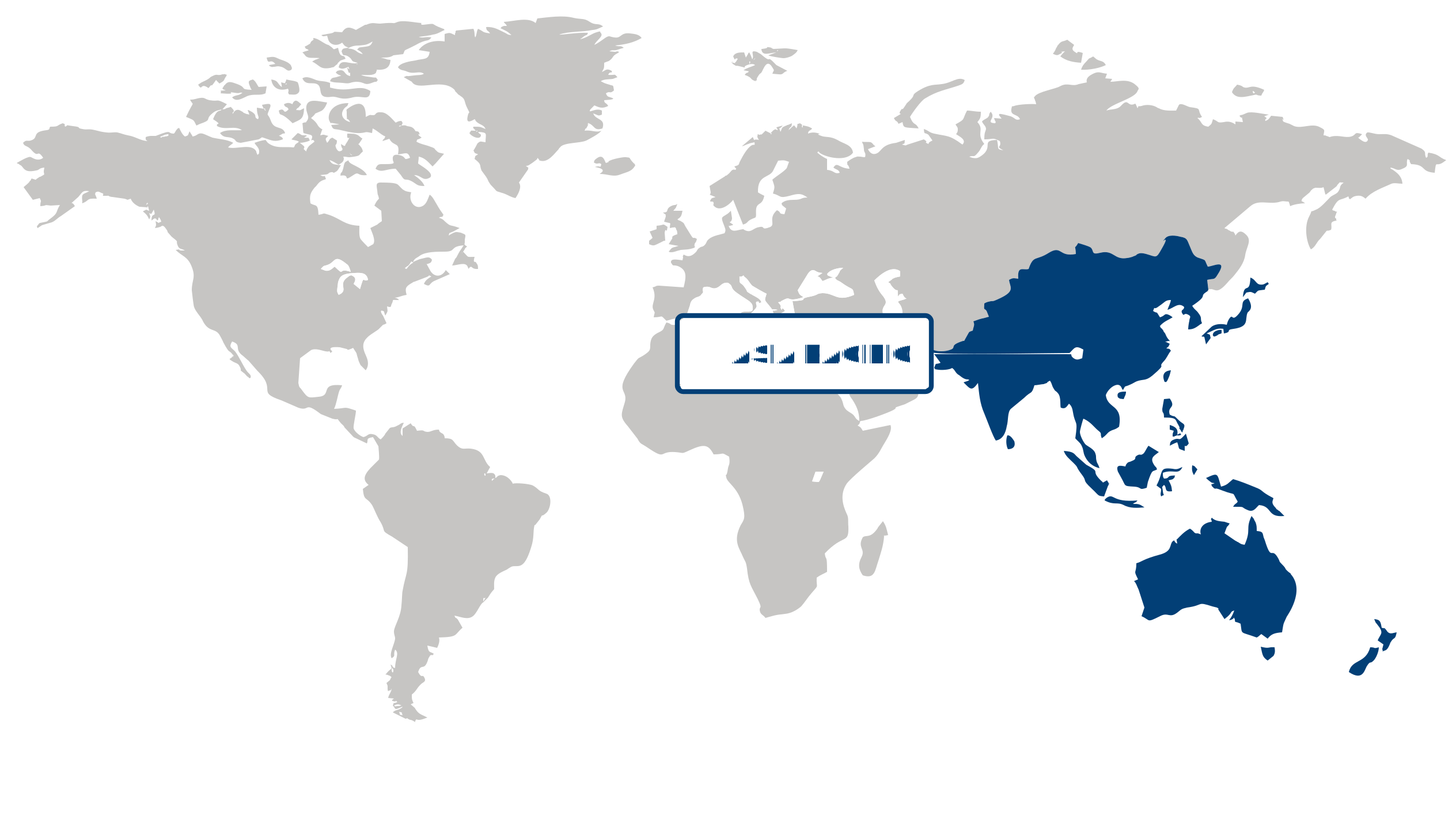
The green coatings market captured over 44.05% of the global market in 2025 in Asia Pacific, making the region the largest market globally; this leadership is underpinned by rapid industrialization, accelerating urbanization and strong regulatory adoption of low‑VOC coatings across multiple jurisdictions. Demand from construction and manufacturing is expanding as urban builds and retrofit programs scale—trends documented by the Asian Development Bank and the World Bank on regional urbanization and industrial expansion—while regulatory tightening, such as measures from China’s Ministry of Ecology and Environment, has accelerated uptake of low‑VOC formulations. Major regional producers and formulators are responding with product portfolios and localized capacity investments (see Nippon Paint Holdings sustainability initiatives). Together, these dynamics position Asia Pacific as a high‑return market for investors focused on sustainable coatings and technology-enabled differentiation.
Japan is positioned as a pivotal hub in Asia Pacific, and the green coatings market in Japan is characterized by stringent environmental standards and demand for high‑performance, low‑VOC solutions from automotive, electronics and infrastructure sectors. Policy and industrial guidance from Japan’s Ministry of the Environment and the Ministry of Economy, Trade and Industry (METI) have driven manufacturers to prioritize emission reductions and product performance, a trend reflected in publicly disclosed sustainability roadmaps from Nippon Paint Holdings and other domestic players. For investors and strategists, Japan offers a premium testing ground for advanced formulations and value‑added services that can be scaled across the region.
China anchors the region, and the green coatings market in China is propelled by large‑scale urban construction, manufacturing scale‑up and increasingly enforceable VOC controls. Enforcement actions and national programs from China’s Ministry of Ecology and Environment and the Ministry of Housing and Urban‑Rural Development have created clear demand signals for compliant, low‑VOC products across residential, commercial and industrial projects. The market’s scale rewards local production and supply‑chain optimization, creating opportunities for partners that can deliver compliant, cost‑efficient formulations and localized service models to capture share as China modernizes its building and industrial base.
North America Market Analysis:
North America emerged as the fastest-growing region in the green coatings market, registering a CAGR of 5.56%, driven by tightening environmental standards and rising demand for eco-friendly coatings across construction and automotive sectors. Regulatory tightening—from U.S. Environmental Protection Agency low-VOC guidance and California Air Resources Board formulation limits to procurement and sustainability benchmarks promoted by the U.S. Green Building Council (USGBC)—is accelerating substitution of solvent-based systems with waterborne, powder and bio-based chemistries. Major OEMs and suppliers are reinforcing demand and supply responses: General Motors and Ford have published sustainability roadmaps increasing demand for low-emission surface treatments, while The Sherwin-Williams Company, PPG and AkzoNobel have highlighted expanded eco-portfolios in corporate disclosures. These converging forces position North America for continued commercial innovation and scale-up opportunities in green coatings across infrastructure and mobility applications.
The U.S. anchors North America in the green coatings market, where scale of construction renovation, a large automotive manufacturing base and procurement preferences create concentrated demand. Automotive OEM decarbonization commitments (see General Motors and Ford Motor Company sustainability communications) are prompting tier suppliers to adopt waterborne and powder coating solutions; federal and large municipal procurement standards (refer to U.S. General Services Administration green purchasing guidance) are steering commercial and institutional projects toward low-VOC products; and domestic R&D and manufacturing strength—evidenced in sustainability reports from The Sherwin-Williams Company and product announcements from PPG—accelerates commercialization. For investors and strategists, the U.S. market’s combination of demand concentration, policy-aligned procurement, and incumbent supplier capabilities makes it the primary entry and scale-up locus reinforcing North America’s regional growth.
Europe Market Trends:
Europe held a significant share of the green coatings market, driven by tight regulatory frameworks and strong corporate commitments that have shifted procurement and R&D priorities across the region. The European Commission’s Green Deal and Renovation Wave, together with guidance from the European Chemicals Agency (ECHA), have accelerated adoption of low-VOC, waterborne and powder systems, while major suppliers such as AkzoNobel and BASF have publicly linked portfolio strategies to these policies in corporate disclosures. Demand patterns reflect growing retrofit activity and sustainability-linked procurement from both public and private buyers, and digital tools for formulation and supply-chain traceability are being scaled. These dynamics position Europe for further opportunity in bio-based resins, cross-border partnerships, and premium differentiated coatings for renovation and industrial applications.
Germany maintained a notable presence in the green coatings market, anchored by its heavy industrial base and OEM-driven performance requirements. Fleet, automotive and industrial manufacturers guided by the Verband der Automobilindustrie (VDA) increasingly specify low-emission, durable coatings, prompting local suppliers such as BASF and Covestro to prioritize sustainable additives and process efficiencies in press releases and investor materials. Skilled technical talent, compact logistics corridors and integration with industrial digitalization initiatives support rapid piloting of new chemistries. For investors, Germany offers a testbed for scale-up of industrial green formulations that can be replicated across Europe, linking manufacturing demand to regional commercialization pathways.
France experienced steady growth in the green coatings market, supported by strong renovation demand and public sustainability targets. National programs administered by ADEME and guidance from the Ministère de la Transition écologique have incentivized low-VOC products in building refurbishment, while companies such as Arkema and Saint-Gobain have highlighted sustainable product lines and construction partnerships in corporate communications. Consumer preferences for healthier indoor environments and municipal procurement standards are accelerating demand for decorative and protective waterborne coatings. Strategically, France’s renovation-led growth complements Germany’s industrial focus, creating regional opportunities for suppliers that can serve both building and industrial segments with compliant, high-performance green formulations.
| Parameter | North America | Asia Pacific | Europe | Latin America | MEA |
|---|---|---|---|---|---|
| Innovation HubiScaleNascentDeveloping Advanced | |||||
| Cost-Sensitive RegioniScaleLowMedium High | |||||
| Regulatory EnvironmentiScaleRestrictiveNeutral Supportive | |||||
| Demand DriversiScaleWeakModerate Strong | |||||
| Development StageiScaleEmergingDeveloping Developed | |||||
| Adoption RateiScaleLowMedium High | |||||
| New Entrants / StartupsiScaleSparseModerate Dense | |||||
| Macro IndicatorsiScaleWeakStable Strong |
Green Coatings Market Share (%), by Types, 2026
Go beyond the chart, access full insights & data tables
Request Free Sample ReportWater-based coatings represented largest share in 2025 of the green coatings market, leading the segments as manufacturers shifted away from solvent-borne systems to comply with stringent VOC limits and meet customer demand for low-emission solutions. This leadership reflects regulatory pressure—U.S. Environmental Protection Agency (EPA) VOC guidance and the European Commission Green Deal—and technical advances in acrylic and polyurethane waterborne resins that close performance gaps with traditional chemistries. AkzoNobel, PPG, and Sherwin‑Williams have publicly expanded waterborne portfolios, signaling supply-chain investment and competitive prioritization. The segment offers scale and distribution advantages for incumbents and niche premium opportunities for smaller innovators focused on health and indoor-air-quality credentials. With ongoing regulatory tightening and sustained consumer and specification demand, water-based coatings will remain strategically central in the near to medium term.
Analysis by Applications
Architectural coatings held largest share in 2025 of the green coatings market, reflecting strong adoption of low-VOC paints across new construction and retrofit projects. Within the segments, demand is driven by building-sector sustainability priorities and codes—U.S. Green Building Council (USGBC) LEED credits, procurement policies in the European Commission, and local indoor-air-quality rules—that prioritize low-emission materials. Benjamin Moore and Sherwin‑Williams have emphasized low-VOC architectural lines in corporate communications, evidencing channel alignment and market readiness. The segment creates strategic opportunities for established suppliers to embed sustainability in specification chains and for agile entrants to offer differentiated, health-focused products. Continued emphasis on healthier buildings and renovation activity supports architectural coatings’ relevance over the near to medium term.
| Segment | Sub-Segment | Largest Segment | Fastest Growing |
|---|---|---|---|
| Types | High-Solids Coatings, Water-Based Coatings, Radiation-Cured Coatings, Powder Coatings | ||
| Applications | Packaging Coatings, Industrial Coatings, Wood Coatings, Architectural Coatings, Automotive Coatings, Others |
Unlock insights tailored to your business with our bespoke market research solutions.
Click to get your customized report now.
Competitive Landscape and Market Positioning
The competitive environment is marked by intensified moves to broaden technological depth and channel reach: leaders are expanding through targeted transactions and joint ventures, accelerating introductions of low-VOC, waterborne, powder and bio-based formulations, and deepening application engineering capabilities. Parallel investments in formulation science, pilot-scale testing, and digital color and coating management are tightening differentiation around performance and sustainability credentials. These actions are reinforcing incumbent advantages in distribution and technical service, prompting faster innovation cycles and driving closer alignment between product roadmaps and demanding end-use segments such as automotive, protective and marine coatings.
Strategic / Actionable Recommendations for Regional Players
North America: Amplify collaborations with OEMs and large industrial end-users to co-develop scalable waterborne and powder systems, and integrate digital color/formulation tools to shorten development cycles. Strengthening regional manufacturing partnerships and logistics resilience will help respond to rapid product introductions and sustain margins while maintaining compliance with tightening environmental standards.
Asia Pacific: Leverage local raw-material ecosystems and contract-manufacturing partners to cost-effectively scale high-performance eco-formulations for decorative and protective markets. Deepen technical service footprints and joint R&D with regional suppliers to capture rapid demand shifts and to differentiate on application-specific performance at competitive cost points.
Europe: Double down on provenance and circularity initiatives by partnering with material innovators and standards bodies to validate bio-based and recycled content claims. Focus on premium support for marine, protective and industrial customers through centralized R&D hubs and targeted pilot programs that demonstrate lifecycle benefits and regulatory alignment.
| Company | Market Share | Company Revenue | Revenue CAGR (%) | Product Portfolio | Geographic Presence | Innovation / R&D Focus | Strategic Developments |
|---|---|---|---|---|---|---|---|
| No companies available. | |||||||
Customize Your Report
Explore examples of how this report can be tailored to different research needs, including custom segments, additional topics or chapters, and related reports. Click a section of the wheel or its numbered marker to explore the available options.
Green Coatings Market — Custom Segments
| Segment | Sub-Segment |
|---|---|
| No segment data available. | |
Green Coatings Market — Custom TOC
| Custom Chapter | Chapter Details |
|---|---|
| No custom TOC data available. | |
Need a different cut of the data?
Request Custom ResearchFrequently Asked Questions
What is the current revenue of the green coatings market?
What is the projected value of the green coatings industry by 2035?
Which territory dominates the green coatings market share rankings?
Which region shows the most rapid acceleration in the green coatings sector?
Where is the water-based coatings segment seeing the strongest adoption within the green coatings industry?
When did architectural coatings sub-segment emerge as the largest sub-segment in the applications segment of green coatings sector?
Which companies are driving growth in the green coatings landscape?
Our Clients
"The report helped us understand emerging consumer trends in our product category. It clarified where to focus innovation for the next product launch."
LyondellBasell
"The regional forecast section was incredibly useful. We were able to identify two new potential partners in Europe thanks to the vendor mapping you included."
SABIC
"We appreciated how actionable the recommendations were. It guided us to improve supply chain resilience."
Olin Corporation
Our Research Team & Methodology
Every Fundamental Business Insights report is built by a dedicated vertical research team, validated through a structured primary-and-secondary methodology, and reviewed for accuracy before it reaches you.
This report was prepared by the Chemicals & Materials Research Team at Fundamental Business Insights, a dedicated research group specializing in the global chemicals, advanced materials, and industrial manufacturing sectors. Our analysts continuously monitor raw material supply chains, feedstock pricing, production technologies, regulatory developments, sustainability initiatives, environmental compliance, trade dynamics, and evolving end-use applications to deliver timely and reliable market intelligence. The research is developed using a structured methodology that combines primary discussions with manufacturers, raw material suppliers, distributors, and industry experts, along with company annual reports, regulatory publications, government trade statistics, industry associations, technical literature, patent databases, and other authoritative secondary sources. Market estimates are validated through multiple research techniques, including top-down and bottom-up analysis, before undergoing an internal quality review to ensure accuracy, consistency, and methodological integrity prior to publication.
Delivery
Published
Available
Support
- Market Size & Forecast
- Market Segmentation
- Regional Analysis
- Growth Drivers & Challenges
- Market Dynamics
- Competitive Landscape
- Company Profiles
- Competitive Benchmarking
- Mergers & Acquisitions
- Market Share Analysis or Key Company Strategies
- Value Chain Analysis
- Porter's Five Forces
- PESTLE Analysis
- Pricing Trends
- Supply-Demand Analysis
- Technology Landscape
- Regulatory Landscape
- Investment & Funding Landscape
- Emerging Opportunities
- Future Market Outlook