



Green Packaging Market Size & Growth Forecast 2026–2035, By Segments (Packaging Type, Application), Regional Demand Trends (North America, Asia Pacific, Europe), Key Country Insights (U.S., Japan, South Korea, Germany, France, Italy), and Competitive Landscape
Market Size and Growth Outlook
Green Packaging Market size was around USD 359.69 Million in 2025 and is slated to grow at a 6.7% CAGR from 2026 to 2035, exceeding USD 687.97 Million by 2035. The industry revenue for 2026 is assessed at USD 380.73 million.
Base Year Value (2025)
USD 359.69 Million
CAGR (2026-2035)
6.7%
Forecast Year Value (2035)
USD 687.97 Million

Historical Data Period
2022-2025

Largest Region
Europe

Forecast Period
2026-2035
Green Packaging Market Intelligence Snapshot:
-
Regional Market Dynamics:
- Europe leads with 38.59% share, driven by strict sustainability regulations, mature recycling systems, and strong adoption of circular packaging across consumer and retail supply chains.
- Asia Pacific is growing at 7.57% CAGR due to rising industrial output, expanding packaged goods demand, and increasing investment in sustainable, scalable packaging production systems.
-
Segment Momentum:
- Recycled Content Packaging held a 58.69% share in 2025 because it fits existing packaging supply chains while helping companies improve sustainability without disrupting operations or material sourcing.
- Degradable Packaging is the fastest-growing segment as businesses increasingly adopt solutions that simplify end-of-life disposal and address growing expectations for waste reduction and sustainable packaging.
-
Market Expansion Drivers:
- Government bans on single-use plastics accelerating shift toward sustainable packaging solutions.
- Rising e-commerce and food delivery demand driving eco-friendly packaging adoption.
- Consumer preference for biodegradable and recycled packaging materials strengthening market shift.
-
Leading Market Participants:
Leading players in the green packaging market include Amcor plc (Switzerland), Mondi plc (United Kingdom), Sealed Air Corporation (United States), DS Smith Plc (United Kingdom), Ball Corporation (United States), Tetra Pak International S.A. (Switzerland), Nampak Ltd. (South Africa), Evergreen Packaging LLC (United States), Smurfit Westrock plc (Ireland).
Global Market Forecast Snapshot:
-
Market Outlook:
- 2025 Market Size: USD 359.69 Million
- Projected Market Size: USD 687.97 Million by 2035
- Growth Forecasts: 6.7% CAGR (2026-2035)
-
Regional and Segment Outlook:
- Leading Regional Market: Europe
- High-Growth Regional Hub: Asia Pacific
- Core Revenue Segment: Recycled Content Packaging (Packaging Type) | Food & Beverages (Application)
- Emerging Opportunity Segment: Degradable Packaging (Packaging Type) | Food & Beverages (Application)
Market Growth Drivers and Industry Trends
Government bans on single-use plastics accelerating shift toward sustainable packaging solutionsRegulatory restrictions on conventional plastic bags, cutlery, pouches, and other disposable formats are reshaping procurement and product design decisions throughout the green packaging market. As brands, retailers, and foodservice operators move to avoid compliance risk and potential penalties, packaging teams are replacing banned materials with paper-based, compostable, molded fiber, and recyclable alternatives that can be deployed at commercial scale. This policy pressure shortens adoption cycles by turning sustainability from a discretionary branding choice into an operational requirement, increasing demand for the green packaging market from regulated end-use segments that need immediate, certifiable substitutes.
Rising e-commerce and food delivery demand driving eco-friendly packaging adoption
The rapid expansion of parcel shipping, takeaway meals, and app-based delivery is increasing packaging intensity per transaction, which is pushing merchants and platform operators to rethink material choices in shipping boxes, mailers, trays, wraps, and protective inserts. In the green packaging market, this translates into stronger uptake of lightweight recyclable formats and compostable food-contact packaging that help businesses manage waste visibility at the consumer doorstep while aligning with retailer sustainability targets. High order volumes also favor standardized green packaging solutions that can be integrated into fulfillment and last-mile operations without disrupting speed, aiding market expansion through repeat, large-scale purchasing behavior.
Consumer preference for biodegradable and recycled packaging materials strengthening market shift
Shifting buyer expectations are influencing how brands position products on shelves and online, making packaging material selection a visible part of product value rather than a back-end sourcing decision. In the green packaging market, demand for biodegradable and recycled inputs is reinforced when consumers associate those materials with lower environmental impact and use packaging cues to compare competing products, especially in food, personal care, and household categories. This pressure encourages converters and brand owners to invest in packaging formats with clearer sustainability claims, certified material content, and improved end-of-life outcomes, increasing market adoption for solutions that can satisfy both performance needs and consumer scrutiny.
| Growth Driver Assessment Framework | |||||
| Growth Driver | Impact On CAGR | Regulatory Influence | Geographic Relevance | Adoption Rate | Impact Timeline |
|---|---|---|---|---|---|
| Government bans on single-use plastics accelerating shift toward sustainable packaging solutions | 2.50% | High | Europe, North America, Asia Pacific | High | Near Term |
| Rising e-commerce and food delivery demand driving eco-friendly packaging adoption | 2.10% | Moderate | Asia Pacific, North America | High | Near Term |
| Consumer preference for biodegradable and recycled packaging materials strengthening market shift | 1.90% | Low | Europe, North America | High | Mid Term |
Unlock insights tailored to your business with our bespoke market research solutions - Click to get your customized report now!
Regional Demand Dynamics
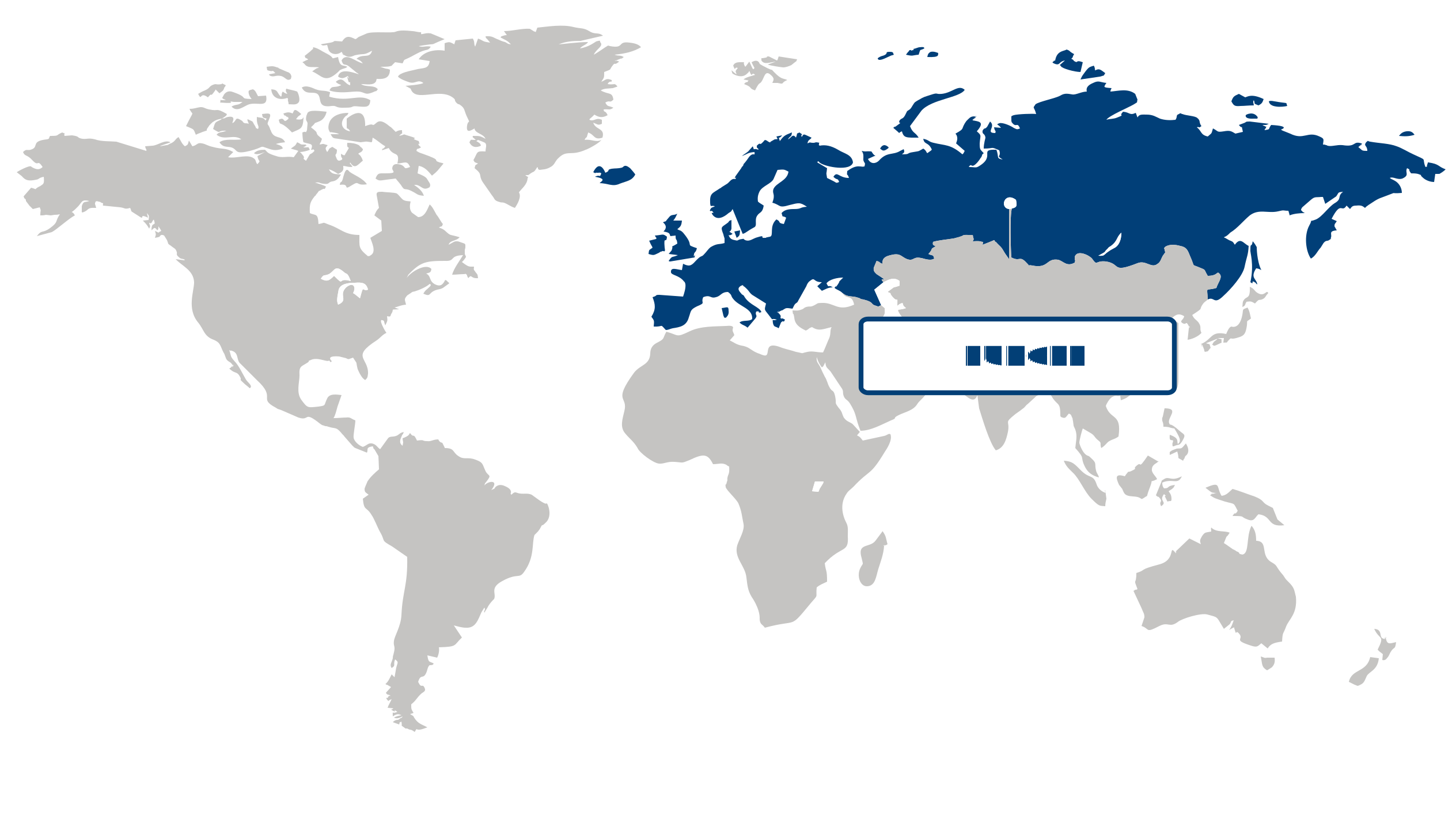
Largest Region
Europe
38.59% Market Share in 2025
Europe held a 38.59% share of the green packaging market in 2025, supported by well-established sustainability regulations, mature recycling systems, and broad adoption of circular packaging practices across consumer goods, food, and retail supply chains. The region’s leadership is aided by the way packaging decisions are made in practice: manufacturers, converters, and brand owners operate within stricter material recovery and waste-reduction frameworks, which sustains demand for recyclable, reusable, and fiber-based packaging formats. Strong coordination across packaging design, compliance, and collection infrastructure also helps keep adoption commercially viable at scale.
Asia Pacific is projected to expand at a 7.57% CAGR over the forecast period, with growth in the green packaging market being impelled by rising industrial output, expanding packaged goods consumption, and increasing investment in more sustainable packaging production. Adoption is accelerating as regional manufacturers respond to shifting buyer expectations and scale up cost-effective alternatives to conventional materials, particularly in high-volume sectors where packaging conversion can happen quickly. The region’s growth momentum is also supported by ongoing capacity expansion and the practical need for packaging solutions that align better with changing environmental standards and export requirements.
Key Country Insights
The U.S. is accelerating adoption of green packaging through recyclable, compostable, and bio-based material innovations. Consumer goods companies are redesigning packaging formats to reduce environmental impact while maintaining product protection and supply chain efficiency.
Japan focuses on green packaging that minimizes material usage while maintaining high packaging performance and product quality. Companies are developing lightweight, recyclable, and renewable packaging solutions that support sustainability goals without compromising functionality.
South Korea is expanding green packaging adoption as consumer brands respond to growing environmental expectations. Packaging producers are introducing recyclable materials, refill-oriented formats, and innovative designs that improve sustainability across retail and e-commerce channels.
Germany prioritizes green packaging solutions that align with circular economy principles and material recovery objectives. Manufacturers are investing in recyclable packaging designs, reduced plastic content, and production processes that improve resource efficiency across multiple industries.
France emphasizes green packaging that combines environmental responsibility with premium product presentation. Brand owners are incorporating recyclable materials, fiber-based packaging, and eco-conscious design strategies to strengthen sustainability across food, cosmetics, and luxury product categories.
Italy is advancing green packaging through greater use of renewable materials and recyclable product formats. Packaging suppliers are supporting food, beverage, and consumer goods manufacturers with solutions that balance environmental performance, design quality, and manufacturing efficiency.
Segment Leadership and Growth Trends
Recycled Content Packaging held a 58.69% share of the green packaging market in 2025, making it the leading packaging type segment. Its leadership is maintained through the practical advantage of fitting into existing packaging supply chains without requiring a full shift in material handling or conversion processes. Across the green packaging market, this makes recycled content packaging a workable option for companies seeking lower-impact packaging while maintaining cost control, material availability, and operational continuity at scale.
Degradable Packaging is emerging as the fastest-growing segment in the green packaging market as end-use requirements move beyond recycled input toward packaging solutions designed for simpler end-of-life management. Its momentum is supported by growing demand for materials that align more directly with disposal and waste-reduction expectations, particularly where conventional recovery systems may be less effective. Compared with more established formats, degradable packaging is gaining traction because it responds to a clear market need for packaging that addresses sustainability concerns at the post-use stage.
Application Segment Analysis: Food & Beverages (Largest & Fastest-Growing Segment)
With a 59.07% share in 2025, Food & Beverages led the green packaging market by application while also recording the fastest growth. This position reflects the sector’s constant need for high-volume packaging and its direct exposure to changing consumer expectations around sustainability in everyday purchases. The green packaging market continues to see strong momentum from Food & Beverages because packaging decisions in this application are closely tied to product turnover, shelf presence, and waste visibility, creating steady pressure to adopt greener formats at scale while maintaining functional packaging performance.
| Report Segmentation | |||
| Segment | Sub-Segment | Largest Segment | Fastest Growing Segment |
|---|---|---|---|
| Packaging Type | Recycled Content Packaging, Reusable Packaging, Degradable Packaging | Recycled Content Packaging | Degradable Packaging |
| Application | Food & Beverages, Personal Care, Health Care, Others | Food & Beverages | Food & Beverages |
 Read our Research Approach
Competitive Landscape and Market Positioning
Key companies in the green packaging market:1. Amcor plc (Switzerland)
2. Mondi plc (United Kingdom)
3. Sealed Air Corporation (United States)
4. DS Smith Plc (United Kingdom)
5. Ball Corporation (United States)
6. Tetra Pak International S.A. (Switzerland)
7. Nampak Ltd. (South Africa)
8. Evergreen Packaging LLC (United States)
9. Smurfit Westrock plc (Ireland)
Sustainability regulations and changing environmental expectations continue to accelerate innovation across the green packaging market. Industry participants are adopting advanced material technologies and circular packaging solutions that improve recyclability, reduce environmental impact, and support compliance with evolving sustainability standards while meeting growing consumer demand for eco-friendly packaging.
Industry Development/News
| Company Name | Date | Key Development |
|---|---|---|
| Graco | Sep-24 | Graco signed a definitive agreement to acquire Valco Melton, a provider of adhesive application and inspection systems. This acquisition integrates adhesive dispensing technology with Graco’s industrial fluid handling portfolio, enhancing quality control and manufacturing precision for packaging customers while strengthening the company’s operational footprint in the broader packaging supply chain. |
| CCL Industries | Aug-24 | CCL Industries acquired Sleever International, a strategic move designed to expand its portfolio of sustainable labeling and sleeve packaging solutions. The acquisition strengthens CCL’s presence in eco-friendly packaging markets, enabling the company to offer a more comprehensive range of sustainable decorative and functional packaging to global brand owners. |
| Greiner Packaging | Aug-24 | Greiner Packaging accelerated the adoption of its K3® r100 self-separating packaging solution across the UK food retail sector. By enabling efficient separation of cardboard and plastic components, this initiative improves packaging recyclability and supports circular economy targets for food and beverage brands aiming to reduce environmental impact. |
| Earthodic | Jul-24 | Earthodic secured US$6 million in seed funding to scale the commercial production of its water-resistant, sustainable packaging technology. The capital injection is earmarked for expanding its manufacturing capabilities and strengthening partnerships in the North American market, signaling a meaningful step toward the commercialization of barrier coatings as alternatives to plastic. |
| Constantia Flexibles | Aug-24 | Constantia Flexibles launched a low-carbon aluminum version of its ComforLid packaging solution specifically for the dairy sector. This development represents a material innovation in product design, aimed at reducing the life-cycle carbon footprint of lidding materials and assisting dairy producers in meeting internal sustainability and emissions reduction objectives. |
| China Ministry of Transport | Jul-24 | The China Ministry of Transport implemented mandatory regulations for the e-commerce logistics sector, requiring the use of eco-friendly, recyclable, or compostable packaging materials. This regulatory shift forces a transformation in packaging supply chains across the region, necessitating widespread adoption of sustainable materials and minimizing excessive wrapping in express delivery operations. |
| Sealed Air | Feb-23 | Sealed Air acquired Liquibox, a prominent manufacturer of sustainable liquid packaging systems. This acquisition strategically expanded Sealed Air’s product portfolio within the food and beverage sector, allowing the company to meet the growing industrial demand for high-performance, sustainable liquid packaging alternatives and strengthening its competitive position in the global green packaging landscape. |
Why Choose Us
Specialized Expertise: Our team comprises industry experts with a deep understanding of your market segment. We bring specialized knowledge and experience that ensures our research and consulting services are tailored to your unique needs.
Customized Solutions: We understand that every client is different. That's why we offer customized research and consulting solutions designed specifically to address your challenges and capitalize on opportunities within your industry.
Proven Results: With a track record of successful projects and satisfied clients, we have demonstrated our ability to deliver tangible results. Our case studies and testimonials speak to our effectiveness in helping clients achieve their goals.
Cutting-Edge Methodologies: We leverage the latest methodologies and technologies to gather insights and drive informed decision-making. Our innovative approach ensures that you stay ahead of the curve and gain a competitive edge in your market.
Client-Centric Approach: Your satisfaction is our top priority. We prioritize open communication, responsiveness, and transparency to ensure that we not only meet but exceed your expectations at every stage of the engagement.
Continuous Innovation: We are committed to continuous improvement and staying at the forefront of our industry. Through ongoing learning, professional development, and investment in new technologies, we ensure that our services are always evolving to meet your evolving needs.
Value for Money: Our competitive pricing and flexible engagement models ensure that you get maximum value for your investment. We are committed to delivering high-quality results that help you achieve a strong return on your investment.
Select Licence Type

