



Hearing Aids Market Size & Growth Forecast 2027–2036, By Segments (Technology, Sales Channel, Product Type), Regional Demand Trends (North America, Asia Pacific, Europe), Key Country Insights (U.S., Japan, South Korea, Germany, France, Italy), and Competitive Landscape
Market Size and Growth Outlook
Hearing Aids Market size was worth USD 9.7 billion in 2026 and is expected to grow at a 6.65% CAGR between 2027 and 2036, reaching USD 18.47 billion by 2036. The industry revenue for 2027 is estimated at USD 10.24 billion.
Base Year Value (2026)
USD 9.7 billion
CAGR (2027-2036)
6.65%
Forecast Year Value (2036)
USD 18.47 billion

Historical Data Period
2022-2026

Largest Region
Europe

Forecast Period
2027-2036
Hearing Aids Market Intelligence Snapshot:
-
Regional Market Dynamics:
- Europe leads with 42.08% share due to established audiology infrastructure, broad access to hearing care services, strong distribution channels, and consistent adoption of advanced hearing devices among aging populations.
- Asia Pacific growth is supported by rising diagnosis rates, improving access to hearing care, expanding healthcare awareness, and broader device availability across underserved populations, driving 7.8% CAGR.
-
Segment Momentum:
- Digital technology accounted for 88.61% of the market in 2026, driven by demand for precise sound processing, personalized settings, easier fitting adjustments, and improved day-to-day user experience.
- E-pharmacy is the fastest-growing sales channel as buyers seek greater convenience, broader product visibility, and simpler access to repeat purchases and accessories through online healthcare purchasing platforms.
-
Market Expansion Drivers:
- Rising adoption of AI-enabled digital hearing aids improving personalized hearing enhancement capabilities.
- Favorable reimbursement policies and awareness campaigns increasing hearing aid accessibility.
- Expansion of OTC hearing aid distribution strengthening retail-based consumer adoption channels.
-
Leading Market Participants:
Major companies in the hearing aids market include GN Store Nord A/S (Denmark), Sonova Holding AG (Switzerland), WS Audiology A/S (Denmark), Demant A/S (Denmark), Starkey Laboratories, Inc. (United States), Audina Hearing Instruments, Inc. (United States), Eargo, Inc. (United States), MDHearing (United States), SeboTek Hearing Systems, LLC (United States), Earlens Corporation (United States).
Global Market Forecast Snapshot:
-
Market Outlook:
- 2026 Market Size: USD 9.7 billion
- 2027 Estimated Market Size: USD 10.24 billion.
- Projected Market Size: USD 18.47 billion by 2036
- Growth Forecasts: 6.65% CAGR (2027-2036)
-
Regional and Segment Outlook:
- Leading Regional Market: Europe
- High-Growth Regional Hub: Asia Pacific
- Core Revenue Segment: Digital (Technology) | Retail Sales (Sales Channel) | Receiver-in-the-Ear Hearing Aids (Product Type)
- Emerging Opportunity Segment: Digital (Technology) | E-Pharmacy (Sales Channel) | Receiver-in-the-Ear Hearing Aids (Product Type)
Market Growth Drivers and Industry Trends
Rising adoption of AI-enabled digital hearing aids improving personalized hearing enhancement capabilities
AI-enabled technologies are reshaping the hearing aids market by allowing devices to process surrounding sounds and adjust amplification according to changing listening environments. Advanced digital hearing aids can distinguish speech from background noise, adapt sound processing settings, and provide more individualized listening experiences based on user needs. Greater integration of intelligent algorithms with compact hearing devices is also improving ease of use and enabling more responsive amplification in settings such as conversations, public spaces, and noisy environments.
Favorable reimbursement policies and awareness campaigns increasing hearing aid accessibility
Favorable reimbursement policies and awareness initiatives will propel hearing aids market growth by reducing financial and informational barriers that can discourage individuals from seeking hearing support. Greater awareness of the effects of untreated hearing difficulties can encourage earlier consultation and greater acceptance of assistive devices, while reimbursement coverage can improve affordability for eligible users. Public education efforts conducted through healthcare channels and community programs can also promote regular hearing assessments and improve understanding of available treatment and device options.
Expansion of OTC hearing aid distribution strengthening retail-based consumer adoption channels
Expansion of over-the-counter distribution is broadening the hearing aids market by making hearing devices more accessible through retail-oriented purchasing channels. Consumers with suitable levels of hearing difficulty can obtain certain products without navigating the conventional specialist-led purchasing process, increasing convenience and shortening the path from identifying a hearing need to obtaining a device. Wider availability through pharmacies, electronics retailers, online channels, and other consumer-facing outlets also improves product visibility and supports greater familiarity with hearing assistance technologies.
| Growth Driver Assessment Framework | |||||
| Growth Driver | Impact On CAGR | Regulatory Influence | Geographic Relevance | Adoption Rate | Impact Timeline |
|---|---|---|---|---|---|
| Rising adoption of AI-enabled digital hearing aids improving personalized hearing enhancement capabilities | 2.00% | Moderate | Europe, North America | High | Near Term |
| Favorable reimbursement policies and awareness campaigns increasing hearing aid accessibility | 1.70% | High | Europe, North America | High | Mid Term |
| Expansion of OTC hearing aid distribution strengthening retail-based consumer adoption channels | 1.40% | Moderate | North America, Asia Pacific | Emerging | Mid Term |
Unlock insights tailored to your business with our bespoke market research solutions - Click to get your customized report now!
Regional Demand Dynamics
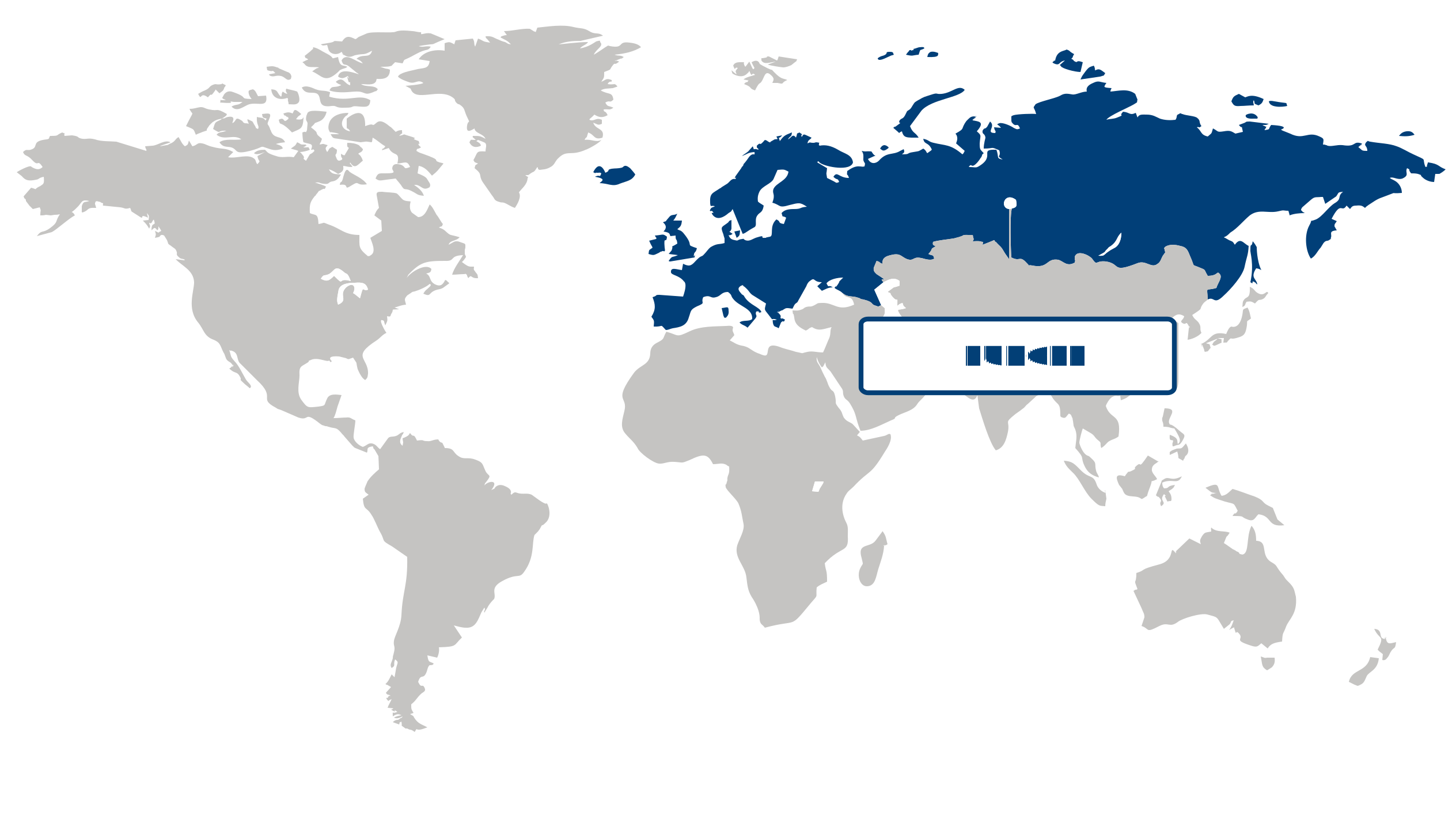
Largest Region
Europe
42.08% Market Share in 2026
Europe (Largest Region) vs Asia Pacific (Fastest-Growing Region)
In the hearing aids market, Europe held the largest share of 42.08% in 2026, reflecting the region's established hearing healthcare infrastructure, aging population, and strong emphasis on access to audiological services. Demand is supported by greater awareness of hearing loss and its impact on communication, social participation, and quality of life, encouraging more individuals to seek diagnosis and hearing support. European healthcare systems and reimbursement frameworks in several countries also contribute to the accessibility of hearing care, while technological progress in digital hearing devices is improving sound processing, connectivity, and user personalization. The region's mature clinical ecosystem, combined with ongoing improvements in device functionality and growing acceptance of technologically advanced hearing solutions, provides a stable foundation for continued market development.
Asia Pacific is projected to be the fastest-growing region, supported by demographic changes, increasing healthcare expenditure, expanding audiology services, and improving awareness of hearing health. Rapid urban development and the gradual expansion of specialized healthcare infrastructure are making diagnostic and hearing rehabilitation services more accessible across a broader population base. At the same time, rising disposable incomes are enabling more consumers to consider advanced hearing solutions, while growing familiarity with digital and wireless technologies is improving acceptance of modern hearing aids. Governments and healthcare providers are also placing greater emphasis on early identification and management of hearing impairment, creating favorable conditions for market penetration. Together, these trends are expected to accelerate adoption as hearing healthcare becomes increasingly integrated into broader health and wellness priorities across the region.
Key Country Insights
The U.S. hearing aids market is expanding through broader consumer access to prescription and over-the-counter devices alongside digital hearing solutions. Providers and manufacturers are emphasizing personalized fitting, remote support, and connectivity features that improve long-term user engagement.
Japan continues to strengthen demand for hearing aids as age-related hearing loss drives interest in discreet and easy-to-use solutions. Manufacturers focus on compact designs, artificial intelligence-enabled sound optimization, and user-friendly features that improve everyday listening experiences.
South Korea is adopting hearing aids that combine advanced sound processing with wireless connectivity and mobile application support. Consumers increasingly value smart features that enable personalized adjustments while complementing digitally connected lifestyles.
Germany prioritizes technologically advanced hearing aids supported by established audiology services and high product quality expectations. Demand favors devices offering enhanced speech recognition, rechargeable designs, and seamless integration with digital healthcare and consumer electronics.
France is reinforcing hearing aid adoption through improved access to hearing care services and reimbursement-supported purchasing. Suppliers are prioritizing comfortable, high-performance devices that enhance speech clarity while supporting long-term patient satisfaction.
Italy is expanding hearing aid adoption through greater awareness of hearing health and modernization of audiology practices. Market activity increasingly centers on digitally programmable devices that improve fitting precision and everyday comfort across diverse patient groups.
Segment Leadership and Growth Trends
Technology Segment Analysis: Digital (Largest & Fastest-Growing Segment)
The digital segment dominated the hearing aids market in 2026, accounting for an 88.61% share, while also representing the fastest-growing technology segment. Digital hearing aids offer sophisticated sound processing, improved noise reduction, directional hearing, and greater adaptability to different listening environments, making them increasingly attractive to users seeking clearer and more personalized hearing support. Continued advances in miniaturization, connectivity, and intelligent sound-processing capabilities are further strengthening the segment's position and encouraging the replacement of conventional technologies.
Sales Channel Segment Analysis: Retail Sales (Largest Segment) vs E-Pharmacy (Fastest-Growing Segment)
Retail sales held the largest share of the hearing aids market in 2026 at 67.8%, supported by consumers' continued preference for purchasing hearing devices through established physical channels where they can receive product demonstrations, fitting assistance, and professional guidance. Hearing aids often require personalization and post-purchase support, making direct interaction with hearing-care professionals an important factor in retail purchasing decisions. The availability of product consultations and after-sales services continues to reinforce the role of retail channels.
E-pharmacy is expanding rapidly as consumers increasingly embrace digital purchasing for healthcare products and seek greater convenience in product discovery and ordering. Online channels can provide broader product visibility, easier comparison of available options, and access to hearing-related products without requiring an initial in-person purchase. Improving digital healthcare engagement and growing consumer familiarity with online pharmacy services are supporting the increasing adoption of e-pharmacy channels.
| Report Segmentation | |||
| Segment | Sub-Segment | Largest Segment | Fastest Growing Segment |
|---|---|---|---|
| Technology | Digital, Analog | Digital | Digital |
| Sales Channel | Retail Sales, E-Pharmacy, Others | Retail Sales | E-Pharmacy |
| Product Type | In-the-Ear Hearing Aids, Receiver-in-the-Ear Hearing Aids, Behind-the-Ear Hearing Aids, Canal Hearing Aids | Receiver-in-the-Ear Hearing Aids | Receiver-in-the-Ear Hearing Aids |
 Read our Research Approach
Competitive Landscape and Market Positioning
Top players in the hearing aids market:
1. GN Store Nord A/S (Denmark)
2. Sonova Holding AG (Switzerland)
3. WS Audiology A/S (Denmark)
4. Demant A/S (Denmark)
5. Starkey Laboratories Inc. (United States)
6. Audina Hearing Instruments Inc. (United States)
7. Eargo Inc. (United States)
8. MDHearing (United States)
9. SeboTek Hearing Systems LLC (United States)
10. Earlens Corporation (United States)
The hearing aids industry is undergoing significant transformation driven by digital and AI-enabled enhancements. In the hearing aids market, innovation is centered on improving sound clarity and adaptive functionality. New product developments are integrating advanced connectivity features, while continuous research is improving user experience and device performance.
Industry Development/News
| Company Name | Date | Key Development |
|---|---|---|
| Sonova | Aug-24 | Sonova launched the Phonak Audéo Sphere Infinio, featuring the proprietary DEEPSONIC chip. Providing 53 times more processing power than industry standards, the device represents a significant technological leap in real-time AI processing, enabling superior speech separation from background noise in complex acoustic environments and establishing a new benchmark for high-performance hearing aid capabilities. |
| Ear Solutions | Mar-25 | Ear Solutions partnered with Audientes to introduce the self-fitting Ven digital hearing aid into the Indian market. The strategic collaboration focuses on enhancing accessibility and customer conversion rates, targeting a broader demographic profile and expanding the retail distribution of affordable, high-quality digital hearing solutions to address significant unmet demand in the region. |
| Eargo | May-25 | Eargo launched the Eargo 8 OTC hearing aid, integrating advanced smart hearing technology with improved battery performance and support services. The release underscores the company’s strategic focus on strengthening its position in the premium direct-to-consumer segment, leveraging enhanced device functionality to capture share within the growing OTC hearing aid market. |
| Starkey | Jun-25 | Starkey and MED-EL formed the DualSync collaboration to advance Bluetooth connectivity for bimodal users of cochlear implants and hearing aids. By enabling seamless streaming from Apple devices to integrated systems, the partnership addresses a critical technical gap in hearing care, enhancing user experience and ecosystem interoperability between distinct assistive device categories. |
| GN | Aug-25 | GN expanded its advanced hearing solutions portfolio with the ReSound Enzo IA line, incorporating AI-powered adaptive processing and support for Bluetooth LE Audio and Auracast. This launch specifically targets the severe-to-profound hearing loss segment, enhancing technical capabilities for speech clarity and connectivity to reinforce the company’s competitive position in advanced assistive technology. |
| GN | Feb-26 | GN released the ReSound Savi custom hearing aids, featuring updated fitting software with NAL-NL3 support and Auracast capabilities. The integration of improved clinical fitting tools and expanded connectivity across its custom styles demonstrates a strategic focus on optimizing professional fitting workflows and broadening the technological footprint of its essential hearing aid ecosystem. |
| Starkey | May-26 | Starkey expanded access to its Omega AI hearing aid technology for government services, integrating enhanced connectivity, durability, and specialized clinical tools. This initiative facilitates the deployment of high-end AI-driven hearing solutions within public-sector healthcare channels, strategically strengthening the company’s presence in institutional markets requiring advanced, robust, and intelligent hearing aid systems. |
| Sam’s Club | May-26 | Sam’s Club partnered with a third-party healthcare platform to integrate tech-enabled hearing health services directly into its retail operations. This expansion into in-store hearing assessments reflects a strategic shift in retail distribution models, aimed at increasing consumer access to diagnostic and care solutions within mainstream, high-traffic commercial environments. |
Why Choose Us
Specialized Expertise: Our team comprises industry experts with a deep understanding of your market segment. We bring specialized knowledge and experience that ensures our research and consulting services are tailored to your unique needs.
Customized Solutions: We understand that every client is different. That's why we offer customized research and consulting solutions designed specifically to address your challenges and capitalize on opportunities within your industry.
Proven Results: With a track record of successful projects and satisfied clients, we have demonstrated our ability to deliver tangible results. Our case studies and testimonials speak to our effectiveness in helping clients achieve their goals.
Cutting-Edge Methodologies: We leverage the latest methodologies and technologies to gather insights and drive informed decision-making. Our innovative approach ensures that you stay ahead of the curve and gain a competitive edge in your market.
Client-Centric Approach: Your satisfaction is our top priority. We prioritize open communication, responsiveness, and transparency to ensure that we not only meet but exceed your expectations at every stage of the engagement.
Continuous Innovation: We are committed to continuous improvement and staying at the forefront of our industry. Through ongoing learning, professional development, and investment in new technologies, we ensure that our services are always evolving to meet your evolving needs.
Value for Money: Our competitive pricing and flexible engagement models ensure that you get maximum value for your investment. We are committed to delivering high-quality results that help you achieve a strong return on your investment.
Select Licence Type

