



High Temperature Insulation Market Size & Growth Forecast 2027–2036, By Segments (Product, Application), Regional Demand Trends (North America, Asia Pacific, Europe), Key Country Insights (U.S., Japan, South Korea, Germany, France, Italy), and Competitive Landscape
Market Size and Growth Outlook
High Temperature Insulation Market size was over USD 8.06 billion in 2026 and is likely to grow at a 5.51% CAGR between 2027 and 2036, surpassing USD 13.78 billion by 2036. The industry revenue for 2027 is assessed at USD 8.43 billion.
Base Year Value (2026)
USD 8.06 billion
CAGR (2027-2036)
5.51%
Forecast Year Value (2036)
USD 13.78 billion

Historical Data Period
2022-2026

Largest Region
Europe

Forecast Period
2027-2036
High Temperature Insulation Market Intelligence Snapshot:
-
Regional Market Dynamics:
- Europe accounted for a 37.10% share in 2026, supported by its mature industrial base, strong replacement demand, and widespread use of advanced insulation in high-temperature processing applications.
- Asia Pacific is projected to grow at a 6.67% CAGR as industrial expansion, new production facilities, and greater installation of heat-intensive equipment increase demand for advanced thermal insulation.
-
Segment Momentum:
- Ceramic Fiber held a 63% share in 2026 due to its strong performance in extreme heat environments, supporting energy efficiency and reliable insulation across industrial systems.
- Calcium Silicate is the fastest-growing segment as industries adopt rigid, durable insulation solutions that improve mechanical strength and long-term operational stability in high-heat applications.
-
Market Expansion Drivers:
- Strict environmental protection regulations driving industrial thermal efficiency upgrades.
- Rising industrial expansion in cement, steel, and ceramics boosting insulation demand.
- Increasing adoption of advanced customized insulation solutions enhancing equipment safety and efficiency.
-
Leading Market Participants:
Leading companies in the high temperature insulation market include Morgan Advanced Materials plc (United Kingdom), Aspen Aerogels, Inc. (United States), Unifrax LLC (United States), 3M Company (United States), Rath AG (Austria), Almatis GmbH (Germany), Isolite Insulating Products Co., Ltd. (Japan), Zircar Zirconia, Inc. (United States), Insulcon Group B.V. (Netherlands), ADL Insulflex Inc. (Canada).
Global Market Forecast Snapshot:
-
Market Outlook:
- 2026 Market Size: USD 8.06 billion
- 2027 Estimated Market Size: USD 8.43 billion.
- Projected Market Size: USD 13.78 billion by 2036
- Growth Forecasts: 5.51% CAGR (2027-2036)
-
Regional and Segment Outlook:
- Leading Regional Market: Europe
- High-Growth Regional Hub: Asia Pacific
- Core Revenue Segment: Ceramic Fiber (Product) | Petrochemicals (Application)
- Emerging Opportunity Segment: Calcium Silicate (Product) | Petrochemicals (Application)
Market Growth Drivers and Industry Trends
Strict environmental protection regulations driving industrial thermal efficiency upgrades
Stricter environmental protection regulations are encouraging industries to improve energy performance and reduce avoidable heat losses, thereby driving the high temperature insulation market growth. Industrial facilities operating furnaces, kilns, reactors, and other high-temperature equipment are increasingly evaluating insulation systems as part of broader efforts to improve thermal management and control energy consumption. Effective insulation helps maintain process temperatures while limiting heat transfer to surrounding areas, which can improve equipment performance and support compliance with increasingly demanding environmental and efficiency requirements. Regulatory attention to industrial emissions and resource efficiency is also encouraging operators to modernize aging thermal infrastructure and incorporate insulation materials capable of performing reliably under demanding operating conditions.
Rising industrial expansion in cement, steel, and ceramics boosting insulation demand
Industrial capacity expansion across energy-intensive sectors such as cement, steel, and ceramics is creating sustained requirements for thermal protection, supporting the high temperature insulation market. These industries rely on furnaces, kilns, heat-treatment equipment, and other processes that operate at elevated temperatures and require insulation to maintain stable thermal conditions. New production facilities and capacity additions typically require insulation systems across multiple stages of industrial processing, while existing plants may replace aging materials to improve heat retention and equipment reliability. Continued investment in manufacturing infrastructure also increases the need for materials that can withstand prolonged exposure to extreme temperatures, thermal cycling, and demanding industrial environments.
Increasing adoption of advanced customized insulation solutions enhancing equipment safety and efficiency
Demand for application-specific thermal protection is increasing as industrial operators seek insulation systems designed around the operating conditions of individual equipment and processes. The high temperature insulation market is benefiting from customized solutions that can address specific temperature ranges, equipment geometries, installation requirements, and thermal performance needs. Advanced insulation materials can help limit excessive surface temperatures, reduce heat loss, and protect surrounding equipment and personnel from high-temperature exposure. Customized designs are also useful where conventional insulation configurations may not provide adequate coverage or durability, allowing industrial users to optimize thermal protection around furnaces, pipes, kilns, reactors, and other specialized equipment.
| Growth Driver Assessment Framework | |||||
| Growth Driver | Impact On CAGR | Regulatory Influence | Geographic Relevance | Adoption Rate | Impact Timeline |
|---|---|---|---|---|---|
| Strict environmental protection regulations driving industrial thermal efficiency upgrades | 2.20% | High | North America, Europe | High | Near Term |
| Rising industrial expansion in cement, steel, and ceramics boosting insulation demand | 2.00% | Moderate | Asia Pacific, North America | High | Near Term |
| Increasing adoption of advanced customized insulation solutions enhancing equipment safety and efficiency | 1.70% | Moderate | Europe, Asia Pacific | Medium | Mid Term |
Unlock insights tailored to your business with our bespoke market research solutions - Click to get your customized report now!
Regional Demand Dynamics
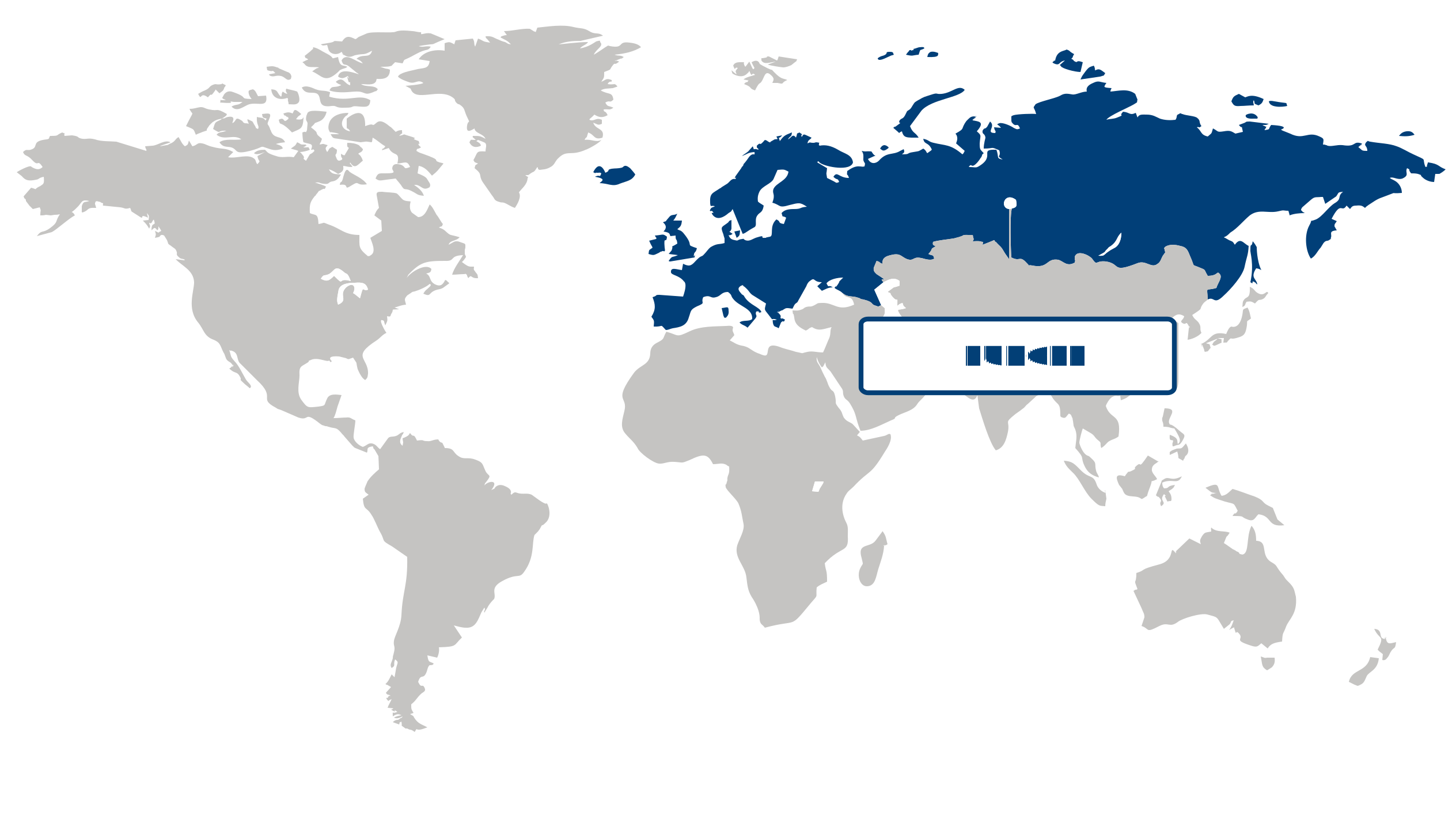
Largest Region
Europe
37.1% Market Share in 2026
Europe (Largest Region) vs Asia Pacific (Fastest-Growing Region)
Europe led the high temperature insulation market with a 37.10% share in 2026, supported by its mature industrial base, emphasis on energy efficiency, and strong focus on improving thermal performance across demanding industrial environments. High temperature insulation is important for managing heat loss, protecting equipment, and improving operational efficiency in applications exposed to elevated temperatures. Industrial modernization and continued attention to energy conservation and environmental performance further strengthen demand for advanced insulation solutions.
Asia Pacific is experiencing the fastest market growth as industrial expansion and infrastructure development increase the need for reliable thermal management across energy-intensive operations. The expansion of manufacturing, power generation, processing, and other high-temperature industrial applications is creating broader opportunities for insulation technologies. Growing emphasis on energy efficiency, equipment protection, and operational optimization is further encouraging the adoption of high temperature insulation solutions throughout the region.
Key Country Insights
The U.S. high temperature insulation market is driven by demand from industrial processing, power generation, and advanced manufacturing facilities. Companies are adopting durable insulation materials that improve thermal efficiency, reduce energy consumption, and support equipment reliability.
Japan is expanding the use of high temperature insulation materials across electronics, automotive, and industrial furnace applications. Japanese manufacturers are prioritizing materials that deliver thermal stability, process consistency, and extended equipment operating life.
South Korea is strengthening demand for high temperature insulation through semiconductor production, heavy industry, and energy-intensive manufacturing. Producers are focusing on innovative insulation materials that enhance operational efficiency and withstand increasingly complex industrial processes.
Germany is reinforcing the high temperature insulation market through investments in energy-efficient industrial equipment and advanced manufacturing operations. Manufacturers are selecting high-performance insulation materials that withstand demanding production environments while supporting sustainability objectives.
France is promoting high temperature insulation solutions that improve industrial energy efficiency while supporting emissions reduction initiatives. End users are modernizing thermal systems with advanced insulation materials designed for long service life and reliable process performance.
Italy is expanding high temperature insulation applications across metal processing, ceramics, and industrial manufacturing facilities. Italian manufacturers are investing in insulation upgrades that improve production efficiency while lowering maintenance requirements and energy losses.
Segment Leadership and Growth Trends
Product Segment Analysis: Ceramic Fiber (Largest Segment) vs Calcium Silicate (Fastest-Growing Segment)
Ceramic fiber held the largest share of the high temperature insulation market in 2026, accounting for 63% of the market. Its strong position is supported by its ability to withstand extreme temperatures while providing effective thermal insulation in demanding industrial environments. Ceramic fiber is particularly suitable for applications requiring lightweight materials, thermal stability, and resistance to repeated heating and cooling. Its established use across high-temperature processing operations continues to support broad adoption where reliable heat management is essential.
Calcium silicate is the fastest-growing product segment, supported by increasing demand for durable insulation materials that can improve thermal efficiency in industrial facilities. Its rigid structure and ability to provide effective heat retention make it suitable for equipment, piping, and other high-temperature applications. Greater attention to energy conservation, heat-loss reduction, and operational efficiency is encouraging industries to adopt insulation materials that support both thermal performance and long-term equipment protection.
Application Segment Analysis: Petrochemicals (Largest & Fastest-Growing Segment)
The petrochemicals segment led the high temperature insulation market in 2026, accounting for 37.1% of the market, and is also the fastest-growing application segment. Petrochemical processing involves extensive high-temperature operations in equipment, furnaces, reactors, pipelines, and related infrastructure, creating sustained demand for insulation capable of limiting heat loss and maintaining process stability. Growing emphasis on energy efficiency, worker protection, equipment reliability, and thermal management further strengthens the need for high-temperature insulation throughout petrochemical facilities.
| Report Segmentation | |||
| Segment | Sub-Segment | Largest Segment | Fastest Growing Segment |
|---|---|---|---|
| Product | Ceramic Fiber, Insulating Firebrick, Calcium Silicate, Other | Ceramic Fiber | Calcium Silicate |
| Application | Petrochemicals, Ceramics, Glass, Cement, Iron & Steel, Refractory, Powder Metallurgy, Aluminum, Others | Petrochemicals | Petrochemicals |
 Read our Research Approach
Competitive Landscape and Market Positioning
Major players in the high temperature insulation market:
1. Morgan Advanced Materials plc (United Kingdom)
2. Aspen Aerogels Inc. (United States)
3. Unifrax LLC (United States)
4. 3M Company (United States)
5. Rath AG (Austria)
6. Almatis GmbH (Germany)
7. Isolite Insulating Products Co. Ltd. (Japan)
8. Zircar Zirconia Inc. (United States)
9. Insulcon Group B.V. (Netherlands)
10. ADL Insulflex Inc. (Canada)
Industrial demand for advanced thermal protection is strengthening the high temperature insulation market. Research into high-performance insulation materials and continuous product innovation are improving heat resistance, durability, and energy efficiency across demanding industrial applications.
Industry Development/News
| Company Name | Date | Key Development |
|---|---|---|
| Saint-Gobain | Jun-26 | Saint-Gobain divested its HKO insulation textiles business to a fund managed by DUBAG Group. This strategic portfolio realignment allows the company to streamline its industrial operations and concentrate resources on higher-priority insulation and materials segments, reflecting a shift in focus toward more core-aligned high-performance product categories. |
| Alkegen | Jun-25 | Alkegen commercially launched AlkeGel™, a fiber-enhanced aerogel insulation product. The innovation delivers improved thermal efficiency and enhanced corrosion under insulation (CUI) protection while facilitating low-dust installation. This launch strengthens Alkegen's competitive position in the advanced high-performance insulation market, specifically targeting demanding industrial and energy sector applications. |
| IPCOM | Mar-24 | IPCOM acquired RSL Group, a UK and Ireland-based distributor specializing in refrigeration and air conditioning. The acquisition expands IPCOM's technical insulation distribution footprint and enhances its downstream supply chain capabilities, reinforcing the company’s ability to provide integrated insulation solutions across the European market. |
Why Choose Us
Specialized Expertise: Our team comprises industry experts with a deep understanding of your market segment. We bring specialized knowledge and experience that ensures our research and consulting services are tailored to your unique needs.
Customized Solutions: We understand that every client is different. That's why we offer customized research and consulting solutions designed specifically to address your challenges and capitalize on opportunities within your industry.
Proven Results: With a track record of successful projects and satisfied clients, we have demonstrated our ability to deliver tangible results. Our case studies and testimonials speak to our effectiveness in helping clients achieve their goals.
Cutting-Edge Methodologies: We leverage the latest methodologies and technologies to gather insights and drive informed decision-making. Our innovative approach ensures that you stay ahead of the curve and gain a competitive edge in your market.
Client-Centric Approach: Your satisfaction is our top priority. We prioritize open communication, responsiveness, and transparency to ensure that we not only meet but exceed your expectations at every stage of the engagement.
Continuous Innovation: We are committed to continuous improvement and staying at the forefront of our industry. Through ongoing learning, professional development, and investment in new technologies, we ensure that our services are always evolving to meet your evolving needs.
Value for Money: Our competitive pricing and flexible engagement models ensure that you get maximum value for your investment. We are committed to delivering high-quality results that help you achieve a strong return on your investment.
Select Licence Type

