



High Voltage Digital Substation Market Size & Growth Forecast 2027–2036, By Segments (Component, End Use, Installation, Architecture), Regional Demand Trends (North America, Asia Pacific, Europe), Key Country Insights (U.S., Japan, South Korea, Germany, France, Italy), and Competitive Landscape
Market Size and Growth Outlook
High Voltage Digital Substation Market size was around USD 926.41 Billion in 2026 and is slated to grow at 10.49% CAGR from 2027 to 2036, crossing USD 2.51 Trillion by 2036. The industry revenue for 2027 is estimated at USD 1.01 Trillion.
Base Year Value (2026)
USD 926.41 Billion
CAGR (2027-2036)
10.49%
Forecast Year Value (2036)
USD 2.51 Trillion

Historical Data Period
2022-2026

Largest Region
Europe

Forecast Period
2027-2036
High Voltage Digital Substation Market Intelligence Snapshot:
-
Regional Market Dynamics:
- Europe benefits from extensive grid modernization, renewable integration, aging transmission infrastructure, and investments in smart-grid digitalization, monitoring, and automation technologies.
- Rapid industrialization, urban expansion, rising power demand, renewable integration, and smart-grid investment are accelerating digitally enabled transmission infrastructure across the region.
-
Segment Momentum:
- The electrical system segment held 33.92% of the market in 2025 because it supports core substation functions including power transmission, voltage regulation, and reliable grid operation, backed by ongoing infrastructure modernization.
- New installations are growing fastest as utilities invest in greenfield transmission and distribution projects with advanced automation and communication capabilities to support smart grids, renewable integration, and rising electricity demand.
-
Market Expansion Drivers:
- Expansion of smart grid infrastructure driving digital substation modernization
- Rising electricity demand increasing need for advanced high voltage substations
- Peak load growth accelerating adoption of automated grid control systems
-
Leading Market Participants:
Prominent companies in the high voltage digital substation market include ABB Ltd. (Switzerland), Siemens AG (Germany), Schneider Electric SE (France), Hitachi Energy Ltd. (Switzerland), General Electric Company (United States), Eaton Corporation plc (Ireland), Cisco Systems, Inc. (United States), Mitsubishi Electric Corporation (Japan), Toshiba Energy Systems & Solutions Corporation (Japan), NR Electric Co., Ltd. (China)
Global Market Forecast Snapshot:
-
Market Outlook:
- 2026 Market Size: USD 926.41 Billion
- 2027 Estimated Market Size: USD 1.01 Trillion
- Projected Market Size: USD 2.51 Trillion by 2036
- Growth Forecasts: 10.49% CAGR (2027-2036)
-
Regional and Segment Outlook:
- Leading Regional Market: Europe
- High-Growth Regional Hub: Asia Pacific
- Core Revenue Segment: Electrical System (Component) | Utility (End Use) | Refurbished (Installation) | Process (Architecture)
- Emerging Opportunity Segment: Communication Network (Component) | Industrial (End Use) | New (Installation) | Station (Architecture)
Market Growth Drivers and Industry Trends
Expansion of smart grid infrastructure driving digital substation modernization
Electric utilities are investing in smart grid technologies to improve network visibility, operational flexibility, and real-time management of power systems. The high voltage digital substation market will drive modernization efforts by enabling the deployment of intelligent substations equipped with digital communication, advanced monitoring, and automated control capabilities. These upgrades enhance system reliability while allowing utilities to integrate modern grid technologies that support more efficient transmission and distribution operations.
Rising electricity demand increasing need for advanced high voltage substations
Growing electricity consumption across industrial, commercial, and residential sectors is placing greater pressure on transmission infrastructure to deliver reliable and uninterrupted power. The high voltage digital substation market growth is driven by the need for advanced substations capable of managing higher power flows while improving operational efficiency and network resilience. Utilities are increasingly upgrading conventional substations with digital technologies that strengthen equipment monitoring, fault detection, and asset management across expanding electrical networks.
Peak load growth accelerating adoption of automated grid control systems
Increasing peak electricity demand is encouraging grid operators to deploy intelligent control systems that improve network responsiveness and maintain stable power delivery during periods of high consumption. This trend will propel the high voltage digital substation market growth by expanding the adoption of automated grid control technologies that support faster decision-making, real-time system coordination, and enhanced operational reliability. The integration of digital protection, communication, and control platforms also enables utilities to optimize grid performance while reducing the likelihood of service interruptions under changing load conditions.
| Growth Driver Assessment Framework | |||||
| Growth Driver | Impact On CAGR | Regulatory Influence | Geographic Relevance | Adoption Rate | Impact Timeline |
|---|---|---|---|---|---|
| Expansion of smart grid infrastructure driving digital substation modernization | 2% | High | Asia Pacific, Europe | High | Near Term |
| Rising electricity demand increasing need for advanced high voltage substations | 1.8% | Moderate | North America, Asia Pacific | High | Near Term |
| Peak load growth accelerating adoption of automated grid control systems | 1.6% | Moderate | Europe, Middle East & Africa | High | Mid Term |
Unlock insights tailored to your business with our bespoke market research solutions - Click to get your customized report now!
Regional Demand Dynamics
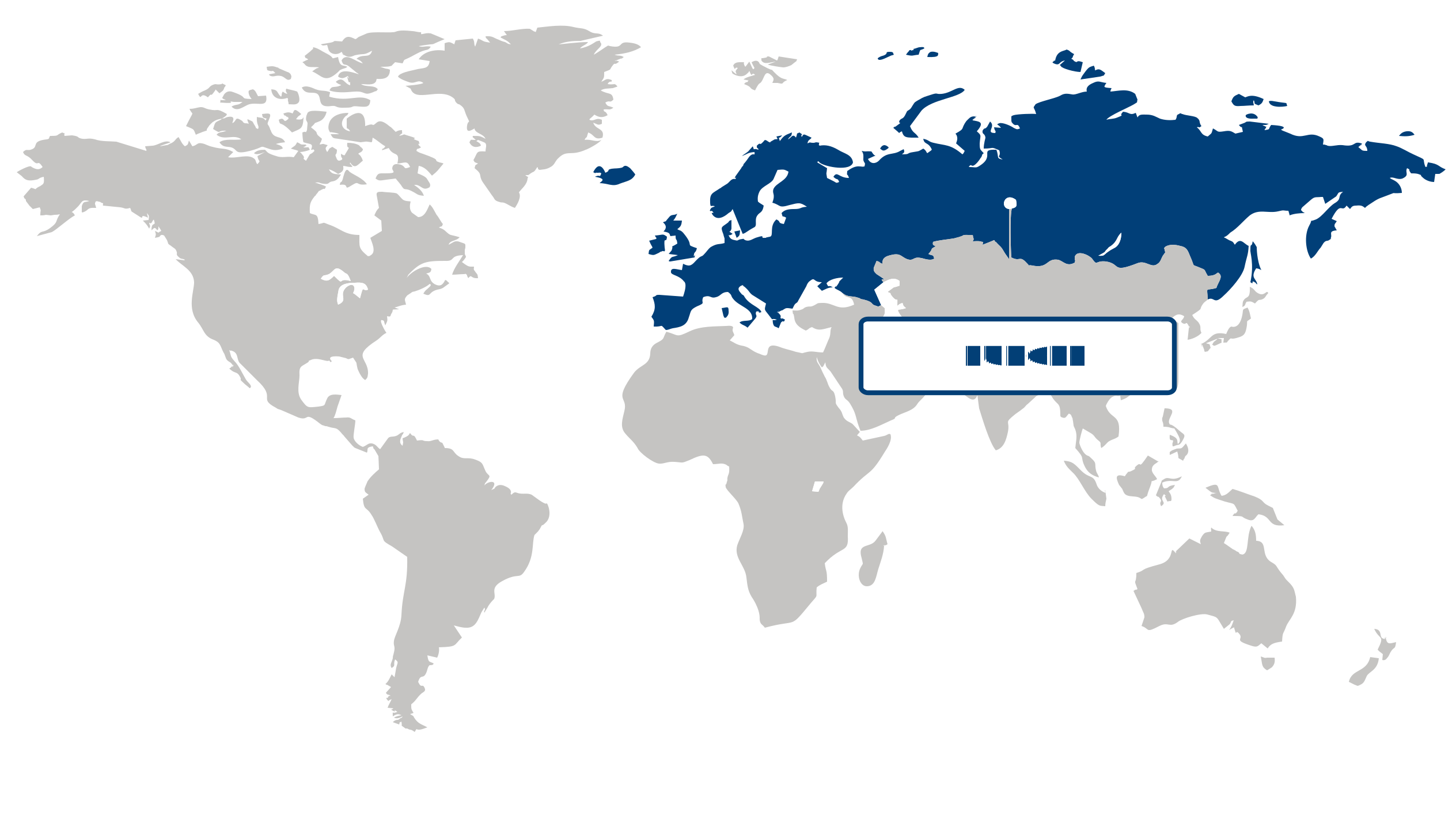
Largest Region
Europe
Largest Market Share in 2026
Europe (Largest Region) vs Asia Pacific (Fastest-Growing Region)
Europe held the largest share of the high voltage digital substation market in 2026, supported by extensive grid modernization initiatives, increasing integration of renewable energy, and the need to improve the reliability and efficiency of established electricity networks. Aging transmission infrastructure is encouraging utilities to adopt digital monitoring, automation, and control technologies that can enhance asset management and enable faster responses to grid disturbances. The region's emphasis on energy transition and power-system resilience is also increasing the need for substations capable of managing more variable and decentralized generation. In addition, investments in smart-grid infrastructure and digitalization are creating a favorable environment for high-voltage substations equipped with advanced communication and condition-monitoring capabilities.
Asia Pacific is expected to register the fastest growth, driven by rapid industrialization, urban expansion, and the continued development of electricity transmission infrastructure. Rising power demand is prompting governments and utilities to strengthen high-voltage networks while improving their ability to manage increasingly complex power flows. The expansion of renewable generation is further creating demand for digitally enabled substations that can support grid balancing, remote monitoring, and efficient integration of distributed power sources. Growing investment in smart-grid projects and infrastructure modernization, particularly across emerging economies, is expected to accelerate adoption as utilities seek more resilient and responsive transmission systems.
No card data available for this language/report.
Segment Leadership and Growth Trends
Component Segment Analysis: Electrical System (Largest Segment) vs Communication Network (Fastest-Growing Segment)
Holding the largest share of the high voltage digital substation market, the electrical system segment accounted for 33.92% in 2026. The segment remains fundamental to substation performance, encompassing critical equipment responsible for power transmission, voltage regulation, and operational reliability. Continuous modernization of grid infrastructure and the replacement of aging electrical assets are supporting sustained investment in advanced electrical systems that enhance efficiency, safety, and long-term network resilience.
The communication network segment is anticipated to experience the fastest growth as utilities increasingly deploy digital substations that depend on secure, high-speed data exchange between intelligent electronic devices. Expanding adoption of real-time monitoring, automation, and remote asset management is accelerating demand for robust communication infrastructure. The integration of advanced networking technologies also enables faster fault detection, improved operational visibility, and greater interoperability across modern power grids.
End Use Segment Analysis: Utility (Largest Segment) vs Industrial (Fastest-Growing Segment)
The utility segment held the largest share of the market in 2026, reflecting extensive investments by power generation, transmission, and distribution companies in digital grid modernization. Utilities continue to prioritize reliable electricity delivery, enhanced grid stability, and automated monitoring capabilities, making digital substations an essential component of next-generation power infrastructure. Increasing regulatory emphasis on grid reliability and renewable energy integration further reinforces the dominance of this segment.
In the high voltage digital substation market, the industrial segment is projected to register the fastest growth as energy-intensive industries adopt digital substations to improve power quality, operational continuity, and asset management. Industrial facilities are increasingly investing in intelligent electrical infrastructure to support automation, reduce unplanned downtime, and optimize energy consumption. The growing electrification of manufacturing operations and expansion of large industrial complexes are further contributing to rapid segment growth.
Installation Segment Analysis: Refurbished (Largest Segment) vs New (Fastest-Growing Segment)
The refurbished installation segment represented the largest share in 2026, as many utilities and grid operators preferred upgrading existing substations instead of constructing entirely new facilities. Refurbishment offers a practical approach to extending asset life while incorporating digital technologies that improve monitoring, automation, and operational efficiency. This strategy also minimizes project disruptions and enables organizations to modernize infrastructure in a cost-effective manner.
The new installation segment is expected to witness the fastest growth, supported by increasing investments in greenfield transmission and distribution projects designed for fully digital operation from the outset. Rising renewable energy integration, expanding electricity demand, and the development of smart grid infrastructure are encouraging utilities to deploy newly built digital substations equipped with advanced automation and communication capabilities.
| Report Segmentation | |||
| Segment | Sub-Segment | Largest Segment | Fastest Growing Segment |
|---|---|---|---|
| Component | Substation Automation System, Communication Network, Electrical System, Monitoring & Control System, Others | Electrical System | Communication Network |
| End Use | Utility, Industrial | Utility | Industrial |
| Installation | New, Refurbished | Refurbished | New |
| Architecture | Process, Bay, Station | Process | Station |
 Read our Research Approach
Competitive Landscape and Market Positioning
Major players in the high voltage digital substation market:
- ABB Ltd. (Switzerland)
- Siemens AG (Germany)
- Schneider Electric SE (France)
- Hitachi Energy Ltd. (Switzerland)
- General Electric Company (United States)
- Eaton Corporation plc (Ireland)
- Cisco Systems, Inc. (United States)
- Mitsubishi Electric Corporation (Japan)
- Toshiba Energy Systems & Solutions Corporation (Japan)
- NR Electric Co., Ltd. (China)
The transition toward digitally connected power infrastructure is reshaping competition around interoperability, cybersecurity, and intelligent automation instead of conventional substation equipment supply. Vendors are investing in standardized communication architectures, advanced monitoring capabilities, and software-driven asset management that enable utilities to modernize networks while improving operational visibility. Utilities are also placing greater importance on long-term system compatibility and scalable digital upgrades, encouraging suppliers to compete through integrated engineering expertise and lifecycle support that extends well beyond initial deployment.
Industry Development/News
| Company Name | Date | Key Development |
|---|---|---|
| ABB | Apr-22 | ABB inaugurated an expanded manufacturing facility in Gujarat, India, dedicated to digital substation products. The factory utilizes advanced technologies to produce cutting-edge components aimed at improving energy efficiency and reliability, strengthening the company's operational footprint in the power infrastructure sector. |
| Hitachi Energy | Mar-21 | Hitachi Energy introduced a Smart Digital Substation Transformer integrating digital capabilities with core transformer expertise. This technology provides real-time monitoring, diagnostics, and analytics to improve operational efficiency and reliability, supporting the transition toward modernized energy systems. |
Why Choose Us
Specialized Expertise: Our team comprises industry experts with a deep understanding of your market segment. We bring specialized knowledge and experience that ensures our research and consulting services are tailored to your unique needs.
Customized Solutions: We understand that every client is different. That's why we offer customized research and consulting solutions designed specifically to address your challenges and capitalize on opportunities within your industry.
Proven Results: With a track record of successful projects and satisfied clients, we have demonstrated our ability to deliver tangible results. Our case studies and testimonials speak to our effectiveness in helping clients achieve their goals.
Cutting-Edge Methodologies: We leverage the latest methodologies and technologies to gather insights and drive informed decision-making. Our innovative approach ensures that you stay ahead of the curve and gain a competitive edge in your market.
Client-Centric Approach: Your satisfaction is our top priority. We prioritize open communication, responsiveness, and transparency to ensure that we not only meet but exceed your expectations at every stage of the engagement.
Continuous Innovation: We are committed to continuous improvement and staying at the forefront of our industry. Through ongoing learning, professional development, and investment in new technologies, we ensure that our services are always evolving to meet your evolving needs.
Value for Money: Our competitive pricing and flexible engagement models ensure that you get maximum value for your investment. We are committed to delivering high-quality results that help you achieve a strong return on your investment.
Select Licence Type

