



Home Fragrance Market Size & Growth Forecast 2027–2036, By Segments (Product, Distribution Channel, Type), Regional Demand Trends (North America, Asia Pacific, Europe), Key Country Insights (U.S., Japan, South Korea, Germany, France, Italy), and Competitive Landscape
Market Size and Growth Outlook
Home Fragrance Market size was valued at USD 14.3 billion in 2026 and is anticipated to grow at a 8.74% CAGR from 2027 to 2036, crossing USD 33.05 billion by 2036. The industry revenue for 2027 is calculated at USD 15.35 billion.
Base Year Value (2026)
USD 14.3 billion
CAGR (2027-2036)
8.74%
Forecast Year Value (2036)
USD 33.05 billion

Historical Data Period
2022-2026

Largest Region
Europe

Forecast Period
2027-2036
Home Fragrance Market Intelligence Snapshot:
-
Regional Market Dynamics:
- Europe held a 36.04% share in 2026, supported by mature consumer demand, broad retail availability, and strong adoption of candles, diffusers, and seasonal fragrance products.
- Asia Pacific is projected to expand at a 10.4% CAGR, fueled by urban consumption, e-commerce access, and rising spending on lifestyle-oriented household products.
-
Segment Momentum:
- Sprays captured 35.83% of the market in 2026 because they provide immediate fragrance delivery, fit everyday household routines, and benefit from frequent replacement driven by regular use.
- Online channels are growing fastest as consumers increasingly value convenient shopping, broader fragrance selection, product reviews, and easy access to niche and repeat-purchase products.
-
Market Expansion Drivers:
- Rising consumer focus on home ambience and wellness-driven interior lifestyle enhancement.
- Growing demand for natural, eco-friendly fragrances and sustainable candle formulations.
- Increasing adoption of aromatherapy-based home fragrance products supporting stress and sleep improvement.
-
Leading Market Participants:
Prominent players in the home fragrance market include S. C. Johnson & Son, Inc. (United States), Procter & Gamble Company (United States), Bath & Body Works, Inc. (United States), Newell Brands Inc. (United States), Reckitt Benckiser Group plc (United Kingdom), The Estée Lauder Companies Inc. (United States), NEST New York (United States), Voluspa (United States), ScentAir Technologies LLC (United States), Seda France, Inc. (United States).
Global Market Forecast Snapshot:
-
Market Outlook:
- 2026 Market Size: USD 14.3 billion
- 2027 Estimated Market Size: USD 15.35 billion.
- Projected Market Size: USD 33.05 billion by 2036
- Growth Forecasts: 8.74% CAGR (2027-2036)
-
Regional and Segment Outlook:
- Leading Regional Market: Europe
- High-Growth Regional Hub: Asia Pacific
- Core Revenue Segment: Sprays (Product) | Supermarkets and Hypermarkets (Distribution Channel) | Mass (Type)
- Emerging Opportunity Segment: Scented Candles (Product) | Online (Distribution Channel) | Premium (Type)
Market Growth Drivers and Industry Trends
Rising consumer focus on home ambience and wellness-driven interior lifestyle enhancement
Greater attention to the sensory environment of residential spaces will drive the home fragrance market growth as consumers increasingly view fragrance as part of interior lifestyle and personal well-being. Candles, diffusers, room sprays, and other fragrance formats can be used to create distinct atmospheres associated with relaxation, freshness, comfort, or seasonal experiences. As consumers spend more time personalizing their living environments, fragrance products are becoming complementary elements of home décor rather than purely functional odor-control products. Product variety across scents, formats, and design aesthetics also allows consumers to coordinate fragrances with different rooms and lifestyle preferences.
Growing demand for natural, eco-friendly fragrances and sustainable candle formulations
Rising environmental awareness will support the home fragrance market growth as consumers increasingly evaluate the ingredients, materials, and production attributes associated with fragrance products. Demand for naturally positioned fragrances and sustainably formulated candles is encouraging manufacturers to explore plant-derived ingredients, responsibly sourced materials, recyclable packaging, and alternatives to conventional components. Consumers may also favor products that align with broader sustainability values while retaining attractive scent profiles and decorative appeal. This shift is encouraging product differentiation around ingredient transparency, packaging choices, responsible sourcing, and environmentally conscious formulation practices.
Increasing adoption of aromatherapy-based home fragrance products supporting stress and sleep improvement
Growing consumer interest in aromatherapy will boost the home fragrance market demand as fragrance products become increasingly associated with relaxation, sleep routines, and emotional well-being. Essential-oil-based diffusers, scented candles, and related products are being incorporated into bedtime, meditation, and relaxation practices as consumers seek sensory experiences that complement wellness routines. Fragrance profiles associated with calming or soothing environments can also influence how consumers use products across bedrooms, living spaces, and personal relaxation areas. The integration of fragrance into daily wellness rituals expands its role beyond home decoration and conventional ambient scenting.
| Growth Driver Assessment Framework | |||||
| Growth Driver | Impact On CAGR | Regulatory Influence | Geographic Relevance | Adoption Rate | Impact Timeline |
|---|---|---|---|---|---|
| Rising consumer focus on home ambience and wellness-driven interior lifestyle enhancement | 2.50% | Low | North America, Europe | High | Near Term |
| Growing demand for natural, eco-friendly fragrances and sustainable candle formulations | 2.30% | Moderate | Europe, North America | High | Mid Term |
| Increasing adoption of aromatherapy-based home fragrance products supporting stress and sleep improvement | 1.90% | Moderate | North America, Asia Pacific | High | Mid Term |
Unlock insights tailored to your business with our bespoke market research solutions - Click to get your customized report now!
Regional Demand Dynamics
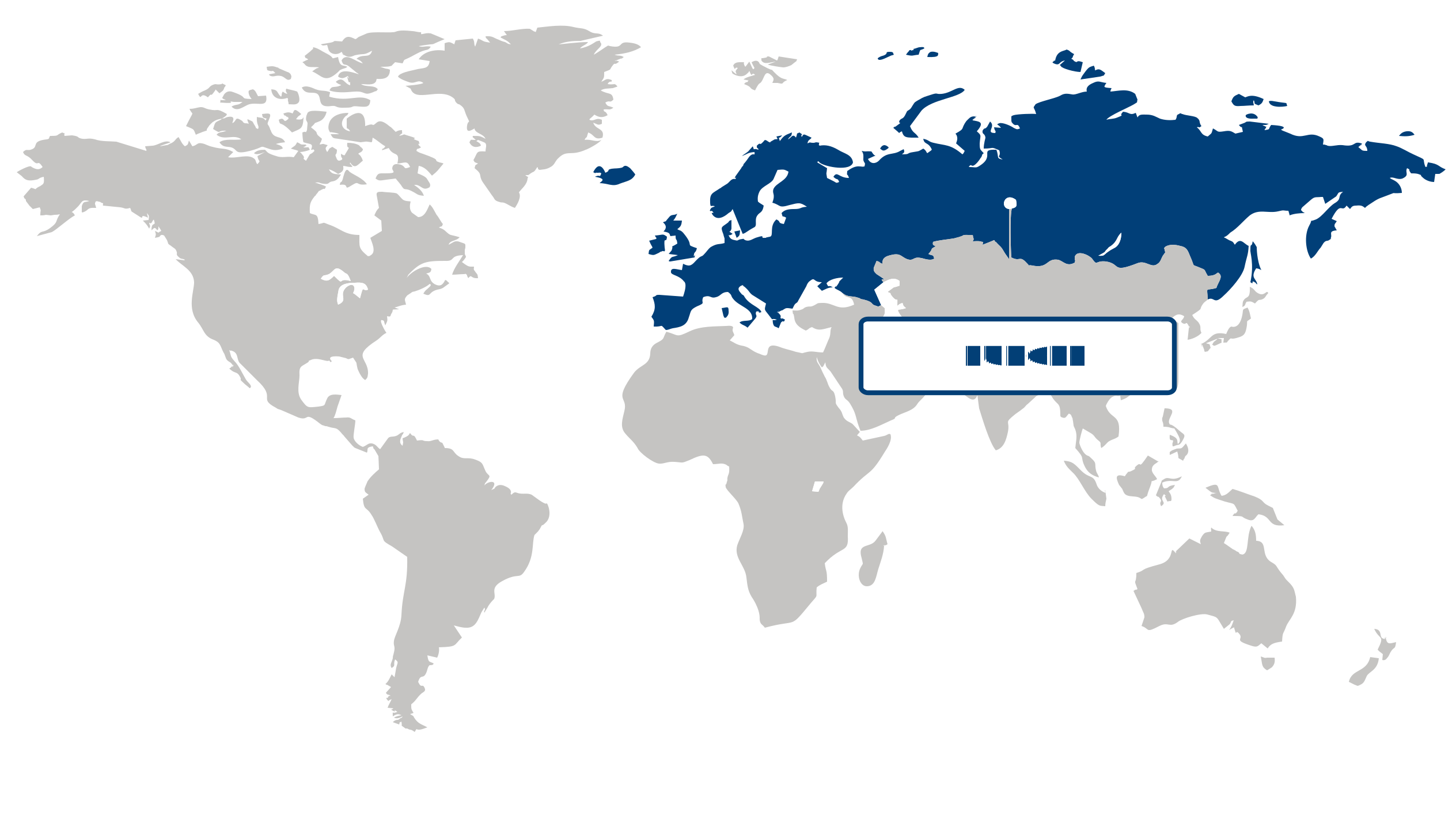
Largest Region
Europe
36.04% Market Share in 2026
Europe (Largest Region) vs Asia Pacific (Fastest-Growing Region)
Europe held the largest share of 36.04% in 2026 in the home fragrance market, supported by strong consumer emphasis on home ambience, interior aesthetics, and lifestyle-oriented products. Candles, diffusers, room sprays, and other fragrance formats are widely incorporated into household routines, while demand for premium, natural, and aesthetically designed products continues to create opportunities for value-added offerings. Mature retail infrastructure, strong e-commerce adoption, and consumer interest in wellness and personalized living environments further support the region’s established market position.
Asia Pacific is the fastest-growing region, driven by rapid urbanization, rising household incomes, and increasing consumer interest in improving residential environments. Growing exposure to global lifestyle trends is encouraging the adoption of home fragrance products beyond traditional applications, particularly among younger urban consumers seeking products associated with relaxation, comfort, and personal expression. Expanding organized retail and e-commerce platforms are also making a broader range of fragrances accessible, while rising interest in home décor and wellness-oriented consumption is creating additional demand across the region.
Key Country Insights
The U.S. home fragrance market continues evolving through premium candles, diffusers, and smart fragrance solutions that enhance home environments. U.S. brands focus on seasonal collections, wellness-inspired scents, and omnichannel retail strategies to maintain consumer engagement.
Japan's home fragrance market favors subtle scents and space-efficient formats suited to modern residential environments. Japanese manufacturers continue developing refined fragrance profiles and elegant product designs that align with everyday home aesthetics.
South Korea integrates home fragrance products into contemporary interior styling and lifestyle trends. South Korean consumers increasingly choose aesthetically designed diffusers and candles that combine visual appeal with distinctive fragrance experiences.
Germany prioritizes home fragrance products made with natural ingredients, recyclable packaging, and long-lasting performance. German consumers increasingly value products that balance fragrance quality with environmentally responsible sourcing and production practices.
France supports the home fragrance market through established expertise in fragrance creation and premium scent development. French brands continue introducing sophisticated collections that combine craftsmanship, distinctive aromas, and decorative product presentation.
Italy positions home fragrance products as both sensory and decorative lifestyle items. Italian manufacturers increasingly combine premium fragrances with artistic packaging and interior-focused designs to appeal to consumers seeking elevated home décor experiences.
Segment Leadership and Growth Trends
Product Segment Analysis: Sprays (Largest Segment) vs Scented Candles (Fastest-Growing Segment)
In the home fragrance market, sprays accounted for the largest share of 35.83% in 2026, supported by their convenience, ease of application, and ability to provide immediate fragrance enhancement within residential spaces. Consumers can use sprays flexibly across rooms and adjust fragrance intensity according to personal preferences, making them practical for everyday household use. Their broad availability through retail channels and diverse range of fragrance profiles further contributes to their popularity. Increasing interest in creating pleasant and personalized home environments continues to sustain demand for spray-based fragrance products.
Scented candles are expected to be the fastest-growing product segment, driven by rising consumer interest in ambiance, relaxation, and sensory experiences within the home. Beyond fragrance, candles contribute decorative and atmospheric value, making them increasingly relevant to consumers seeking wellness-oriented and aesthetically appealing home environments. Growing interest in self-care rituals and experiential home products is encouraging greater use of scented candles. Premium fragrance combinations, attractive presentation, and their suitability for gifting are also supporting wider adoption.
Distribution Channel Segment Analysis: Supermarkets and Hypermarkets (Largest Segment) vs Online (Fastest-Growing Segment)
The supermarkets and hypermarkets segment held the largest share of 41.87% in 2026 in the home fragrance market, benefiting from high consumer accessibility and the ability to offer a broad selection of household fragrance products in a single shopping environment. Physical retail allows consumers to compare product formats, fragrances, packaging, and prices while making immediate purchases. Strong visibility through established retail networks and the routine nature of household shopping further supports this channel's leading position.
Online distribution is anticipated to be the fastest-growing channel, supported by increasing consumer preference for convenient shopping and the expanding availability of home fragrance products through digital platforms. Online channels provide access to a broader product assortment, detailed product information, customer reviews, and convenient delivery options. Digital commerce also enables consumers to discover niche and premium fragrance products that may have limited physical distribution. These advantages, combined with the broader shift toward online household purchasing, are expected to accelerate growth in the online channel.
| Report Segmentation | |||
| Segment | Sub-Segment | Largest Segment | Fastest Growing Segment |
|---|---|---|---|
| Product | Scented Candles, Sprays, Essential Oils, Incense Sticks, Others | Sprays | Scented Candles |
| Distribution Channel | Supermarkets and Hypermarkets, Specialty Stores, Convenience Stores, Online, Others | Supermarkets and Hypermarkets | Online |
| Type | Mass, Premium | Mass | Premium |
 Read our Research Approach
Competitive Landscape and Market Positioning
Leading companies in the home fragrance market:
1. S. C. Johnson & Son Inc. (United States)
2. Procter & Gamble Company (United States)
3. Bath & Body Works Inc. (United States)
4. Newell Brands Inc. (United States)
5. Reckitt Benckiser Group plc (United Kingdom)
6. The Estée Lauder Companies Inc. (United States)
7. NEST New York (United States)
8. Voluspa (United States)
9. ScentAir Technologies LLC (United States)
10. Seda France Inc. (United States)
The home fragrance market is experiencing strong innovation driven by demand for premium scents, wellness-oriented products, and eco-conscious fragrance solutions. Manufacturers are introducing seasonal collections, natural ingredient blends, and sustainable packaging formats to attract a broader consumer base. Increasing consumer preference for personalized home environments and relaxation-focused products is also contributing to growth in the home fragrance market.
Industry Development/News
| Company Name | Date | Key Development |
|---|---|---|
| Turpaz Industries | May-26 | Turpaz Industries acquired Phoenix Flavors & Fragrances for $95 million. This transaction significantly scales Turpaz’s global fragrance and specialty ingredients portfolio, bolstering its manufacturing capabilities in the U.S. and enhancing its ability to compete in international markets through targeted strategic expansion. |
| SEVA Home | May-26 | SEVA Home launched its "ELEMENTAL" luxury candle collection, featuring an identity-driven fragrance range in minimalist packaging. The brand further differentiates itself by integrating social impact initiatives into its production ecosystem, linking product sales to healthcare funding and community employment programs. |
| K. Hall Studio | Feb-26 | K. Hall Studio acquired the "Homesick" brand from WIN Brands Group. This acquisition integrates narrative-based fragrance branding into K. Hall Studio’s lifestyle portfolio, strengthening its position in the storytelling-driven scent segment and reinforcing its U.S.-based manufacturing capacity for home fragrance goods. |
| SCENTA | Jan-26 | SCENTA launched a smart fragrance ecosystem at CES 2026, integrating IoT technology for intelligent scent delivery and personalization. This move positions the company at the intersection of consumer technology and home fragrance, targeting demand for customizable, app-controlled ambient scenting for residential environments. |
| Yankee Candle | Oct-25 | Yankee Candle launched the "YC Collection," a premium-tier fragrance line designed to align with "quiet luxury" trends. The collection features sophisticated, perfumer-crafted scents, a proprietary dye-free wax blend, and high-end minimalist vessels, representing a strategic shift toward elevated design and modern aesthetics in its mass-market portfolio. |
| Glasshouse Fragrances | Oct-25 | Glasshouse Fragrances executed a nationwide U.S. retail partnership with Anthropologie, placing its candle and diffuser lines in approximately 130 stores. This strategic distribution expansion significantly increases the brand's visibility and accessibility, facilitating entry into the broader American premium home scent consumer base. |
| Victoria's Secret | Sep-25 | Victoria's Secret officially diversified its portfolio by launching a dedicated home fragrance collection, including candles, room sprays, and reed diffusers. By extending its signature personal fragrance scents into the home category, the company aims to capitalize on lifestyle-based brand loyalty and capture share in the home ambiance market. |
| L’Occitane | Jan-24 | L’Occitane acquired Italian home fragrance brand Dr. Vranjes Firenze. This acquisition strengthens L’Occitane’s position in the luxury home scent segment, combining Dr. Vranjes' artisanal heritage and high-end positioning with L’Occitane’s global distribution network to drive long-term growth in the premium fragrance market. |
| L’Oréal Group | Feb-24 | L’Oréal Group made a strategic investment in the Chinese home fragrance brand "To Summer." This move highlights L’Oréal's commitment to capturing high-growth niche fragrance markets and reinforces its strategy to localize premium home scent experiences for the evolving consumer demand within the Asian market. |
| Monogram Capital | Apr-24 | Monogram Capital Partners acquired a majority stake in Tru Fragrance & Beauty. This investment expands its footprint in fragrance brand development and manufacturing, enhancing the company’s portfolio exposure to both independent and licensed brands within the high-growth home and personal fragrance ecosystems. |
Why Choose Us
Specialized Expertise: Our team comprises industry experts with a deep understanding of your market segment. We bring specialized knowledge and experience that ensures our research and consulting services are tailored to your unique needs.
Customized Solutions: We understand that every client is different. That's why we offer customized research and consulting solutions designed specifically to address your challenges and capitalize on opportunities within your industry.
Proven Results: With a track record of successful projects and satisfied clients, we have demonstrated our ability to deliver tangible results. Our case studies and testimonials speak to our effectiveness in helping clients achieve their goals.
Cutting-Edge Methodologies: We leverage the latest methodologies and technologies to gather insights and drive informed decision-making. Our innovative approach ensures that you stay ahead of the curve and gain a competitive edge in your market.
Client-Centric Approach: Your satisfaction is our top priority. We prioritize open communication, responsiveness, and transparency to ensure that we not only meet but exceed your expectations at every stage of the engagement.
Continuous Innovation: We are committed to continuous improvement and staying at the forefront of our industry. Through ongoing learning, professional development, and investment in new technologies, we ensure that our services are always evolving to meet your evolving needs.
Value for Money: Our competitive pricing and flexible engagement models ensure that you get maximum value for your investment. We are committed to delivering high-quality results that help you achieve a strong return on your investment.
Select Licence Type

