Homeopathy Product Market Size & Growth Forecast 2027–2036, By Segments (Source, Product, Application), Regional Demand Trends (North America, Asia Pacific, Europe), Key Country Insights (U.S., Japan, South Korea, Germany, France, Italy), and Competitive Landscape
Jump to content
Market Size and Growth Outlook
Homeopathy Product Market size was estimated at USD 12.54 billion in 2026 and is projected to grow at a 10.71% CAGR from 2027 to 2036, attaining USD 34.69 billion by 2036. The industry revenue for 2027 is assessed at USD 13.81 billion.
Get more details on this report
Request Free Sample ReportHomeopathy Product Market Intelligence Snapshot
Regional Market Dynamics
- Europe leads due to its established consumer base, extensive product availability, strong pharmacy and practitioner distribution channels, and consistent use of homeopathic remedies in routine self-care.
- Asia Pacific is projected to grow at a 13.33% CAGR, driven by rising interest in alternative care, expanding retail and online distribution, and increasing wellness-focused consumer purchasing.
Segment Momentum
- Plant-based sources lead the market because they support a wide range of established homeopathic formulations, enabling broad product portfolios and reliable supply across common remedy categories.
- Tincture is expanding fastest because its versatility supports both further remedy preparation and direct use, giving manufacturers and practitioners greater formulation flexibility.
Market Expansion Drivers
- Expanding homeopathy clinic networks improving accessibility in underserved regional markets.
- Rising consumer preference for alternative therapies supporting homeopathic medicine adoption for chronic conditions.
- Increasing digital health platforms and online consultations enhancing distribution of homeopathic products.
Leading Market Participants
- Major players in the homeopathy product market include Boiron Group (France), Heel GmbH (Germany), Herb Pharm, LLC (United States), Nelsons (United Kingdom), Schwabe Group (Germany), Hyland's, Inc. (United States), Ayush Ayurvedic Pte Ltd. (Singapore), The Healing Company Ltd. (United Kingdom).
Global Market Forecast Snapshot
Market Outlook
- 2026 Market Size: USD 12.54 billion
- 2027 Estimated Market Size: USD 13.81 billion.
- Projected Market Size: USD 34.69 billion by 2036
- Growth Forecast: 10.71% CAGR (2027-2036)
Regional and Segment Outlook
- Leading Regional Market: Europe
- High-Growth Regional Hub: Asia Pacific
- Core Revenue Segment: Plants (Source) | Dilutions (Product) | Analgesic (Application)
- Emerging Opportunity Segment: Animals (Source) | Tincture (Product) | Respiratory (Application)
Market Growth Drivers and Industry Trends
Expanding homeopathy clinic networks improving accessibility in underserved regional markets
Expansion of homeopathy clinic networks will support the homeopathy product market by making consultations and related treatments more accessible to consumers in regions with limited availability of alternative healthcare services. New and expanded clinics can provide patients with direct access to practitioners, product recommendations, and follow-up care, reducing geographic barriers to obtaining homeopathic treatments. Greater availability of practitioners also helps integrate homeopathy into local healthcare-seeking patterns, particularly in communities where consumers already use complementary approaches. The broader clinic network creates additional channels through which homeopathic products can reach patients under practitioner guidance.
Rising consumer preference for alternative therapies supporting homeopathic medicine adoption for chronic conditions
Growing interest in alternative and complementary therapies is contributing to the homeopathy product market as some consumers seek approaches they perceive as suitable for managing long-term health concerns. Individuals dealing with recurring or chronic conditions may explore homeopathic medicines alongside other healthcare options, particularly when they are interested in personalized or non-conventional treatment approaches. This preference can encourage continued product use over extended periods and increase demand for different homeopathic preparations aligned with individual treatment practices. Consumer interest in holistic approaches to wellness is also supporting broader awareness of homeopathic products across complementary healthcare settings.
Increasing digital health platforms and online consultations enhancing distribution of homeopathic products
The expansion of digital health services is widening access to the homeopathy product market by connecting consumers with practitioners through online consultations and enabling product-related interactions beyond physical clinics. Digital platforms can facilitate remote appointments, follow-up consultations, treatment guidance, and access to homeopathic products for consumers who may live far from established practitioners. Online channels also make it easier for consumers to explore different product categories and receive recommendations within digital healthcare ecosystems. This combination of virtual consultation and online distribution is reducing geographical constraints while providing a more convenient pathway for consumers seeking homeopathic care.
| Growth Driver | Impact on CAGR | Regulatory Influence | Geographic Relevance | Adoption Rate | Impact Timeline |
|---|---|---|---|---|---|
| Expanding homeopathy clinic networks improving accessibility in underserved regional markets | 1.80% | Moderate | Asia Pacific, Latin America | High | Near Term |
| Rising consumer preference for alternative therapies supporting homeopathic medicine adoption for chronic conditions | 1.70% | Low | Europe, Asia Pacific, North America | Medium | Mid Term |
| Increasing digital health platforms and online consultations enhancing distribution of homeopathic products | 1.40% | Moderate | North America, Europe | Emerging | Long Term |
Unlock insights tailored to your business with our bespoke market research solutions.
Click to get your customized report now.
Regional Demand Dynamics
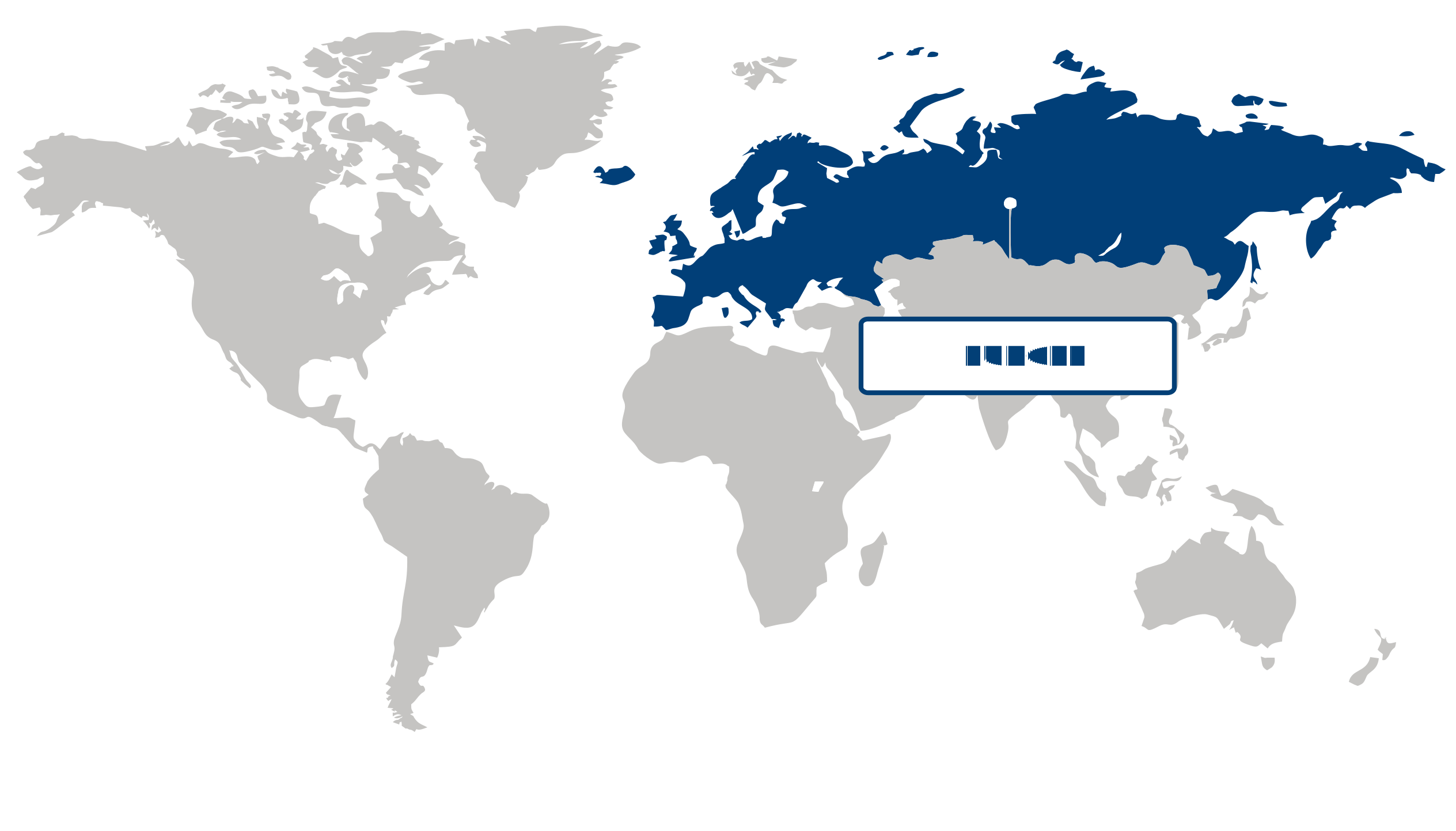
Europe (Largest Region)
Europe led the homeopathy product market in 2026, supported by longstanding consumer familiarity with homeopathic practices and an established complementary healthcare culture across several countries. The region has a developed distribution network for complementary and alternative health products, including specialized retail channels and pharmacies. Consumer interest in holistic approaches to wellness continues to support demand, while established practitioner networks contribute to product awareness and accessibility. Regulatory frameworks governing homeopathic products and increasing consumer attention to preventive wellness further shape market development, creating an established environment for these products within the broader complementary healthcare landscape.
Asia Pacific (Fastest-Growing Region)
Asia Pacific is experiencing the fastest growth in the homeopathy product market, driven by increasing interest in traditional and complementary approaches to healthcare, expanding consumer health awareness, and improving access to organized wellness and healthcare channels. Growing urban populations are contributing to broader exposure to alternative health products, while rising disposable incomes are enabling consumers to explore a wider range of wellness-oriented options. The coexistence of traditional medical practices and modern healthcare systems provides a favorable environment for complementary products. Increasing retail availability, practitioner awareness, and consumer interest in holistic wellness are further supporting adoption across the region.
| Parameter | North America | Asia Pacific | Europe | Latin America | MEA |
|---|---|---|---|---|---|
| Innovation HubiScaleNascentDeveloping Advanced | |||||
| Cost-Sensitive RegioniScaleLowMedium High | |||||
| Regulatory EnvironmentiScaleRestrictiveNeutral Supportive | |||||
| Demand DriversiScaleWeakModerate Strong | |||||
| Development StageiScaleEmergingDeveloping Developed | |||||
| Adoption RateiScaleLowMedium High | |||||
| New Entrants / StartupsiScaleSparseModerate Dense | |||||
| Macro IndicatorsiScaleWeakStable Strong |
Key Country Insights
Germany 🇩🇪
Established Pharmacy PresenceGermany maintains a mature homeopathy product market with strong pharmacy participation and long-standing consumer familiarity. Manufacturers continue investing in quality standards and diversified formulations to meet varied therapeutic preferences.
France 🇫🇷
Traditional Alternative CareFrance supports homeopathy products through established consumer familiarity with alternative healthcare options despite evolving regulatory discussions. Companies increasingly focus on product credibility, pharmacy engagement, and targeted wellness applications to sustain demand.
Italy 🇮🇹
Heritage Wellness DemandItaly continues to value homeopathy products within complementary healthcare traditions supported by pharmacies and specialty retailers. Manufacturers are enhancing product accessibility and emphasizing quality assurance to strengthen long-term consumer trust.
Japan 🇯🇵
Niche Wellness AdoptionJapan's homeopathy product market remains focused on specialized wellness consumers seeking complementary health approaches. Market participants prioritize education, trusted distribution channels, and product differentiation to support informed purchasing decisions.
South Korea 🇰🇷
Complementary Health InterestSouth Korea is witnessing steady interest in homeopathy products among consumers exploring broader wellness solutions. Suppliers are expanding digital engagement and educational initiatives to improve awareness while positioning products within complementary care portfolios.
United States 🇺🇸
Consumer Wellness ChoicesThe U.S. homeopathy product market is supported by consumers seeking complementary wellness options alongside conventional healthcare. Companies are strengthening retail distribution while emphasizing transparent labeling and product quality to build consumer confidence.
Homeopathy Product Market Share (%), by Source, 2026
Go beyond the chart, access full insights & data tables
Request Free Sample ReportSource Segment Analysis: Plants (Largest Segment) vs Animals (Fastest-Growing Segment)
Plant-based sources accounted for the largest share of the homeopathy product market in 2026. Their leading position is supported by the broad use of plant-derived substances in homeopathic formulations and the established consumer familiarity with botanical ingredients. Plant sources provide a diverse range of materials that can be incorporated into different homeopathic preparations, supporting their applicability across various product categories. Continued consumer interest in plant-based wellness approaches and naturally derived ingredients further reinforces demand for plant-sourced homeopathy products.
Animal-derived sources are expected to represent the fastest-growing segment during the forecast period as interest expands in diverse source materials used for specialized homeopathic preparations. Increasing consumer awareness of different homeopathic formulations and growing interest in alternative therapeutic approaches are supporting broader consideration of animal-derived ingredients. Greater product diversification and demand for specialized remedies are expected to contribute to the segment's expansion.
Product Segment Analysis: Dilutions (Largest Segment) vs Tincture (Fastest-Growing Segment)
The dilutions segment held the largest share of the homeopathy product market in 2026, reflecting the widespread use of diluted preparations in homeopathic products. Their established role across a broad range of remedies supports consistent demand, while the flexibility of dilution-based formulations enables their incorporation into diverse product offerings. Continued consumer familiarity with conventional homeopathic preparations and sustained interest in alternative wellness products reinforce the segment's leading position.
Tincture products are projected to grow at the fastest pace during the forecast period, supported by increasing interest in liquid formulations that can provide convenient administration and flexible use. Tinctures offer a distinct format for incorporating source materials into homeopathic preparations and can appeal to consumers seeking easily administered products. Expanding product variety and consumer interest in alternative formats are expected to support greater adoption of tincture-based products.
| Segment | Sub-Segment | Largest Segment | Fastest Growing |
|---|---|---|---|
| Source | Plants, Minerals, Animals | Plants | Animals |
| Product | Dilutions, Tincture, Tablets, Others | Dilutions | Tincture |
| Application | Analgesic, Antipyretic, Respiratory, Neurology, Others | Analgesic | Respiratory |
Competitive Landscape and Market Positioning
Prominent players in the homeopathy product market:
1. Boiron Group (France)
2. Heel GmbH (Germany)
3. Herb Pharm LLC (United States)
4. Nelsons (United Kingdom)
5. Schwabe Group (Germany)
6. Hyland's Inc. (United States)
7. Ayush Ayurvedic Pte Ltd. (Singapore)
8. The Healing Company Ltd. (United Kingdom)
The homeopathy product market is expanding through wider distribution networks and increased accessibility across wellness channels. Product diversification is playing a central role, with new formulations targeting specific health concerns and wellness routines. Strengthened ecosystem integration with retail and healthcare platforms is enhancing visibility and adoption. Regulatory alignment efforts are also supporting structured growth and improving consumer trust in alternative treatment options.
| Company | Market Share | Company Revenue | Revenue CAGR (%) | Product Portfolio | Geographic Presence | Innovation / R&D Focus | Strategic Developments |
|---|---|---|---|---|---|---|---|
| Boiron Group (France) | |||||||
| Heel GmbH (Germany) | |||||||
| Herb Pharm LLC (United States) | |||||||
| Nelsons (United Kingdom) | |||||||
| Schwabe Group (Germany) | |||||||
| Hyland's Inc. (United States) | |||||||
| Ayush Ayurvedic Pte Ltd. (Singapore) | |||||||
| The Healing Company Ltd. (United Kingdom). |
Industry Development / News
| Company Name | Date | Key Development |
|---|---|---|
| Hyland’s | Jan-25 | Hyland’s expanded distribution of its Baby Oral Pain Relief tablets across major U.S. retail chains following reformulation to remove belladonna and benzocaine. The expansion strengthens retail penetration and enhances product safety positioning within pediatric homeopathic treatment offerings. |
| Dr. Willmar Schwabe GmbH & Co. KG | Jan-25 | Dr. Willmar Schwabe GmbH & Co. KG invested in advanced botanical extraction systems to enhance tincture manufacturing capabilities. The initiative strengthens production efficiency and supports expansion of standardized herbal and homeopathic formulations within its pharmaceutical manufacturing operations. |
| SBL | Jan-25 | SBL expanded pediatric homeopathic syrup production targeting seasonal respiratory support applications. The development enhances manufacturing capacity for child-focused formulations and strengthens its presence in preventive and seasonal homeopathic healthcare solutions. |
| Boiron USA | Aug-24 | Boiron USA established a new logistics centre in Newtown Square, Pennsylvania, to streamline warehousing and national distribution. The facility enhances supply chain efficiency and strengthens nationwide delivery capabilities for its homeopathic product portfolio in the U.S. market. |
| Boiron | Jan-24 | Boiron launched advanced immunity-support tablet formulations with sugar-free ingredients to expand its homeopathic product range. The development strengthens its consumer health portfolio by addressing demand for alternative immune support solutions in the over-the-counter segment. |
| Homeocan | Jan-24 | Homeocan strengthened its online retail distribution networks across North America to improve accessibility of homeopathic products. The expansion enhances digital sales reach and reinforces its commercial positioning in consumer-driven homeopathic healthcare markets. |
| Heel GmbH | Jan-23 | Heel GmbH introduced recyclable medicinal packaging solutions for respiratory wellness products, supporting sustainability initiatives within its homeopathy portfolio. The development improves environmental performance while maintaining compliance with pharmaceutical packaging standards. |
Customize Your Report
Explore examples of how this report can be tailored to different research needs, including custom segments, additional topics or chapters, and related reports. Click a section of the wheel or its numbered marker to explore the available options.
Homeopathy Product Market — Custom Segments
| Segment | Sub-Segment |
|---|---|
| Practitioner Involvement | Practitioner-Prescribed Products, Practitioner-Recommended Products, Self-Medication Products |
| Distribution Model | Pharmacies & Drugstores, Specialty Homeopathy Stores & Clinics, Online Channels |
| Consumer Age Group | Pediatric, Adult, Geriatric |
Homeopathy Product Market — Custom TOC
| Custom Chapter | Chapter Details |
|---|---|
| Consumer Trust and Adoption Behavior Assessment |
|
| Retail, Practitioner, and Digital Distribution Strategy |
|
| Country-Level Regulatory Acceptance Readiness |
|
Need a different cut of the data?
Request Custom ResearchFrequently Asked Questions
How much revenue does the homeopathy product market generate?
How much is the homeopathy product industry expected to grow by 2036?
How is the expansion of digital consultations affecting distribution dynamics in the homeopathy product market?
What role is rising interest in alternative therapies playing in shaping long-term demand patterns for homeopathy products?
Why do plant-based sources hold the largest share of the homeopathy product market?
Why is tincture the fastest-growing product segment in the homeopathy product market?
What factors support Europe's leadership in the homeopathy product market?
Why is Asia Pacific emerging as the fastest-growing homeopathy products market?
What are the prominent companies operating in the homeopathy product landscape?
Our Clients
"The team took the time to understand our specific business needs and delivered a report that was well aligned with our objectives. Their expertise and understanding of the industry were clearly reflected in the quality and relevance of the insights provided."
Siemens Healthcare
"Our experience in acquiring the research report has been excellent. The depth of analysis, and actionable insights provided have been extremely valuable in supporting our ongoing R&D efforts."
GC Biopharma
"The report offered a comprehensive view of the market trends. The in-depth segmentation and analysis of emerging opportunities gave us a better understanding of the market."
Medtronic
Our Research Team & Methodology
Every Fundamental Business Insights report is built by a dedicated vertical research team, validated through a structured primary-and-secondary methodology, and reviewed for accuracy before it reaches you.
Delivery
Published
Available
Support
- Market Size & Forecast
- Market Segmentation
- Regional Analysis
- Growth Drivers & Challenges
- Market Dynamics
- Competitive Landscape
- Company Profiles
- Competitive Benchmarking
- Mergers & Acquisitions
- Market Share Analysis or Key Company Strategies
- Value Chain Analysis
- Porter's Five Forces
- PESTLE Analysis
- Pricing Trends
- Supply-Demand Analysis
- Technology Landscape
- Regulatory Landscape
- Investment & Funding Landscape
- Emerging Opportunities
- Future Market Outlook