



Honeycomb Paperboard Packaging Market Size & Forecasts 2026-2035, By Segments (Material, Product Type, Application, End User Industry), Growth Opportunities, Innovation Landscape, Regulatory Shifts, Strategic Regional Insights (U.S., Japan, China, South Korea, UK, Germany, France), and Competitive Dynamics (International Paper, WestRock, Smurfit Kappa, DS Smith, Georgia-Pacific)
Market Size and Growth Outlook
Honeycomb Paperboard Packaging Market size is anticipated to rise from USD 1.84 billion in 2025 to USD 3.45 billion by 2035, reflecting a CAGR surpassing 6.5% over the forecast horizon of 2026-2035. The estimated revenue for 2026 is USD 1.94 billion.
Base Year Value (2025)
USD 1.84 billion
CAGR (2026-2035)
6.5%
Forecast Year Value (2035)
USD 3.45 billion

Historical Data Period
2022-2025

Largest Region
Asia Pacific

Forecast Period
2026-2035
Key Takeaways
- Asia Pacific region captured around 42% revenue share in 2025, supported by China's dominance in international exports and the regional expansion of electronic manufacturing.
- Asia Pacific region will expand at around 7.4% CAGR from 2026 to 2035, accelerated by rising domestic consumption and government-led bans on non-biodegradable materials.
- The kraft paper segment led the honeycomb paperboard packaging market in 2025, supported by strong demand for recyclable and sustainable packaging materials.
- The honeycomb paperboard sheets segment held the largest share of the market in 2025, due to widespread use of sheets for protective and cost‑effective packaging across industries.
- In 2025, the automotive segment captured a majority share of the honeycomb paperboard packaging market, driven by increasing use of lightweight protective packaging for automotive components.
- The logistics segment held largest share of the market in 2025, owing to expansion of global logistics and e‑commerce requiring durable, lightweight packaging.
- Major competitors in the honeycomb paperboard packaging market include International Paper (USA), WestRock (USA), Smurfit Kappa (Ireland), DS Smith (UK), Georgia-Pacific (USA), Weyerhaeuser (USA), Packaging Corporation of America (USA), Oji Holdings (Japan), Mondi Group (Austria), Stora Enso (Finland).
Market Growth Drivers and Industry Trends
Rising Demand for Sustainable and Lightweight PackagingThe growing emphasis on environmental responsibility is significantly propelling the honeycomb paperboard packaging market. Consumers and corporations are increasingly favoring eco-friendly alternatives to plastic and traditional packaging, responding to stricter regulations from bodies like the European Union and advocacy from organizations such as the Ellen MacArthur Foundation. As a result, companies like WestRock have expanded sustainable paperboard offerings, capturing market share through lightweight, recyclable solutions that reduce carbon footprints. This shift invites both incumbents and startups to innovate on material sourcing and circular economy integration. Going forward, sustainability mandates and consumer pressure are likely to fuel broader adoption, reinforcing the role of honeycomb paperboard as a key element in greener supply chains.
Technological Innovations in Honeycomb Paperboard Production
Advancements in manufacturing techniques and materials science are reshaping the honeycomb paperboard packaging market by enhancing product strength and customization capabilities. For instance, Stora Enso's investment in automation and cellulose fiber technologies improves process efficiencies and durability, enabling tailored solutions that meet complex logistics demands. These innovations not only reduce costs but also support branding through differentiated packaging design, as evidenced by Smurfit Kappa’s innovation center announcements. Established producers can leverage these enhancements to deepen market penetration, while new entrants benefit from modular production technologies lowering barriers to entry. Continued investment in R&D is expected to sustain this innovation-driven growth trajectory in the near term.
Expansion in E-Commerce and Industrial Packaging
The surge in e-commerce volume and industrial shipping needs has intensified the demand for robust yet lightweight packaging, directly benefiting the honeycomb paperboard packaging market. Logistics companies such as DHL and Amazon emphasize durable, damage-resistant packaging to minimize returns and product loss, creating demand for protective yet sustainable packing solutions. This trend underscores the strategic importance for market participants to integrate honeycomb paperboard as a core offering compatible with automated packing systems. It also opens avenues for startups creating niche applications tailored for last-mile delivery and fragile goods. As global e-commerce infrastructure continues to mature, honeycomb paperboard packaging will remain indispensable for efficient, cost-effective distribution networks.
Industry Restraints:
High Production Costs Linked to Material and Manufacturing Complexity
The honeycomb paperboard packaging market faces significant constraints due to elevated production costs arising from the specialized raw materials and complex manufacturing processes required. Unlike conventional cardboard, honeycomb structures demand precise layering and bonding techniques, driving up operational expenses. This is substantiated by packaging firms such as Smurfit Kappa, which highlighted in their 2023 sustainability report the cost challenges inherent in scaling honeycomb solutions versus traditional corrugated options. These financial barriers complicate pricing strategies, limiting adoption among cost-sensitive consumer goods companies and smaller packaging firms. Both incumbents and new entrants must invest heavily in process optimization and material innovation to remain competitive. Moving forward, unless there are substantial advances in cost-efficient production technologies or raw material substitutions, the market’s expansion is likely to be moderated by these financial bottlenecks.
Limitations in Recycling Infrastructure and Regulatory Standards
The honeycomb paperboard packaging market is restrained by inconsistent recycling infrastructure and evolving regulatory standards related to packaging waste management. Many municipal recycling systems, as reported by the U.S. Environmental Protection Agency (EPA), are optimized for flat paperboard and struggle with the three-dimensional honeycomb format, leading to lower recycling rates and consumer reluctance. Additionally, differing waste regulations across regions complicate compliance for global suppliers, as detailed in the European Packaging Waste Directive updates. This dynamic challenges market players to align product design with both sustainability targets and regulatory mandates without compromising performance. As governments intensify packaging waste regulations, companies will face mounting pressure to enhance recyclability and certify compliance, inevitably shaping strategic priorities and potentially slowing rapid adoption until recycling frameworks catch up.
| Growth Driver Assessment Framework | |||||
| Growth Driver | Impact On CAGR | Regulatory Influence | Geographic Relevance | Adoption Rate | Impact Timeline |
|---|---|---|---|---|---|
| Rising demand for sustainable and lightweight packaging | 2.50% | Short term (≤ 2 yrs) | Europe, North America | Medium | Moderate |
| Technological innovations in honeycomb paperboard production | 2.00% | Medium term (2–5 yrs) | Europe, Asia Pacific | Low | Moderate |
| Expansion in e-commerce and industrial packaging | 2.00% | Long term (5+ yrs) | North America, Asia Pacific | Low | Slow |
Unlock insights tailored to your business with our bespoke market research solutions - Click to get your customized report now!
Regional Demand Dynamics
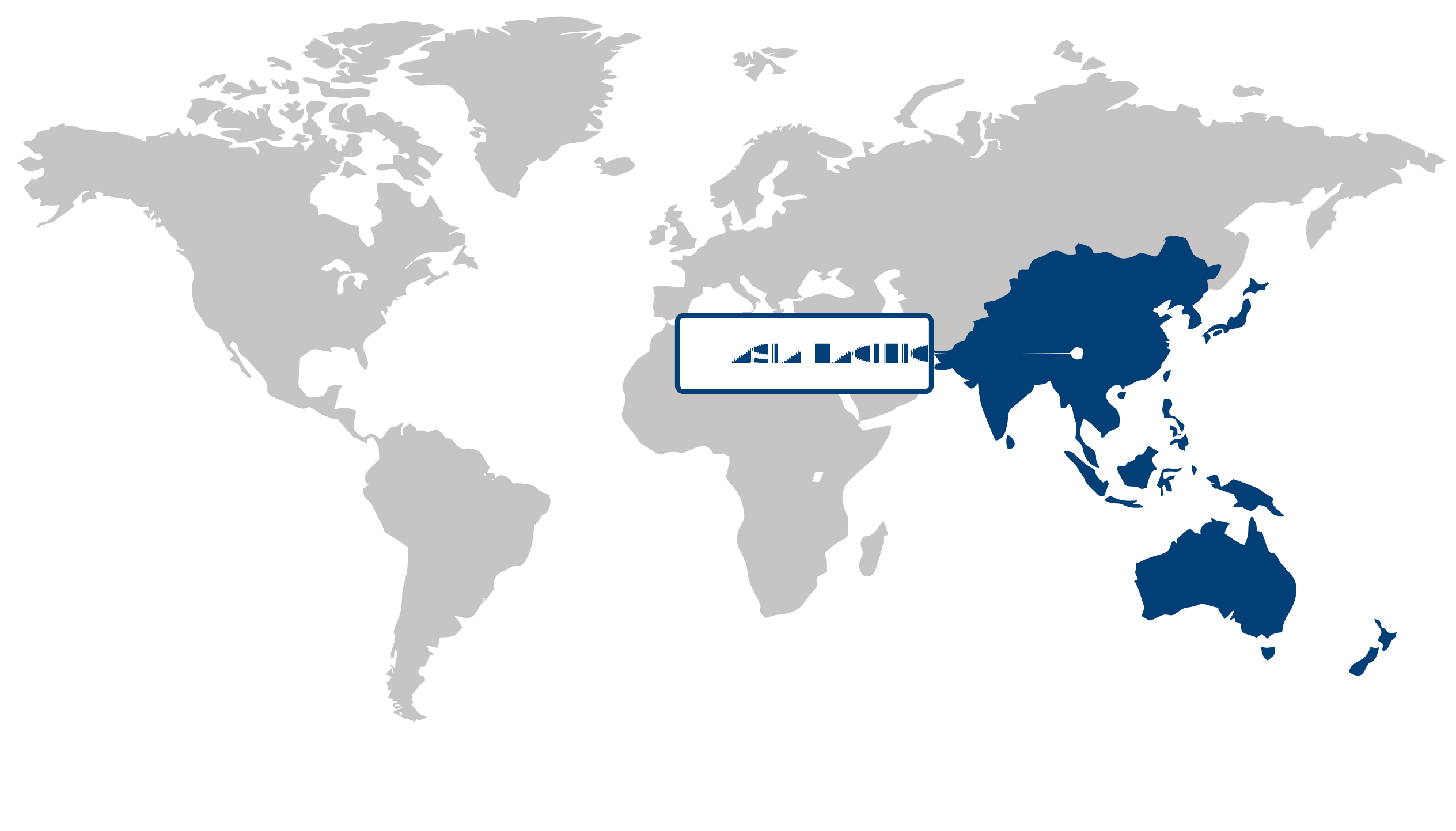
Largest Region
Asia Pacific
42% Market Share in 2025
Asia Pacific dominated the honeycomb paperboard packaging market with over 42% share in 2025, emerging as both the largest and fastest-growing region at a 7.4% CAGR. This leadership is largely driven by China's dominance in international exports, where extensive outbound shipments necessitate efficient, durable, and sustainable packaging solutions. Furthermore, the regional expansion of electronic manufacturing hubs across Asia Pacific, particularly in China, fuels demand for protective and lightweight packaging. According to data from the China Council for the Promotion of International Trade, increased export volumes incentivize manufacturers to adopt innovative paperboard packaging to reduce costs and environmental impact. With rising consumer awareness around eco-friendly packaging and stringent regulatory frameworks encouraging sustainable materials, Asia Pacific is poised to offer significant opportunities for investors and strategists aiming to capitalize on evolving industry dynamics.
China anchors the Asia Pacific honeycomb paperboard packaging market through its unparalleled export capacity and robust manufacturing ecosystem. The country's regulatory momentum towards sustainable packaging, as evidenced by recent guidelines from the Ministry of Ecology and Environment, complements industry efforts from major manufacturers like Nine Dragons Paper. These initiatives harmonize supply chain efficiency with environmental responsibility, reinforcing China’s position. This dynamic presents a strategic advantage, making China a critical growth driver for the regional market.
Japan serves as a pivotal hub in the Asia Pacific honeycomb paperboard packaging market, leveraging its advanced manufacturing technologies and stringent quality standards. Japanese companies, including Oji Holdings Corporation, emphasize innovation in lightweight and recyclable packaging solutions, aligning with consumers’ growing preference for environmentally conscious products. The country’s regulatory environment supports circular economy principles, further propelling sustainable packaging adoption. Japan’s focus on high-value packaging complements China's export-driven scale, together underpinning Asia Pacific’s dominant role in the honeycomb paperboard packaging market.
North America Market Analysis:
North America emerged as the fastest-growing region in the honeycomb paperboard packaging market, registering a robust CAGR of 8.5%. This growth is predominantly driven by increasing demand for sustainable and lightweight packaging solutions among manufacturers and consumers. The regional market benefits from heightened environmental awareness and stricter regulations on plastic usage, such as policies implemented by the U.S. Environmental Protection Agency (EPA) promoting eco-friendly alternatives. Leading packaging firms like WestRock and International Paper have ramped up investments in honeycomb paperboard innovation, further expanding supply capabilities and driving adoption. Additionally, North America's strong e-commerce sector intensifies the need for durable yet sustainable packaging formats. These dynamics, coupled with advanced logistics infrastructure and technology integration in packaging processes, position North America as a critical hub for growth and development in this market, offering significant opportunities for investors seeking scalable and impactful sustainability solutions.
The U.S. serves as a pivotal market within North America for honeycomb paperboard packaging, propelled by consumer preference shifts toward environmentally responsible products. With robust government incentives encouraging green manufacturing, companies such as Pratt Industries have accelerated their deployment of recyclable paperboard packaging. The U.S. regulatory landscape, including the U.S. Food and Drug Administration’s (FDA) updated guidelines promoting safer, biodegradable materials, supports this shift. Consumer demand for packaging that combines sustainability with high performance in protecting goods during transit is strong, particularly in the food and electronics sectors. As e-commerce continues to expand, U.S. businesses prioritize honeycomb paperboard due to its lightweight properties that reduce shipping costs and carbon footprints. The country’s innovation ecosystem and access to investment capital strengthen its leadership, reinforcing North America’s overall market momentum in honeycomb paperboard packaging.
Europe Market Trends:
Europe maintained notable presence in the honeycomb paperboard packaging market, driven by increasing demand for sustainable and lightweight packaging solutions across various industries. The region’s emphasis on environmental policies, spearheaded by the European Union’s Circular Economy Action Plan, has accelerated adoption of recyclable and renewable materials such as honeycomb paperboard. Additionally, heightened consumer awareness around eco-friendly products in markets including automotive, electronics, and e-commerce is shaping packaging preferences. Germany’s Fraunhofer Institute for Environmental, Safety, and Energy Technology recently reported advancements in honeycomb structure optimization, enhancing product durability while reducing material usage. Europe’s robust logistics infrastructure and commitment to digital supply chain transparency further strengthen its leadership position. Given these converging factors, the region offers significant opportunities for manufacturers and investors focused on sustainable innovations and regulatory compliance in the honeycomb paperboard packaging market.
Germany stands out as a pivotal country in the honeycomb paperboard packaging market due to its advanced industrial base and rigorous environmental regulations. With German manufacturers in automotive and machinery sectors prioritizing lightweight yet sturdy packaging, companies like Walter Pack have leveraged durable honeycomb paperboard to meet both logistical and sustainability requirements, as highlighted in the company’s 2023 sustainability report. The German Environment Agency’s strict waste reduction mandates further incentivize adoption of recyclable packaging solutions, positioning Germany as an innovation hub for honeycomb board applications. This dynamic aligns closely with broader European sustainability goals, underpinning Germany’s influential role in steering demand and technological development within the regional honeycomb paperboard packaging market.
France plays a significant role in the honeycomb paperboard packaging market by integrating eco-conscious consumer trends with regulatory initiatives fostering sustainable packaging. French firms, including Smurfit Kappa, have expanded their honeycomb paperboard product lines in response to consumer demand for biodegradable and reusable packaging, as documented in the company’s 2023 corporate press release. Additionally, France’s National Institute for Circular Economy actively supports research on material lifecycle optimization, enhancing competitiveness in honeycomb packaging solutions. This alignment of consumer preferences and supportive regulatory frameworks strengthens France’s contribution to Europe’s honeycomb paperboard packaging ecosystem, offering critical insights into scalable sustainable packaging strategies for investors and industry leaders in the region.
No card data available for this language/report.
Segment Leadership and Growth Trends
Kraft paper held the largest share in the honeycomb paperboard packaging market in 2025, driven primarily by escalating demand for recyclable and sustainable packaging materials. This segment’s leadership is anchored in growing environmental regulations and heightened consumer preference for eco-friendly alternatives, as reinforced by endorsement from the Environmental Protection Agency (EPA) promoting sustainable packaging solutions. Kraft paper’s biodegradability and renewability align with corporate sustainability goals, enhancing brand value and regulatory compliance. These factors create strategic opportunities for both established manufacturers focusing on green innovations and emerging players targeting niche eco-conscious markets. Given the sustained global emphasis on reducing plastic waste and advancing circular economy initiatives, the kraft paper segment is poised to maintain its prominence in the foreseeable future.
Analysis by Product Type
Honeycomb paperboard sheets represented the largest share in the honeycomb paperboard packaging market in 2025, supported by their widespread application in protective, cost-effective packaging across diverse industries. The sheets’ versatility, combined with efficient manufacturability and structural strength, meets rising demand for lightweight packaging solutions that reduce logistics costs and carbon footprint. Industry leaders like WestRock Corporation emphasize sheet-based solutions in their press releases to highlight digital transformation efforts optimizing material use. This segment’s adaptability to varied shipment sizes and product types offers ample growth avenues for incumbents and startups investing in customization technologies. Continued industrial adoption of sheets for e-commerce and fragile goods packaging underscores their enduring relevance in the medium term.
Analysis by Application
The automotive segment dominated the honeycomb paperboard packaging market in 2025, fueled by increasing uptake of lightweight protective packaging for automotive components. Automakers’ shift towards weight reduction and stringent safety regulations, noted in reports by the Society of Automotive Engineers (SAE), drive the preference for honeycomb paperboard to protect parts during transport and assembly. Consumer demand for sustainable vehicles also catalyzes packaging innovations emphasizing recyclability and impact resistance. This segment offers strategic advantages by supporting supply chain efficiencies and compliance with environmental mandates, benefiting both established automotive suppliers and emerging packaging specialists. Given ongoing trends in vehicle electrification and automotive lightweighting, this segment’s leadership position appears well-established for the near to medium term.
| Report Segmentation | |||
| Segment | Sub-Segment | Largest Segment | Fastest Growing Segment |
|---|---|---|---|
| Material | Kraft Paper, Testliner Paper, Corrugated Paper | ||
| Product Type | Honeycomb Paperboard Sheets, Honeycomb Paperboard Cores, Honeycomb Paperboard Panels, Honeycomb Paperboard Boxes | ||
| Application | Automotive, Aerospace, Electronics, Construction, Furniture | ||
| End User Industry | Automotive, Electronics, Logistics, Construction, Furniture | ||
 Read our Research Approach
Competitive Landscape and Market Positioning
Key players in the honeycomb paperboard packaging market include International Paper, WestRock, Smurfit Kappa, DS Smith, Georgia-Pacific, Weyerhaeuser, Packaging Corporation of America, Oji Holdings, Mondi Group, and Stora Enso. These entities stand out for their strong global footprints and robust supply chain networks, which enable responsive delivery in key industrial sectors. Their leadership is reinforced by extensive product portfolios that span sustainable and innovative paperboard solutions, positioning them as frontrunners in environmentally aligned packaging design. The prominence of these companies reflects their ability to meet evolving regulatory and customer demands, setting high operational and quality standards within the market.The competitive landscape features active moves to consolidate resources, augment technology capabilities, and broaden market reach. The top players have pursued collaborations and alliances that integrate advanced manufacturing techniques, enhancing product differentiation and cost efficiencies. Innovations are frequently introduced, targeting performance improvements such as durability and recyclability, which bolster competitive standing. Additionally, strategic expansions into emerging geographies through acquisitions underline a tactical emphasis on global-scale penetration, influencing pricing dynamics and customer engagement models in this sector.
Strategic / Actionable Recommendations for Regional Players
North American companies should deepen engagements with logistics and retail sectors, leveraging digital tools to enhance supply chain transparency and customization. Partnerships focused on developing next-generation sustainable packaging could solidify leadership amid rising environmental expectations.
In the Asia Pacific region, players have opportunities to capitalize on rapid urbanization and e-commerce expansion by integrating automation and smart packaging solutions. Collaborations with local manufacturers could enable tailored offerings that address diverse market needs while expanding footprint.
European market participants may benefit from investing in circular economy initiatives and high-value specialty packaging targeting premium goods. Harnessing advanced materials and forging alliances with policy makers can strengthen compliance and innovation, reinforcing competitive differentiation.
Why Choose Us
Specialized Expertise: Our team comprises industry experts with a deep understanding of your market segment. We bring specialized knowledge and experience that ensures our research and consulting services are tailored to your unique needs.
Customized Solutions: We understand that every client is different. That's why we offer customized research and consulting solutions designed specifically to address your challenges and capitalize on opportunities within your industry.
Proven Results: With a track record of successful projects and satisfied clients, we have demonstrated our ability to deliver tangible results. Our case studies and testimonials speak to our effectiveness in helping clients achieve their goals.
Cutting-Edge Methodologies: We leverage the latest methodologies and technologies to gather insights and drive informed decision-making. Our innovative approach ensures that you stay ahead of the curve and gain a competitive edge in your market.
Client-Centric Approach: Your satisfaction is our top priority. We prioritize open communication, responsiveness, and transparency to ensure that we not only meet but exceed your expectations at every stage of the engagement.
Continuous Innovation: We are committed to continuous improvement and staying at the forefront of our industry. Through ongoing learning, professional development, and investment in new technologies, we ensure that our services are always evolving to meet your evolving needs.
Value for Money: Our competitive pricing and flexible engagement models ensure that you get maximum value for your investment. We are committed to delivering high-quality results that help you achieve a strong return on your investment.
Select Licence Type

