



Hospital Acquired Infections Diagnostics Market Size & Growth Forecast 2027–2036, By Segments (Infection, Test, Product, Type), Regional Demand Trends (North America, Asia Pacific, Europe), Key Country Insights (U.S., Japan, South Korea, Germany, France, Italy), and Competitive Landscape
Market Size and Growth Outlook
Hospital Acquired Infections Diagnostics Market size was estimated at USD 4.5 billion in 2026 and is projected to grow at a 1.43% CAGR from 2027 to 2036, exceeding USD 5.19 billion by 2036. The industry revenue for 2027 is assessed at USD 4.55 billion.
Base Year Value (2026)
USD 4.5 billion
CAGR (2027-2036)
1.43%
Forecast Year Value (2036)
USD 5.19 billion

Historical Data Period
2022-2026

Largest Region
Europe

Forecast Period
2027-2036
Hospital Acquired Infections Diagnostics Market Intelligence Snapshot:
-
Regional Market Dynamics:
- Europe leads due to established hospital laboratory infrastructure, standardized infection surveillance protocols, and routine integration of diagnostics into inpatient workflows supporting early pathogen detection and outbreak control.
- Asia Pacific is expanding at 8.25% CAGR, driven by growing hospital capacity, stronger infection prevention focus, and wider adoption of diagnostic platforms for faster pathogen detection and surveillance.
-
Segment Momentum:
- UTI accounted for 28.94% of the market in 2026, supported by frequent screening requirements, recurrent inpatient testing, and the need for rapid infection identification to support treatment and infection control.
- Molecular testing leads and grows fastest because hospitals increasingly prioritize rapid turnaround and accurate pathogen detection, enabling quicker clinical decisions and more effective infection management.
-
Market Expansion Drivers:
- Rising prevalence of hospital-acquired infections and antimicrobial resistance increasing diagnostic demand.
- Expansion of molecular diagnostics like PCR enabling rapid pathogen detection and treatment optimization.
- Growing surgical procedures and aging population increasing hospital infection screening requirements.
-
Leading Market Participants:
Leading players in the hospital acquired infections diagnostics market include bioMérieux S.A. (France), Abbott Laboratories (United States), F. Hoffmann-La Roche Ltd. (Switzerland), Becton, Dickinson and Company (United States), QIAGEN N.V. (Netherlands), Thermo Fisher Scientific Inc. (United States), Hologic, Inc. (United States), Siemens Healthineers AG (Germany), Meridian Bioscience, Inc. (United States), Danaher Corporation (United States).
Global Market Forecast Snapshot:
-
Market Outlook:
- 2026 Market Size: USD 4.5 billion
- 2027 Estimated Market Size: USD 4.55 billion.
- Projected Market Size: USD 5.19 billion by 2036
- Growth Forecasts: 1.43% CAGR (2027-2036)
-
Regional and Segment Outlook:
- Leading Regional Market: Europe
- High-Growth Regional Hub: Asia Pacific
- Core Revenue Segment: UTI (Infection) | Molecular (Test) | Consumables (Product) | Blood Tests (Type)
- Emerging Opportunity Segment: UTI (Infection) | Molecular (Test) | Consumables (Product) | Blood Tests (Type)
Market Growth Drivers and Industry Trends
Rising prevalence of hospital-acquired infections and antimicrobial resistance increasing diagnostic demand
The persistent occurrence of healthcare-associated infections and growing antimicrobial resistance are driving the hospital acquired infections diagnostics market as healthcare providers require accurate information to identify pathogens and guide appropriate treatment. Rapid and reliable diagnosis can help distinguish bacterial infections from other conditions, support antimicrobial selection, and strengthen infection-control measures within healthcare facilities. Greater awareness of resistant organisms is also increasing the importance of diagnostic tools capable of identifying pathogens and relevant resistance characteristics, particularly in patients with severe or complicated infections.
Expansion of molecular diagnostics like PCR enabling rapid pathogen detection and treatment optimization
The increasing adoption of molecular testing technologies is expanding the hospital acquired infections diagnostics market by enabling healthcare laboratories to detect pathogens with greater speed and analytical sensitivity. PCR-based methods can identify specific microbial genetic material and can be adapted to detect multiple pathogens within complex clinical samples, reducing dependence on lengthy culture-based workflows in appropriate applications. Faster diagnostic information allows clinicians and infection-control teams to make more timely decisions regarding treatment, isolation, and patient management, while multiplex molecular approaches can improve the efficiency of testing where several infectious agents may be clinically relevant.
Growing surgical procedures and aging population increasing hospital infection screening requirements
The rising volume of surgical interventions and the expanding elderly patient population are increasing the need for infection surveillance, supporting the hospital acquired infections diagnostics market across hospitals and other healthcare settings. Surgical patients may require invasive procedures, prolonged hospitalization, or medical devices that can increase exposure to healthcare-associated infections, making appropriate screening and monitoring important components of clinical care. Older patients can also have greater vulnerability to infections and may present with complex underlying conditions, encouraging healthcare providers to strengthen diagnostic protocols for early identification and management of hospital-acquired pathogens.
| Growth Driver Assessment Framework | |||||
| Growth Driver | Impact On CAGR | Regulatory Influence | Geographic Relevance | Adoption Rate | Impact Timeline |
|---|---|---|---|---|---|
| Rising prevalence of hospital-acquired infections and antimicrobial resistance increasing diagnostic demand | 2.20% | High | North America, Europe | High | Near Term |
| Expansion of molecular diagnostics like PCR enabling rapid pathogen detection and treatment optimization | 2.00% | High | Europe, North America, Asia Pacific | High | Near Term |
| Growing surgical procedures and aging population increasing hospital infection screening requirements | 1.60% | High | Asia Pacific, Europe | Medium | Mid Term |
Unlock insights tailored to your business with our bespoke market research solutions - Click to get your customized report now!
Regional Demand Dynamics
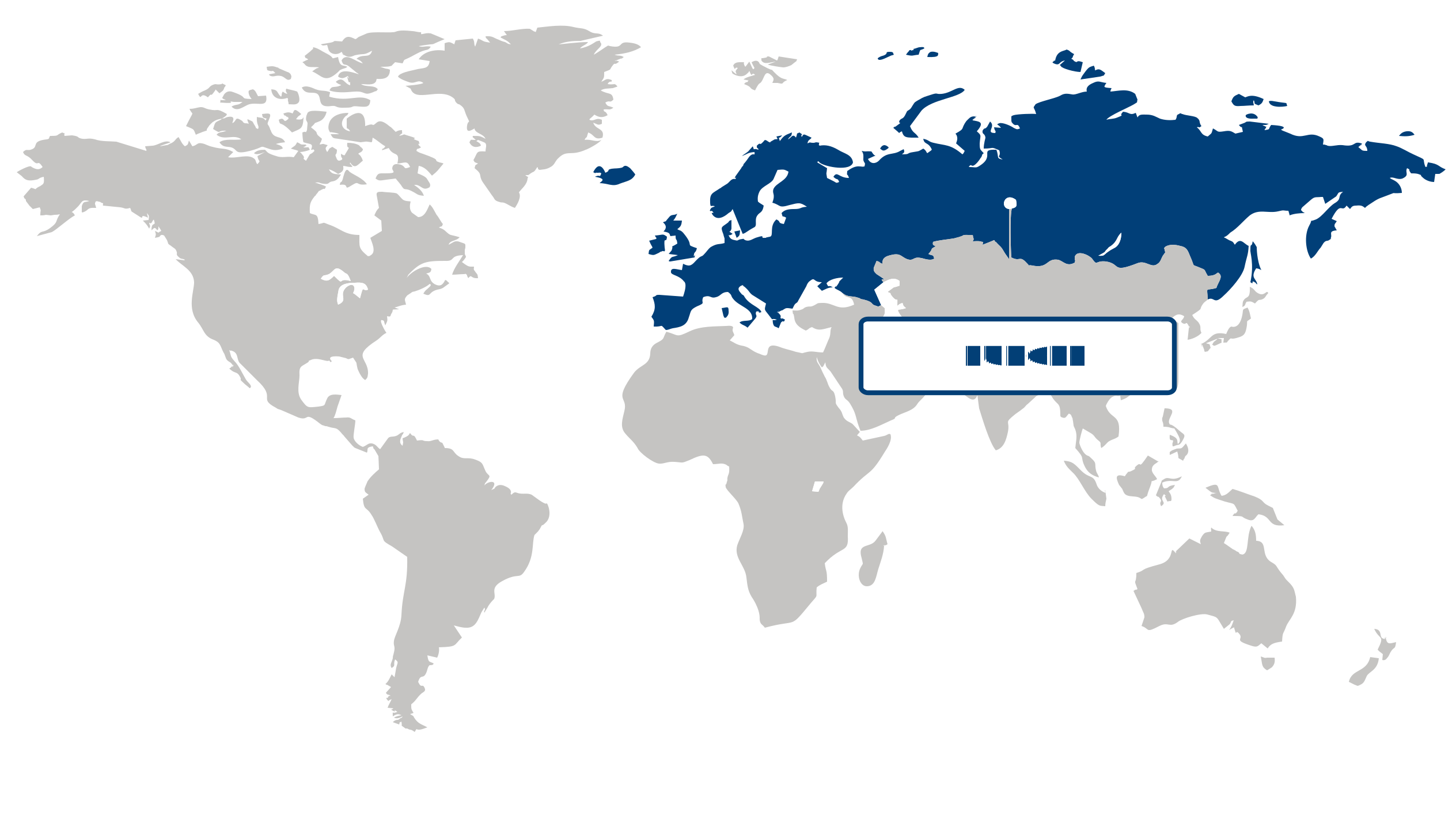
Largest Region
Europe
Largest Market Share in 2026
Europe (Largest Region) vs Asia Pacific (Fastest-Growing Region)
Europe held the largest share of the hospital acquired infections diagnostics market in 2026, supported by advanced healthcare systems, established infection-control practices, and strong emphasis on patient safety. Increasing pressure on healthcare facilities to identify infections rapidly is encouraging adoption of diagnostic technologies that enable earlier detection and more informed treatment decisions. Well-developed laboratory infrastructure, standardized clinical protocols, and stringent healthcare quality requirements further support demand for reliable infection diagnostics across hospitals and other clinical settings.
Asia Pacific is the fastest-growing region, fueled by expanding healthcare infrastructure, rising hospital admissions, and increasing awareness of healthcare-associated infection prevention. Improvements in laboratory capacity and diagnostic accessibility are enabling healthcare providers to strengthen surveillance and detection capabilities. Growing investments in hospital modernization, combined with greater emphasis on antimicrobial stewardship and infection-control protocols, are creating additional demand for timely diagnostic solutions. The expansion of healthcare services across emerging economies is expected to broaden the addressable market for hospital infection diagnostics.
Key Country Insights
The U.S. continues to prioritize rapid hospital-acquired infection diagnostics through expanded laboratory automation, antimicrobial stewardship programs, and infection surveillance initiatives. Healthcare providers across the U.S. increasingly integrate molecular testing and data-driven monitoring to strengthen patient safety and improve clinical decision-making.
Japan focuses on highly accurate diagnostic technologies that complement stringent hospital infection prevention standards. Clinical laboratories in Japan are adopting advanced molecular and automated testing platforms to improve turnaround times and support effective infection control strategies.
South Korea is strengthening hospital infection diagnostics through digital laboratory infrastructure and advanced molecular testing capabilities. Healthcare providers in South Korea increasingly combine automation with real-time surveillance tools to improve detection efficiency and clinical response.
Germany emphasizes standardized diagnostic workflows and high-quality microbiology practices across hospitals. Healthcare institutions in Germany continue investing in precise pathogen identification and antimicrobial resistance detection to support infection prevention protocols and efficient clinical management.
France continues expanding diagnostic capabilities that reinforce infection prevention within hospitals and specialized care facilities. Healthcare organizations in France prioritize reliable laboratory testing and coordinated surveillance to support clinical quality improvement and regulatory compliance.
Italy is modernizing hospital diagnostic laboratories to improve identification of healthcare-associated infections and antimicrobial resistance. Clinical facilities across Italy are adopting automated workflows and standardized testing approaches to strengthen infection management practices.
Segment Leadership and Growth Trends
Infection Segment Analysis: UTI (Largest & Fastest-Growing Segment)
The UTI segment accounted for the largest share of the hospital acquired infections diagnostics market, reaching 28.94% in 2026, and is also the fastest-growing infection segment. Urinary tract infections remain a significant focus of hospital infection surveillance because timely identification is important for guiding treatment and limiting complications. Increasing emphasis on infection prevention, antimicrobial stewardship, and rapid identification of pathogens is supporting demand for reliable UTI diagnostic solutions. Growing adoption of efficient testing workflows is further strengthening the segment's position.
Test Segment Analysis: Molecular (Largest & Fastest-Growing Segment)
Molecular testing represented the largest share of the hospital acquired infections diagnostics market in 2026 and is also the fastest-growing test segment. Molecular methods offer sensitive and rapid identification of pathogens and relevant genetic markers, supporting timely clinical decision-making in hospital environments. Their ability to provide actionable diagnostic information more quickly than conventional approaches is particularly valuable where early intervention can help improve patient management and infection-control practices. Increasing focus on rapid diagnostics, antimicrobial resistance surveillance, and precision in pathogen identification is driving continued adoption of molecular testing.
| Report Segmentation | |||
| Segment | Sub-Segment | Largest Segment | Fastest Growing Segment |
|---|---|---|---|
| Infection | UTI, Pneumonia, Surgical Site Infection, Bloodstream Infections, Others | UTI | UTI |
| Test | Molecular, Conventional | Molecular | Molecular |
| Product | Consumables, Instruments | Consumables | Consumables |
| Type | Blood Tests, Urinalysis | Blood Tests | Blood Tests |
 Read our Research Approach
Competitive Landscape and Market Positioning
Key companies in the hospital acquired infections diagnostics market:
1. bioMérieux S.A. (France)
2. Abbott Laboratories (United States)
3. F. Hoffmann-La Roche Ltd. (Switzerland)
4. Becton Dickinson and Company (United States)
5. QIAGEN N.V. (Netherlands)
6. Thermo Fisher Scientific Inc. (United States)
7. Hologic Inc. (United States)
8. Siemens Healthineers AG (Germany)
9. Meridian Bioscience Inc. (United States)
10. Danaher Corporation (United States)
The hospital acquired infections diagnostics market is advancing through the development of rapid testing platforms and highly sensitive diagnostic technologies designed to improve infection detection accuracy. Companies are investing in molecular diagnostics, automation, and AI-assisted analysis tools to accelerate clinical decision-making and reduce healthcare-associated risks. Growing emphasis on infection control protocols and faster turnaround times continues to drive innovation across diagnostic solutions.
Industry Development/News
| Company Name | Date | Key Development |
|---|---|---|
| QIAGEN | Nov-24 | QIAGEN expanded its diagnostic operational footprint by establishing a new facility in Barcelona, Spain. The site is dedicated to enhancing QIAstat-Dx operations, infectious disease testing, and precision medicine, directly supporting diagnostic development partnerships with Eli Lilly and AstraZeneca. |
| QIAGEN | Jun-24 | QIAGEN launched its FDA-cleared QIAstat-Dx Gastrointestinal Panel 2 in the United States, enabling rapid multiplex detection of up to 16 pathogens. The technological introduction improves diagnostic accuracy and hospital operational efficiency for managing complex gastrointestinal infections. |
| bioMérieux | Jan-24 | bioMérieux acquired Canadian healthcare software firm LUMED to enhance its clinical decision support capabilities. The transaction integrates advanced infection prevention software into bioMérieux's portfolio, optimizing hospital antimicrobial stewardship programs and tracking systems for healthcare-associated infections. |
| Danaher | Nov-23 | Danaher partnered with Oxford University to advance precision medicine for sepsis through rapid molecular testing. The initiative leverages Cepheid's diagnostic technology to identify distinct sepsis subtypes, driving clinical efficiency in critical hospital care environments. |
| Thermo Fisher Scientific | Feb-23 | Thermo Fisher Scientific partnered with Mylab Discovery Solutions to commercialize high-quality RT-PCR infectious disease diagnostic kits in India. The collaboration expands Thermo Fisher's geographic presence and enhances local clinical capacity for molecular diagnostics. |
Why Choose Us
Specialized Expertise: Our team comprises industry experts with a deep understanding of your market segment. We bring specialized knowledge and experience that ensures our research and consulting services are tailored to your unique needs.
Customized Solutions: We understand that every client is different. That's why we offer customized research and consulting solutions designed specifically to address your challenges and capitalize on opportunities within your industry.
Proven Results: With a track record of successful projects and satisfied clients, we have demonstrated our ability to deliver tangible results. Our case studies and testimonials speak to our effectiveness in helping clients achieve their goals.
Cutting-Edge Methodologies: We leverage the latest methodologies and technologies to gather insights and drive informed decision-making. Our innovative approach ensures that you stay ahead of the curve and gain a competitive edge in your market.
Client-Centric Approach: Your satisfaction is our top priority. We prioritize open communication, responsiveness, and transparency to ensure that we not only meet but exceed your expectations at every stage of the engagement.
Continuous Innovation: We are committed to continuous improvement and staying at the forefront of our industry. Through ongoing learning, professional development, and investment in new technologies, we ensure that our services are always evolving to meet your evolving needs.
Value for Money: Our competitive pricing and flexible engagement models ensure that you get maximum value for your investment. We are committed to delivering high-quality results that help you achieve a strong return on your investment.
Select Licence Type

