



Hydrogen Electrolyzer Market Size & Growth Forecast 2027–2036, By Segments (Application, Power Generation, Technology), Regional Demand Trends (North America, Asia Pacific, Europe), Key Country Insights (U.S., Japan, South Korea, Germany, France, Italy), and Competitive Landscape
Market Size and Growth Outlook
Hydrogen Electrolyzer Market size was valued at USD 4.42 billion in 2026 and is projected to grow at a 93.2% CAGR from 2027 to 2036, attaining USD 3.2 trillion by 2036. The industry revenue for 2027 is estimated at USD 7.89 billion.
Base Year Value (2026)
USD 4.42 billion
CAGR (2027-2036)
93.20%
Forecast Year Value (2036)
USD 3.2 trillion

Historical Data Period
2022-2026

Largest Region
Europe

Forecast Period
2027-2036
Hydrogen Electrolyzer Market Intelligence Snapshot:
-
Regional Market Dynamics:
- Europe led the market in 2026, supported by strong low-carbon hydrogen initiatives, active project pipelines, renewable energy integration, and early industrial deployment activity.
- Asia Pacific is projected to expand at a remarkable 102.82% CAGR as countries scale renewable energy projects, accelerate hydrogen deployment, and increase domestic manufacturing activity.
-
Segment Momentum:
- The Energy segment accounted for 37.1% of the market in 2026 due to its role in renewable energy integration, power balancing, and long-duration energy storage applications.
- >2,000 kW systems are the fastest-growing segment as projects scale toward commercial deployment, requiring higher hydrogen output, stronger economies of scale, and better alignment with large renewable energy installations.
-
Market Expansion Drivers:
- Government decarbonization initiatives accelerating investment in green hydrogen production infrastructure.
- Integration of renewable energy with electrolyzers strengthening scalable clean energy storage capabilities.
- Industrial adoption of low-carbon hydrogen supporting commercialization of large-scale electrolyzer deployments.
-
Leading Market Participants:
Major players in the hydrogen electrolyzer market include thyssenkrupp nucera AG & Co. KGaA (Germany), Nel ASA (Norway), Plug Power Inc. (United States), Siemens Energy AG (Germany), ITM Power plc (United Kingdom), Cummins Inc. (United States), McPhy Energy S.A. (France), Enapter S.r.l. (Italy), John Cockerill S.A. (Belgium), Topsoe A/S (Denmark).
Global Market Forecast Snapshot:
-
Market Outlook:
- 2026 Market Size: USD 4.42 billion
- 2027 Estimated Market Size: USD 7.89 billion.
- Projected Market Size: USD 3.2 trillion by 2036
- Growth Forecasts: 93.2% CAGR (2027-2036)
-
Regional and Segment Outlook:
- Leading Regional Market: Europe
- High-Growth Regional Hub: Asia Pacific
- Core Revenue Segment: Energy (Application) | <500 kW (Power Generation) | Alkaline Electrolyzer (AE) (Technology)
- Emerging Opportunity Segment: Mobility (Application) | >2,000 kW (Power Generation) | Anion Exchange Membrane (AEM) (Technology)
Market Growth Drivers and Industry Trends
Government decarbonization initiatives accelerating investment in green hydrogen production infrastructure
Government decarbonization initiatives are creating a supportive investment environment for the hydrogen electrolyzer market as countries pursue lower-emission energy systems and seek alternatives to fossil-fuel-based hydrogen production. National hydrogen strategies, clean energy programs, emissions-reduction policies, and incentives for renewable hydrogen projects are encouraging developers to establish new production capacity. Electrolyzers are central to these projects because they use electricity to split water into hydrogen and oxygen, enabling hydrogen production without direct reliance on fossil feedstocks when powered by renewable electricity. Public-sector support is also helping reduce project development barriers and improve the economic attractiveness of electrolyzer installations across energy, industrial, and infrastructure applications.
Integration of renewable energy with electrolyzers strengthening scalable clean energy storage capabilities
The hydrogen electrolyzer market will benefit from the increasing integration of electrolyzers with solar and wind power facilities, particularly as renewable generation becomes more variable and requires flexible energy management solutions. Electrolyzers can convert surplus renewable electricity into hydrogen, allowing energy to be stored in a transportable form and used later across power generation, mobility, and industrial applications. This coupling also enables renewable energy developers to utilize electricity that might otherwise be curtailed during periods of high generation. As energy systems place greater emphasis on balancing intermittent renewable resources, electrolyzer installations are being incorporated into integrated energy projects alongside renewable generation and hydrogen storage infrastructure.
Industrial adoption of low-carbon hydrogen supporting commercialization of large-scale electrolyzer deployments
Industrial decarbonization is strengthening demand for the hydrogen electrolyzer market as energy-intensive sectors explore low-carbon hydrogen to replace conventional hydrogen and reduce emissions from production processes. Refining, chemicals, steel, fertilizers, and other industrial activities can incorporate hydrogen into existing processes or emerging low-carbon production pathways, creating demand for reliable hydrogen supply at commercial scale. Large industrial projects require electrolyzer systems with greater capacity, operational reliability, and integration with supporting power and hydrogen infrastructure. The development of hydrogen-based industrial applications is consequently encouraging larger electrolyzer projects and supporting the transition from demonstration-scale installations toward commercially oriented deployments.
| Growth Driver Assessment Framework | |||||
| Growth Driver | Impact On CAGR | Regulatory Influence | Geographic Relevance | Adoption Rate | Impact Timeline |
|---|---|---|---|---|---|
| Government decarbonization initiatives accelerating investment in green hydrogen production infrastructure | 2.50% | High | Europe, North America | High | Near Term |
| Integration of renewable energy with electrolyzers strengthening scalable clean energy storage capabilities | 2.20% | High | Europe, Asia Pacific | High | Mid Term |
| Industrial adoption of low-carbon hydrogen supporting commercialization of large-scale electrolyzer deployments | 1.80% | Moderate | Asia Pacific, Middle East & Africa | Emerging | Long Term |
Unlock insights tailored to your business with our bespoke market research solutions - Click to get your customized report now!
Regional Demand Dynamics
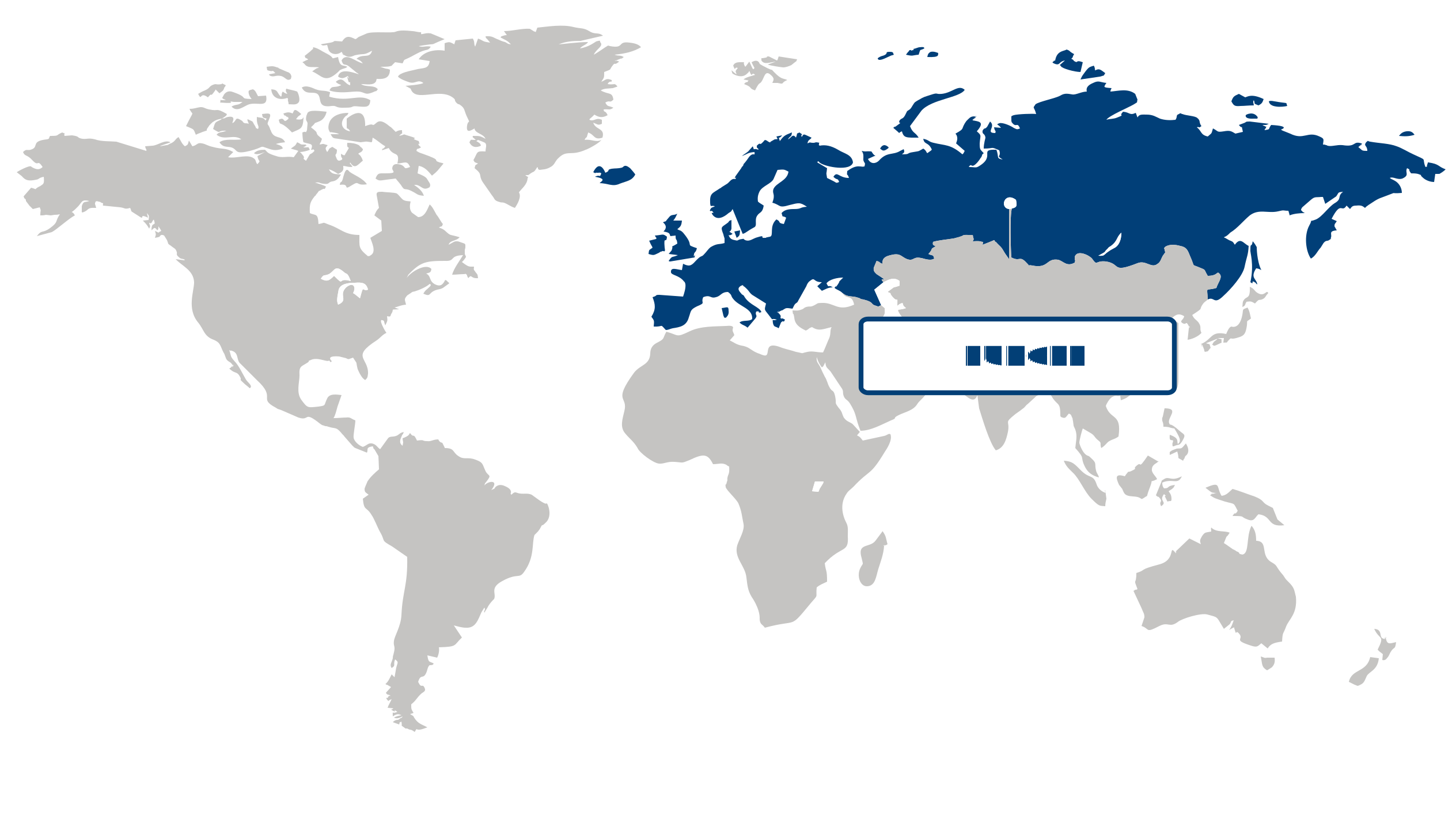
Largest Region
Europe
Largest Market Share in 2026
Europe (Largest Region) vs Asia Pacific (Fastest-Growing Region)
Europe held the largest share of the hydrogen electrolyzer market in 2026, supported by strong policy emphasis on decarbonization, expanding renewable energy capacity, and growing investment in low-carbon hydrogen production. The region’s efforts to reduce emissions from industrial and energy-intensive sectors are encouraging the deployment of electrolyzer technologies that can convert renewable electricity into hydrogen. Increasing integration of clean energy systems with industrial applications, along with the development of hydrogen infrastructure, is strengthening demand. Continued focus on energy security and the transition toward lower-carbon energy sources further supports the region’s market position.
Asia Pacific is the fastest-growing region, driven by rapid industrialization, expanding renewable power generation, and rising demand for cleaner energy solutions. Major industrial economies are increasingly exploring hydrogen for applications across manufacturing, transportation, energy, and other hard-to-abate sectors. Growing investments in renewable energy and hydrogen infrastructure are creating favorable conditions for electrolyzer deployment. The region’s large industrial base, increasing focus on energy transition, and efforts to diversify energy sources are expected to accelerate adoption of electrolyzer technologies.
Key Country Insights
The U.S. is expanding hydrogen electrolyzer deployment through industrial decarbonization projects and renewable hydrogen initiatives. Manufacturers and energy developers in the U.S. are prioritizing larger system capacities, domestic supply chains, and improved electrolyzer efficiency for commercial applications.
Japan is incorporating hydrogen electrolyzers into broader clean energy strategies that support industrial use and long-term energy diversification. Organizations in Japan are investing in efficient electrolysis technologies and coordinated hydrogen distribution networks to improve supply resilience.
South Korea is strengthening hydrogen electrolyzer deployment by combining advanced manufacturing capabilities with clean energy investments. Companies in South Korea are focusing on localized component production, technology innovation, and integration with industrial hydrogen demand.
Germany is advancing hydrogen electrolyzer adoption to support low-carbon manufacturing, chemicals, and steel production. Companies in Germany are emphasizing integration with renewable power sources and reliable hydrogen infrastructure to strengthen industrial energy transition efforts.
France is increasing hydrogen electrolyzer installations linked to renewable electricity and industrial decarbonization initiatives. Project developers in France are emphasizing efficient plant integration, hydrogen mobility applications, and collaboration across regional clean energy ecosystems.
Italy is supporting hydrogen electrolyzer adoption through projects that connect renewable generation with industrial and transport applications. Businesses in Italy are concentrating on scalable production facilities and regional infrastructure that improve hydrogen availability across key sectors.
Segment Leadership and Growth Trends
Application Segment Analysis: Energy (Largest Segment) vs Mobility (Fastest-Growing Segment)
The energy segment led the hydrogen electrolyzer market with a 37.1% share in 2026, supported by the growing role of electrolyzers in producing hydrogen using electricity and integrating hydrogen into broader energy transition strategies. Electrolyzers can enable the conversion of renewable or low-carbon electricity into hydrogen, providing a pathway for storing energy and supplying hydrogen to industrial and energy-related applications. Their relevance to decarbonization efforts and the development of cleaner energy systems is strengthening investment interest in hydrogen production infrastructure. Mobility is advancing more rapidly as hydrogen-based transportation gains attention for applications where conventional electrification can be challenging. Fuel-cell vehicles require reliable hydrogen availability, creating demand for strategically located hydrogen production and refueling infrastructure. Increasing interest in cleaner heavy-duty transportation and the development of hydrogen mobility ecosystems are therefore supporting faster adoption of electrolyzer solutions in this application.
Power Generation Segment Analysis: <500 kW (Largest Segment) vs >2,000 kW (Fastest-Growing Segment)
The <500 kw segment accounted for the largest share of the hydrogen electrolyzer market in 2026, representing demand for smaller-scale systems suited to distributed hydrogen production, pilot projects, localized energy applications, and facilities with comparatively modest hydrogen requirements. Smaller electrolyzers can offer greater deployment flexibility and can be integrated into decentralized energy systems or specific end-use environments without requiring large centralized production infrastructure. Their suitability for modular installations also supports adoption where organizations are developing hydrogen capabilities incrementally. In contrast, the >2,000 kw segment is expanding more rapidly as hydrogen projects increasingly move toward larger production capacities and broader integration with energy and industrial infrastructure. Larger electrolyzer systems can support substantial hydrogen output and improve the feasibility of centralized production for applications requiring consistent supply, while the expansion of renewable power and interest in large-scale hydrogen ecosystems is strengthening demand for higher-capacity equipment.
| Report Segmentation | |||
| Segment | Sub-Segment | Largest Segment | Fastest Growing Segment |
|---|---|---|---|
| Application | Energy, Mobility, Industrial, Grid Injection | Energy | Mobility |
| Power Generation | <500 kW, 500-2,000 kW, >2,000 kW | <500 kW | >2,000 kW |
| Technology | Alkaline Electrolyzer (AE), Proton Exchange Membrane (PEM), Solid Oxide Electrolyzer (SOE), Anion Exchange Membrane (AEM) | Alkaline Electrolyzer (AE) | Anion Exchange Membrane (AEM) |
 Read our Research Approach
Competitive Landscape and Market Positioning
Prominent players in the hydrogen electrolyzer market:
1. thyssenkrupp nucera AG & Co. KGaA (Germany)
2. Nel ASA (Norway)
3. Plug Power Inc. (United States)
4. Siemens Energy AG (Germany)
5. ITM Power plc (United Kingdom)
6. Cummins Inc. (United States)
7. McPhy Energy S.A. (France)
8. Enapter S.r.l. (Italy)
9. John Cockerill S.A. (Belgium)
10. Topsoe A/S (Denmark)
The hydrogen electrolyzer market is witnessing rapid development as industries accelerate investments in green hydrogen production and low-carbon energy infrastructure. Manufacturers are focusing on improving electrolyzer efficiency, reducing operational costs, and scaling production capabilities to meet rising clean energy demand. Continuous innovation in membrane technologies and renewable energy integration is also strengthening growth opportunities across the hydrogen electrolyzer market.
Industry Development/News
| Company Name | Date | Key Development |
|---|---|---|
| Advait Greenergy | Mar-26 | Advait Greenergy inaugurated a 30 MW alkaline electrolyzer assembly facility in Gujarat, India. This capital deployment strengthens domestic equipment manufacturing capacity and bolsters India’s regional green hydrogen supply chain and ecosystem. |
| Royal Dutch Shell | Jan-26 | Shell advanced its Refhyne II initiative to develop a 100 MW hydrogen electrolyzer at its Rheinland refinery site in Germany. The facility expands industrial-scale electrolysis capacity to integrate renewable hydrogen directly into refining operations. |
| OMV | Oct-25 | OMV commenced construction of a 140 MW hydrogen electrolyzer facility in Bruck an der Leitha, Austria. The strategic infrastructure project significantly expands Europe's utility-scale green hydrogen production capacity and footprint. |
| Plug Power | Oct-25 | Plug Power delivered its initial 10 MW electrolyzer array for Galp’s 100 MW green hydrogen project at the Sines Refinery in Portugal. This milestone expands large-scale electrolyzer deployment and drives commercial refinery decarbonization. |
| GH2 Solar Limited | Sep-25 | GH2 Solar Limited partnered with South Korea’s AHES to establish a INR 400 crore green hydrogen electrolyzer manufacturing facility in Madhya Pradesh, India, expanding regional production infrastructure and equipment capacity. |
| Clean Power Hydrogen (CPH2) | Jun-25 | Clean Power Hydrogen activated its primary electrolyzer manufacturing license agreement with Hidrigin in Ireland. The partnership establishes localized production of green hydrogen equipment, scaling regional distribution and market access. |
| Power to Hydrogen | Mar-25 | Power to Hydrogen secured more than USD 20 million in Series A funding to scale the manufacturing of its Anion Exchange Membrane (AEM) electrolyzers, accelerating commercial deployment for sustainable fuel applications. |
| Siemens Energy | Oct-24 | Siemens Energy secured a commercial contract to supply electrolyzer units for the Hamburg Green Hydrogen Hub’s 100 MW electrolysis project at the former Moorburg power plant site in Germany, expanding utility-scale infrastructure. |
| Ohmium | Aug-24 | Ohmium secured financial backing under India’s SIGHT scheme for a 137 MW electrolyzer manufacturing project. The state-supported allocation accelerates the company's factory expansion and scaling of green hydrogen equipment manufacturing capacity. |
| John Cockerill | Jun-24 | John Cockerill secured EUR 230 million in capital funding for its hydrogen subsidiary. The substantial financial injection is dedicated to accelerating the commercial deployment and manufacturing scale of its green hydrogen electrolyzer technologies. |
Why Choose Us
Specialized Expertise: Our team comprises industry experts with a deep understanding of your market segment. We bring specialized knowledge and experience that ensures our research and consulting services are tailored to your unique needs.
Customized Solutions: We understand that every client is different. That's why we offer customized research and consulting solutions designed specifically to address your challenges and capitalize on opportunities within your industry.
Proven Results: With a track record of successful projects and satisfied clients, we have demonstrated our ability to deliver tangible results. Our case studies and testimonials speak to our effectiveness in helping clients achieve their goals.
Cutting-Edge Methodologies: We leverage the latest methodologies and technologies to gather insights and drive informed decision-making. Our innovative approach ensures that you stay ahead of the curve and gain a competitive edge in your market.
Client-Centric Approach: Your satisfaction is our top priority. We prioritize open communication, responsiveness, and transparency to ensure that we not only meet but exceed your expectations at every stage of the engagement.
Continuous Innovation: We are committed to continuous improvement and staying at the forefront of our industry. Through ongoing learning, professional development, and investment in new technologies, we ensure that our services are always evolving to meet your evolving needs.
Value for Money: Our competitive pricing and flexible engagement models ensure that you get maximum value for your investment. We are committed to delivering high-quality results that help you achieve a strong return on your investment.
Select Licence Type

