Hydrolyzed Vegetable Proteins Market Size & Growth Forecast 2027–2036, By Segments (Function, Source, Application), Regional Demand Trends (North America, Asia Pacific, Europe), Key Country Insights (U.S., Japan, South Korea, Germany, France, Italy), and Competitive Landscape
Jump to content
Market Size and Growth Outlook
Hydrolyzed Vegetable Proteins Market size was estimated at USD 1.9 billion in 2026 and is projected to grow at a 5.23% CAGR from 2027 to 2036, surpassing USD 3.16 billion by 2036. The industry revenue for 2027 is calculated at USD 1.98 billion.
Get more details on this report
Request Free Sample ReportHydrolyzed Vegetable Proteins Market Intelligence Snapshot
Regional Market Dynamics
- Europe leads the market through its mature processed food industry, established ingredient supply chains, and consistent demand for flavor-enhancing proteins in savory food manufacturing.
- Asia Pacific is projected to grow at a 6.33% CAGR, driven by expanding packaged food production, rising processed food consumption, and greater use of functional flavor ingredients.
Segment Momentum
- Flavoring agents remain the largest and fastest-growing function because manufacturers rely on hydrolyzed vegetable proteins to deliver consistent savory taste across processed foods, soups, sauces, snacks, and ready meals.
- Pea is gaining momentum as manufacturers diversify plant protein sources to support evolving formulation needs, making it an increasingly attractive option for new hydrolyzed vegetable protein applications.
Market Expansion Drivers
- Growing demand for plant-based processed foods driving hydrolyzed vegetable protein consumption.
- Rising vegan and vegetarian dietary adoption increasing demand for meat alternative flavor enhancers.
- Expanding sports nutrition and infant formula applications supporting specialty protein ingredient demand.
Leading Market Participants
- Top players in the hydrolyzed vegetable proteins market include Ajinomoto Co., Inc. (Japan), Kerry Group plc (Ireland), Cargill, Incorporated (United States), Archer Daniels Midland Company (United States), Roquette Frères (France), DSM-Firmenich AG (Netherlands), Tate & Lyle PLC (United Kingdom), Griffith Foods International Inc. (United States), MGP Ingredients, Inc. (United States), Givaudan SA (Switzerland).
Global Market Forecast Snapshot
Market Outlook
- 2026 Market Size: USD 1.9 billion
- 2027 Estimated Market Size: USD 1.98 billion.
- Projected Market Size: USD 3.16 billion by 2036
- Growth Forecast: 5.23% CAGR (2027-2036)
Regional and Segment Outlook
- Leading Regional Market: Europe
- High-Growth Regional Hub: Asia Pacific
- Core Revenue Segment: Flavoring Agent (Function) | Soy (Source) | Processed Food Products (Application)
- Emerging Opportunity Segment: Flavoring Agent (Function) | Pea (Source) | Meat Substitutes (Application)
Market Growth Drivers and Industry Trends
Growing demand for plant-based processed foods driving hydrolyzed vegetable protein consumption
The expanding consumption of plant-based processed foods will drive the hydrolyzed vegetable proteins market as food manufacturers seek ingredients that can improve savory taste, aroma, and overall product acceptability. Hydrolyzed vegetable proteins are widely suited to processed foods because their flavor-enhancing properties can support formulations such as meat alternatives, soups, sauces, seasonings, snacks, and ready-to-eat meals. As consumers increasingly look for convenient foods with plant-derived ingredients, manufacturers are reformulating product portfolios to deliver familiar savory profiles without relying solely on conventional animal-derived ingredients. This shift is encouraging greater incorporation of hydrolyzed vegetable proteins into processed food formulations, particularly where manufacturers need consistent flavor performance and compatibility with large-scale food processing.
Rising vegan and vegetarian dietary adoption increasing demand for meat alternative flavor enhancers
The hydrolyzed vegetable proteins market is gaining momentum from the rising adoption of vegan and vegetarian diets, which is encouraging food producers to improve the sensory characteristics of meat substitutes. As plant-based burgers, nuggets, sausages, prepared meals, and other alternatives become more diversified, manufacturers require flavor ingredients capable of delivering deeper savory and umami notes that can enhance consumer acceptance. Hydrolyzed vegetable proteins can complement plant-based formulations by strengthening taste profiles and helping compensate for flavor limitations associated with certain plant protein bases. Their application in meat alternative products therefore provides formulators with an effective ingredient option as dietary preferences shift toward plant-forward consumption and manufacturers expand their range of vegetarian and vegan offerings.
Expanding sports nutrition and infant formula applications supporting specialty protein ingredient demand
Growing applications in specialized nutrition products are creating additional opportunities for the hydrolyzed vegetable proteins market, particularly as formulators explore functional protein ingredients for targeted dietary needs. Sports nutrition products require carefully formulated protein-based compositions that can support convenient nutritional intake, while infant formula development places strong emphasis on suitable ingredients and controlled formulations. The use of hydrolyzed vegetable protein ingredients in specialized food applications can broaden the addressable market for vegetable-derived protein components beyond conventional food processing. Increasing product diversification across nutrition categories is also encouraging ingredient suppliers and food manufacturers to consider specialized protein solutions that can be incorporated into powders, nutritional preparations, and other formulated products.
| Growth Driver | Impact on CAGR | Regulatory Influence | Geographic Relevance | Adoption Rate | Impact Timeline |
|---|---|---|---|---|---|
| Growing demand for plant-based processed foods driving hydrolyzed vegetable protein consumption | 1.90% | Moderate | North America, Europe | High | Mid Term |
| Rising vegan and vegetarian dietary adoption increasing demand for meat alternative flavor enhancers | 1.70% | Low | Europe, Asia Pacific | High | Mid Term |
| Expanding sports nutrition and infant formula applications supporting specialty protein ingredient demand | 1.40% | High | North America, Europe | Medium | Long Term |
Unlock insights tailored to your business with our bespoke market research solutions.
Click to get your customized report now.
Regional Demand Dynamics
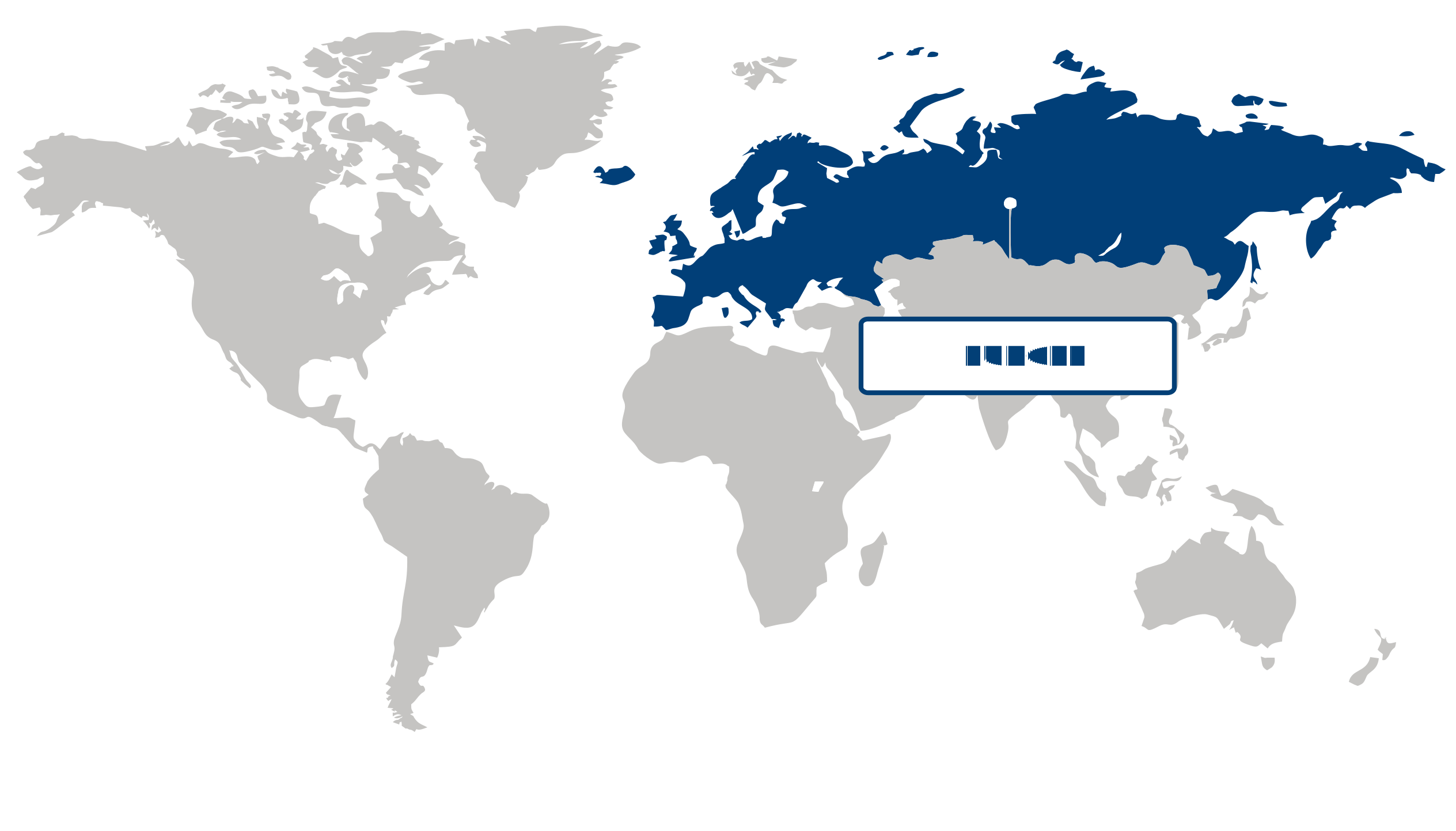
Europe (Largest Region)
Europe held the largest regional share of the hydrolyzed vegetable proteins market in 2026, supported by established food processing industries, strong demand for plant-based ingredients, and growing consumer preference for clean-label and sustainable food products. Increasing use of vegetable proteins in savory foods, sauces, prepared meals, and functional formulations is supporting regional demand, while ongoing product innovation is broadening application opportunities across the food industry.
Asia Pacific (Fastest-Growing Region)
Asia Pacific is the fastest-growing region, driven by expanding food manufacturing, rising consumer interest in plant-based nutrition, and changing dietary preferences. Growing urban populations and demand for convenient, protein-enriched foods are encouraging manufacturers to incorporate hydrolyzed vegetable proteins into diverse formulations. Increasing investment in food processing capabilities and the development of innovative plant-based products are further supporting regional market expansion.
| Parameter | North America | Asia Pacific | Europe | Latin America | MEA |
|---|---|---|---|---|---|
| Innovation HubiScaleNascentDeveloping Advanced | |||||
| Cost-Sensitive RegioniScaleLowMedium High | |||||
| Regulatory EnvironmentiScaleRestrictiveNeutral Supportive | |||||
| Demand DriversiScaleWeakModerate Strong | |||||
| Development StageiScaleEmergingDeveloping Developed | |||||
| Adoption RateiScaleLowMedium High | |||||
| New Entrants / StartupsiScaleSparseModerate Dense | |||||
| Macro IndicatorsiScaleWeakStable Strong |
Key Country Insights
Germany 🇩🇪
Functional Food FormulationGermany utilizes hydrolyzed vegetable proteins to improve flavor development and functionality across processed food applications. German ingredient suppliers increasingly focus on consistent product quality and plant-based formulation innovation for food manufacturers.
France 🇫🇷
Culinary Ingredient DevelopmentFrance applies hydrolyzed vegetable proteins across soups, sauces, and prepared foods requiring balanced savory flavor profiles. French food manufacturers increasingly value high-quality plant-based ingredients that complement premium product positioning.
Italy 🇮🇹
Savory Food EnhancementItaly incorporates hydrolyzed vegetable proteins into processed foods and culinary applications that require consistent flavor performance. Ingredient suppliers in Italy continue supporting food manufacturers with plant-based solutions suited to evolving recipe development needs.
Japan 🇯🇵
Umami Ingredient InnovationJapan emphasizes hydrolyzed vegetable proteins for enhancing savory taste profiles in packaged foods, sauces, and seasonings. Food producers in Japan continue refining ingredient blends that deliver flavor consistency while supporting efficient product development.
South Korea 🇰🇷
Processed Food ApplicationsSouth Korea expands the use of hydrolyzed vegetable proteins across convenience foods, snacks, and prepared meal categories. Manufacturers in South Korea increasingly incorporate plant-derived flavor ingredients to improve taste and formulation flexibility.
United States 🇺🇸
Clean Label IngredientsThe U.S. hydrolyzed vegetable proteins market benefits from growing demand for clean-label savory ingredients across processed foods. Food manufacturers in the U.S. continue expanding plant-based formulations that enhance flavor while supporting evolving consumer preferences.
Hydrolyzed Vegetable Proteins Market Share (%), by Function, 2026
Go beyond the chart, access full insights & data tables
Request Free Sample ReportFunction Segment Analysis: Flavoring Agent (Largest & Fastest-Growing Segment)
Flavoring agent was both the largest and fastest-growing function segment in the hydrolyzed vegetable proteins market, reflecting the strong importance of hydrolyzed vegetable proteins in enhancing savory taste profiles. Their ability to provide depth, richness, and umami characteristics makes them valuable across a broad range of prepared foods, sauces, seasonings, snacks, and other formulations. Growing interest in plant-derived ingredients and clean-label-oriented product development is further encouraging food manufacturers to use hydrolyzed vegetable proteins as functional flavor-enhancing ingredients, supporting the segment's leading position and continued momentum.
Source Segment Analysis: Soy (Largest Segment) vs Pea (Fastest-Growing Segment)
Soy held the largest share of the hydrolyzed vegetable proteins market in 2026, benefiting from its established use as a versatile plant-based protein source and its suitability for hydrolysis. Soy-derived ingredients are widely incorporated into food formulations because they can deliver desirable savory characteristics while supporting plant-based product development. Their established processing infrastructure, broad application potential, and familiarity among food manufacturers continue to underpin the segment's strong market presence.
Pea is emerging as the fastest-growing source as manufacturers diversify plant-based protein portfolios and respond to consumer interest in alternative protein ingredients. Pea-based hydrolyzed proteins offer opportunities for formulations seeking plant-derived flavor enhancement while reducing dependence on traditional protein sources. Increasing innovation in plant-based foods and greater attention to ingredient diversification are creating favorable conditions for broader adoption of pea-derived hydrolyzed vegetable proteins.
| Segment | Sub-Segment | Largest Segment | Fastest Growing |
|---|---|---|---|
| Function | Flavoring Agent, Emulsifying Agent, Others | Flavoring Agent | Flavoring Agent |
| Source | Soy, Wheat, Corn, Pea, Others | Soy | Pea |
| Application | Bakery & Confectionary, Processed Food Products, Meat Substitutes, Beverages, Others | Processed Food Products | Meat Substitutes |
Competitive Landscape and Market Positioning
Major players in the hydrolyzed vegetable proteins market:
1. Ajinomoto Co. Inc. (Japan)
2. Kerry Group plc (Ireland)
3. Cargill Incorporated (United States)
4. Archer Daniels Midland Company (United States)
5. Roquette Frères (France)
6. DSM-Firmenich AG (Netherlands)
7. Tate & Lyle PLC (United Kingdom)
8. Griffith Foods International Inc. (United States)
9. MGP Ingredients Inc. (United States)
10. Givaudan SA (Switzerland)
Rising demand trends in the hydrolyzed vegetable proteins market are closely linked to growing interest in plant-based nutrition and functional food ingredients. Product innovation is expanding to address diverse formulation needs across food processing applications. Collaborative development efforts are enabling improved extraction and processing efficiencies. R&D investments continue to support enhancements in taste optimization, solubility, and nutritional performance.
| Company | Market Share | Company Revenue | Revenue CAGR (%) | Product Portfolio | Geographic Presence | Innovation / R&D Focus | Strategic Developments |
|---|---|---|---|---|---|---|---|
| Ajinomoto Co. Inc. (Japan) | |||||||
| Kerry Group plc (Ireland) | |||||||
| Cargill Incorporated (United States) | |||||||
| Archer Daniels Midland Company (United States) | |||||||
| Roquette Frères (France) | |||||||
| DSM-Firmenich AG (Netherlands) | |||||||
| Tate & Lyle PLC (United Kingdom) | |||||||
| Griffith Foods International Inc. (United States) | |||||||
| MGP Ingredients Inc. (United States) | |||||||
| Givaudan SA (Switzerland). |
Industry Development / News
| Company Name | Date | Key Development |
|---|---|---|
| ACI Group | Jun-25 | ACI Group entered a long-term distribution agreement with International Flavors and Fragrances (IFF) to supply plant-based proteins across the UK and Ireland. The agreement includes hydrolyzed vegetable proteins and specialized blends, strengthening regional distribution networks and expanding access to plant-based protein ingredients for food formulation applications. |
| Herbal Isolates | Mar-25 | Herbal Isolates developed a hydrolyzed vegetable protein production process compliant with European standards, ensuring controlled levels of 3-MCPD in line with CODEX guidelines. The development enhances product safety and regulatory alignment, supporting improved commercialization of hydrolyzed plant proteins in food and nutrition applications across regulated markets. |
| Roquette | Feb-24 | Roquette introduced new pea protein ingredients under the NUTRALYS portfolio, including NUTRALYS H85 hydrolyzed pea protein designed for use in snack bars and beverages. The product expansion strengthens Roquette’s position in plant-based protein solutions and enhances its functional ingredient offerings for diversified food applications. |
Customize Your Report
Explore examples of how this report can be tailored to different research needs, including custom segments, additional topics or chapters, and related reports. Click a section of the wheel or its numbered marker to explore the available options.
Hydrolyzed Vegetable Proteins Market — Custom Segments
| Segment | Sub-Segment |
|---|---|
| Product Form | Powder, Liquid, Paste |
| Processing Method | Acid Hydrolysis, Enzymatic Hydrolysis, Fermentation-Based Hydrolysis |
| Distribution Channel | Direct Sales, Specialty Ingredient Distributors, Online & E-Commerce Channels |
Hydrolyzed Vegetable Proteins Market — Custom TOC
| Custom Chapter | Chapter Details |
|---|---|
| Clean Label Ingredient Adoption Analysis |
|
| Plant Protein Formulation Opportunity Assessment |
|
| Food Application Expansion Outlook |
|
Need a different cut of the data?
Request Custom ResearchFrequently Asked Questions
What is the market size of hydrolyzed vegetable proteins?
What is the expected industry size of hydrolyzed vegetable proteins by 2036?
How are shifting consumer preferences toward plant-based foods influencing hydrolyzed vegetable protein demand in processed food formulations?
What is driving the increased adoption of alternative protein sources like pea in hydrolyzed vegetable protein production?
Why is the flavoring agent segment leading the hydrolyzed vegetable proteins market?
Why is pea becoming the fastest-growing source in the hydrolyzed vegetable proteins market?
Why does Europe lead the hydrolyzed vegetable proteins market?
What is fueling hydrolyzed vegetable proteins market growth in Asia Pacific?
Which organizations are considered leaders in the hydrolyzed vegetable proteins landscape?
Our Clients
"The report provided a thorough look at market trends, technological advancements, and the competitive landscape. The depth of insights was really valuable."
ITC Limited
"We would highly recommend Fundamental Business Insights & Consulting to anyone looking for reliable, detailed, and comprehensive market research in the Food industry."
Tyson Foods
"The clarity and presentation of the information were commendable. The report was delivered timely, which made the overall experience smooth and convenient."
Mondelēz International
Our Research Team & Methodology
Every Fundamental Business Insights report is built by a dedicated vertical research team, validated through a structured primary-and-secondary methodology, and reviewed for accuracy before it reaches you.
Delivery
Published
Available
Support
- Market Size & Forecast
- Market Segmentation
- Regional Analysis
- Growth Drivers & Challenges
- Market Dynamics
- Competitive Landscape
- Company Profiles
- Competitive Benchmarking
- Mergers & Acquisitions
- Market Share Analysis or Key Company Strategies
- Value Chain Analysis
- Porter's Five Forces
- PESTLE Analysis
- Pricing Trends
- Supply-Demand Analysis
- Technology Landscape
- Regulatory Landscape
- Investment & Funding Landscape
- Emerging Opportunities
- Future Market Outlook