Hydronic Underfloor Heating Market Size & Growth Forecast 2027–2036, By Segments (Facility, Application), Regional Demand Trends (North America, Asia Pacific, Europe), Key Country Insights (U.S., Japan, South Korea, Germany, France, Italy), and Competitive Landscape
Jump to Content
Market Size and Growth Outlook
Hydronic Underfloor Heating Market size was assessed at USD 5.5 billion in 2026 and is poised to grow at a 6.04% CAGR between 2027 and 2036, exceeding USD 9.89 billion by 2036. The industry revenue for 2027 is calculated at USD 5.78 billion.
Get more details on this report
Request Free Sample ReportHydronic Underfloor Heating Market Intelligence Snapshot
Regional Market Dynamics
- Europe leads the market through established building efficiency standards, strong adoption of energy-efficient heating technologies, and demand for sustainable heating solutions across residential and commercial renovation projects.
- Asia Pacific is the fastest-growing region, supported by rapid urbanization, expanding residential and commercial construction, rising awareness of energy-efficient heating, and investment in modern infrastructure.
Segment Momentum
- New buildings accounted for 88.89% market share in 2026 because integrating piping, insulation, heating controls, and floor structures during initial construction reduces retrofit complexity and supports energy-efficient building design.
- Residential applications held 59.33% market share in 2026 and are expected to grow fastest, driven by demand for consistent indoor warmth, space-saving heating, programmable controls, and improved household energy efficiency.
Market Expansion Drivers
- Increasing adoption of energy-efficient and sustainable heating systems.
- Growth in residential and commercial construction.
- Innovations in hydronic underfloor heating technologies.
Leading Market Participants
- Key companies in the hydronic underfloor heating market include Uponor (Finland), Danfoss (Denmark), Rehau Group (Germany), Robert Bosch (Germany), Warmup (UK), Watts Water Technologies (USA), Viega (Germany), Emmeti (Italy), Schluter Systems (Germany), Giacomini (Italy).
Global Market Forecast Snapshot
Market Outlook
- 2026 Market Size: USD 5.5 billion
- 2027 Estimated Market Size: USD 5.78 billion
- Projected Market Size: USD 9.89 billion by 2036
- Growth Forecast: 6.04% CAGR (2027-2036)
Regional and Segment Outlook
- Leading Regional Market: Europe
- High-Growth Regional Hub: Asia Pacific
- Core Revenue Segment: Facility (New Buildings) | Application (Residential)
- Emerging Opportunity Segment: Facility (New Buildings) | Application (Residential)
Market Growth Drivers and Industry Trends
Increasing adoption of energy-efficient and sustainable heating systems
The increasing adoption of energy-efficient and sustainable heating systems is driving demand for hydronic underfloor heating as an alternative to conventional space-heating solutions. Hydronic systems distribute heat evenly across floor surfaces, enabling comfortable indoor temperatures while supporting efficient heat utilization and compatibility with modern low-temperature heating technologies. Growing emphasis on reducing building energy consumption and improving thermal comfort is encouraging residential and commercial users to integrate hydronic heating into energy-conscious building designs.
Growth in residential and commercial construction
Growth in residential and commercial construction is creating new opportunities for hydronic underfloor heating through its integration into modern building designs and renovation projects. Developers and property owners are increasingly seeking heating systems that provide consistent indoor comfort while maintaining efficient use of available space. The ability to install hydronic heating beneath floors without occupying wall or room space is particularly attractive in contemporary homes, offices, hospitality facilities, and other buildings where design flexibility and comfort are important considerations.
Innovations in hydronic underfloor heating technologies
Innovations in hydronic underfloor heating technologies are improving system efficiency, installation flexibility, temperature control, and compatibility with modern building energy systems. Advances in piping materials, control mechanisms, zoning systems, heat distribution designs, and smart thermostatic controls are enabling more precise management of indoor temperatures. Integration with renewable and low-temperature heat sources is further enhancing the appeal of hydronic systems, supporting their adoption in buildings designed around energy efficiency and sustainable heating performance.
| Growth Driver | Impact on CAGR | Regulatory Influence | Geographic Relevance | Adoption Rate | Impact Timeline |
|---|---|---|---|---|---|
| Increasing adoption of energy-efficient and sustainable heating systems | 2.5% | Short term (≤ 2 yrs) | Europe; North America; Spillover: Asia Pacific | Medium | Fast |
| Growth in residential and commercial construction | 2% | Medium term (2–5 yrs) | Asia Pacific; North America; Spillover: Europe | Low | Moderate |
| Innovations in hydronic underfloor heating technologies | 1.5% | Long term (5+ yrs) | North America; Europe | Low | Moderate |
Explore Growth Opportunities
Request Free Sample ReportRegional Demand Dynamics
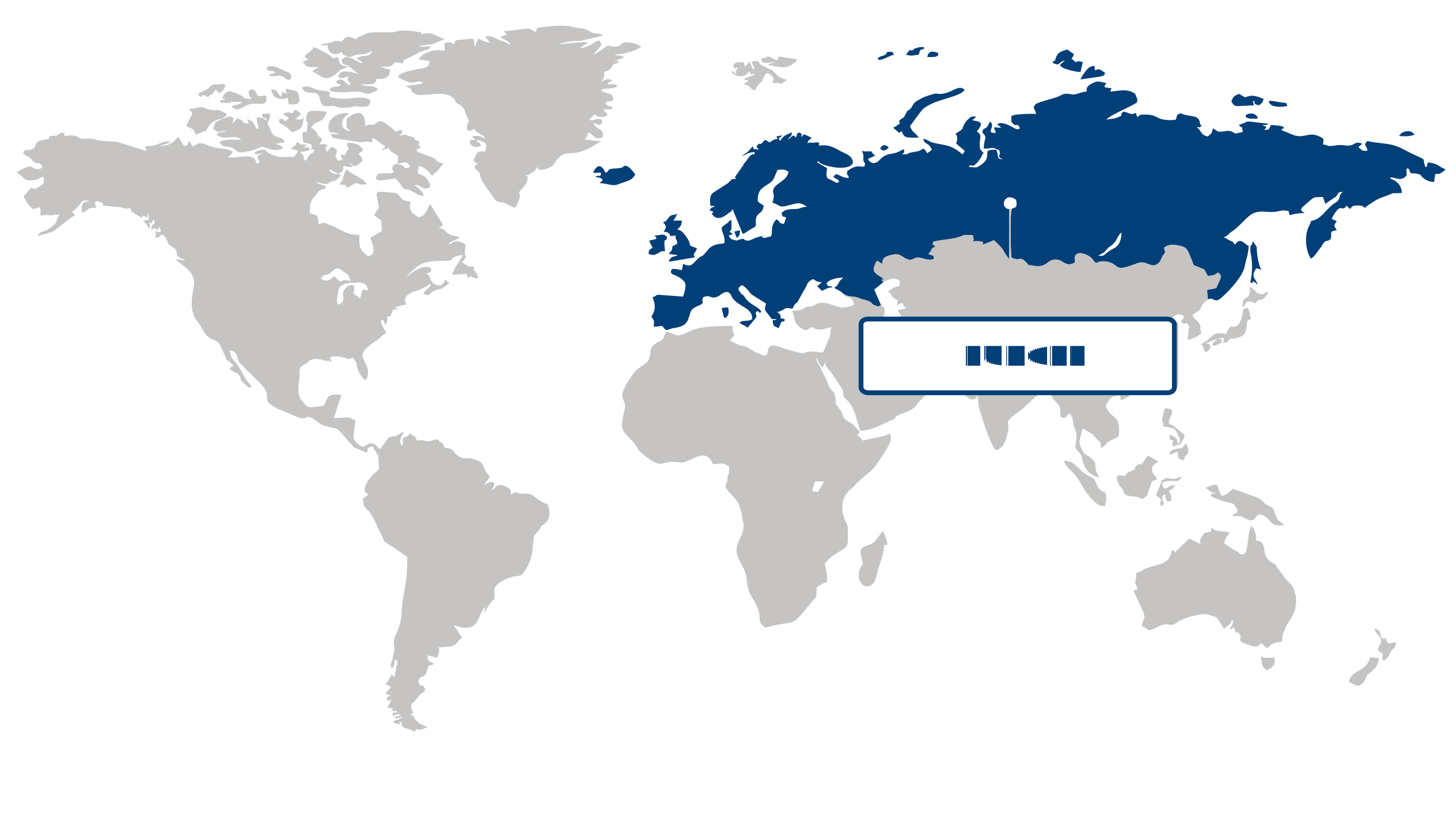
Europe (Largest Region)
Europe held the largest share of the hydronic underfloor heating market in 2026. The region’s leading position is led by strong adoption of energy-efficient heating technologies, established building efficiency standards, and increasing emphasis on reducing energy consumption in residential and commercial buildings. Hydronic underfloor heating provides consistent indoor warmth while supporting efficient heat distribution, making it attractive for modern construction and renovation projects. Growing demand for sustainable heating systems, building modernization, and improved indoor comfort is further contributing to the widespread adoption of hydronic underfloor heating across the region.
Asia Pacific (Fastest-Growing Region)
Asia Pacific is projected to be the fastest-growing region in the hydronic underfloor heating market, influenced by rapid urbanization, expanding construction activity, and increasing investment in modern residential and commercial infrastructure. Rising awareness of energy-efficient heating solutions is encouraging the adoption of advanced systems that provide improved thermal comfort and efficient heat distribution. Increasing construction of modern buildings, changing consumer preferences, and growing efforts to improve building energy performance are creating favorable conditions for market expansion. The development of sustainable infrastructure and greater adoption of advanced heating technologies are expected to further support regional growth.
| Parameter | North America | Asia Pacific | Europe | Latin America | MEA |
|---|---|---|---|---|---|
| Innovation HubiScaleNascentDeveloping Advanced | |||||
| Cost-Sensitive RegioniScaleLowMedium High | |||||
| Regulatory EnvironmentiScaleRestrictiveNeutral Supportive | |||||
| Demand DriversiScaleWeakModerate Strong | |||||
| Development StageiScaleEmergingDeveloping Developed | |||||
| Adoption RateiScaleLowMedium High | |||||
| New Entrants / StartupsiScaleSparseModerate Dense | |||||
| Macro IndicatorsiScaleWeakStable Strong |
Key Country Insights
United States 🇺🇸
Comfort-Led Heating RetrofitsThe U.S. hydronic underfloor heating market is supported by demand for zoned indoor comfort and efficient heat distribution in residential and selected commercial buildings. Installation flexibility, integration with existing heating systems, and suitability for renovation projects are important considerations for contractors and property owners.
Germany 🇩🇪
Integrated Heating SystemsGermany's market places hydronic underfloor heating within broader building-efficiency and low-temperature heating strategies. Demand centers on systems that integrate effectively with modern heating infrastructure, provide consistent room comfort, and support both new construction and renovation where building performance is a key design consideration.
Japan 🇯🇵
Space-Efficient Thermal ComfortJapan's hydronic underfloor heating market is driven by interest in comfortable, unobtrusive indoor heating suited to residential environments. Compact system designs, installation practicality, and even heat distribution are commercially relevant, particularly where builders and homeowners seek alternatives that preserve usable living space.
South Korea 🇰🇷
Residential Heating IntegrationSouth Korea offers strong application relevance for hydronic underfloor heating because residential heating systems are closely integrated into building design. Market priorities include dependable heat distribution, installation compatibility, and efficient system operation, with suppliers benefiting from solutions tailored to established residential construction practices.
France 🇫🇷
Renovation Heating SolutionsFrance's hydronic underfloor heating demand is supported by renovation and residential comfort projects seeking discreet, evenly distributed heating. Suppliers can target systems compatible with existing building structures and heating infrastructure, emphasizing installation practicality, room-by-room comfort, and integration with broader energy-efficiency improvements.
Italy 🇮🇹
Residential Comfort UpgradesItaly's market is oriented toward hydronic underfloor heating for residential construction and renovation where comfort and unobtrusive heating are valued. Commercial priorities include adaptable installation, efficient heat distribution, and compatibility with different floor structures, allowing systems to be incorporated into varied property modernization projects.
Hydronic Underfloor Heating Market Share (%), by Facility, 2026
Go beyond the chart, access full insights & data tables
Request Free Sample ReportFacility Segment Analysis: New Buildings (Largest & Fastest-Growing Segment)
The new buildings facility segment accounted for the largest share of the hydronic underfloor heating market, with a 2026 market share of 88.89%, and is also expected to grow at the fastest pace, reflecting the greater ease of incorporating hydronic heating systems during the initial design and construction of a building. New construction projects provide opportunities to integrate piping networks, insulation, floor structures, and heating controls into the building layout from the outset, reducing the complexity associated with retrofitting existing properties. Hydronic underfloor heating is particularly attractive in new buildings because it can be planned alongside other energy and space-management systems, supporting efficient heat distribution while preserving usable wall and floor space. Growing emphasis on energy-efficient building design and improved indoor comfort is further encouraging developers and property owners to consider integrated heating solutions during construction. The ability to incorporate modern controls and zoning arrangements also provides greater flexibility in managing heating requirements across different areas. As construction activity increasingly incorporates energy-conscious building practices, new buildings are expected to remain a major source of demand for hydronic underfloor heating.
Application Segment Analysis: Residential (Largest & Fastest-Growing Segment)
The residential application segment accounted for the largest share of the hydronic underfloor heating market, with a 2026 market share of 59.33%, and is also expected to grow at the fastest pace, supported by increasing demand for comfortable, energy-efficient, and space-saving heating solutions in homes. Hydronic underfloor systems distribute heat across the floor surface, providing more consistent warmth than conventional heating arrangements while eliminating the need for prominent radiators in living spaces. This configuration can improve interior design flexibility and create a more comfortable indoor environment, particularly in newly constructed or extensively renovated homes. Growing consumer awareness of energy efficiency and household heating performance is also encouraging interest in systems that can operate effectively with modern heating technologies. In addition, residential users increasingly value programmable controls and room-level temperature management, which can improve convenience and allow heating patterns to be adapted to household needs. As homeowners and residential developers place greater emphasis on indoor comfort, efficient energy use, and integrated building systems, residential applications are expected to continue driving adoption of hydronic underfloor heating.
| Segment | Sub-Segment | Largest Segment | Fastest Growing |
|---|---|---|---|
| Facility | New Buildings, Retrofit | New Buildings | New Buildings |
| Application | Residential, Commercial, Industrial | Residential | Residential |
Unlock insights tailored to your business with our bespoke market research solutions.
Click to get your customized report now.
Competitive Landscape and Market Positioning
Analyst Perspective:
The competitive dynamic in hydronic underfloor heating centers on balancing high-performance thermal distribution with structural adaptability and intelligent control. Delivering uniform floor surface temperatures requires careful calibration of pipe spacing and water delivery, yet the practical adoption of these systems often depends on physical installation parameters. Flexible, high-burst-pressure piping reduces labor complexity and long-term leak risks in concealed spaces, while low-profile assemblies allow manufacturers to capture lucrative retrofit demand where vertical clearance is limited. Concurrently, product value is shifting toward digital integration. Systems equipped with responsive smart thermostat zoning and manifold flow regulation enable precise room-by-room climate management, allowing suppliers to target energy-conscious buyers willing to invest in superior indoor comfort and operational efficiency.
Major players in the hydronic underfloor heating market:
- Uponor (Finland)
- Danfoss (Denmark)
- Rehau Group (Germany)
- Robert Bosch (Germany)
- Warmup (UK)
- Watts Water Technologies (USA)
- Viega (Germany)
- Emmeti (Italy)
- Schluter Systems (Germany)
- Giacomini (Italy)
| Company | Market Share | Company Revenue | Revenue CAGR (%) | Product Portfolio | Geographic Presence | Innovation / R&D Focus | Strategic Developments |
|---|---|---|---|---|---|---|---|
| Uponor (Finland) | |||||||
| Danfoss (Denmark) | |||||||
| Rehau Group (Germany) | |||||||
| Robert Bosch (Germany) | |||||||
| Warmup (UK) | |||||||
| Watts Water Technologies (USA) | |||||||
| Viega (Germany) | |||||||
| Emmeti (Italy) | |||||||
| Schluter Systems (Germany) | |||||||
| Giacomini (Italy) |
Industry Development/News
| Company Name | Date | Key Development |
|---|---|---|
| Eve | August 2026 | Eve introduced its Thermostat for underfloor heating in Europe with Matter and Thread connectivity that operates without requiring cloud services. The launch adds locally controlled smart-home functionality to underfloor heating systems while emphasizing interoperability through the Matter standard, representing a technology-focused development that can expand connected control capabilities within the heating market. |
| Panasonic | July 2025 | Panasonic launched an air-to-water heat pump solution combining home heating, cooling, and hot water production in a single system for new-build and retrofit applications. Compatible with underfloor heating, radiators, and fan coil units, the solution eliminates the need for an indoor unit and supports replacement of conventional gas or oil boilers, broadening hydronic heating system applications. |
| Danfoss | June 2024 | Danfoss unveiled its Icon2 underfloor heating controller alongside the voice-controlled Danfoss Ally system, introducing smart control and connected functionality for heating applications. Icon2 was presented as a solution designed for quick installation and different system requirements, while Ally uses Zigbee 3.0 and enables heating management through smart-home platforms and an app, supporting greater digitalization of underfloor heating control. |
| Georg Fischer AG | April 2024 | Georg Fischer AG finalized its acquisition of Uponor Corporation, strengthening its position in sustainable water and flow technologies and expanding its capabilities across plumbing and indoor climate solutions. The transaction is strategically relevant to hydronic underfloor heating through Uponor’s established presence in indoor climate systems and supports GF’s expansion of energy-efficient solutions for residential and commercial applications. |
Customize Your Report
Explore examples of how this report can be tailored to different research needs, including custom segments, additional topics or chapters, and related reports. Click a section of the wheel or its numbered marker to explore the available options.
Hydronic Underfloor Heating Market — Custom Segments
| Segment | Sub-Segment |
|---|---|
| Heat Source | Gas Boiler, Electric Boiler, Heat Pump, Solar Thermal |
| Floor Construction Type | Wet Systems, Dry Systems, Low-Profile Systems |
| Control System | Manual Controls, Programmable Controls, Smart/Connected Controls |
Hydronic Underfloor Heating Market — Custom TOC
| Custom Chapter | Chapter Details |
|---|---|
| Circular Product & Material Transition Pathways |
|
| Reuse Model Viability |
|
| Product Compliance & Specification Landscape |
|
Need a different cut of the data?
Request Custom ResearchFrequently Asked Questions
How large is the hydronic underfloor heating market?
How much is the hydronic underfloor heating industry expected to grow by 2036?
How is the shift toward energy-efficient building systems supporting hydronic underfloor heating adoption?
How are technology innovations expanding hydronic underfloor heating deployment?
Why do new buildings dominate the hydronic underfloor heating market?
Why is residential demand driving growth in the hydronic underfloor heating market?
What makes Europe the leading market for hydronic underfloor heating?
Why is Asia Pacific emerging as a high-growth market for hydronic underfloor heating?
What are the key competitors in the hydronic underfloor heating landscape?
Our Clients
"Your insights on workforce structures were spot-on. The analysis on mid-to-senior level roles validated some of our hiring decisions and highlighted gaps."
Ateliers De France
"The report gave us insights on competitors in the market. It helped our team refine our bidding strategy for upcoming contracts."
Clark Construction
"The reports provided a deep dive into market trends, and competitive landscape. The strategic insights and recommendations have been very helpful."
Rudolph and Sletten
Our Research Team & Methodology
Every Fundamental Business Insights report is built by a dedicated vertical research team, validated through a structured primary-and-secondary methodology, and reviewed for accuracy before it reaches you.
This report was prepared by the Construction & Manufacturing Research Team at Fundamental Business Insights, a dedicated research group specializing in global construction, building materials, manufacturing processes, and industrial infrastructure markets. The team closely tracks construction activity, infrastructure investments, manufacturing technologies, raw material trends, equipment adoption, labor and productivity developments, sustainability initiatives, regulatory standards, and supply chain dynamics to provide timely and reliable market intelligence. The research is developed using a structured methodology that combines primary discussions with manufacturers, construction companies, equipment suppliers, distributors, contractors, and industry experts, along with company annual reports, government infrastructure statistics, regulatory publications, industry associations, engineering standards, technical publications, and other authoritative secondary sources. Market estimates are validated through multiple research techniques, including top-down and bottom-up analysis, before undergoing an internal quality review to ensure accuracy, consistency, and methodological integrity prior to publication.
Delivery
Published
Available
Support
- Market Size & Forecast
- Market Segmentation
- Regional Analysis
- Growth Drivers & Challenges
- Market Dynamics
- Competitive Landscape
- Company Profiles
- Competitive Benchmarking
- Mergers & Acquisitions
- Market Share Analysis or Key Company Strategies
- Value Chain Analysis
- Porter's Five Forces
- PESTLE Analysis
- Pricing Trends
- Supply-Demand Analysis
- Technology Landscape
- Regulatory Landscape
- Investment & Funding Landscape
- Emerging Opportunities
- Future Market Outlook