Hydrophobic Perlite Insulation Board Market Size & Forecasts 2026-2035, By Segments (Product Type, End-use Industry, Application, Distribution Channel), Growth Opportunities, Innovation Landscape, Regulatory Shifts, Strategic Regional Insights (U.S., Japan, China, South Korea, UK, Germany, France), and Competitive Dynamics (Thermal Ceramics, Knauf Insulation, BASF, Owens Corning, Johns Manville)
Jump to Content
Market Size and Growth Outlook
Hydrophobic Perlite Insulation Board Market size is forecasted to reach USD 19.23 billion by 2035, rising from USD 7.28 billion in 2025, at a CAGR of more than 10.2% between 2026 and 2035. In 2026, revenue is projected at USD 7.93 billion.
Get more details on this report
Request Free Sample ReportHydrophobic Perlite Insulation Board Market Intelligence Snapshot
Regional Market Dynamics
Segment Momentum
Market Expansion Drivers
Leading Market Participants
Global Market Forecast Snapshot
Market Outlook
Regional and Segment Outlook
Market Growth Drivers and Industry Trends
The expanding construction activity in both commercial and residential domains directly fuels the hydrophobic perlite insulation board market. Urbanization trends and increasing investments in infrastructure upgrades, as highlighted by the U.S. Census Bureau’s construction statistics, reflect heightened consumer and developer preference for durable, cost-effective insulation materials. This demand surge creates strategic openings for manufacturers to scale operations and optimize supply chains for faster delivery. New entrants can capitalize on regional construction booms by tailoring product offerings to localized climatic and building code requirements. As global construction standards evolve, aligning products with these demands will be critical for sustained market relevance, making it imperative for stakeholders to monitor real-time construction data from authoritative sources like the European Construction Industry Federation (FIEC).
Technological Advancements Enhancing Hydrophobic Properties
Innovations spearheaded by research organizations and companies such as BASF and PPG Industries have significantly improved the hydrophobic characteristics of perlite insulation boards, enhancing their durability and water resistance. These advancements address longstanding challenges of moisture ingress that compromise insulation performance, thereby elevating product appeal among architects and contractors focused on building longevity. By integrating cutting-edge surface treatments and nano-coatings, firms unlock opportunities for premium product positioning and differentiation in a crowded market. Entrants with a robust R&D strategy can leverage partnerships with material science institutes, as seen in collaborations facilitated by the American Society for Testing and Materials (ASTM), to accelerate product enhancements. The continuous refinement of hydrophobicity will remain a competitive priority as market participants seek to meet increasingly stringent quality benchmarks.
Sustainability-Driven Adoption and Energy Efficiency Regulations
The hydrophobic perlite insulation board market benefits immensely from tightening global energy efficiency mandates and sustainability commitments promoted by governments and entities such as the International Energy Agency (IEA). Regulatory frameworks like the European Union’s Energy Performance of Buildings Directive (EPBD) incentivize adoption of environmentally friendly insulation solutions that reduce carbon footprints. These policies stimulate demand for low-embodied energy products with superior thermal performance, positioning hydrophobic perlite boards as ideal solutions. Both incumbents and entrants can exploit this trend by certifying products with recognized green building standards, such as LEED or BREEAM, to meet institutional procurement criteria. As sustainability remains central to construction agendas worldwide, aligning product development with regulatory trajectories ensures market access and potentially enhanced margins.
Industry Restraints:
Raw Material Cost Volatility
The hydrophobic perlite insulation board market faces significant headwinds due to fluctuations in the cost of raw perlite and hydrophobic agents. These price instabilities, driven by geopolitical tensions and supply chain disruptions affecting key producing regions like Turkey and the United States—as noted in reports from the United States Geological Survey (USGS)—increase production costs and compress margins. For manufacturers like Dryvit Systems and USG Corporation, such volatility complicates long-term pricing strategies and deters aggressive capacity expansions. Smaller entrants particularly struggle with procuring competitively priced raw materials, limiting their market penetration. As global supply chain uncertainties persist amid uneven recovery from recent disruptions, cost pressures are expected to remain a critical constraint, compelling companies to enhance supply chain resilience and price stabilization measures.
Stringent Building Code and Environmental Regulations
Hydrophobic perlite insulation boards must comply with increasingly rigorous building codes and environmental standards that impact product formulation and certification timelines. Agencies such as the International Code Council (ICC) and the European Committee for Standardization (CEN) enforce stringent fire resistance, thermal performance, and chemical emission requirements. Compliance often necessitates costly reformulations and extensive testing, delaying time-to-market and elevating barriers for new players. Established manufacturers like BASF invest heavily in R&D to meet these evolving standards, which can strain financial and operational resources yet reinforce market leadership. Given the global push for sustainable construction and enhanced safety, regulatory scrutiny will intensify, compelling all market participants to prioritize innovation and certification expertise to maintain competitiveness.
| Growth Driver | Impact on CAGR | Regulatory Influence | Geographic Relevance | Adoption Rate | Impact Timeline |
|---|---|---|---|---|---|
| Construction and insulation demand in commercial/residential sectors | 3.00% | Short term (≤ 2 yrs) | Europe, North America | Medium | Fast |
| Technological advancements improving hydrophobic properties | 2.50% | Medium term (2–5 yrs) | North America, Asia Pacific | Medium | Moderate |
| Sustainability-driven adoption and energy efficiency regulations | 2.00% | Long term (5+ yrs) | Europe, North America; Spillover: Asia Pacific | High | Slow |
Unlock insights tailored to your business with our bespoke market research solutions.
Click to get your customized report now.
Regional Demand Dynamics
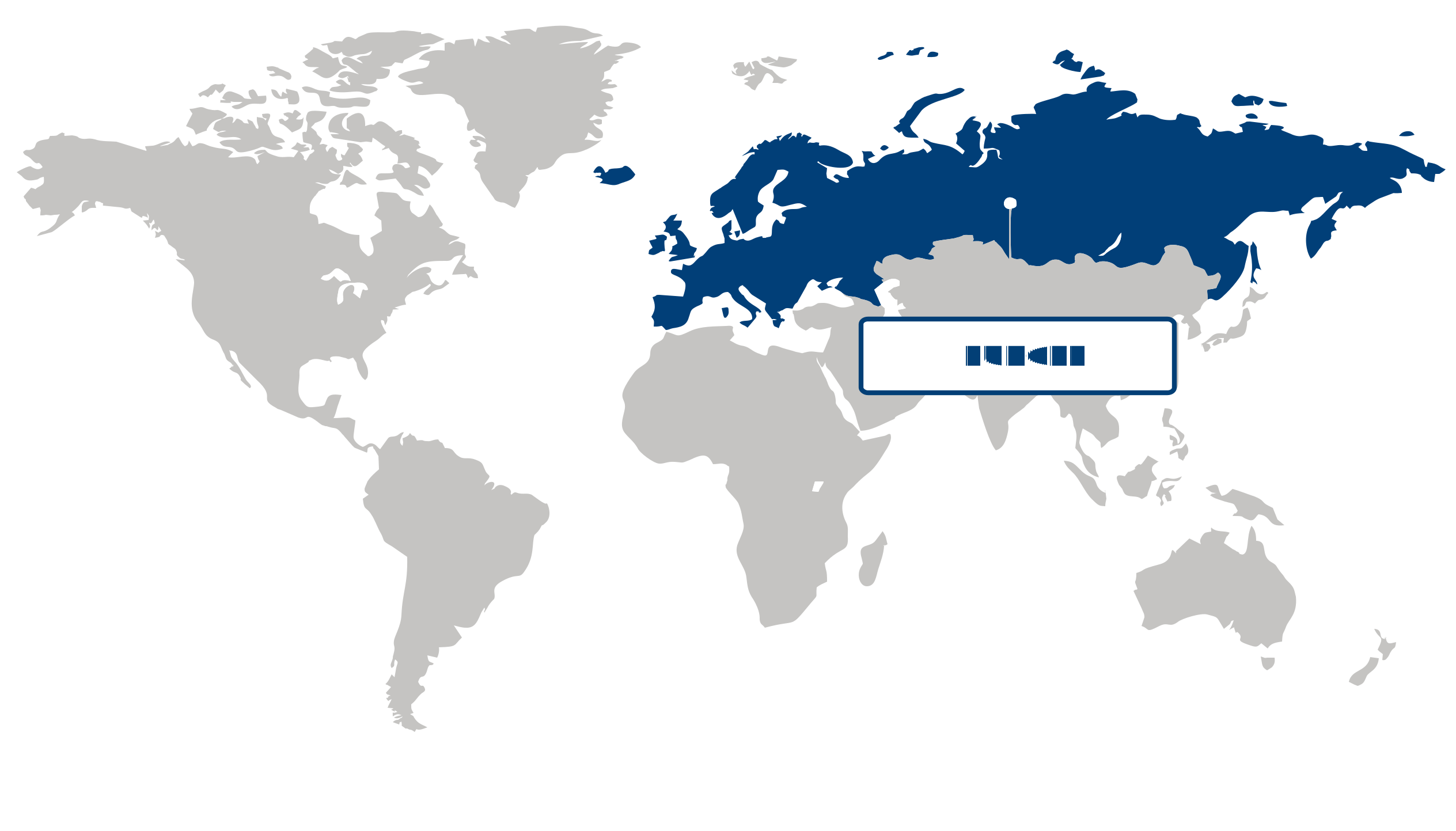
Europe dominated the hydrophobic perlite insulation board market, representing more than 41% of the global share in 2025. This leadership stems chiefly from stringent building energy-efficiency regulations and a robust demand for advanced insulation materials across the region. The European Union’s commitment to the Green Deal and energy performance directives bolsters adoption rates, as highlighted by reports from the European Commission. Additionally, consumer preference for sustainable construction solutions and government incentives for retrofitting older buildings have driven substantial market growth. Industry leaders like Knauf Insulation have ramped up production capacities and innovated for better thermal performance, underpinning economic resilience despite global supply chain challenges. As digital transformation accelerates in building management and material selection, Europe offers promising avenues for scalable deployment and technological integration in hydrophobic perlite insulation products.
Germany anchors the European hydrophobic perlite insulation board market, benefiting from rigorous national energy codes and a mature construction sector focused on sustainability. The implementation of the Energy Saving Ordinance (EnEV) and the government's push towards carbon neutrality by 2045 have increased demand for cutting-edge insulation solutions. German manufacturers such as BASF are leveraging these regulations to expand their product portfolios with hydrophobic perlite-based boards, catering to both new construction and retrofit projects. This regulatory-driven market dynamic positions Germany as a strategic hub, reinforcing the broader regional opportunity for innovation and adoption.
France plays a pivotal role in the European hydrophobic perlite insulation board market through its progressive environmental policies and strong consumer inclination toward green building practices. The French Environment and Energy Management Agency (ADEME) supports initiatives promoting energy-efficient materials, fueling demand for perlite insulation boards with superior moisture resistance. Manufacturers like Isover Saint-Gobain have aligned their strategies with these trends, targeting commercial and residential sectors. France’s emphasis on energy renovation in older urban areas further complements regional growth momentum, enhancing Europe's overall leadership in this market segment.
Asia Pacific Market Analysis:
Asia Pacific emerged as the fastest-growing region in the hydrophobic perlite insulation board market, registering a robust CAGR of 12.4%. This remarkable growth is propelled by rapid urban construction and an escalating preference for energy-efficient building materials across the region. Countries within Asia Pacific are increasingly prioritizing sustainability and improved energy conservation standards in building regulations, aligning with global climate initiatives such as those highlighted by the Asian Development Bank. Additionally, advances in construction technologies and a competitive supply chain environment have enabled broader adoption of hydrophobic perlite insulation boards, which offer superior thermal insulation and moisture resistance. The region’s expanding middle class and escalating infrastructure investments in smart cities further fuel demand. Moving forward, Asia Pacific’s ongoing urbanization and stringent environmental policies present significant opportunities for companies to innovate and scale in the hydrophobic perlite insulation board market.
Japan plays a pivotal role in Asia Pacific’s hydrophobic perlite insulation board market, driven by stringent building codes that emphasize energy efficiency and thermal performance. Japanese construction firms and developers are increasingly integrating advanced insulation materials like hydrophobic perlite boards to meet targets under the Ministry of Economy, Trade and Industry’s energy conservation measures. The country’s commitment to retrofitting aged housing stock and investments in earthquake-resistant structures further boost material demand, supported by initiatives from the Japan External Trade Organization (JETRO). This regulatory rigor and consumer demand for high-performance insulation position Japan as a key market influencing regional trends and standards.
China represents a cornerstone of Asia Pacific’s growth in the hydrophobic perlite insulation board market, powered by unmatched urbanization rates and government incentives favoring green building materials. The National Development and Reform Commission’s policies promoting sustainable construction and energy-saving technologies have accelerated uptake in residential and commercial sectors. Large-scale infrastructure projects and the expansion of eco-city developments, as reported by the China Green Building Council, underscore the country’s strategic focus on sustainable urban development. The increasing consumer consciousness around energy costs and indoor environmental quality further drives hydrophobic perlite board adoption, making China a crucial market that reinforces the broader region’s leadership and growth potential in this sector.
North America Market Trends:
North America maintained a notable presence in the hydrophobic perlite insulation board market, driven by increased construction and industrial activities focused on energy efficiency and thermal insulation. The region's emphasis on green building standards and stringent energy codes, such as those promulgated by the U.S. Green Building Council, has bolstered demand for eco-friendly and fire-resistant insulation solutions. Additionally, manufacturers like Owens Corning and certain innovative startups have intensified R&D efforts to enhance the hydrophobic properties and durability of perlite boards, responding to rising consumer preferences for sustainable materials. Supply chain resilience, strengthened by local raw material availability and advanced logistics infrastructure, has further supported market stability despite global disruptions. Consequently, North America offers significant opportunities as advancing regulatory frameworks and urbanization propel greater adoption of high-performance insulation products.
The U.S. stands as the principal driver within North America’s hydrophobic perlite insulation board market, anchored by progressive policies on energy conservation and building efficiency led by the Department of Energy and Environmental Protection Agency. These agencies have actively encouraged the integration of thermal insulation solutions that align with the ENERGY STAR program’s standards, stimulating demand in both residential and commercial construction sectors. Additionally, companies like Johns Manville have announced expansions in manufacturing capacity to meet the rising volume requirements, reflecting a robust supply-side response. This strategic posture, combined with a well-established distribution network, positions the U.S. as a pivotal market influencing broader North American trends, reinforcing regional growth potential through innovation and regulatory alignment.
| Parameter | North America | Asia Pacific | Europe | Latin America | MEA |
|---|---|---|---|---|---|
| Innovation HubiScaleNascentDeveloping Advanced | |||||
| Cost-Sensitive RegioniScaleLowMedium High | |||||
| Regulatory EnvironmentiScaleRestrictiveNeutral Supportive | |||||
| Demand DriversiScaleWeakModerate Strong | |||||
| Development StageiScaleEmergingDeveloping Developed | |||||
| Adoption RateiScaleLowMedium High | |||||
| New Entrants / StartupsiScaleSparseModerate Dense | |||||
| Macro IndicatorsiScaleWeakStable Strong |
Hydrophobic Perlite Insulation Board Market Share (%), by Product Type, 2026
Go beyond the chart, access full insights & data tables
Request Free Sample ReportHigh-performance hydrophobic perlite insulation board dominated the hydrophobic perlite insulation board market in 2025, primarily fueled by escalating industrial construction and rigorous energy efficiency regulations. This segment’s leadership reflects a growing preference among industrial players for materials that deliver superior thermal insulation to meet sustainability mandates and reduce operational costs. Corporate initiatives by companies such as Knauf Insulation and BASF to innovate in high-performance insulation solutions underscore robust supply chain investments and technology advancements. These trends create strategic opportunities for both incumbents with established R&D capabilities and new entrants focused on niche, high-value products. Given the continued tightening of energy codes and the global push for green building practices advocated by organizations like the International Energy Agency (IEA), this segment is poised to maintain its pivotal role in the market’s near- to mid-term landscape.
Analysis by End-use Industry
Industrial construction represented the largest share in the hydrophobic perlite insulation board market in 2025, driven by intensified construction activity and mandates for higher energy efficiency in industrial facilities. This segment benefits from increased demand for roof insulation solutions that optimize thermal management under regulatory frameworks such as the U.S. DOE’s Building Technologies Office and Europe’s Energy Performance of Buildings Directive. Industrial clients increasingly prioritize materials that enhance sustainability footprints while complying with evolving standards, fostering a competitive environment that incentivizes innovation and supply chain resilience. Strategic advantages arise from addressing complex project demands and volume procurement opportunities, appealing to both established multinational providers and agile startups. The ongoing infrastructure modernization efforts worldwide suggest sustained relevance for this segment going forward.
Analysis by Application
Roof insulation held the largest share in the hydrophobic perlite insulation board market in 2025, underpinned by strengthening building codes and an intensified focus on energy efficiency in construction. This segment’s prominence aligns with growing awareness among stakeholders about reducing heat loss and improving thermal regulation at building envelopes, amplified by initiatives from regulatory bodies such as the U.S. Green Building Council and the Building Research Establishment Environmental Assessment Method (BREEAM). Market dynamics reveal that architects and builders increasingly integrate hydrophobic perlite boards for their durability and water resistance, factors critical in diverse climatic regions. These drivers create avenues for companies specializing in high-performance materials, supporting portfolio diversification and innovation. Continuing advances in sustainability standards and climate adaptation strategies will ensure this segment’s sustained importance in coming years.
| Segment | Sub-Segment | Largest Segment | Fastest Growing |
|---|---|---|---|
| Product Type | Standard-Grade Hydrophobic Perlite Insulation Board, High-Performance Hydrophobic Perlite Insulation Board | ||
| End-use Industry | Residential Construction, Commercial Construction, Industrial Construction | ||
| Application | Roof Insulation, Wall Insulation, Floor Insulation | ||
| Distribution Channel | Online Platforms, Offline Stores, Specialty Retailers |
Competitive Landscape and Market Positioning
The competitive landscape is marked by focused innovation and strategic collaborations. Top players continually enhance offerings through targeted research investments, optimizing board performance in thermal insulation and water repellency. Cross-industry partnerships and selective acquisitions serve to expand technical know-how and geographic reach. Product diversification reflects responsiveness to evolving energy efficiency standards, bolstering competitive differentiation. This dynamic fosters a market environment where agility and innovation drive positioning, enabling companies like Promat and Paroc Group to capture niche segments while industry titans consolidate influence through expansive global networks.
Strategic / Actionable Recommendations for Regional Players
North American entities should capitalize on alliances with technology providers to harness advanced hydrophobic treatments, while prioritizing retrofit and green-building projects in infrastructure to deepen market penetration and enhance product relevance.
In Asia Pacific, regional companies may focus on collaborations with local construction firms and government bodies to address rising demand in urbanization, integrating digital tools to streamline production and distribution processes for broader accessibility.
European players can benefit from leveraging regulatory frameworks to excel in sustainability certification, concurrently innovating in eco-friendly raw materials and targeting high-performance sub-segments aligned with stringent energy conservation policies and evolving market expectations.
| Company | Market Share | Company Revenue | Revenue CAGR (%) | Product Portfolio | Geographic Presence | Innovation / R&D Focus | Strategic Developments |
|---|---|---|---|---|---|---|---|
| No companies available. | |||||||
Customize Your Report
Explore examples of how this report can be tailored to different research needs, including custom segments, additional topics or chapters, and related reports. Click a section of the wheel or its numbered marker to explore the available options.
Hydrophobic Perlite Insulation Board Market — Custom Segments
| Segment | Sub-Segment |
|---|---|
| No segment data available. | |
Hydrophobic Perlite Insulation Board Market — Custom TOC
| Custom Chapter | Chapter Details |
|---|---|
| No custom TOC data available. | |
Need a different cut of the data?
Request Custom ResearchFrequently Asked Questions
How is the hydrophobic perlite insulation board industry size expected to evolve during the forecast period?
Which geographic area exhibits the highest level of hydrophobic perlite insulation board market penetration?
Which region shows the most rapid acceleration in the hydrophobic perlite insulation board sector?
What factors give high-performance hydrophobic perlite insulation board segment a competitive edge in the hydrophobic perlite insulation board sector?
Which is the largest sub-segment within the end-use industry segment for hydrophobic perlite insulation board industry?
Why does roof insulation sub-segment dominate the application segment of hydrophobic perlite insulation board sector?
How does online platforms segment fare in the hydrophobic perlite insulation board industry?
Which companies are driving growth in the hydrophobic perlite insulation board landscape?
Our Clients
"Your insights on workforce structures were spot-on. The analysis on mid-to-senior level roles validated some of our hiring decisions and highlighted gaps."
Ateliers De France
"The report gave us insights on competitors in the market. It helped our team refine our bidding strategy for upcoming contracts."
Clark Construction
"The reports provided a deep dive into market trends, and competitive landscape. The strategic insights and recommendations have been very helpful."
Rudolph and Sletten
Our Research Team & Methodology
Every Fundamental Business Insights report is built by a dedicated vertical research team, validated through a structured primary-and-secondary methodology, and reviewed for accuracy before it reaches you.
Delivery
Published
Available
Support
- Market Size & Forecast
- Market Segmentation
- Regional Analysis
- Growth Drivers & Challenges
- Market Dynamics
- Competitive Landscape
- Company Profiles
- Competitive Benchmarking
- Mergers & Acquisitions
- Market Share Analysis or Key Company Strategies
- Value Chain Analysis
- Porter's Five Forces
- PESTLE Analysis
- Pricing Trends
- Supply-Demand Analysis
- Technology Landscape
- Regulatory Landscape
- Investment & Funding Landscape
- Emerging Opportunities
- Future Market Outlook