In-car Wi-Fi Market Size & Growth Forecast 2027–2036, By Segments (Component, Vehicle, Distribution Channel, Technology), Regional Demand Trends (North America, Asia Pacific, Europe), Key Country Insights (U.S., Japan, South Korea, Germany, France, Italy), and Competitive Landscape
Jump to Content
Market Size and Growth Outlook
In-car Wi-Fi Market size was assessed at USD 20.27 Billion in 2026 and is poised to grow at 10.18% CAGR between 2027 and 2036, exceeding USD 53.44 Billion by 2036. The industry revenue for 2027 is estimated at USD 22.02 Billion.
Get more details on this report
Request Free Sample ReportIn-car Wi-Fi Market Intelligence Snapshot
Regional Market Dynamics
- Europe leads through high vehicle connectivity adoption, sophisticated automotive infrastructure, and strong consumer demand for connected navigation, entertainment, remote services, and passenger convenience.
- Asia Pacific is expanding rapidly with rising vehicle ownership, digitalization, connected-vehicle adoption, improving telecommunications infrastructure, and growing demand for digital in-car experiences.
Segment Momentum
- The hardware segment held a 64.32% market share in 2026 because routers, antennas, communication modules, and embedded connectivity devices are essential for delivering reliable in-vehicle internet access.
- The software & services segment is growing quickly due to rising demand for cloud-based connectivity management, cybersecurity, over-the-air updates, and subscription-based digital services within connected vehicle ecosystems.
Market Expansion Drivers
- Rising demand for connected vehicles accelerating in-car broadband connectivity deployment
- Expansion of 5G networks enabling high-speed automotive infotainment and telematics services
- Growth of fleet and mobility services increasing demand for continuous vehicle connectivity solutions
Leading Market Participants
- Key companies in the in-car wi-fi market include Qualcomm Incorporated (United States), Broadcom Inc. (United States), Ericsson AB (Sweden), NXP Semiconductors N.V. (Netherlands), Harman International (United States), AT&T Inc. (United States), Verizon Communications Inc. (United States), Huawei Technologies Co., Ltd. (China), Cisco Systems, Inc. (United States), Intel Corporation (United States)
Global Market Forecast Snapshot
Market Outlook
- 2026 Market Size: USD 20.27 Billion
- 2027 Estimated Market Size: USD 22.02 Billion
- Projected Market Size: USD 53.44 Billion by 2036
- Growth Forecast: 10.18% CAGR (2027-2036)
Regional and Segment Outlook
- Leading Regional Market: Europe
- High-Growth Regional Hub: Asia Pacific
- Core Revenue Segment: Hardware (Component) | Passenger Vehicles (Vehicle) | OEM (Distribution Channel) | 4G LTE (Technology)
- Emerging Opportunity Segment: Software & Services (Component) | Passenger Vehicles (Vehicle) | OEM (Distribution Channel) | 5G NR (Technology)
Market Growth Drivers and Industry Trends
Rising demand for connected vehicles accelerating in-car broadband connectivity deployment
Consumer expectations for uninterrupted digital experiences are encouraging vehicle manufacturers to integrate advanced connectivity features into modern automobiles. The in-car wi-fi market will propel growth as broadband-enabled vehicles provide seamless internet access for passengers while supporting connected infotainment, navigation, software updates, and cloud-based applications. Embedded connectivity also enhances the overall driving experience by enabling continuous communication between vehicles and digital service platforms throughout daily travel.
Expansion of 5G networks enabling high-speed automotive infotainment and telematics services
The ongoing rollout of 5G infrastructure is transforming connected mobility by providing faster data transmission, lower latency, and greater network capacity for automotive applications. The in-car wi-fi market benefits from these advancements as vehicles increasingly support high-definition streaming, real-time navigation, over-the-air software updates, and advanced telematics services without compromising connectivity performance. Enhanced mobile networks also enable more responsive digital services that improve convenience for both drivers and passengers.
Growth of fleet and mobility services increasing demand for continuous vehicle connectivity solutions
The expansion of shared mobility platforms, commercial fleets, and connected transportation services is increasing the need for reliable vehicle connectivity throughout daily operations. Within this evolving landscape, the in-car wi-fi market is driven by demand for communication solutions that enable real-time fleet monitoring, route optimization, remote diagnostics, and continuous data exchange between vehicles and management platforms. Persistent connectivity also supports passenger services, operational efficiency, and predictive maintenance across diverse mobility ecosystems.
| Growth Driver | Impact on CAGR | Regulatory Influence | Geographic Relevance | Adoption Rate | Impact Timeline |
|---|---|---|---|---|---|
| Rising demand for connected vehicles accelerating in-car broadband connectivity deployment | 3.2% | Low | North America, Europe, Asia Pacific | High | Near Term |
| Expansion of 5G networks enabling high-speed automotive infotainment and telematics services | 3.6% | Moderate | Asia Pacific, North America, Europe | High | Near Term |
| Growth of fleet and mobility services increasing demand for continuous vehicle connectivity solutions | 2.9% | Low | North America, Europe | High | Near Term |
Explore Growth Opportunities
Request Free Sample ReportRegional Demand Dynamics
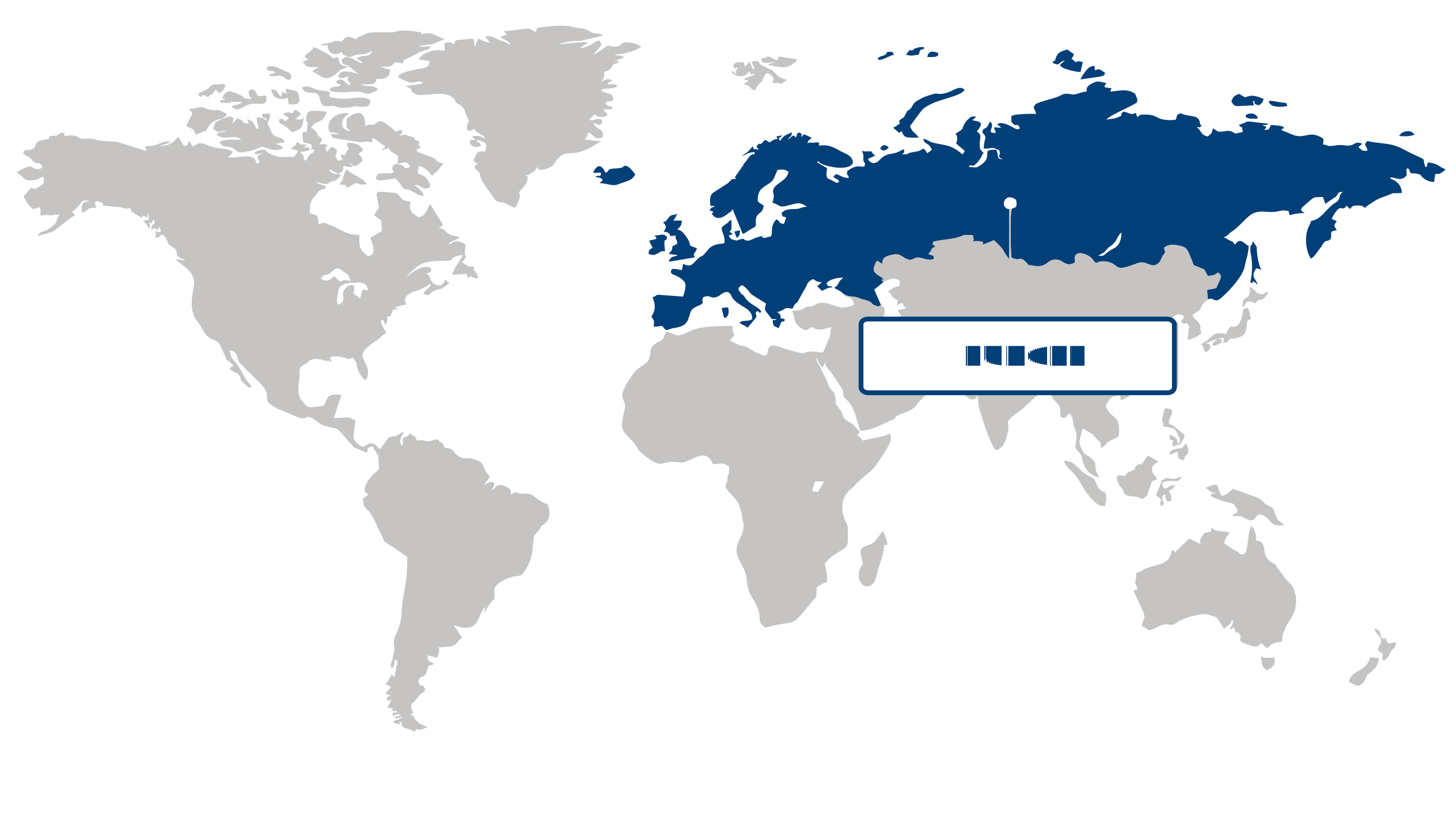
Europe (Largest Region)
Europe held the largest position in the in-car wi-fi market in 2026, supported by high vehicle connectivity adoption, sophisticated automotive infrastructure, and strong consumer demand for seamless digital experiences while traveling. The region’s established automotive industry is increasingly incorporating connected features into passenger vehicles, while widespread smartphone and digital service usage is reinforcing demand for reliable in-vehicle internet access. Growing interest in connected navigation, entertainment, remote services, and passenger convenience is further encouraging automakers to enhance onboard connectivity capabilities.
Asia Pacific (Fastest-Growing Region)
Asia Pacific is expected to register the fastest growth, driven by expanding vehicle ownership, accelerating digitalization, and rising consumer expectations for connected mobility. Increasing adoption of connected and technologically advanced vehicles is creating a broader addressable base for in-car internet services, particularly across rapidly developing automotive markets. Improvements in telecommunications infrastructure and growing availability of high-speed mobile networks are also supporting more reliable connectivity, while increasing demand for digital entertainment and connected vehicle functions is strengthening the regional opportunity.
| Parameter | North America | Asia Pacific | Europe | Latin America | MEA |
|---|---|---|---|---|---|
| Innovation HubiScaleNascentDeveloping Advanced | |||||
| Cost-Sensitive RegioniScaleLowMedium High | |||||
| Regulatory EnvironmentiScaleRestrictiveNeutral Supportive | |||||
| Demand DriversiScaleWeakModerate Strong | |||||
| Development StageiScaleEmergingDeveloping Developed | |||||
| Adoption RateiScaleLowMedium High | |||||
| New Entrants / StartupsiScaleSparseModerate Dense | |||||
| Macro IndicatorsiScaleWeakStable Strong |
Key Country Insights
United States 🇺🇸
Connected Mobility ServicesThe U.S. in-car Wi-Fi market benefits from consumer demand for continuous connectivity and expanding connected vehicle services. Automakers and network providers prioritize high-speed data access, over-the-air updates, and enhanced digital experiences for drivers and passengers.
Germany 🇩🇪
Premium Connectivity IntegrationGermany incorporates in-car Wi-Fi into premium vehicle platforms that emphasize connected mobility and digital functionality. Commercial priorities include secure connectivity, seamless infotainment integration, and reliable support for software-enabled vehicle features.
Japan 🇯🇵
Intelligent Cabin ConnectivityJapan is expanding in-car Wi-Fi capabilities to enhance infotainment, navigation, and connected vehicle services across passenger vehicles. The market emphasizes dependable connectivity, compact communication technologies, and integration with intelligent mobility platforms.
South Korea 🇰🇷
Digital Vehicle ExperienceSouth Korea advances the in-car Wi-Fi market through strong automotive electronics capabilities and connected mobility development. Manufacturers prioritize fast wireless connectivity, cloud-enabled vehicle functions, and improved user experiences within digitally connected vehicles.
France 🇫🇷
Mobility Connectivity EnhancementFrance is strengthening in-car Wi-Fi adoption as connected services become a greater component of modern vehicle offerings. Commercial activity focuses on secure wireless access, infotainment performance, and compatibility with evolving connected mobility ecosystems.
Italy 🇮🇹
Infotainment Connectivity AdoptionItaly is integrating in-car Wi-Fi into passenger vehicles to improve digital services and connected driving experiences. Market priorities include affordable connectivity solutions, enhanced passenger convenience, and support for expanding automotive software capabilities.
In-car Wi-Fi Market Share (%), by Component, 2026
Go beyond the chart, access full insights & data tables
Request Free Sample ReportComponent Segment Analysis: Hardware (Largest Segment) vs Software & Services (Fastest-Growing Segment)
the hardware segment accounted for the largest share of 64.32% in 2026 in the in-car wi-fi market. Its dominance is driven by the essential role of physical connectivity components such as routers, antennas, communication modules, and embedded connectivity devices that enable reliable in-vehicle internet access. Growing integration of connected vehicle technologies by automotive manufacturers and increasing consumer expectations for seamless digital connectivity have further strengthened demand for hardware solutions across new vehicle models.
the software & services segment is projected to witness the fastest growth over the forecast period. Increasing demand for cloud-based connectivity management, cybersecurity solutions, over-the-air updates, and subscription-based digital services is expanding the importance of software within connected vehicle ecosystems. As automakers continue enhancing in-car digital experiences and connected services, software platforms and managed connectivity solutions are expected to play an increasingly significant role in supporting long-term market growth.
Vehicle Segment Analysis: Passenger Vehicles (Largest & Fastest-Growing Segment)
the passenger vehicles segment dominated the in-car wi-fi market with the largest share of 65.28% in 2026 and is also anticipated to remain the fastest-growing segment. Rising consumer demand for uninterrupted internet connectivity, infotainment services, navigation, and connected mobility features has accelerated the integration of in-car wi-fi across passenger vehicles. Increasing production of connected cars, growing adoption of smart mobility technologies, and continuous enhancements in digital user experiences are expected to further strengthen the position of this segment.
Distribution Channel Segment Analysis: OEM (Largest & Fastest-Growing Segment)
the OEM distribution channel held the largest share of 67.78% in 2026 in the in-car wi-fi market and is also expected to register the fastest growth over the forecast period. Automotive manufacturers are increasingly integrating factory-installed wi-fi systems as part of standard and premium connected vehicle packages to meet evolving consumer expectations. Native integration enables improved system compatibility, enhanced cybersecurity, and seamless connectivity with other vehicle technologies. Continued investment in connected vehicle platforms and expanding deployment of embedded communication systems are expected to reinforce the OEM channel's leadership.
| Segment | Sub-Segment | Largest Segment | Fastest Growing |
|---|---|---|---|
| Component | Hardware, Software & Services | Hardware | Software & Services |
| Vehicle | Passenger Vehicles, Commercial Vehicles | Passenger Vehicles | Passenger Vehicles |
| Distribution Channel | OEM, Aftermarket | OEM | OEM |
| Technology | 4G LTE, 5G NR, Wi-Fi 6 | 4G LTE | 5G NR |
Unlock insights tailored to your business with our bespoke market research solutions.
Click to get your customized report now.
Competitive Landscape and Market Positioning
Top players in the in-car wi-fi market:
- Qualcomm Incorporated (United States)
- Broadcom, Inc. (United States)
- Ericsson AB (Sweden)
- NXP Semiconductors N.V. (Netherlands)
- Harman International (United States)
- AT&T, Inc. (United States)
- Verizon Communications, Inc. (United States)
- Huawei Technologies Co., Ltd. (China)
- Cisco Systems, Inc. (United States)
- Intel Corporation (United States)
Demand for always-connected driving experiences is reshaping competitive priorities in the in-car Wi-Fi market, encouraging providers to enhance network reliability, cybersecurity, and seamless connectivity across multiple devices within the vehicle. Innovation is increasingly directed toward solutions that integrate smoothly with connected vehicle ecosystems while supporting software updates, infotainment services, and intelligent mobility applications. Suppliers that can balance high-quality connectivity with flexible integration across different vehicle platforms are strengthening their position as digital services become a more integral part of the in-vehicle experience.
| Company | Market Share | Company Revenue | Revenue CAGR (%) | Product Portfolio | Geographic Presence | Innovation / R&D Focus | Strategic Developments |
|---|---|---|---|---|---|---|---|
| Qualcomm Incorporated (United States) | |||||||
| Broadcom Inc. (United States) | |||||||
| Ericsson AB (Sweden) | |||||||
| NXP Semiconductors N.V. (Netherlands) | |||||||
| Harman International (United States) | |||||||
| AT&T Inc. (United States) | |||||||
| Verizon Communications Inc. (United States) | |||||||
| Huawei Technologies Co. Ltd. (China) | |||||||
| Cisco Systems Inc. (United States) | |||||||
| Intel Corporation (United States) |
Industry Development/News
| Company Name | Date | Key Development |
|---|---|---|
| LG Innotek | Apr-26 | LG Innotek has secured a contract to supply Wi-Fi 7 modules to a major European automotive parts provider. This expansion into next-generation wireless communication technology strengthens the company's competitive position within the automotive connectivity ecosystem, enabling higher data throughput and improved latency for advanced vehicle-to-everything (V2X) and in-cabin connectivity applications. |
| AT&T | Oct-25 | AT&T expanded its automotive connectivity footprint by enabling 5G support for Toyota Connected Services. This partnership facilitates the integration of critical vehicle features, including remote services, enhanced safety functions, and connected entertainment. The infrastructure deployment underscores the industry shift toward utilizing cellular 5G as a primary backbone for comprehensive in-vehicle digital services and consumer-facing features. |
| Verizon Communications | Mar-25 | Verizon Communications launched an upgraded network management platform for in-car Wi-Fi, integrating AI-driven connectivity optimization and automated device management. By incorporating real-time traffic monitoring, the platform enhances network reliability and reduces latency, addressing the increasing demand for seamless, high-performance connectivity in connected vehicle architectures across global markets. |
| Qualcomm | Feb-25 | Qualcomm introduced an automotive chipset suite featuring 5G NR support and integrated edge-computing capabilities. This rollout is designed to bolster connectivity performance for OEMs and fleet operators by supporting advanced telematics processing and over-the-air (OTA) software updates, facilitating the deployment of complex, multi-device infotainment systems in modern vehicles. |
| Harman International | Jan-25 | Harman International debuted an AI-driven in-car Wi-Fi platform featuring cloud-based monitoring and intelligent data routing. By providing automated service optimization dashboards, the solution enables more efficient management of secure connectivity, telematics, and infotainment services, specifically targeting the requirements of high-volume passenger and commercial vehicle deployments. |
| Ericsson | Dec-24 | Ericsson expanded its in-car connectivity infrastructure with the introduction of network slicing and edge computing modules. These additions provide the scalability and low-latency communication necessary for next-generation connected vehicle services, allowing automotive manufacturers to deploy more robust, predictive connectivity analytics and specialized data-routing applications for modern fleet management. |
| AT&T | Oct-24 | AT&T, in collaboration with Broadcom and NXP Semiconductors, launched an integrated hardware and software solution utilizing Wi-Fi 6E technology. The platform features secure connectivity and AI-enabled traffic optimization, aimed at enhancing network performance and multi-device management capabilities for automotive OEMs and global fleet operators integrating next-generation wireless standards into vehicle electronics. |
Customize Your Report
Explore examples of how this report can be tailored to different research needs, including custom segments, additional topics or chapters, and related reports. Click a section of the wheel or its numbered marker to explore the available options.
In-car Wi-Fi Market — Custom Segments
| Segment | Sub-Segment |
|---|---|
| Connectivity Use Case | Passenger Internet Access, In-Vehicle Infotainment, Connected Navigation and Telematics, Connected Vehicle Services |
| Subscription Model | Embedded Connectivity Included with Vehicle, Carrier-Bundled Subscription, OEM-Branded Subscription, Pay-as-You-Go Connectivity |
| Service Provider Type | Mobile Network Operators, Automotive OEMs, Connectivity Service Providers, Technology and Platform Providers |
In-car Wi-Fi Market — Custom TOC
| Custom Chapter | Chapter Details |
|---|---|
| Connected Vehicle Monetization Models |
|
| Telecom-Automotive Partnership Models |
|
| In-Vehicle Connectivity Economics |
|
Need a different cut of the data?
Request Custom ResearchFrequently Asked Questions
What is the current size of the in-car wi-fi market?
What is the projected value of the in-car wi-fi industry by 2036?
How is 5G infrastructure reshaping in-car Wi-Fi deployment and service demand?
Why are fleet and mobility operators increasing investment in continuous vehicle connectivity?
Why is the hardware segment the largest in the in-car Wi-Fi market?
What is driving the growth of the software & services segment?
What supports Europe's leadership in the in-car Wi-Fi market?
Why is Asia Pacific the fastest-growing in-car Wi-Fi market?
Who are the leading players in the in-car wi-fi landscape?
Our Clients
"The team surpassed our expectations with the report depth. The actionable insights provided proved crucial in navigating market challenges."
Tata Motors
"We found the report to be very informative. The expertise and attention to market nuances significantly influenced our business direction."
DENSO Corporation
"The consumer survey findings were quite good. We now have a clearer picture of the customer churning and retention strategy."
HL Mando
Our Research Team & Methodology
Every Fundamental Business Insights report is built by a dedicated vertical research team, validated through a structured primary-and-secondary methodology, and reviewed for accuracy before it reaches you.
This report was prepared by the Automotive & Transportation Research Team at Fundamental Business Insights, a dedicated research group specializing in the global automotive, mobility, and transportation industries. Our analysts continuously monitor vehicle technology advancements, electrification trends, autonomous and connected mobility, manufacturing developments, supply chain dynamics, regulatory standards, emissions policies, aftermarket activities, and evolving consumer and commercial transportation requirements to deliver timely and reliable market intelligence. The research is developed using a structured methodology that combines primary discussions with vehicle manufacturers, component suppliers, technology providers, distributors, logistics stakeholders, and industry experts, along with company annual reports, regulatory publications, government transportation statistics, industry associations, technical standards, and other authoritative secondary sources. Market estimates are validated through multiple research techniques, including top-down and bottom-up analysis, before undergoing an internal quality review to ensure accuracy, consistency, and methodological integrity prior to publication.
Delivery
Published
Available
Support
- Market Size & Forecast
- Market Segmentation
- Regional Analysis
- Growth Drivers & Challenges
- Market Dynamics
- Competitive Landscape
- Company Profiles
- Competitive Benchmarking
- Mergers & Acquisitions
- Market Share Analysis or Key Company Strategies
- Value Chain Analysis
- Porter's Five Forces
- PESTLE Analysis
- Pricing Trends
- Supply-Demand Analysis
- Technology Landscape
- Regulatory Landscape
- Investment & Funding Landscape
- Emerging Opportunities
- Future Market Outlook